
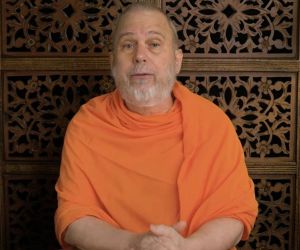
The other day, while listening to a talk by my teacher Swami Tadatmananda, I was struck by something he said. Of course, being my teacher, there are many things that he says that have significance and that resonate with me. But these statements in particular found a home in me that day:
Words can’t get you there (ie realisation of our oneness with the Divine, God, Universal Consciousness, we may call it many things), but words can help you get rid of everything else.
Talking with my partner hermit this morning about this idea, I suddenly thought that for the vast majority of us there are only a given number of words used on a daily basis. And I think this would apply to whatever language we speak – even when you think of specialist groups like scientists, religious people, engineers, – any group.

I’m not talking here about whether me or you as an individual has a ‘wide’ vocabulary, or a ‘limited’ one; I’m just saying that there are only so many words we need to get by while living in our particular worlds.
And that thought led to a not so original idea that those words will be used to achieve all kinds of ends, including opposing goals and purposes.
In other words (no pun intended, I promise!), words may be used to attack and hurt others and ourselves; or in the relaying or writing of the news telling us (constantly and repetitively) all the bad things going on in the world; to express hate; to promote violence; in advertising for anything and everything; to threaten and dominate – have power over – other living beings or Earth herself.
Then, on the other hand, those exact same words can be used to heal others and ourselves; spread news about good things happening around us; in the prayers many of us utter every day; in the many holy scriptures and other sacred texts so many hold dear; to promote love and express love; to promote harmony and unity among peoples and with Earth and all her life; to empower ourselves and others to live well and to thrive.
So, where’s the difference? Well, I think there is a theme developing in this post: it’s going to be packed solid with obvious, even clichéd words and statements. What I’m getting at is this: Two very well worn clichés just popped into mind:
Sticks and stones might break my bones, but words will never hurt me.
And the other:
The pen (or any other means of communication) is mightier than the sword.
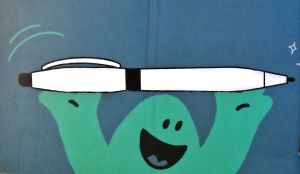
It seems to me that these two statements appear to be at odds with each other; kind of opposite ideas aren’t they? Well, clichés may be ‘hackneyed oft-repeated aphorisms’ (I read that definition somewhere ages ago), but I rather think that a great many clichés are merely truths passed down the ages that have been remembered and treasured precisely because they are true and have proven helpful.
Words can hurt; we have all experienced that truth for ourselves. Of course, for ‘enlightened ‘ people words might roll over them like, (forgive another cliché or two) like water off a duck’s back, or those words will go in one ear and out the other. But, I think most of us have a way to go before enlightenment, certianly it’ll be a rather high number of lifetimes before I’m even close.

Which means that before that day of enlightenment comes, words will continue to hurt. Or heal. All of us can think of many examples of words that can be used in so many ways, but let’s just take one example:
Power or powerful. In how many ways can we use that word? What does it mean if I say: ‘He’s a powerful politician’.?
Does it mean this politician is a dictator who forces people to do what he wants? Does he ban anyone who disagrees with him? Is he a believer in the myth that the people are all there to serve him? Does he raise taxes so he can live luxuriously? Does he make policies that keep people poor or hungry?

Or does it mean that this politician is a strong, good, and compassionate leader? Does he know how to empower people to move themselves and society forward? Is he sensitive to the needs of all the people he serves? Does he listen to the people and follow through on what they tell him? Does he do his best to ensure that nobody goes poor and hungry?
You probably get the point I think? Exactly the same words; two diametrically opposed meanings. Of course, we could all cite countless examples of this duality: same words, different meanings. And you know something? We all do it.

So, what’s the solution? How can we find words that don’t hurt? How are we to learn that our ‘pen’ (read voice, keyboard, paintbrush, camera, or any medium we use to ‘speak with’) is mightier? Well, until that aforementioned day of enlightenment is upon us, all we can do is practise; after all, practise makes perfect (sorry).
Okay then, how shall we practise? I can only tell you what I am trying to do myself. Focus on truth in all your actions, words, thoughts. Turn away, as your default response, from all that you know to be untrue. Develop your powers of discernment so you will know what is true and what isn’t.
And this requires that you remind yourself constantly that you already do know the difference. Your heart will tell you, so listen to it as well!
Does all this work. Yes. Maybe. Sometimes. But what I can say for sure is that practising this way of reconditioning your thoughts, words, and deeds so that they are all on the same page, (there I go again with the clichés again) advances you ever so steadily on that road that leads to enlightenment, when we will know exactly what, when, and how to say what we need to say whenever we try to express ourselves in any given situation.
 Notes from the Hermit's Cave