Last January I published a post inspired by a favourite verse from the Bhagavad Gita:
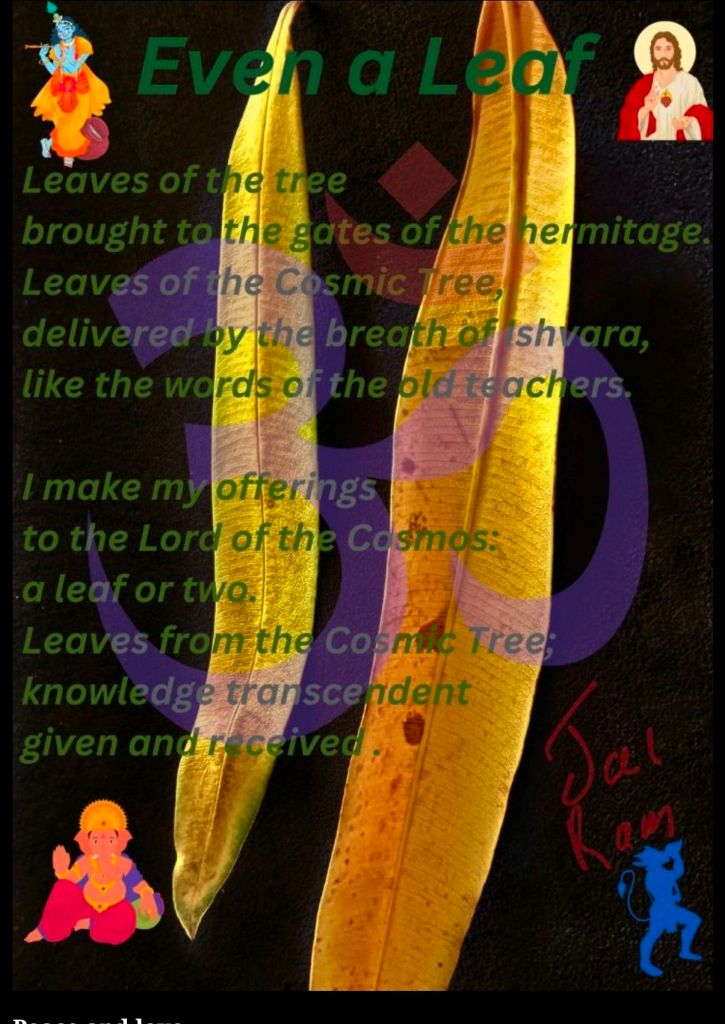
If anyone with love and devotion offers me a leaf, a flower, a fruit, or water, I will accept it. Bhagavad Gita 9:26
If you like you can read the post here, but I will be including the poem that made up that post in this one which shares the same topic,
Today’s post was in fact written during my more recent hospital stay as a record of a very nice encounter with my Bhagavad Gita and a nurse. I’ll only make changes to tidy it up a bit and to make it clearer for you, the reader.
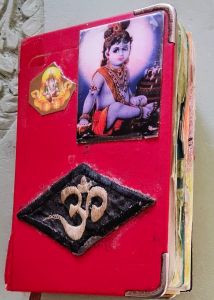
A ministering angel, in the guise of a nurse happened to notice my beloved little Bhagavad Gita sitting on my bed-side cupboard as she went about her healing duties. Picking it up, pausing to gaze at the image of the Lord on the cover, she then exclaimed excitedly:
‘You love Krishna!’ She was already opening and closing my book at random, with a rapt expression on her face.
‘I do love Krishna,’ I replied, happy to connect with a fellow devotee.
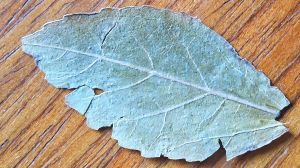
‘O my God,’ she cried even more excitedly, ‘you even have leaf. She held up one of the small leaves I’d slipped between the pages. It was as if she was making of it an offering, just as I had when first putting it there, in remembrance of that verse I love.
I think there are at least half a dozen such leaves offered at various times over the years.
Gently, reverently, she put the leaf back in its pages, closed the book carefully, and replaced it in the exact same position on the bed-side table.
‘I am very glad you love Krishna,’ she smiled as she tuned to leave and headed to serve the next one in need of healing.
In the High Holy Lands Where Magic Sometimes Happens
For the last while (long while really. Actually many years), I have dreamed a few times a month, sometimes more, that I am in, about to arrive in, or just about to leave Rishikesh in India.
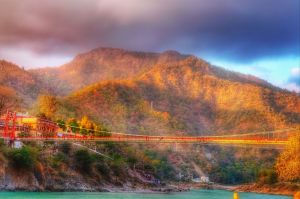
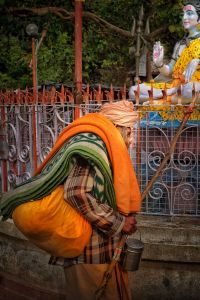
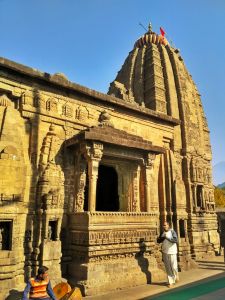
Rishikesh is a small town straddling the Ganges River, and nestled in the foothills of the Himalayas. For millennia it has been considered a sacred place. Its history replete with stories of divine beings, ancient sages and saints, not to mention its status as a major pilgrimage destination for at least a thousand years and the town becoming ever more popular in recent years for pilgrims and ordinary pleasure seeking tourists from around the world.
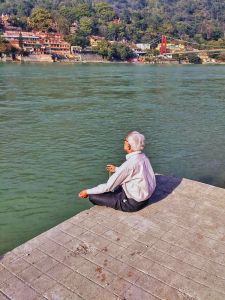
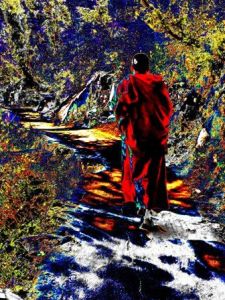
This isn’t me but it could be
I last visited Rishikesh in 2016-17 (having previously spent time there in 2006) when my partner hermit and I stayed for several months. I associate that stay with the strengthening and deepening of my spiritual practice as well as the gaining of a kind of clarity in terms of my outlook on the world particularly on the spiritual path that had been calling to me – as it does still.
Putting aside health issues that hinder our mobility, I think it’s fair to say that my attachment to Rishikesh and my longing to return have more or less faded away almost completely over recent years.
Rishikesh has always been a busy, crowded place with the associated traffic, noise, pollution, and inflated prices. Rampant commercialism has long threatened the town’s ‘spiritual ‘ or ‘sacred’ vibe. These days it is the fourth most visited place in India for overseas travellers so it’s likely to be more busy, choked with traffic, noisy, more commercial and material focused than ever, with the associated degradation of its appeal for some.
But, even if I were also able to put all this aside, I think the core of the letting go of my longing for Rishikesh has more to do with the turning inward that has accompanied our eventual recognition of our calling to the hermit life with its quiet, secluded, contemplative lifestyle (or the aspiration for that life).
So, why the dreams? Why so often? Well, as I’ve mentioned, Rishikesh has played a significant role in my life. And despite the dropping away of those longings and attachment, I’m not saying going there again is totally out of the realm of possibility, but it no longer has that ‘I’m home’ kind of feeling. No longer has that magnetic attraction for me.
Now, here’s the missing information about these dreams I’ve neglected to mention thus far: Not one of the dreams has been set in the ‘real’ Rishikesh; never have they been ‘geographically correct’ for wont of better description.
Sometimes the dream town is nothing more than a small clump of houses sitting on a hill or in a field with a dirt track passing by.
Other times it is a sizeable town with temples, streets, cafes and shops masquerading as an Indian town. Sometimes it’s simply a story taking place inside a shop or restaurant that, in the dream, I know is in Rishikesh though not in the terrestrial town. There have been dreams in which the town is more like a city with highrise buildings, multi-lane roadways, and all the rest.
The most recent dream had me in a bus headed for another bus connection to Rishikesh. Worried about missing the connection, I was told that the Rishikesh bus wasn’t due ‘for weeks’.
Many and varied settings all standing in for the ‘real’ Rishikesh. But I don’t think I need Carl Jung to tell me the meaning of these dreams. All of them are my internal sacred or significant ‘Rishikesh’. It’s as if the actual geographic location in India called Rishikesh is the illusion and these dreams are the reality for me. All emanating from the cave in my heart
My inner or true Self, you might say, telling me that my being concerned with my specific geographical location is missing the point. A message for me that I am always in Rishikesh, that I am always in sacred space and with saints and sages, and that the Divine is everything and everywhere.
Lately it’s been a bit hard to remember I’m actually a hermit. A lengthy hospital stay, doctors’ visits, sessions with physio and other therapists, moving to a new hermitage. There seems to be no end to the people and activities pulling me back out there into the world.
Sometimes I would like to just stop, do nothing and simply be.
But even a hermit isn’t exempt from performing actions in the world. Of course the point of living in seclusion as a hermit is to minimise contact and interaction with the world of people and things of the world; to renouncing objects and pleasures of the senses and ridding oneself of desires for these material experiences.
Even so, no matter the degree to which one renounces action, it is simply not possible to cease all activity in this world.
Recently I came across a kind of list of the three types of categories or activities one must never renounce regardless of the level of withdrawal from the world.
In fact, looking at it from another perspective, this little list could be described as a guide on the types of activities to undertake for not only hermits but all of us wanting to live a life of ‘being good and doing good’. And as a means to make every single thing we do serve the Truth.
Actually, that brings us to the top most (for me at least) of the three categories of activity that are never to be renounced, which is the embracing of actions that contribute to my quest to understand my true nature, to fully realise the divinity within myself that is in fact the divinity that pervades and permeates all there is.
My intention is that all my activities are informed by loving devotion to this divinity and a deep yearning to be of service to that divinity. Don’t relate to Divinity? That’s okay: substitute God, the Universe, Love, Beauty, Truth …
Which now leads me to the next category: I aspire to consider the welfare of all other living beings as I perform any action in this world. Being mindful at all times to ensure my actions, including my speech and thought, causes as little harm as possible; how can I be good?
Of course the other side of this mindfulness is to continually be asking myself, what can I actually do to contribute in a positive way to the welfare of all living beings; how can I do good?
The final of the three equal, mutually dependant, and intimately interconnected categories of activities require once again a continual mindfulness to my own welfare, on all levels.
Sounds obvious: we all want be happy, to enjoy life and be healthy. But, speaking only for myself here, there are any number of activities I have engaged in (some I still do) in order to get some pleasure, to be happy, whatever, that might work for a while, but as with all worldly things, it never lasts. As the saying goes, that which at first tastes like nectar can end up being poison.
Like the relationship I share with Youtube. With no television in the Hermitage Youtube is the go to space for things to watch; an unlimited source for study, inspiration, and sometimes simply for entertainment.
But last night, and by no means for the first time, I realized I was spending far more time ‘looking’ (AKA scrolling) for something of interest to watch then actually watching anything.
Now, watching videos for study, inspiration, and even entertainment, may contribute to my welfare, but scrolling certainly does not. Time consuming, mind deadening, it leads to irritability, depression and exposure to content I want nothing to do with. Time for (another) break.
Sometimes, when the ears can hear and the eyes can see, there are many signs and wonders to be witnessed; there are communications to be recieved from some seemingly other source than inside our little physical, material selves.
Birds, they say, sing with the voice of God, their song being the song of the Universe, so that the rest of us may hear. Or if you like, a bird’s song opens up within us a kind of portal to the true or Higher Self so we may hear the words of the Divine within.
There is a particular bird that we have often heard, though never seen, who is close to our hermitage, though we also hear others with the same song from farther away. The song seems simple, but it is profound.
Two sounds, 1,2. Two notes in slightly different keys. Like the hoot of an owl but not low and deep as I imagine an owl’s voice might be. But not especially high or shrill either. Flat? No I wouldn’t say so: each note is unique.
Some days ago my partner hermit was ‘just sitting in the hermitage garden, not focusing on anything in particular, when she heard the bird’s voice again.
And then without volition or any bidding on her part, the words Let Go seemed to superimpose themselves over the two notes of the bird’s call.
Naturally, she shared what she had heard with me, a message from or via the winged one. So, when next I heard the bird call, I automatically heard Let Go, Let Go. Now, it’s difficult to not hear the message in that short song.
But there’s more.
From time to time the bird’s call (or that of a more distant relative) becomes a three part call, 1,2,3, with the first note short, very short but seemingly with a particular stress of its own. Quickly this new variation morphed into the expanded message, Just let go. Sometimes Let go, sometimes Just let go.
But, wait, there is even more, hence this story I am sharing with you now.
Last night, in the dark and quiet of early morning wakefulness, I heard the bird once again, another new variation: again the same 1,2,3, but now with a fourth note added 1,2,3,4,. Now I heard Just let go now.
Let go of what? No need to ask: just let go of random, chaotic, and repetitive thoughts; release tension and worry, fear and anxiety. When? Now. You can’t let go in an hour, or tomorrow, or next Wednesday. There is only now.
This is the song of the cosmos that we have heard. As I can hear, now in the distance, the two tone variation: Let go, let go.
Just let go cries the winged messenger perched in the fence-corner tree. Let go. Just surrender. Surrender to what? The river of life, its flow, its vibe
Lord here I am, I cry in reply. Two beings, one Self.
Sharing our prayers this morning, the hermits each reciting a prayer to the other so each can pray, and talking about the oneness of life (prompted by one of the shared prayers), the dependence of one species upon another.
As we reflected on that idea – of interdependence – it occured to me that perhaps, there might be a problem in how we as humans, interpret its meaning. We can maybe call it a kind of paradox, but we’ll get to that in a bit.
Our dependence – as humans beings – on so many other species is actually a well known, and I hope increasingly accepted, reality. For food, for shelter, for water, air to breathe. Everything.
In any case, an aspect of this interdendcence idea that struck me as perhaps missing, that I’ve not really heard before (I haven’t researched this; just winging it thought and contemplation wise) is this; If, say, bees disappeared, or all trees were cut down, would humans survive? Definitely not.
On the other hand, let’s say that in an instant or even over time, all humans on Earth disappeared. What would happen to all the other living beings? All the bugs, the fishes, the animals of all kinds, trees, grasses – all the living beings?
It seems to me that all those other species, all those beings of all kinds, would not only survive, they would most likely thrive.
Actually, now I think about it, I remember during the COVID lockdowns, people in various places around the world were amazed at the return of birds to usually busy polluted cities, and how the air seemed fresher in some places when in ‘normal times’ it was getting hard to breathe. And beaches and rivers looked a bit cleaner than usual.
Fewer people commuting; fewer planes flying; less goods being transported on congested roads; less waste going into rivers and the oceans. Seems life on Earth was doing better when we (humans) were out of the picture, even for a short while.
Which is to say, humans may not be necessary for the survival of planet Earth and the other life that lives here. Putting it very simply: We go, they thrive; They go, we go too.
But, my thought train races along its newly discovered track here, what if I’m wrong? What if I’m looking at the whole issue on just a superficial level? What if all I am seeing is the gross material level of the whole question? What if I’m missing the real point of it all?
Well it seems to me that on that purely physical, surface level, my theory (borrowed as it may be perhaps) might be right, the irony true: we go, they thrive; they go, we all go; they stay, we all get to stay.
But who are ‘they‘? Who are ‘we‘? For me it’s clear that we are not all simply and only our physical bodies and our minds living here in the material world; that’s all temporary and comes and goes. No, there has to be more to it than that.
Which is what I end up coming back to so very often: there is only one. No separation; no you and me; them or us. Just one. Without a second. Only Consciousness.

I think the best thing to do, just to be on the safe side is to look after each other – regardless of the particular body we happen to be inhabiting at the moment.
There would be some – including me – who would say that all human beings, and not just monks, need to learn to awaken their hearts, to cultivate attitudes and a life of love, compassion, empathy, and kindness.
Who would disagree with such a suggestion?
Well, I’ve already said that I am one of the ‘some’ who would welcome such an evolution in human consciousness. But, at the same time, I don’t want to make pronouncements, form judgements, hold opinions, on what anybody should do, or be like. Only me. I am only responsible for my own behaviours, attitudes, ideas, thoughts, speech, and the rest of how to live my life. I just can’t – as in I’m not entitled – to tell anyone else what to do, what to think, what to say and so on.
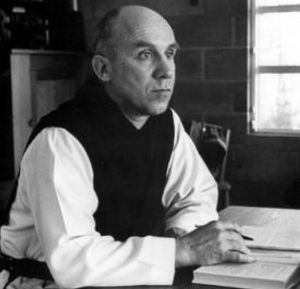
Actually I’d even speculate that Merton is in fact talking about just the one monk: himself; he’s not preaching a prescription for the behaviour of others.
I’ve read so much Merton that it’s impossible now for me to remember exactly where I read this statement of his, but I do know that when I first saw it and made a note, the concept resonated deeply for me as a great aspiration for my own life as a monk, and as a trying to be decent human being.
In other words, this monk – me, myself, and I – has a task to carry on with: to cultivate an awakened heart. And being a ‘great study’ it’s bound to be at least a lifetime’s project.
It’s an effort though, awakening one’s heart. It’s even a bit of a mystery at times what the phrase actually means in real terms.
Love, obviously, tops the list for any aspirant on the awakened heart path. And, yes, I do feel, express, and act out love – so deeply sometimes to the point of being overwhelmed or ‘flooded’; sometimes speechless (that’s the good bit), sometimes full of words.
But then there are times (oftentimes is the word) when that love is clouded or shrouded completely by angers and irritations, by regrets of what should be or shouldn’t be, could be or cant’t be, what isn’t.
The great study of the monk is to have an awakened heart Thomas Merton
All attachments to what is not as I think it should be. All barriers to love. All ways and means of keeping the heart asleep – or at best semi-awake, and still sleepy: slow to respond, slow to act, and with ongoing blockages to seeing how things actually are.
The quest to acquire an awakened heart and the outpourings of love, kindness, gentleness, generosity, that such a state would allow, is probably at the root, the foundation, of my life as a hermit monk, of my life as a pilgrim journeying through and to Self.
Living quietly and simply; developing a contemplative way of being in the world while definitely being not of the world; cultivating silence, peace and calm; all are activities and attitudes directed at cultivating an awakened heart.
All that generosity, patience, love, kindness, empathy, and all the rest are definitely all characteristics of an awakened heart. Here’s my dilemma (only one among many that riddle my crazy monkey mind): they are also precisely the elements that need to be practised in order for one to acquire an awakened heart. What’s the expression? Catch 22?
Of course, it just occurs to me now, everything that is, is exactly as it’s meant to be, happening just as it ‘should’. So, in other words, all these words of reflection are simply a commentary on what has been and gone already, that which is in the past, and is no longer existing.
All that matters – all that exists – now is that at this moment, in its ongoingness, I am as loving, as kind, as patient, and as generous (not to forget compassionate, empathetic) as I’m able. To others obviously, as well as to myself.
All that wonderful list of characteristics of an awakened heart all exist right now within me. Perhaps I need to wake up my mind a bit more so I might see that reality. Then I might actually realise that I already have an awakened heart and that I simply got forgetful somewhere along the way.
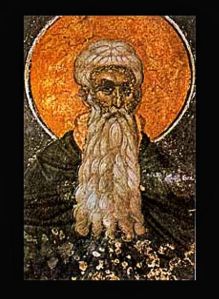
Recently I came across the story of Abba Arsenius – one of the early Christian desert fathers. I’d originally written about him a year ago in what became a short series of posts.
Coming across him and his story again prompted me to revisit those posts – the first of which you can read here – and I reread them again, though as if for the first time. Anyway, here’s a short recap before we move on.
Arsenius was a high ranking official for the Roman Empire, working for many years as a tutor to the sons of the Emperor.
Over time he grew tired of the glamour lifestyle, the politics, corruption and court intrigues, and looked for a way to free himself from the whole material trap he was in.
So he prayed, ceaselessly, the story goes. He prayed for salvation, for freedom.
And, in time the answer, according to the story came in just a few words:
Flee, be silent, and pray always.
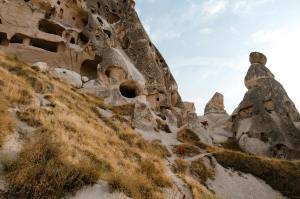
And he did. Flee I mean. He headed for the Egyptian deserts which is where he found that silence, and the space, peace, and calm to fulfil his desire to be praying constantly. And, with some comings and goings, ups and downs, he stayed for the rest of his life.
Now, while Arsenius and his story are fascinating (in fact now I’ve rediscovered him, I’m going to look around for a biography or something so I can learn more), what I want to think about here is something I wrote in the first of those previous posts, and how it ties in with our decision (almost a year ago now) to stay in this one place for the present.
For these Hermit Pilgrims ‘fleeing from the world’ has meant a nomadic lifestyle, few possessions and material needs, a hermit life where our engagement or entanglement with the world is kept to a minimum, and in which we feel less of a pressure to conform, to ‘be shaped’ by the world around us.
The notion of staying in this one place – as fully now and in the present as we can be – is actually paradoxically a fleeing of its own kind. The world of Samsara, the material world ‘out there’ continues to become less and less appealing to these Hermit Pilgrims.
Alongside this growing detachment to the world (as well as the loss of desire to move about in the world geographically speaking), is the deepening realisation that the real and true pilgrimage is within, through and to our own mind and heart.
Complimenting all this, is the growing contentment we are experiencing in this actual place, this hermitage of ours that we are creating on a daily basis. More and more it feels to be the exact place in which that inner pilgrimage is to continue.
Does this mean we have given up on that ‘nomadic lifestyle’? No, not at all. Or, more accurately, we are not niether giving up or not giving up. The present is all there is and we don’t – can’t – know anything beyond that. As the saying goes, What can we say about tomorrow?
One morning recently I was reciting my prayers when I began to notice the welling of tears in the corners of my eyes. Soon the wellings became a slow stream down each cheek. And, before long, I was more or less sobbing. For a little while.
Where did the tears come from? Why was I crying? Well, to be honest, it’s a mystery.
No mystery, you might be thinking: Sounds like your tears were brought on for some reason by reading the prayers.
I’m not so sure. I used the words ‘reciting my prayers’ deliberately: Not only was I not paying attention to, or even seeing the words on the paper, I was not engaged in the least in the words themselves and their meaning.
Rather than ‘praying’ I was reciting from memory, rote fashion, as if chanting my times tables in primary school. Merely mouthing the words; my mind was blank, as in not there, distant, off doing what my mind does, without awareness from me, when I’m trying to pay attention.
So, was this some sort of moment of catharsis? Possibly, or so it seems to me.
Sometimes – often spontaneously, other times with some forewarning – there is a release: a shedding of tears, as in my story above; a heavy inner or outer sigh of relief; sometimes simply a sense of something let go, something gone, or at least on the way to being gone.
When such moments of catharsis take place, often what causes them, the catalyst, appears obvious. On the other hand – as in my recent sobbing session – that catalyst is a mystery, unrelated in any obvious way to anything happening at that moment, or at least to anything taking place on the surface of that moment.
Equally the cause for the tears, sighs, relief, and so on – the object of any potential catharsis – may also be a mystery. I had no idea at the time, nor do I know now, what caused my tears.
The prayer being recited at the time was about silence. But, as I’ve already mentioned, no way was I actually praying, what with my total lack of attention, obliviousness to the words, my mental blankness. My unconsciousness come to think of it. Nothing to suggest a catalyst or catharsis.
In any case, when such miraculous happenings occur, one thing I try (I hope) to remind myself to not do: Do not ask why. Let catharsis – or whatever process is underway – be as it is.
And to put aside my habitual tendency to analyse and categorise; resist the temptation to want to know and label everything that happens to me. Let the catharsis – if that’s what it is – carry on as it does and not dismiss it as: ‘Oh that’s just me getting emotional.’ Or ‘I must be a bit overtired today.’
To – wildly and freely – paraphrase a few words from an iconic movie character:
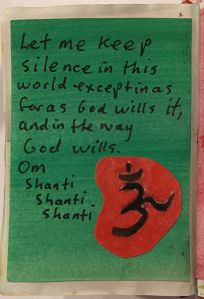
A small irony revealed itself to me just now as I prayed my way through the prayers inserted in the front of my Bhagavad Gita.
I’d completed one prayer and turned the page to the next. Then, without a pause or thought, I quickly turned the page again. I stopped, thought better of it, and turned back to attend to the prayer I’d skipped over.
Now, here’s the irony: The prayer on the first side of that carelessly and mindlessly leafed past page read simply:
Go slowly and mindfully in everything.
Well, that’s not the ironey itself. But, given that this was the page I had simply passed over without a thought, with no pause, the words written there obviously were a lesson for me.
A message to contemplate, to actually stop and pause with, mull over, meditate on, and perhaps make resolutions over. Advice to me to stop, to slow down.
Couldn’t be clearer really.
There’s no telling why I skimmed past that page, that prayer, without a pause. Could be a simple case of absent-mindedness, or a rush to see what was on the next page; a grass is greener type of thing.
Why I was rushing through the pages isn’t the point. What is to the point is here I am, doing morning prayers, praying some, then skipping others. The other point is that in this instance, for some reason I stopped, went back, and prayed the skipped prayers.
So, moving to the resolution.
It’s extraordinary to me when that kind of thing happens. (It does happen quite a lot, but unfortunately I only notice it occasionally) We will have an intuition, or receive a message from ourself that helps to us get back on track when we mess up.
In any case, it’s obvious that I’ve found what I might call the prayer of the day, the mission statement, so to speak, informing whatever activities I undertake today.
Slow and mindful in everything I do, say, and think. For now, for the present, that will the guide on the path of today that I will follow. Keeping in mind the adage that practise makes perfect, for when I falter.
Oh, another irony wrapped up with this one. The prayer on the facing page was also skipped, and in itself sheds another light on the message from that first one. That second prayer actually puts forward one, important, way in which I can actually set about achieving that first one:
In other words: place more focus on, pay more attention to, the Divine in whatever form, and by whatever name, I encounter it today.
Works both ways I think: Making the effort to go slowly, to be mindful, puts us in the present moment. And, the present moment is the only place we’re going to be able to become aware of the Divine.
Then, as we become aware of the presence of the Divine, we are right where we need to be, when we need to be there in order to actually slow down and be more mindful.
PS These notes were made a few hours ago. Since then, I have on the whole practised being slow and mindful. Not perfectly, mind you, but then as I say, practise makes perfect. Even now as I type this – very attentively – my mind wanders, so there is a way to go for me. The day is not over yet!