What Should I Do?

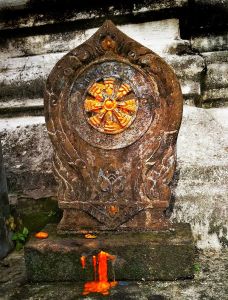
Dharma as a wheel

Many times during the years I’ve been exploring so-called Eastern religions  I’ve come across the concept of Dharma.

Very broadly, my studies tell me it could be said to represent the Truth of all things, though apparently there is no exact English translation and the word has many other uses as well.

Personally I’ve chosen to think of Dharma as much more than merely an abstract philosophical concept that only exists ‘out there’ in the world, or – worse – as some vague notion in my mind.

For me, Dharma is personal. It’s a guide that assists me in my aspiration to take more complete responsibility for myself and my actions.

Dharma, as a guide to taking personal responsibility, requires me to try live a life informed by Ahimsa – the path of least harm.

Many sources will tell you that Ahimsa means absolute non-violence or doing no harm. There’s nothing wrong with describing it in these terms, but this definition ignores the fact that any material being living in a material world is always taking action. All the time. And it is impossible to take any action at all without doing harm. To other beings, to the world, or even to oneself.

Putting it simply, the best I can do, in order to live a righteous – or Dharmic – life, is to consistently and continually enquire of myself What should I do? in any and all  situations, that will do the least harm. Or one can look at it the other way round: What action do I avoid because it would cause more harm?

Sounds simple written down like this. But, even with the apparently small issues that crop up all the time in everyday life, I find there are very often conflicting interests; the choices we are faced with aren’t always clear-cut
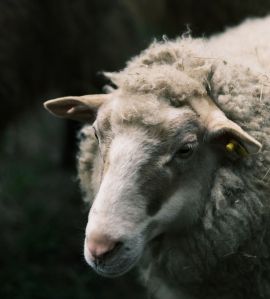
I don’t eat animals, nor do I use items made from them or explot them in any way. But I do eat fruit, vegetables, nuts etc which does cause harm to many living things in the process of growing, harvesting, transporting, and even eating such a diet. All I can do is try as much as I can to minimise the harm done by my lifestyle choices. I know, there are still many unresolved questions, but the point is to make the best choices I can given my circumstances.

I really dislike telling lies, even so-called ‘white-lies’ –  the lies we tell or the truth we avoid revealing, to cover up something that we think will do more harm if told to another – or to ourselves. While these white lies, or half truths, are sometimes not really about protecting others from harm, and often are about politeness, most of us have used them to protect others or self at one time or another.

As I said, for me it’s about taking personal responsibility. A way for me to at least try to ensure I’m doing the least harm possible.

The other day I heard Dorothy Day in an interview use the expression Works of war or Works of peace (though I think the words themselves come from The Bible but I couldn’t find it).
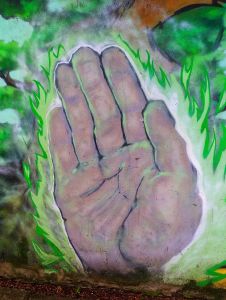
When it comes down to the personal level – the only realm over which I have any meaningful control is me and how I choose to live – a work of war is when I choose deliberately or through avoidable ignorance to do or cause harm; a work of peace is when I make a choice that does or causes the least harm for everyone and everything involved.
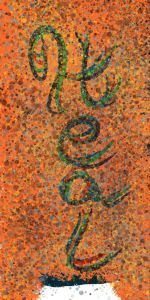
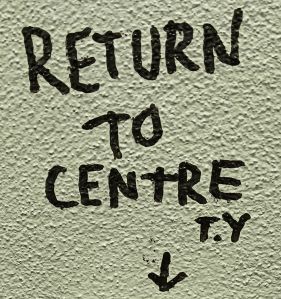
Do Good, Be Good: A How to Guide

Lately it’s been a bit hard to remember I’m actually a hermit. A lengthy hospital stay, doctors’ visits, sessions with physio and other therapists, moving to a new hermitage. There seems to be no end to the people and activities pulling me back out there into the world.

Sometimes I would like to just stop, do nothing and simply be.

But even a hermit isn’t exempt from performing actions  in the world. Of course the point of living in seclusion as a hermit is to minimise contact and interaction with the world of people and things of the world; to renouncing objects and pleasures of the senses and ridding oneself of desires for these material experiences.

Even so, no matter the degree to which one renounces action, it is simply not possible to cease all activity in this world.

Recently I came across a kind of list of the three types of categories or activities one must never renounce regardless  of the level of withdrawal from the world.

In fact, looking at it from another perspective, this little list could be described as a guide on the types of activities to undertake for not only hermits but all of us wanting to live a life of ‘being good and doing  good’. And as a means to make every single thing we do serve the Truth.

Actually, that brings us to the top most (for me at least) of the three categories of activity that are never to be renounced, which is the embracing of actions that contribute to my quest to understand my true nature, to fully realise the divinity within myself that is in fact the divinity that pervades and permeates all there is.

My intention is that all my activities are informed by loving devotion  to this divinity and a deep yearning to be of service to that divinity. Don’t relate to Divinity? That’s okay: substitute God, the Universe, Love, Beauty, Truth …

Which now leads me to the next category: I aspire to consider the welfare of all other living beings as I perform any action in this world. Being mindful at all times to ensure my actions, including my speech and thought, causes as little harm as possible; how can I be good?

Of course the other side of this mindfulness is to continually be asking myself, what can I actually do to contribute in a positive way to the welfare of all living beings; how can I do good?

The final of the three equal, mutually dependant, and intimately interconnected  categories of activities require once again a continual mindfulness to my own welfare, on all levels.

Sounds obvious: we all want be happy, to enjoy life and be healthy. But, speaking only for myself here, there are any number of activities I have engaged in (some I still do) in order to get some pleasure, to be happy, whatever, that might work for a while, but as with all worldly things, it never lasts. As the saying goes, that which at first tastes like nectar can end up being poison.

Like the relationship I share with Youtube. With no television in the Hermitage Youtube is the go to space for things to watch; an unlimited source for study, inspiration, and sometimes simply for entertainment.

But last night, and by no means for the first time, I realized I was spending far more time ‘looking’ (AKA scrolling) for something of interest to watch then actually watching anything.

Now, watching videos for study, inspiration, and even entertainment, may contribute to my welfare, but scrolling certainly does not. Time consuming, mind deadening, it leads to irritability, depression and exposure to content I want nothing to do with. Time for (another) break.

A life worth striving towards.

Do good, be good?

Keep doing it and it will become normal

(eventually).

Self Enquiry: Listen to Your Self

This last little while I’ve been going through some serious contemplation, some deep questioning, on how to be ‘more of a monk’. Things like how to pray more deeply, and often; how to have a more focused and concentrated devotional practice; how to be a nicer person. Things like that.

Actually, that’s not exactly right is it? These are questions, enquiries, that for a number of years (is all my life too big a stretch?) habe occupied me. I’ve consistently been making enquiries, addressing questions, to Self – as well as to God or the Divine.

Still, like all things in life, self-enquiry goes through more intense, then less intense phases or periods. Let’s just say that lately I’ve been immersed – sometimes to the point of distraction – in one of those more intense periods.

(note from internal editor: Do I have to remind you once again to get on with the story you are here to tell?)

Okay then; let me see. Oh yes, right. Last night I was looking forward to beginning a new book. I’d read the introduction and thought that it was going to be just my cup of tea as it were, that it was something I would enjoy and learn from.

Anyway, as I opened the book on my tablet, I was suddenly stopped by a sort of wordless warning. The sense I had was that this book would indeed be a little piece of the answers I’ve been seeking.

Not so much in the contents I felt, it was more about approaching the book with more openness, less skepticism, more generosity of spirit and mental attitude. And the idea seemed to also include taking these qualities with me later as I thought about what I had read (or was about to read I should say).

You see, being more open, less skeptical, and more generous, come under the umbrella of being nicer. Still given the subject I was about to read about, I was a bit surprised by this ‘warning’.

As it turned out, I finished the entire book, so enthralled was I by the contents. The only things that tested my resolve to ‘be nicer’ was a number of occasions when the author’s worldview and interpretation of events, stretched my patience.

But, I managed. I didn’t become inpatient or outraged or irritable . When threatened by such responses I simply reminded myself that I was reading about another person, and I didn’t have to have an opinion one way or the other about what they believed or how they lived. Not only do I not have to have an opinion, I’m not sure I really have the right to an opinion about someone else’s life at all.

Besides, haven’t I just got through describing how I am myself deeply engaged in a process of self-enquiry? And wouldn’t such a process involve exposing myself to ideas, worldviews, kinds of information, new to me or not in alignment with my own beliefs? Surely bursts of impatience, indignance, judgement, and the like, would close me off in my search for answers?

Anyway, as I said I was so enthralled by the book – my reading informed by a little more generosity, a little less judgement, a renewed attempt at openness – that I finished the book in that one sitting.

Mind you it was only one hundred and something pages long. Still, for me, it was pretty good going.

PS Speed reading wasn’t – isn’t, nor ever will be – a part of my ongoing self-enquiry into the depths of my monkhood. Perhaps I need to add something like ‘Transcend the ego’ to my list.