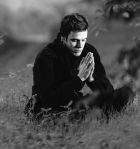
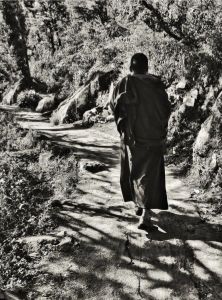
Openness, Another Name for God

Openness is the least blasphemous name for God.

            Rainer Maria Rilke (14 Dec 1875-29 Dec 1926)

While watching a lecture the other day, the speaker flashed a written quote across the screen:

Openness. A name – or more than a name – for God, for the Divine, for the universal consciousness, for love, Spirit, the Self. For the life force. The names are endless.
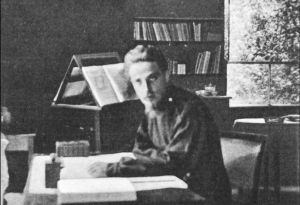
Rilke in his studio (Courtesy Wikimedia Commons)

Rilke was an Austrian poet who held as a core belief that the divine can’t be defined, contained, or limited by the use of human concepts or language . And that to give names or forms to ‘God’ or the divine is blasphemous because it reduces a limitless, evolving, mystery to a small, rigid projection.
Of course openness is also a human concept, an attribute ascribed by a human mind to a space, person, thing and so on. And it’s also a word – that is, it’s a bit of human language with all the baggage that brings with it.

So, do we simply have just one more human concept and word to add to an ever-growig list of names and forms of ‘God’? Not to forget that God is in itself a human invented concept and word.

But I get Rilke’s point: he was trying to move on from the tendency for us to use limiting names and forms. In his view the application of names and forms to the divine only serves to build walls that hide or obscure the divine, allowing the development of many and very often conflicting doctrines and dogma that have often been the cause of division and strife between the peoples of the world.

He thought dogma and doctrines of all kinds were meaningless and irrelevant when it comes to knowing the divine.

The Open’, he described as a state of pure existence unbounded and unfiltered by memory, fear or any other mental constructs we humans use to divide reality.

In other words a ‘good experience ‘ or a ‘bad experience ‘ are mental concepts that we come up with to label our experiences based on our fears, our memories or on the speculations of our minds and input from our senses.
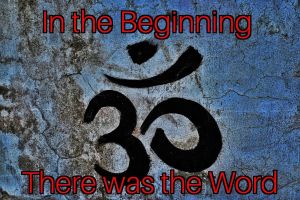
Of course, being human beings in a material body living in a material world, we really do need to name, describe, label and judge our relationship to and experience of the world. The problem arises because we finally decide that these subjective experiences are in fact absolute reality and thus blind ourselves to any other options.

Openness is both the path to the goal and the goal itself. The way forward is to keep asking the big Who am I? questions – without insisting on getting hard and fast answers we then proceed to cast in concrete.

Embrace our own subjective experience without allowing it to become our apparent reality that only serves to keep us separated and subject to even more suffering.

Transcend it all. You are all.

All that is.
Pray & Work

One of the topics I like to explore on YouTube (my ‘break’ is over and I don’t think I’m scrolling quite do much as I was before I took that break) is the lives of hermits; the monastic life as lived by nuns, monks and priests of any and all religious traditions or none.

That’s more than one topic isn’t it? Well, you get the drift. In any case, last night I rediscovered a nice documentary on a monastery in the United States I had already seen but decided to watch it again. Here’s the link.

Courtesy Wikipedia

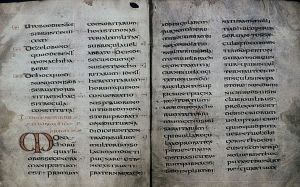
A monk on the doco talks about The Rule of Benedict. Just as the name suggests this is the rule (of life) written by Saint Benedict of Nursia in the 6th Century to help guide monks and nuns living in monastic communities in all aspects of a shared life dedcated to God.

Benedict had a good insight into such a life (and human nature) and the ‘Rule” is in fact a text containg many instructions and a great deal of advice on monastic life centred around what he termed Ora et Labora  –  the very essence of the contemplative life in his view.

It’s Latin of course and translates to Pray and Work and is followed by many monasteries in the Christian traditon. Of course, monastic communities in most traditions have similar sts of guidelines or ‘Rules’.

The primary focus and function of monastics is to pray. That’s what they are there for. But Benidict figured that some kind of balance was needed; not only so the monasteries could support themselves but so monks and nuns actually got some physical activity. Hence the equal emphasis on work.

So, the two ideals work together in a way supports a balanced, ordered, harmonious and peaceful community (in theory). Pray and work are intertwined. Even the Latin for pray, Ora is embedded in Labora, the word for work.

We don’t do rules here at the hermitage, not into them at all actually, but I do like this Pray and Work idea very much. It is, after all, what we do too, and why we are here. In fact, I try to approach everything I do as a prayer. It doesn’t always work in the sense that, while prayer and work may be one and the same, I tend to sometimes forget that fact. So having this pray and work principle as a central tenet of my life reminds me to remember that I am actually doing both.

I pray – quite a lot actually. Chanting mantra, reciting set prayers I’ve gathered into my practice over the years or that I’ve written myself. Then there is the prayer that comes from within silence, the contemplation of the texts I study, the things I see, hear, or talk about.

There is the cultivation of ‘good thoughts’ and feelings of compassion. Just sitting, being still and quiet with an open mind. Simply stopping to look at a flower, a tree or another person and sense the beauty. All these and more are prayer.

Which leads us to the ‘Work’ side of the equation. What exactly is my work? First thing to say is, I am a hermit and a monk and my primary job is to pray. If  It sounds like a closed system, that’s because it is.
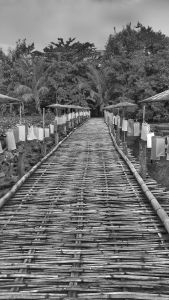
My work includes my studies and practices which are aimed at cultivating those good thoughts and open mind we talked about, and that attempt to ‘create good vibes in the world’. (Which, as I’ve written many times, is best achieved when I am secluded at least a little from the busyness of the world.

Lest you imagine that I am missing out on the physical activity seen by Benedict as essential to balance, let me assure you I do get quite a lot of exercise – more all the time as I recover.  It’s my yoga practice, an integral aspect of my prayer and work life.

This blog is a part of my work. Though, to be honest, publishing this blog and engaging with our little community, gives me so much pleasure, joy, and ‘good vibes’, that I really can’t call it ‘work’. Writing and posting does me good!

When it comes to work, it’s not so much about what you do (we gotta do what we gotta do), but more about how you approach that work.

What transforms work into prayer is doing it for the right reasons. But who’s to say what are ‘right reasons’? Well that’s easy: you. Or me. Or any other individual deciding for themselves and for themselves alone.

As I said my work – and prayer – is to try to create good vibes in the world. I don’t always succeed but I think it really is the effort and intention that is most important. And not being attached to the outcomes. As in: ‘Aren’t I so holy and virtuous praying for the world all the time’. Hardly.

No. Create the vibe, let it go, and let it do its thing.

A Nail Biter of a Post

I’ve been biting my nails lately. A lot. At least that’s the thought that occured to me just now as I sat hunched over chewing on my right thumbnail.


Truth be told, there isn’t a time I remember when I didn’t chew my fingernails and pick at my toe nails. When I was a child my mother would coat my fingernails with an allegedly foul tasting liquid meant to curb my appetite for fingernail.

Alas, I came to like the taste so much that it had the opposite effect. Rather than put me off biting and chewing, this strategy simply served to make me want more.

Thinking back on it now, that liquid was likely some kind of poison. Not much health and safety oversight in those days. But I’m still here – and still biting my nails.

Why? It is actually a very good question. I know it’s very often looked upon as being a ‘bad habit’. Especially if youv’e left childhood behind and are still chewing. To me nail biting has been a response to anxiety, worry, fear and uncertainty.

Maybe as children we find comfort in biting nails at those times of trouble, and it doesn’t take long for the habit to become ingrained and we have turned into nail biting adults – perhaps still finding the same comfort.

Actually, it does seem to me to be a habit I would like to leave behind: nails made deformed, ragged, and unsightly from a lifetime of chewing.

‘Stop biting into yourself’, my mother would constantly remind me. ‘Stop chewing on yourself.’

Maybe it’s a self esteem thing, a means of self harm in a sense: ‘I don’t feel good about myself, so if I start eating bits of this ugly thing, I might eventually erase myself completely.’

Mmm. Perhaps. It’s a clue. Headed in the right direction, But what if it’s not an attempt to erase ‘this ugly thing’, the physical body, the thing we mistake for ‘me’ and with which we engage with the world?

What if, instead, it is some kind of misguided or unconscious way we try to dig deeper inside of ourselves? Could it be an attempt to get past the physical and right to the core of the ‘real’ me? To our ‘inner’ Self?

After all, I’ve often discovered myself happily chewing nails while thinking hard, deep in reverie, reading intently, or trying to get ‘to the root’ of something. Sound familiar?

Mind you, I’m not saying now that chewing nails is a ‘good habit.’ As a strategy to strip away the physical body in order to get to the real me deep down somewhere there inside, it hasn’t proven particularly effective.

Perhaps there will come a day when I no longer chew my nails. Maybe there will be time when my other more legitimate self enquiry practice will allow me to access that inner Self, when I will finally realise my true nature and discover who I truly am.

First step on this path is to remember that there is no ‘good or bad’, no ‘one day’, no ‘future time’. There’s only what is and there is only the eternal now.

The other advice to give myself as I end this post is – when trying to change a behaviour – is don’t fight against or resist the behaviour itself. Instead I need to propose viable alternatives.

I need to make new habits.

Everything & Everywhere

Namaste friends

In the High Holy Lands Where Magic Sometimes Happens

For the last while (long while really. Actually many years), I have dreamed a few times a month, sometimes more, that I am in, about to arrive in, or just about to leave Rishikesh in India.

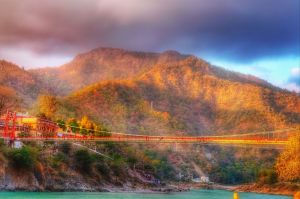
Rishikesh is a small town straddling the Ganges River, and nestled in the foothills of the Himalayas. For millennia it has been considered a sacred place. Its history replete with stories of divine beings, ancient sages and saints, not to mention its status as a major pilgrimage destination for at least a thousand years and the town becoming ever more popular in recent years for pilgrims and ordinary pleasure seeking tourists from around the world.

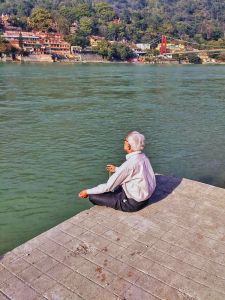
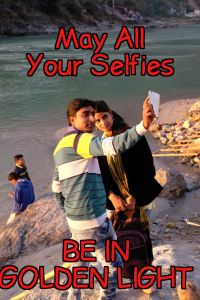
This isn’t me but it could be

I last visited Rishikesh in 2016-17 (having previously spent time there in 2006) when my partner hermit and I stayed for several months. I associate that stay with the strengthening and deepening of my spiritual practice as well as the gaining of a kind of clarity in terms of my outlook on the world particularly on the spiritual path that had been calling to me – as it does still.

Putting aside health issues that hinder our mobility, I think it’s fair to say that my attachment to Rishikesh and my longing to return have more or less faded away almost completely over recent years.

Rishikesh has always been a busy, crowded place with the associated traffic, noise, pollution, and inflated prices. Rampant commercialism has long threatened the town’s ‘spiritual ‘ or ‘sacred’ vibe. These days it is the fourth most visited place in India for overseas travellers  so it’s likely to be more busy, choked with traffic, noisy, more commercial and material focused than ever, with the associated degradation of its appeal for some.

But, even if I were also  able to put all this aside, I think the core of the letting go of my longing for Rishikesh has more to do with the turning inward that has accompanied our eventual recognition of our calling to the hermit life with its quiet, secluded, contemplative lifestyle (or the aspiration for that life).

So, why the dreams? Why so often? Well, as I’ve mentioned, Rishikesh has played a significant role in my life. And despite the dropping away of those longings and attachment, I’m not saying going there again is totally out of the realm of possibility, but it no longer has that ‘I’m home’ kind of feeling. No longer has that magnetic attraction for me.

Now, here’s the missing information about these dreams I’ve neglected to mention thus far: Not one of the dreams has been set in the ‘real’ Rishikesh; never have they been ‘geographically correct’ for wont of better description.

Sometimes the dream town is nothing more than a small clump of houses sitting on a hill or in a field with a dirt track passing by.

Other times it is a sizeable town with temples, streets, cafes and shops masquerading as an Indian town. Sometimes it’s simply a story taking place inside a shop or restaurant that, in the dream, I know is in Rishikesh though not in the terrestrial town. There have been dreams in which the town is more like a city with highrise buildings, multi-lane roadways, and all the rest.

The most recent dream had me in a bus headed for another bus connection to Rishikesh. Worried about missing the connection, I was told that the Rishikesh bus wasn’t due ‘for weeks’.

Many and varied settings all standing in for the ‘real’ Rishikesh. But I don’t think I need Carl Jung to tell me the meaning of these dreams. All of them are my internal sacred or significant ‘Rishikesh’. It’s as if the actual geographic location in India called Rishikesh is the illusion and these dreams are the reality for me. All emanating from the cave in my heart

My inner or true Self, you might say, telling me that my being concerned with my specific geographical location is missing the point. A message for me that I am always in Rishikesh, that I am always in sacred space and with saints and sages, and that the Divine is everything and everywhere.

Om Tat Sat

Do Good, Be Good: A How to Guide

Lately it’s been a bit hard to remember I’m actually a hermit. A lengthy hospital stay, doctors’ visits, sessions with physio and other therapists, moving to a new hermitage. There seems to be no end to the people and activities pulling me back out there into the world.

Sometimes I would like to just stop, do nothing and simply be.

But even a hermit isn’t exempt from performing actions  in the world. Of course the point of living in seclusion as a hermit is to minimise contact and interaction with the world of people and things of the world; to renouncing objects and pleasures of the senses and ridding oneself of desires for these material experiences.

Even so, no matter the degree to which one renounces action, it is simply not possible to cease all activity in this world.

Recently I came across a kind of list of the three types of categories or activities one must never renounce regardless  of the level of withdrawal from the world.

In fact, looking at it from another perspective, this little list could be described as a guide on the types of activities to undertake for not only hermits but all of us wanting to live a life of ‘being good and doing  good’. And as a means to make every single thing we do serve the Truth.

Actually, that brings us to the top most (for me at least) of the three categories of activity that are never to be renounced, which is the embracing of actions that contribute to my quest to understand my true nature, to fully realise the divinity within myself that is in fact the divinity that pervades and permeates all there is.
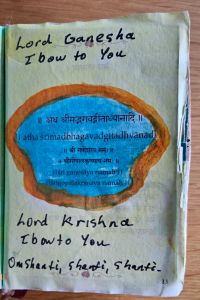
My intention is that all my activities are informed by loving devotion  to this divinity and a deep yearning to be of service to that divinity. Don’t relate to Divinity? That’s okay: substitute God, the Universe, Love, Beauty, Truth …

Which now leads me to the next category: I aspire to consider the welfare of all other living beings as I perform any action in this world. Being mindful at all times to ensure my actions, including my speech and thought, causes as little harm as possible; how can I be good?

Of course the other side of this mindfulness is to continually be asking myself, what can I actually do to contribute in a positive way to the welfare of all living beings; how can I do good?

The final of the three equal, mutually dependant, and intimately interconnected  categories of activities require once again a continual mindfulness to my own welfare, on all levels.

Sounds obvious: we all want be happy, to enjoy life and be healthy. But, speaking only for myself here, there are any number of activities I have engaged in (some I still do) in order to get some pleasure, to be happy, whatever, that might work for a while, but as with all worldly things, it never lasts. As the saying goes, that which at first tastes like nectar can end up being poison.

Like the relationship I share with Youtube. With no television in the Hermitage Youtube is the go to space for things to watch; an unlimited source for study, inspiration, and sometimes simply for entertainment.

But last night, and by no means for the first time, I realized I was spending far more time ‘looking’ (AKA scrolling) for something of interest to watch then actually watching anything.

Now, watching videos for study, inspiration, and even entertainment, may contribute to my welfare, but scrolling certainly does not. Time consuming, mind deadening, it leads to irritability, depression and exposure to content I want nothing to do with. Time for (another) break.

A life worth striving towards.

Do good, be good?

Keep doing it and it will become normal

(eventually).

A Pause (or two) for Reflection

Physiotherapy, formal exercises as well as the myriad of day-to-day activities required to maintain a physical body, is prescribed as the way forward for people like me who have experienced a stroke.

Quite right too. Exercises and activities to build and strengthen muscle to help recover mobility; to repair broken – and develop new – brain pathways to help recover dexterity and increase both micro and macro motor functioning.

But what of psychotherapy? Not the talking, talking and more talking kind that aims to uncover past traumas, root out the cause of current psychological and emotional issues in an attempt to ‘fix’ you. While talking can be hugely helpful, (I mean it. Talking to a trusted friend, relative or professional, provides not only emotional support, but can give you new perspectives and fresh insights into even the most intractable issues).

What I’m getting at here is more about therapy for the complete psyche: the emotions and the mind and including the spirit or soul.

It is about the rebuilding of confidence – the ‘I am able’ attitude – and it is about filling the void to evolve a meaningful life.

The refuge that each day I commit to take in the divine will of the universe is where this care of the psyche -the inner me, if you like – begins.

Pause for reflection #1: If I take refuge in the will of that which is on the face of it ‘a higher power’ than my own, then why the big efforts at ‘filling the void’. Sounds like I’m resisting that divine will, or somehow refusing to acknowledge the reality of my life as it is.
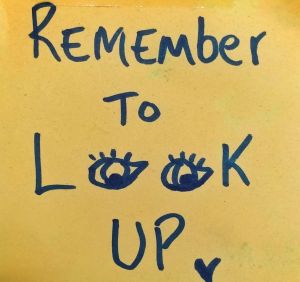
Of course the ‘making of effort’ and doing our bit is absolutely vital and necessary. So I pray, I meditate, I read, I sit quietly, I create what and when I can. And I make blog notes like this and they also count.

But it doesn’t feel enough. It’s like I’m trying too hard to get to some point I’ve actually acknowledged I’m already at: in the shelter of the will of the universe.

I don’t like to say it, but I’m bored, and I think it is the constant ‘trying’ that is the big obstacle to having a more rounded and holistic approach and attitude to living here and now with life as it actually is for me at this moment.

‘Trying’ suggests the going outside of the present. Making huge straining efforts to make things other than they are. Hardly living in the moment is it?

There are long periods when I find myself sitting with ‘nothing to do’ (I cant read, write, create and pray all the time as in 24/7 can I?)

Pause for reflection #2: Why not? You may very well be asking, as indeed I am asking myself right now. Perhaps these spaces and times are the will of the Divine specifically designed for me to learn to sit in silence and to simply be.
Maybe they offer spaces and times for me to be quiet; opportunities to simply be open to receive, lessons in presence.

Not only that, perhaps they are healing times when all the fragments of my psyche can settle back into their rightful place.

So, the problem is the solution, is what I seem to be saying here. The times I am describing here and which I often face and experience with dread, are precisely gifts of grace granted to me to help me heal, and teach me to sit in silence learning to listen.

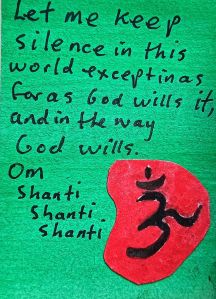
Yes, keeping silent except when and how it is the divine will of the universe might be quite nice.

Taking it Slowly, Taking it Mindfully

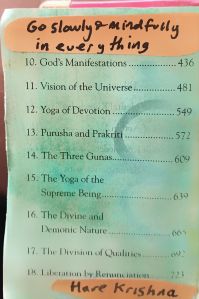
A small irony revealed itself to me just now as I prayed my way through the prayers inserted in the front of my Bhagavad Gita.

I’d completed one prayer and turned the page to the next. Then, without a pause or thought, I quickly turned the page again. I stopped, thought better of it, and turned back to attend to the prayer I’d skipped over.

Now, here’s the irony: The prayer on the first side of that carelessly and mindlessly leafed past page read simply:

Go slowly and mindfully in everything.

Well, that’s not the ironey itself. But, given that this was the page I had simply passed over without a thought, with no pause, the words written there obviously were a lesson for me.

A message to contemplate, to actually stop and pause with, mull over, meditate on, and perhaps make resolutions over. Advice to me to stop, to slow down.

Couldn’t be clearer really.

There’s no telling why I skimmed past that page, that prayer, without a pause. Could be a simple case of absent-mindedness, or a rush to see what was on the next page; a grass is greener type of thing.

Why I was rushing through the pages isn’t the point. What is to the point is here I am, doing morning prayers, praying some, then skipping others. The other point is that in this instance, for some reason I stopped, went back, and prayed the skipped prayers.

So, moving to the resolution.

It’s extraordinary to me when that kind of thing happens. (It does happen quite a lot, but unfortunately I only notice it occasionally) We will have an intuition, or receive a message from ourself that helps to us get back on track when we mess up.

In any case, it’s obvious that I’ve found what I might call the prayer of the day, the mission statement, so to speak, informing whatever activities I undertake today.

Slow and mindful in everything I do, say, and think. For now, for the present, that will the guide on the path of today that I will follow. Keeping in mind the adage that practise makes perfect, for when I falter.

Oh, another irony wrapped up with this one. The prayer on the facing page was also skipped, and in itself sheds another light on the message from that first one. That second prayer actually puts forward one, important, way in which I can actually set about achieving  that first one:

In other words: place more focus on, pay more attention to, the Divine in whatever form, and by whatever name, I encounter it today.

Works both ways I think: Making the effort to go slowly, to be mindful, puts us in the present moment. And, the present moment is the only place we’re going to be able to become aware of the Divine.

Then, as we become aware of the presence of the Divine, we are right where we need to be, when we need to be there in order to actually slow down and be more mindful.

PS These notes were made a few hours ago. Since then, I have on the whole practised being slow and mindful. Not perfectly, mind you, but then as I say, practise makes perfect. Even now as I type this – very attentively – my mind wanders, so there is a way to go for me. The day is not over yet!

A Few Thoughts on the Big Question: Why a Monk’s Life?

Just now, on rediscovering a quote I’d noted down months ago, I spontaneously decided to download again the book I took it from. This will be the third reading: seems to be one of those books that keep calling you back.

The book (The Abbot’s Shoes by Peter Robertson) tells the story of the author’s foray into monastic living in New Zealand way back in the early 1970s when he was twenty something.

One of many mini monastries we’ve been blessed to live in

I’d like to share the mentioned quote with you, because I think it really speaks to my own commitment to the contemplative, hermit life, which is for us a monastic life too – a hermitage is actually a mini monastery.

Sitting in his apartment one night, completely dissatisfied with life the universe and everything, the author contemplates the state of the world around him.

‘All the marching, all the writing, all the campaigning in the world isn’t going to change this insanity, brutality, and carnage.’

Actually this isn’t the quote I’d made a note of; it’s the preceding  sentence which I saw again today and it seemed to just fill out the context for me. Anyway, after a few moments of quietness and thought, the author concludes:

‘I somehow intuited that the most powerful, significant , and influential  action I could take to change the course of this kind of history, was to hide in a monastery.’

He goes on to reflect that by doing so – living simply, in a community devoted totally to contemplation and prayer – he could become a tiny part of ‘the turning of the tide’.

Years later, reading Thomas Merton‘s diaries, he discovered that Merton had felt the same way, concluding that those living simple, prayer filled, contemplative and quiet lives were ‘keeping the universe from crashing in pieces and falling apart.’

There is a strong sense among contemplatives, hermits, nuns, monks, that this is their function: keeping the whole thing going. Or as our author says, each playing a tiny part in the big picture. I would say, like I know Merton did many times (and acted upon his words), that action in the world is absolutely necessary; it’s just that it can’t do all the work alone.

In our hermitage we too speak often of these ideas, and think about them deeply and try to realise how they affect our lives as hermit monks.

So, hiding in a monastery? Or in a hermitage? It’s true it’s very much a hidden life in many ways. For me though, it’s not about  being hidden, it’s more about just what Black Elk says, I’m trying to make my every step a prayer.

Speaking for myself, it’s not that I’m unwilling to pray for a specific individual, or for peace in such and such a country, or relief from poverty, and oppression for specific individuals or communities.

It’s more that: picking and choosing in that way risks leaving people and issues out inadvertently or through some unconscious bias.

I have chosen to live this life apart as much as possible from the world in order to minimise the anxiery being ‘out there’ causes me, to have the quiet, the time, the ‘head and heart’ space to simply pray. To make of my life a prayer

Let every step you take upon Mother Earth be as a prayer

Black Elk (Ogala Lakota Holy Man)

My partner hermit is fond of reminding me of the well known aphorism that a stone dropped in a pond will make ripples that spread out and out. Just like the vibes – the vibrations – emanating from a prayerful life, from all the prayerful lives.

Realisation of Reality; It started With a Joke

‘I like looking at you,’ says the hermit.

‘You must be sick in the head,’ replies, as quick as  you like, his partner hermit of 40 odd years. (Obviously an old and oft shared joke).

‘Of course I’m sick in the head,’ bursts out of the hermit in response. ‘It’s like saying the sun comes up every morning. It’s a given, a simple fact of life.’

Problem is, it’s not true is it? the sun I mean; it doessn’t come up does it? Doesn’t go down either for that matter. I mean it looks like it rises up every morning, and it looks  like it goes down every night. But it doesn’t. In reality it’s us here on planet Earth who are doing the turning.

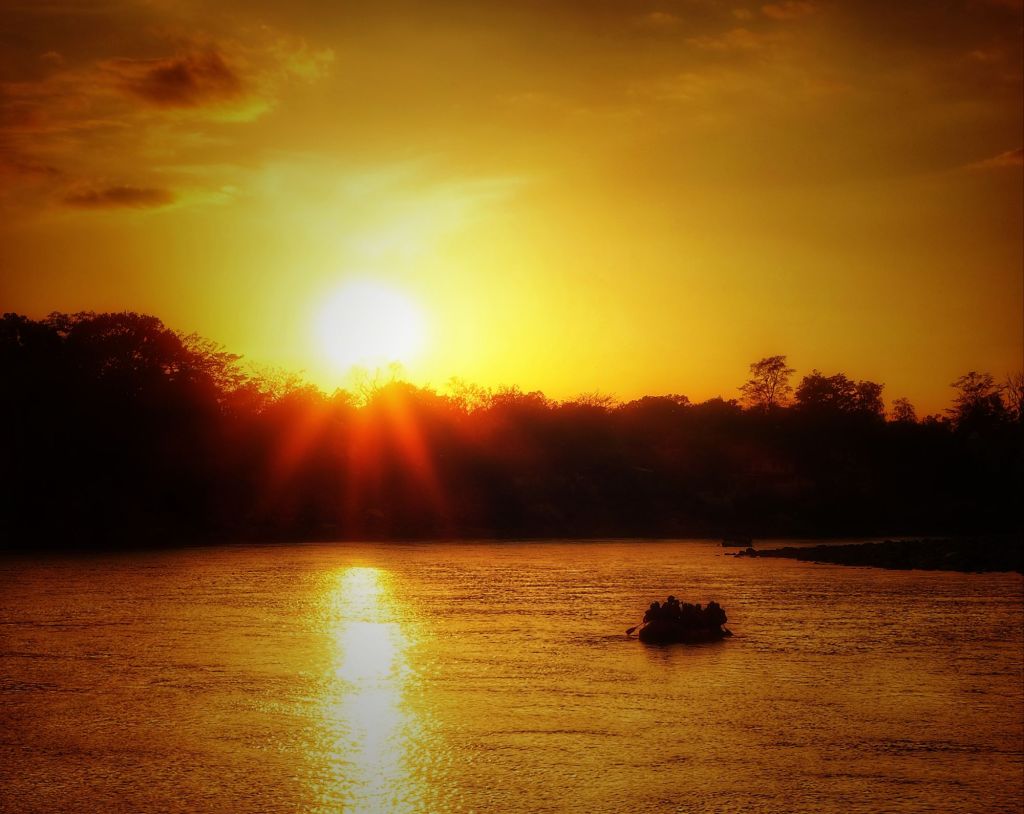
At ‘sunrise’, our home planet in its continual revolving has us looking at a stationary star (our Sun, Sol, Surya) that is, rather than going up, just sits there as we revolve downwards leaving it behind, Same story at night with the sunset, just the other way round.

Our experience when looking at this scene is that the sun is going down behind the hills. But in reality it’s the hills and river and the viewer going up as Earth rovolves. Hard to get one’s head around.

To explain what we see, what we experience – or rather what our ancestors saw and sought to explain – the simplest, most obvious thing to do is tell it like we see it. Sounds obvious enough, but as we’ve just seen, the story we inherited and which was only recently (in historical terms that is) shown to be incorrect, of the rising and the setting of the sun was based on an illusion,

As to the hermit and his story – the long-held believed to be true story – well, if we’ve been able to establish that stories we tell ourselves are often based on illusions, then perhaps the hermit can look for another story concerning the state of his head health, that is based a little more on facts, not so much on illusion.

Or to put it in other words: It’s quite possible that if the truth of the matter is that the sun never goes up and never  goes down, then just maybe the hermit is not actually sick in the head.

Except perhaps when it comes to old jokes shared between beloved partner hermits.

A Plea for Forgiveness

It was way back in the earlier days of this blog, sometime in 2022, that I wrote a post about our community’s liking for snacking on plain toast by choice. It’s our more or less regular late evening, before bed, bite to eat. Perhaps accompanied by black tea, as I described in that post.

As I also point out in that post, I do actually enjoy plain toast. It’s not that I no longer like jam or other yummy spreads; I like them too well truth be told, but sometimes, well, plain is good.

As the day winds down to become night, and we settle to our evening snack, I will sometimes make a joke about simple food, or monks with simple tastes, whatever. Anyway, a few nights ago I made a remark, a joke, that has had a profound impact on me.

‘I’ll just say a prayer for my two slices of dry toast.’

Of course I am just like so many other religious or spiritually inclined people, and say a prayer before I receive any and all food or drink. It’s a long time habit, and a blessing I like to perform. Just a thank you is all it is really.

This comment, this joke, as soon as it was out of my mouth, I realised, of course I will. Don’t I always?

It’s true that our community lives simply, as simply as we can. And that includes what we eat and drink. It’s also true that this is not some sort of ethical stance consciously taken; nor is it a kind of overlaid act of solidarity with those who have no choices due to poverty or other circumstances.

It’s purely and simple because we like simple. It really does suit our natures and temperaments and for us it is the obvious way to live.

It is no renunciation: we welcome simple. This obviously is not to say that we are unaware that our very natures and temperaments naturally steer us away from choices that are unethical or are out of sync with compassion (call it solidarity) for other beings.

The reason I’m ranting on about this off-hand comment thrown out as a so-called joke is, well just that: It was off-hand, and my misguided intention in making this ‘joke’ was insensitive and careless; it was lacking compassion for all the other living beings sharing life and consciousness with me.

And for that flippancy and carelessness, I ask forgiveness from the invisible community that is in fact all of us struggling to live in a material world.

My sense is that in saying ‘all of us’ I might instead say, all of us who are in truth One; We who are that one Self that seeks forgiveness.