Openness, Another Name for God

Openness is the least blasphemous name for God.

            Rainer Maria Rilke (14 Dec 1875-29 Dec 1926)

While watching a lecture the other day, the speaker flashed a written quote across the screen:

Openness. A name – or more than a name – for God, for the Divine, for the universal consciousness, for love, Spirit, the Self. For the life force. The names are endless.

Rilke in his studio (Courtesy Wikimedia Commons)

Rilke was an Austrian poet who held as a core belief that the divine can’t be defined, contained, or limited by the use of human concepts or language . And that to give names or forms to ‘God’ or the divine is blasphemous because it reduces a limitless, evolving, mystery to a small, rigid projection.
Of course openness is also a human concept, an attribute ascribed by a human mind to a space, person, thing and so on. And it’s also a word – that is, it’s a bit of human language with all the baggage that brings with it.

So, do we simply have just one more human concept and word to add to an ever-growig list of names and forms of ‘God’? Not to forget that God is in itself a human invented concept and word.

But I get Rilke’s point: he was trying to move on from the tendency for us to use limiting names and forms. In his view the application of names and forms to the divine only serves to build walls that hide or obscure the divine, allowing the development of many and very often conflicting doctrines and dogma that have often been the cause of division and strife between the peoples of the world.

He thought dogma and doctrines of all kinds were meaningless and irrelevant when it comes to knowing the divine.

The Open’, he described as a state of pure existence unbounded and unfiltered by memory, fear or any other mental constructs we humans use to divide reality.

In other words a ‘good experience ‘ or a ‘bad experience ‘ are mental concepts that we come up with to label our experiences based on our fears, our memories or on the speculations of our minds and input from our senses.
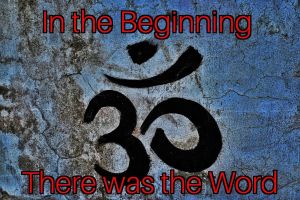
Of course, being human beings in a material body living in a material world, we really do need to name, describe, label and judge our relationship to and experience of the world. The problem arises because we finally decide that these subjective experiences are in fact absolute reality and thus blind ourselves to any other options.

Openness is both the path to the goal and the goal itself. The way forward is to keep asking the big Who am I? questions – without insisting on getting hard and fast answers we then proceed to cast in concrete.

Embrace our own subjective experience without allowing it to become our apparent reality that only serves to keep us separated and subject to even more suffering.

Transcend it all. You are all.

All that is.
A Nail Biter of a Post

I’ve been biting my nails lately. A lot. At least that’s the thought that occured to me just now as I sat hunched over chewing on my right thumbnail.


Truth be told, there isn’t a time I remember when I didn’t chew my fingernails and pick at my toe nails. When I was a child my mother would coat my fingernails with an allegedly foul tasting liquid meant to curb my appetite for fingernail.

Alas, I came to like the taste so much that it had the opposite effect. Rather than put me off biting and chewing, this strategy simply served to make me want more.

Thinking back on it now, that liquid was likely some kind of poison. Not much health and safety oversight in those days. But I’m still here – and still biting my nails.

Why? It is actually a very good question. I know it’s very often looked upon as being a ‘bad habit’. Especially if youv’e left childhood behind and are still chewing. To me nail biting has been a response to anxiety, worry, fear and uncertainty.

Maybe as children we find comfort in biting nails at those times of trouble, and it doesn’t take long for the habit to become ingrained and we have turned into nail biting adults – perhaps still finding the same comfort.

Actually, it does seem to me to be a habit I would like to leave behind: nails made deformed, ragged, and unsightly from a lifetime of chewing.

‘Stop biting into yourself’, my mother would constantly remind me. ‘Stop chewing on yourself.’

Maybe it’s a self esteem thing, a means of self harm in a sense: ‘I don’t feel good about myself, so if I start eating bits of this ugly thing, I might eventually erase myself completely.’

Mmm. Perhaps. It’s a clue. Headed in the right direction, But what if it’s not an attempt to erase ‘this ugly thing’, the physical body, the thing we mistake for ‘me’ and with which we engage with the world?

What if, instead, it is some kind of misguided or unconscious way we try to dig deeper inside of ourselves? Could it be an attempt to get past the physical and right to the core of the ‘real’ me? To our ‘inner’ Self?

After all, I’ve often discovered myself happily chewing nails while thinking hard, deep in reverie, reading intently, or trying to get ‘to the root’ of something. Sound familiar?

Mind you, I’m not saying now that chewing nails is a ‘good habit.’ As a strategy to strip away the physical body in order to get to the real me deep down somewhere there inside, it hasn’t proven particularly effective.

Perhaps there will come a day when I no longer chew my nails. Maybe there will be time when my other more legitimate self enquiry practice will allow me to access that inner Self, when I will finally realise my true nature and discover who I truly am.

First step on this path is to remember that there is no ‘good or bad’, no ‘one day’, no ‘future time’. There’s only what is and there is only the eternal now.

The other advice to give myself as I end this post is – when trying to change a behaviour – is don’t fight against or resist the behaviour itself. Instead I need to propose viable alternatives.

I need to make new habits.