While watching a lecture the other day, the speaker flashed a written quote across the screen:
Openness. A name – or more than a name – for God, for the Divine, for the universal consciousness, for love, Spirit, the Self. For the life force. The names are endless.
Rilke in his studio (Courtesy Wikimedia Commons)
Rilke was an Austrian poet who held as a core belief that the divine can’t be defined, contained, or limited by the use of human concepts or language . And that to give names or forms to ‘God’ or the divine is blasphemous because it reduces a limitless, evolving, mystery to a small, rigid projection.
Of course openness is also a human concept, an attribute ascribed by a human mind to a space, person, thing and so on. And it’s also a word – that is, it’s a bit of human language with all the baggage that brings with it.
So, do we simply have just one more human concept and word to add to an ever-growig list of names and forms of ‘God’? Not to forget that God is in itself a human invented concept and word.
But I get Rilke’s point: he was trying to move on from the tendency for us to use limiting names and forms. In his view the application of names and forms to the divine only serves to build walls that hide or obscure the divine, allowing the development of many and very often conflicting doctrines and dogma that have often been the cause of division and strife between the peoples of the world.
He thought dogma and doctrines of all kinds were meaningless and irrelevant when it comes to knowing the divine.
‘The Open’, he described as a state of pure existence unbounded and unfiltered by memory, fear or any other mental constructs we humans use to divide reality.
In other words a ‘good experience ‘ or a ‘bad experience ‘ are mental concepts that we come up with to label our experiences based on our fears, our memories or on the speculations of our minds and input from our senses.
Of course, being human beings in a material body living in a material world, we really do need to name, describe, label and judge our relationship to and experience of the world. The problem arises because we finally decide that these subjective experiences are in fact absolute reality and thus blind ourselves to any other options.
Openness is both the path to the goal and the goal itself. The way forward is to keep asking the big Who am I? questions – without insisting on getting hard and fast answers we then proceed to cast in concrete.
Embrace our own subjective experience without allowing it to become our apparent reality that only serves to keep us separated and subject to even more suffering.
Yesterday, after getting back to the Hermitage from a walk around the block, I went to take off my shoes.
Actually, I thought, while I’ve got my shoes on I may as well spray the weeds out the front and out the back in the courtyards of the Hermitage.
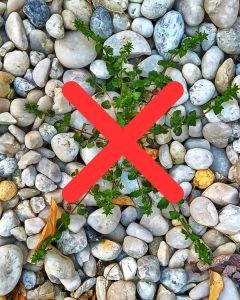
Sounds like an innocent and innocuous thing to say and do doesn’t it? Well, in fact it is a far from innocuous euphemism which in reality has me saying: I’ll apply some poison through a spray bottle to the leaves and stems of plants somebody or other has classified weeds, in order to kill them slowly over a few days.
Needless to say, this activity always evokes mixed feelings in me. Like everything else in the material life, this issue has two sides concerning the rightness and wrongness of ‘spraying the weeds’.
On the one hand, I understand that we humans are merely one more species along with so many others. We have to do what we need to do in order to feed, clothe, and shelter ourselves.
Weeds, I know, interfere with humans’ ability to grow food for example. In this context weeds are those plants that threaten to overrun, damage, or reduce supplies of ‘acceptable’ food plant species. Thinking about it now, it strikes me that the decisions about is it a weed or is it not a weed, can be pretty subjective.
On the other hand I personally do not want – nor do I think it right – to kill other living things. Of course, and clearly obvious too, it’s a bit more nuanced than a simple choice between do I? or don’t I?
I eat plants of many varieties, and in many forms, and I understand very well that they are all living beings. And, add to that, how many insects, lizards, snails, small mammals, birds, and other animals are displaced, injured, or killed in the planting, growing, harvesting, packaging, transport, and sale of the fruits, vegetables, nuts and so on that I eat?
Like I said earlier, the human species, like all others, must do what it has to to survive. Obviously, again being human, we have minds capable of discernment and decision making that can help us minimise the harm we cause as we pursue survival.
For me, a major component of that harm minimization takes the form of not eating the flesh of animals, as well as my choice to not utilise items made from animals.
Even with this there is a problem: Who’s to say what life forms are acceptable as food, and which aren’t? Humans have invented the scary idea of the Food Chain. We simply decide who is higher and who is lower on that chain and eat accordingly.
Needless to say, humans have appointed themselves to be the highest species on that ‘food chain’. Meaning of course, anything else is lower and hence okay as food.
Anyway, I digress a bit. Getting away from food questions, to look specifically once again at the ‘weeds’ to be sprayed in the Hermitage garden.
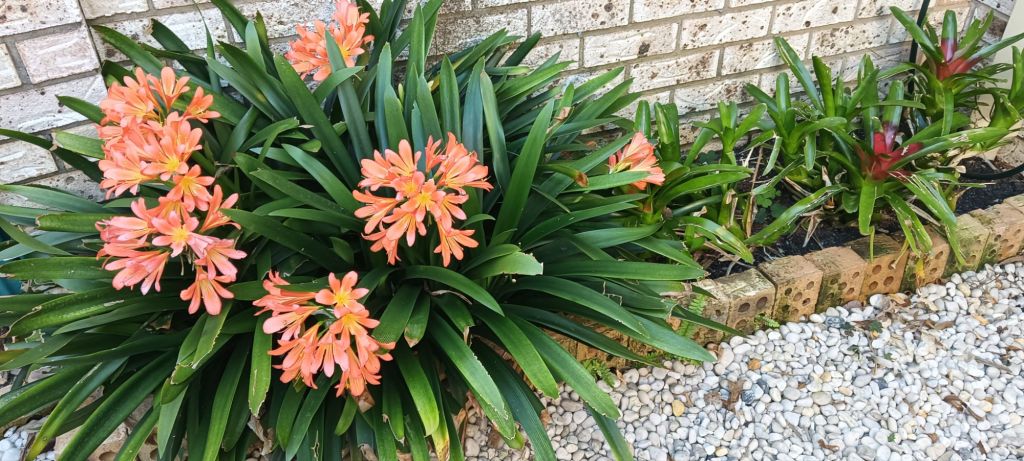
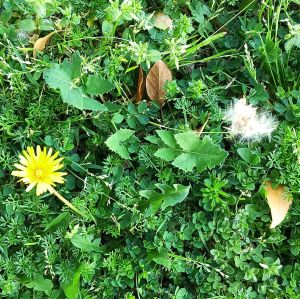
I often ask myself what is it that makes one plant with big orange flowers acceptable as a garden plant? Of course it’s beautiful, ornamental, and a pleasure to have nearby, but what else?
But, what is it that makes another plant, with its delicacy and little flower that are equally beautiful and as pleasing to be around in my view, not acceptable as a garden plant? What makes this one a weed, while that first one we met in the previous paragraph not?
Well, it seems to me that the first answer has to do with necessity dictated by circumstances or conditions beyond one’s control.
As I’ve said, when it comes to growing food, it’s necessary to control plants that threaten that growth. Discernment comes in when we decide how to eliminate that threat with the least harm. One aspect of discernment is actually related to that subjectivity I mentioned before: one person’s weed, is another person’s delicious and nutritious food – and vice versa.
At the Hermitage we don’t grow our own food, so we don’t face that dilemma. Here, at the Hermitage, it is a condition of living here that we control the weeds. And the plants classed as weeds are well known to us due to this condition being a routine clause in most rental contracts.
Besides, it seems that another major factor that makes a plant a weed, is where it grows, how hard it is to keep in bounds and behave.
I guess it’s not only a requirement, that we control the weeds. It’s an issue for our discernment as we try to find ways to share this little patch of the world with the other life forms who also live in this space with us.
It is a wise discernment that tells us to follow the rules of the contract. And our discernment also shows us that, in this human built environment we live in, we can’t allow the space to be taken over by plants that would then provide a safe harbour for insects, rodents, and other creatures that might or would threaten our health and wellbeing and that of our neighbours.
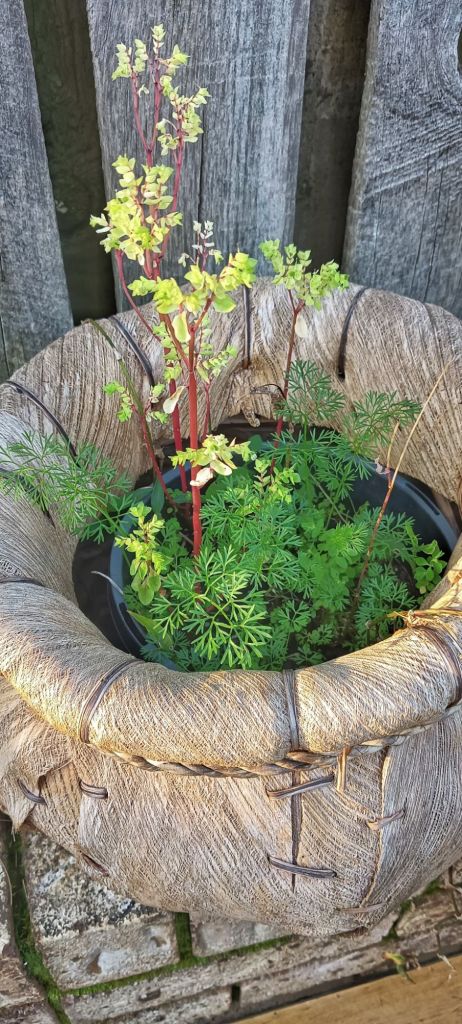
In a pot rescued from a roadside pile of domestic discards, a variety of plants – weeds also rescued over a few months of ‘spraying the weeds’ as a kind of offering to and celebration of life – grow in a group.
It’s a pretty group, I think, of delicate, yet sturdy little lifeforms.
Are they still weeds? Now that I’ve placed them to grow in an ‘approved’ space? Now that they are confined by bounds within which I can control them?
Confined? Controlled? Perhaps for now, but not for long. It’s a comforting thought, realising they all have allies: the sun, the rain – and the wind.
At the same time, we consider all life forms, including humans, to be manifestations of the Divine. All life is one, as I assert so often. Speaking personally, I am sad that any lifeform that is harmed because of my actions and my material needs.
Discernment, compassion, love and mindful action. As we seek to coexist in peace with those beings we share our world and lives with, these things are all required. Empathy too: We are the weeds, the weeds are us.
And the inner editor is insisting I finish by reminding myself that life, the universe, and all that happens, is unfolding exactly as it’s meant to; all we can do is play our part in that unfolding.
To ‘check the weather’ is to actively seek knowledge – news – of the world; it’s asking, what’s going on out there? Kind of an attachment, and in most cases, most of the time, I don’t seek out news of the world, but in certain circumstances it does sometimes seem necessary.
So, because it’s been raining heavily, and there have has been some minor flooding not too far from us, I checked the Bureau of Meteorology earlier this morning – I have an app on my phone.
Along with the air temperature, the measured and predicted rainfall, and other weather related details, there is list of ‘Current Severe Weather Warnings’.
There were three listed: big surf (we’re a couple of kilometres from the coast), big winds, and a third which leapt out and grabbed me, or putting it more accurately, it reached out and grabbed my heart.
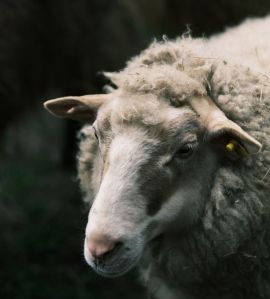
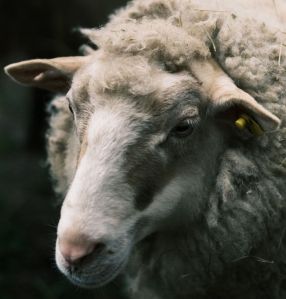
A ‘Sheep Graziers’ Warning’ it’s called. It’s purpose is to warn farmers, that due to cold temperatures, heavy rain, and high winds, there is a risk of ‘losses to lambs and sheep exposed to these conditions.’
In other words, lambs and sheep might die if left out in the weather.
That casual check of the weather has now exposed me to some of that information of the world, the news, that I usually avoid. And that news has impacted my heart, my soul.
The risk of ‘loss’ to those sheep – and lambs – is to me as devastating as it would be when any other being is at risk of suffering or death. And, obviously, I’m absolutely aware at the same level that many creatures of many and varied species – including my own – are at this moment exposed to the very same risks.
One of the thoughts that occur to me is this: The very reason for these warnings is so that farmers can take the appropriate action to protect and safeguard the creatures in their care.
Another thought: the sheep have no choice. Like the rest of us living beings they are subject to the conditions that play out in the material world. Of course we can add a little perspective to this: I am making these notes in a warm, dry and safe hermitage.
(Then, as I began to type up those notes just now, there was a very short but powerful thunder and lightning storm accompanied by very heavy hail. Once again I am warm, dry and safe.)
All beings are prisoners in a sense, to their material bodies, and, as I said, subject to suffering due to the material world. What we, as individual beings, or individual species, can do to reduce our suffering is going to always vary from individual to individual, from species to species.
I suppose what I’m getting at is that all of us – all beings – need help of one sort or another at some point, to release us or protect us from suffering.
I must admit that very often feel helpless when it comes to what I’m able to do to relieve the suffering of the world – my own, the suffering of those close to me, and that of all beings.
You know, I don’t not watch the news so I can avoid being upset or sad or angry which are often my reactions when seeing or reading news of the world. While I don’t enjoy those emotions when they come, it’s more the emotion they lead to that really bothers me: more and more feelings of helplessness.
And helplessness for me causes paralysis: whatever little I might otherwise be able to do, I cannot. For example, since checking that weather report I haven’t been able to settle to my prayers, my meditation, my chanting, and study; I am not, right now able to do any of the things I would normally do as my way of contributing to the welfare of other beings. Paralysis.
So, here I am making notes that will become a post to share with you. A story of checking the weather; of empathy with other beings; my feelings of inadequacy at not being able to relieve their suffering – as well as my own for that matter.
But, I will pray. I promise. Prayer is healing, prayer banishes helplessness.
Those sheep – as well as all other beings – and I are not separate; I am them and they are me. We are the One.
It always surprises me how quickly, how easily – how smoothly – a perfectly okay conversation or train of thought will, just like that, morph into a full-on gossipy rant.
You know the thing: pointing the finger at what someone else is doing wrong; or precisely and with great clarity of analysis detailing how another person (or sometimes myself) has erred, how they’ve slipped up, made mistakes they could have or in ‘my opinion’ should have avoided.
How easy it seems to happen that I will suddenly find myself very eagerly ranting about the sawdust in the eye of another, while breezily ignoring the huge plank in my own eye. The errors in someone else’s way are so often clear to me, while my own not so terrific ways are completely ignored.
And the weird thing is, how it sneaks up on you. I mean on me. As I said at the start, one minute I’m having a pleasant and reasonable conversation, the next minute I’m ranting about him, or her, or them, or who or whatever.
Such an error in my own ways, occured this morning as I fell into what felt like a perfectly rational pointing the finger session, full of criticisms and judgements about someone I actually quite admire.
That is until one of the hermits with just one comment, brought the whole thing to a sudden and definite stop:
‘We should be sitting here sending out good vibes. That’s our job.’
A perfectly timed cause for a pause for thought. And absolutely correct – as hermits, as monks committed to the welfare of all beings, it’s more than our job; our lives are dedicated supposedly to love, prayer, service, contemplation on the Divine in all things and how we can best serve that Divine.
Human nature is a tricky topic to think about though. So much of what we do in the world is driven by our desires for more things, for status, for happiness, or pleasure. Eating, sleeping, mating, and defending, I have heard it called by way of summary.
Hermits behind walls are still flawed human beings
I’ve supposedly withdrawn from all that, left it behind ‘in the world’. I live a secluded, quiet, and contemplative life precisely in order to counter those very attributes of human nature.
I suppose all this says is, I am still a human being with all the flaws, all the desires – and aversions – that come with being that kind of, well, being.
Yes, all true. Maybe. But, isn’t it possible that I might use just a bit more discipline? Could I be perhaps a little more clear in my focus?
Perhaps I could ‘sit here’ and send out good vibes. At the very least I could pay a bit more attention to those times when I’m about to slide – or have already slid – into my ‘putting out bad vibes’ mode.
We can’t really ever know what’s going on in the lives of other people, or in their minds and hearts. In any case, it is rarely, if ever, our business to even want to know or make guesses or assumptions about others’ lives.
As a hermit monk, as a pilgrim on the spiritual path I aspire to walk, my only business is the making of ripples (I know it’s a cliché but it works for me, just as so many do), the distribution of waves, or vibrations of replenishment, of love, and kindness, of good things, out beyond myself.
Good vibes to all living beings who I am pledged to serve, to the Divine that is in, and in fact is, all beings, including me, you and all there is.
‘I’ll carry on with my Gita then,’ I said to my partner hermit after we’d been discussing something for a while.
‘I’m enjoying reading my prayers this morning. So I’ll read a few more then read a few verses’ (of the Bhagavad Gita).
‘Reading’ my prayers? Is that what I’m doing? Surely a prayer – prayers – are for praying? Anyway, not simply for ‘reading’.
Of course in this particular instance, the forms the prayers are taking – on the most superficial, worldly, material level – are as words written by human hand (mine) on paper pages in a little book.
But, right now, the big question, the existential question really, is have I been merely reading those prayers? Or have I been praying those prayers?
Then there’s another, equally existential, concern that arises: How to know the difference. Reading? Or praying?
I feel like saying that the first thought that comes to mind – the first answer to reach the tip of my pen on this page – is this: Actually, the answer has come in the form of a rhetorical question:
If a prayer is prayed, how would it ever even occur to me query if it is in fact a prayer, and not just words on a page to be read?
Yes, first thought best thought here I think. When a prayer is prayed, even if its form is words written on a page, there is a movement beyond those words on the page. In fact, there is a transcendence of all that is of the material world that takes place.
A prayer is what it’s always been: a prayer. The forms prayers take are, I think, literally endless, uncountable, and can never be submitted to categorisation by us humans.
Prayer is for praying, that’s the lesson for me. Just pray.
A couple of days ago I recieved a beautiful gift in an email. I often receive wonderful things through the email, and this one, as with so many of the others, has profound meaning for me.
Not only that, but this gift has served as a reminder to me of that significance. I’d like to share with you that gift, as well as some thoughts on its importance and meaning to me.
There are a multitude of sources online where you can learn all the technical stuff, word meanings, history, origin, when it’s used and all the rest. I would like, however, to just ‘think out loud’ in my own words, and follow my own heart’s promptings.
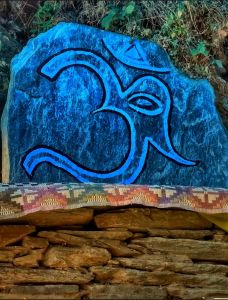
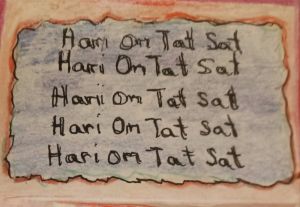
Hari Om Tat Sat, is actually two mantras in one: Hari Om, and Om Tat Sat.
Hari Om represents the totality of what we might call God. Hari refers to the manifested cosmos, as well as the creative impulse in its manifest form. I call that Ishvara, but it doesn’t have a name I’m sure!
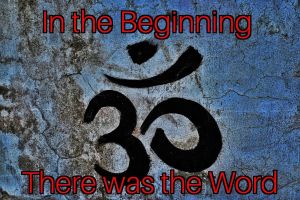
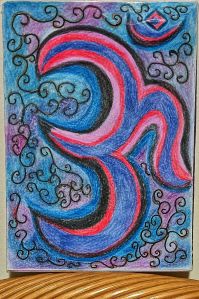
Om, is the unmanifested universal consciousness, the Absolute Reality. Meaning, as I understand it, existence itself. I call it Brahman, or God, but again, names are just labels we humans apply to things to make it all seem so neat and tidy!
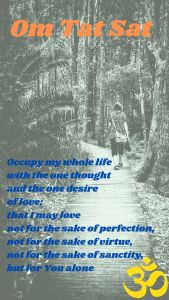
They say that Om Tat Sat is the most sacred of mantras (in Hinduism). It’s used at the completion of prayers and rituals as a way of invoking the presence of the divine and ‘bringing it all together’ you might say. Well not so much bringing, more like a reminder that everything is one already.
I really like the chanting of Hari Om Tat Sat. It’s a centering practice I would say, a way to remember the oneness of all. And I say it, as the traditionalists do, as a closing to prayers or other practice; it’s like ‘Amen’ or ‘It is so’ or ‘Let it be so’ or, well it’s endless – and personal and subjective.
As mentioned, Om means Brahman – or God in the unmanifested state; Tat, not only sounds like that but does in fact mean all that is. In other words, Brahman or the Absolute. Sat means Truth, Absolute Truth or, once again Brahman.
For me it is a little prayer of its own actually. And I’ve heard it used as a greeting many times. It’s a means I think of honouring the divine within the one being greeted, while at the same time I have a sense that it is a recognition, or acknowledgement rather, of the oneness, the unity of the greeter and the greeted along with everything else.
This is why I don’t really feel the need to break the mantra down to explain in technical detail all the constituent syllables (even I were qualified to do so, which I most surely am not).
It really is a way to acknowledge the oneness of all, the Absolute, which includes, obviously, me and you. The Truth is absolute, it says, so must we be, absolute.
The walk from the Hermitage to the coffee shop at the Village Green takes around five minutes or so. This morning, noticing a pause in the rain, we thought we might take the opportunity to get some fresh air and a walk, at the end of which there would be coffee. So, we stepped bravely forward, with the faith that the gods of the rain were indeed taking a break.
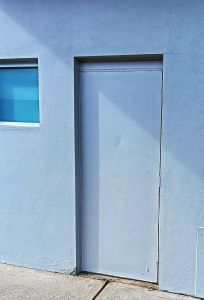
‘Look over there, ‘ said my partner hermit as we passed through the centre of the village. ‘There’s a door that can only be opened from the inside.’
‘I’ve never noticed that before,’ I replied, looking across the street to a wall into which was set a door with no visible handles or lock. The only things that suggested that it was in fact a door were the hinges on one side, as well as its size and shape.
Now don’t ask me how many times I’d passed that spot. Most likely dozens of times, on both sides of the road. Still, now that I had been shown it, I was intrigued. Mentally I was captured: I thought, what a wonderful thing: the one or ones on the other side of the door have complete control over who or what is allowed to enter.
With such a door, one that only opens from your side, you could easily choose to rarely – or even never – open it. Ah, peace at last went my thoughts.
But, right away, those thoughts were dismissed, sent packing: too simplistic, too extreme, to heavy a response. Though, you know, I do feel strongly that such a response to the world – shutting it all out completely – is perfectly understandable, completely reasonable, and oftentimes even an absolute necessity .
Still, I had that feeling towards my reactive thoughts of ‘too extreme’ (inner editor’s note: he has no idea what he’s saying does he? If you ask me, right this minute he will be thinking his initial reaction was spot on and he’d love to have a door like that. Anyway, we’ll let him have it his way).
Some further, more careful thought is required here I think. For a start, here’s a question: If I were to keep the door shut all the time, how would I ever be able to allow my own light, my own love, my own Self, out into the world?
Maybe there’s a way to keep the door open sometimes, then at other times choose to keep it closed to bar access to unwanted intruders in the form of people, thoughts, events, emotions and so on.
After all, it is my door (in this little fantasy at least), the door to the inside, where resides the ‘real’ me, the Self within, beyond and above, the physical form that I so tenaciously cling to as as being the real me. Talk about attachment!
Perhaps slightly exagerated, but this is close to how I see my actual door working as distinct from the story I’m telling in this post.
Where was I? Oh yes. With that door that opens only from the inside, I might come – eventually – to realise that there is nothing to disturb me – unless I open the door and let whoever or whatever that is unwanted, through the door.
I am my own gatekeeper, and without my consent my gate (door) cannot be opened and entered.
And, getting back to the choices I am able to make to sometimes open the door to allow some light and love to flow out from me, out the door and into the world. The more I’m able to discern when, and for how long, to open the door as a way to control what comes in, to what can reach me, the more resources of said love and light I shall be able to build up.
Which, in turn, will lead to more and more opportunities I’ll have to open the door in order to share some of that good.
I can envisage a state reached where my door could quite possibly be left to stand ajar all the time.
You see, the more love and light pouring out, the less that disturbs me can get in. Love and light is transforming, isn’t it?
Yes. Now I’ve noticed – recognised – the door that can only be opened from the inside: It’s me! Now, where did I leave my door keys?
Varuna and Surya. the Hindu deities of sky and all Earth’s waters (Varuna), and our sun (Surya). These names resonate for me. I like how such great natural phenomena fundamental to our existence on this planet, can be ‘personalised’ in this way.
I find that having acquired symbolic or representational names for sky, water, and sun, has allowed me to somehow relate to the inherent giving and preserving of the energies that power all life that water, sky, and sun provide in a prayerful, thankful way. Kind of makes it personal.
Let me put aside for a moment the obvious scientific reality that tells us we can’t live long without water, can’t live at all without the gases in our atmosphere, and if the sun goes dark for whatever length of time it is, then all life ceases to exist.
How many times have I stood in awe watching a sunset?
Or watched as big waves rolled in with a surfer hoping for a ride?
How many times have I welcomed the sound of rain on a roof and the sight of it nourishing trees or other life
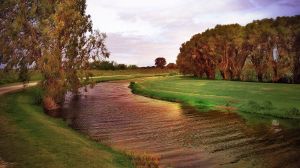
And how many times have I sat on or walked along a riverbank feeling uplifted and a little more grounded?
Many, many times is the short answer. Varuna and Surya are constant presences in our lives. And I am grateful for the life-giving and life-sustaining natures of their existence.
Sharing with you today, a little poetic expression of one of those times when sky, water, and sun, gave me just a little more than those fundamental material energies.
ONCE AGAIN VARUNA AND SURYA
Once again, Varuna and Surya are coming to make rescue. They arrive on – as in fact they are – the currents and eddies of the river of life. In this way, the natural order remains in motion.
Shared with love
from Paul the hermit
Flow river go, past the shady tree. Flow river flow, flow to the sea. Flow river flow, flow to the sea.
Thanks to Roger McGuinn for one of the classic flowing on a river songs.
A curious title for a post, I thought as the words popped into mind. And it’s one that could be hinting at, pointing towards, any number of ideas, topics, or whatever.
In this case, however, it is really quite straightforward: The title refers to a three-line quote I rediscovered when I was transferring notes from a full notebook to a new one the other day.
Actually, ‘three-line’ quote may not be quite correct. In fact, I have no idea if it is a longer quote consisting of three lines, or, three individual one-liners that I happen to have grouped together.
Whatever the case, I don’t know where I found this quote or these quotes. All I can say is that I was surprised to come across them as I performed the normally routine task of transferring notes.
Surprised, because each of these lines I think, hold a special message for me; a unique piece of advice. You could even call them guidance.
Each individual line and its message is wrapped around and driven by the verb to keep:
Keep your spirits up Please help keep the silence. God’s will be done and keep calm.
As a whole, this quote (these quotes) constitute a kind of ‘how to live in the world’ mini-guide. Each – and all – of the three lines point to an aspect of what we might call Right Living – guiding us to the means by which we may approach daily life with its ups and downs, its sorrows and joys, good and bad times, mistakes, hurts, confusion, that make up our lives as flawed human beings living the best we can in an imperfect world.
Keep your spirits up
What with all those ups and downs, sorrows, daily crises – in our own lives and in the world around us – how are we to keep our spirits up?
How do we free ourselves of the pain and suffering caused to us by all these travails?
How do we remain positive and optimistic in the face of what passes for a life ‘in the world’?
All good questions, and there are many many answers out there in that same crazy, mixed-up world that’s giving us all the trouble in the first place.
Speaking only for me, I have nowhere near reached the point where I can say that my spirits are consistently lifted, that I let nothing disturb me.
Why is that? The answer is simple: because I’m a human being. Or perhaps it’s better to say I inhabit a human body which is subject to one thing only: constant change.
I’m learning more and more that the only one I can address such questions to is me. If there are any answers to how to keep my spirits up, I’m realizing slowly that I won’t find them out there in the world or in the things of the world.
So, going within has to be at least my tentative response. It seems that there really is nothing else that will keep my spirits up for more than some fleeting often illusory moments here and there.
Please help keep the silence
What silence? Well may you ask: hardly what you’d call a quiet place to live, this world of ours.
Once again, for me, going within is a good start. Though I’m not the quietest person in the world, especially ‘within’. Too many thoughts, emotions coming and going, all the craziness of an overactive mind and heart.
But it’s a start.
I keep re-centring when I can. I focus on my breath; recite some favourite prayers; chant mantra (the names of God); I sometimes just sit. All these do help me, will help me, I know. They do, sometimes, every now and again, for little moments, create that little (vast?) space I call silence.
As to playing my part in keeping that broader, silence? Well I’ve mentioned before the invisible community – the heaps of people all over the world who are on the same or similar paths, practising their own unique ways of going within, of cultivating both inner and external quiet, or silence.
All of which tells me, I am not alone. And it says, my little contribution to silence – to being still and quiet – actually counts.
God’s will be done and keep calm
For me, ‘God’s will be done’ is simply another way of saying that the Universe (or life) is unfolding exactly as it does in the only way it can. It just is as it is. And me, being also that life, I play my part.
And that’s all: we play our part; we do our bit, and it all happens as it does.
Acceptance of this truth is also one of those aspiration things I keep near the top of my list. Surrender, I sometimes call it. Surrender, rather than being a ‘giving up’ as we sometimes use the word, is more about going with the flow of the river, or accepting and cooperating with the flow of the natural order of the Universe as we experience it in our lives.
That ‘keep calm’ bit reminds me of that meme that was everywhere a few years ago: ‘Keep calm and carry on’. It, in a real sense, is exactly what I’m trying to do.
Surrendering, or accepting that ‘the universe is unfolding as it should’ (to borrow once again from the astonishing Desiderata) seems to be the clearest most obvious way to that calm our quote speaks about: Calm acceptance, free from the resistance and struggle against the flow of the river of life that lies at the root of much of our suffering.
So, the Dharma of Keeping. One small (or perhaps not so small) set of clues about how to live right in the world – and with the world.
The river of life is calling me to the kitchen. Even hermit monks have dishes to put away. So, keeping calm, I carry on.
Hermitage on the Loch (courtesy: a member of our community
It wouldn’t be quite correct to say that I never get calls or texts on my phone. What would be correct is to say is that the vast majority are to do with what I might call The Bureaucracy: Reminders of Doctor and dentist appointments, notices from various government bodies, library notices; all that kind of thing.
And there is another emerging category that’s actually a lot more welcome: while my partner hermit and I have always phoned each other, lately we’ve been texting more and more as an extra way to communicate with each other.
Sometimes these texts are about the mundane things we all have to do in the world, but then there’s another dimension in which texting allows us to keep in touch with each other’s feelings, thoughts, doings, and simply as a means of keeping the connection open and strong.
The other day, for example, such a text arrived unannounced in my phone. Like some I get from The Bureaucracy, this one was essentially a little series of reminders. But rather than being about the things of the outside world, these ones, in this text, spoke directly and deeply to the enrichment of the inner life – my inner life.
Powerful messages, all of them, that really go to the heart of one’s (my) efforts to live a life more centred on my spiritual quest and my commitment to living more in sync with Absolute Reality.
On first reading of this text (and on each rereading, of which there have been many), I really felt strongly that I needed to contemplate deeply and prayerfully on the pieces of this whole. And, as well, to share my reflections with you.
Sit in your cell as in Paradise
This little – yet tremendous – injunction references an answer to a question posed to Abba Moses, one of the early Desert Fathers:
Go sit in your cell and your cell will teach you everything.
Essentially Moses’ advice is, remain within the confines of your dwelling place – whatever and wherever form that place takes. This can be a literal geographical location, or even your own body as it moves in the world. We all have a body, we all dwell there.
Sitting in one’s cell is not a simple or passive activity. It is in fact hard work as we wrestle with the mad monkey mind, and attempt to grow spiritually.
So, what about the ‘as in Paradise’ bit? Well, to me this feels very much like thinking of one’s cell as the place to be. What I mean to say is that it’s the only you can possibly be in right now, in the present of the here and now.
It’s not about judgements of is it good or bad, pleasant or unpleasant, painful or not. Just acceptance of where youu’re at right now. Doesn’t mean you’re stuck there and by no means suggests you resign yourself to your circumstances. It simply means you see it like it is, at this moment.
And it’s about understanding that, while you are in that place, it’s where you know you need to be. Your cell – your dwelling place – has within it everything you need to live, grow, learn, and prosper in the spiritual life.
Whatever the ‘place’ you are in is like, we can try to cocoon ourselves, make a space within the space, even if it is just being aware of our bodies sitting in the space. Cocoon myself is an expression I’ve been using lately to describe the act of isolating myself in any way I can from my surroundings. This can apply on the macro scale or the micro as we seek to centre ourselves and find quiet and a peaceful place.
It’s not as if in this cocoon (or whatever it might be) that all will be bliss and light all of a sudden. No, I think the suggestion here is we try to develop an attitude of non-attachment towards the things of the world that trouble us, those things that cause us suffering, precisely because we are attached to them.
That is the purpose of sitting in your cell. That is the everything that your cell will teach you.
You know my friends, I’m a bit weary tonight, and with your permission I will continue with this sharing of my contemplation, my reflections, in my next post.