Even a Leaf: Another Chapter

Namaste Friends

A little note to begin with

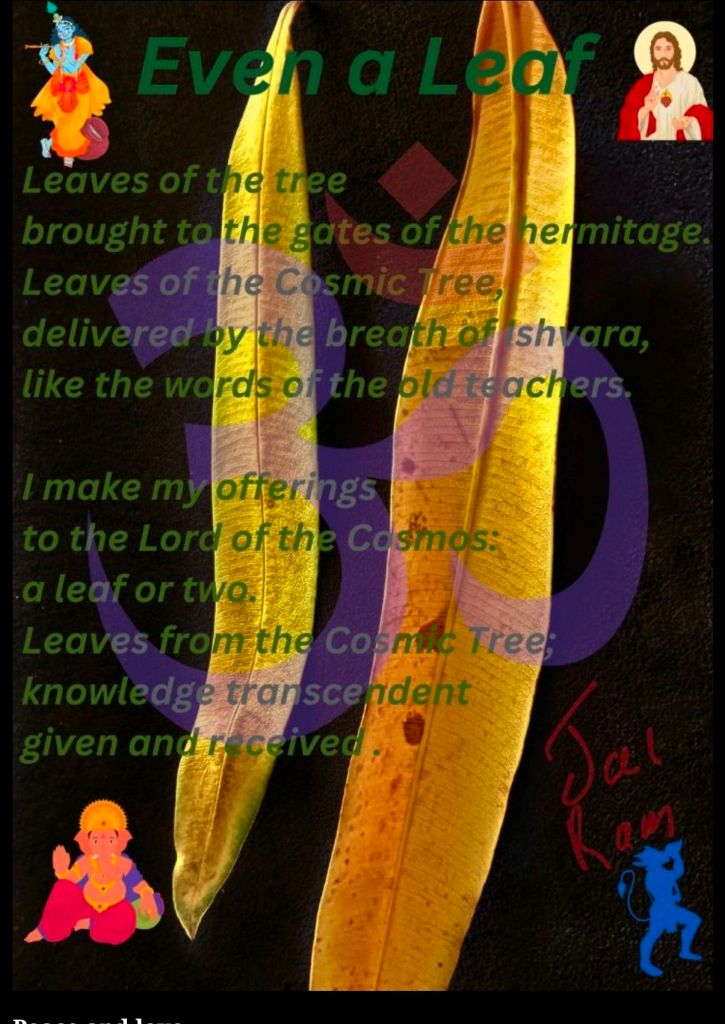
Last January I published a post inspired by a favourite verse from the Bhagavad Gita:

If anyone with love and devotion offers me a leaf, a flower, a fruit, or water, I will accept it.                                                        Bhagavad Gita 9:26

If you like you can read the post here, but I will be including the poem that made up that post in this one which shares the same topic,

Today’s post was in fact written during my more recent hospital stay as a record of a very nice encounter with my Bhagavad Gita and a nurse. I’ll only make changes to tidy it up a bit and to make it clearer for you, the reader.

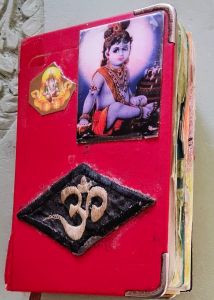
A ministering angel, in the guise of a nurse happened to notice my beloved little Bhagavad Gita sitting on my bed-side cupboard as she went about her healing duties. Picking it up, pausing to gaze at the image of the Lord on the cover, she then exclaimed excitedly:

‘You love Krishna!’ She was already opening and closing my book at random, with a rapt expression on her face.

‘I do love Krishna,’ I replied, happy to connect with a fellow devotee.

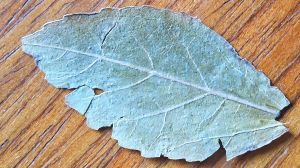
‘O my God,’ she cried even more excitedly, ‘you even have leaf. She held up one of the small leaves I’d slipped between the pages. It was as if she was making of it an offering, just as I had when first putting it there, in remembrance of that verse I love.

I think there are at least half a dozen such leaves offered at various times over the years.

Gently, reverently, she put the leaf back in its pages, closed the book carefully, and replaced it in the exact same position on the bed-side table.

‘I am very glad you love Krishna,’ she smiled as she tuned to leave and headed to serve the next one in need of healing.

love and peace

Paul the Hermit

PS

The poem from last January’s post:

Pray & Work

One of the topics I like to explore on YouTube (my ‘break’ is over and I don’t think I’m scrolling quite do much as I was before I took that break) is the lives of hermits; the monastic life as lived by nuns, monks and priests of any and all religious traditions or none.

That’s more than one topic isn’t it? Well, you get the drift. In any case, last night I rediscovered a nice documentary on a monastery in the United States I had already seen but decided to watch it again. Here’s the link.

Courtesy Wikipedia

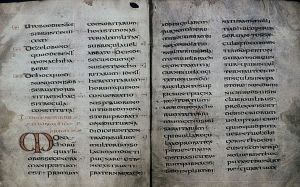
A monk on the doco talks about The Rule of Benedict. Just as the name suggests this is the rule (of life) written by Saint Benedict of Nursia in the 6th Century to help guide monks and nuns living in monastic communities in all aspects of a shared life dedcated to God.

Benedict had a good insight into such a life (and human nature) and the ‘Rule” is in fact a text containg many instructions and a great deal of advice on monastic life centred around what he termed Ora et Labora  –  the very essence of the contemplative life in his view.

It’s Latin of course and translates to Pray and Work and is followed by many monasteries in the Christian traditon. Of course, monastic communities in most traditions have similar sts of guidelines or ‘Rules’.

The primary focus and function of monastics is to pray. That’s what they are there for. But Benidict figured that some kind of balance was needed; not only so the monasteries could support themselves but so monks and nuns actually got some physical activity. Hence the equal emphasis on work.

So, the two ideals work together in a way supports a balanced, ordered, harmonious and peaceful community (in theory). Pray and work are intertwined. Even the Latin for pray, Ora is embedded in Labora, the word for work.

We don’t do rules here at the hermitage, not into them at all actually, but I do like this Pray and Work idea very much. It is, after all, what we do too, and why we are here. In fact, I try to approach everything I do as a prayer. It doesn’t always work in the sense that, while prayer and work may be one and the same, I tend to sometimes forget that fact. So having this pray and work principle as a central tenet of my life reminds me to remember that I am actually doing both.
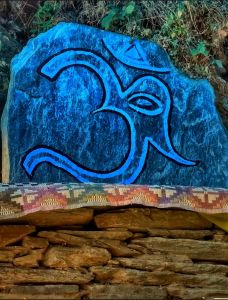
I pray – quite a lot actually. Chanting mantra, reciting set prayers I’ve gathered into my practice over the years or that I’ve written myself. Then there is the prayer that comes from within silence, the contemplation of the texts I study, the things I see, hear, or talk about.

There is the cultivation of ‘good thoughts’ and feelings of compassion. Just sitting, being still and quiet with an open mind. Simply stopping to look at a flower, a tree or another person and sense the beauty. All these and more are prayer.

Which leads us to the ‘Work’ side of the equation. What exactly is my work? First thing to say is, I am a hermit and a monk and my primary job is to pray. If  It sounds like a closed system, that’s because it is.

My work includes my studies and practices which are aimed at cultivating those good thoughts and open mind we talked about, and that attempt to ‘create good vibes in the world’. (Which, as I’ve written many times, is best achieved when I am secluded at least a little from the busyness of the world.

Lest you imagine that I am missing out on the physical activity seen by Benedict as essential to balance, let me assure you I do get quite a lot of exercise – more all the time as I recover.  It’s my yoga practice, an integral aspect of my prayer and work life.

This blog is a part of my work. Though, to be honest, publishing this blog and engaging with our little community, gives me so much pleasure, joy, and ‘good vibes’, that I really can’t call it ‘work’. Writing and posting does me good!

When it comes to work, it’s not so much about what you do (we gotta do what we gotta do), but more about how you approach that work.

What transforms work into prayer is doing it for the right reasons. But who’s to say what are ‘right reasons’? Well that’s easy: you. Or me. Or any other individual deciding for themselves and for themselves alone.

As I said my work – and prayer – is to try to create good vibes in the world. I don’t always succeed but I think it really is the effort and intention that is most important. And not being attached to the outcomes. As in: ‘Aren’t I so holy and virtuous praying for the world all the time’. Hardly.

No. Create the vibe, let it go, and let it do its thing.

A Pause (or two) for Reflection

Physiotherapy, formal exercises as well as the myriad of day-to-day activities required to maintain a physical body, is prescribed as the way forward for people like me who have experienced a stroke.

Quite right too. Exercises and activities to build and strengthen muscle to help recover mobility; to repair broken – and develop new – brain pathways to help recover dexterity and increase both micro and macro motor functioning.

But what of psychotherapy? Not the talking, talking and more talking kind that aims to uncover past traumas, root out the cause of current psychological and emotional issues in an attempt to ‘fix’ you. While talking can be hugely helpful, (I mean it. Talking to a trusted friend, relative or professional, provides not only emotional support, but can give you new perspectives and fresh insights into even the most intractable issues).

What I’m getting at here is more about therapy for the complete psyche: the emotions and the mind and including the spirit or soul.

It is about the rebuilding of confidence – the ‘I am able’ attitude – and it is about filling the void to evolve a meaningful life.

The refuge that each day I commit to take in the divine will of the universe is where this care of the psyche -the inner me, if you like – begins.

Pause for reflection #1: If I take refuge in the will of that which is on the face of it ‘a higher power’ than my own, then why the big efforts at ‘filling the void’. Sounds like I’m resisting that divine will, or somehow refusing to acknowledge the reality of my life as it is.

Of course the ‘making of effort’ and doing our bit is absolutely vital and necessary. So I pray, I meditate, I read, I sit quietly, I create what and when I can. And I make blog notes like this and they also count.

But it doesn’t feel enough. It’s like I’m trying too hard to get to some point I’ve actually acknowledged I’m already at: in the shelter of the will of the universe.

I don’t like to say it, but I’m bored, and I think it is the constant ‘trying’ that is the big obstacle to having a more rounded and holistic approach and attitude to living here and now with life as it actually is for me at this moment.

‘Trying’ suggests the going outside of the present. Making huge straining efforts to make things other than they are. Hardly living in the moment is it?

There are long periods when I find myself sitting with ‘nothing to do’ (I cant read, write, create and pray all the time as in 24/7 can I?)

Pause for reflection #2: Why not? You may very well be asking, as indeed I am asking myself right now. Perhaps these spaces and times are the will of the Divine specifically designed for me to learn to sit in silence and to simply be.
Maybe they offer spaces and times for me to be quiet; opportunities to simply be open to receive, lessons in presence.

Not only that, perhaps they are healing times when all the fragments of my psyche can settle back into their rightful place.

So, the problem is the solution, is what I seem to be saying here. The times I am describing here and which I often face and experience with dread, are precisely gifts of grace granted to me to help me heal, and teach me to sit in silence learning to listen.

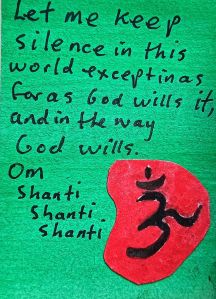
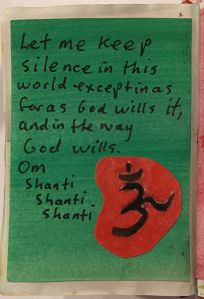
Yes, keeping silent except when and how it is the divine will of the universe might be quite nice.

Cries of the Winged Ones

CRIES OF THE WINGED ONES

Just let go
cries the winged messenger
perched in the fence-corner tree.
Let go. Just surrender.
Surrender to what?
The river of life,
its flow, its vibe

Lord here I am,
I cry in reply.
Two beings, one Self.

The winged messenger cries

because she longs for us to listen

Flee, Be Silent, Pray Always: A Revisit

Courtesy Wikipedia

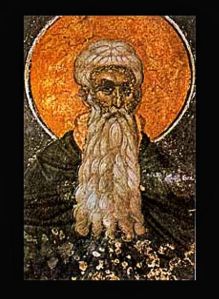
Recently I came across the story of Abba Arsenius – one of the early Christian desert fathers. I’d originally written about him a year ago in what became a short series of posts.

Coming across him and his story again prompted me to revisit those posts – the first of which you can read here – and I reread them again, though as if for the first time. Anyway, here’s a short recap before we move on.

Arsenius was a high ranking official for the Roman Empire, working for many years as a tutor to the sons of the Emperor.

Over time he grew tired of the glamour lifestyle, the politics, corruption and court intrigues, and looked for a way to free himself from the whole material trap he was in.

So he prayed, ceaselessly, the story goes. He prayed for salvation, for freedom.

And, in time the answer, according to the story came in just a few words:

Flee, be silent, and pray always.

And he did. Flee I mean. He headed for the Egyptian deserts which is where he found that silence, and the space, peace, and calm to fulfil  his desire to be praying constantly. And, with some comings and goings, ups and downs, he stayed for the rest of his life.

Now, while Arsenius and his story are fascinating (in fact now I’ve rediscovered him, I’m going to look around  for a biography or something  so I can learn more), what I want to think about here is something I wrote in the first of those previous posts, and how it ties in with our decision (almost a year ago now) to stay in this one place for the present.

For these Hermit Pilgrims ‘fleeing from the world’  has meant a nomadic lifestyle, few possessions and material needs, a hermit life where our engagement or entanglement with the world is kept to a minimum, and in which we feel less of a pressure to conform, to ‘be shaped’ by the world around us.

The notion of staying in this one place – as fully now and in the present as we can be – is actually  paradoxically a fleeing of its own kind. The world of Samsara, the material world ‘out there’ continues to become less and less appealing to these Hermit Pilgrims.

Alongside this growing detachment to the world (as well as the loss of desire to move about in the world geographically speaking), is the deepening realisation that the real and true pilgrimage is within, through and to our own mind and heart.

Complimenting all this, is the growing contentment we are experiencing in this actual place, this hermitage of ours that we are creating on a daily basis. More and more it feels to be the exact place in which that inner pilgrimage is to continue.

Does this mean we have given up on that ‘nomadic lifestyle’? No, not at all. Or, more accurately, we are not niether giving up or not giving up. The present is all there is and we don’t – can’t – know anything beyond that. As the saying goes, What can we say about tomorrow?

We are here, and it is now.

with love
Paul the Hermit

Moment of Catharsis?

One morning recently I was reciting my prayers when I began to notice the welling of tears in the corners of my eyes. Soon the wellings became a slow stream down each cheek. And, before long, I was more or less sobbing. For a little while.

Where did the tears come from? Why was I crying? Well, to be honest, it’s a mystery.

No mystery, you might be thinking: Sounds like your tears were brought on for some reason by reading the prayers.

I’m not so sure. I used the words ‘reciting my prayers’ deliberately: Not only was I not paying attention to, or even seeing the words on the paper, I was not engaged in the least in the words themselves and their meaning.

Rather than ‘praying’ I was reciting from memory, rote fashion, as if chanting my times tables in primary school. Merely mouthing the words; my mind was blank, as in not there, distant, off doing what my mind does, without awareness from me, when I’m trying to pay attention.

So, was this some sort of moment of catharsis? Possibly, or so it seems to me.

Sometimes – often spontaneously, other times with some forewarning – there is a release: a shedding of tears, as in my story above; a heavy inner or outer sigh of relief; sometimes simply a sense of something let go, something gone, or at least on the way to being gone.

When such moments of catharsis take place, often what causes them, the catalyst, appears obvious. On the other hand – as in my recent sobbing session – that catalyst is a mystery, unrelated in any obvious way to anything happening at that moment, or at least to anything taking place on the surface of that moment.

Equally the cause for the tears, sighs, relief, and so on – the object of any potential catharsis – may also be a mystery. I had no idea at the time, nor do I know now, what caused my tears.

The prayer being recited at the time was about silence. But, as I’ve already mentioned, no way was I actually praying, what with my total lack of attention, obliviousness to the words, my mental blankness. My unconsciousness come to think of it. Nothing to suggest a catalyst or catharsis.

In any case, when such miraculous happenings occur, one thing I try (I hope) to remind myself to not do: Do not ask why. Let catharsis – or whatever process is underway – be as it is.

And to put aside my habitual tendency to analyse and categorise; resist the temptation to want to know and label everything that happens to me. Let the catharsis – if that’s what it is – carry on as it does and not dismiss it as: ‘Oh that’s just me getting emotional.’ Or ‘I must be a bit overtired today.’

To – wildly and freely – paraphrase a few words from an iconic movie character:

Catharsis is as catharsis does.

A Prayer to Share: for the Divine Mother

Namaste and Welcome

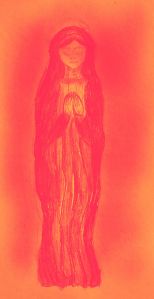
Today I would like to share with you a prayer (it’s a poem too, but …) I’ve written in praise of the Divine Mother. It’s actually the second prayer I’ve written to and for her. I shared that first one, called simply, A Prayer to the Divine Mother on the blog previously and you can find it here.

That post will also give you some background to my reverence for the Divine Mother – what she means to me; where my initial devotion comes from; my heart sense that this universal creative energy drives and sustains all creation; and finally how Divine Mother may be worshipped in many and varied (and even no) forms.

The prayer I share with you today – Jai Shree Maa –  emerged as I knelt chanting those exact word at the alter of a holy place dedicated to the Divine Mother as revered by many in her form as Our Lady of the Rosary.

It is a temple in that name I sometimes go pilgrimming to for quietness, meditation, and devotion.

Please accept my prayer. Thank you

JAI SHREE MAA

In this temple to the Divine Mother
upon my knees and praying.
Jai Shree Maa

I chant with sacred love in my heart,
sacred words upon my lips.
Jai Shree Maa

Divine Mother, with these words,
Jai Shree Maa
I invoke your holy presence;
I speak from my heart to yours.

With love and wishes for peace

Paul the Hermit

Flowing With the River of Life: A Work in Progress

O Lord, I take refuge in You.
You are my sole guide, my master.
Show me the right path and
I shall follow it.

This is a prayer I like very much. It appeared one day in a previous incarnation of this notebook, then migrated to my prayer book. Its origins are lost in the mists of forgetfullness.

In any case, I like it – a lot. In a big picture kind of way it encapsulates much about the way I aspire to live my life; what I aspire to devote my life and energies to.

The prayer is addressed to the ‘Lord’ – to the Divine; to the Absolute Reality of (to borrow a favourite phrase) Life, the Universe, and Everything. Some will call this God, some think of it as the creator. For me it is simply Lord: all that is existence.

And it is there that I aspire to take refuge. I seek shelter in the knowledge of the rightness and order of the universe. Not an easy task when I think about the state of life ‘on the ground’ on our home planet; how the horrors can be almost impossible to grasp, to understand, and to keep from despairing over.

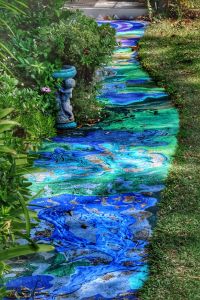
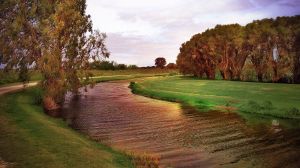
But a contented state of refuge, of safety, security, and even happiness, may be found, I sense, by a cooperation with what we might call the flow of the river of life.

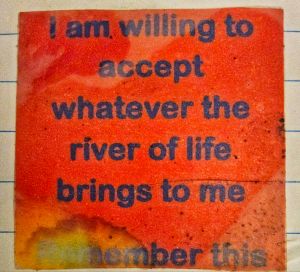
And if I am to discover for myself that refuge, then there really is only one choice: to accept that flow of the river of life as my only guide to how to live, what to do, how to be.

Not surprisingly I struggle with the idea of cooperating with and accepting the often crazy and random nature of that flow of my life as my ‘sole guide’; how much harder is it to accept that very river as my master?

Again, if I ever want to be happy, if I ever hope to be free from suffering and attachments to those things that cause me to suffer, then I must accept and cooperate with the reality: the river of life is the master whether I like it or not. I may as well accept it.

Which absolutely and I hope obviously, does not mean I’m a fatalist, or that I am resigned to just let the currents toss me about willy nilly. No, not at all.

My deep sense (yet another site for other struggles) that the solution to suffering does indeed lie in an acceptance of the reality of the flow of life as it’s happening moment to moment.

By not resisting life and what it presents to me, I aspire to arrive at a state of acceptance where I might contentedly and freely ask what is my role here? What is the universe asking me to do?

If I can listen, and actually hear with the ear of my heart, then I might be able to discern the path, which if followed, will free me from suffering .

Then I shall be going with the flow, following the path of least resistence, and I’ll be contributing to my own smooth (well, smoother at least) ride through life.

We are Many, Yet We are One

To ‘check the weather’ is to actively seek knowledge – news – of the world; it’s asking, what’s going on out there? Kind of an attachment, and in most cases, most of the time, I don’t seek out news of the world, but in certain circumstances it does sometimes seem necessary.

So, because it’s been raining heavily, and there have has been some minor flooding not too far from us, I checked the Bureau of Meteorology earlier this morning – I have an app on my phone.

Along with the air temperature, the measured and predicted rainfall, and other weather related details, there is list of ‘Current Severe Weather Warnings’.

There were three listed: big surf (we’re a couple of kilometres from the coast), big winds, and a third which leapt out and grabbed me, or putting it more accurately, it reached out and grabbed my heart.

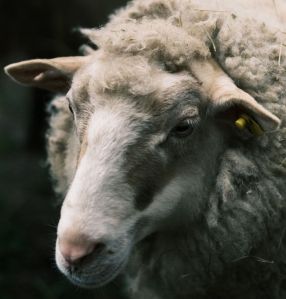
A ‘Sheep Graziers’ Warning’ it’s called. It’s purpose is to warn farmers, that due to cold temperatures, heavy rain, and high winds, there is a risk of ‘losses to lambs and sheep exposed to these conditions.’

In other words, lambs and sheep might die if left out in the weather.

That casual check of the weather has now exposed me to some of that information of the world, the news, that I usually avoid. And that news has impacted my heart, my soul.

The risk of ‘loss’ to those sheep – and lambs – is to me as devastating as it would be when any other being is at risk of suffering or death. And, obviously, I’m absolutely aware at the same level that many creatures of many and varied species – including my own – are at this moment exposed to the very same risks.

One of the thoughts that occur to me is this: The very reason for these warnings is so that farmers can take the appropriate action to protect and safeguard the creatures in their care.

Another thought: the sheep have no choice. Like the rest of us living beings they are subject to the conditions that play out in the material world. Of course we can add a little perspective to this: I am making these notes in a warm, dry and safe hermitage.

(Then, as I began to type up those notes just now, there was a very short but powerful thunder and lightning storm accompanied by very heavy hail. Once again I am warm, dry and safe.)

All beings are prisoners in a sense, to their material bodies, and, as I said, subject to suffering due to the material world. What we, as individual beings, or individual species, can do to reduce our suffering is going to always vary from individual to individual, from species to species.

I suppose what I’m getting at is that all of us – all beings – need help of one sort or another at some point, to release us or protect us from suffering.

I must admit that very often feel helpless when it comes to what I’m able to do to relieve the suffering of the world – my own, the suffering of those close to me, and that of all beings.

You know, I don’t not watch the news so I can avoid being upset or sad or angry which are often my reactions when seeing or reading news of the world. While I don’t enjoy those emotions when they come, it’s more the emotion they lead to that really bothers me: more and more feelings of helplessness.

And helplessness for me causes paralysis: whatever little I might otherwise be able to do, I cannot. For example, since checking that weather report I haven’t been able to settle to my prayers, my meditation, my chanting, and study; I am not, right now able to do any of the things I would normally do as my way of contributing to the welfare of other beings. Paralysis.

So, here I am making notes that will become a post to share with you. A story of checking the weather; of empathy with other beings; my feelings of inadequacy at not being able to relieve their suffering – as well as my own for that matter.

But, I will pray. I promise. Prayer is healing, prayer banishes helplessness.

Those sheep – as well as all other beings – and I are not separate; I am them and they are me. We are the One.