Lighting Candles, Learning Lessons

Not many people know this, but I’m a big fan of clichés. Not always, only when they serve a purpose, make a point, illustrate an idea, or have some other relevance or meaning. I remember an occasion when I witnessed a perfect illustration of a favourite cliché.
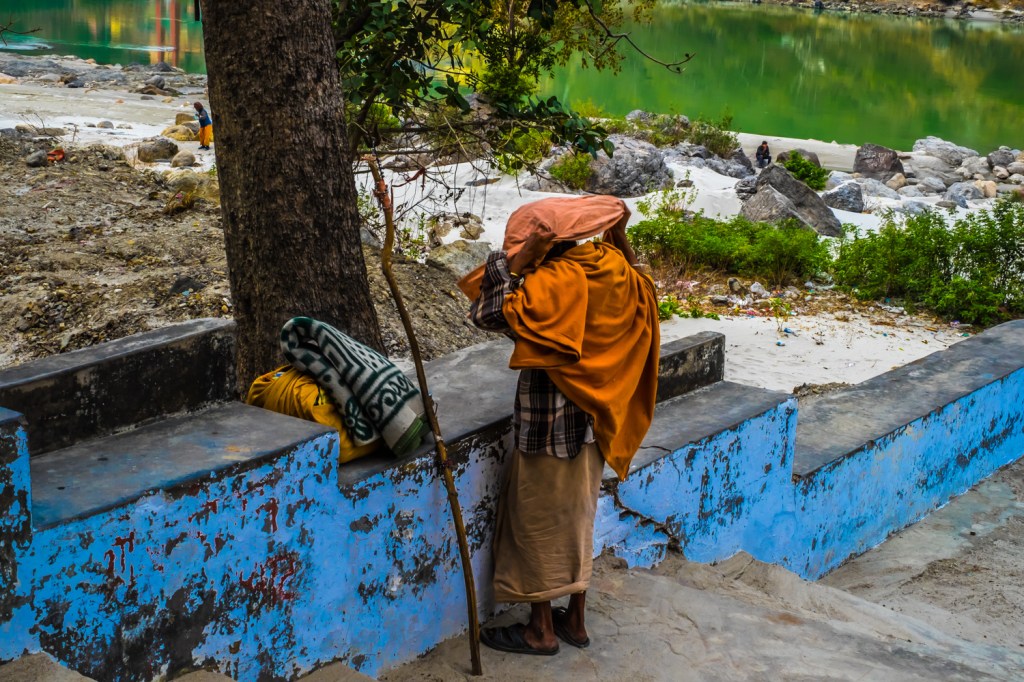
Once, many years ago I was sitting in a café in the Himalayas on a late monsoon afternoon when the clouds hung low and the lights were on so people could see. Suddenly, the lights went out.

A collective groan from the full café: people writing in journals, reading books and so on (no smartphones or laptops in those days), had to stop what they were doing. Although not an uncommon occurrence in those parts, lights going off was a bit of a pain for us spoiled tourists.

Anyway, one of the waiters fetched some candles, and began lighting one on each table. I think there were perhaps ten tables. I watched him as he moved slowly around the packed, but tiny café. As he lit the candle on the very last table, the electricity came back on.
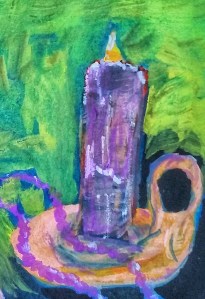
Again the collective sighed, this time in relief, as light flooded the café. I heard one voice say something to the effect of: ‘he shouldnt have bothered, I mean the lights came on eventually’ .

‘Well, you know, if he hadn’t made the effort to make some light for us, maybe the power wouldn’t have come back so quickly’, I commented casually.

Another collective sigh and murmurs of, ‘Yes true’, and ‘far out’, ‘never thought of that’ and ‘so profound’. All this as response to some off the cuff, random remark by me.

And the cliché?

Its better to light a candle than to curse the darkness.

This cliché goes so well with something I like to say that has become a bit of cliché in itself (because I say it so often):

Just look at what you can do, not what you can’t do.

Of course, I didn’t invent this one, but still, to me it makes sense. For example, In the little scene described above, we couldn’t do anything to turn the electricity back on, but one of us (the waiter) could fetch and light some candles.

At Dictionary.com, it tells me that a cliché is:

a trite, stereotyped expression; … usually expressing a popular or common thought or idea, that has lost originality, ingenuity, and impact by long overuse.


Rubbish I say! Overuse? Why does using something a lot make it bad? Why should an idea or thought be robbed of its meaning or power, simply because its been around for a long time? There’s no need to overthink the topic; I’m not saying we should always use clichés. But at the same time, clichés have usually become clichés because they are true, or say something in a succinct and accessible way.

Anyway, this post isn’t about grammar, it’s about lighting candles and looking at and realising what you can do, and not cursing the darkness and being pulled down by thinking about what you can’t do.
Does it help? The lighting of candles? The realising of what you can do? Sometimes yes, sometimes no. Nothing, not even a cliché, is perfect.

Love and blessing from me to you.
With These Words … Part 2

Namaste and Welcome to Part 2 of this little miniseries in which I hope to tell you some more about my ‘philosophy of life’. So before we get underway with Part 2, bear with me as I quote for you the last couple of paragraphs from Part 1.  (If you missed that part, you can find it here.)

After describing the vows traditionally taken by monks and nuns of various traditions (poverty, chastity, obedience, and in the case of monks and nuns committing to a specific place for life, stability).

I explained that I recently discovered how these vows have evolved for many individuals and intentional communities, and how I thought that newer interpretation summed up really nicely the way in which I aspire to live.

One renewed version [of the vows] is: Simplicity, Purity, and Accountability. In the place of Stability, there is now Presence.
While I can’t say I have taken these vows myself, it’s occurred to me that, put together, they do make a fairly precise set of principles that could be said to apply already as I attempt to live authentically as a hermit.

My idea was to look at the vows one at a time to test whether they do in fact represent the way of living I aspire to. Anyway here in Part 2 we will begin with Simplicity

Simplicity

Fingers poised. A whole lot of thinking going on. What to say about simplicity? It’s not as simple as it sounds; actually it’s quite a complicated concept. Certainly it seems that way as I begin to try and define what it means to me.

At its core it really means I live as simply as I can in a world not designed for simple living. Friends of mine have a motto: ‘Simple Living, High Thinking’, which I like a lot, and which fits with my own life.

Of course a simple life starts with looking at what one needs to live a good life which would be defined by one’s own unique needs, occupation, health, age, and all kinds of other personal factors.

For me I’ve found  that it’s not really that much. Over the years I have more and more pared down material possessions; I’ve become adaptable in terms of living in small spaces (and now actually prefer it); my diet, while extremely healthy and interesting, is very simple as I’m not always always looking for variety or new ‘taste sensations’.

I buy very few clothes; again I’m not interested in having a lot of new stuff all the time, I’m very practical and just buy what I need and I am always neat and tidy (well most of the time!), and adequately clothed.

I don’t have a car, though I have in the past. Lots of reasons for this, but essentially it’s a much simpler way to live, even if sometimes I might think it’s complicated not being able to just jump in and drive anywhere you want. A car can be a big responsibility, expensive, and a pain to take care of. Certainly for me it’s been a relief, not owning cars.

My entertainments are also simple. I don’t watch TV because it’s a terrible distraction and I’ve found it’s mostly a tool for marketing of all kinds, with very little of any real value to offer.

Of course, we all know how big a distraction the Internet can be, and I’m just like you: I get sucked into scrolling and into mindless videos and the rest. I’ve found it’s a case of self discipline: sometimes it works, sometimes it doesn’t. I try to use it as the wonderful tool it can be.

I think I mentioned somewhere else that I haven’t been to a cafe or restaurant for several years. They just don’t seem to hold any attraction anymore.

I guess this could go on and on, but basically living in simplicity is an attitude thing. And for me it’s been very much an evolutionary thing too. I try not to draw up pros and cons lists and analyse to death decisions on what to do, buy, eat, and so on. I don’t always succeed naturally!

Simplicity exists alongside the other topics we’re discussing here: they somehow work together to make a whole life. Going for the simple things sort of becomes natural to some degree. I hope that becomes clearer as we go along.

Another thing I will say about simplicity is that it’s a less impactful way of living, both personally and for the world as a whole.

Of course there are quite a few things that can’t be avoided in a world designed to make everything as multi-layered, material thing and fashion obsessed, and as profitable and ‘productive’ as possible. And simple doesn’t always mean cheap, though it has to be said that I live on quite a small income by our culture’s standards, but I would also have to say I don’t think I lack anything materially.


Actually another factor in this simplicity discussion is time. And I see now I’m using a lot of your time with this ever-lengthening post. So, before I go and get ready for Part 3, let me just say something quickly about Time and Simplicity.

For many years my health, my inclination to travel, my aversions to ‘the ways of the world’, and my tendencies to want to create, have meant I haven’t spent a lot of time in the mainstream of working life. And now I am retired.

So I believe I’ve long been given gifts of time in one way or another. But of course, just like everyone else, I can be quite good at putting the words time and pressure together. Again it’s an attitude thing that we’ll most likely talk about when we get into Presence later on. Which sounds like an oxymoron.

So, until next time

Peace and Love from me to you.

Don’t Worry: You’re Not Late


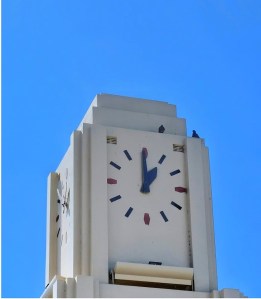
One morning recently I opened my Journal, ready to write: ‘I woke up late today.’ But I didn’t (well I did get up late) I stopped as the thought went through my mind: what does late actually mean.

Well, I know what late means as I suppose we all do, but I Iooked it up anyway. And, of course it means exactly what we think it means: ‘after the expected, proper, or usual time.’

Expected, usual, or proper. Three words guaranteed to get me thinking. After all, who is it exactly that prescribes (or proscribes) what is the expected, usual or proper time or what is not?

Then the lyrics of a song called A Blessing in Disguise by singer-songwriter Graham Connors came to me. One particular blessing he lists in the song is a watch that runs backwards. The watch owner’s friends all offer to have it fixed, but he says no thank you; it suits me just fine:

It reminds me that time is a state of mind
a restriction we place on our lives.

Yes, exactly. I’m sure we all sometimes see time as a restriction. How many of us are tired of (not to mention exhausted by) appointments, schedules, alarms waking us up, too many hours at ‘waste of time’ jobs, too many hours when we’re not at that job, the endless hours spent hypnotized by one screen or another?

In other words, we live bound by restrictions we place (or allow others to place) on ourselves and then we wonder why we’re unhappy, frustrated, exhausted, angry, sad and in need of a break; in need of more time.

Well, time, as the song says, is a state of mind. It’s how we look at time; that’s the point. Forget the restrictions. No, I don’t mean quit your job (though I never suggest to anyone they not quit their job), ignore family or other ‘obligations’ (same disclaimer). What I am suggesting is that you find ways to look at time as the ongoing present, a state of mind to be in, to be in presence. Not future. Not past. And never ever static.

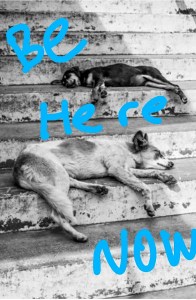
One can never be late. One can only ever be here and now, in that previously mentioned ongoing present. You are the one to decide what is ‘proper’ for you; it’s up to you to create your own unique ‘usual’

And as for ‘expectations’: well, if you have to have them (and expectations are really only imaginings about events, situations, and circumstances that aren’t real yet and may never be), at least make them your own.
Peace

With These Words … Part 1

Namaste friends

At this early stage in the life of this blog, no doubt most visitors will really have only seen the Welcome and the About Me pages. The question I’m asking myself is what else can I tell you about myself and my life that you can’t see for yourself on those pages?

Well, I realized that I’d already, on another blog, shared some insights in a kind of miniseries of posts that speak about my philosophy of life as I call it. So, join me as I get into Part 1.

By now you probably worked out that I call myself a hermit. Perhaps I have explained what I mean by this somewhere else on this blog, but in a nutshell being a hermit to me means living a quiet life, without a lot of physical contact with other people; I visit shops and other businesses and so on, as little as I can manage. For example, I haven’t been to a cafe, restaurant, or other social gatherings for several years.

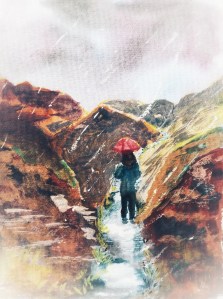
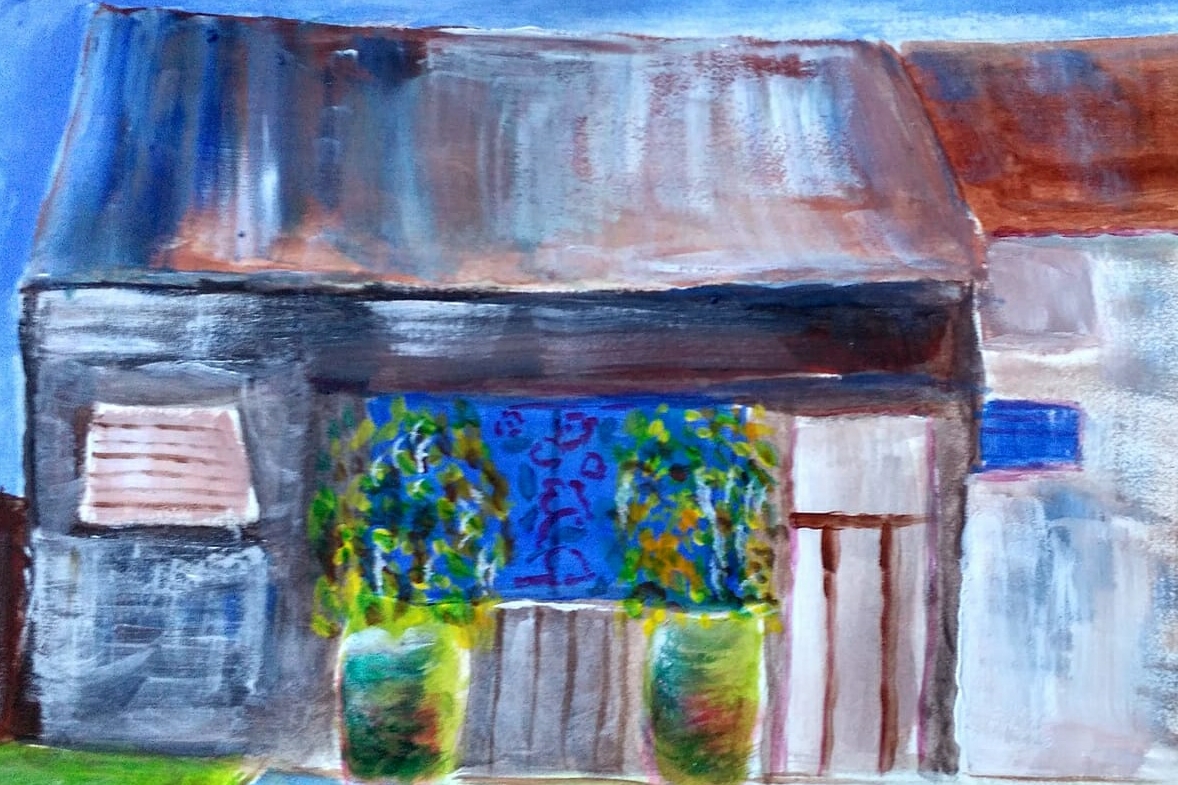
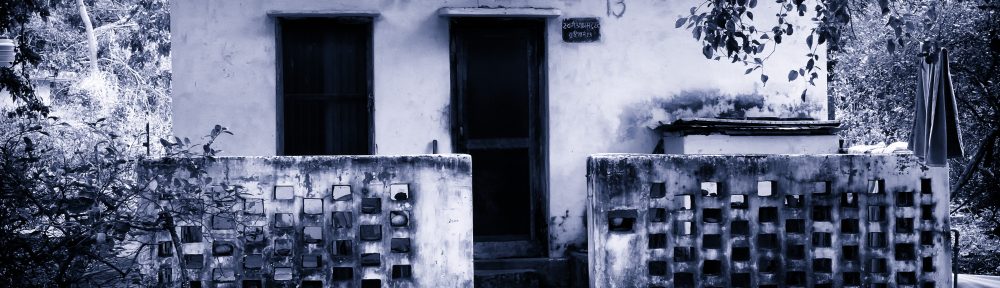
Just one of many hermitages we’ve found by the side of the road. This one way out in the desert country in Australia’s Outback
(Painting by my partner hermit Pauline)

Of course there are more esoteric or spiritual aspects to being a hermit, and I’m very much aware that it’s this spiritual quest side of things that is really the driver for the way I live. A quiet life lived apart from the world, means less distractions, more quiet, more time. All are great helps.

Obviously given the times we are living in right now, I’m far from the only one living a hermit life. At least I am blessed in that my way of living is by choice. At the same time, I’m actually quite excited to watch as the people of the world begin to slowly get back out there and into life again.

As no doubt I’m mentioned somewhere else, I was born with a nomadic nature and soul. So in a real sense it’s a pilgrimage I’ve always been on anyway. So perhaps I might be back out there on the road sometime soon

In the truest sense of the word, I aspire to live like a monk: A monk in (sort of), but not of the world you might say. However monks (and nuns) usually live in community, in a monastery or convent. It’s true to say that life with my partner has me living in community, though it’s only the two of us. Then there are the few places in cyberspace where I encounter and interact with others.

It’s well known that many monks and nuns take a number of vows when they join their communities. Traditionally these vows are: Poverty, Chastity, and Obedience. In many cases the additional vow of Stability is added, binding the monk or nun to a particular community in a particular place.

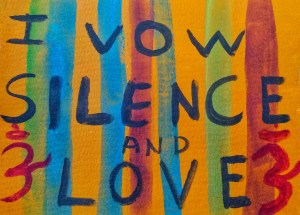
I’ve never been comfortable with those vows, so I’ve never made them. But as I have progressed in my spiritual journey, I have taken vows of various kinds. Mind you my vow to silence is having a hard time of it with me! As for the love part of this vow: well, that’s also a work in progress.

Anyway, recently I’ve been reading about communities (some religious, some secular, but always made up of people sharing the same or similar values, goals, and missions) who, also uncomfortable with those traditional vows, have reinterpreted them in a way that sits more comfortably.

That renewed version is : Simplicity, Purity, and Accountability. In the place of the vow to stability, there is now what you could say is a more precise concept: Presence.

While I can’t say I have formally taken these vows, it has occurred to me that, put together, they do make up a fairly precise set of principles that could be said to apply already as I attempt to live authentically as hermit, monk, and pilgrim!

Please join me in Part 2 (appearing soon) when I will put this theory to the test.

Peace and love from me to you