Let me share with you some random thoughts that came up as I sat to meditate one recent morning. As I settled, a thought struck me.
One among many of course, but this one got my attention. It went something like this:
‘I am where I’m at today because of the life I’ve lived: my choices to travel, my continual need for change and variety. And not to forget the impacts of my health on decisions over the years.’
It was a bad feeling coming on as you can tell.
So, I guess (the thoughts kept coming) I’ve had the fun and adventure and now’s the time to pay the price.
This particular thought train is an antique I’ve been run down by many times. And the way it going this time was downhill fast; it was one of those ‘poor me, what a horrible life I’ve got’ trips. Then, the next thoughts were a bit more truthful:
I live with my life partner and soulmate in a Pacific Coast town, literally five minutes walk to a spectacular beach and some special coastal scenery. The town isn’t too big, and not too small: it has everything we need without the crowds, traffic, noise, pollution, shopping malls, and other paraphernalia that goes with a materialism gone mad.
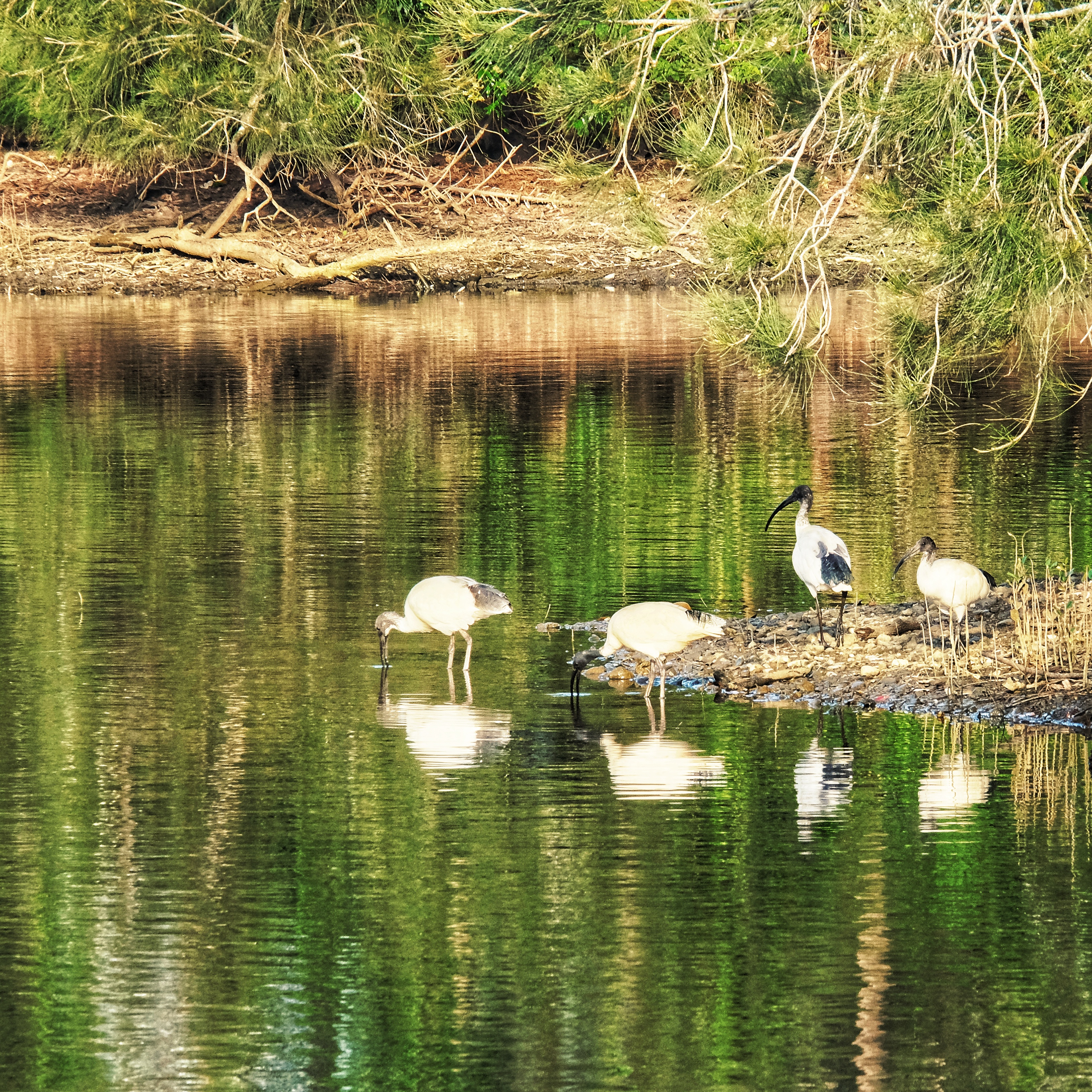
We live in a very comfortable small house in a Subtropical paradise of a holiday park resort flanked by a beautiful creek and forest. Every day we get to see and watch nicely many species of birds.
Each night literally hundreds of bats fly over on their way to feed, and very often we get to see wild kangaroos up close. Not to mention the lizards, ranging from tiny Geckos to metre long beauties.
It’s true: I did make that mental list. No, I thought, this is no price I have to suffer to pay for past decisions and actions. These are gifts I’ve been granted. Oh, did I mention that I get to pretty much spend all day every day doing more or less exactly what I want or feel lead to do?
This was one time when I was able to divert that ‘poor me look how I’m suffering’ thought train, and let the ‘I’m really and truly blessed’ express to roll on through.
Well here we are at Part 3 of the mini series in which we’re looking at whether or not my ‘philosophy of life’ might be well described by living according to the vows used by many contemporary nuns and monks and that are a reinterpretation or evolution of the traditional vows.
As I’ve mentioned, I haven’t taken these vows, but when I learned about them (Simplicity, Purity, Accountability, and for some, Presence.) I thought I’d look at how well I live up to the life they dictate.
So, welcome. And if you haven’t yet seen the first two parts, please feel free to have a look at them. Part 1 is a sort of introduction and overview, while in Part 2 I asked whether or not I actually do manage to live a simple life.
Well, do I? To be honest, it was a nice challenge looking at that question; I mean it got me thinking about the reality of my life (like the rest of these posts will as well, obviously) and I would say yes, I think I do live a quite simple life, especially in the context of the dominant culture we live in, and society’s demands and pressures.
Anyway, time to get on with the next part of our little exploration.
Purity
Purity. It’s one of those words isn’t it? I mean, probably all of us think we know what it means, but it’s not a word we use on a day-to-basis is it? It’s a word we’d use rarely if ever to describe our behaviour or approach to life. So, what words do I use then?
Which reminds me: purity gets a bit of a bad rap I think. It’s often used to describe standards imposed by some group, or authority, a moral code thrust upon us, from someone or something outside of ourselves.
For me, Purity is really about my approach to life, to myself and other living beings, to the world, to everything actually.
So, with your permission I will try for the rest of this post to use words and ideas that actually mean something to me in my daily life and in the way I try to live.
Clean is a word that comes to mind. It sounds strange (and redundent) to say, but I try to live a clean life. Obviously I bathe regularly, wear clean cloths and try to not spill stuff too often. But, you might not know this, but clumsy is my middle name, so, yes spilling stuff is a curse I live with! (I just had an orange and I think more juice ended up on my shirt than in my mouth).
Now, actually that’s a good start: I mean to say, we’re all fallible beings; we all have things we can’t quite get right all the time: Pu … oops … the P word is a concept to hold on to in an aspirational way; it’s not a hard and fast set of rules or standards where I’m in a I am either, or I am not, scenario. Actually it’s very much to do with the present, but that literally is a story for another day isn’t it?
How else do I try to live clean? Thinking. I try, consciously, and all the time, to practise clean or we can say right thinking. Right thoughts about others, whether I like what they do or not. Right attitudes to others too are important aspirations for me as well.
To be truthful I’m not yet at the stage where I could say that having right attitudes to others has freed me to neither like or dislike people, situations, or whatever. Perhaps now and again, but certainly not all the time. Like everyone else I’m attached to my likes and dislikes, to my prejudices, and biases. As I said, it’s aspirational, something to work on continually.
Part of that right attitude, as well as living clean, is having a compassionate approach to other living beings. Meaning that with my actions, thoughts or behaviour I try to do as little harm as possible. Actually, it’s more than that: compassion for me must be an active thing, not just a vague feeling or intention informing my life.
In other words, I have designed my life (diet, clothing, transport, thinking, and the rest) so that I cause no more death or harm to any living thing than I can possibly manage.
Of course I realise we human beings are simply one more species among the many millions sharing this planet. Nothing any of us do in any sphere of life (our actions in the world, our thinking) can be accomplished without an impact on our fellow dwellers on Earth. All we can do is what we can do.
Aspiration. That’s what it boils down to for me. Did I mention it (you know … P) isn’t a you are or you are not kind of thing? Like the other P word, presence, it has at its main characteristic an ongoingness; there is no time when we can say I am P … .
Nor will there ever be a time when we can say in a way that that’s actually truth, ‘I give up, It’s too hard. I’m never going to be P… .
Which leads very nicely to Accountability, the next of our words to live by. But let’s get into that next time! Thank you sharing this time with me.
Not many people know this, but I’m a big fan of clichés. Not always, only when they serve a purpose, make a point, illustrate an idea, or have some other relevance or meaning. I remember an occasion when I witnessed a perfect illustration of a favourite cliché.
Once, many years ago I was sitting in a café in the Himalayas on a late monsoon afternoon when the clouds hung low and the lights were on so people could see. Suddenly, the lights went out.
A collective groan from the full café: people writing in journals, reading books and so on (no smartphones or laptops in those days), had to stop what they were doing. Although not an uncommon occurrence in those parts, lights going off was a bit of a pain for us spoiled tourists.
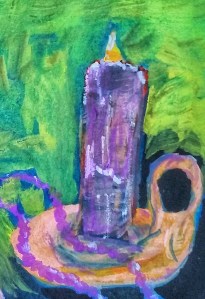
Anyway, one of the waiters fetched some candles, and began lighting one on each table. I think there were perhaps ten tables. I watched him as he moved slowly around the packed, but tiny café. As he lit the candle on the very last table, the electricity came back on.
Again the collective sighed, this time in relief, as light flooded the café. I heard one voice say something to the effect of: ‘he shouldnt have bothered, I mean the lights came on eventually’ .
‘Well, you know, if he hadn’t made the effort to make some light for us, maybe the power wouldn’t have come back so quickly’, I commented casually.
Another collective sigh and murmurs of, ‘Yes true’, and ‘far out’, ‘never thought of that’ and ‘so profound’. All this as response to some off the cuff, random remark by me.
And the cliché?
Its better to light a candle than to curse the darkness.
This cliché goes so well with something I like to say that has become a bit of cliché in itself (because I say it so often):
Just look at what you can do, not what you can’t do.
Of course, I didn’t invent this one, but still, to me it makes sense. For example, In the little scene described above, we couldn’t do anything to turn the electricity back on, but one of us (the waiter) could fetch and light some candles.
At Dictionary.com, it tells me that a cliché is:
a trite, stereotyped expression; … usually expressing a popular or common thought or idea, that has lost originality, ingenuity, and impact by long overuse.
Rubbish I say! Overuse? Why does using something a lot make it bad? Why should an idea or thought be robbed of its meaning or power, simply because its been around for a long time? There’s no need to overthink the topic; I’m not saying we should always use clichés. But at the same time, clichés have usually become clichés because they are true, or say something in a succinct and accessible way.
Anyway, this post isn’t about grammar, it’s about lighting candles and looking at and realising what you can do, and not cursing the darkness and being pulled down by thinking about what you can’t do.
Does it help? The lighting of candles? The realising of what you can do? Sometimes yes, sometimes no. Nothing, not even a cliché, is perfect.



 Notes from the Hermit's Cave