You’re Already There.

There are many blessings that come with the living of the hermit life. And I am especially blessed as I am not a ‘hermit alone’ – I share my life, the Hermitage, and my spiritual practice with another hermit. We are partner hermits.
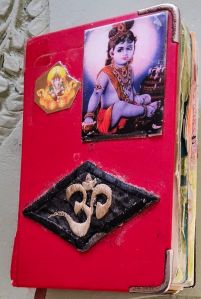
One component of that spiritual practice is our times spent together reading a few verses from the Bhagavad Gita. We pursue our own personal studies, but sometimes one or the other of us will share an especially resonant verse, or an insight or thoughts.

This morning my partner hermit told me, in a casual almost by the way manner, that she’d just read a verse that spoke about not disturbing others, and not letting ourselves be disturbed by others.

At first, I had no memory at all of this verse; I just couldn’t place it. Which might sound a little worrisome, given I’ve been studying this text for seven or eight years.

So, it wasn’t till she gave me chapter and verse and I looked it up for myself, that it finally clicked into place. Of course I knew this verse, but it had slipped from conscious memory.

And that surprised me: this verse seems to me to be speaking to a key concept in the teaching of the text as a whole, as well as to my personal aspirations. Surely, I would think, it should be, what’s the expression? Top of mind?

He [sic] who disturbs no one, and who is never perturbed by anyone, who is unattached to happiness, impatience, fear, and anxiety is dear to Me.

               Bhagavad Gita 12:15

This verse is full of meaning for me. It’s like a one-stop how to lesson in avoiding the personal suffering that’s brought about through attachments. Mind you, once again I can’t help wondering after years of study, and with how much this verse resonates for me, why I had such a hard time remembering even seeing it before.

I suspect the power of the ego and the mind have a lot to do with it. Ego – along with its master, the mind – love attachments to the world, to anything really. I guess they are always doing their best to keep me attached to my compulsions and aversions.

Imagine though, not being disturbed by anything – or anyone – and me actually not doing anything that disturbs anyone or anything?

Not just people and other living entities in my immediate physical environment, but out there in the wider world – in the Universe even.

It’s about vibes isn’t it? What vibrations am I putting out into the world? Are they vibrations and waves of love, peace, compassion, detachment, equinimity? Or at they vibes of discord, dislike, anger and sorrow over the stuff I can’t control?

And just think what it would be like if I weren’t so attached to the idea that my happiness depends on getting pleasure or ‘results’ from worldly things, activities based on the senses? Imagine really understanding that the only true and real and lasting happiness and satisfaction can only come come from within my Self?

This doesn’t mean at all that I can’t be happy, or can’t have fun or enjoyment. It is merely saying that, if I can accept whatever comes to me in life without clinging to the things I want, or running away from the things or situations I don’t want, then there will be less suffering.

Ego is jumping in now and wants me to note that, while I may in fact be on the path to detachment and freedom, I’m not far along enough yet to escape its clutches. Anyway, moving right along.

Impatience, fear, and anxiety are tricky presences in the attachment arena. I’m even less far along the path to letting go of these stubborn attachments. But, again, at least I’m on the path.

And what is that path? Where’s it going? Well (paradox alert), on the path in this instance is another way of saying I’ve not realised fully that I am already at the path’s destination. I just think I have a long way to go.
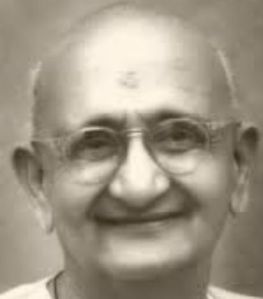
Swami Ramdas (1884-1963) Courtesy Wikipedia

I think Swami Ramdas said: ‘When you set foot upon the path, you have reached the destination.’ I think!

That’s the ‘dear to me’ bit of the verse explained. The ‘me’ in this phrase represents the aspired to full realisation that I am free, liberation or enlightenment some call it. It’s a place, or state of mind in which I move through the world with peace, calm and equilibrium, where nothing disturbs me, and I disturb no one.

That state of liberation doesn’t mean I have given up, or will have to give up, all desires for things I want, nor will I have escaped the things I have aversions to. It simply means I will no longer be driven by those desires and aversions, I will no longer be attached.

It means, too, that I will no longer be concerned in an attached way, to who says or does what to whom, when, where, why or whatever. At that stage I will be in the world, but not of it.

Of course, I am a hermit; you would think it’s easy for me being secluded from the world (well it’s not total seclusion). If only that were true.

I still have the clingings, cravings, and aversions; I’m even attached to the clingings and the aversions.

The one desire, the one I permit myself to cling to, is the desire to free from all other attachments, the attachments that cause so much suffering.
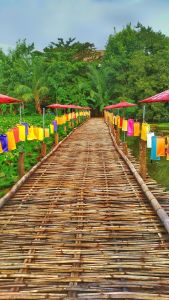
As long at I have that desire guiding my life, then I will be satisfied, when I can be, knowing that one day I will fully realise that I’m already free, unattached, liberated and happy.

There’s a song I wish I could remember the name of, or at least who sings it, but there’s a line in the lyrics that, says something like ‘I don’t want to go searching for what I already have.’ That’s me!
What Will Please You Lord? A Prayer Contemplated

Namaste my friends

In my last post I reflected upon the meaning for me personally of a Bhagavad Gita verse that had particularly struck me as I carried on with my renewed inspiration to read the text from the beginning.

Today, I didn’t even get to the place where my reading left off yesterday. Before reading I like to pray some or all the prayers I have pasted in the front (and the back now). As I was deep into this practice, one prayer in particular stopped me, just as with that verse yesterday.

This one seemed to speak to me, asking ‘What do I mean to you?’ So, I made a mental note (always a risky proposition with me), and carried on with my prayers, determined to take time later to think about that prayer, and try to answer its question. So, here I am, later in the day, making these notes.

The prayer itself I am fairly sure comes from Thomas Merton, monk, mystic, and writer. Not completely sure, but I know that whoever composed it was one clearly inclined towards living the life of the mystic.

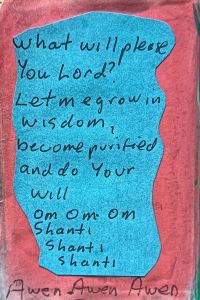
What will please you Lord?
Let me grow in wisdom,
become purified,
and do your will.

For whoever composed this prayer, it is an expression of a genuine longing. I can say that for me it is a deep plea, expresses my own longing. Each time I recite it, in fact, I can say that, although this is the first time I’ve addressed the big what does it mean question, I do sense the longing and grasp the meanings of the various words and ideas in the prayer. Actually, now I think about it, I do say this prayer or parts thereof in one form or another very often.

What will please you Lord?

When I begin to pray these words, what I feel I am actually doing is asking the Universe, the Divine, Self, God – the I AM – how can I live my life so that it is attuned to the natural order and flow of the Universe.

I am asking, what do I need to do to let go of attachments to worldly things which arise from material desires? How do I find the grace to accept when things aren’t going completely my way?

In other words, I’m asking how can i live a good, truthful, happy life in harmony with all other beings and with the Universe.

Let me grow in wisdom

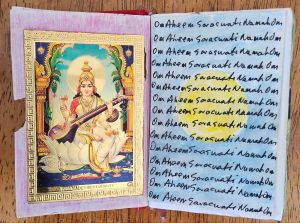
Another of my prayer pages. This one devoted to Maa Saraswati, goddess of, among other things, wisdom

A good place to start, a great first step. But, again I have to ask myself, what does growing in wisdom mean to me?

To me wisdom is not merely knowledge. Though, having said that wisdom needs to rest on a firm foundation of knowledge, otherwise what’s there to be ‘wise’ about?

I’m not talking about worldly knowledge here, though obviously it takes some degree of knowledge for any of us to live in the world. Also it’s relevant to the next part of our prayer; we’ll see that soon.

I’m referring instead to a special kind of knowledge that will (I pray) lead me somewhere closer to acquiring some degree of wisdom – one day.

Self-knowledge is what I’m getting at. And I go about my attempt to obtain self-knowledge in a couple of different ways. I study, sacred texts like the Bhagavad Gita, as well as the words of those wiser than me (which is rather a large selection of people I can tell you) both living and historical.

I meditate (not nearly enough!) as a way to enquire into my own ‘real’ or true nature: who am I? what am I? Just digging deep within to reach some realisation of the answers to those questions.

When I have answered those questions, I will understand that I have reached a true level of self-knowledge. I sense that, at least being on the path to that realisation, I would never be able to develop any level of wisdom.

Mind you, I do feel that all humans are born with some degree of wisdom potential ‘built in’ so to say. As for me, I don’t feel especially wise just yet.

Become purified

For me, becoming purified goes hand in hand with the cultivation of wisdom. In fact I would say that in the very efforts to become purified, it might be possible for me to develop some wisdom as a result of those efforts.

So, here we go again: What does it mean? To become purified? For me it means living a Dharmic life. By Dharmic I mean a life steered and driven by Truth, Right Living, Right Speech, Right Conduct , Right … The Buddha taught The Noble Eightfold Path. That is in my opinion the very best, topmost, pinnacle of self directed means to living a Dharmic or purified life.

The Eightfold Path is not a set of dogmas, rules, or anything like a list of commandments or instructions . The eight steps are merely signposts, a roadmap, pointers for me to follow in order to purify my life, live a Dharmic life. No behaviours are prescribed: it’s entirely my choice what forms my behaviour, actions, and the rest take.

Obviously the path to becoming purified is a life-long one, though some would say that many lifetimes are required. Personally, I can’t even hint that I might be anywhere near close; some days I feel further away than ever.

But, as I work towards ‘growing in wisdom, with the help of my becoming purified path, I pray that some day I might actually learn what I call proper discernment.

This discernment is the ability to act in the world and to react to the joys and sorrows that are inevitable, with compassion, love, and wisdom. To face those inevitabilities with calm and equanimity. Acting with proper discernment will mean that I am living in Truth.

… and do your will

As I reread the words I’ve just written, I realise that, by the time I reach the state described in that last paragraph, I will have succeeded in ‘doing your will.
I will have aligned my self perfectly with the order of the Universe. I will know my place as a tiny fragment of that very order.

If I’m honest however, I have to say that I think it’s going to be a very very long time before such a state come to pass. So, what to do in the meantime?

Well, along with my attempts to live Dharmically, and to cultivate wisdom, I have committed myself to a life of devotion. Devotion, prayer, contemplation.

Devotion to what? To whom?

To the Universe, Divinity, God; all that is represented by all those names we humans have put on the Absolute Reality, that is all there is.

Everything. And everybody, is what I’m saying. There really is no separation except a kind of superficial one we allow ourselves to imagine by applying so many names and forms to the material objects, things and so on, that appear to us as separate one from another, whereas there is in fact only one, without a second.

That’s where the contemplation comes in. It’s a going within, inward to what we imagine is a kind of ‘space’ where all merges into one, the one that is all there is.

I think that’s what ‘pleases the Lord’. While I am indescribably, gravely, deficient at all the steps described above, one course I know to be right for me is to continue to engage with those steps, and to devote myself and my life to the Divine, to the Truth.

That’s what pleases me. I pray that it pleases the Lord.