Over the last couple of months or so I’ve been listening on and off to Jimmy Buffett. I like Jimmy’s music, and I have liked it since the late 70s. I have at least ten of his albums in my Music folder.
Anyway, Buffett is an American singer/songwriter who writes and performs songs about beach life, sailing, exotic island paradises, and generally having a good time down at the beach and in and on the water. And preferably in sunny climes.
Yes. Hedonistic is a word that’s been used to describe his music and the lifestyle he celebrates. Still, I’ve liked him for a very long while now, and every so often I get into his ‘escapism’ and his relaxing in paradise kind of vibe.
Something a little rebellious about many of his lyrics too. But let’s not go there just now. What I want to talk about is a song I’ve listened to dozens of times, but when I played it again the other night, it got my attention in a way it never had before.
What I mean to say, is that for the first time I actually heard the song (Love the Now. Have a listen, you won’t regret it). I got what the writer was saying with his lyrics.
All the pain and the pleasure I love the now All the blood and the treasure
Then another verse:
The whole damn world’s gone crazy The moon is jumping over the cow How can you help But not love the now?
It’s like he’s saying, ‘yeah, it’s all good.’ Not just hedonistic but nihilistic as well. Like he doesn’t care, doesn’t want to know. But, then, in another verse he writes:
It’s the only place I’ve ever been It’s the only way that I know how
It is. That’s what he’s saying. ‘All the ranting and Ravin’ and ‘All the cussin’ and cravin’‘ are there for sure. Or, rather, they are all here. And now. But, dig a little deeper, read between the lines (so to speak).
Listen to this:
Don’t talk about your superstitions Don’t talk about your cats meow But don’t talk about tomorrow tonight I Love The Now
You see? He doesn’t want to hear about your belief systems imposed on you by others. He doesn’t want to hear about your fears that have been manufactured by someone else to keep you in line. And he is not the slightest bit interested in your fancy material toys and other stuff (cat’s meow: a great expression coined in the 1920s meaning fancy, flashy, cool, awesome and other similar epiphets).
And don’t talk about some far off distant future (okay tomorrow night may sometimes seem awfully close to now, but you get the meaning).
The bottom line (literally and figuratively): he loves the now. And that’s because that’s all there is: the now.
So, on the face of it hedonistic, nihilistic even, as if he’s shrugging his shoulders in a ‘so what?’ kind of way. But he’s not doing that at all; he’s actually offering a solution to the overwhelming tidal wave of ‘things that are wrong with the world’, and about which many of us feel helpless and sometimes even hopeless. The Now. It really is the only thing you’ve ever known, the only time and place you can ever hope to be. So why not love it? Why not just live it?
This is not resignation; it is not fatalism or a giving up (or in). In fact it is a courageous engagement with the total reality of life as it is right now. Jimmy writes that:
Tomorrow’s right around the corner I’ll get there somehow But I’m stuck in [the] meantime
A couple of days ago when this powerful and important statement in the form of this illustration showed up on my social media, I was struck by something I don’t think I’d noticed before. Suddenly I saw: ‘might not change the world”. Might not? Which gave me the idea: it could as easily say ‘Helping one person might change the world …’.
But, you know, my thinking went even further: I realized that might and might not have nothing to do with it. The reality is that every action we take, and that includes the action of helping other living beings, actually does change the world.
Well, firstly, which of our actions help other beings, and thus change the world, we can’t always know. And obviously we can’t always (actually it’s more like very rarely) see the impacts of our actions. And even if we do, it’s likely that we’ll only directly get to see what happens in a limited and local sense. Nevertheless, all actions have a tendency to result in a domino, or cascade effect that literally never stops.
But, wait, there’s more. I kept thinking about it, and came up with a couple of ideas about why it could be a good idea to change the might not in this marvelous saying, which speaks of a negative possibility, to always will, which points to something definite.
All is one on the physical and the non-physical levels
We’ve all had those moments when we sense a connection with the rest of the world; we feel that we are part of nature, part of something bigger than just the one of us.
But, have you ever felt you were even more than just a ‘part of’ the world or nature? Have you ever had a sense that you are nature? Maybe this sounds a bit esoteric: we are one Self; we are all manifestations of the divine; we are all sparks of the one light, and so on.
And of course we can’t know for sure what goes on beyond the physical world. But, even at the most basic level of the material world, especially as we get down to the microscopic and even atomic levels, it’s hard to see any ‘separation’ between any individual and another. Atoms merge and cross over, interact, and change, energy fields collide and mingle, between all living and non-living things.
So, who’s to say that one small action on my part, one small change, won’t have a cascading effect as the ripples (that’s a good way to put it isn’t it?) from that action spread through the world and beyond?
The ‘What can One Person Do?’ Dilemma
Our Sydney Smith quote partially answers this agonising question for us as we’ve seen. Still, you might think that one person can’t do a lot when the needs are so many and so vast, and when most problems in our world seem to be so intractable. Mr Smith says that there is always something you as one person, as an individual can do, even if it’s a small thing you do.
Just think how many people everywhere are asking this same question: ‘What can one person do?’ If even a tiny percentage of those individuals answered that they could do something, then you would start to see changes taking place for sure. How could all those actions not add up to a changed world?
The Multiplyer Effect
Just now I used the words ‘add up’. Well actually it’s more like a multiplication effect isn’t it? If we say we change the world by helping just one person, then there has to be a Multiplyer at work I think.
We have all heard that aphorism that if you give food to a hungry person then you feed them for a day, but if you teach that person to produce their own food, then you feed them for a lifetime. Another truism definitely.
Still, once again, I think we can go further. Is it possible that by teaching one person to produce their own food you can help the whole world eat properly? Let me tell you a story I heard on an online video just a few days ago.
A man was traveling in a poor part of a country he loved. He’d spent the previous few years in another part of the same country building a house and growing his own vegetables and fruits.
He met a local person who was renting a small block of land, and that person asked him if he could help them build a house and teach them to grow their own food. It was a poor area, and the land was pretty much a little slice of jungle.
Anyway, this man agreed to help, and has been there for a few years now. He showed that local person how to grow various fruits and what looked to me to be a huge variety of vegetables. And they didn’t forget the flowers either. As the seasons passed, seeds were gathered and more land turned over to growing food.
Apparently from the very start they had a surplus of the fruits and vegetables they were growing, so they began offering them to neighbours, most of whom were also very poor.
Our traveling friend then showed them how to collect seeds from the food they ate (and the flowers too) and began to show these neighbours how to plant, fertilise, care for, and harvest what those seeds produced. In this way they too were able expand the amount of food they could grow.
So, already there is a growing area of this one slice of one country, that’s becoming self sufficient in fruit and vegetables. Now, that’s not the whole world obviously, but you’d have to agree, it’s a good start.
Anyway, just think: those people now have skills and surplus food and seeds to share further afield. Who can say how far such action might spread? It all sounds quite simplistic put like this, but it is the way that many grassroots movements for change have worked. And remember, nobody can reliably predict the ongoing impacts of any actions.
So, yes it is true, helping one person does indeed change the world for that one person. But whatever we do for one person, it also does definitely change the world beyond. As we’ve said, we may not see how or that it changes everything in the world and certainly not all at once.
We may think of ourselves as just one separate little individual, but we are united with all life. We may think that it’s all too much; too many problems; what can I do? The road to changing the world seems to be blocked, seems to be impassable.
Well, one teacher I admire is Swami Ramdas who founded Anandashram in India. Among the many great things he said, this one stands out for me above them all. I may have the wording a bit wrong, but basically the message is:
Once you have set your feet upon the path, then you are already at your goal
Which is another way of saying that if you help one person, then you have already changed the world.
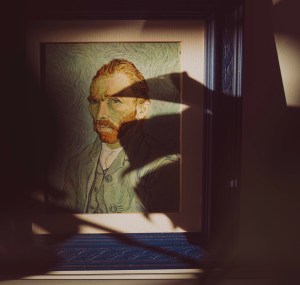
It is an old belief, and it is a good belief, that our life is a pilgrims progress.
Vincent Van Gogh
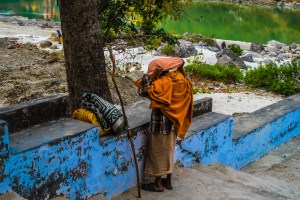
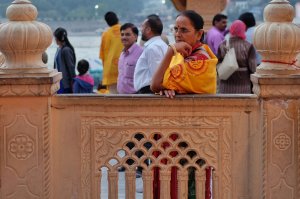
The usual definition of a pilgrim is a person who goes on a journey to a special place, a place that has significance for them, often as a spiritual exercise or quest. Sometimes the journey can be over long distances and a difficult road.
The key characteristic of a pilgrimage is that it is to be undertaken on foot, or put another way, a pilgrimage is a journey we (as the pilgrim) travel on by our own efforts, under our own steam as they say.
In this quote Vincent is talking about that other pilgrimage: the one that goes on on the inside. It’s referring to the idea that our lives can be an inner spiritual journey (or pilgrimage) from our present imperfect condition to a place or state of beatitude. Or as some might say Heaven or Nirvana. Others call it Self or God Realisation. And some other people call it Enlightenment.
You could say that Vincent is suggesting that a pilgrim is one who goes on a special quest to find the answers to life’s big questions; a pilgrim is a person who travels (either out there in the world, or inside on a journey of the heart, mind, and soul) to see, to learn, to do and to grow as a human being.
And, if all goes well, we end up in Nirvana, or a state of spiritual advancement as a kind of nice bonus at the end of the road
Spiritual for me in this context refers to the things that affect or relate to the human spirit or soul and might not be concerned simply with the physical or material aspects of life.
But here is the funny paradox about this kind of inner spiritual pilgrimage: as we learn, as we discover new ways of being and relating to people; as we find answers for ourselves and as we grow as people, we find that changes start to take place in our physical world.
From simply directing the wheres and whens of our activities in the material world, to pushing us in a direction of study, to influencing what people we meet, to the type of work we end up doing and to the actual state of our mental and physical health. It’s that inner pilgrimage that really is running the show of our lives.
So, as we travel the long road of our lives, let’s continue to learn. Let’s keep alert for those insights that come with a desire to grow and to work out what our lives and the world are all about. Above all, let’s keep on pilgriming down that road, and allowing ourselves to be open to new experience, new people, new ways of being.
Another quote from Vincent that I particularly resonate with. This time from a letter to his brother Theo and talking about the lot of the pilgrim:






 Notes from the Hermit's Cave