Insights Gained on the Kora (A Follow On Post to our last one).

Namaste and greetings friends

The previous post on this blog was about the notion of Kora, or the circumambulation of a sacred site or object on foot as a kind of pilgrimage. If you missed it, you can find that post here.

While researching for that blog, I came across an old file in a forgotten folder which also touched on Kora as a topic. I’d forgotten all about it as it was really only a first draft of a proposed post that, at the time didn’t go any further.

Reading it again, I right away realized it was a great theme for its own post and would follow on quite nicely. So, before I share that with you, allow me a minute to set the context.

In early 2020 we had just arrived in a small outback town in central NSW. We’d planned our arrival to coincide with the onset of the very first lockdown put in effect as a response to the outbreak of Covid 19. Our hermitage remained there for about six months before that first (of several as it turned out, though we didn’t know it at the time) lockdown eased and we moved on.

As with that last post, this one features a sports ground, and my adoption of it for the purposes of my own circular pilgrimage practice.

Thank you for your patience
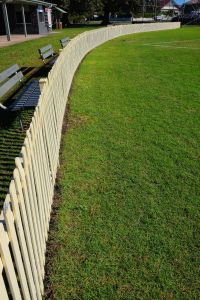
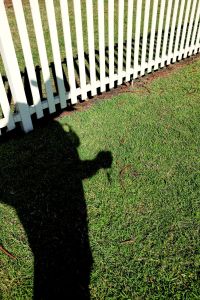
Across the road from the little apartment in which we took refuge a few months ago as fear of the Corona virus spread and travel was restricted, is a sports ground. In freer, safer times, they play cricket, and – in the winter – football there.

That ground, or rather the oval shaped fenceline surrounding it, has become a Kora for us. A Kora is a kind of pilgrimage in the form of a mindful and meditative Circumambulation.

Kora is a Tibetan word, but the concept of pilgrimages circling sacred sites is common to most religious traditions. I guess you might say, we’ve kind of adapted the practice to suit our purposes.
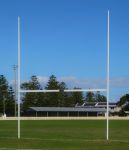
Anyway, a few days ago I noticed that markings had been painted on the grass: a set of giant squares and other lines. I realized that football must soon be returning, along with the reopening of cafes, restaurants, and so on in the town.

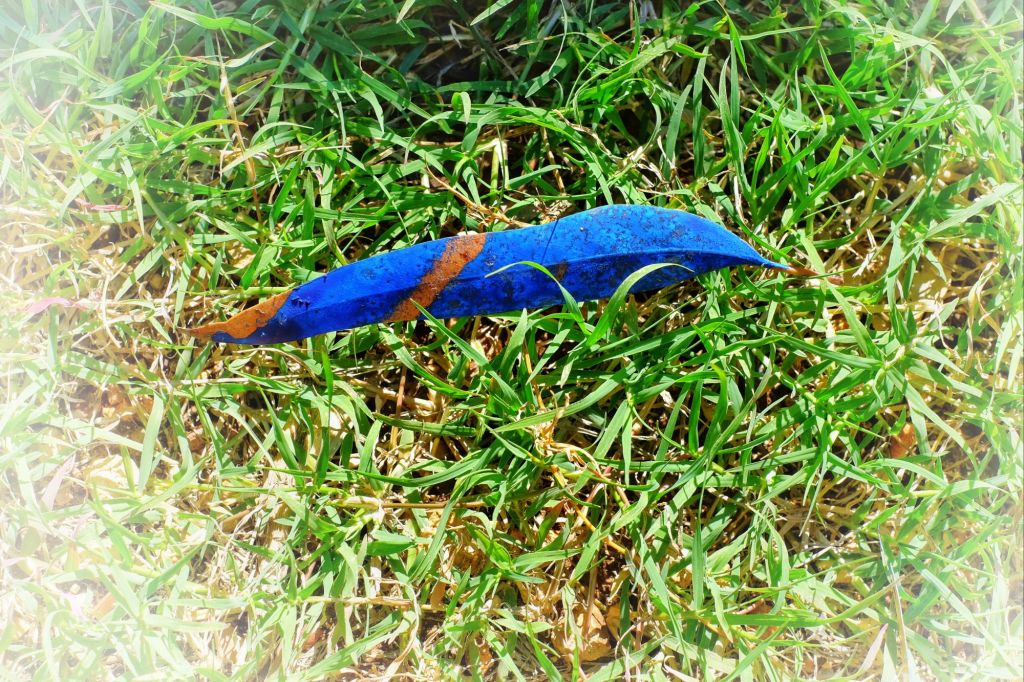
As I continued on my Kora that day, I began to notice that many leaves had been painted along with the grass. It occurred to me that these blue-hued leaves could be seen as a kind of symbol for at least one aspect of the current ‘crisis’ that I’d been thinking about already.

Since first adopting this ground as my own Kora, I’d often seen – and sometimes collected – leaves blown from neighbouring trees by winter winds. I’m always doing stuff like that. Sort of my way of connecting with nature.

Then, on the day in question, I saw the return of human activity to that grassy leaf-strewn space.
I make no comment here, no judgements about rights and wrongs. Life must go on. And with life, the cultural activities of all human communities must resume.

I simply point out that it seemed to me that blue paint on winter-blown leaves is an apt metaphor for the impacts that we, the human species, have on the world we live in.

Also, as you can see from my photo, that impact isn’t always ugly, or bad. In this case, I think it’s actually quite beautiful.
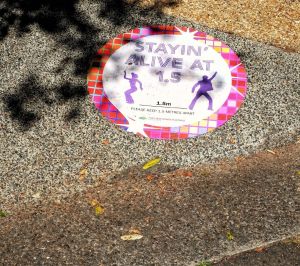
The other thing to say is (as I read on a sign taped to the fence on the same sports ground) please remember to social distance. (note: the pandemic is officially no longer with us, but when you think about it, it might be seen as a wise precaution at any time. There are always germs around waiting to spread!)

Oh okay, one more thing. In a time – in a world – where social distance has become a verb, remember that the only distance between any of us is purely physical and an invented mental construct. All life, despite seemingly unlimited names and forms, is one. There is no separation.

Peace and Love
Circling Sacred Sites is Good for You (Me)

As a self-described Hermit Pilgrim, I aspire always to live a contemplative and secluded life, as far apart from wordly concerns as I can manage. At the same time, I am a pilgrim, in both the sense of the internal journey of the Self as I study and meditate, as well as in the world itself: I move from one living space to another – one temporary hermitage to another- as I feel directed or led.

In the last several years I’ve noticed how often I seem to find myself in one more temporary hermitage that ‘just happens’ to be located right next door or across the road from a sports-ground, or what’s often called ‘a local oval’.

At least three times in recent years, that I can recall. And it is so at the moment. This time the hermitage is in a suburb of a mid-size city (by Australian standards) that in reality is more a low-key and small seaside town on a peninsular.

Anyway, just as with those other occasions, I have been grateful for the oval across the road: It makes for an ideal Kora.

Kora is a Tibetan words that means the act of walking around or circumamabulating a sacred place or object.

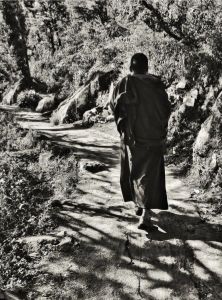
A monk on the Kora around the home and temple of the Dalai Lama in the Indian Himalayas

Tibetan Buddhists do Kora as a form of pilgrimage and walking meditation. It is a devotional practice and it is said to have transformative powers.

Of course Buddhists are not alone in practising this kind of circumamabulation (from the Latin circum (around) and ambulare (to walk).): Muslims circle seven times around the Kaaba in Mecca as the final stage of Hajj .

Many religious traditions consider Mount Kailish in Tibet a sacred place and circling it on foot, even once, is considered by some to be the equivalant of one complete lifetime.

In south India there is another sacred hill called Mount Arunachala. Each year millions of pilgrims walk around its base, which takes a couple of days. In India, the word pradakshina is used to describe such circular acts of devotion and pilgrimage.

And the list goes on: as I said many if not most religious traditions have a practice of walking around sacred sites or places as acts of pilgrimage or devotion.

So, what has any of this have to do with me walking around local ovals or sports grounds and calling what I do a Kora? Well, my intentions are similar to those other pilgrims but perhaps more humble. Let me explain.

Not being a sports-oriented person (not into competition and team sports at all really) I can’t comment too much on the idea that a sportsground is sacred ground because of the sports played there.

I do acknowledge and understand how it is that so many people do in fact consider the games played there as sacred activity with winnings and losings and full of heroic deeds. This indeed makes these places sacred sites.

Then there is the fact that many such grounds are named in memory of local people who have been prominent in the community. And, as is the case with the oval over the road from the current hermitage, ovals do actually become sites of memory.

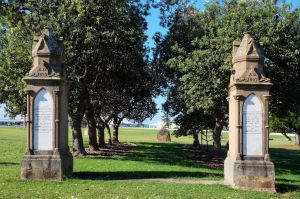
This one, called Lynn Oval hosts several memorials at its periphery: there are tributes to miners who have died in accidents in local mines.

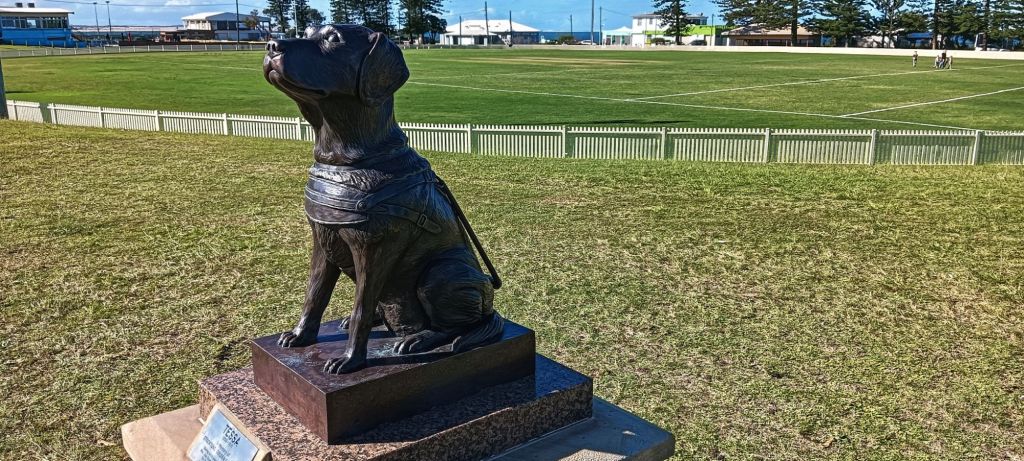
And there is a lovely statue of a guide (service dog for people who have vision impairments) dog called Tessa who is famous in the area for helping to raise a lot of money for more guide dogs.

Lastly but, for me, probably the most significant ‘evidence’ for a local oval being sacred ground is that it, well it just is. Just as all ground is sacred. An affirmation borrowed from First Nations’ Peoples says it all very nicely:

We stand always on sacred ground and beneath sacred skies.

In other words, everthing, everytwhere is sacred. All the rest, the memorials, the games played, they are not what makes the ground sacred, they are the things that people layer onto the space as a way of acknowledging the inherent sacredness.

And that is how it is for me. It’s not me walking around the oval chanting mantra (or at other times ‘just thinking’) that makes it sacred ground, despite being sacred acts in their own right.

I mentioned earlier an alternative word for Kora, pradakshina. This comes from the Sanskrit for ‘to the right’, because traditionally the idea was to always circle the sacred site or object clockwise, so the sacred object remains on one’s right.

Obvioiusly there isn’t much to see on the middle of the oval as I walk around the boundary fence (it’s about 400 to 500 meters by the way). Mind you, the other day a flock of pigeons were feeding in the centre while I walked. Then, at another oval, in another town, there would often be a lone Ibis sitting almost in the centre. It’s all sacred.

This idea of centre has me realising that the whole point for me of walking around ovals chanting my mantra, is the reach my centre. The temple I’m circumamabulating is me; I’m the container so to speak, for the Consciousness which pervades and actually is all there is.

Peace and Love

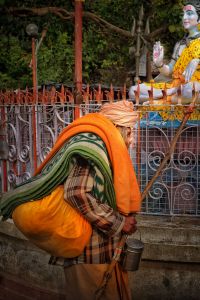
Holy Wanderer: A Saddhu performs pradakshina around a shrine to Shiva in Rishikesh India

PS: I’ve written another post, also related to Kora. Please feel free to visit that post here