Sometimes Happy, Sometimes Blue

Remember, this is just a passing through place

Many years ago now, a wise person I know used these words to remind me of a fact of life that, even now, I sometimes (to be honest, this should read very often) forget: we are – all of us – only passing through. For me, the words have extra resonance beyond what you might call that overarching reality of the temporary nature of our time in this world: I was, born and still am, a nomad.

Even though I very much see myself as being on a never-ending pilgrimage, I do often get anxious about should I move? should I do this? Should I do that? Existential and other kinds of angst are common to all of us I think. So, now and again it’s a good idea to hit the refresh button and click the reminder that I am always in a passing through place.

I often find myself singing (usually very quietly or in my mind) the chorus from Passing Through, a very special Leonard Cohen:

Passing through, passing through.
Sometimes happy, sometimes blue,
Glad that I ran into you.
Tell the people that you saw me passing through

Leonard Cohen – Passing Through

And that’s the refresh: It is literally true to say – both in terms of my internal life journey and where I might be geographically speaking at any given time – that I am only passing through.

Change is constant, that’s the message here. Being sometimes happy, sometimes blue are just facts of life Leonard’s song tells us. But putting the whole chorus together you can see it’s about presence. It’s about being in the ongoing present moment; the moment that just keeps on keeping on. It’s about living in and being conscious of that ongoingness, whether we’re happy or blue.

As I typed that last sentence, about states of happiness and blueness, I suddenly thought of a poem I wrote quite a while ago now. Just Passing Through. Or Seeking Noble Truths. It, too, is about presence, about the attachment to outcomes (like being happy, or not being blue) being the cause of our suffering. Of course this isn’t my idea: it’s one of the Buddha’s Four Noble Truths.

I think I would like to share that poem with you. But let’s do it next time shall we? Because, while there might be no time like the present, as we’ve just seen, the present is ongoing.

So, see you next time

Peace and love

Right Understanding:First Step on The Eightfold Path

In my last post, I reflected upon a lovely Buddhist mantra, an invocation for peace and happiness for all beings (Lokah Samastah Sukhino). We discovered along the way, that it is no ordinary mantra: it actually amounts to a solemn promise to contribute to the peace and happiness of others (and Self obviously).

Then we thought about how to actually go about acting on this promise: Be kind. That’s what I came to. That’s all that is required. But, as you will recall, being kind sounds easy but quite often isn’t. The Buddha himself came to our rescue with  The Eightfold Path,

At the end of that last post, I declared I would devote this next one to looking at Right Understanding, the first of the principles in The Eightfold Path. I said I would just sit at the keyboard and see what emerges as I thought about what is Right Understanding.

Before we get started, let me make the point that The Eightfold Path is not a kind of ‘to do’ list where you tick off one item and move onto the next. The Path is more about integrating the principles into our lives, letting them overlap when they do and moving forward in one area, while (possibly) moving backwards in another as our lives unfold with all the usual twists and turns.

The Eightfold Path is a life-long (some would say lives-long) process; don’t think in terms of goals to be achieved.

Does this mean we will need to explore all eight principles on the Path? Well, we’ll have to see how this evolves over time. Although as I say it’s not a to-do list, I think it more than possible to at least think about the principles or steps on the Path one at a time.

The second thing to say by way of introduction is this: As I mentioned in my previous post, there are virtually unlimited places on the internet where one can source The Buddha’s Teachings, including many commentaries on The Eightfold Path.

I’ve made no use of any of these sources. I have sought only to put down some of my own ideas and learnings, as well as just letting my heart have its say.

If in that process I’ve made any errors of any kind, forgive me. I merely follow The Buddha’s own instruction: Don’t take my word for it; Ask questions; Do your own analysis; Think for yourself.

Now that’s all out of the way, let’s just describe briefly the Four Noble Truths. This is necessary because the injunction to follow The Eightfold Path, comes in the Fourth of those Noble Truths.

Putting them as succinctly as I can, The Four Noble Truths are as follows: The first truth tells us that life is suffering, the second that the cause of suffering is desire (or we can also say attachment), the third that there is a cure for suffering and the fourth tells us what that cure is.

That’s where The Eightfold Path comes in: it’s what you might call The Buddha’s prescription for the alleviation of suffering. At this point I would like to suggest that if you are not familiar with the Four Noble Truths, please take some time to check out the topic for yourself.

The Eightfold Path does, as I mentioned last time, in fact sound very easy when put it in list form like this:

  1. Right understanding
  2. Right thought
  3. Right speech
  4. Right action
  5. Right livelihood
  6. Right effort
  7. Right mindfulness
  8. Right concentration

Remember, though, as I said, it’s not a to-do list we can work through one item at a time. Or perhaps we can put it another way: It is possible to work on one item at a time, but it’s not about getting that one completed before one can move on to the next item on the list.

The first step on this Noble Path we have embarked upon is Right Understanding. Actually it’s not only the first, it is the ongoing one; and it is the final step also on this particular Path of Liberation. And it seems to me that I’m right in this: my life has been one continual search for undetstanding.

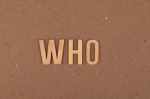
Not many people know this, but I spent some time working as a journalist. One of the fundamental principles (aside from telling the truth of course) that I followed was the, Who? What? When? Where? Why? and How? set of questions.

Now, I wouldn’t say that it was necessary to ask every one of these questions in every situation. But, as a general rule, they served as a useful guideline to getting as much information on all relevant aspects of an event, a person, or whatever the subject of a story was. And I have to say that I find myself quite often using this list or some varient of it when I’m trying to understand or figure out something.

Why those questions? Where do they lead? What am I trying to do by asking them? How do they help me? (See what I mean? I can’t help myself) If we sum it up, then we would say that asking the WWWWWandH questions have the potential to lead us closer to understanding.

Let’s say you are unhappy with the work you do on a daily basis. You don’t understand why; After all, it pays okay; the hours aren’t too onerous, the work itself is fairly easy as work goes. What’s the problem then? You just don’t understand. You know there’s something not quite right, but you just can’t put your finger on it.

Who is doing that job? I am, you say. But, really, who are you? Is it you doing the job or just a part of you that you kind of section off from the real you for the working day?

What are you doing that makes you unhappy? Is it being in that workplace? Is it the work itself? It might be ‘okay as far as work goes’, but is it really okay?

When are you at that job? I guess this question is about how many hours, what percentage of your life you spend doing that job. And, even more to the point of the when question: When are you really there? How much of your work day are you actually off somewhere else? (refer to the where question)

Where are you? Are you where you want to be? And, kind of getting back to the Who question, who is it that’s there? Is it the real you? Or is it that sectioned off bit of yourself you access during work hours while the real you is off somewhere else?

Why are you doing that job/work? Well most likely your answer will be something like: I have rent to pay, food to buy, bills to pay, family to support. Well, those answers have to do with what you do with the money you earn from doing that job. The question lingers: Why are doing that job? I mean, the real you; why?

How can you be happier at your work? By now you’ve got the hang of this. If you have answered all the W questions then you will already be getting some clues about the answer to the H question.

Asking variations of this set of W and H questions can help us in many aspects of life where we seek understanding. They don’t have to be put as formal questions, and they don’t have to all be asked in every situation. Also they don’t have to be thought based queries either, if you know what I mean.

The answers may well come by simply asking the question, and ‘sleeping on it’. By that I mean you don’t have to tirelessly mull over a question. Meditate on it, think about it, of course, but then forget it consciously and let the answer come to you. And, of course you can always literally sleep on it.

There’s a small art gallery in a desert mining down almost in the heart of Australia. On their window they used to have a quote by  Claude Monet:

I know we aren’t talking about art here (or maybe we are?), but I think this quote applies to many of us as we try to understand our lives and our place in the world. Especially when it comes to what makes us happy. All of us spend a lot of time, not so much pretending as in going through the motions. That’s because sometimes it’s just too hard to try and understand.

But, keep at it. Ask the questions but don’t worry about the answers: they will emerge when they’re ready. True understanding is close to love, as Monet says.

Peace to you from me

I love the Now. When else is there?

Over the last couple of months or so I’ve been listening on and off to Jimmy Buffett. I like Jimmy’s music, and I have liked it since the late 70s. I have at least ten of his albums in my Music folder.

Anyway, Buffett is an American singer/songwriter who writes and performs songs about beach life, sailing, exotic island paradises, and generally having a good time down at the beach and in and on the water. And preferably in sunny climes.

Yes. Hedonistic is a word that’s been used to describe his music and the lifestyle he celebrates. Still, I’ve liked him for a very long while now, and every so often I get into his ‘escapism’ and his relaxing in paradise kind of vibe.

Something a little rebellious about many of his lyrics too. But let’s not go there just now. What I want to talk about is a song I’ve listened to dozens of times, but when I played it again the other night, it got my attention in a way it never had before.

What I mean to say, is that for the first time I actually heard the song (Love the Now. Have a listen, you won’t regret it). I got what the writer was saying with his lyrics.

All the pain and the pleasure
I love the now
All the blood and the treasure

Then another verse:

The whole damn world’s gone crazy
The moon is jumping over the cow
How can you help
But not love the now?

It’s like he’s saying, ‘yeah, it’s all good.’ Not just hedonistic but nihilistic as well. Like he doesn’t care, doesn’t want to know. But, then, in another verse he writes:

It’s the only place I’ve ever been
It’s the only way that I know how

It is. That’s what he’s saying. ‘All the ranting and Ravin’ and ‘All the cussin’ and cravin’‘ are there for sure. Or, rather, they are all here. And now. But, dig a little deeper, read between the lines (so to speak).

Listen to this:

Don’t talk about your superstitions
Don’t talk about your cats meow
But don’t talk about tomorrow tonight
I Love The Now

You see? He doesn’t want to hear about your belief systems imposed on you by others. He doesn’t want to hear about your fears that have been manufactured by someone else to keep you in line. And he is not the slightest bit interested in your fancy material toys and other stuff (cat’s meow: a great expression coined in the 1920s meaning fancy, flashy, cool, awesome and other similar epiphets).

And don’t talk about some far off distant future (okay tomorrow night may sometimes seem awfully close to now, but you get the meaning).

The bottom line (literally and figuratively): he loves the now. And that’s because that’s all there is: the now.

So, on the face of it hedonistic, nihilistic even, as if he’s shrugging his shoulders in a ‘so what?’ kind of way. But he’s not doing that at all; he’s actually offering a solution to the overwhelming tidal wave of ‘things that are wrong with the world’, and about which many of us feel helpless and sometimes even hopeless.
The Now. It really is the only thing you’ve ever known, the only time and place you can ever hope to be. So why not love it? Why not just live it?

This is not resignation; it is not fatalism or a giving up (or in). In fact it is a courageous engagement with the total reality of life as it is right now.
Jimmy writes that:

Tomorrow’s right around the corner
I’ll get there somehow
But I’m stuck in [the] meantime

And, then, most importantly he says:

And I Love The Now

With These Words … Part 5

Well my friends, here we are at Part 5 of my little mini series. As it happens, it’s also the final part.

It’s been a fascinating trip, this little journey we’ve shared. Reflecting on the set of vows usually made by nuns and monks, and how my way of living fits with these undertakings. How well do I live these vows? As a philosophy directing my life, do they work?

Let’s get on shall we? The final vow is Presence, which is the new interpretation on the vow of Stability taken when a person makes a life commitment to a particular place and or community. Obviously for one who moves as much as I do, presence is probably the appropriate concept to take its place

Presence

Just now I was thinking that by far the easiest of the topics we’re looking at here, is Presence. Yet at the same time it is the absolute hardest to write about – even worse to think about.

Why easy? Well, because in a very real sense there is nothing we can say about presence or the present. Of course I could spend the rest of my life reading books, studying, and even writing about it myself; how to live here and now. But all the time the obvious would be staring me in the face.

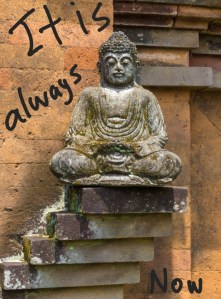
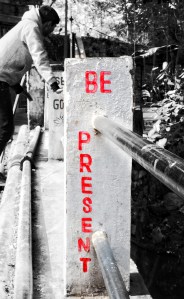
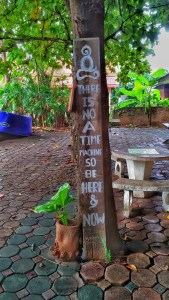
How can we be anything but present? How is it possible to be anywhere but here? And surely it’s always now? A thing called ‘the past’ doesn’t exist except in memory, and the future? Well, where is it? it doesn’t exist. Never will. I know it’s kind of common to hear things like ‘We’re living in the future’, but are we really? Of course not. So, end of story right there I guess.

Except that it’s not, is it? This is where it gets to be the hardest topic to talk about. It seems none of us – us humans anyway – can get our heads around the aforesaid obvious fact of life: we are always here, and it is always now. Why is this so?

Well, speaking only for myself, you understand, I think about it too much. I seem to have convinced myself (courtesy of my ever-busy mind) that there is a way to learn to be present; a how to guide, that I can read or invent myself that will finally allow me to put myself into the present, in the here and now.

And all Along I am sitting here, thinking and writing about how to be present or put another way, how to sit in this spot right now.Do you see where this is going? If I’m not here and it isn’t now, then where am I? And when is it?

Sorry, but I have no answers. Even asking the questions is denying the obvious: I am here, it is now. The trouble is my mind isn’t at all ever content and happy with the present, regardless of how I might feel about it.

In that case, can I say that in my way of living I am committed to presence? To be in the present? Well, speaking for me personally – whoever that me is – perhaps the better question might be: Do I fully realise that I can only be here and now because that’s all there is?

To that I would have to say definitely not. My mind is continually on the run between the deep past and the unreal and unknowable future and all points in between. And my mind loves repeat journeys too!

So how do I intend to come to that place of the realisation of presence? Well, before we go on, you can’t actually intend to be present. Intention is about …

Enough!!!! Enough mind stuff. Please

The truth is, there is nothing for me to DO. I am here; it is now. That’s all there is.

Except one more thing to do: I just have to wake up

With These Words … Part 4

Welcome back to my little mini-series With These Words … , my reflections on how well my way of living measures up to the vows taken by many spiritual seekers, either in a community setting, or as a spiritually oriented hermit, or an individual ‘monk in the world‘ (and monk here has no gender specific meaning. A monk is a monk). Do these concepts work as a kind of philosophy of life for me?

Funny I used the expression measure up just now: You see, we’re at Part 4 which is Accountability. So, measuring up is the very thing we will be talking about right now! Oh, one thing: If you missed any of those earlier Parts to this series, you’ll find links in the PS at the bottom.

Accountability

It goes without saying that we are always accountable for the consequences of our actions, decisions, behaviours, and way of being in the world. Of course there is a deep mystical concept that it is only our material nature that carries out actions in the physical world and that the doer is actually the source of that material nature: God, Self, Brahman. Or you could say the Universe. As in I am a child of the Universe kind of thing.

But, you know, putting all that aside, we are actually living a physical life, and the truth is we are accountable for anything we do in this material world. And that means literally everything: thought, word, deed; the whole deal.

So, the question is not whether or not we are accountable: we just are. The real question is whether I myself acknowledge that accountability and act accordingly to change behaviours or whatever might be necessary.

To be honest, I truly feel that we all very often fail, sometimes even refuse, to even see the consequences of our actions, and therefore fail to make those necessary corrections or changes. Certainly you can put me high up on that list.

So, the big question: Do I feel ‘obligated to explain, justify and take responsibility for [our] actions and to answer to someone [for the consequences of those actions]? (Thanks Dictionary.com for the help here) That someone is very often yourself, or a partner, family member, work colleague, friend. You get it.

Personally, I would say definitely yes, sort of, sometimes. The problem comes up on those occasions when I fail to see, as I noted above. Now, again being very truthful about myself, I would say that most of the time I am aware of my actions, even when I’m not able to control them. But, still being truthful, I am often guilty of picking on the wrong stuff I do and end up blaming myself for innocent actions, and blissfully ignoring the other kind.

I am very big on taking responsibility once I’m aware of a not so good consequence or behaviour, or whatever. Of course like everyone else I do at times defend the indefensible. I’m particularly good with that sort of thing: it often takes me a long time to wake up. Not as long as it once did, but still.

In my attempts to live an authentic hermit life, I think naturally and, through my spiritual practice, meditation, study, and contemplation, not to mention self enquiry and heart level honesty, steadily making progress.

Like I said, being accountable is not the question. It’s about realising that I’m accountable and that I am thus responsible for taking whatever remedial action necessary. And it goes without saying I am also accountable for the consequences of those actions too.

Phew. That’s quite enough of this particular little episode of self enquiry. Okay. Just one more thought:

Remember my last post (I Think, Therefore I suffer. Sometimes) ? About how I was able to divert the ‘poor me’ thought train, to let the ‘I’m really and truly blessed’ express to roll on through? Well it occurred to me that this is a terrific example of accountability. Remember thoughts count as actions too.

I had the negative thoughts, which lead to the consequence of an onslaught of maudlin self-pity. and even in that sad state I realized that there could only be bad stuff come from that self-pity if left to fester – and it might not just be me who gets entangled: self-pity makes vibes, an atmosphere, and that affects everyone.

No, that was not going to happen, so other thoughts kicked in. In other words, I made changes: my thoughts of ‘woe is me’ transformed into ones of gratitude and acknowledgement of my true position.

Essentially I saw the consequences of my actions (or thoughts), realized at some level I was accountable to myself and others for those consequences (actual and potential), and I took action. As I said, this all was going on inside and happened in a flash really. Still, I am still witnessing the consequences of that little incident of being accountable for my actions and acting accordingly.

Enough I think I said? I realise that I have gone on and on and not given thought to the consequences to you, the suffering reader stuck with said verbosity. So, as a responsible hermit who has taken a vow to be a bit more silent at least sometimes, I will stop this post without further ado.

PS Just in case you’ve missed the previous posts in this series:
Part 1 The Introduction and overview
Part 2 Simplicity
Part 3 Purity

With These Words … Part 3

Well here we are at Part 3 of the mini series in which we’re looking at whether or not my ‘philosophy of life’ might be well described by living according to the vows used by many contemporary nuns and monks and that are a reinterpretation or evolution of the traditional vows.

As I’ve mentioned, I haven’t taken these vows, but when I learned about them (Simplicity, Purity, Accountability, and for some, Presence.) I thought I’d look at how well I live up to the life they dictate.

So, welcome. And if you haven’t yet seen the first two parts, please feel free to have a look at them. Part 1 is a sort of introduction and overview, while in Part 2 I asked whether or not I actually do manage to live a simple life.

Well, do I? To be honest, it was a nice challenge looking at that question; I mean it got me thinking about the reality of my life (like the rest of these posts will as well, obviously) and I would say yes, I think I do live a quite simple life, especially in the context of the dominant culture we live in, and society’s demands and pressures.

Anyway, time to get on with the next part of our little exploration.

Purity

Purity. It’s one of those words isn’t it? I mean, probably all of us think we know what it means, but it’s not a word we use on a day-to-basis is it? It’s a word we’d use rarely if ever to describe our behaviour or approach to life. So, what words do I use then?

Which reminds me: purity gets a bit of a bad rap I think. It’s often used to describe standards imposed by some group, or authority, a moral code thrust upon us, from someone or something outside of ourselves.

For me, Purity is really about my approach to life, to myself and other living beings, to the world, to everything actually.

So, with your permission I will try for the rest of this post to use words and ideas that actually mean something to me in my daily life and in the way I try to live.

Clean is a word that comes to mind. It sounds strange (and redundent) to say, but I try to live a clean life. Obviously I bathe regularly, wear clean cloths and try to not spill stuff too often. But, you might not know this, but clumsy is my middle name, so, yes spilling stuff is a curse I live with! (I just had an orange and I think more juice ended up on my shirt than in my mouth).

Now, actually that’s a good start: I mean to say, we’re all fallible beings; we all have things we can’t quite get right all the time: Pu … oops … the P word is a concept to hold on to in an aspirational way; it’s not a hard and fast set of rules or standards where I’m in a I am either, or I am not, scenario. Actually it’s very much to do with the present, but that literally is a story for another day isn’t it?

How else do I try to live clean? Thinking. I try, consciously, and all the time, to practise clean or we can say right thinking. Right thoughts about others, whether I like what they do or not. Right attitudes to others too are important aspirations for me as well.

To be truthful I’m not yet at the stage where I could say that having right attitudes to others has freed me to neither like or dislike people, situations, or whatever. Perhaps now and again, but certainly not all the time. Like everyone else I’m attached to my likes and dislikes, to my prejudices, and biases. As I said, it’s aspirational, something to work on continually.

Part of that right attitude, as well as living clean, is having a compassionate approach to other living beings. Meaning that with my actions, thoughts or behaviour I try to do as little harm as possible. Actually, it’s more than that: compassion for me must be an active thing, not just a vague feeling or intention informing my life.

In other words, I have designed my life (diet, clothing, transport, thinking, and the rest) so that I cause no more death or harm to any living thing than I can possibly manage.

Of course I realise we human beings are simply one more species among the many millions sharing this planet. Nothing any of us do in any sphere of life (our actions in the world, our thinking) can be accomplished without an impact on our fellow dwellers on Earth. All we can do is what we can do.

Aspiration. That’s what it boils down to for me. Did I mention it (you know … P) isn’t a you are or you are not kind of thing? Like the other P word, presence, it has at its main characteristic an ongoingness; there is no time when we can say I am P … .

Nor will there ever be a time when we can say in a way that that’s actually truth, ‘I give up, It’s too hard. I’m never going to be P… .

Which leads very nicely to Accountability, the next of our words to live by. But let’s get into that next time! Thank you sharing this time with me.

Peace and love

With These Words … Part 2

Namaste and Welcome to Part 2 of this little miniseries in which I hope to tell you some more about my ‘philosophy of life’. So before we get underway with Part 2, bear with me as I quote for you the last couple of paragraphs from Part 1.  (If you missed that part, you can find it here.)

After describing the vows traditionally taken by monks and nuns of various traditions (poverty, chastity, obedience, and in the case of monks and nuns committing to a specific place for life, stability).

I explained that I recently discovered how these vows have evolved for many individuals and intentional communities, and how I thought that newer interpretation summed up really nicely the way in which I aspire to live.

One renewed version [of the vows] is: Simplicity, Purity, and Accountability. In the place of Stability, there is now Presence.
While I can’t say I have taken these vows myself, it’s occurred to me that, put together, they do make a fairly precise set of principles that could be said to apply already as I attempt to live authentically as a hermit.

My idea was to look at the vows one at a time to test whether they do in fact represent the way of living I aspire to. Anyway here in Part 2 we will begin with Simplicity

Simplicity

Fingers poised. A whole lot of thinking going on. What to say about simplicity? It’s not as simple as it sounds; actually it’s quite a complicated concept. Certainly it seems that way as I begin to try and define what it means to me.

At its core it really means I live as simply as I can in a world not designed for simple living. Friends of mine have a motto: ‘Simple Living, High Thinking’, which I like a lot, and which fits with my own life.

Of course a simple life starts with looking at what one needs to live a good life which would be defined by one’s own unique needs, occupation, health, age, and all kinds of other personal factors.

For me I’ve found  that it’s not really that much. Over the years I have more and more pared down material possessions; I’ve become adaptable in terms of living in small spaces (and now actually prefer it); my diet, while extremely healthy and interesting, is very simple as I’m not always always looking for variety or new ‘taste sensations’.

I buy very few clothes; again I’m not interested in having a lot of new stuff all the time, I’m very practical and just buy what I need and I am always neat and tidy (well most of the time!), and adequately clothed.

I don’t have a car, though I have in the past. Lots of reasons for this, but essentially it’s a much simpler way to live, even if sometimes I might think it’s complicated not being able to just jump in and drive anywhere you want. A car can be a big responsibility, expensive, and a pain to take care of. Certainly for me it’s been a relief, not owning cars.

My entertainments are also simple. I don’t watch TV because it’s a terrible distraction and I’ve found it’s mostly a tool for marketing of all kinds, with very little of any real value to offer.

Of course, we all know how big a distraction the Internet can be, and I’m just like you: I get sucked into scrolling and into mindless videos and the rest. I’ve found it’s a case of self discipline: sometimes it works, sometimes it doesn’t. I try to use it as the wonderful tool it can be.

I think I mentioned somewhere else that I haven’t been to a cafe or restaurant for several years. They just don’t seem to hold any attraction anymore.

I guess this could go on and on, but basically living in simplicity is an attitude thing. And for me it’s been very much an evolutionary thing too. I try not to draw up pros and cons lists and analyse to death decisions on what to do, buy, eat, and so on. I don’t always succeed naturally!

Simplicity exists alongside the other topics we’re discussing here: they somehow work together to make a whole life. Going for the simple things sort of becomes natural to some degree. I hope that becomes clearer as we go along.

Another thing I will say about simplicity is that it’s a less impactful way of living, both personally and for the world as a whole.

Of course there are quite a few things that can’t be avoided in a world designed to make everything as multi-layered, material thing and fashion obsessed, and as profitable and ‘productive’ as possible. And simple doesn’t always mean cheap, though it has to be said that I live on quite a small income by our culture’s standards, but I would also have to say I don’t think I lack anything materially.


Actually another factor in this simplicity discussion is time. And I see now I’m using a lot of your time with this ever-lengthening post. So, before I go and get ready for Part 3, let me just say something quickly about Time and Simplicity.

For many years my health, my inclination to travel, my aversions to ‘the ways of the world’, and my tendencies to want to create, have meant I haven’t spent a lot of time in the mainstream of working life. And now I am retired.

So I believe I’ve long been given gifts of time in one way or another. But of course, just like everyone else, I can be quite good at putting the words time and pressure together. Again it’s an attitude thing that we’ll most likely talk about when we get into Presence later on. Which sounds like an oxymoron.

So, until next time

Peace and Love from me to you.
Don’t Worry: You’re Not Late


One morning recently I opened my Journal, ready to write: ‘I woke up late today.’ But I didn’t (well I did get up late) I stopped as the thought went through my mind: what does late actually mean.

Well, I know what late means as I suppose we all do, but I Iooked it up anyway. And, of course it means exactly what we think it means: ‘after the expected, proper, or usual time.’

Expected, usual, or proper. Three words guaranteed to get me thinking. After all, who is it exactly that prescribes (or proscribes) what is the expected, usual or proper time or what is not?
Then the lyrics of a song called A Blessing in Disguise by singer-songwriter Graham Connors came to me. One particular blessing he lists in the song is a watch that runs backwards. The watch owner’s friends all offer to have it fixed, but he says no thank you; it suits me just fine:

It reminds me that time is a state of mind
a restriction we place on our lives.

Yes, exactly. I’m sure we all sometimes see time as a restriction. How many of us are tired of (not to mention exhausted by) appointments, schedules, alarms waking us up, too many hours at ‘waste of time’ jobs, too many hours when we’re not at that job, the endless hours spent hypnotized by one screen or another?

In other words, we live bound by restrictions we place (or allow others to place) on ourselves and then we wonder why we’re unhappy, frustrated, exhausted, angry, sad and in need of a break; in need of more time.

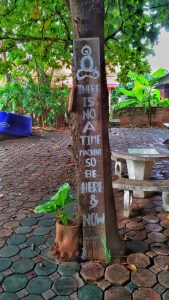
Well, time, as the song says, is a state of mind. It’s how we look at time; that’s the point. Forget the restrictions. No, I don’t mean quit your job (though I never suggest to anyone they not quit their job), ignore family or other ‘obligations’ (same disclaimer). What I am suggesting is that you find ways to look at time as the ongoing present, a state of mind to be in, to be in presence. Not future. Not past. And never ever static.

One can never be late. One can only ever be here and now, in that previously mentioned ongoing present. You are the one to decide what is ‘proper’ for you; it’s up to you to create your own unique ‘usual’

And as for ‘expectations’: well, if you have to have them (and expectations are really only imaginings about events, situations, and circumstances that aren’t real yet and may never be), at least make them your own.
Peace