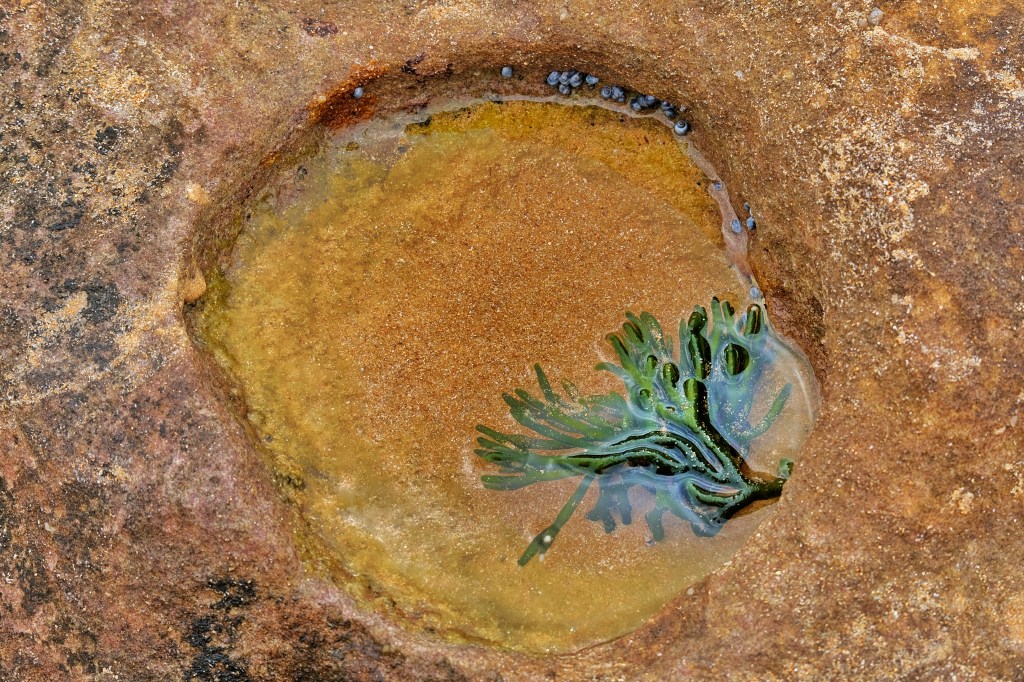
Yellow-Golden sands
carpet the floors
of tidal rockpools,
home to crustations and seagrasses.
And the coffee tasted like medicine.

Yellow-Golden sands
carpet the floors
of tidal rockpools,
home to crustations and seagrasses.
And the coffee tasted like medicine.
Today I’d like to share a poem with you. I wrote it exactly a year ago, but it’s about a day many many years ago. At other places on this site I’ve mentioned that cliched but for me ever so real question: Am I running away from something or am I running towards something?
In one of those other places I joke about my answer: ‘Neither. I’m just a journey person’. Well, this poem began life as a story of the day I first met Jesus freaks as I hitchhiked on just one more random excursion.
Then it becomes at the same time a piece about running, or journeying towards. And, there’s more: it then speaks about the journey as the point of the journey; the movement is the thing
But the thing morphed into a rap about journey beginnings, or at least in the sense of my ongoing attempted, and until a lot of years later, futile escapes from the madness of family and circumstance. That’s the running away bit.

You see, there was something holy felt then, as now, about those seemingly random hitching trips (not that I would dream of hitching in these times). Somehow I knew the Road was the escape route from the growing madness and horror.
Of course I was only able to partially articulate this at that time, but I remember even at 17 (no, it was a year earlier when I’d made my first attempt. I’d forgotten about that) feeling a sort of specialness about the covering of new (for me) ground, the movement, then the arrival at new (for me) places, new towns and cities.
Much of this pilgrimming (for that is what it was) was done in solitude – except for interactions with drivers of course (one of whom was on the day in question one of the said Jesus Freaks) and other necessary people along the way.
I felt a sense of belonging when on the Road; a kind of being in place and in sync. A sense of belonging that I kept fucking up as I let the trickster ego with its taunting messages of fear, loneliness, greed for things and status, and the rest, take control of me and lead me on twisting and tricky roads back to madness.
And now, these 50 years later, I survey the damage done, the cost to self and others. Especially others. No use of course, to look back with wishful thoughts of what if things had been done differently, what if other choices had been made. Such is not truth, not real. Well, none of it’s real anyway is it? Samsara is all it is – it’s all a sea of madness and illusion isn’t it?
Anyway, here is the poem. May it speak to you.
Peace
I woke up that morning marooned in Albion
in a village of warriors, on a street, in a house,
going mad in a nest of madness
on an island of madness, in a sea of madness.
Escape, refuge, safety – waking thoughts.
Waking dreams. Looking for a way out.
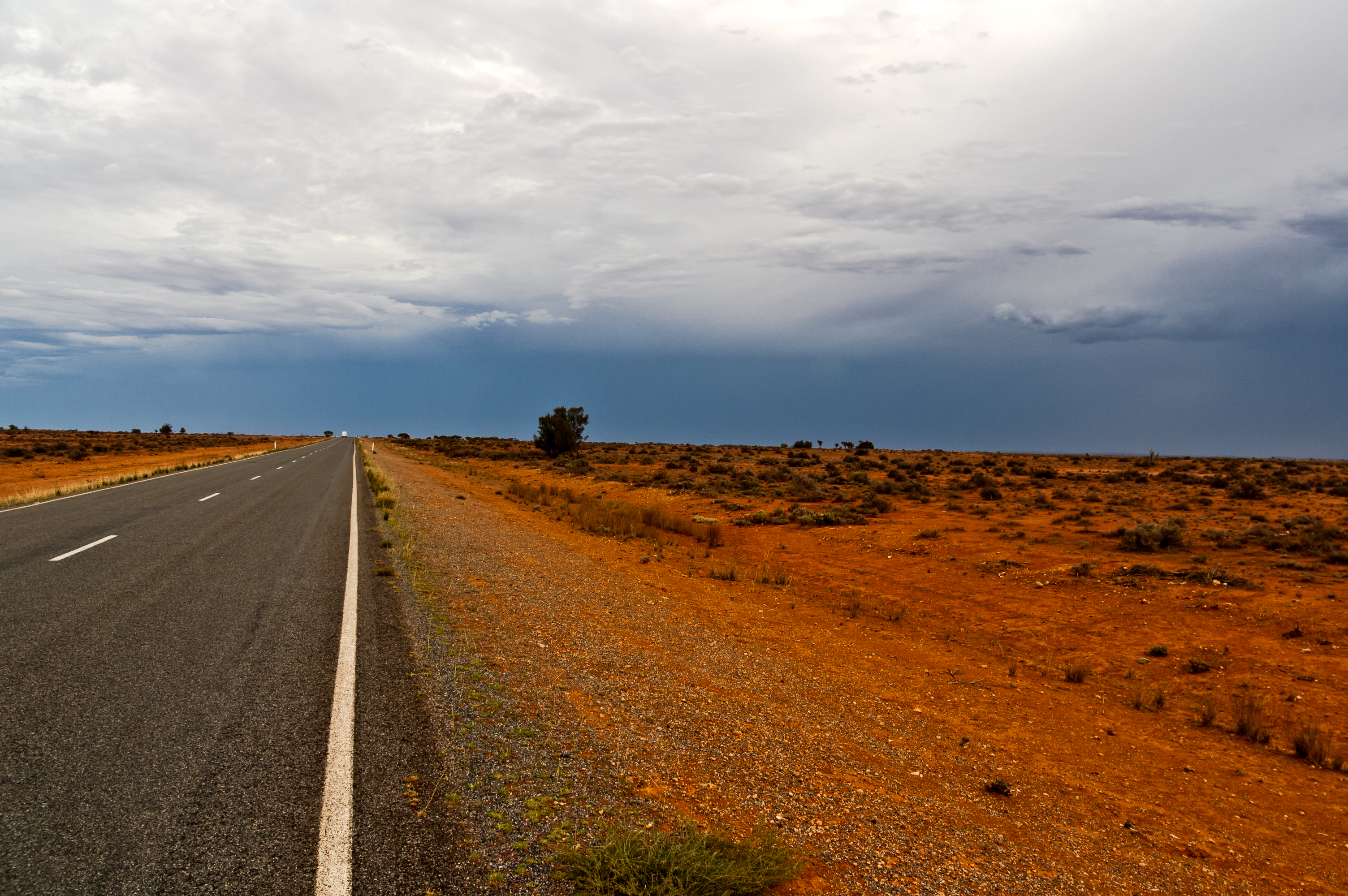
The Road. The Road rose up in my mind.
The Road will save me. Not the shrink
the patriarch screamed I needed to see.
The Road was waiting; I found it waiting for me.
And my thumb in silent salutation and prayer
held aloft in supplication as I trudged on that seemingly straight but trickster road.
Welcome to the pilgrims’ way, the Road greeted me
as I trod ever more lightly
and Babylon’s chariots hurtled past me bound for far nowheres.
Or maybe somewheres.
All in the fast lanes and howling deceptively
of invitations and rejections, attractions and aversions.
Then – in time – an invitation proffered and accepted.
This pilgrim was on his way.
Greetings and Welcome after what feels like a gap of forever since my last post.
Two weeks today since I moved into a rented house way out here Outback in the mining town of Broken Hill, on the traditional lands of the Wilyakali people whose ongoing presence on this country I acknowledge and give thanks for.
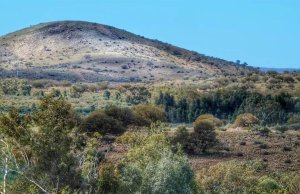
And now, it is the location of my hermitage, my safe haven and refuge. But, no, therein lies the conundrum: I love it here; I know I’ve come to the right place to which I’ve been called. But after two weeks, I’m still not feeling grounded; I’m not really here yet.
Culture shock, fatigue, new environment, excitement; call it what you will; something has me not yet settled and in place. Yesterday a small poem came to me that I think expresses exactly the problem.
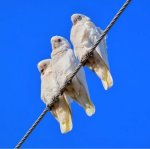
And now I’m sharing it with you as a way of explaining why the gap, why the block.
Peace and love from me to you.
The call to the desert
has been answered.
And now, I am here.
No, to tell the truth, I’m not actually. Here I mean.
So, where am I?
Not there, back there
where I came from.
Not even sure if ‘there’ really exists,
if you know what I mean.
Mind you, when I said ‘here now”
I meant it’s been a short now:
Now that I’m here. Just.
A short stretch – so far.
Here; there; now; so far;
it’s all too much.
And you know what?
It’s all in my head.
In my mind I mean.
A wise teacher once taught:
First thought, best thought.
But for here and now?
As in being here now?
No thought, more like,
is best thought.
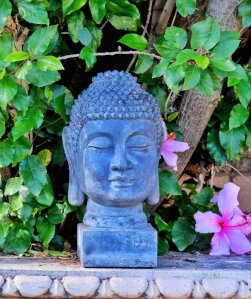
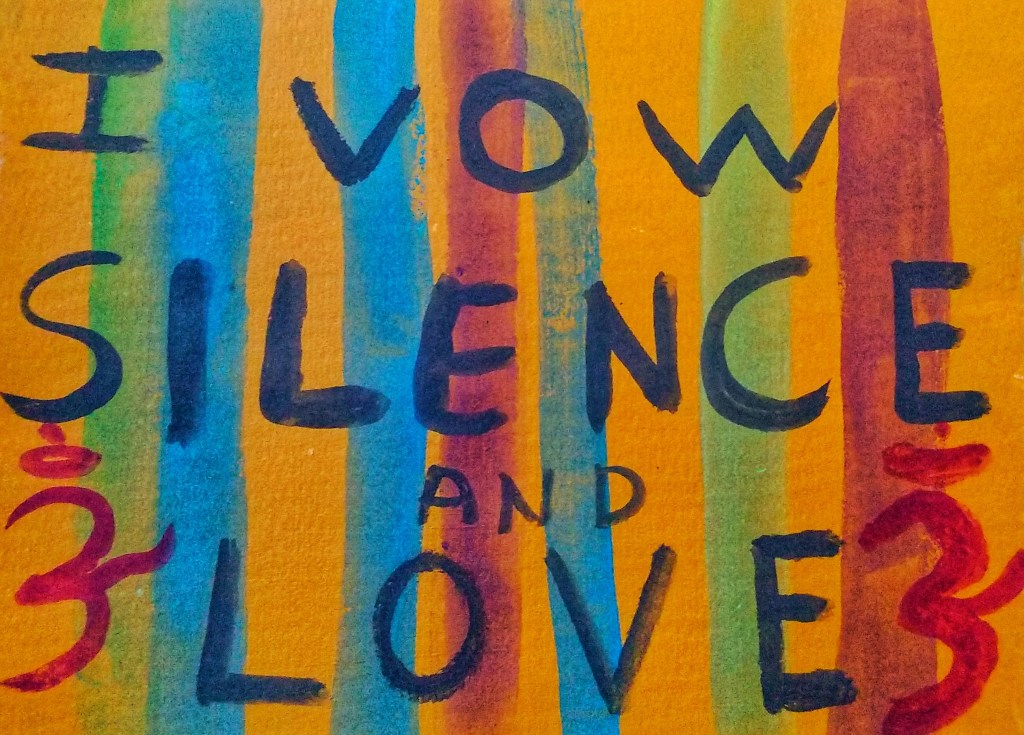
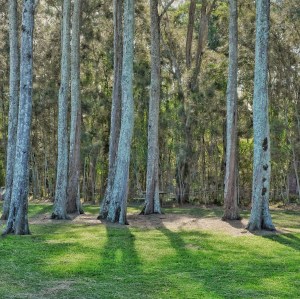
Reverence the place and learn from what you see
Coming across this note last night, I was stumped. I coudln’t think where it had come from, where I’d seen it; nothing at all came to mind. And an online search just now failed to turn up anything either. I mean I must have read it somewhere. Or is it possible it came from me?
Of course it’s all the same: there is only one source. At any rate, it’s an injunction one can relate to anywhere, any place. It’s surely about presence?
And about learning from all that is to be seen (heard, felt, intuited, known) in whatever place one is in now. I mean, the place I’m in now. I am here and it is now.
I’m reminded of the faith affirmation (is it a prayer?) that seems to have been written for this particular hermit pilgrim:
As a a hermit, I am a pilgrim dependent on a pure faith that I am exactly where God wold have me be now.
Sometimes I think that too much thinking about and angst over places other than the one I’m actually in right now, is a sure and certain way to resist and reject any reverencing of the place I’m in, not to mention what’s to be learned or gifted from the experience of being here.

And of course that angst, worry, wishful thinking, or whatever, comes with its own issues of distraction, and of a taking away of one’s Self from the present, the notion that here and now is the only time and place that exists.
A poem of mine I came across the other day while looking for something else says it all quite nicely. This poem is called Transcendental Injunctions, and it’s a rap on presence, about being here, and being now.

The central action describes how my senses can take me away from that here and now: I describe my habit of smelling my Bhagavad Gita (yes, as in putting my nose into the pages of the little book and inhaling the aroma of those pages) and how that takes me back to the shores of the River Ganges; another place, another time.
Anyway, allow me to share the final verse, which speaks of one such occasion:
Then, there is a voice:
I hear it with the ear of my heart:
There is no place to go.
What you seek is within.
There’s nothing to find:
God’s kingdom is within.
I suppose there is nothing left to say. I am here, and it is now
Peace to you from me
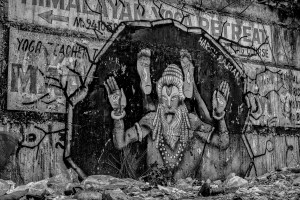
Notes from the Hermit’s Cave is what this blog is called. I promised to publish musings or notes of all sorts: your regular text blog; photos or other pictures; poems; and other assorted bit and pieces.
Well, I’ve rediscovered a poem that I think would be great to share with you.
Looking through some posts saved from old blogs no longer active, I came across theaforementioned poem. It’s about a guy I met in a cafe in India back in 2006. This person kept me and a crowd of other travellers spellbound for a couple of hours one monsoon afternoon. Not to mention the many conversations focused on him that followed in the next few days and the several pages in my Journal recounting the whole experience.

Anyway, as soon as I saw this poem again, I thought I just have to post it here. That trip was a big step for me in my own healing and spiritual journey. And meeting this guy has played a part in all that.
So, please join me in making this small offering of thanks to that guy, whose actual name I never learned, and who forever will be known to several very fortunate travellers as the Cockroach Man
This is what he said.
He’d lived many years in India,
and, in that time he’d done many things.
Even, he said, for a while he’d trained with a yogi, his guru.
This is what he said.
Yogic training is not easy, he said,
In fact, he said, one aspect made him sick
for a year.
This is what he said.
His Guru put beings in his head.
Beings like parasites he said.
Yes, yogic training, it made him sick.
This is what he said.
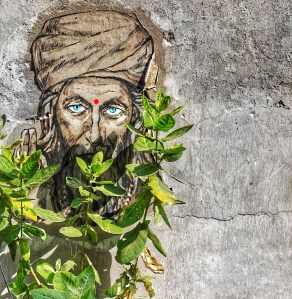
Parasites implanted in the head? A part of yogic training?
No. I don’t think so.
Actually, inserted was the word he used.
‘inserted beings in my head.’
This is what he said.
All gone now, save one, he said.
Only one remains—it’s like a cockroach.
And it’s still in him making him sick.
This is what he said.
At night, he said, there is sometimes relief.
The cockroach leaves and floats just below the ceiling.
Well, its astral body leaves his head and floats above his bed.
This is what he said
‘You’re a healer. You understand,’
is what he says as he turns to me.
Umm, no. Actually I don’t.
But this is not what I said.
Where is he now, the Cockroach Man?
‘It’s winter soon. I’m gonna give blankets
to the villagers.’
This is what he said.
He’s known suffering, he said.
And you could tell he was tired
from fighting the cockroach.
‘I’ll feed the poor.’
This is what he said.
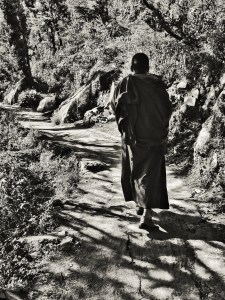
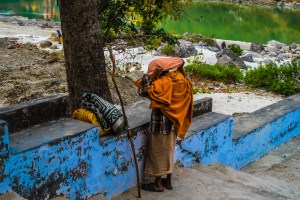
It is an old belief, and it is a good belief, that our life is a pilgrims progress.
Vincent Van Gogh
The usual definition of a pilgrim is a person who goes on a journey to a special place, a place that has significance for them, often as a spiritual exercise or quest. Sometimes the journey can be over long distances and a difficult road.
The key characteristic of a pilgrimage is that it is to be undertaken on foot, or put another way, a pilgrimage is a journey we (as the pilgrim) travel on by our own efforts, under our own steam as they say.

In this quote Vincent is talking about that other pilgrimage: the one that goes on on the inside. It’s referring to the idea that our lives can be an inner spiritual journey (or pilgrimage) from our present imperfect condition to a place or state of beatitude. Or as some might say Heaven or Nirvana. Others call it Self or God Realisation. And some other people call it Enlightenment.
You could say that Vincent is suggesting that a pilgrim is one who goes on a special quest to find the answers to life’s big questions; a pilgrim is a person who travels (either out there in the world, or inside on a journey of the heart, mind, and soul) to see, to learn, to do and to grow as a human being.
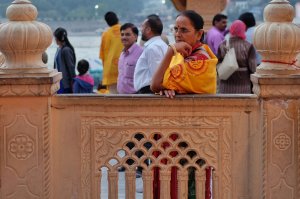
And, if all goes well, we end up in Nirvana, or a state of spiritual advancement as a kind of nice bonus at the end of the road
Spiritual for me in this context refers to the things that affect or relate to the human spirit or soul and might not be concerned simply with the physical or material aspects of life.
But here is the funny paradox about this kind of inner spiritual pilgrimage: as we learn, as we discover new ways of being and relating to people; as we find answers for ourselves and as we grow as people, we find that changes start to take place in our physical world.
From simply directing the wheres and whens of our activities in the material world, to pushing us in a direction of study, to influencing what people we meet, to the type of work we end up doing and to the actual state of our mental and physical health. It’s that inner pilgrimage that really is running the show of our lives.
So, as we travel the long road of our lives, let’s continue to learn. Let’s keep alert for those insights that come with a desire to grow and to work out what our lives and the world are all about. Above all, let’s keep on pilgriming down that road, and allowing ourselves to be open to new experience, new people, new ways of being.
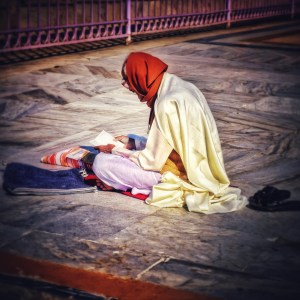
Another quote from Vincent that I particularly resonate with. This time from a letter to his brother Theo and talking about the lot of the pilgrim:
We must continue quietly on our way.
Vincent Van Gogh
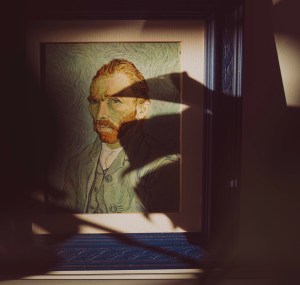
Thank you Vincent for the pictures you gave us; thank you for the words you wrote; thank you for being you.
 Notes from the Hermit's Cave