It Is What It Is

Right at the end of our last post, I mentioned – in an almost off-handed manner – that the hermitage has moved. Better to say the hermits were lead by the ever not so subtle universe to leave our refuge of a year for the safety and seclusion of another abode a few hundred metres away.

Why? Why did the hermits have to move? Well here’s the thing, the owner of that space that had graced us with its protection for that year decided to revive his on and off again campaign to sell the property. And with great success too: very soon there was a buyer very keen to move in ASAP

So, the search was on for a new abode to house the hermits. Cutting a long story short, and leaving out a multiplicity of praises, gratitude, and details, here we are.

Now you know why we moved into a new hermitage. Or do you? You have a few of the facts about how the process of us moving actually manifested in the material world, but as to proper answers to the why questions? You’ll agree that it’s all a bit vague, mundane, and that I haven’t given any answers to why at all.

That’s because I don’t know either; no idea at all.

It’s true, there were some unusual obstacles and pressures – but aren’t there always for everyone as they negotiate and try to manage their lives in the world?

And I could add that the timing could have been better – see above rhetorical question for my response to this one.

No. Like so much (actually everything really) that happens in the on-going, non-stop re creation of the physical world (constant flux, change,seeming chaos, conflicts, setbacks, advances, ups and downs) as it flows along in its own way at its own pace, I have to admit, its a mystery to be unravelled. Or not: there are some who would dare to label this constant re creation, God’s will.
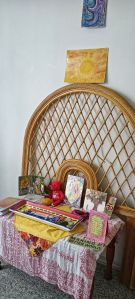
So, we can ask why here? Why now? What’s the lesson to be learned from the move to the new hermitage.

Or we could just tell ourselves that that’s just the way the Cosmos does things. By any standards it’s been a no hitches, no hassles, change of address. But let’s not get distracted by dualities: It is what it is, as I like to say.

And there’s no good or bad, but thinking makes it so.

You’re the Voice, Try and Understand It

One of the things I like about one of our local coffee shops is that they play a nice wide selection of music. Mostly popular songs from pretty much every decade back to the ’60s. I think they have one of those looping playlists you hear sometimes in shops and cafés.

It must be quite a long list because you don’t necessarily hear the same songs repeated at every visit. Which is a nice thing too.

Anyway, yesterday the chorus of a song I heard played got stuck in my head. The song, You’re the Voice, was a hit around the world in 1986 when it was released by Australian singer John Farnham.

It’s essentially a protest song reminding us that we all have a voice, and encouraging us to use our voices to stand up against corruption and war. One of the co-writers Chris Thompson missed out on going to an anti-nuclear protest because he slept late. He felt so badly about sleeping in that he wrote the lyrics reminding us about taking personal responsibility and making our voices heard.

Okay, back to the chorus getting stuck in my head.

You’re the voice, try and understand it
Make a noise and make it clear Oh woah.
We’re not gonna sit in silence
We’re not gonna live in fear Oh woah

You see? It’s very catchy, and an excellent piece of advice too. And, for a hermit monk, it’s actually advice I could and do aspire to live by. Just not quite in the sense the song intends perhaps.

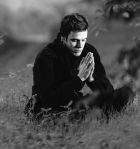
This morning, when my partner hermit suggested we just sit in silence for a while, I spontaneously started singing the chorus, though a slightly modified version:

We’re just gonna sit in silence
We’re not gonna live with fear.

Then, as I sat in said silence, I got to thinking about the words of the chorus.  Nobody wants to live in fear, yet it is an aspect of the human condition and something so many people live with constantly all over the world. All through human history as well.

The message of the song reminds us all that we have a voice which we can use to help create a state of affairs in which we don’t have to live in quite so much fear, fear that’s coming at us from so many sources.

For me, this is a vital, fundamental, and absolutely essential principle. Without those who do stand up, those who do use their voices to try to right wrongs, then, well I can’t think of what that might mean.

Yet, for me, I’ve chosen silence. Not only chosen I must admit: temperament, my own nature, health, all are factors that have made silence the best course for me to take. Silence as in seclusion from the world, minimizing outside imput, and reducing as much as possible the attachment to the world and its things and fears.

And this way of living ironically allows me to use my voice in my own ways to address the Truth as I see it; to help effect change and contribute to the healing so sorely needed.

Being ‘out there’ and engaged with worldly things and activities and interacting with people constantly causes me so much anxiety that it threatens my health and ability to act in the world.

There is also the personal choice aspect, common to so many who live a contemplative life. Silence – when I can actually achieve such a state – gives me the energy and clarity to write; it gives me the mental, emotional and spiritual ‘space’ and energy to pray, to contemplate, and to foster the ‘good vibrations’ I feel are also necessary to turn the world towards peace, healing, and truth, as well as to assist in maintaining the wellbeing of all life.

The world, and all of life, needs both those who can’t or won’t be silent (I’m definitely not suggesting the world needs more noise). We all need people who can and do raise their voices against war, poverty, corruption, and all the ills that plague us.

And it needs those who are able to ‘just sit in silence’. The work to be done is the same; the outcomes perused are the same; and in essence the means themselves aren’t all that different either. Silence as mentioned can include the use of our voices in ‘quiet’ ways, in ways that don’t have to relate so directly the affairs of the world.

It really is a symbiosis: Those of us living secluded and contemplative lives with our prayers, our witness, our creative endeavours, support those active and vocal ones out there trying to heal the world.

And at the same time those out there in the world support the secluded and contemplative ones. Their efforts and hard work, and simply knowing they are there, are encouraging and nurturing for the secluded and contemplative ones.

We are One after all.
Yet our voices are all unique, each and every one.
That’s what I understand to be true.

A Few Thoughts on the Big Question: Why a Monk’s Life?

Just now, on rediscovering a quote I’d noted down months ago, I spontaneously decided to download again the book I took it from. This will be the third reading: seems to be one of those books that keep calling you back.

The book (The Abbot’s Shoes by Peter Robertson) tells the story of the author’s foray into monastic living in New Zealand way back in the early 1970s when he was twenty something.

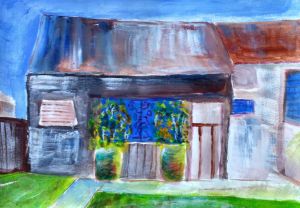
One of many mini monastries we’ve been blessed to live in

I’d like to share the mentioned quote with you, because I think it really speaks to my own commitment to the contemplative, hermit life, which is for us a monastic life too – a hermitage is actually a mini monastery.

Sitting in his apartment one night, completely dissatisfied with life the universe and everything, the author contemplates the state of the world around him.

‘All the marching, all the writing, all the campaigning in the world isn’t going to change this insanity, brutality, and carnage.’

Actually this isn’t the quote I’d made a note of; it’s the preceding  sentence which I saw again today and it seemed to just fill out the context for me. Anyway, after a few moments of quietness and thought, the author concludes:

‘I somehow intuited that the most powerful, significant , and influential  action I could take to change the course of this kind of history, was to hide in a monastery.’

He goes on to reflect that by doing so – living simply, in a community devoted totally to contemplation and prayer – he could become a tiny part of ‘the turning of the tide’.

Years later, reading Thomas Merton‘s diaries, he discovered that Merton had felt the same way, concluding that those living simple, prayer filled, contemplative and quiet lives were ‘keeping the universe from crashing in pieces and falling apart.’

There is a strong sense among contemplatives, hermits, nuns, monks, that this is their function: keeping the whole thing going. Or as our author says, each playing a tiny part in the big picture. I would say, like I know Merton did many times (and acted upon his words), that action in the world is absolutely necessary; it’s just that it can’t do all the work alone.

In our hermitage we too speak often of these ideas, and think about them deeply and try to realise how they affect our lives as hermit monks.

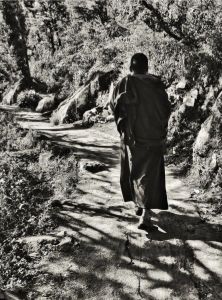
So, hiding in a monastery? Or in a hermitage? It’s true it’s very much a hidden life in many ways. For me though, it’s not about  being hidden, it’s more about just what Black Elk says, I’m trying to make my every step a prayer.

Speaking for myself, it’s not that I’m unwilling to pray for a specific individual, or for peace in such and such a country, or relief from poverty, and oppression for specific individuals or communities.

It’s more that: picking and choosing in that way risks leaving people and issues out inadvertently or through some unconscious bias.

I have chosen to live this life apart as much as possible from the world in order to minimise the anxiery being ‘out there’ causes me, to have the quiet, the time, the ‘head and heart’ space to simply pray. To make of my life a prayer

Let every step you take upon Mother Earth be as a prayer

Black Elk (Ogala Lakota Holy Man)

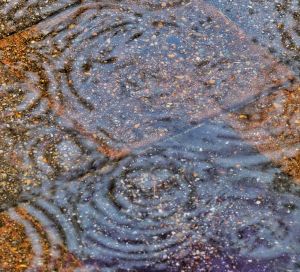
My partner hermit is fond of reminding me of the well known aphorism that a stone dropped in a pond will make ripples that spread out and out. Just like the vibes – the vibrations – emanating from a prayerful life, from all the prayerful lives.

The Hermits (and the Lion) Sleep Tonight

The Lion Sleeps Tonight. That’s the song name I always think of. Sometimes you might hear it called Wimoweh. While it’s the song’s Zulu title, it’s actually not a real word: it references a mishearing (and subsequent recording by a group in the early ’50s) of Uyimube (the original chorus) which is Zulu for you are a lion.

In any case, I feel like I’ve known the song all my life. I suppose I have: it was a smash hit when I was seven or eight years old. It’s been one of those songs that have stuck, become a constant presence, to be hummed occasionally, to be sung even less frequently, heard rarely, but loved and familiar.

Anyway, recently (in March I think) my affection for the song surfaced. I was thinking about something my partner hermit had said about creativity and suddenly the melody to The Lion Sleeps Tonight came into mind.

That melody, and my memory of the lyrics then became integral to the poem I wrote to express some of my thoughts about my partner hermit’s statement. It helped me say what I had to say.

I hope you like it – the song – Listen to the Tokens doing their version from 1961; check out the lyrics too. It’s a happy song, a reassuring song of safety and love.

With that I humbly offer my poem. Enjoy

THE HERMITS SLEEP TONIGHT

A creative way to start the day.
A prayerful way, a prayerful way.

In Samsara’s jungle there is a village, a suburban village.
A prayerful way, a prayerful way.

Near the village – no, in the village
the hermits sleep tonight.
A prayerful way, a prayerful way.

The walled enclosure,
their very own paradise,
like a castle keep,
keeps them safe.
A peaceful way, a peaceful way.

Hush my sisters; hush my brothers.
No need to fear the jungle.
A prayerful way, a prayerful way.

Day breaks; Surya rises.
A prayerful way, a prayerful way.

Sleeping hermits gather, to break the fast.
A prayerful way, a prayerful way.

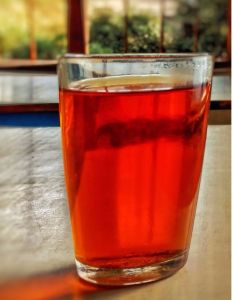
Fast broken, sacred tea imbibed.
A prayerful way, a prayerful way

The hermits begin, begin their day of prayer.

A creative way to start the day.
A prayerful way, a prayerful way.

It’s Dhal Day Today

This morning I announced here in the Hermitage to anyone within range, that today, I would be making lentils. No, I thought, I can’t ‘make’ lentils; my job is to cook them so they might become Dhal.  Jokingly to myself I stated by way of correction in my best mentally affirmative voice ‘It’s Dhal day today.’

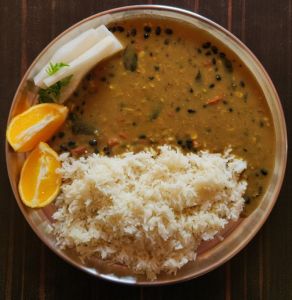
Dhal is an important staple for us here at the hermitage. Please don’t imagine I’m exaggerating  when I say that we eat it everyday. Actually, come to think of it, it might be just an ever so slight exaggeration.

Very very occasionally we choose some other evening meal, always vegan. But to tell the truth, we all like Dhal so much that we hardly ever feel the need for a change.

Anyway, as I say, it’s one of my relished responsibilities to once a week, or thereabouts, play my part in producing the Dhal that sustains the community for the next week.

Just a little aside: Lest you think Dhal is all we eat, I should mention we eat lots of fruits and vegetables, rice and breads, beans and various other things that come to us one way or another.

Please, the inner editor is begging me, can we just get on with today’s topic? Actually, the topic is the Dhal making that has taken place today. So, really, we are still kind of on track.

Right then. Not long after my announcements to the community and to myself, I got to it,  to the task at hand. First, I pour red lentils into a largish saucepan.

Not my picture. Just to give you an idea of what I saw that prompted my feelings

I watched as the lentils streamed from the packet to form a little mountain, first at the bottom of the saucepan, growing to full saucepan scale. Funny thing to say but I was kind of mesmerized by this mountain building. I was struck by the thought – more like a feeling – this is wonderful, this is important.

I mean to say that I felt a little awestruck by the abundance. In a sort of gratitude induced reverie, I scooped a handful of said lentil mountain, letting lentils stream back to Lentil Mountain in the saucepan.

Then it’s rinsing time. You see, you need to rinse the lentils to get rid of excess starch, bits of dirt,  little stones, or twigs. This is a vital step in the process according to the Dhal Grand Master who taught me this life-sustaining art.

In any case, it’s at this stage that you’re allowed to get your hands right into the mix. Run water, swish the lentils around, drain off now starchy, twiggy, stony water. And repeat five, six, or more times determined by the clarity of the water after each rinse.

I like that bit too actually: kind of pleasant sensation as lentils swirl through fingers and you get experience something of the lentils themselves. Nice feeling.

Next step, fill a giantish sized saucepan (I call it the big pot) with the rinsed lentils, add water (very exacting amounts too, but don’t ask me for precise details), bring to the boil occasionally scooping off any remaining bits and pieces as you watch the alchemy happen.

Then, once boiling, it’s time to stir in various spices. Once again, exact amounts are called for, but, well it’s kind of a trade secret. By which I mean, I couldn’t tell you measurements; one just knows. Could be a cook thing. Or maybe it’s a monk thing?

Enough cooking (sometimes the inner editor doesn’t know when to leave the writer alone).

Okay then.

Gratitude. And wonder. Both experienced today – and not for the first time.

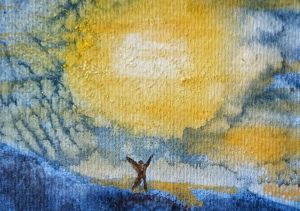
Wonder at & gratitude to Surya (the Sun) which gives and sustains all life, including lentils

Wonder at the aforementioned alchemy that transforms dried, red lentils, a few spices, and water, into a delicious, substantial, healthy and nourishing, food that satisfies and sustains.

Gratitude that I am able to take a small part in this alchemy. Gratitude for the beings who sustain us – me, our community, you, all of us on Earth. Gratitude for the grace I have been granted that actually allows me access to such wonders and abundance.

It’s a lot to be grateful for. All I can add is that it is my deep gratitude that will keep me ‘making lentils’ always.

A Plea for Forgiveness

It was way back in the earlier days of this blog, sometime in 2022, that I wrote a post about our community’s liking for snacking on plain toast by choice. It’s our more or less regular late evening, before bed, bite to eat. Perhaps accompanied by black tea, as I described in that post.

As I also point out in that post, I do actually enjoy plain toast. It’s not that I no longer like jam or other yummy spreads; I like them too well truth be told, but sometimes, well, plain is good.

As the day winds down to become night, and we settle to our evening snack, I will sometimes make a joke about simple food, or monks with simple tastes, whatever. Anyway, a few nights ago I made a remark, a joke, that has had a profound impact on me.

‘I’ll just say a prayer for my two slices of dry toast.’

Of course I am just like so many other religious or spiritually inclined people, and say a prayer before I receive any and all food or drink. It’s a long time habit, and a blessing I like to perform. Just a thank you is all it is really.

This comment, this joke, as soon as it was out of my mouth, I realised, of course I will. Don’t I always?

It’s true that our community lives simply, as simply as we can. And that includes what we eat and drink. It’s also true that this is not some sort of ethical stance consciously taken; nor is it a kind of overlaid act of solidarity with those who have no choices due to poverty or other circumstances.

It’s purely and simple because we like simple. It really does suit our natures and temperaments and for us it is the obvious way to live.

It is no renunciation: we welcome simple. This obviously is not to say that we are unaware that our very natures and temperaments naturally steer us away from choices that are unethical or are out of sync with compassion (call it solidarity) for other beings.

The reason I’m ranting on about this off-hand comment thrown out as a so-called joke is, well just that: It was off-hand, and my misguided intention in making this ‘joke’ was insensitive and careless; it was lacking compassion for all the other living beings sharing life and consciousness with me.

And for that flippancy and carelessness, I ask forgiveness from the invisible community that is in fact all of us struggling to live in a material world.

My sense is that in saying ‘all of us’ I might instead say, all of us who are in truth One; We who are that one Self that seeks forgiveness.