Talking About Sloth

Sloth.  Its a good word isn’t it?  One of those words you don’t have to look up to know what it means.  But if you do look it up, you’ll find it has a couple of meanings.  One is: laziness, indolence and a reluctance to make an effort.

Is sloth a bad thing?  Certainly it gets a bad rap; I mean: lazy? Indolent? Not willing to make an effort? Hardly words of praise. On the other hand we value words like busy, productive, efficient, hard working, and the rest. In our culture, these are definitely words of praise.

Go out and play; Read a book; Go to school; Study hard; Get a good job (whatever that means); How much do you make a year? When are up for promotion?  Demands and questions like these are constants in all our lives, and they force us into defining ourselves by what we do whether we are a little kid at school, a teenager trying to sort life out, an adult trying to make our way in the world the best we can.

Yes, it’s true I think: it always seems to be a about defining ourselves by what we do, rather than who we are, or what we stand for.  Always we have to be doing something.  Ever heard that little identity joke, I’m a human being, not a human doing?  I wonder how many of us would feel lost if we shifted from that need to be a doer to another definition of our identity, one less reliant on what we do or on what we’ve done in the past, or will do in the future.
Well, I hear you saying, this is all fine and dandy, but my boss won’t pay me unless I show up, there are meals to cook for the kids, I’m running late for an appointment, the lawn needs mowing and after that I have to write a report for my night class.

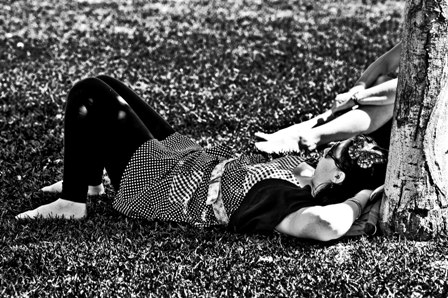
All very true, valid, and all of them things that do need to be done. We all have a life don’t we? But perhaps sometimes, even just now and again, and perhaps just for a few minutes at a time, you can stop. Just stop. Thats all. Stop and just do nothing, or rather stop and simply be.
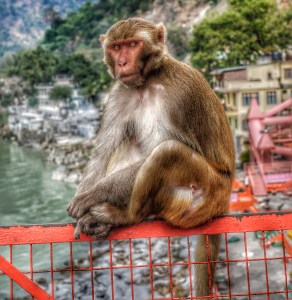
Have I mentioned a favourite little two word sentence I really really like? Just sit. Don’t read, don’t think, don’t try to stop thinking, don’t ‘meditate’. All that’s required is to do nothing. Do No Thing. Actually, I think I’ve found a new favourite.

On, remember I said there are a couple of definitions of sloth?  Well the other one tells us that a sloth is a slow moving nocturnal mammal noted for hanging upside down from tree branches.  It lives entirely in the trees and is capable of only very slow movement on the ground.
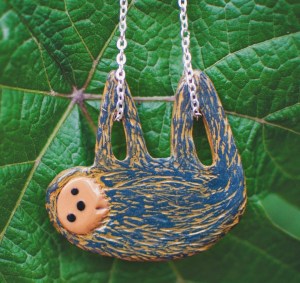
So, I guess you should be very careful when you tell someone else I’m a sloth. Mind you, putting aside the hanging upside down bit, and the nocturnal requirement, it’s probably not such a bad way of being to emulate, do you think?

Have a lazy (slothful) day.
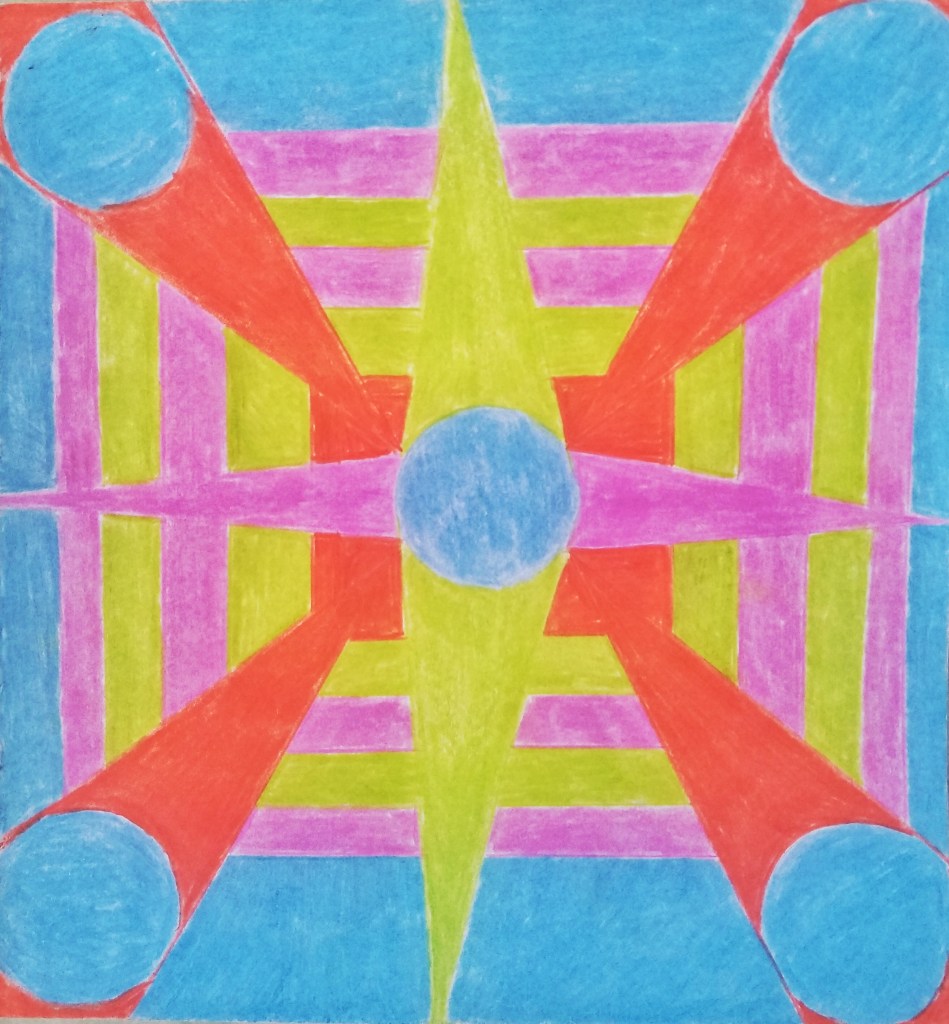
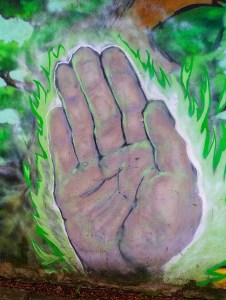
Look! I’m using two hands!

Namaste my friends


In my last post I shared with you a poem. Just another note as I said then. Today I find myself thinking about sharing a drawing with you. Or it’s a design, a ‘symbolic’ illustration. I’m not sure what to call it. Actually illustration is a good word in this case: I’m not exactly sharing it for its own sake, but to illustrate the topic for today’s post. Anyway, moving right along.

For a lot of years I have every so often had an urge to create patterns and designs, and just to colour in things. Just to see colour on the page I think. Just to be making them. They are of many and varied shapes and some are paint, some markers, and some pencil. I picked this one more or less at random so you can see the kind of thing I’m spending way too many words telling you about.

I really enjoy making these things. It can be quite a meditative process; of course mind can wander as always, but I find that if I just focus on the exact mark I’m making or a particular detail, then it pulls me in. Into the zone as you might say. In that sense it can be an intense experience.

And therein lies the problem: Sometimes, particularly with pencils I can be be so focused and intent, that I end up hurting my hand. Holding the pencil too tight, pressing too hard trying to squeeze more colour onto the page (that’s what it feels like anyway), or just old fashioned and typical impatience pulling me to push harder.

Whatever the cause, nowadays if I even begin to use a pencil (writing with a pen is okay for some reason) my hand begins to ache. It’s not terrible pain, just a nagging thing. But certainly it is what you might call a disincentive.

While I was looking through a pile of old drawings a couple of days ago, I thought, I wander if I can use my other hand instead? Now I’m not one of those people who can switch between hands with ease; if there is an opposite to ambidextrous, then that’s me. But I thought, I’m going to try anyway.

So I took a coloured pencil and paper and with my non-dominent hand (that’s an understatement if I’ve ever made one) and tried to just pretend I was colouring in some shape. No lines as such, just colouring in strokes.

Alien alert! That’s what it felt like. Completely and utterly alien. Although my hand wasn’t totally out of control, it felt like it was. Still I persisted, and you know I won’t say I got to the point of it feeling natural or fluid or comfortable, but I could tell there was potential for that to happen.

In a funny way it wasn’t even my hand that was the problem; it was more a mind or brain thing where I just felt out of joint, not connected or something. Quite disorienting actually. But I think I’m going to try again. At least I thought I can use my other hand for the big areas, leaving my usual one for the finer work when necessary.

I suppose it’s like anything new isn’t it? Or rather in this instance it was about realising I’m not able to do a thing, an activity that is meaningful to me because the way I was doing it was making it too hard, or even impossible. And actually causing damage.

Who can say why it’s only just occured to me after so many years of struggling with the issue (on and off). I guess, there’s a right time for everything, or as I often think, there is never a wrong time. Life just is.

Never too late as they say, to do it differently. I guess we’ll have to see what happens. I might end up ambidextrous, who knows? Mind you, don’t be expecting fine art or lifelike portraits with my other hand anytime soon.

Van Gogh: Mystic & Saint?

A few weeks ago I finished one of the most extraordinary books I have ever read. Yes, I know: we live in the days of hype and the redundant superlative. Everything is the best, biggest, greatest. Or, conversely, the worst, most tragic, saddest; it goes on and on.

In this case however I am not exaggerating. This book was amazing. It’s Learning from Henry Nouwen and Vincent Van Gogh: A portrait of a compassionate Life, by Carol A. Berry. From this book I’ve learned as much and more about Van Gogh’s motivations, his vision, his art, and yes, his very nature and soul, than in everything I’ve read, seen or heard about Vincent until now put together. And that includes from several visits to the magnificent Van Gogh museum in Amsterdam.

The book had its genesis in a course the author sat in on in the 1970s put on by Henry Nouwen for Theology students. The course aimed at helping future ministers and pastors learn to connect with their future parishioners. Basically it was about accessing the compassionate sides of their own natures so they might better help others. Nouwen used Van Gogh as a the model of a person who had lived a life built on compassion for others.

The author has mined Vincent’s letters (mostly to his brother Theo) and studied deeply his paintings and drawings, in order to understand and demonstrate what it means to live a life of compassion, and to highlight the artist’s mission in life. For me that mission is summed up very nicely in a quote from one of Van Gogh’s letters:

Art is to console those who are broken by life.

Vincent Van Gogh to his brother Theo

I had a vague sense of Vincent’s spiritual leanings (I knew he’d been a missionary living among poor miners and their families to better understand and help them), and he’d tried to become a preacher. But, before finding this book my thinking hadn’t gone much deeper than that.

But, through reading this book I discovered Vincent was really what many of us might call a mystic. The author goes further and after what i’ve learned, I tend to agree with her: she thinks Van Gogh is a saint.

A mystic in the sense that he tried to live a holy and compassionate life. He viewed all nature (of which he concluded humans are simply one equal part) as being expressions of the divine. And a saint in that he dedicated his life to making art that would inject light and colour into the darkness of people’s lives.

As I mentioned, Vincent had been a missionary for a time. But his radical way of living among the poor and sharing their lives in order to know and love them better was shocking and way too extreme for his bosses, and he had to move on.

So, he finally settled on full-on immersion in his art. His mission was to make paintings that offered comfort and consolation to those who are suffering. And that’s all of us to one degree or another isn’t it?

You can see by now that this supremely accessible (and pleasurable to read) work has had a profound impact on me. This book isn’t only for artists, nor is it a religious book; it is as I have said an inspiration and guide to living a compassionate and loving life.

I don’t want to just say ‘I can’t recommend highly enough that you read this book’; I want to say instead Please, please read this book. Then obviously act on what you have read!

I’ve always admired – loved – Vincent, now I think I know why. Or as Don McLean says in one of the most profound love songs (Vincent) in history (remember, I never exaggerate):

Now, I understand, what you tried to say to me
How you suffered for your sanity
How you tried to set them free
They would not listen, they did not know how
Perhaps they’ll listen now

Perhaps.

Love and Peace from me to you