Walk In The Waters of Life

Since I launched this blog (a whole month and a bit ago already), I’ve had an idea for a post. A short, spontaneous, chatty but informative little piece on my favourite name and form of the Divine Feminine (often referred to as the Goddess): Saraswati.

Well, as the keenly observant among you will have noticed, no such post has appeared. Procrastination in overdrive you might say. Or perhaps it was that the Goddess just wasn’t keen on me doing the post about her?
You see, I did some research, made a ton of notes, and discovered all kinds of fascinating things and I just felt I wanted to share what I’d learned. Somehow, though, the idea didn’t go any further. I’ve thought about it from time to time, but still, nothing has come. Then, a couple of days ago, I came across my notes and reread what I’d discovered.

Now, here’s a key moment: as I reread those notes, I thought (paraphrasing here), ‘I really must post this. It’s all so fascinating and would interest a lot of people and even be helpful.’ Something like that anyway. Yet, still, it is not written.

So, despite my notes seemingly begging for my attention, I guess that maybe it’s not the time. Now my notes are safely tucked into a few nice little folders within a larger folder somewhere in the depths of my harddrive.

All that struggle; all that thinking and fretting over what was supposed to be a short, spontaneous couple of hundred words on a subject I love. Still, the episode has got me thinking about intuition and how it can disguise itself – with our help – as procrastination. And vice versa.

Yes, I know, obvious question: how can we ever know the difference? When are we inventing all kinds of reasons for putting something off, and when is it really intuition trying to guide us?

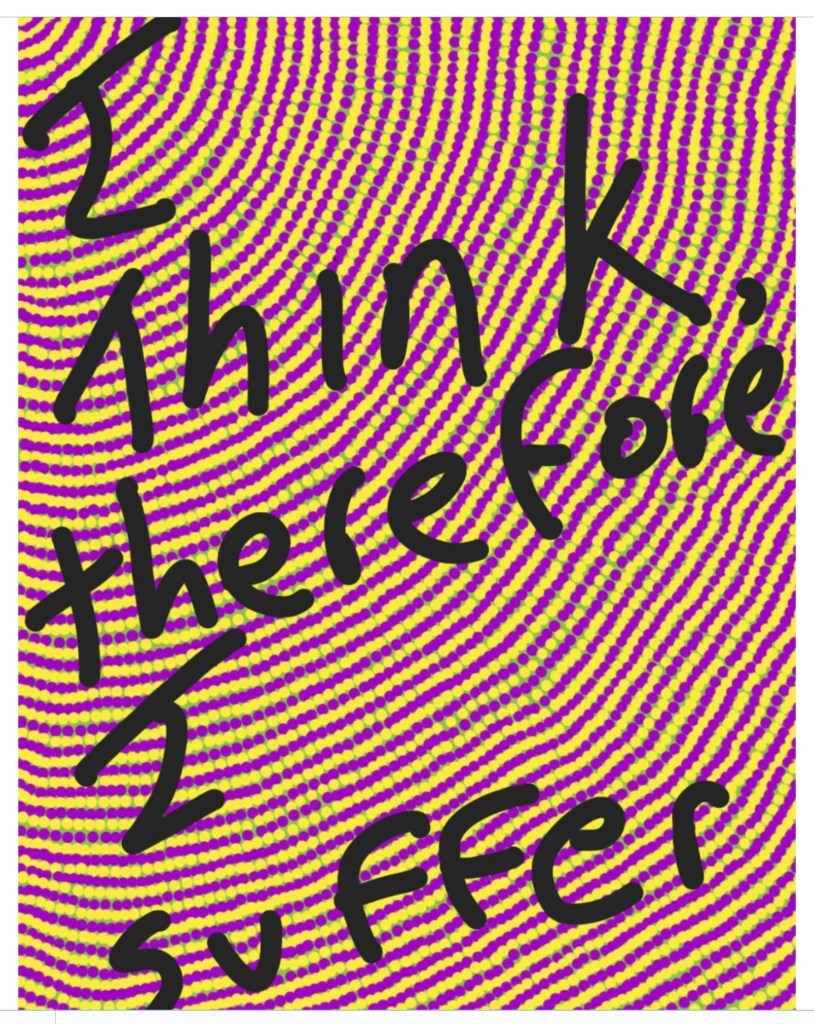
Well, it’s complicated. As creatures able to reason, we are always ready to come up with arguments for and against, to think endlessly and agonize over the smallest and most trivial details while ignoring the big stuff. Really, in my case that’s all there is to it: I just think too much.
Sticking to the Saraswati blog post episode (a catchy title don’t you think? Watch out for a post headed up ‘The Saraswati Blog Post Episode‘), I don’t recall why I didn’t just get right to writing it. It might have been any number of things: a perceived lack of time; a promise to self to ‘give it some more thought’; a resistance to the actual ‘labour’ required. Who knows?

Or, was it more that, while the idea was a good one, I just wasn’t feeling it? Maybe the timing just wasn’t right? The problem is that sometimes an intuition comes in a flash of knowing – with a capital K – that you can’t possibly miss.

Then, other times, it creeps up so slowly and quietly that it gets drowned out and ignored as our monkey mind takes over with its endless arguments for and against, pros and cons, advantages and disadvantages,

The lesson I was given here was this: What is going to get done, will get done; what is not going to get done, won’t. Sounds simple really, but so often we make it more complicated with our overthinking, our coming up with excuses. We procrastinate.

Then, at other times, we just dive in the deep end, flowing with the intuition. It may be right or it may be wrong, but it’s done. Actually, I am trying to realise that there is no right or wrong about a decision made: it just is as it is. Easy to type, hard to do.

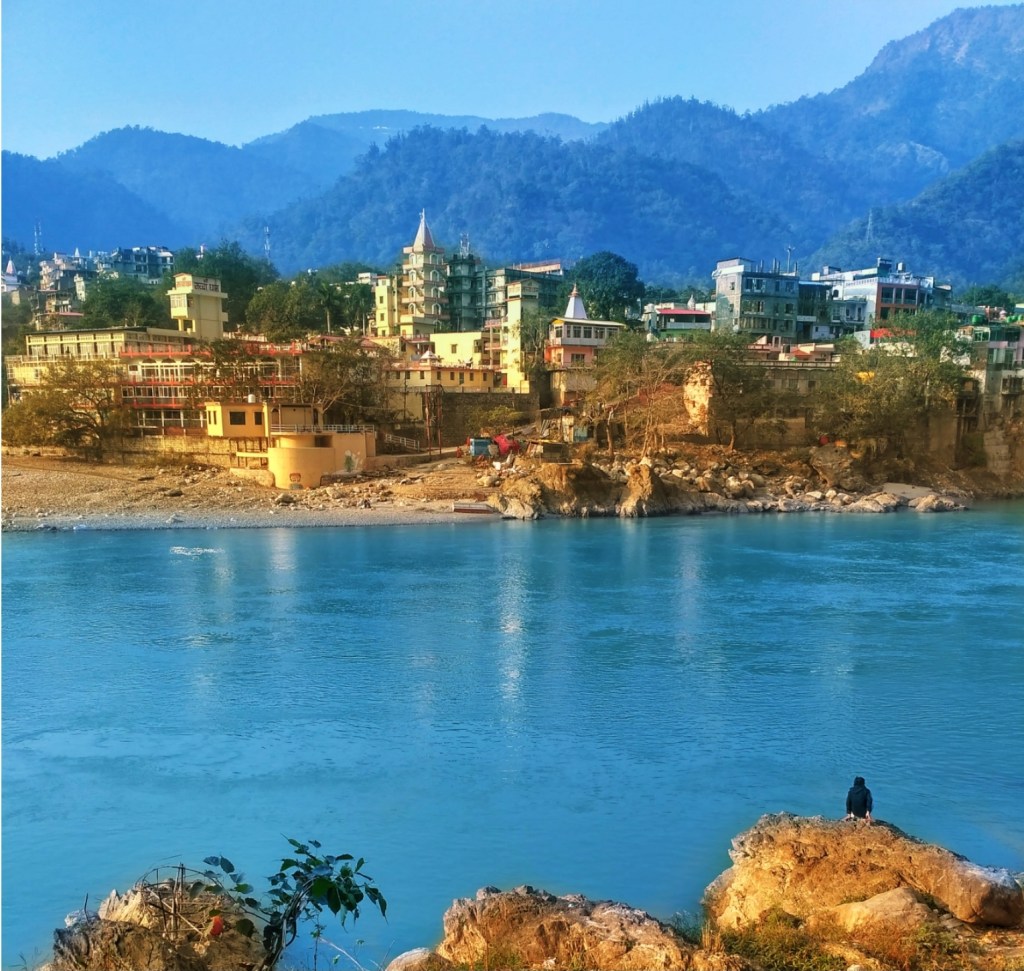
Flowing. That’s a good word actually. Saraswati, along with many other characteristics, embodies flow. As in the flow of the river of life. She’s the Goddess of all things creative as well as any activity that helps one to discover the essence of self.

So, flash or gradual realisation; right or wrong; left or right, be the river: flow with what happens or doesn’t happen. Don’t fret about the twists and turns, the ebb and flow of tides, the rocks in the stream that force us to flow around or over, or to change direction completely. In 1946 the poet Jorge Luis Borges wrote an essay about time. In that essay, among other things he says:

Time is the substance I am made of. Time is a river which sweeps me along, but I am the river (emphasis is mine)

Jean Luis Borges A New Refutation of Time 1946

Reading that quote reminded me of a song that I’ve been humming on and off for a very very long time (hint: I saw the movie when it first came out).

The river flows, it flows to the sea.
Wherever that river goes, that’s where I want to be.
Flow river flow.

Peace from me to you.
PS: Thanks to my memory for giving me these lyrics from The Ballad of Easy Rider. Or was it actually Saraswati whispering in my ear?


Karma Yoga & Contemplative Living: Creating Good Vibrations

Greetings friends

Not so long ago I read The Glass Bead Game by Herman Hesse. And I have to say it’s what I like to call a ‘real book’: written beautifully with an interesting and deeply engrossing story, full of detail, symbolism, thought-provoking ideas, and at the end of the day just plain and simply a delight to spend time with.

I won’t go into what the book is about here, but for the sake of this post, I will just tell you that it is about a mythical European province populated by an elite group of scholars of all sorts who have as their main cultural, social, and even political focus, the game of the book’s title.

Anyway, what I want to talk about here today is something said by the book’s main character, who in the course of the story becomes the master of the game and therefore a hugely influential figure.

This character is having a conversation with a friend. And he’s talking about the way this elite group conducts itself in the world. How it helps shape the country and history. He says to his friend:

We do not intend to flee from the vita activa (the active life) to the vita contemplativa (the contemplative life), nor vice versa, but to keep moving forward while alternating between the two, being at home in both, partaking of both.

Now, what struck me about this quote is that only a couple of days before I’d read a verse in the Bhagavad Gita that I felt said almost exactly the same thing. Krishna says to the warrior Arjuna:

Contemplative life and Karma Yoga are one and the same and takes one to the same destination. One who perceives this sees things as they are.

Bhagavad Gita Ch 5 Verse 5

Karma Yoga is usually defined as taking action without desiring reward for oneself or being attached to the fruits of the action. It is very much the taking of selfless action that is for the benefit or others. However, because as living beings in the world, we are always taking action and actually can’t not be acting, Karma Yoga is also described as being simply the yoga of action.

The Contemplative Life is most often ascribed to monks and nuns, and others living a life of deep thought, study, meditation and prayer. But any of us can lead a contemplative life because such a life is about being mindful, it’s about considering the consequences of our actions.

Such a life is lived slowly and thoughtfully and would be called ‘spiritual’ by some people. We could also call it an examined life. It is about cultivating an inner life, a life of mindfulness in all aspects of our lives.

And living in a contemplative manner helps create more peaceful communities; people living in this way project a calm that can have profound impacts on others. Such people help to set up what some us like to think of as good vibrations

Of course it’s one thing to talk about the Contemplative Life versus the active life in a novel and in an ancient book of scripture. It’s a whole other thing to be trying to figure out what sort of life we should be living in the world here and now, with the urgency of climate change, wars, despotic leaders, increasing poverty and the rest. Or is it?

Is it better for us to take action by protesting, joining activist groups, writing letters? Or is better that we live apart in some way, spending time contemplating, meditating, ‘praying’?

To me it seems there’s a real struggle going on right now between these two points of view. There are those who will tell us that it is too late for ‘thoughts and prayers’, and then there are those who say, we can’t achieve world peace (in its many facets), until we have attained inner peace on an individual level, and that the only way to reach that state is to meditate, live a contemplative life, and slow down.

Obviously, and you already knew I was going to say this, the two are not mutually exclusive; both approaches are required and serve their own purposes. There is no dilemma; there is no conflict. And above all, neither approach is superior to the other.

Many of us are suited to an active life; some of us less so. Some of us are suited to silence and to quiet reflection and study, some of us aren’t. And oftentimes if we try to act contrary to our true natures, then we have great difficulty in achieving anything. And we don’t help anyone when that happens.

Karma Yoga or the Contemplative life. An active life or a life of silence and contemplation. Only you are able to know which is for you. Of course there’s always a crossover to some degree or other. Being fully active and engaged in the world, doesn’t stop one from spending time in a contemplation, and perusing one’s life mindfully.

Equally, leading a totally or partially contemplative life doesn’t mean you aren’t taking action in the world. Obviously you are. For me, the contemplative life is a way to find some personal peace, to create those good vibrations I mentioned, and it allows me to connect with others of like mind, who are working for the highest good. Those living in the invisible community I think I’ve mentioned some other time.

Balance. The key is to find the balance that expresses you and your nature best. So, take some action right now and begin contemplating!