Chant the Name and Write a Blog Post!

Even the biggest dream catcher won’t always catch the dreams

This morning I woke up restless, and extremely tired. It felt as if I hadn t slept at all, though I know I did. Who can say about these things? Perhaps dreams disturbed me or something.

Anyway, despite this grogginess/restlessness vibe, I resolved to get on with morning routines. And, in addition to breakfast and normal stuff, I set an intention to continue with my usual morning devotional practice.

So with that in mind (and a coffee in hand as an extra aid to wakefullness), I sat with that intention and in a mood of devotion.  As is my usual practice, I picked up my Bhagavad Gita.

Now, this particular edition has some pages in front and in the back that aren’t really a part of the main text. Over the years I’ve written things on these pages, and pasted in various pictures, prayers, and other things meaningful to me.

As I picked up the book, it fell open accidentally, by chance, at random, to the pages on which I had placed an image of Saraswati, as well as a page of repeated mantras to her. (I use the female personal pronouns because she is a female representation of the divine in particular aspects. More on this later).

Okay I thought: that’s a pretty clear message about where to go from here. I will chant Saraswati’s mantra for a while. Then I thought, there’s a really nice live recording of the mantra by Krishna Das. Do check it out, it’s very lovely, very meditative and soothing.

So, for about 30 minutes I chanted along with this beautiful renditon of  the mantra. Well, it’s a hymn really, a sacred song. And, now? How do I feel?

Awake! Wide awake, alert, ready to face the rest of the day. Inspired also, hence this quick post. No longer restless, well not as bad as I was anyway.

Oh, I should tell you a little about who I think Saraswati is, though of course if you click on the link on her name above, you’ll learn more.
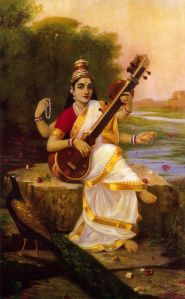
For me, She is a personifcation, a representation, of the divine; the universal consciousness in its aspect of the arts and learning. Obviously, there’s a lot more to Saraswati than that, but for me, she is like a muse, a sort of mentor; She reminds me that art (and study which I have to get to today as well!) is an expression of all that is divine. Actually, art is the divine just as all things are.

I think that Saraswati has been busy with me this morning.  She has helped me to set down these words I share with you. Perhaps, this little story of my morning has reminded me that I can call on Her more often. One of my biggest aspirations, you see, is to share more with you here.

Oh, one last reminder: There is no such as thing as ‘accidentally’, or ‘by chance’ or ‘at random.

Peace
Making Peace with Poetry and a Prayer

Namaste my friends

The poem I want to share with you today has, I think, been shared on this blog before. I haven’t checked because I didn’t want to be tempted to censor myself and not post it again if it has been posted.

The poem, titled simply Peace Prayer, has a repeating refrain in each verse:

Our Lady Queen of Peace Pray for us.

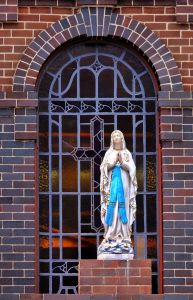
A couple of days ago I came across a church dedicated to this particular manifestation of the Divine Feminine. I know it doesn’t seem to be such a far-out coincidence, but up till then, I had never encountered a church with this name.


So, obviously, it reminded me of my poem, written a couple of years ago now. As well as the story that prompted its writing:

When I was 12 my father went to war. As a professional soldier, he went as a part of this country’s commitment to its American allies in its war against Vietnam.

Our family was, at least nominally, Christian at that time, and anyway, desperate times do indeed call for desperate measures.

Which means we, my mother, my sisters, and I, formed a tiny prayer circle every night for over a year to pray for my father and for peace.

These days I no longer label my beliefs, not if I can help it anyway. What I seek now is the Divine wherever it is to be found. Which is everywhere of course!

In any case, here is my poem. It’s always the right time to pray for peace, though we should always remember our prayers are really directed at ourselves. It’s up to us to answer the prayer as we are able and see fit.

Peace and love to you all.

Peace Prayer

The father, the husband, the man of the house
He’s away. At the war.
Our Lady Queen of Peace pray for us.

Away at the war, yes,
In a far off land. Not his own.
Our Lady Queen of Peace pray for us.

Away at the war. “Incountry”.
that’s what they call it.
Our Lady Queen of Peace pray for us.

At home the children, the wife and mother wait.
Wait and pray.
Our Lady Queen of Peace pray for us.

At home they wait yes.
Each night on their knees,
in a circle. Prayer circle.

Away at the war, he is fighting. For what?
At home, they are praying. For what?
Our Lady Queen of Peace pray for us.

Silence, Solitude: Where can I find it?

Remain in your cell, and your cell will teach you everything

This piece of advice from one of the early Christian desert hermits to a follower has been going round in my head for ages. And I mean a couple of years at least. I’d read it in several books at the time, and I’ve seen it in a few since.

Of course, most of the writers of those books interpreted this advice at face value, literally advising the student, hermit, monk, or other contemplative person to stay in their physical cell (hut, cave monastery cell, suburban bedroom, wherever is their permanent dwelling) and listen, meditate, study, and contemplate. The advice is, stay in that space in silence and seclusion. Quite possibly forever.

‘But it could be the cell of your Self,’ my partner hermit said to me one time. And yes, I thought, that’s exactly right. I liked the symbolism. The actual literal, physical space and its geographical location isn’t necessarily the important factor. What’s important is that you, the real you is actually fully present wherever you are, right here, right now.

Think about what it really means to be present – to be here now: It means that you can say, ‘This is the only space and the only moment that exists. Right here and right now.’

Living life is an ever-flowing movement or process, and at the same time (excuse the unintended pun) is always occuring in the present. And in that ongoing moment you – your Self -is always there.

Of course along for the ride is your little s self with its ego, chattering and never quiet mind reminding you of the distractions, stresses, anxieties, worries about things to do or not do, memories of the past, and fears for the future. It goes on and on.

But, still, that space within where you can meditate, pray, contemplate quietly, that’s your Self, your ‘cell’.

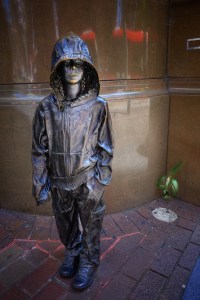
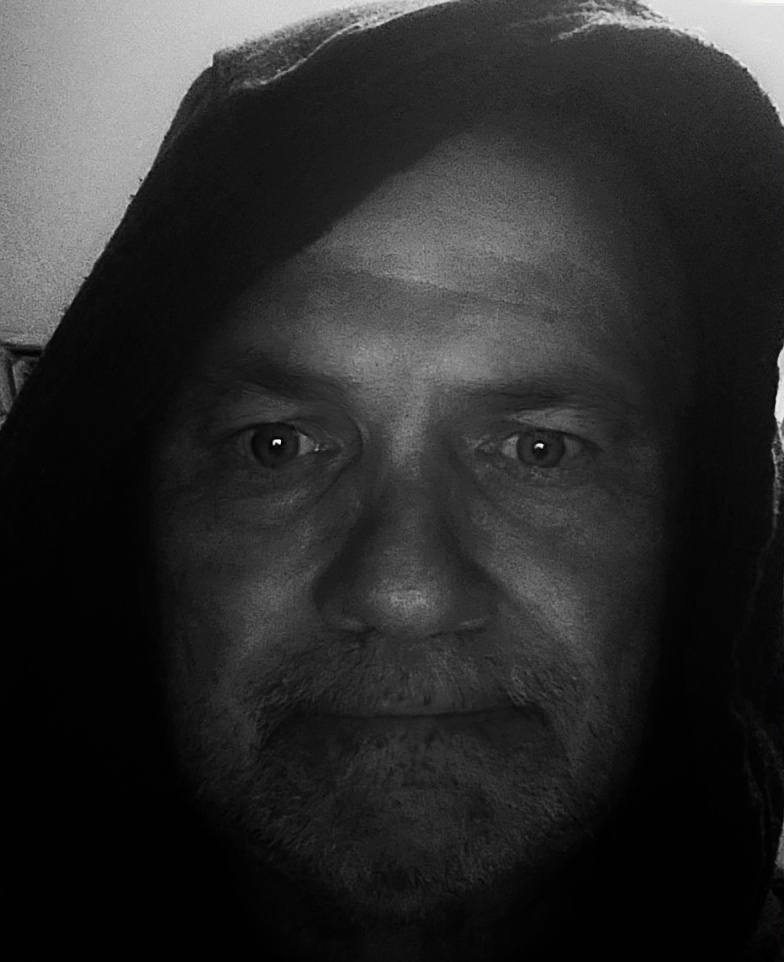
I’ve always liked and worn hoodies. I guess a lot of people do. For some it’s about fashion; others wear them for warmth in cold weather or to keep the sun off when it’s hot; some people even use them to hide.

Then there are others such as nuns, monks, priests and others too, for whom a hood is a part of the robe they wear as a member of their particular group.

In those cases, a hood is called a cowl and most often it’s a largish loose hood sewn onto the robe or habit. Just like a regular hoodie.

I read somewhere (I forget where) that some groups nickname these cowls ‘cells’. In other words, the wearer carries their cell with them wherever they go.

Of course they don’t always actually wear the hood on their heads, but whenever they wish or need to retreat to their cells, all they have to do is simply pull their hood up and over their head and all of a sudden they are in their own private and solitary world; they are in their cell.

As I said earlier, I like the symbolism. But more than that: I find wearing a hood on my head or simply in standby mode, comforting.

I’m not overly good with crowds, or in close proximity to other people on a bus or train or whatever. I like knowing that just by pulling my hood on, I’m able to create my own space apart from my surroundings. In that space I can feel safe and kind of apart.

Even at home I wear a hood when I’m meditating or praying. It’s just one more opportunity to retreat into my cell, into Self

Peace from the Hermit to you

A Small Gift

An Encircling Embrace (Unknown and brilliant street artists)

From the Hermit’s Cave to You, wherever you are

Tell Me: What is God? Dominus Est

Welcome dear reader

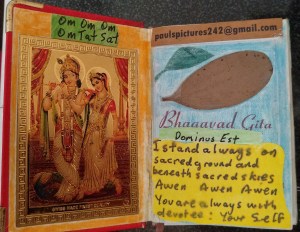
Have I shared with you my Bhagavad Gita? Well, I know I’ve mentioned a few times that it’s one of, if not the primary resource for study and guidance for me.

As you’ve probably guessed, this is a quick photo of the inside of the front cover. And, again as you’ve noticed, I like to stick things in my books, especially this little one. (Actually now I mention it, this is the only book in the traditional format as in made of paper, I own). It’s an old practice and for me adds multiple dimensions and depths to what is already a treasure.

Sometime I’d like to go through and describe to you all that I have added, but for today, do you see the little green section with the words Dominus Est printed?

In the religious tradition I was raised in, these two words have a specific meaning and use. However, it’s only recently that I’ve come to think of this little Latin phrase (well technically it’s a sentence, but …) in the sense of the literal meaning of the words themselves: God is.

That’s it. Or the Lord is, or the Master is. If we change the Dominus, we can use this tiny sentence to define our conception of the divine, the holy, in any way that seems right: Truth is, Beauty is, Art is. For me, God is, sits right. As do the others in this list. Same same.

So, God Is. What else could possibly be said that would add to this already very emphatic and simple statement? Nothing at all. It’s stand-alone, complete in itself.

Like asking who or what is God, we can answer: ‘I am this’ or ‘I am not that’. Or we can realise what for me is becoming the only answer:
I am.

Why? Well, if we were to add anything at all to these two words, such as God is Truth, or God is Love, or God Resides in …, or God is called … , then we are in fact stating only a little of the truth. Sure, God is truth and love, and goes by many names and is found in many forms, but once we say what something is, we are actually making more of a statement about what it is not.

In the beginning there was the word, and the word was with God, and the word was God.

Mind you, it’s perfectly natural, and for many of us helpful, even necessary, to ascribe to God a name and or form. We are ourselves material beings, living in a material universe; it’s logical that we would choose (or need) to see God in a word, a physical object, or attribute some other kind of materiality to our notions of the divine.

I must say that I am one of those who find it difficult to envisage an invisible, non-physical, and impersonal ‘God’. Of course, our little statement, God is, does indeed say just this doesn’t it? Isness is pretty non-corporeal, certainly not in the least physical. And isn’t even a ‘spirit’ or ‘entity’ of any kind; Isness just is. The moment we label something (including ourselves) we miss that isness, that essence.

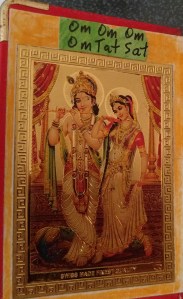
You see my picture of Krishna and Radha? This form, or forms, is one of the several that I feel right in having as a kind of focus, or centre of my devotion to and love for the divine; for love, for truth, and for it all.

You might be saying, this guy does believe in a personal God. He just told us. The truth is I don’t believe or not believe that Krishna (or any of the myriad names and forms we’ve invented) is God. God simply is. And my heart tells me that this is enough.

There are a pair of theological ideas known as Cataphatic Theology, and Apophatic Theology. Cataphatic describes or approaches the divine by stating what God is, while Apothatic (you guessed it) describes God by speaking only of what God is not.

My guess is that pretty much everybody, from whatever tradition, would approach the divine (and not only the divine) in one or other of these ways. But for me it was such a relief to realise that there was no need to go there at all. I could stop with the definitions and the descriptions, the what is and what is not. I have the freedom to not have to believe or not beleive. None of it matters. Dominus Est. God is.

Am I there yet? Have I let go of dualities? Hardly. Maybe the odd glimpse, but it’s rare. And it always will be for as long as I live in a physical body. But to paraphrase something Swami Ramdas said:

I’ve set my feet upon the path, so I am already at the goal.

Peace and love from me to you