
Yes, it’s true: life is precious.
But gold? Silver?
And what about diamonds?
Something to think about.
Peace & love

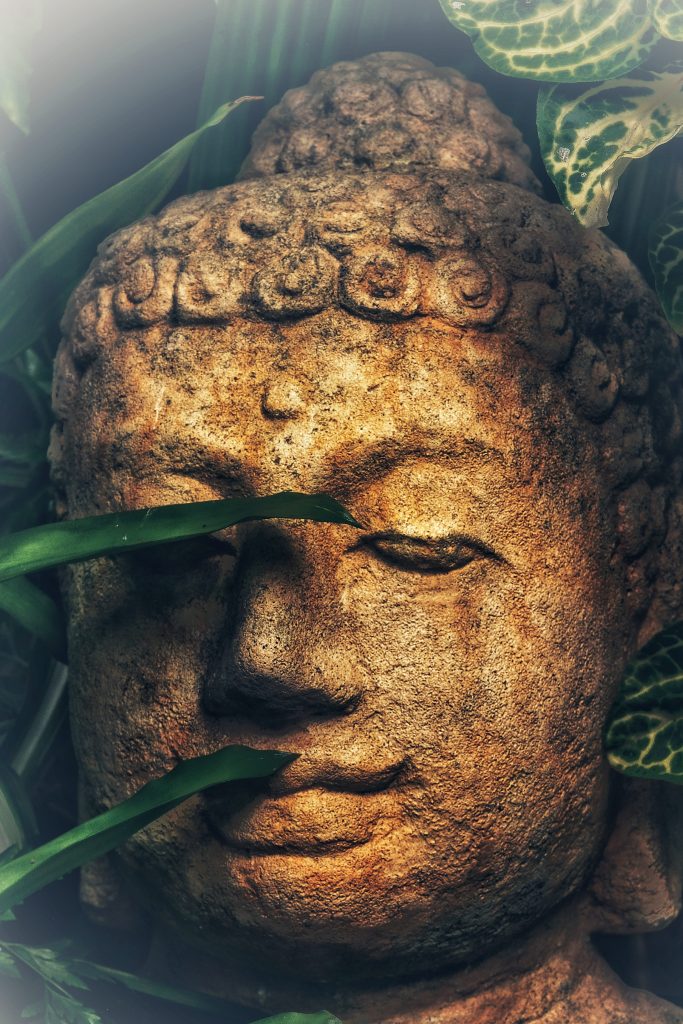
The inclination to seek knowledge is, for me, a gift, a blessing. And we live in a time when there are so many sources, so many resources available, and many are freely available too. There seems to be no limit to what the genuine seeker of knowledge can uncover.
Yes, of course, we’re swamped with information from all sides. We are deceived by fake news. And everything these days is a commodity, a thing to be bought, sold, acquired, or otherwise used for profit in the material world.
All true. However, this is where one’s discernment comes into play. It’s up to each of us as seekers of knowledge (on whatever topic or subject) to discern for ourselves the truth or otherwise of the information we use to form the knowledge we are seeking.
In my last post, I began to talk about two notes that I made in my notebook. These notes were quickly jotted down while seeking knowledge from two different sources about two distinct topics. Feel free to have a look at that post here if you happened to miss it.
Do your duty
Follow Dharma
Live a righteous life
These three lines are the sum of what remains of a session with my teacher, Swami Tadatmananda. It’s his short, succinct summary of the teachings I was trying to absorb from him that day.

You’ve probably guessed I am not a great note-taker; I like to just let sink in what wants to sink in, absorb what resonates for me. Perhaps on that day, I felt the summary was all I needed as a basis for later contemplation.
With that in mind, I would like, in this post, to reflect on these three injunctions, try to work out how I’m doing when it comes to taking notice of them, and actually where I’m at with actually living by them.
What does it mean, ‘Do your duty’? And what does it mean, for me, to do my duty?
Firstly, let me try to define duty. Not from the dictionary meaning, not from some outside ‘authority’. No, this is me talking about how I define duty.
Duty, for me, is defined by the activities I choose to prioritize in my life. These are the things that I believe best serve my true, essential nature. Acting in accordance with this true nature includes responsibilities such as taking care of my physical, emotional, and mental health. While this may not always be easy and sometimes feels impossible, it is my duty because my mind and body are manifestations of my true self, of the divinity.
Duty, again for me, means persuing activites – in the world as well as within myself – that nurture, protect, and grow, who or what I percieve that Self to be.

This Self I refer to is not restricted to the apparently separate entity I call ‘me’. That apparent separation is just that, an appearance: Self is all there is; I am not simply bonded or joined with all other living (and non-living) beings: I am those beings, just as they are me.
As such, my duty is to act in ways that benefit (or at the very least do as little harm as possible to) all beings, all life. Here, I guess, we could talk about Karma. But let’s leave that for now. It’s enough to say that nobody can tell me – or you – what is our duty. In fact, the truth is I already know the full extent of my duty, as we all do.
The only thing lacking for me is what I might call a full disclosure of what that duty is. That full disclosure can only come from me – as in the Self. As they say, I might know in my head what my duty is, but I’ve yet to fully realise it in my heart. And if I’m honest with myself I can say that my aspiration to do my duty is a constant reminder and motivation to do always the best I can to fulfill my duty.
In some areas I think I do my duty pretty well, but in others I have a long way to go.
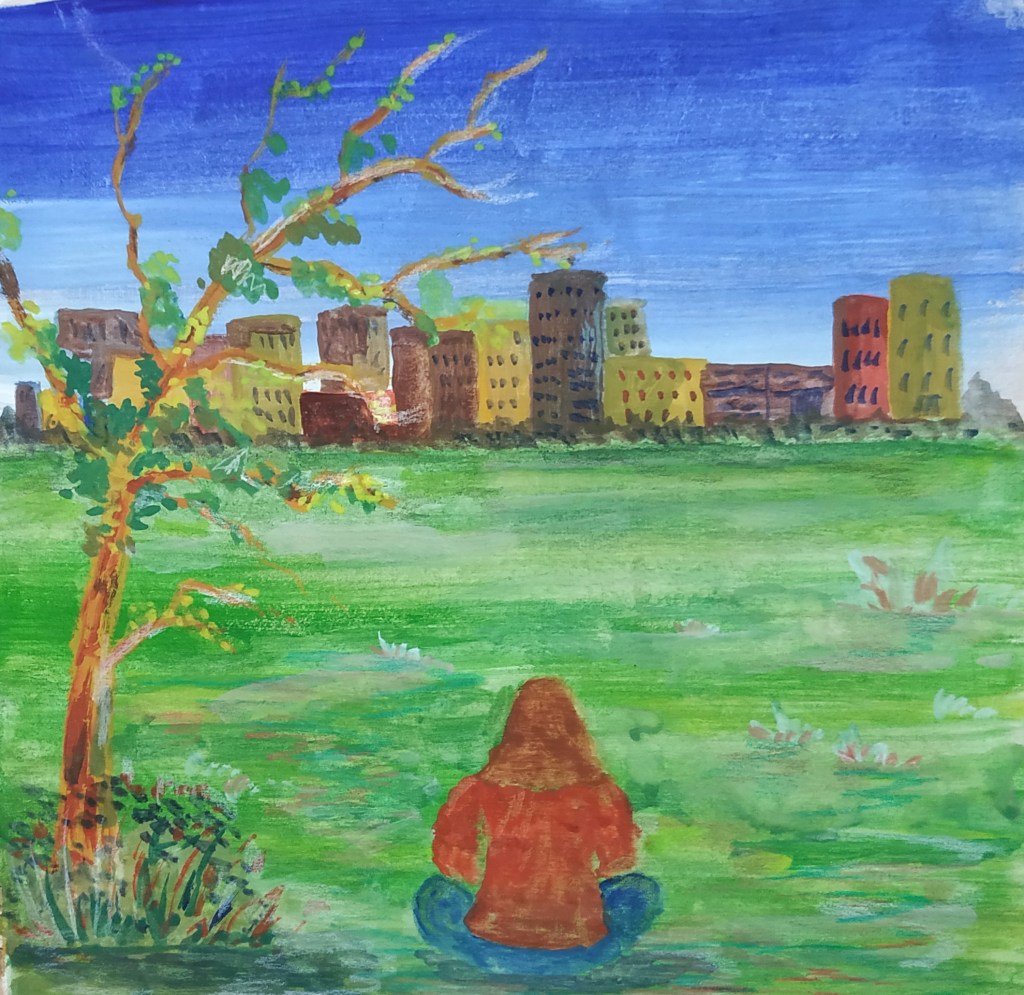
In my next post (and the final one in this series: there just seems to be such a lot to think about when contemplating this topic), I will look at what it is to follow Dharma. Once again, it’ll be a very personal, subjctive answer because, to put it perhaps too simply, I like to think that I know right from wrong.
I hope this post has been of at least a little interest and value to you. I will look forward to seeing you here for my next post.
Thank you and I wish you peace.
Greetings and Welcome
To become a Buddhist, , there are a number of things a person must commit to. One of these consists of a kind of three in one resolution that’s welcomed by any aspirant. In fact, some say that in order to be a Buddhist, one has to repeat The Triratna or The Three Jewels. Three refuges is the other name used.
I take refuge in the Buddha
I take refuge in the Dharma
I take refuge in the Sangha
The exact words used may vary, but The Three Jewels is common throughout the Buddhist world. And of course there will be many meanings ascribed to ‘take refuge’, but the one I like is the one that any of us might use in, say, a heavy downfall of rain. What do we usually do in when the rain starts falling? We look for shelter, we take refuge.

I don’t mean to suggest that becoming a Buddhist automatically means that one is seeking a safe dry cosy place out of the storm. Though, now I’ve said that, it does make sense. I know myself that (though I am not a Buddhist) sometimes the only way forward, the only means to seek the truth, and to find peace, is to take refuge somewhere or in someone or something.
Not being a Buddhist as I said, I’m not qualified to speak about Buddhism in any real detail. What I have in mind is I would like to borrow the Three Refuges and reflect on how we could all use what me might call a ‘secular’ interpretation as a way of putting into words our own commitment to finding a refuge, a safe haven as we tackle what is for all of us born into a physical body, a life of trials, tribulations, ups and downs, storms and lulls, happy times and sad times, and all the rest of the package that’s called living a life.
Let’s take a look at each of the Three Jewels (also known as the Three Treasures which I like a lot), and think about how we can apply it to our own life, to our own seeking of refuge.
For a Buddhist, the Buddha is the Guru, the teacher, the one who holds the Truth and shows the way. Many people would say right now, well that counts me out. I don’t follow a religion. I don’t have a teacher or guru. I’m just another regular person trying to make my way through life.
While it may be true that you don’t have a teacher or priest or guru, or anyone else in the role of guide, there is one person who is always there with and for you, one person who is always thinking about you, who is making decisions for you on which way to go, what to do and all the rest: you.
Yes, you. Your Self. When it comes down to it, who knows you better than you do? Take refuge in you, in the Self. Need to make a hard choice? Look within. Feeling tired, or ill or fed up? Look within you for the answers to what can be done. Follow your intuition. You, plus intuition, plus you taking refuge in you, equals teacher, guide. You are your own guru.
Once again there’s a myriad of ways to define dharma. And once again, I have a favourite: Dharma (often represented by a wheel) according to the religious tradition we know as Hinduism is cosmic or universal law that underpins right behaviour. It is the eternal and inherent nature of reality. In other words it is Truth.
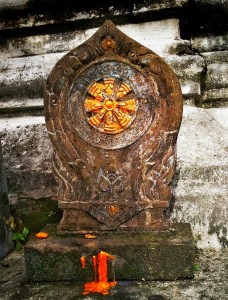
We can all say, regardless of our beliefs say, I take refuge in the truth and in what is right. It’s a commitment to always acting in the best interests of everyone – including ourselves (maybe even especially ourselves). It is taking shelter or refuge in what is right. Living such a life in our messed up world is never going to be easy, so it is best to think in terms of doing the best one can. But having it as your ongoing guide will ease the path.
A Sangha is an association or a community. Often used to describe monastic communities of monks or nuns, it may also include lay people. If we step outside of the religious framework, then a Sangha is a community that shares common bonds, beliefs, commitments, interests, and so on. Family, tribe, workmates, recreational and sports clubs. You name it: all sorts of groups might be sanghas or communities.
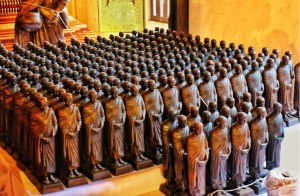
Of course, and perhaps very obviously, not all groups will be communities, And equally we may not think we are a part of any community; we may think of ourselves as being quite outside any group. However there are no rules that say a community has to have a set number of members. Besides, being in community is a condition and has nothing to do with group size or composition.
So, if you find yourself in a community of one – or two or however many – take refuge there. Make a commitment there. As with any other real community, this one begins with you and your truth.
The Buddha, the Dharma, and the Sangha. The Teacher, the Truth, and the Community. Making commitments to the Three Refuges can create a solid foundation as we continue our journey through the world and our lives. The refuges – the safe havens we can call them – we have sought and found will support us through good and bad times.
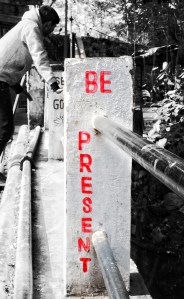
Actually, I just thought: if we are genuinely able to take true refuge in these three treasures then we will conditioning our Selves to be more present, more in the here and now of who we are, what we’re doing, and what’s happening to us.
Peace to you from me
Remember, this is just a passing through place

Many years ago now, a wise person I know used these words to remind me of a fact of life that, even now, I sometimes (to be honest, this should read very often) forget: we are – all of us – only passing through. For me, the words have extra resonance beyond what you might call that overarching reality of the temporary nature of our time in this world: I was, born and still am, a nomad.

Even though I very much see myself as being on a never-ending pilgrimage, I do often get anxious about should I move? should I do this? Should I do that? Existential and other kinds of angst are common to all of us I think. So, now and again it’s a good idea to hit the refresh button and click the reminder that I am always in a passing through place.
I often find myself singing (usually very quietly or in my mind) the chorus from Passing Through, a very special Leonard Cohen:
Passing through, passing through.
Leonard Cohen – Passing Through
Sometimes happy, sometimes blue,
Glad that I ran into you.
Tell the people that you saw me passing through
And that’s the refresh: It is literally true to say – both in terms of my internal life journey and where I might be geographically speaking at any given time – that I am only passing through.
Change is constant, that’s the message here. Being sometimes happy, sometimes blue are just facts of life Leonard’s song tells us. But putting the whole chorus together you can see it’s about presence. It’s about being in the ongoing present moment; the moment that just keeps on keeping on. It’s about living in and being conscious of that ongoingness, whether we’re happy or blue.
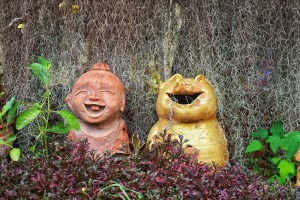
As I typed that last sentence, about states of happiness and blueness, I suddenly thought of a poem I wrote quite a while ago now. Just Passing Through. Or Seeking Noble Truths. It, too, is about presence, about the attachment to outcomes (like being happy, or not being blue) being the cause of our suffering. Of course this isn’t my idea: it’s one of the Buddha’s Four Noble Truths.
I think I would like to share that poem with you. But let’s do it next time shall we? Because, while there might be no time like the present, as we’ve just seen, the present is ongoing.
So, see you next time
Peace and love
In my last post, I reflected upon a lovely Buddhist mantra, an invocation for peace and happiness for all beings (Lokah Samastah Sukhino). We discovered along the way, that it is no ordinary mantra: it actually amounts to a solemn promise to contribute to the peace and happiness of others (and Self obviously).
Then we thought about how to actually go about acting on this promise: Be kind. That’s what I came to. That’s all that is required. But, as you will recall, being kind sounds easy but quite often isn’t. The Buddha himself came to our rescue with The Eightfold Path,
At the end of that last post, I declared I would devote this next one to looking at Right Understanding, the first of the principles in The Eightfold Path. I said I would just sit at the keyboard and see what emerges as I thought about what is Right Understanding.

Before we get started, let me make the point that The Eightfold Path is not a kind of ‘to do’ list where you tick off one item and move onto the next. The Path is more about integrating the principles into our lives, letting them overlap when they do and moving forward in one area, while (possibly) moving backwards in another as our lives unfold with all the usual twists and turns.
The Eightfold Path is a life-long (some would say lives-long) process; don’t think in terms of goals to be achieved.
Does this mean we will need to explore all eight principles on the Path? Well, we’ll have to see how this evolves over time. Although as I say it’s not a to-do list, I think it more than possible to at least think about the principles or steps on the Path one at a time.
The second thing to say by way of introduction is this: As I mentioned in my previous post, there are virtually unlimited places on the internet where one can source The Buddha’s Teachings, including many commentaries on The Eightfold Path.
I’ve made no use of any of these sources. I have sought only to put down some of my own ideas and learnings, as well as just letting my heart have its say.
If in that process I’ve made any errors of any kind, forgive me. I merely follow The Buddha’s own instruction: Don’t take my word for it; Ask questions; Do your own analysis; Think for yourself.
Now that’s all out of the way, let’s just describe briefly the Four Noble Truths. This is necessary because the injunction to follow The Eightfold Path, comes in the Fourth of those Noble Truths.
Putting them as succinctly as I can, The Four Noble Truths are as follows: The first truth tells us that life is suffering, the second that the cause of suffering is desire (or we can also say attachment), the third that there is a cure for suffering and the fourth tells us what that cure is.
That’s where The Eightfold Path comes in: it’s what you might call The Buddha’s prescription for the alleviation of suffering. At this point I would like to suggest that if you are not familiar with the Four Noble Truths, please take some time to check out the topic for yourself.
The Eightfold Path does, as I mentioned last time, in fact sound very easy when put it in list form like this:
Remember, though, as I said, it’s not a to-do list we can work through one item at a time. Or perhaps we can put it another way: It is possible to work on one item at a time, but it’s not about getting that one completed before one can move on to the next item on the list.

The first step on this Noble Path we have embarked upon is Right Understanding. Actually it’s not only the first, it is the ongoing one; and it is the final step also on this particular Path of Liberation. And it seems to me that I’m right in this: my life has been one continual search for undetstanding.
Not many people know this, but I spent some time working as a journalist. One of the fundamental principles (aside from telling the truth of course) that I followed was the, Who? What? When? Where? Why? and How? set of questions.
Now, I wouldn’t say that it was necessary to ask every one of these questions in every situation. But, as a general rule, they served as a useful guideline to getting as much information on all relevant aspects of an event, a person, or whatever the subject of a story was. And I have to say that I find myself quite often using this list or some varient of it when I’m trying to understand or figure out something.
Why those questions? Where do they lead? What am I trying to do by asking them? How do they help me? (See what I mean? I can’t help myself) If we sum it up, then we would say that asking the WWWWWandH questions have the potential to lead us closer to understanding.
Let’s say you are unhappy with the work you do on a daily basis. You don’t understand why; After all, it pays okay; the hours aren’t too onerous, the work itself is fairly easy as work goes. What’s the problem then? You just don’t understand. You know there’s something not quite right, but you just can’t put your finger on it.

Who is doing that job? I am, you say. But, really, who are you? Is it you doing the job or just a part of you that you kind of section off from the real you for the working day?

What are you doing that makes you unhappy? Is it being in that workplace? Is it the work itself? It might be ‘okay as far as work goes’, but is it really okay?
When are you at that job? I guess this question is about how many hours, what percentage of your life you spend doing that job. And, even more to the point of the when question: When are you really there? How much of your work day are you actually off somewhere else? (refer to the where question)

Where are you? Are you where you want to be? And, kind of getting back to the Who question, who is it that’s there? Is it the real you? Or is it that sectioned off bit of yourself you access during work hours while the real you is off somewhere else?
Why are you doing that job/work? Well most likely your answer will be something like: I have rent to pay, food to buy, bills to pay, family to support. Well, those answers have to do with what you do with the money you earn from doing that job. The question lingers: Why are doing that job? I mean, the real you; why?

How can you be happier at your work? By now you’ve got the hang of this. If you have answered all the W questions then you will already be getting some clues about the answer to the H question.
Asking variations of this set of W and H questions can help us in many aspects of life where we seek understanding. They don’t have to be put as formal questions, and they don’t have to all be asked in every situation. Also they don’t have to be thought based queries either, if you know what I mean.
The answers may well come by simply asking the question, and ‘sleeping on it’. By that I mean you don’t have to tirelessly mull over a question. Meditate on it, think about it, of course, but then forget it consciously and let the answer come to you. And, of course you can always literally sleep on it.
There’s a small art gallery in a desert mining down almost in the heart of Australia. On their window they used to have a quote by Claude Monet:

I know we aren’t talking about art here (or maybe we are?), but I think this quote applies to many of us as we try to understand our lives and our place in the world. Especially when it comes to what makes us happy. All of us spend a lot of time, not so much pretending as in going through the motions. That’s because sometimes it’s just too hard to try and understand.
But, keep at it. Ask the questions but don’t worry about the answers: they will emerge when they’re ready. True understanding is close to love, as Monet says.
Peace to you from me
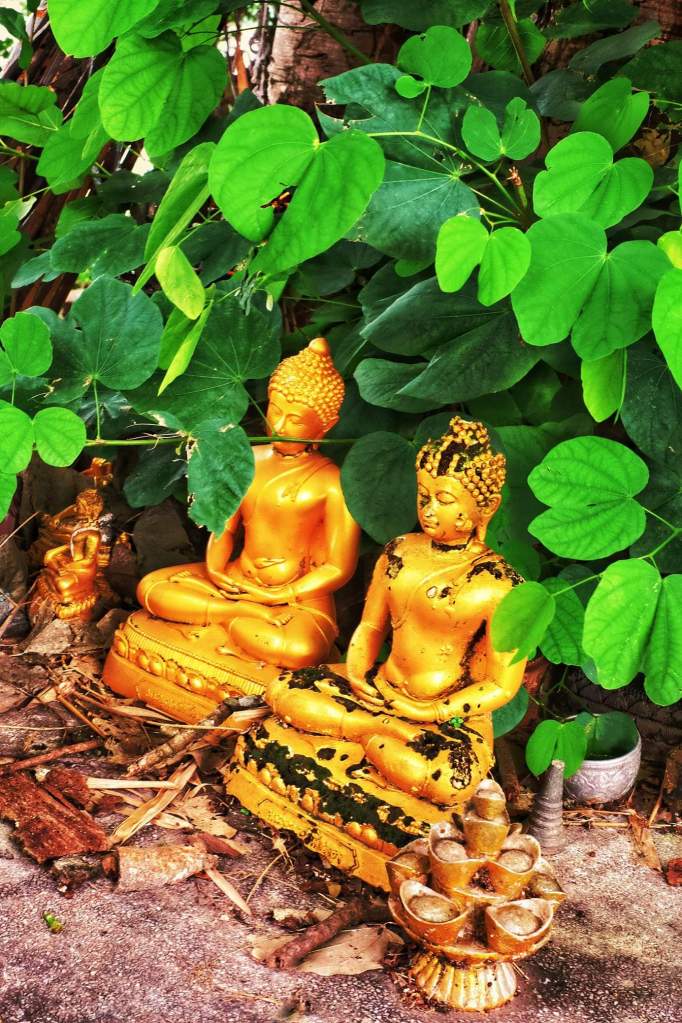
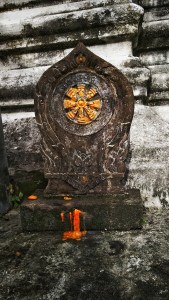
There is a little shrine at the foot of a huge and ancient tree, outside a Buddhist temple above the banks of the Mekong River in a little town called Chiang Khong in the far north of Thailand. As I looked at this obviously highly revered sacred site, through the viewfinder of my camera, I knew what I would call the photo:
Now, I already knew that this translates to: May all beings everywhere be happy and free. A friend of my son’s used to use this ancient Sanskrit mantra a lot and I’d long since discovered its meaning. Or so I thought.
Anyway, later as I readied this (what turned out to be quite a lovely image in my ever so humble opinion) I thought I would look up the mantra again. Just to make sure I had the right spelling and so on.
It was then I had a surprise. May all beings everywhere be happy and free is only the first part of this beautifully expressive mantra. I quickly discovered that this mantra is not simply some vague wish or prayer for universal peace and happiness; it is also a call to action. Here’s the complete translation as I found it:
May all beings everywhere be happy and free, and may the thoughts, words, and actions of my own life contribute in some way to that happiness and to that freedom for all.
But, wait. There’s more.
As I read more deeply into the meaning of all the words in the mantra, I discovered that it’s more than a call to action or a simple invocation. I learned that the mantra as I knew it was missing a final word: Bhavantu. So with this word missing, a vital element of the mantra was lost: the use of the suffix antu at the very end in the original Sanskrit turns the whole thing into a solemn promise. Antu means it must be so.
This all got me thinking: How? I mean, how do we transform our ‘thoughts, words, and actions’ so that they will contribute to the happiness of all beings? And how can we actually make it a promise?
Then it suddenly occurred to me: the action required was summarised very nicely by the Buddha in what he called The Eightfold Path. We are meant to start living according to the principles in that teaching.
Now, The Eightfold Path is, on the face of it, a fairly straightforward set of life principles that, when understood and integrated into one’s life and being, will lead to the cessation of suffering.
Now, this sounds all very well and good, but I’ve been wondering if there was a way I could sum it up in just a few words.
Something succinct, and to the point.
Then I found myself (again suddenly, right out of the blue) scribbling a note on my phone:
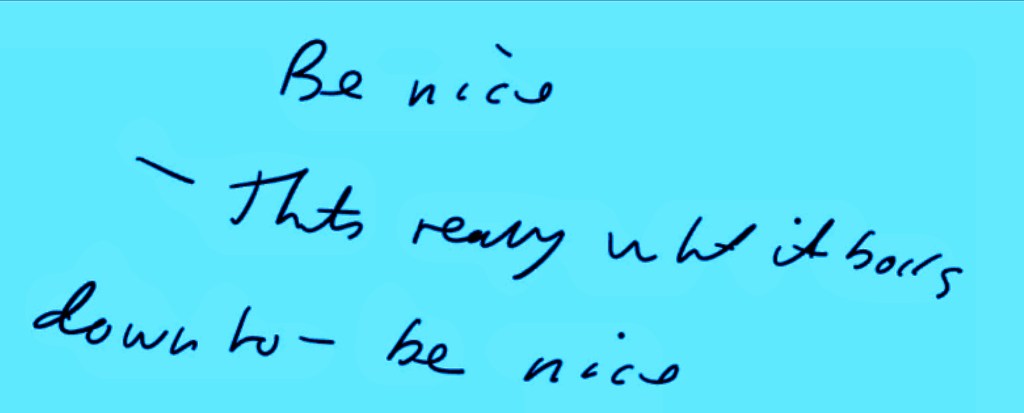
Be nice.
That’s really what it boils down to
Kindness in all our intereractions with all the forms that life has taken: other humans; other animals; plants; Earth herself; the rivers; the oceans; the forests. You name it. All forms that life has taken.
So, how do we be nice?
When I say it like that, it almost sounds silly; I mean, how hard can it be? Be nice? Easy.
Well, I guess I can say for myself that it’s true, sort of, sometimes. Yes it is often extremely easy for me to be nice. And, then, other times I have to try to be nice. And then there are those times when try as I might, nice just doesn’t happen.
Which means, I guess, that it might not be quite that simple after all.
There are so many wonderful explanations of the Buddha’s teachings, including The Eightfold Path, on the Internet. On the face of it, that might seem confusing. However Buddha himself advised that each person should question the teachings and come to their own conclusions. In other words, he said, don’t take my word for it, check it out for yourself.
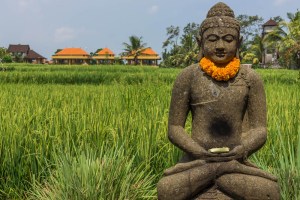
The Eightfold Path. I might know that lovely list by name (Right Understanding, Right Thought, Right Speech, and so on), and I’ve read a little about them, but maybe it’s time to dig a bit deeper.
I’m going to make a start with Right Understanding simply because it’s the first on the list, and has always seemed to be a pretty important starting point.
So, next post (or perhaps a later one) that’s what I’m going to do. Just sit and see what comes out of my heart and onto the page (or screen). Please join me then and we’ll see what happens.
Peace and love from me to you
 Notes from the Hermit's Cave