Talking About Sloth

Sloth.  Its a good word isn’t it?  One of those words you don’t have to look up to know what it means.  But if you do look it up, you’ll find it has a couple of meanings.  One is: laziness, indolence and a reluctance to make an effort.

Is sloth a bad thing?  Certainly it gets a bad rap; I mean: lazy? Indolent? Not willing to make an effort? Hardly words of praise. On the other hand we value words like busy, productive, efficient, hard working, and the rest. In our culture, these are definitely words of praise.

Go out and play; Read a book; Go to school; Study hard; Get a good job (whatever that means); How much do you make a year? When are up for promotion?  Demands and questions like these are constants in all our lives, and they force us into defining ourselves by what we do whether we are a little kid at school, a teenager trying to sort life out, an adult trying to make our way in the world the best we can.

Yes, it’s true I think: it always seems to be a about defining ourselves by what we do, rather than who we are, or what we stand for.  Always we have to be doing something.  Ever heard that little identity joke, I’m a human being, not a human doing?  I wonder how many of us would feel lost if we shifted from that need to be a doer to another definition of our identity, one less reliant on what we do or on what we’ve done in the past, or will do in the future.
Well, I hear you saying, this is all fine and dandy, but my boss won’t pay me unless I show up, there are meals to cook for the kids, I’m running late for an appointment, the lawn needs mowing and after that I have to write a report for my night class.

All very true, valid, and all of them things that do need to be done. We all have a life don’t we? But perhaps sometimes, even just now and again, and perhaps just for a few minutes at a time, you can stop. Just stop. Thats all. Stop and just do nothing, or rather stop and simply be.
Have I mentioned a favourite little two word sentence I really really like? Just sit. Don’t read, don’t think, don’t try to stop thinking, don’t ‘meditate’. All that’s required is to do nothing. Do No Thing. Actually, I think I’ve found a new favourite.

On, remember I said there are a couple of definitions of sloth?  Well the other one tells us that a sloth is a slow moving nocturnal mammal noted for hanging upside down from tree branches.  It lives entirely in the trees and is capable of only very slow movement on the ground.
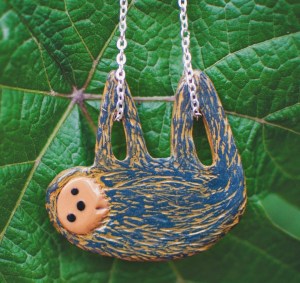
So, I guess you should be very careful when you tell someone else I’m a sloth. Mind you, putting aside the hanging upside down bit, and the nocturnal requirement, it’s probably not such a bad way of being to emulate, do you think?

Have a lazy (slothful) day.
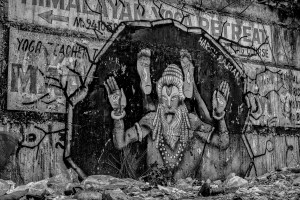
Homage to The Cockroach Man. With thanks and affection

Notes from the Hermit’s Cave is what this blog is called. I promised to publish musings or notes of all sorts: your regular text blog; photos or other pictures; poems; and other assorted bit and pieces.

Well, I’ve rediscovered a poem that I think would be great to share with you.

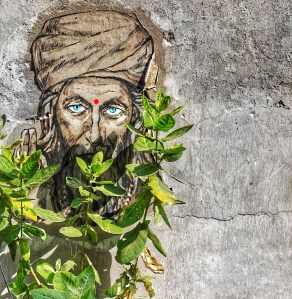
Looking through some posts saved from old blogs no longer active, I came across theaforementioned poem. It’s about a guy I met in a cafe in India back in 2006. This person kept me and a crowd of other travellers spellbound for a couple of hours one monsoon afternoon. Not to mention the many conversations focused on him that followed in the next few days and the several pages in my Journal recounting the whole experience.

Anyway, as soon as I saw this poem again, I thought I just have to post it here. That trip was a big step for me in my own healing and spiritual journey. And meeting this guy has played a part in all that.

So, please join me in making this small offering of thanks to that guy, whose actual name I never learned, and who forever will be known to several very fortunate travellers as the Cockroach Man

THE COCKROACH MAN

This is what he said.
He’d lived many years in India,
and, in that time he’d done many things.
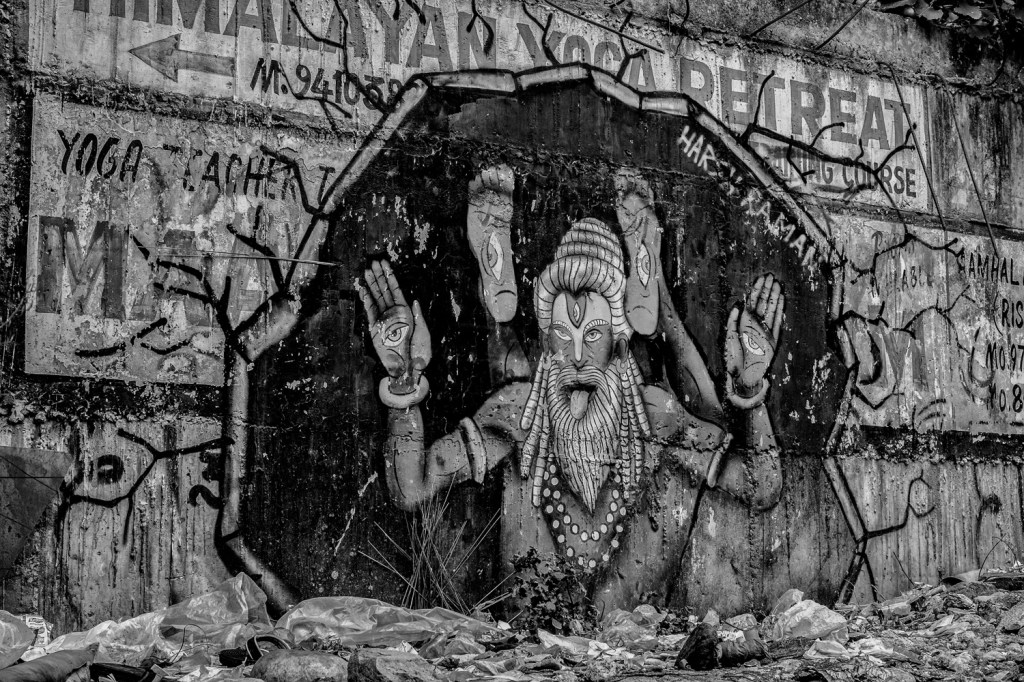
Even, he said, for a while he’d trained with a yogi, his guru.
This is what he said.

Yogic training is not easy, he said,
In fact, he said, one aspect made him sick
for a year.
This is what he said.

His Guru put beings in his head.
Beings like parasites he said.
Yes, yogic training, it made him sick.
This is what he said.

Parasites implanted in the head? A part of yogic training?
No. I don’t think so.
Actually, inserted was the word he used.
‘inserted beings in my head.’
This is what he said.

All gone now, save one, he said.
Only one remains—it’s like a cockroach.
And it’s still in him making him sick.
This is what he said.

At night, he said, there is sometimes relief.
The cockroach leaves and floats just below the ceiling.
Well, its astral body leaves his head and floats above his bed.
This is what he said

‘You’re a healer. You understand,’
is what he says as he turns to me.
Umm, no. Actually I don’t.
But this is not what I said.

Where is he now, the Cockroach Man?
‘It’s winter soon. I’m gonna give blankets
to the villagers.’
This is what he said.

He’s known suffering, he said.
And you could tell he was tired
from fighting the cockroach.
‘I’ll feed the poor.’
This is what he said.

Van Gogh: Mystic & Saint?

A few weeks ago I finished one of the most extraordinary books I have ever read. Yes, I know: we live in the days of hype and the redundant superlative. Everything is the best, biggest, greatest. Or, conversely, the worst, most tragic, saddest; it goes on and on.

In this case however I am not exaggerating. This book was amazing. It’s Learning from Henry Nouwen and Vincent Van Gogh: A portrait of a compassionate Life, by Carol A. Berry. From this book I’ve learned as much and more about Van Gogh’s motivations, his vision, his art, and yes, his very nature and soul, than in everything I’ve read, seen or heard about Vincent until now put together. And that includes from several visits to the magnificent Van Gogh museum in Amsterdam.

The book had its genesis in a course the author sat in on in the 1970s put on by Henry Nouwen for Theology students. The course aimed at helping future ministers and pastors learn to connect with their future parishioners. Basically it was about accessing the compassionate sides of their own natures so they might better help others. Nouwen used Van Gogh as a the model of a person who had lived a life built on compassion for others.

The author has mined Vincent’s letters (mostly to his brother Theo) and studied deeply his paintings and drawings, in order to understand and demonstrate what it means to live a life of compassion, and to highlight the artist’s mission in life. For me that mission is summed up very nicely in a quote from one of Van Gogh’s letters:

Art is to console those who are broken by life.

Vincent Van Gogh to his brother Theo

I had a vague sense of Vincent’s spiritual leanings (I knew he’d been a missionary living among poor miners and their families to better understand and help them), and he’d tried to become a preacher. But, before finding this book my thinking hadn’t gone much deeper than that.

But, through reading this book I discovered Vincent was really what many of us might call a mystic. The author goes further and after what i’ve learned, I tend to agree with her: she thinks Van Gogh is a saint.

A mystic in the sense that he tried to live a holy and compassionate life. He viewed all nature (of which he concluded humans are simply one equal part) as being expressions of the divine. And a saint in that he dedicated his life to making art that would inject light and colour into the darkness of people’s lives.

As I mentioned, Vincent had been a missionary for a time. But his radical way of living among the poor and sharing their lives in order to know and love them better was shocking and way too extreme for his bosses, and he had to move on.

So, he finally settled on full-on immersion in his art. His mission was to make paintings that offered comfort and consolation to those who are suffering. And that’s all of us to one degree or another isn’t it?

You can see by now that this supremely accessible (and pleasurable to read) work has had a profound impact on me. This book isn’t only for artists, nor is it a religious book; it is as I have said an inspiration and guide to living a compassionate and loving life.

I don’t want to just say ‘I can’t recommend highly enough that you read this book’; I want to say instead Please, please read this book. Then obviously act on what you have read!

I’ve always admired – loved – Vincent, now I think I know why. Or as Don McLean says in one of the most profound love songs (Vincent) in history (remember, I never exaggerate):

Now, I understand, what you tried to say to me
How you suffered for your sanity
How you tried to set them free
They would not listen, they did not know how
Perhaps they’ll listen now

Perhaps.

Love and Peace from me to you

What I learned from a Glass of Chai

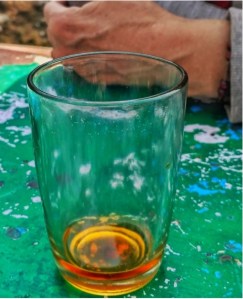
One of my favourite things to do India back in the days when I still spent hours in cafes was to drink tea. Or Chai as it’s called there, very often served in a glass. 

Most of the time the glass is filled to a level that leaves a small space at the top of the glass cool enough to allow the drinker to pick up the (usually) super-heated glass.  A great idea really because Chai is best imbibed at close to boiling point!

However, occasionally, a glass will arrive full to the brim with scalding hot but sweet and tempting Chai. With no cooler glass at the rim, how is the desperate Chai addict going to get to that sweet and satisfying liquid?

Well, obviously, the only way is to take the rim of that glass as gingerly as possible between one’s toughest and most calloused two fingers and just lift that glass and finally taste the flavorsome nectar contained within.

Of course there is another possible response: our Chai drinker may fear the painful consequences of taking hold of the hot glass, so will either leave the glass to cool or will reject the Chai completely.  Neither of these outcomes would ever satisfy a true Chai aficionado.

Now, how does the cliché go? This is a lot like life isn’t it? Well yes it is.  How often have we been confronted with an obstacle that’s preventing us from achieving something we want, or that is keeping us away from finding peace or love or some other condition we want in our lives?

Those problems, those obstacles, they are simply the hot glass blocking our way to the good things we want. Perhaps this is a good time to go ahead bravely, grab that hot glass and declare that for you there really are no problems that are (ready for another cliché?) too hot to handle. 

With These Words … Part 5

Well my friends, here we are at Part 5 of my little mini series. As it happens, it’s also the final part.

It’s been a fascinating trip, this little journey we’ve shared. Reflecting on the set of vows usually made by nuns and monks, and how my way of living fits with these undertakings. How well do I live these vows? As a philosophy directing my life, do they work?

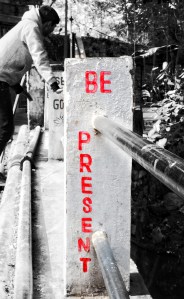
Let’s get on shall we? The final vow is Presence, which is the new interpretation on the vow of Stability taken when a person makes a life commitment to a particular place and or community. Obviously for one who moves as much as I do, presence is probably the appropriate concept to take its place

Presence

Just now I was thinking that by far the easiest of the topics we’re looking at here, is Presence. Yet at the same time it is the absolute hardest to write about – even worse to think about.

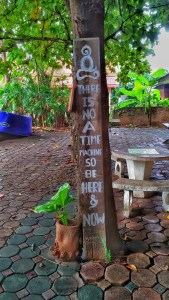
Why easy? Well, because in a very real sense there is nothing we can say about presence or the present. Of course I could spend the rest of my life reading books, studying, and even writing about it myself; how to live here and now. But all the time the obvious would be staring me in the face.

How can we be anything but present? How is it possible to be anywhere but here? And surely it’s always now? A thing called ‘the past’ doesn’t exist except in memory, and the future? Well, where is it? it doesn’t exist. Never will. I know it’s kind of common to hear things like ‘We’re living in the future’, but are we really? Of course not. So, end of story right there I guess.

Except that it’s not, is it? This is where it gets to be the hardest topic to talk about. It seems none of us – us humans anyway – can get our heads around the aforesaid obvious fact of life: we are always here, and it is always now. Why is this so?

Well, speaking only for myself, you understand, I think about it too much. I seem to have convinced myself (courtesy of my ever-busy mind) that there is a way to learn to be present; a how to guide, that I can read or invent myself that will finally allow me to put myself into the present, in the here and now.

And all Along I am sitting here, thinking and writing about how to be present or put another way, how to sit in this spot right now.Do you see where this is going? If I’m not here and it isn’t now, then where am I? And when is it?

Sorry, but I have no answers. Even asking the questions is denying the obvious: I am here, it is now. The trouble is my mind isn’t at all ever content and happy with the present, regardless of how I might feel about it.

In that case, can I say that in my way of living I am committed to presence? To be in the present? Well, speaking for me personally – whoever that me is – perhaps the better question might be: Do I fully realise that I can only be here and now because that’s all there is?

To that I would have to say definitely not. My mind is continually on the run between the deep past and the unreal and unknowable future and all points in between. And my mind loves repeat journeys too!

So how do I intend to come to that place of the realisation of presence? Well, before we go on, you can’t actually intend to be present. Intention is about …

Enough!!!! Enough mind stuff. Please

The truth is, there is nothing for me to DO. I am here; it is now. That’s all there is.

Except one more thing to do: I just have to wake up

I Think, Therefore I Suffer. Sometimes

Welcome

Let me share with you some random thoughts that came up as I sat to meditate one recent morning. As I settled, a thought struck me.

One among many of course, but this one got my attention. It went something like this:

‘I am where I’m at today because of the life I’ve lived: my choices to travel, my continual need for change and variety. And not to forget the impacts of my health on decisions over the years.’

It was a bad feeling coming on as you can tell.

So, I guess (the thoughts kept coming) I’ve had the fun and adventure and now’s the time to pay the price.

This particular thought train is an antique I’ve been run down by many times. And the way it going this time was downhill fast; it was one of those ‘poor me, what a horrible life I’ve got’ trips. Then, the next thoughts were a bit more truthful:

I live with my life partner and soulmate in a Pacific Coast town, literally five minutes walk to a spectacular beach and some special coastal scenery. The town isn’t too big, and not too small: it has everything we need without the crowds, traffic, noise, pollution, shopping malls, and other paraphernalia that goes with a materialism gone mad.

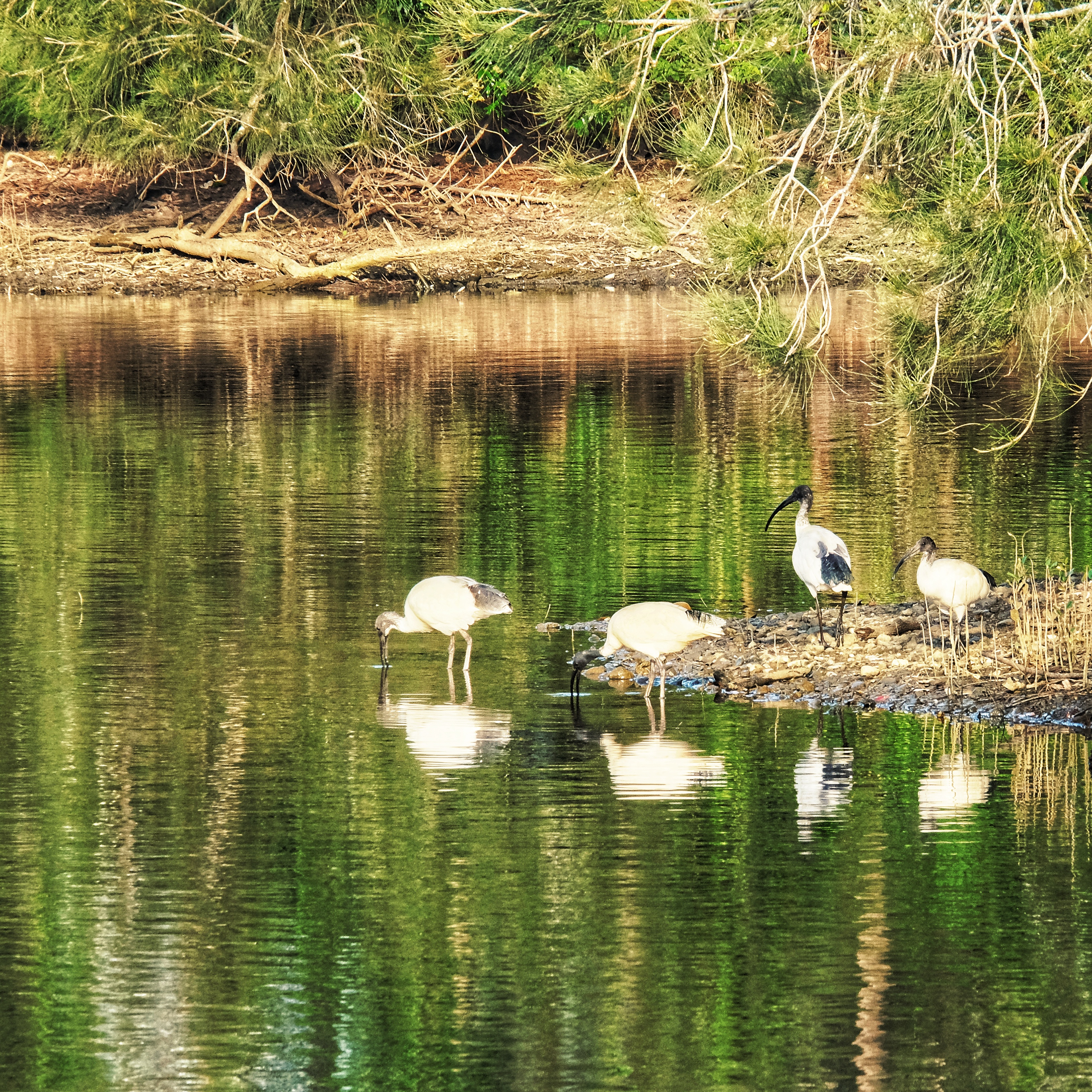
We live in a very comfortable small house in a Subtropical paradise of a holiday park resort flanked by a beautiful creek and forest. Every day we get to see and watch nicely many species of birds.

Each night literally hundreds of bats fly over on their way to feed, and very often we get to see wild kangaroos up close. Not to mention the lizards, ranging from tiny Geckos to metre long beauties.

It’s true: I did make that mental list. No, I thought, this is no price I have to suffer to pay for past decisions and actions. These are gifts I’ve been granted. Oh, did I mention that I get to pretty much spend all day every day doing more or less exactly what I want or feel lead to do?

This was one time when I was able to divert that ‘poor me look how I’m suffering’ thought train, and let the ‘I’m really and truly blessed’ express to roll on through.

Peace and love to you all from me

With These Words … Part 2

Namaste and Welcome to Part 2 of this little miniseries in which I hope to tell you some more about my ‘philosophy of life’. So before we get underway with Part 2, bear with me as I quote for you the last couple of paragraphs from Part 1.  (If you missed that part, you can find it here.)

After describing the vows traditionally taken by monks and nuns of various traditions (poverty, chastity, obedience, and in the case of monks and nuns committing to a specific place for life, stability).

I explained that I recently discovered how these vows have evolved for many individuals and intentional communities, and how I thought that newer interpretation summed up really nicely the way in which I aspire to live.

One renewed version [of the vows] is: Simplicity, Purity, and Accountability. In the place of Stability, there is now Presence.
While I can’t say I have taken these vows myself, it’s occurred to me that, put together, they do make a fairly precise set of principles that could be said to apply already as I attempt to live authentically as a hermit.

My idea was to look at the vows one at a time to test whether they do in fact represent the way of living I aspire to. Anyway here in Part 2 we will begin with Simplicity

Simplicity

Fingers poised. A whole lot of thinking going on. What to say about simplicity? It’s not as simple as it sounds; actually it’s quite a complicated concept. Certainly it seems that way as I begin to try and define what it means to me.

At its core it really means I live as simply as I can in a world not designed for simple living. Friends of mine have a motto: ‘Simple Living, High Thinking’, which I like a lot, and which fits with my own life.

Of course a simple life starts with looking at what one needs to live a good life which would be defined by one’s own unique needs, occupation, health, age, and all kinds of other personal factors.

For me I’ve found  that it’s not really that much. Over the years I have more and more pared down material possessions; I’ve become adaptable in terms of living in small spaces (and now actually prefer it); my diet, while extremely healthy and interesting, is very simple as I’m not always always looking for variety or new ‘taste sensations’.

I buy very few clothes; again I’m not interested in having a lot of new stuff all the time, I’m very practical and just buy what I need and I am always neat and tidy (well most of the time!), and adequately clothed.

I don’t have a car, though I have in the past. Lots of reasons for this, but essentially it’s a much simpler way to live, even if sometimes I might think it’s complicated not being able to just jump in and drive anywhere you want. A car can be a big responsibility, expensive, and a pain to take care of. Certainly for me it’s been a relief, not owning cars.

My entertainments are also simple. I don’t watch TV because it’s a terrible distraction and I’ve found it’s mostly a tool for marketing of all kinds, with very little of any real value to offer.

Of course, we all know how big a distraction the Internet can be, and I’m just like you: I get sucked into scrolling and into mindless videos and the rest. I’ve found it’s a case of self discipline: sometimes it works, sometimes it doesn’t. I try to use it as the wonderful tool it can be.

I think I mentioned somewhere else that I haven’t been to a cafe or restaurant for several years. They just don’t seem to hold any attraction anymore.

I guess this could go on and on, but basically living in simplicity is an attitude thing. And for me it’s been very much an evolutionary thing too. I try not to draw up pros and cons lists and analyse to death decisions on what to do, buy, eat, and so on. I don’t always succeed naturally!

Simplicity exists alongside the other topics we’re discussing here: they somehow work together to make a whole life. Going for the simple things sort of becomes natural to some degree. I hope that becomes clearer as we go along.

Another thing I will say about simplicity is that it’s a less impactful way of living, both personally and for the world as a whole.

Of course there are quite a few things that can’t be avoided in a world designed to make everything as multi-layered, material thing and fashion obsessed, and as profitable and ‘productive’ as possible. And simple doesn’t always mean cheap, though it has to be said that I live on quite a small income by our culture’s standards, but I would also have to say I don’t think I lack anything materially.


Actually another factor in this simplicity discussion is time. And I see now I’m using a lot of your time with this ever-lengthening post. So, before I go and get ready for Part 3, let me just say something quickly about Time and Simplicity.

For many years my health, my inclination to travel, my aversions to ‘the ways of the world’, and my tendencies to want to create, have meant I haven’t spent a lot of time in the mainstream of working life. And now I am retired.

So I believe I’ve long been given gifts of time in one way or another. But of course, just like everyone else, I can be quite good at putting the words time and pressure together. Again it’s an attitude thing that we’ll most likely talk about when we get into Presence later on. Which sounds like an oxymoron.

So, until next time

Peace and Love from me to you.