Am I Here & Now or There & Then?

One week today and I will be there. In other words, this time next week at this time I will have arrived in the desert city of Broken Hill. Almost in the heart of the continent and right in the middle of the Outback. In fact they call that whole area The Big Red after the colour of its tens of thousands of square kilometres of desert sands.

Back to Country

It’s about 1500 kilometres from the Pacific Coast where I am right now. I’d like to write about the ‘call’ to the desert, which I am finally answering, but maybe I’ll get to that in another post.

Right now I only want to say how excited I am to be going. A bit anxious too (I’ve been there before, but still …), and plain and simple looking forward to getting there.

Acturally, to be perfectly clear about it: I can’t wait to be there. But, you see, herein lies the problem: I am so keen to get there that I’m feeling as if I am no longer here. I am not present; I am not living in the moment and in the place I’m in (which I love by the way, the place I mean).
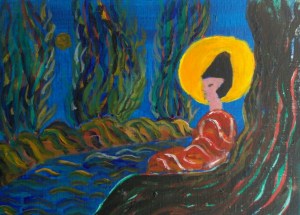
I don’t mean to say that I am some sort of Buddha who is usually fully present in each moment; or who is serene and calm when he knows change is coming. Any reader of this blog will tell you that presence isn’t necessarily my greatest strength.


But, I must say that lately I have improved (slightly) my living in the moment, being here and now, way of living. It’s just that I’ve been longing for this particular change (and all that I anticipate will come with it) so much that I just can’t help myself.

Did I mention already that this is a problem for me? Well, yes, I did, and it is. I prefer very much to be where I am and when I am and fully in the flow of the ongoing present.

Of course there is nothing wrong with wanting something to happen. The problem arises when one is so anxious for whatever it is to happen, that what’s happening here and now ceases to be where one is at—in other words: the trouble is that I stop being in the present.

Buddha taught what are called The Four Noble Truths. (which pretty much form the core of Buddhist teachings) The second of these Truths says that attachment is the cause of suffering. Suffering here means anxiety, worry, regret, fear; all those kinds of things. Whenever we say something like, ‘I can’t wait to…’, then it is a sure sign we are attached to that want or desire.
If I’m in it, will I win it?

By the way, the First Noble Truth is: Life is suffering. Suffering, The Buddha taught, is simply the price of being alive. We get hungry, we are conscious of pain (in all its guises), we grieve; we grow old; we get sick; and we die.

But, right now, I want to talk more about Noble Truths three and four. Number three says that suffering can be overcome. Nice clean, clear, and not to mention, succinct little statement. Of course, it’s easy for him to say isn’t it? He is Buddha after all.

Perfectly reasonable reaction from us suffering humans. But there is hope and we will find that in Noble Truth number four which gives us the how to overcome suffering. There are quite a few ways to put this Truth into words, but the one I like best says:
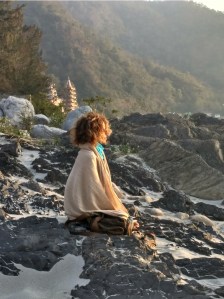
The way to overcome suffering is to sit.

What? Sit? Yes, sit. Be still; stop moving. Of course if we relate this Truth to my little dilemma for wanting to so badly to be somewhere else that I’m not able to be where I am now, we can expand this Truth to something like this:

Focus your full attention on what you are doing now, and where you are now as well. As much as you can, be open to change, but be less attached to the nature or timing of that change. After all, you can make all the plans you like, but who knows what’s really going to happen—you won’t know that till it actually happens.

So, that’s what I am trying to do. Instead of saying stuff like ‘I wish I could go sooner’, or ‘it’s only x days till I go’ (yes I know, that’s what I said way up there at the top of the post), I am going to ask myself, ‘What am I doing now?’, and I plan to look around me, and engage more with the reality of this moment. And try hard to realise the ongoingness of that everlasting moment.

As Ram Dass said,

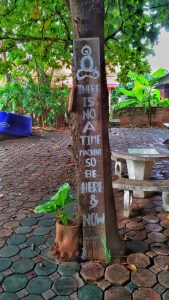
Be Here Now.

Hey, that’s a great mantra isn’t it? Chanting it whenever I start getting out of the here and now mode, might just put me back there again. I mean here—and now. You know what I mean!

Love and blessings from me to you

Paul
A Little Blogging Balance is Called For

Hello and welcome

In yesterday’s post I made mention of how Notes from the Hermit’s Cave is a month and ‘a bit’ old now. I thought when I typed that, ah yes, so it is; I don’t think I’d given a lot of thought to details like that.

So, first things first: Thank you for being there at the other end of all this, and for joining me on this new venture. Adventure really.

Anyway, as you could tell if you read that post, I just kept on typing with hopefully something reasonable coming out at the end!

Later when I told a wise one I know about that realisation, this person said to me:

‘Are you sure you’re getting enough new imput to keep coming up with new ideas for more writing?’

Good question. Wasn’t yesterday’s post about precisely the issue of an idea that wouldn’t (or maybe couldn’t) evolve into a post? But, wait, not having any ideas isn’t a problem is it? Or is it? So, what’s ‘enough new imput’?

So now I had two pieces of information that had me thinking: the running out of ideas is a possibility; having ideas that won’t or don’t work is a certainty. Together these bits of information came together to form a little bit of knowledge.

That’s how it’s supposed to work: we gather information, then we turn that information into knowledge. The trouble happens when we are overloaded with too much information and can’t sort out any of it to form anything like coherent knowledge.

Anyway, here am I getting distracted! What I was about to say was that the knowledge which came from those three pieces of information, was:

There’s a potential for ideas to run dry, but the other problem is that just because there are ideas apparently available now, doesn’t mean they are any good, or can be used, want to be used, or for a myriad of other reasons, I can’t connect with them. Either way, I am definitely going to need some new, perhaps different imput

What to do? Now, this is where the formation of wisdom comes into the picture: first there were seemingly random bits of information, which then came together to form a little parcel, nugget, insight (what do you call a piece of knowledge?). Some knowledge.

As we all know, simply gathering information, even if we somehow are able to turn that information into knowledge, is no guarantee that wisdom will follow.

However in this particular instance, wisdom did emerge. After some thinking, and some not thinking, I thought, I know: I’ll have a couple of days off. No posts. No blog (except to answer people who reach out to me obviously) stuff at all.

Ah wisdom. So simple really when you look at it isn’t it? I’ll just have a couple of days without thinking about, or looking at Notes from the Hermit’s Cave. So, what will I do instead? Well it’s not as if my time isn’t rather (very rewardingly) full with the other practices incumbent upon me as a hermit and a pilgrim. And a monk.

Still, I thought, I could use a bit more time just sitting still. You know: being quiet, eyes closed, not doing anything. Then, I’ve been a bit light on listening to music this last little while. And not listening to enough music is enough to cause trouble with anybody’s creative self isn’t it?

So, decision made. More time sitting and being. In silence so the inner mind is open to receive new ideas, to process existing ones, and to well, just be quiet. And some more music. Doesn’t matter what it is {well to a point it doesn’t): ideas come from and because of music.

Perhaps by this point, it has occured to you as it has to me, that there is an irony at work here. Here I am writing a blog post on the very first day of a couple of days off from writing blog posts. Okay, I get it. Time off starts … now!
No-post weekend starts … now!

Alright, I can’t make any promises; The creative spirit arises when it does; my heart opens when it does. Besides, as that same wise one said to me by way of an injunction on how to approach everything and anything:

No overthinking

PS I was just thinking, there’s a book I’ve been meaning to get to for weeks now, so … Never mind

Karma Yoga & Contemplative Living: Creating Good Vibrations

Greetings friends

Not so long ago I read The Glass Bead Game by Herman Hesse. And I have to say it’s what I like to call a ‘real book’: written beautifully with an interesting and deeply engrossing story, full of detail, symbolism, thought-provoking ideas, and at the end of the day just plain and simply a delight to spend time with.

I won’t go into what the book is about here, but for the sake of this post, I will just tell you that it is about a mythical European province populated by an elite group of scholars of all sorts who have as their main cultural, social, and even political focus, the game of the book’s title.

Anyway, what I want to talk about here today is something said by the book’s main character, who in the course of the story becomes the master of the game and therefore a hugely influential figure.

This character is having a conversation with a friend. And he’s talking about the way this elite group conducts itself in the world. How it helps shape the country and history. He says to his friend:

We do not intend to flee from the vita activa (the active life) to the vita contemplativa (the contemplative life), nor vice versa, but to keep moving forward while alternating between the two, being at home in both, partaking of both.

Now, what struck me about this quote is that only a couple of days before I’d read a verse in the Bhagavad Gita that I felt said almost exactly the same thing. Krishna says to the warrior Arjuna:

Contemplative life and Karma Yoga are one and the same and takes one to the same destination. One who perceives this sees things as they are.

Bhagavad Gita Ch 5 Verse 5

Karma Yoga is usually defined as taking action without desiring reward for oneself or being attached to the fruits of the action. It is very much the taking of selfless action that is for the benefit or others. However, because as living beings in the world, we are always taking action and actually can’t not be acting, Karma Yoga is also described as being simply the yoga of action.

The Contemplative Life is most often ascribed to monks and nuns, and others living a life of deep thought, study, meditation and prayer. But any of us can lead a contemplative life because such a life is about being mindful, it’s about considering the consequences of our actions.

Such a life is lived slowly and thoughtfully and would be called ‘spiritual’ by some people. We could also call it an examined life. It is about cultivating an inner life, a life of mindfulness in all aspects of our lives.

And living in a contemplative manner helps create more peaceful communities; people living in this way project a calm that can have profound impacts on others. Such people help to set up what some us like to think of as good vibrations

Of course it’s one thing to talk about the Contemplative Life versus the active life in a novel and in an ancient book of scripture. It’s a whole other thing to be trying to figure out what sort of life we should be living in the world here and now, with the urgency of climate change, wars, despotic leaders, increasing poverty and the rest. Or is it?

Is it better for us to take action by protesting, joining activist groups, writing letters? Or is better that we live apart in some way, spending time contemplating, meditating, ‘praying’?

To me it seems there’s a real struggle going on right now between these two points of view. There are those who will tell us that it is too late for ‘thoughts and prayers’, and then there are those who say, we can’t achieve world peace (in its many facets), until we have attained inner peace on an individual level, and that the only way to reach that state is to meditate, live a contemplative life, and slow down.

Obviously, and you already knew I was going to say this, the two are not mutually exclusive; both approaches are required and serve their own purposes. There is no dilemma; there is no conflict. And above all, neither approach is superior to the other.

Many of us are suited to an active life; some of us less so. Some of us are suited to silence and to quiet reflection and study, some of us aren’t. And oftentimes if we try to act contrary to our true natures, then we have great difficulty in achieving anything. And we don’t help anyone when that happens.

Karma Yoga or the Contemplative life. An active life or a life of silence and contemplation. Only you are able to know which is for you. Of course there’s always a crossover to some degree or other. Being fully active and engaged in the world, doesn’t stop one from spending time in a contemplation, and perusing one’s life mindfully.

Equally, leading a totally or partially contemplative life doesn’t mean you aren’t taking action in the world. Obviously you are. For me, the contemplative life is a way to find some personal peace, to create those good vibrations I mentioned, and it allows me to connect with others of like mind, who are working for the highest good. Those living in the invisible community I think I’ve mentioned some other time.

Balance. The key is to find the balance that expresses you and your nature best. So, take some action right now and begin contemplating!

Seeking Justice: Commitments

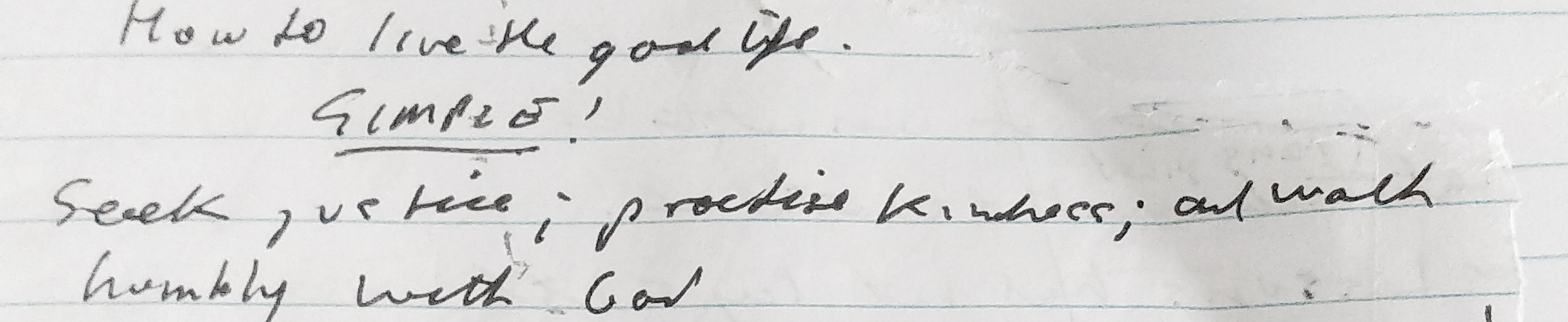
This morning I was just sitting, or at least trying to just sit. You know, being quiet, relaxing the mind. All that kind of thing. And of course, an idea sprung into that not so cooperative mind, so I grabbed my notebook. Just as I went to put this latest brainwave on paper I noticed a very extraordinary note I must have made I don’t know when:

I’ve just looked it up: It’s a slight paraphrase of a verse from the Old Testament, from the prophet Micah. Where I read it, I can’t say (the note is at least several weeks old). But to quote another little note from some unknown source, I always like to:

Let the noble thoughts come to me from all corners of the universe.

unknown

I’m just like everyone else, always wanting the easy solutions and you can tell that can’t you? ‘How to live the good life? Simple!’. I mean really; hardly humble in my approach in that note was I? Well, let’s talk about what Micah says, not my own lack of humility.

Seek justice; practise kindness; and walk humbly with [your] God.

There are numerous versions online of this verse (Micah, 6:8), so I will leave it to you to check those out for yourself. I’ve added the word your because all those versions do say ‘your God’. But even in this paraphrase it’s easy to see there is nothing at all simple about any of these injunctions.

I discovered that this verse is often invoked in times of grave injustice, or crisis. I think it goes without saying that we would be hard pressed to think of a time that was not a time of grave injustice or crisis. Certainly, we are living in one of those times of injustice and crisis.

There’s no need to or purpose served by getting into how ‘grave’ injustice is now compared to some other time; there’s no need or point to weighing up the relative severity of one crisis versus another. Injustice is injustice; a crisis is a crisis.

In other words, the present is always the time to heed the injunctions of this verse.

So, what do we do if we are to seek justice? Running the risk of sounding flippant, I would say that there are as many answers to this question as there are people to answer it. Now, you would think this would make the task impossible; too many cooks and all that. But actually it’s perfect. Why? Because it means that whoever you are, whatever your situation, you can actively seek justice.

Or, I am sorry: I should say I, me. Not you. I can actively seek justice. But, you say, you are a hermit; you live in a cave (not literally but I know what you mean); you hardly ever even talk to people in ‘real life’. Yes, all true. And I would say that the action I take is by no means at the level I know I want it to be. I’m doing nowhere enough.

Does that mean I’m leaving the cave? Going out into the world, onto the streets to join other brave souls seeking justice? Believe me, I ask myself such questions constantly. But to speak truth to you now, I will say that I know absolutely, in my heart, that my role is something different.

If anything, I need to go deeper into the cave; I need to go deeper into the inner world of my own Self. I know that in this way I will join with so many others in what I’ve come to call the Invisible Community of people all over the world living lives of contemplation and prayer. Or, speaking for me personally, trying to live a life of contemplation and prayer.

By so doing I am at least in a tiny way supporting those millions of others out there on the streets, in the aid groups, running campaigns, writing letters, helping the victims of injustice, in all kinds of miraculous, brave, and innovative ways.

So that’s my commitment to you. To deepen my prayer; to intensify my contemplation; to more fully realise my union with all living beings; and to really join with the invisible community in its efforts.

And, you ask, this blog? What’s it about then? Well, notes, musings, thoughts and reflections all aimed at reminding me of my responsibilities. And hopefully along the way, solidifying my union with you and the rest of creation, just a bit.

Peace and love

PS I haven’t forgotten ‘practise kindness’ or ‘walk humbly with your God’. Maybe another time.

Look! I’m using two hands!

Namaste my friends


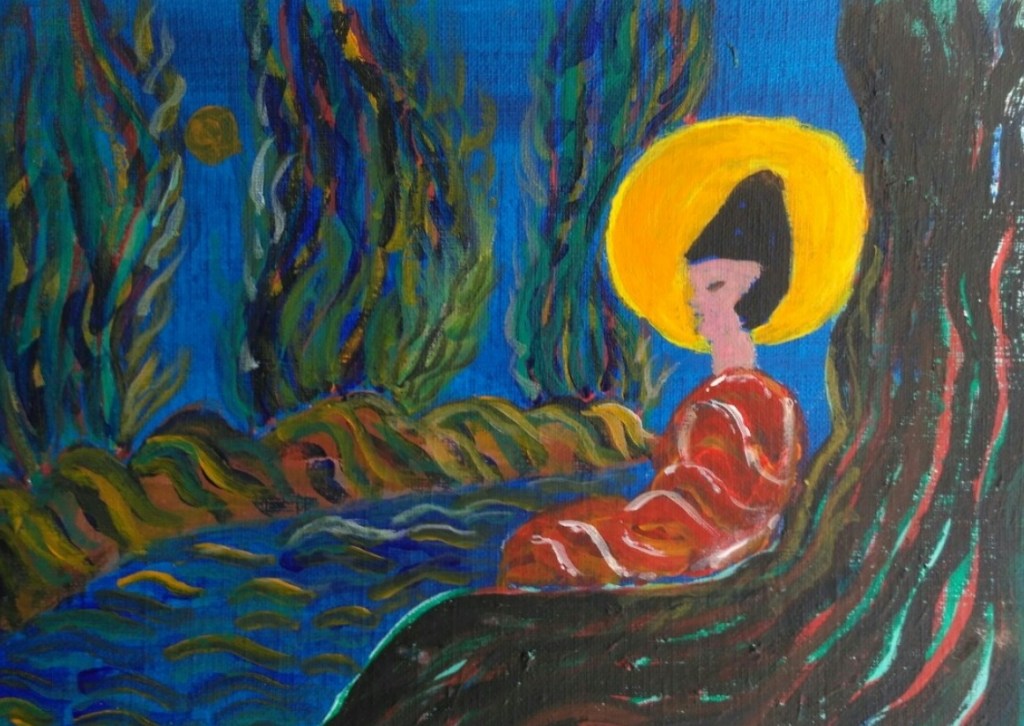
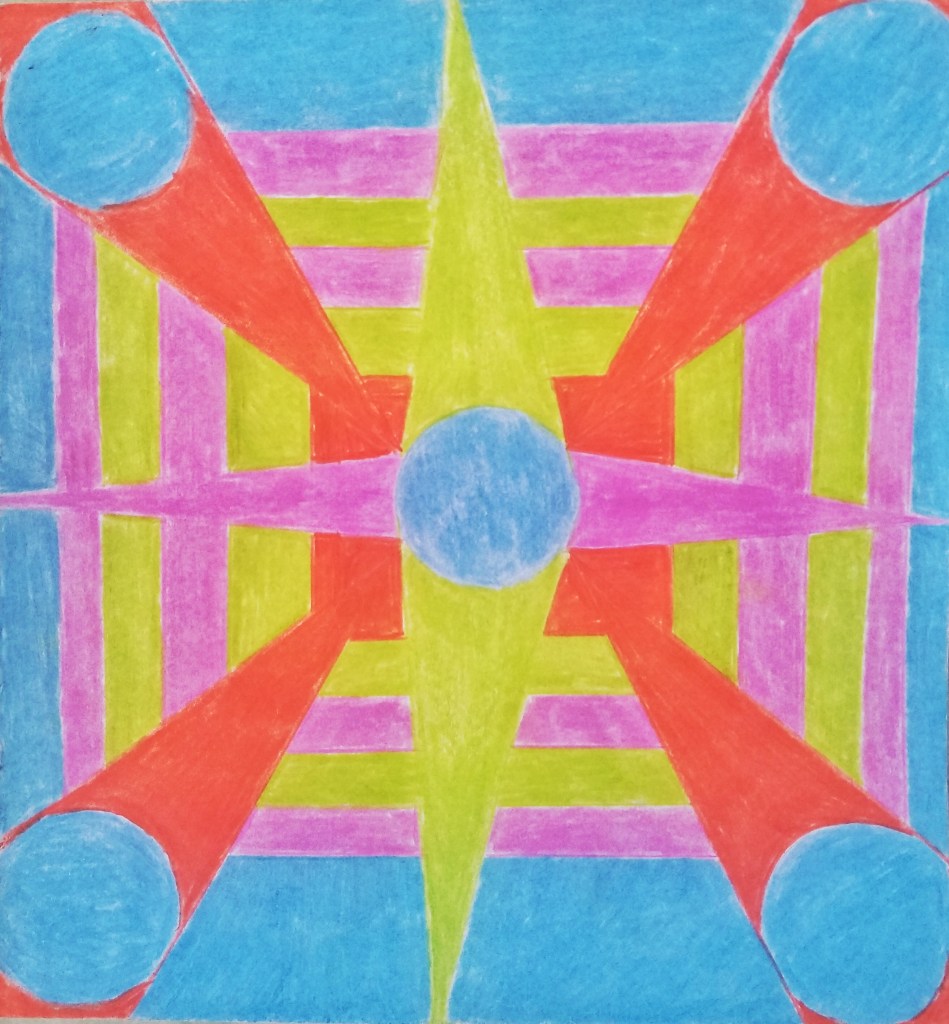
In my last post I shared with you a poem. Just another note as I said then. Today I find myself thinking about sharing a drawing with you. Or it’s a design, a ‘symbolic’ illustration. I’m not sure what to call it. Actually illustration is a good word in this case: I’m not exactly sharing it for its own sake, but to illustrate the topic for today’s post. Anyway, moving right along.

For a lot of years I have every so often had an urge to create patterns and designs, and just to colour in things. Just to see colour on the page I think. Just to be making them. They are of many and varied shapes and some are paint, some markers, and some pencil. I picked this one more or less at random so you can see the kind of thing I’m spending way too many words telling you about.

I really enjoy making these things. It can be quite a meditative process; of course mind can wander as always, but I find that if I just focus on the exact mark I’m making or a particular detail, then it pulls me in. Into the zone as you might say. In that sense it can be an intense experience.

And therein lies the problem: Sometimes, particularly with pencils I can be be so focused and intent, that I end up hurting my hand. Holding the pencil too tight, pressing too hard trying to squeeze more colour onto the page (that’s what it feels like anyway), or just old fashioned and typical impatience pulling me to push harder.

Whatever the cause, nowadays if I even begin to use a pencil (writing with a pen is okay for some reason) my hand begins to ache. It’s not terrible pain, just a nagging thing. But certainly it is what you might call a disincentive.

While I was looking through a pile of old drawings a couple of days ago, I thought, I wander if I can use my other hand instead? Now I’m not one of those people who can switch between hands with ease; if there is an opposite to ambidextrous, then that’s me. But I thought, I’m going to try anyway.

So I took a coloured pencil and paper and with my non-dominent hand (that’s an understatement if I’ve ever made one) and tried to just pretend I was colouring in some shape. No lines as such, just colouring in strokes.

Alien alert! That’s what it felt like. Completely and utterly alien. Although my hand wasn’t totally out of control, it felt like it was. Still I persisted, and you know I won’t say I got to the point of it feeling natural or fluid or comfortable, but I could tell there was potential for that to happen.

In a funny way it wasn’t even my hand that was the problem; it was more a mind or brain thing where I just felt out of joint, not connected or something. Quite disorienting actually. But I think I’m going to try again. At least I thought I can use my other hand for the big areas, leaving my usual one for the finer work when necessary.

I suppose it’s like anything new isn’t it? Or rather in this instance it was about realising I’m not able to do a thing, an activity that is meaningful to me because the way I was doing it was making it too hard, or even impossible. And actually causing damage.

Who can say why it’s only just occured to me after so many years of struggling with the issue (on and off). I guess, there’s a right time for everything, or as I often think, there is never a wrong time. Life just is.

Never too late as they say, to do it differently. I guess we’ll have to see what happens. I might end up ambidextrous, who knows? Mind you, don’t be expecting fine art or lifelike portraits with my other hand anytime soon.

See the Tenderness

Over the years I’ve tried many types of meditation. But I always come back to the same method. I call it The Third Eye technique.

Once I’ve settled quietly, perhaps having taken a few deep breaths to relax a little, I bring my awareness to the centre of my forehead, the spot between my eyes. Traditionally, this is where the Third – or spiritual – eye is located.

(Actually that particular spot is in line with the Pineal gland  which is located in the centre of the brain between the hemispheres, and its function is to help regulate sleep patterns.)

And then? Well, I know I’m not alone when I say that, no matter how hard I try, it seems a lot of the time nothing happens. Well, thoughts happen. Anxieties and memories intrude their pesky (and sometimes ugly) presence. So much for emptying the mind and having transcendental experiences.

Well, in fact despite evidence to the contrary, I – along with all of you who ‘try to meditate’ – do sometimes achieve a state of no thought, of total quiet. The problem is, of course, in a state where there is no thought it’s impossible to think: ‘Hey, I’m having no thoughts.’

As for the (rare) transcendent experience referred to: on those occasions something other than a thought, memory, anxiety, comes up; something that transcends those mundane ‘normal’ things.

See the tenderness. See the tenderness. See the tenderness.

These words seemed to come right after I’d thought for the millionth time ‘nothing’s happening’ while I tried to meditate one day a while ago.

Not spoken by a voice exactly, yet heard with my internal or mental ear. Clear and distinct; the same fully formed injunction repeated three times.

But, see the tenderness? I’m not sure where these words came from. The truth is I am a gentle person by nature; I am not naturally ‘tough’ or ‘aggressive’ or anything like that. But it’s also true that I’ve been all those things over long periods of my life. Nature vs nurture you see.

Anyway, what tenderness? Where? Does it refer to the tenderness that exists in the world?

Perhaps it’s to do with what I am supposed to be reading or otherwise taking in? Books, movies, and other story sources that speak of tender things and people?

Or might it be an injunction for me to redouble my efforts to turn away from the wold? To turn away from the horrors and the nastiness of Maya or the material and essentially illusory world?

And by this turning away from the world, perhaps tenderness is to be found and seen in a turning to the interior world, in the spaces of contemplation within Self.

This injunction (repeated emphatically three times. Sorry I already said that didn’t I?) does seem to have come from some part of my Self that longs for a gentler way to be, for a more tender way to relate to others and to Self.

Ideas and questions to contemplate and to reflect upon. Meanwhile, it’s a good start to know that even if my mind tells me otherwise, when I meditate, something is happening. Sometimes.

Peace

With These Words … Part 3

Well here we are at Part 3 of the mini series in which we’re looking at whether or not my ‘philosophy of life’ might be well described by living according to the vows used by many contemporary nuns and monks and that are a reinterpretation or evolution of the traditional vows.

As I’ve mentioned, I haven’t taken these vows, but when I learned about them (Simplicity, Purity, Accountability, and for some, Presence.) I thought I’d look at how well I live up to the life they dictate.

So, welcome. And if you haven’t yet seen the first two parts, please feel free to have a look at them. Part 1 is a sort of introduction and overview, while in Part 2 I asked whether or not I actually do manage to live a simple life.

Well, do I? To be honest, it was a nice challenge looking at that question; I mean it got me thinking about the reality of my life (like the rest of these posts will as well, obviously) and I would say yes, I think I do live a quite simple life, especially in the context of the dominant culture we live in, and society’s demands and pressures.

Anyway, time to get on with the next part of our little exploration.

Purity

Purity. It’s one of those words isn’t it? I mean, probably all of us think we know what it means, but it’s not a word we use on a day-to-basis is it? It’s a word we’d use rarely if ever to describe our behaviour or approach to life. So, what words do I use then?

Which reminds me: purity gets a bit of a bad rap I think. It’s often used to describe standards imposed by some group, or authority, a moral code thrust upon us, from someone or something outside of ourselves.

For me, Purity is really about my approach to life, to myself and other living beings, to the world, to everything actually.

So, with your permission I will try for the rest of this post to use words and ideas that actually mean something to me in my daily life and in the way I try to live.

Clean is a word that comes to mind. It sounds strange (and redundent) to say, but I try to live a clean life. Obviously I bathe regularly, wear clean cloths and try to not spill stuff too often. But, you might not know this, but clumsy is my middle name, so, yes spilling stuff is a curse I live with! (I just had an orange and I think more juice ended up on my shirt than in my mouth).

Now, actually that’s a good start: I mean to say, we’re all fallible beings; we all have things we can’t quite get right all the time: Pu … oops … the P word is a concept to hold on to in an aspirational way; it’s not a hard and fast set of rules or standards where I’m in a I am either, or I am not, scenario. Actually it’s very much to do with the present, but that literally is a story for another day isn’t it?

How else do I try to live clean? Thinking. I try, consciously, and all the time, to practise clean or we can say right thinking. Right thoughts about others, whether I like what they do or not. Right attitudes to others too are important aspirations for me as well.

To be truthful I’m not yet at the stage where I could say that having right attitudes to others has freed me to neither like or dislike people, situations, or whatever. Perhaps now and again, but certainly not all the time. Like everyone else I’m attached to my likes and dislikes, to my prejudices, and biases. As I said, it’s aspirational, something to work on continually.

Part of that right attitude, as well as living clean, is having a compassionate approach to other living beings. Meaning that with my actions, thoughts or behaviour I try to do as little harm as possible. Actually, it’s more than that: compassion for me must be an active thing, not just a vague feeling or intention informing my life.

In other words, I have designed my life (diet, clothing, transport, thinking, and the rest) so that I cause no more death or harm to any living thing than I can possibly manage.

Of course I realise we human beings are simply one more species among the many millions sharing this planet. Nothing any of us do in any sphere of life (our actions in the world, our thinking) can be accomplished without an impact on our fellow dwellers on Earth. All we can do is what we can do.

Aspiration. That’s what it boils down to for me. Did I mention it (you know … P) isn’t a you are or you are not kind of thing? Like the other P word, presence, it has at its main characteristic an ongoingness; there is no time when we can say I am P … .

Nor will there ever be a time when we can say in a way that that’s actually truth, ‘I give up, It’s too hard. I’m never going to be P… .

Which leads very nicely to Accountability, the next of our words to live by. But let’s get into that next time! Thank you sharing this time with me.

Peace and love