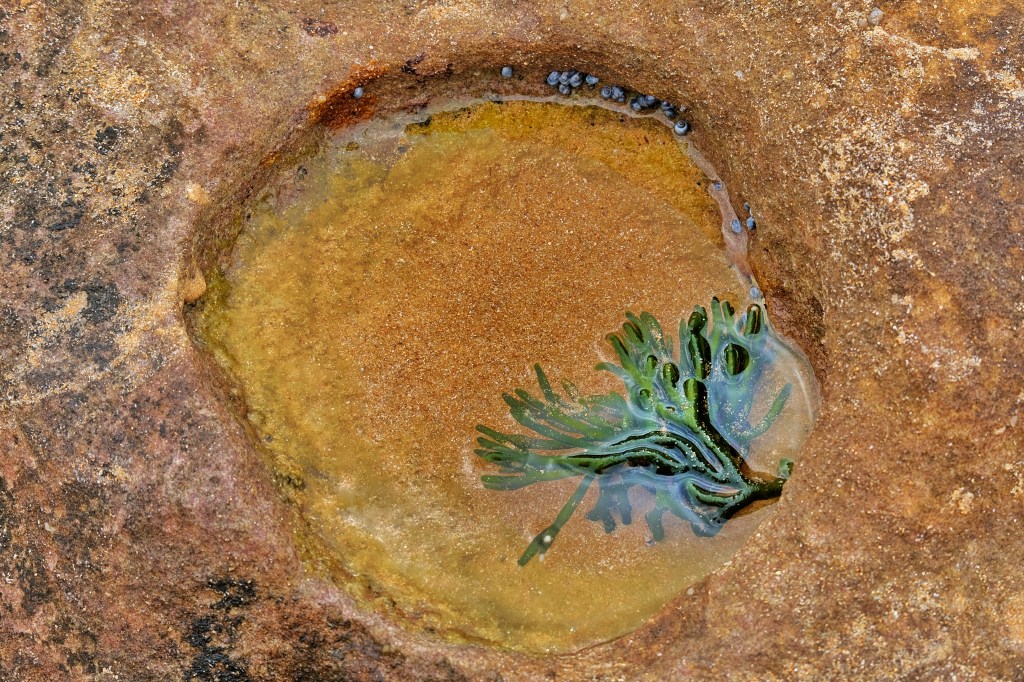
Yellow-Golden sands
carpet the floors
of tidal rockpools,
home to crustations and seagrasses.
And the coffee tasted like medicine.

Yellow-Golden sands
carpet the floors
of tidal rockpools,
home to crustations and seagrasses.
And the coffee tasted like medicine.
We’ve all had this experience I think. I’ll be reading something, and right away I’ll come to a conclusion, become either sure of something or the complete opposite; I can be confused, force myself to ask more questions. I can even have brilliant insights or realizations.
No? Well, maybe it’s really just me then. But, wait there’s more: this is a two part experience. When that second part happens we will come to realise that what we think we read is nothing at all like what the words on the paper (or screen) actually said in a factual sense.
Yes, you’ve probably guessed by now that there’s a story coming. In fact this exact thing happened to me this morning, all the way to the brilliant insight or realisation bit.
In fact it was a brilliant realisation, the only problem was that it was based on only on what I thought I read, not what was actually being said.
Anyway, I was reading the verse quoted below, from my Bhagavad Gita and a sudden flash of insight hit me.
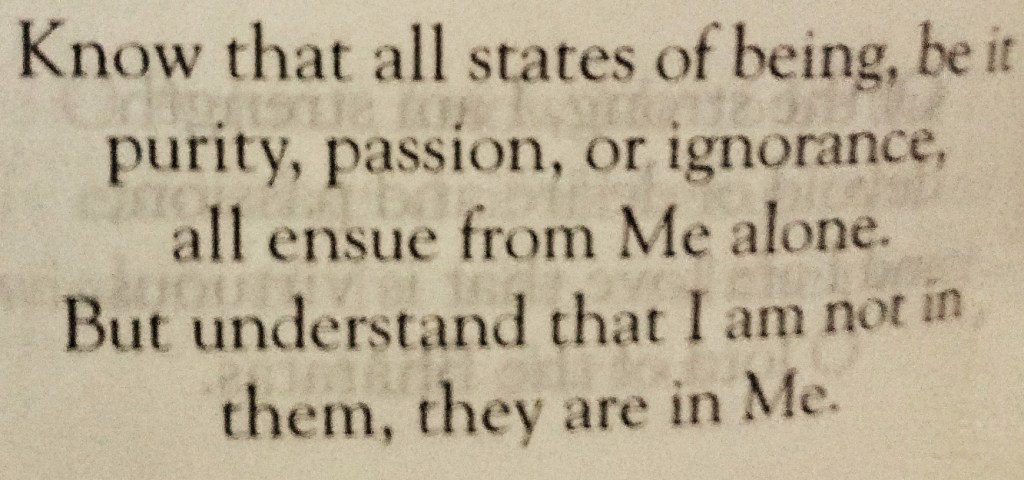
Despite these five lines saying a particular thing in a clear and precise manner, I somehow misread the first three lines to say:
All beings ensue from Me.
Bhagavad Gita Ch 7:12
Somehow my mind skipped the ‘states of’ bit and made a leap that actually lead to a great realisation: Of course, I thought; God is not in us (as in living beings), it’s we who are in God.
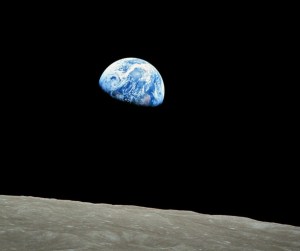
Which to me means that we are all part and parcel of God. I’m not saying, I’m God; I’m not saying you are either. What I am saying is that all creation as one, unified whole, is in God. And if that one unified whole does indeed ensue from God, then it follows that all of creation is God.
As individualized, embodied entities, we (along with all life everywhere) are simply manifestations in the material form of that divine energy, that life, that truth; that which we often call God.
Now, this is an instance of a flash of insight leading to a truth, when the receiver of the insight (that’s me) is engaged with what you might call some other factual reality, that is, the actual words on the page.
At first I thought, that’s weird: how did I misread all those words related to states of being? I mean they are pretty clear right? But then I thought, no, maybe not so weird. In fact, it makes sense.
How can my material mind and intellect possibly be expected to always keep its millions of thoughts, ideas, impulses and the rest, in perfect order each thought or whatever following completely logically from the one before and to the one after? It’s never going to happen is it? Not for any of us (Well maybe I’m overstating my case here, but you know what I mean).
And if mind does indeed operate on what seems on the face of it to be a random basis, then it’s perfectly reasonable to suppose that one might be prompted to some momentous insight by, well by anything really. Even if it’s a conclusion jumped to after the misreading of a text.
In this case though, that jumping to conclusions, even though based a misreading, has turned out to be a genuine realisation that I feel on an intuitive level; my instincts tell me it’s Truth.
Jai Gurudev
All that I am today is by your grace.

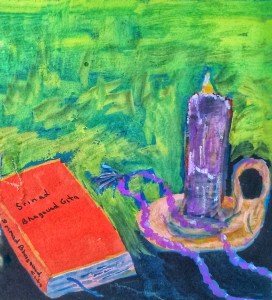
This morning as I do most mornings (trying to make it every morning) I sat for my practice starting with some prayers and reading a a few random verses from Bhagavad Gita.
Then I settled to spend some time in devotional chanting of mantra. For a change this morning, while chanting I listened to a lovely album of devotees chanting the Hare Krishna mantra:
Hare Krishna Hare Krishna
Krishna Krishna Hare Hare.
Hare Rama Hare Rama,
Rama Rama Hare Hare.
I reached for my mala (prayer beads or rosary) and as I mentally repeated these holy names in accompaniment to the recording, I held a bead between my fingers for each repetition, focusing on the chant.
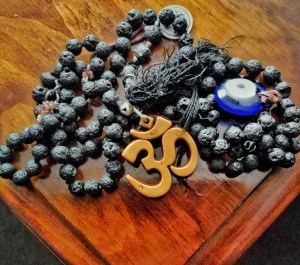
Now, chanting is much like any other human activity: that is to say, the mind is always there. Usually it manages to bring up all kinds of irrelevant fears, memories, questions, you name it. Today, however, one of those supposedly random memories actually caught my attention in a good way and took me along.
As I continued handling my prayer beads I thought about a story I read in India nearly 15 years ago now. The story concerned prayer beads as it happens. Buddhist nuns, imprisoned in Tibet, were forced to resort to making their own rosaries in secret after their meagre belongings had been seized.
Almost ten years later, after another extended stay in India, I finally was able to write about this story. In this instance it came into being as a poem I called Homage to Holiness. May I share it with you here?
Homage to Holiness
Threads harvested from threadbare clothing.
Pea-sized bits of bread, sliced from meagre rations,
secretly hoarded for sacred purpose.
Mala makers work at night
in the dark of the stinking and freezing stone cell.
Chewed bits of bread become dough again,
and, by feel, frozen fingers knead the dough
until tiny beads are created.
An even tinier twig, again by feel, pierces each bead through.
Then in solemn prayerful silence and focus,
the nun passes her harvested thread through the first bead.
She ties a knot, no easy task with freezing fingers in the frozen dark.
And so it goes; all sacred duties take their own time.
One by one; one bead of bread threaded; one knot knotted.
The nun nears collapse. But now, at last, her task is done.
As the last knot is knotted, the last bead in its place,
the nun sighs and mutters, whispers, a prayer of thanks.
One hundred and eight beads – plus one – made, and strung
Her Mala
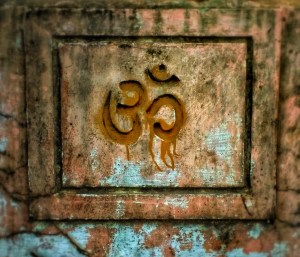
Om Mani Padme Hum
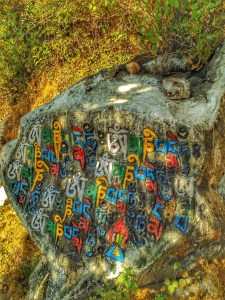
Probably the most sacred and significant of all Buddhist Mantra, Om Mani Padme Hum, means something like ‘the jewel is in the lotus’. But many would say it goes a lot further than the mere literal translation of the words; It is said to be the actual path to Enlightenment. There is a huge amount of information on the Internet about this mantra, so if you’re interested a good place to start is at this link.
Whatever the actual literal meaning, interpretation, or who chants it, I think we can all agree that the intent of this mantra is to have us focus on the divine, or on the Ultimate or Absolute reality. The same as any mantra one might choose actually. Remember last post? God is.
in any case, I think somewhere above I’ve used the word random. Well I should know better by now: no such thing as random. One of the Bhagavad Gita verses I read – in fact the final one I left marked with my bookmark – seems to me fit very nicely with that ‘random’ memory of a story read years ago, and my humble retelling of the story in a poem many years later
One who knows the Absolute and whose intelligence is fixed on the Absolute is not moved by pleasure or pain, pleasant or unpleasant happenings.
Bhagavad Gita 5:20
Did that nun imprisoned as she was in the dark and the cold feel that pain? Did she feel fear? Of course she did. The thing is, she was, as constantly as her circumstances allowed, fixed on the Absolute: the activity of making the mala, the intended use of the mala, and her prayerful attention and devotion as she worked, all enabling a complete fixing of mind, heart, and attention onto the Absolute.
The cold was still there; the hunger and fear too. But this nun was able to remain centred, you might even say calm and content, despite the dire situation.
Actually content was a word I read in relation to this nun and her sisters (she wasn’t alone in that prison cell): From what I read they were released after some time, and eventually escaped to India where they rejoined friends, family, and of course their leader the Dalai Lama
At the time the story was being recorded for posterity, the Mala Maker reported that she was happy and content and leading a full and fulfilling life. I imagine her as still being fixed on the Absolute.
Thank you for allowing me to share these moments with you
Love and peace
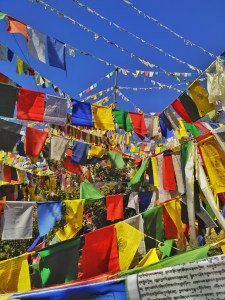
Welcome to another musing from the hermits’ cave. It’s been a while hasn’t it?
Mind you, I’ve been busy: settling into the new hermitage here in the desert. Actually, it’s been cloudy since we arrived, and raining sometimes. It’s as if the Subtropics have followed us here, except that it’s been freezing.

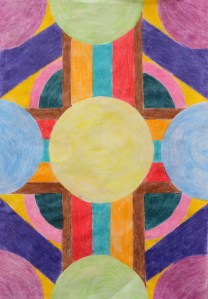
And I’ve been busy colouring in as well. Not as in filling in a picture book designed for colouring, but in making my own patterns and shapes with the one aspiration of making colour happen.
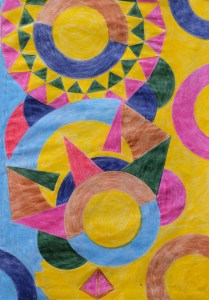
Japanese calligraphy masters will tell you that God is in the ink, or in my case in the pigment of the colour pencils I use. I draw designs, sometimes complex, sometimes simple, then fill the spaces with colour. Sometimes just one or two, sometimes multiple colours.
Why? Well, the simple answer is because I like doing it. I like to see colour covering the page, seeing it slowly fill that empty space. I’m not good at ‘drawing’ and painting in the traditional sense, but one thing I can do is make colour. So I do.
And it’s a sacred act: God is in the ink remember? It’s the making of beauty. And that is a holy act. There’s that aphorism isn’t there? It’s better to light a candle than curse the darkness?
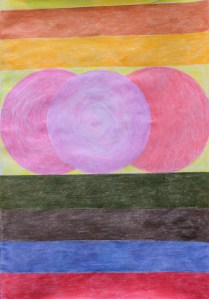
Or, I could say that it’s better to make colour and patterns than it is to be swamped by the darkness.
There’s a Bhagavad Gita verse I like that I came across again the other day:
If one’s thoughts are fully absorbed in the Absolute all his [sic] spiritual offerings also become a part of that same Absolute
Bhagavad Gita 4:24
In other words, all our actions – and we never cease from activity while we dwell in a material body – are not only prayers or offerings to that Absolute (or you can say to God, to beauty, to art, to love, to the universe, to life. Or you don’t have to name it at all. None of the names and forms are relevant) but in fact become that Absolute.
I am a hermit pilgrim, living a contemplative life devoted to the Absolute we just talked about. I have little to offer, but I offer all that I am. And with my photographs, and with my ‘colouring in’, I try to create a little bit of the sacred, a lit bit of colour and beauty to keep us all away from the darkness.
Peace and love
Greeting and Welcome to you
Quite a long time ago now I half wrote a book. I mean to say, I wrote half the thing before giving up. The book was going to be called When a Pet Dies, and was about, well exactly what the title suggests. All the practical stuff that you’d expect, as well as ways to deal with the grief over the loss of a companion animal .
I thought at the time that the reason it was only half written is that, once I got through that practical stuff and was ready to tackle the grief and loss parts, some kind of lethargy set in, or I got lazy. Or perhaps, I was thinking also, the muse for that particular project had simply left and was gone. So it remains half written.
So, why am I musing over this half done, half forgotten project from long ago? Well, let me tell you about a visit I had this morning.
I was sitting, focusing on chanting my mantra. Suddenly I felt an absolutely overwhelming sense of loss and sadness. I don’t recall thinking of anything in particular beforehand, but the sense was overpowering. Flooded with grief is what they call it I think.
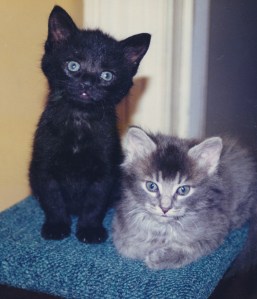
And then, just as powerfully, I sensed the presence of Lofi, my cat who died in my arms over ten years ago. Immense feeling of presence is what I wrote in my notebook. Now, I’m not saying he was literally there with me. I’m also not saying he wasn’t. All I can say is that it was among the most intense of similar experiences I’ve had over the years. Anyway, that’s most likely what got me thinking about my incomplete book.
Later this morning I was sitting with my partner on a benchseat overlooking the sea, the bit of the Pacific coast I’ll be leaving behind next week.

Actually, now I’ve mentioned that, you might remember from my last post how keen I am to get out there to the desert. That excitement and anticipation doesn’t mean for a second that I’m not feeling quite sad about leaving the coast.
Anyway, we were just sitting there and chatting on and off, when suddenly a thought seemed to push its way to the surface. I all of a sudden knew why I stopped where I did when writing that book. I realized in a strong and convincing way that you can’t build a structure to define what grief is or how or if it should be experienced, by whom and when.
I’m not talking about the ‘truism’ that one hears all the time that says that the ‘stages of grief’ are in a set order, until they’re not. Actually come to think about it, I’m not even sure this is true. I mean, I’m not sure it (grief) is a thing to be labelled, quantified, recorded, predicted, analysed.

I mean, who’s to ever say how any other individual, or even oneself, will feel about anything at all? Sure, there might be a ‘typical’ set of responses to any given circumstance, such as a loss, but even the proponents of such theories will tell you that none of us is typical.
Which kind of leads me back to my feeling of oneness with my Lofi earlier in the day. Obviously I’m not alone in having such feelings. How often has any one of us heard other people say, after they’ve lost a loved one:e, ‘S/he was really here. It was so real’.
Such experiences can occur anytime, even decades after the loved one has left. I’ve mentioned somewhere else that I’m reading (in little chunks) a great book by Joseph Campbell, the renowned scholar of myth. Let me share with you a quote from the section I’ve been reading today where he’s talking about how art in India seeks to portray the divine in all things:
This is the wonderful song that one hears when one reads the Bhagavad Gītā or any of the great texts of Eastern philosophy. This is the song of that immortal spirit that never was born and never die.
Of course this isn’t meant to be a consolation to myself or anyone else. After all, we are physical beings, living in a material, solid and apparently ‘real’ world. So, naturally, we experience loss, like everything else in that context.
Our bodies react (or don’t) as do our minds, creating physical sensations and emotional responses. Or not. These physical and emotional responses, or lack of them, are totally unpredictable, unexpected, and most definitely unclassifiable by anyone outside of oneself (myself)
Anyway, there are no rules. Even the grief and loss experts will tell you this. Mind you, I can and will only speak for myself, and my experience. Basically that experience has taught me that I have an intuitive resistance to ever thinking in terms of there being a ‘roadmap’ for grief.
Or a statistically valid ‘pattern’ or ‘process’, or that there are even such things as ‘stages of grief’.
My grief for my Lofi is unique, just as everyone’s is. I’m pretty sure I don’t even want to define it, label it, ‘try to get closure’, ‘come to terms with my loss’. No. None of that. It’s like I’ve said someplace else, or at some other times:
Sometimes we make way too many words for something for which there are no words.
Thank you for allowing me to share these words with you. I pray that they are not ‘too many’
peace and love

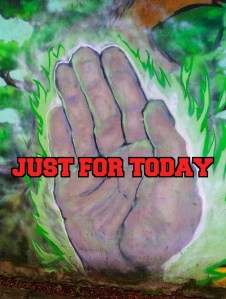
There is a song by George Harrison that I like very much. Actually there are many songs of his that mean a great deal to me. He’s been a kind of mentor or teacher for me since the early 70s. But, having said that, there is something about Just for Today that really does resonate deeply within me. It’s not even one of his ‘biggies’, and was released in 1987 on the album Cloud Nine
In fact, if you read the lyrics of the song. Or even better, listen to George actually doing the song himself, you’ll most likely agree that this is more than a song. This is a refrain, a plea, even a prayer. No ordinary pop song anyway.
If just (for) today
I could try to live through this day only
Not deal with all life’s problems
Just for today
Then, the other verse (there are only two):
If just for tonight
I could feel not sad and lonely
Not be my own life’s problems
Just for one night
How many times have I made these same pleas? I don’t think I’d be able to count them. Of course I’d guess we all have at some time or other (or even quite often, all the time, every day, ahhhhh!!!!!!) wished or prayed for the problems (whatever they may be) to just go away, even for just a day. No, not even a whole day. How about just for a few minutes?
So, I’m not alone then. Still, it’s no consolation is it, to know that we all go through the same wishful thinking to be rid of the same or similar problems? I think, though, in this song George has given us a clue to what we can do to bring ourselves a little more into the present when it comes to the angst we weigh ourselves down with over ‘all life’s problems’.
And actually, he’s suggesting not that we focus fully on the present moment, the micro if you like, which can be tricky at the best of times. He’s given us a bit of a an easier task: Just look at this day only. Perhaps we can better look at a whole day than this ‘moment’ or ‘second’. A day is sort of a macro moment, a bit easier to get hold of.
But, that last little question, about always me being my own life’s problem, that’s what I really try to get to grips with. I am my own life’s problem. The problem is not the family I was born into. It’s not the less than idyllic childhood I endured. It’s not even the bullies I seem to have attracted to myself over many years in far-off school days.
The problem is not even the anxiety that I seem to have been born with, or that’s evolved over time. Nature vs nurture?
And I can’t even say that the problem is the kinds of choices I’ve made about life, work, thinking, and all the rest, over the years.
No. None of this. The problem is me. And, let’s get really trippy here: the problem isn’t even me. It’s the physical manifestation that thinks it’s me and which exists in relationship to the physical world.
So, who is the real me? Who am I? Ah, well, these are the really big questions. Asking these questions is called Self Enquiry. And I think it’s helping me.
Whenever one of those life’s problems, or anxieties pops up I try to remember to ask: ‘To whom is this feeling/thought/memory occuring?’ That answer is (obviously) to me. And then I ask, ‘Who is this me? Who am I?’ Then, for the minutest of tiny moments, it all stops. Sometimes.

You see, I’m not really able to answer that Who am I question. The best I can come up with is a never-ending list of who I’m not, or what I’m not. It’s called Neti Neti: not this, not that. So, if I keep returning to who am I every time one of those ‘I’m not …’ comes up, what happens?
Well, in theory, nothing. The idea is that asking Who am I stops the mind. It can’t answer. If a mind can’t answer, there can be no thought. And if there is no thought, then mind ceases to exist. (I’m not talking of brain here, but mind. It seems to me that the mind has no existence as a distinct entity of its own. It is more what we could say a ‘place’ that comes into being when thought happens. No thought, no mind.)
This cessation of thought is only a momentary thing. Thoughts soon come barging back (it also seems to me that while mind might not actually exist, it has a way of making its presence known in no uncertain terms). One thing I try to remember that causes me no end of extra thinking, is the fact that if we are not having a thought, then we can’t ever know it. You can’t have a conscious thought that says ‘hey, I’m not thinking now’
I see this Self Enquiry as a way (in a long term, lifetime kind of way) to rid myself of my incessant thinking and the confused (confusing too) and useless thoughts that arise all the time. For me it is, in a sense, a way to become mindless.
In that moment, when thought ceases, there is no pain. There are no questions, and there is no anxiety. There is no dread; no hope even. Basically you can say there is nothing for that tiny moment.
And that’s me, the real me. In that little moment (who can measure the length of a moment?), there is presence, as in I (the real I) am present, right here, right now.
Actually there is no time, as we measure it in the world, in that little moment (or whatever we choose to call it). Perhaps it’s more accurate to call it a state of being.
And it’s a state I’d like to be in more often. Not, as I say, that I’d know I was in it. Only by what you might call the spin-off effects of more calm, more clarity, less anxiety, all that sort of thing. In a way I would call that a state of grace.
All I can say is that it is exactly where and when and how I want to be.
Just for today.
Hello and welcome

In yesterday’s post I made mention of how Notes from the Hermit’s Cave is a month and ‘a bit’ old now. I thought when I typed that, ah yes, so it is; I don’t think I’d given a lot of thought to details like that.
So, first things first: Thank you for being there at the other end of all this, and for joining me on this new venture. Adventure really.
Anyway, as you could tell if you read that post, I just kept on typing with hopefully something reasonable coming out at the end!
Later when I told a wise one I know about that realisation, this person said to me:
‘Are you sure you’re getting enough new imput to keep coming up with new ideas for more writing?’
Good question. Wasn’t yesterday’s post about precisely the issue of an idea that wouldn’t (or maybe couldn’t) evolve into a post? But, wait, not having any ideas isn’t a problem is it? Or is it? So, what’s ‘enough new imput’?
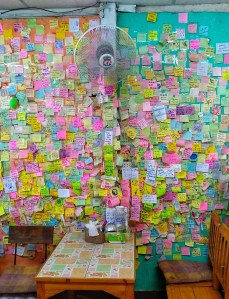
So now I had two pieces of information that had me thinking: the running out of ideas is a possibility; having ideas that won’t or don’t work is a certainty. Together these bits of information came together to form a little bit of knowledge.
That’s how it’s supposed to work: we gather information, then we turn that information into knowledge. The trouble happens when we are overloaded with too much information and can’t sort out any of it to form anything like coherent knowledge.
Anyway, here am I getting distracted! What I was about to say was that the knowledge which came from those three pieces of information, was:
There’s a potential for ideas to run dry, but the other problem is that just because there are ideas apparently available now, doesn’t mean they are any good, or can be used, want to be used, or for a myriad of other reasons, I can’t connect with them. Either way, I am definitely going to need some new, perhaps different imput
What to do? Now, this is where the formation of wisdom comes into the picture: first there were seemingly random bits of information, which then came together to form a little parcel, nugget, insight (what do you call a piece of knowledge?). Some knowledge.
As we all know, simply gathering information, even if we somehow are able to turn that information into knowledge, is no guarantee that wisdom will follow.
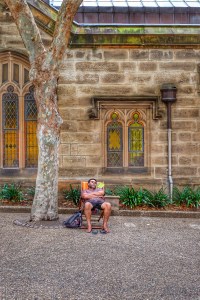
However in this particular instance, wisdom did emerge. After some thinking, and some not thinking, I thought, I know: I’ll have a couple of days off. No posts. No blog (except to answer people who reach out to me obviously) stuff at all.
Ah wisdom. So simple really when you look at it isn’t it? I’ll just have a couple of days without thinking about, or looking at Notes from the Hermit’s Cave. So, what will I do instead? Well it’s not as if my time isn’t rather (very rewardingly) full with the other practices incumbent upon me as a hermit and a pilgrim. And a monk.
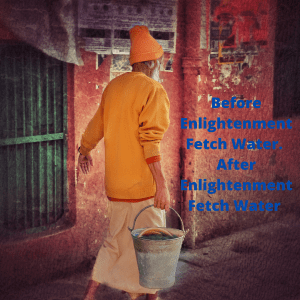
Still, I thought, I could use a bit more time just sitting still. You know: being quiet, eyes closed, not doing anything. Then, I’ve been a bit light on listening to music this last little while. And not listening to enough music is enough to cause trouble with anybody’s creative self isn’t it?
So, decision made. More time sitting and being. In silence so the inner mind is open to receive new ideas, to process existing ones, and to well, just be quiet. And some more music. Doesn’t matter what it is {well to a point it doesn’t): ideas come from and because of music.
Perhaps by this point, it has occured to you as it has to me, that there is an irony at work here. Here I am writing a blog post on the very first day of a couple of days off from writing blog posts. Okay, I get it. Time off starts … now!
No-post weekend starts … now!

Alright, I can’t make any promises; The creative spirit arises when it does; my heart opens when it does. Besides, as that same wise one said to me by way of an injunction on how to approach everything and anything:
PS I was just thinking, there’s a book I’ve been meaning to get to for weeks now, so … Never mind
Greetings friends

Not so long ago I read The Glass Bead Game by Herman Hesse. And I have to say it’s what I like to call a ‘real book’: written beautifully with an interesting and deeply engrossing story, full of detail, symbolism, thought-provoking ideas, and at the end of the day just plain and simply a delight to spend time with.
I won’t go into what the book is about here, but for the sake of this post, I will just tell you that it is about a mythical European province populated by an elite group of scholars of all sorts who have as their main cultural, social, and even political focus, the game of the book’s title.
Anyway, what I want to talk about here today is something said by the book’s main character, who in the course of the story becomes the master of the game and therefore a hugely influential figure.
This character is having a conversation with a friend. And he’s talking about the way this elite group conducts itself in the world. How it helps shape the country and history. He says to his friend:
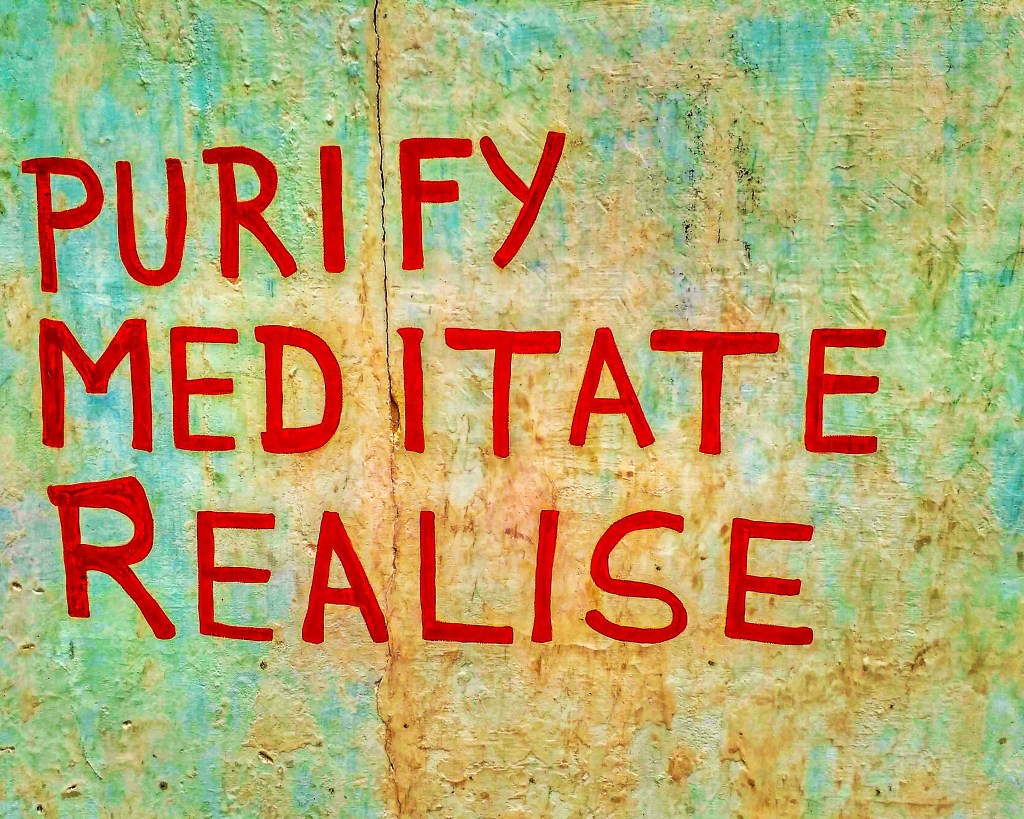
We do not intend to flee from the vita activa (the active life) to the vita contemplativa (the contemplative life), nor vice versa, but to keep moving forward while alternating between the two, being at home in both, partaking of both.
Now, what struck me about this quote is that only a couple of days before I’d read a verse in the Bhagavad Gita that I felt said almost exactly the same thing. Krishna says to the warrior Arjuna:
Contemplative life and Karma Yoga are one and the same and takes one to the same destination. One who perceives this sees things as they are.
Bhagavad Gita Ch 5 Verse 5
Karma Yoga is usually defined as taking action without desiring reward for oneself or being attached to the fruits of the action. It is very much the taking of selfless action that is for the benefit or others. However, because as living beings in the world, we are always taking action and actually can’t not be acting, Karma Yoga is also described as being simply the yoga of action.
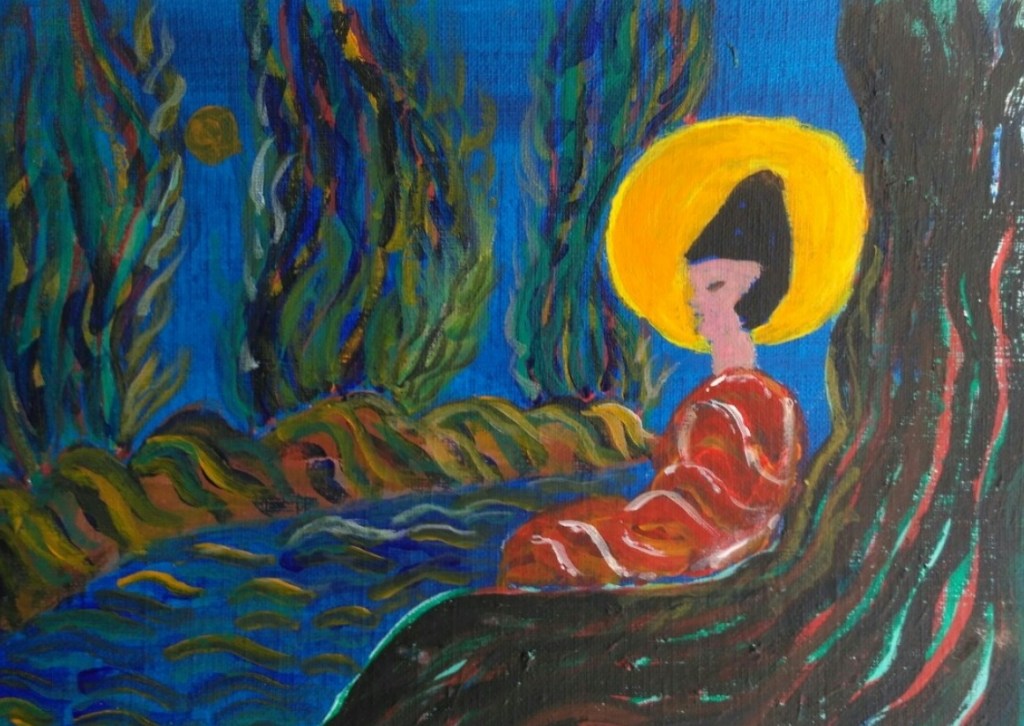
The Contemplative Life is most often ascribed to monks and nuns, and others living a life of deep thought, study, meditation and prayer. But any of us can lead a contemplative life because such a life is about being mindful, it’s about considering the consequences of our actions.
Such a life is lived slowly and thoughtfully and would be called ‘spiritual’ by some people. We could also call it an examined life. It is about cultivating an inner life, a life of mindfulness in all aspects of our lives.
And living in a contemplative manner helps create more peaceful communities; people living in this way project a calm that can have profound impacts on others. Such people help to set up what some us like to think of as good vibrations
Of course it’s one thing to talk about the Contemplative Life versus the active life in a novel and in an ancient book of scripture. It’s a whole other thing to be trying to figure out what sort of life we should be living in the world here and now, with the urgency of climate change, wars, despotic leaders, increasing poverty and the rest. Or is it?

Is it better for us to take action by protesting, joining activist groups, writing letters? Or is better that we live apart in some way, spending time contemplating, meditating, ‘praying’?
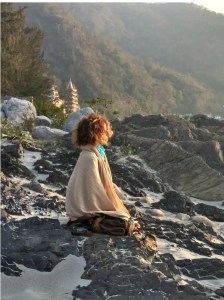
To me it seems there’s a real struggle going on right now between these two points of view. There are those who will tell us that it is too late for ‘thoughts and prayers’, and then there are those who say, we can’t achieve world peace (in its many facets), until we have attained inner peace on an individual level, and that the only way to reach that state is to meditate, live a contemplative life, and slow down.
Obviously, and you already knew I was going to say this, the two are not mutually exclusive; both approaches are required and serve their own purposes. There is no dilemma; there is no conflict. And above all, neither approach is superior to the other.
Many of us are suited to an active life; some of us less so. Some of us are suited to silence and to quiet reflection and study, some of us aren’t. And oftentimes if we try to act contrary to our true natures, then we have great difficulty in achieving anything. And we don’t help anyone when that happens.
Karma Yoga or the Contemplative life. An active life or a life of silence and contemplation. Only you are able to know which is for you. Of course there’s always a crossover to some degree or other. Being fully active and engaged in the world, doesn’t stop one from spending time in a contemplation, and perusing one’s life mindfully.
Equally, leading a totally or partially contemplative life doesn’t mean you aren’t taking action in the world. Obviously you are. For me, the contemplative life is a way to find some personal peace, to create those good vibrations I mentioned, and it allows me to connect with others of like mind, who are working for the highest good. Those living in the invisible community I think I’ve mentioned some other time.
Balance. The key is to find the balance that expresses you and your nature best. So, take some action right now and begin contemplating!
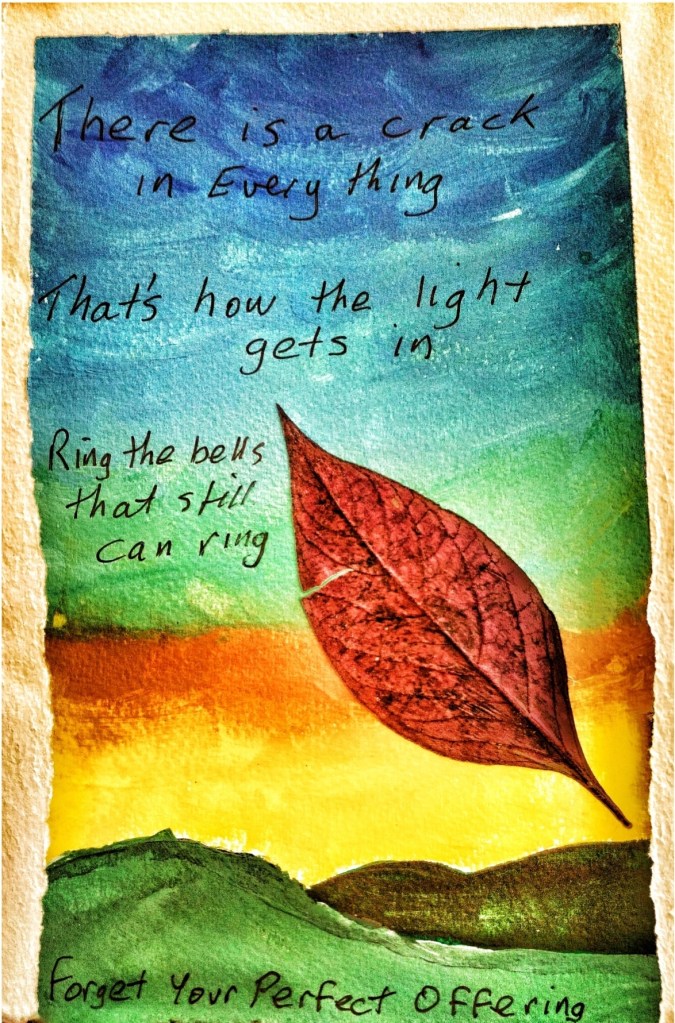



 Notes from the Hermit's Cave