A Story of a Door

The walk from the Hermitage to the coffee shop at the Village Green takes around five minutes or so. This morning, noticing a pause in the rain, we thought we might take the opportunity to get some fresh air and a walk, at the end of which there would be coffee. So, we stepped bravely forward, with the faith that the gods of the rain were indeed taking a break.
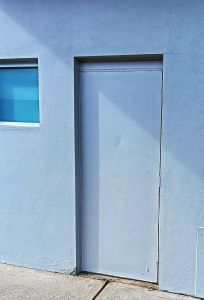
‘Look over there, ‘ said my partner hermit as we passed through the centre of the village. ‘There’s a door that can only be opened from the inside.’

‘I’ve never noticed that before,’ I replied, looking across the street to a wall into which was set a door with no visible handles or lock. The only things that suggested that it was in fact a door were the hinges on one side, as well as its size and shape.

Now don’t ask me how many times I’d passed that spot. Most likely dozens of times, on both sides of the road. Still, now that I had been shown it, I was intrigued. Mentally I was captured: I thought, what a wonderful thing: the one or ones on the other side of the door have complete control over who or what is allowed to enter.

With such a door, one that only opens from your side, you could easily choose to rarely – or even never – open it. Ah, peace at last went my thoughts.

But, right away, those thoughts were dismissed, sent packing: too simplistic, too extreme, to heavy a response. Though, you know, I do feel strongly that such a response to the world – shutting it all out completely – is perfectly understandable, completely reasonable, and oftentimes even an absolute necessity .

Still, I had that feeling towards my reactive thoughts of ‘too extreme’ (inner editor’s note: he has no idea what he’s saying does he? If you ask me, right this minute he will be thinking his initial reaction was spot on and he’d love to have a door like that. Anyway, we’ll let him have it his way).

Some further, more careful thought is required here I think. For a start, here’s a question: If I were to keep the door shut all the time, how would I ever be able to allow my own light, my own love, my own Self, out into the world?

Maybe there’s a way to keep the door open sometimes, then at other times choose to keep it closed to bar access to unwanted intruders in the form of people, thoughts, events, emotions and so on.

After all, it is my door (in this little fantasy at least), the door to the inside, where resides the ‘real’ me, the Self within, beyond and above, the physical form that I so tenaciously cling to as as being the real me. Talk about attachment!
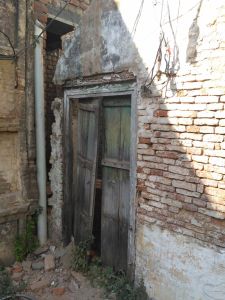
Perhaps slightly exagerated, but this is close to how I see my actual door working as distinct from the story I’m telling in this post.

Where was I? Oh yes. With that door that opens only from the inside, I might come – eventually – to realise that there is nothing to disturb me – unless I open the door and let whoever or whatever that is unwanted, through the door.

I am my own gatekeeper, and without my consent my gate (door) cannot be opened and entered.

And, getting back to the choices I am able to make to sometimes open the door to allow some light and love to flow out from me, out the door and into the world. The more I’m able to discern when, and for how long, to open the door as a way to control what comes in, to what can reach me, the more resources of said love and light I shall be able to build up.

Which, in turn, will lead to more and more opportunities I’ll have to open the door in order to share some of that good.

I can envisage a state reached where my door could quite possibly be left to stand ajar all the time.

You see, the more love and light pouring out, the less that disturbs me can get in. Love and light is transforming, isn’t it?
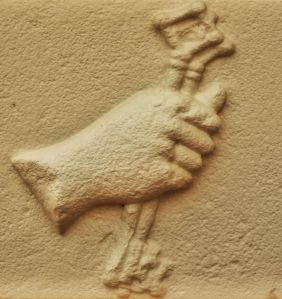
Yes. Now I’ve noticed – recognised – the door that can only be opened from the inside: It’s me! Now, where did I leave my door keys?

The Q&A in the Scripture: Part 2

Namaste

And welcome to Part 2 of The Q&A in the Scripture series in which we are looking at the answers given by Krishna to a list of questions asked by his cousin Uddhava in a scripture called the Uddhava Gita.

Remember the scene? Uddhava has asked Krishna a pile of questions about how to live a good life, how to live in the world with discernment.

These questions have become urgent because the cousins are about to leave their hometown which is on the brink of war. Both will be going their separate ways and both know they won’t be seeing each other for a while – perhaps never again.

Anyway, moving right along: In our last installment, we had Uddhava asking the first of his questions; this one happens to have two parts:

What is quietude and what is self-control?

We discovered that quietude is not the state in which one finds peace, silence, our true selves, or the Divine, but is itself that consciousness, that pervades and permeates all that is, silence, peace. In other words, quietude is  the Divine itself.

In the present post, we move to the second of Uddhava’s two-part question: what is self-control? Krishna’s answer is excellently short and sweet:

Dama  (self-control) is restraint of the senses.

Krishna in his response, makes it clear that restraining the (one’s own) senses includes mind as a kind of sixth sense in addition to the five physical senses. In the context you could almost say that it’s his mind that Uddhava is in most need of restraining. Maybe that’s the message for all of us?
Well, we are all well aware of the ways in which we have tried to control our senses; Uddhava knows too. But look at the situation these two cousins find themselves in:

It’s fine for Krishna: he’s returning home to Heaven, or wherever. But, Uddhava, who is also about to leave, is facing more uncertain prospects. He’s experiencing great turmoil, and fear over his and his familiy’s safety as the threat of war closes in. Most likely he’s also grieving over having to go into exile from his ancestral home.

Of course he’d be fearful for the future: where will he go? What will he do? How will he protect and provide for his family? Like I said, an onslaught of mental and emotional anguish.

Still, it does seem that Uddhava is maintaining quite a steady presence of mind. He’s thinking about the future; he is clear about the sort of stuff he needs to find out from his cousin (remember Krishna is God) in order to put and keep his life on the right track despite the challenges facing him now and in the future.

Then there’s the fact that this self-control thing is only one question on a list of 36. Clearly Uddhava is looking for a lot of advice.

Restrain the senses – all six of them – Krishna says. But how? What does it mean, ‘restrain the senses’? I think I alluded to the notion that we all have some ideas, some clues, about how we as individuals might restrain them, but let’s personalise this: What does it mean for me to restrain my senses?

Actually, now I’ve made that suggestion, I feel overwhelmed: Where would I start? Surely I need to do a whole series of posts, just on this one topic alone?

Oh wait, I can start right there. Exaggeration, hyperbole, over-dramatising, catastrophizing, all perfect examples of emotional reactions leaping from an unrestrained senses central: my mind.

Let’s put aside that mental stuff for a little while, and just say that all those emotional responses could do with a bit more restraining training. Just looking at the physical senses to begin with, I can easily say that they also, at least some of them sometimes, need various degrees of working on.

First, my sense of taste: it goes into overdrive sometimes, and then I eat too much. Not so much as in the past, but the restraint has a way to go still.

My sense of sight is pretty good, well restrained for the most part. But there are times when I lapse into old habits and spend too much time looking at a screen and scrolling in a mindless kind of way. Getting there though!

As for my sense of hearing: You might remember a post from a while ago when I talked about letting go of much of my music collection, some of which I’ve listened to my whole life.  I’m doing this because so much of what used to be ‘my favourite’ songs or artists, no longer serve my spiritual growth, nor does much of it reflect the view of life and the world that I’m trying to cultivate.

Well, I’ve made a good start, but occasionally I slip and find myself humming old tunes, or listening to an album that I really ‘should have’ deleted already. Restrained? Sort of, and I’m still encouraged.

Enough! Let’s get straight to the biggie: my mind. If I’m honest, I have to say that my mind, while not exactly in full agreement with my efforts at restraint, is starting to get into sync with me and my aspirations for a more controlled mind.

But still, those previously mentioned emotional reactions like exaggeration, over-dramatising and the rest, are still there. Falling into line, it’s true, still … .

Then there is the (more than) occasional first port of call reactions to pieces of news of various kinds: I’m prone to ask, just as I imagine Uddhava might have: Why don’t ‘they’ control themselves? Why can’t he or she or such and such country or politician show a little restraint?

Yes, I know, we’re all guilty of this one to some degree or other.

My quickness to anger is not quite, but almost, might soon be, won’t be long before it is, a thing of the past.

Then, there’s my tendency to ruminate: rehash endlessly real and imagined events and other stuff from the past – as well as the always imagined possibilities (as well as the impossibilities) for the future.

Again, I know I’m not alone in this emotional roller coaster ride, and I do know that I am nowhere near as much of a ruminator as I was; I have made great strides, significant inroads, and I am encouraged that the end of rumination is getting closer!

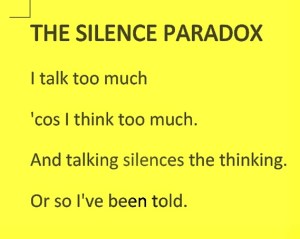
And now, here is the one thing I tend to think of one of my biggest, most tiresome and tedious, most annoying conditioned emotional responses: I talk too much. Not as much as I used to, but still too much for my comfort, and for the peace of mind of those around me. More restraint is called for.

Restraint has played its part in reducing my talking. But in a sense the major ally has been the ongoing quest I’m engaged in to discover my true nature, as consciousness, which is really my oneness with all that is.

And here our second question and answer leads us right back to the first: quietude.

I wrote in that post:

Quietude, calmness, peace of mind, are not where  you will find God, consciousness, or whatever we call it.  Quietude and the rest are God. They are consciousness.

Or putting it the other way round: cultivate silence, calm, peace of mind, and your senses will no longer need to be restrained. Your whole Self, including body and mind, will then be resting in Quietude, in your true nature.

That’s why I think these two questions are asked and answered together: Each leads to the other: by restraining our senses we are more easily able to achieve a state of calm, quiet, some level of peace of mind – in other words, Quietude.

Walk In The Waters of Life

Since I launched this blog (a whole month and a bit ago already), I’ve had an idea for a post. A short, spontaneous, chatty but informative little piece on my favourite name and form of the Divine Feminine (often referred to as the Goddess): Saraswati.

Well, as the keenly observant among you will have noticed, no such post has appeared. Procrastination in overdrive you might say. Or perhaps it was that the Goddess just wasn’t keen on me doing the post about her?

You see, I did some research, made a ton of notes, and discovered all kinds of fascinating things and I just felt I wanted to share what I’d learned. Somehow, though, the idea didn’t go any further. I’ve thought about it from time to time, but still, nothing has come. Then, a couple of days ago, I came across my notes and reread what I’d discovered.

Now, here’s a key moment: as I reread those notes, I thought (paraphrasing here), ‘I really must post this. It’s all so fascinating and would interest a lot of people and even be helpful.’ Something like that anyway. Yet, still, it is not written.

So, despite my notes seemingly begging for my attention, I guess that maybe it’s not the time. Now my notes are safely tucked into a few nice little folders within a larger folder somewhere in the depths of my harddrive.

All that struggle; all that thinking and fretting over what was supposed to be a short, spontaneous couple of hundred words on a subject I love. Still, the episode has got me thinking about intuition and how it can disguise itself – with our help – as procrastination. And vice versa.

Yes, I know, obvious question: how can we ever know the difference? When are we inventing all kinds of reasons for putting something off, and when is it really intuition trying to guide us?

Well, it’s complicated. As creatures able to reason, we are always ready to come up with arguments for and against, to think endlessly and agonize over the smallest and most trivial details while ignoring the big stuff. Really, in my case that’s all there is to it: I just think too much.

Sticking to the Saraswati blog post episode (a catchy title don’t you think? Watch out for a post headed up ‘The Saraswati Blog Post Episode‘), I don’t recall why I didn’t just get right to writing it. It might have been any number of things: a perceived lack of time; a promise to self to ‘give it some more thought’; a resistance to the actual ‘labour’ required. Who knows?

Or, was it more that, while the idea was a good one, I just wasn’t feeling it? Maybe the timing just wasn’t right? The problem is that sometimes an intuition comes in a flash of knowing – with a capital K – that you can’t possibly miss.

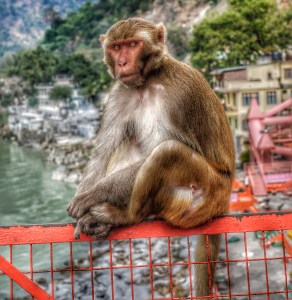
Then, other times, it creeps up so slowly and quietly that it gets drowned out and ignored as our monkey mind takes over with its endless arguments for and against, pros and cons, advantages and disadvantages,

The lesson I was given here was this: What is going to get done, will get done; what is not going to get done, won’t. Sounds simple really, but so often we make it more complicated with our overthinking, our coming up with excuses. We procrastinate.

Then, at other times, we just dive in the deep end, flowing with the intuition. It may be right or it may be wrong, but it’s done. Actually, I am trying to realise that there is no right or wrong about a decision made: it just is as it is. Easy to type, hard to do.

Flowing. That’s a good word actually. Saraswati, along with many other characteristics, embodies flow. As in the flow of the river of life. She’s the Goddess of all things creative as well as any activity that helps one to discover the essence of self.

So, flash or gradual realisation; right or wrong; left or right, be the river: flow with what happens or doesn’t happen. Don’t fret about the twists and turns, the ebb and flow of tides, the rocks in the stream that force us to flow around or over, or to change direction completely. In 1946 the poet Jorge Luis Borges wrote an essay about time. In that essay, among other things he says:

Time is the substance I am made of. Time is a river which sweeps me along, but I am the river (emphasis is mine)

Jean Luis Borges A New Refutation of Time 1946

Reading that quote reminded me of a song that I’ve been humming on and off for a very very long time (hint: I saw the movie when it first came out).

The river flows, it flows to the sea.
Wherever that river goes, that’s where I want to be.
Flow river flow.

Peace from me to you.

PS: Thanks to my memory for giving me these lyrics from The Ballad of Easy Rider. Or was it actually Saraswati whispering in my ear?

Talking About Sloth

Sloth.  Its a good word isn’t it?  One of those words you don’t have to look up to know what it means.  But if you do look it up, you’ll find it has a couple of meanings.  One is: laziness, indolence and a reluctance to make an effort.

Is sloth a bad thing?  Certainly it gets a bad rap; I mean: lazy? Indolent? Not willing to make an effort? Hardly words of praise. On the other hand we value words like busy, productive, efficient, hard working, and the rest. In our culture, these are definitely words of praise.

Go out and play; Read a book; Go to school; Study hard; Get a good job (whatever that means); How much do you make a year? When are up for promotion?  Demands and questions like these are constants in all our lives, and they force us into defining ourselves by what we do whether we are a little kid at school, a teenager trying to sort life out, an adult trying to make our way in the world the best we can.

Yes, it’s true I think: it always seems to be a about defining ourselves by what we do, rather than who we are, or what we stand for.  Always we have to be doing something.  Ever heard that little identity joke, I’m a human being, not a human doing?  I wonder how many of us would feel lost if we shifted from that need to be a doer to another definition of our identity, one less reliant on what we do or on what we’ve done in the past, or will do in the future.

Well, I hear you saying, this is all fine and dandy, but my boss won’t pay me unless I show up, there are meals to cook for the kids, I’m running late for an appointment, the lawn needs mowing and after that I have to write a report for my night class.

All very true, valid, and all of them things that do need to be done. We all have a life don’t we? But perhaps sometimes, even just now and again, and perhaps just for a few minutes at a time, you can stop. Just stop. Thats all. Stop and just do nothing, or rather stop and simply be.

Have I mentioned a favourite little two word sentence I really really like? Just sit. Don’t read, don’t think, don’t try to stop thinking, don’t ‘meditate’. All that’s required is to do nothing. Do No Thing. Actually, I think I’ve found a new favourite.

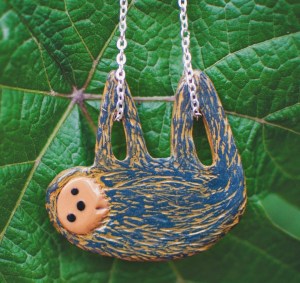
On, remember I said there are a couple of definitions of sloth?  Well the other one tells us that a sloth is a slow moving nocturnal mammal noted for hanging upside down from tree branches.  It lives entirely in the trees and is capable of only very slow movement on the ground.

So, I guess you should be very careful when you tell someone else I’m a sloth. Mind you, putting aside the hanging upside down bit, and the nocturnal requirement, it’s probably not such a bad way of being to emulate, do you think?

Have a lazy (slothful) day.

Silence. Could I have some more please?


Silence isn’t my strong suit. Or I should say, keeping quiet isn’t what I’m known for. One of the main reasons l live the life I do is because I am very sensitive to noise, but my problems start when I seem to forget that other people, and my own peace of mind, are affected by excessive noise created by me too.

And noise includes talking too much. Of course there are any number of reasons a person talks too much. Some people even believe they talk so much because it quietens the mind. No, afraid not. Been there. Not for me anyway.

Insecurity, nervousness, fear, low confidence, compulsive behaviours. The list could go on and on. When you think about it, the why isn’t always so important as the how to fix it question.

I spend a lot of time alone, in solitude, that gives other people and on rare occasions my mind, a break. I spend a lot of time listening to music to which I always listen intently. Of course that works on a number of levels, and is uplifting most of the time.

Speaking of listening to music, I usually use headphones like a lot of people. And I am blessed, absolutely and truly blessed, to have really good noise cancelling on my headphones. Anyone who uses ANC knows that it’s almost a miracle and makes the experiencing of music even better than it already is.

But I have discovered another use for the noise cancelling. I don’t always want to listen to anything: sometimes even I want some quiet, some silence. So, probably not the first person to do this, but I use ANC just by itself, just to shut out external noise.
But I’ve found it does more than this. Turning it on somehow creates another space. I actually feel like I’m enclosed in a space, or place. I hope that makes sense.

We tend to think of quiet and silence as meaning the same thing, and obviously they are similar and we use them interchangeably a lot of the time. But, sometimes they seem to be two distinct concepts. Quiet is an absence of noise. Whereas silence often seems to me to be a kind of solid state, an entity that comes into being for a short while (or longer hopefully) and encloses one in something like a cocoon or protected space.

Of course this state can be attained in different ways. For me lately I find with ANC on for itself alone, I can relax more quickly; I feel sort of ‘protected’ and safer somehow. Anyway, enough for this little tip from me. Perhaps headphone makers should change the label from Active Noise Cancelling, to Active Silence Creation

Peace and love

Look! I’m using two hands!

Namaste my friends


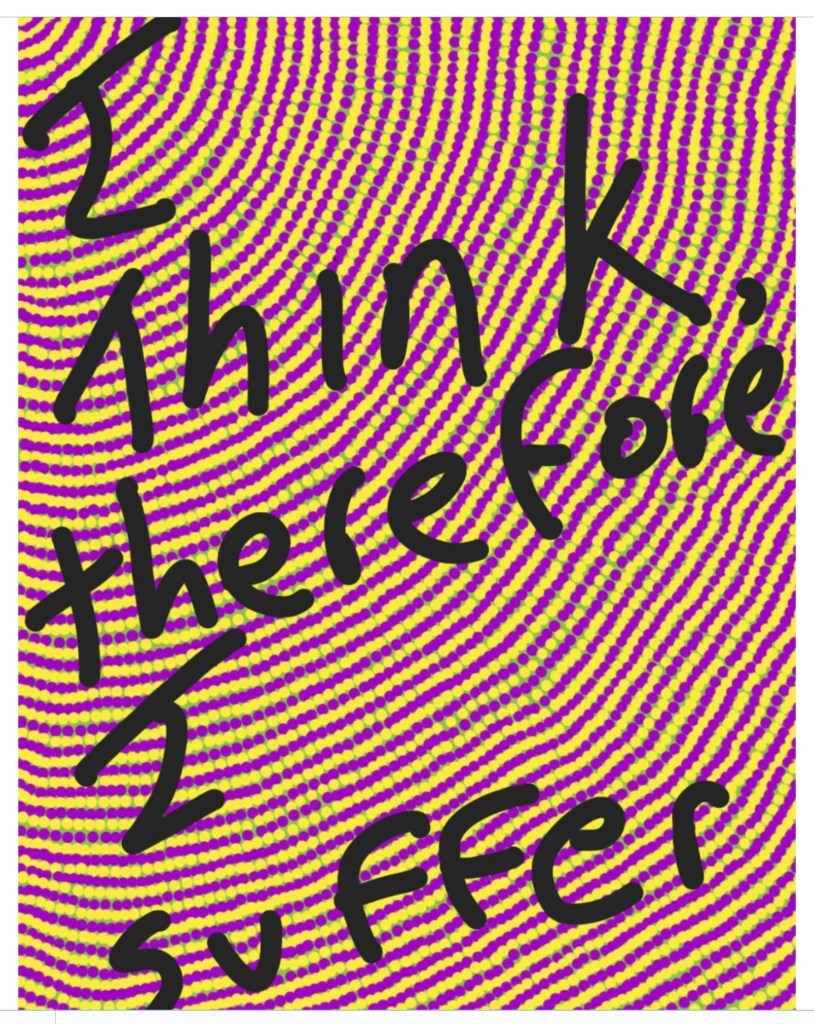
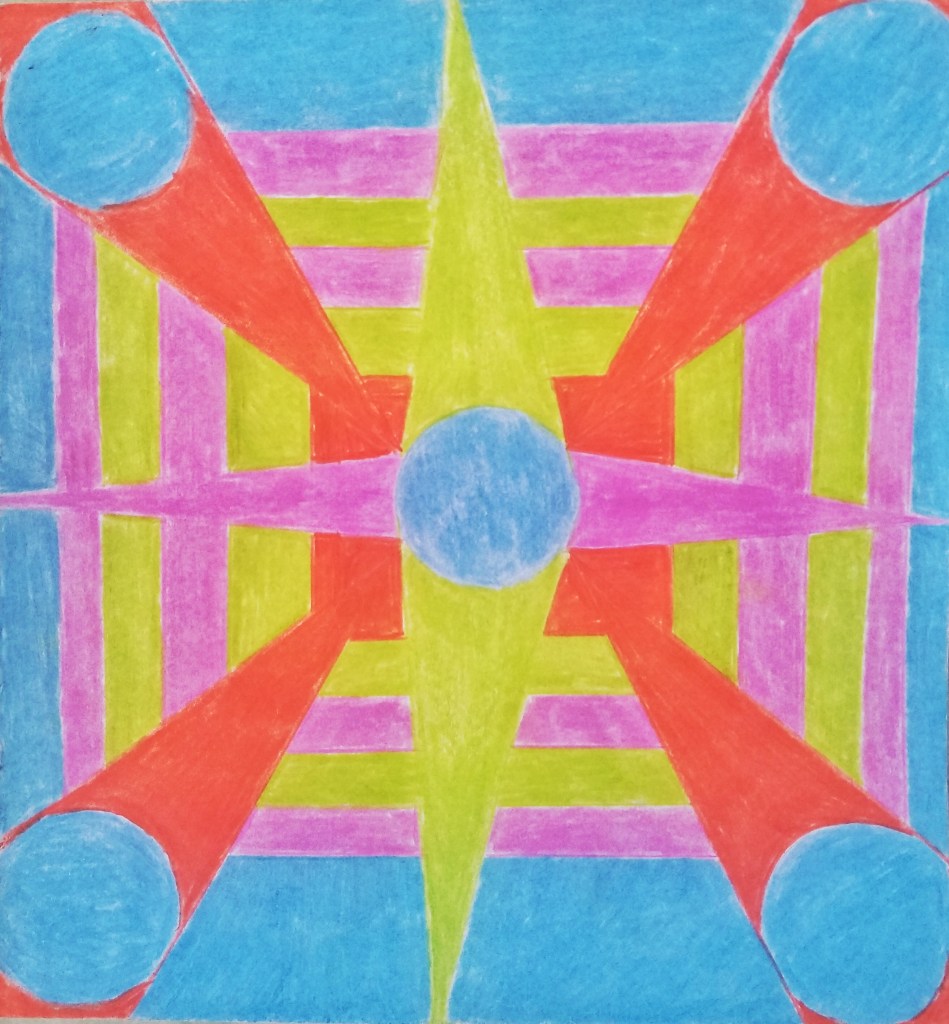
In my last post I shared with you a poem. Just another note as I said then. Today I find myself thinking about sharing a drawing with you. Or it’s a design, a ‘symbolic’ illustration. I’m not sure what to call it. Actually illustration is a good word in this case: I’m not exactly sharing it for its own sake, but to illustrate the topic for today’s post. Anyway, moving right along.

For a lot of years I have every so often had an urge to create patterns and designs, and just to colour in things. Just to see colour on the page I think. Just to be making them. They are of many and varied shapes and some are paint, some markers, and some pencil. I picked this one more or less at random so you can see the kind of thing I’m spending way too many words telling you about.

I really enjoy making these things. It can be quite a meditative process; of course mind can wander as always, but I find that if I just focus on the exact mark I’m making or a particular detail, then it pulls me in. Into the zone as you might say. In that sense it can be an intense experience.

And therein lies the problem: Sometimes, particularly with pencils I can be be so focused and intent, that I end up hurting my hand. Holding the pencil too tight, pressing too hard trying to squeeze more colour onto the page (that’s what it feels like anyway), or just old fashioned and typical impatience pulling me to push harder.

Whatever the cause, nowadays if I even begin to use a pencil (writing with a pen is okay for some reason) my hand begins to ache. It’s not terrible pain, just a nagging thing. But certainly it is what you might call a disincentive.

While I was looking through a pile of old drawings a couple of days ago, I thought, I wander if I can use my other hand instead? Now I’m not one of those people who can switch between hands with ease; if there is an opposite to ambidextrous, then that’s me. But I thought, I’m going to try anyway.

So I took a coloured pencil and paper and with my non-dominent hand (that’s an understatement if I’ve ever made one) and tried to just pretend I was colouring in some shape. No lines as such, just colouring in strokes.

Alien alert! That’s what it felt like. Completely and utterly alien. Although my hand wasn’t totally out of control, it felt like it was. Still I persisted, and you know I won’t say I got to the point of it feeling natural or fluid or comfortable, but I could tell there was potential for that to happen.

In a funny way it wasn’t even my hand that was the problem; it was more a mind or brain thing where I just felt out of joint, not connected or something. Quite disorienting actually. But I think I’m going to try again. At least I thought I can use my other hand for the big areas, leaving my usual one for the finer work when necessary.

I suppose it’s like anything new isn’t it? Or rather in this instance it was about realising I’m not able to do a thing, an activity that is meaningful to me because the way I was doing it was making it too hard, or even impossible. And actually causing damage.

Who can say why it’s only just occured to me after so many years of struggling with the issue (on and off). I guess, there’s a right time for everything, or as I often think, there is never a wrong time. Life just is.

Never too late as they say, to do it differently. I guess we’ll have to see what happens. I might end up ambidextrous, who knows? Mind you, don’t be expecting fine art or lifelike portraits with my other hand anytime soon.

Homage to The Cockroach Man. With thanks and affection

Notes from the Hermit’s Cave is what this blog is called. I promised to publish musings or notes of all sorts: your regular text blog; photos or other pictures; poems; and other assorted bit and pieces.

Well, I’ve rediscovered a poem that I think would be great to share with you.

Looking through some posts saved from old blogs no longer active, I came across theaforementioned poem. It’s about a guy I met in a cafe in India back in 2006. This person kept me and a crowd of other travellers spellbound for a couple of hours one monsoon afternoon. Not to mention the many conversations focused on him that followed in the next few days and the several pages in my Journal recounting the whole experience.

Anyway, as soon as I saw this poem again, I thought I just have to post it here. That trip was a big step for me in my own healing and spiritual journey. And meeting this guy has played a part in all that.

So, please join me in making this small offering of thanks to that guy, whose actual name I never learned, and who forever will be known to several very fortunate travellers as the Cockroach Man

THE COCKROACH MAN

This is what he said.
He’d lived many years in India,
and, in that time he’d done many things.
Even, he said, for a while he’d trained with a yogi, his guru.
This is what he said.

Yogic training is not easy, he said,
In fact, he said, one aspect made him sick
for a year.
This is what he said.

His Guru put beings in his head.
Beings like parasites he said.
Yes, yogic training, it made him sick.
This is what he said.

Parasites implanted in the head? A part of yogic training?
No. I don’t think so.
Actually, inserted was the word he used.
‘inserted beings in my head.’
This is what he said.

All gone now, save one, he said.
Only one remains—it’s like a cockroach.
And it’s still in him making him sick.
This is what he said.

At night, he said, there is sometimes relief.
The cockroach leaves and floats just below the ceiling.
Well, its astral body leaves his head and floats above his bed.
This is what he said

‘You’re a healer. You understand,’
is what he says as he turns to me.
Umm, no. Actually I don’t.
But this is not what I said.

Where is he now, the Cockroach Man?
‘It’s winter soon. I’m gonna give blankets
to the villagers.’
This is what he said.

He’s known suffering, he said.
And you could tell he was tired
from fighting the cockroach.
‘I’ll feed the poor.’
This is what he said.

I love the Now. When else is there?

Over the last couple of months or so I’ve been listening on and off to Jimmy Buffett. I like Jimmy’s music, and I have liked it since the late 70s. I have at least ten of his albums in my Music folder.

Anyway, Buffett is an American singer/songwriter who writes and performs songs about beach life, sailing, exotic island paradises, and generally having a good time down at the beach and in and on the water. And preferably in sunny climes.

Yes. Hedonistic is a word that’s been used to describe his music and the lifestyle he celebrates. Still, I’ve liked him for a very long while now, and every so often I get into his ‘escapism’ and his relaxing in paradise kind of vibe.

Something a little rebellious about many of his lyrics too. But let’s not go there just now. What I want to talk about is a song I’ve listened to dozens of times, but when I played it again the other night, it got my attention in a way it never had before.

What I mean to say, is that for the first time I actually heard the song (Love the Now. Have a listen, you won’t regret it). I got what the writer was saying with his lyrics.

All the pain and the pleasure
I love the now
All the blood and the treasure

Then another verse:

The whole damn world’s gone crazy
The moon is jumping over the cow
How can you help
But not love the now?

It’s like he’s saying, ‘yeah, it’s all good.’ Not just hedonistic but nihilistic as well. Like he doesn’t care, doesn’t want to know. But, then, in another verse he writes:

It’s the only place I’ve ever been
It’s the only way that I know how

It is. That’s what he’s saying. ‘All the ranting and Ravin’ and ‘All the cussin’ and cravin’‘ are there for sure. Or, rather, they are all here. And now. But, dig a little deeper, read between the lines (so to speak).

Listen to this:

Don’t talk about your superstitions
Don’t talk about your cats meow
But don’t talk about tomorrow tonight
I Love The Now

You see? He doesn’t want to hear about your belief systems imposed on you by others. He doesn’t want to hear about your fears that have been manufactured by someone else to keep you in line. And he is not the slightest bit interested in your fancy material toys and other stuff (cat’s meow: a great expression coined in the 1920s meaning fancy, flashy, cool, awesome and other similar epiphets).

And don’t talk about some far off distant future (okay tomorrow night may sometimes seem awfully close to now, but you get the meaning).

The bottom line (literally and figuratively): he loves the now. And that’s because that’s all there is: the now.

So, on the face of it hedonistic, nihilistic even, as if he’s shrugging his shoulders in a ‘so what?’ kind of way. But he’s not doing that at all; he’s actually offering a solution to the overwhelming tidal wave of ‘things that are wrong with the world’, and about which many of us feel helpless and sometimes even hopeless.
The Now. It really is the only thing you’ve ever known, the only time and place you can ever hope to be. So why not love it? Why not just live it?

This is not resignation; it is not fatalism or a giving up (or in). In fact it is a courageous engagement with the total reality of life as it is right now.
Jimmy writes that:

Tomorrow’s right around the corner
I’ll get there somehow
But I’m stuck in [the] meantime

And, then, most importantly he says:

And I Love The Now

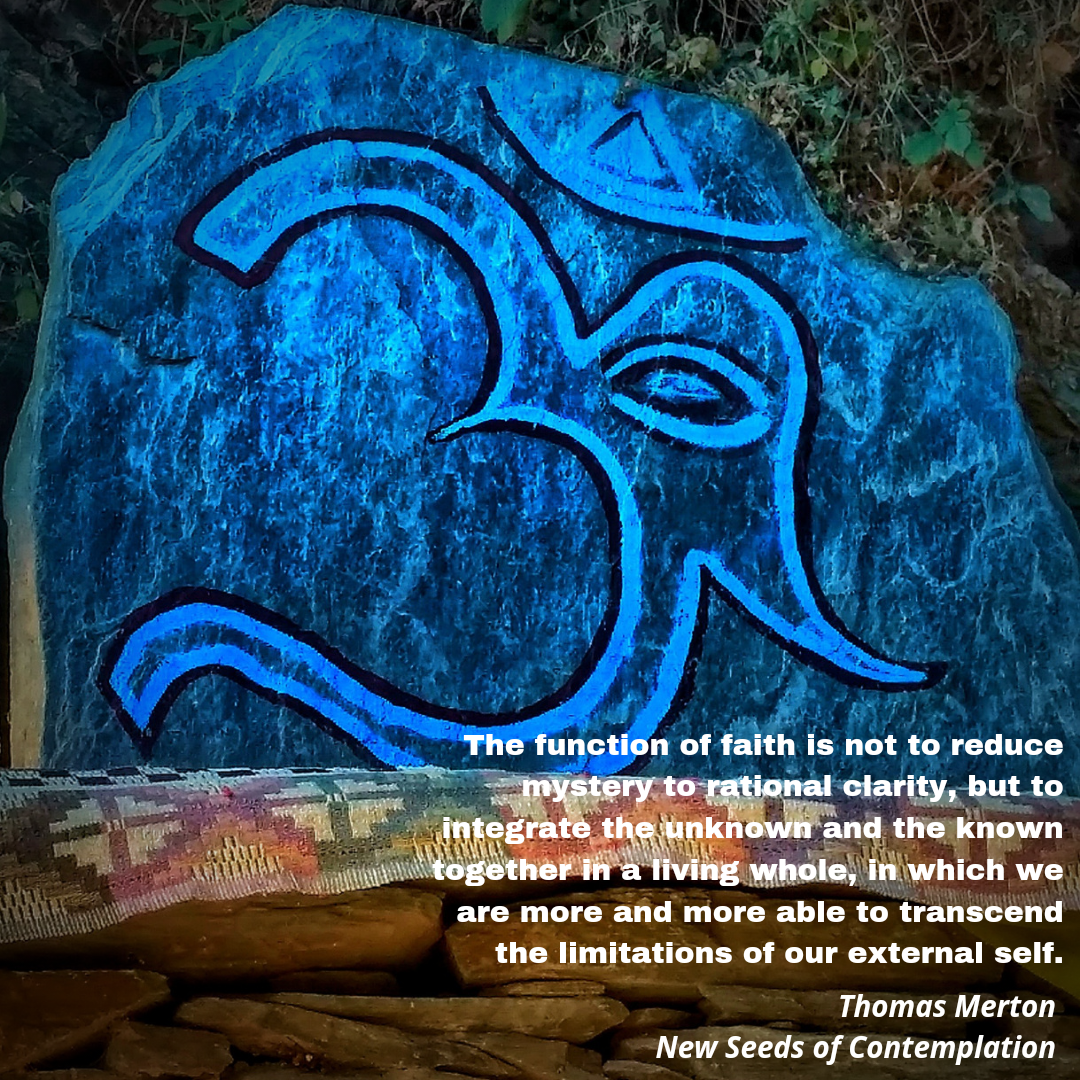
The Function of Faith

With These Words … Part 4

Welcome back to my little mini-series With These Words … , my reflections on how well my way of living measures up to the vows taken by many spiritual seekers, either in a community setting, or as a spiritually oriented hermit, or an individual ‘monk in the world‘ (and monk here has no gender specific meaning. A monk is a monk). Do these concepts work as a kind of philosophy of life for me?

Funny I used the expression measure up just now: You see, we’re at Part 4 which is Accountability. So, measuring up is the very thing we will be talking about right now! Oh, one thing: If you missed any of those earlier Parts to this series, you’ll find links in the PS at the bottom.

Accountability

It goes without saying that we are always accountable for the consequences of our actions, decisions, behaviours, and way of being in the world. Of course there is a deep mystical concept that it is only our material nature that carries out actions in the physical world and that the doer is actually the source of that material nature: God, Self, Brahman. Or you could say the Universe. As in I am a child of the Universe kind of thing.

But, you know, putting all that aside, we are actually living a physical life, and the truth is we are accountable for anything we do in this material world. And that means literally everything: thought, word, deed; the whole deal.

So, the question is not whether or not we are accountable: we just are. The real question is whether I myself acknowledge that accountability and act accordingly to change behaviours or whatever might be necessary.

To be honest, I truly feel that we all very often fail, sometimes even refuse, to even see the consequences of our actions, and therefore fail to make those necessary corrections or changes. Certainly you can put me high up on that list.

So, the big question: Do I feel ‘obligated to explain, justify and take responsibility for [our] actions and to answer to someone [for the consequences of those actions]? (Thanks Dictionary.com for the help here) That someone is very often yourself, or a partner, family member, work colleague, friend. You get it.

Personally, I would say definitely yes, sort of, sometimes. The problem comes up on those occasions when I fail to see, as I noted above. Now, again being very truthful about myself, I would say that most of the time I am aware of my actions, even when I’m not able to control them. But, still being truthful, I am often guilty of picking on the wrong stuff I do and end up blaming myself for innocent actions, and blissfully ignoring the other kind.

I am very big on taking responsibility once I’m aware of a not so good consequence or behaviour, or whatever. Of course like everyone else I do at times defend the indefensible. I’m particularly good with that sort of thing: it often takes me a long time to wake up. Not as long as it once did, but still.

In my attempts to live an authentic hermit life, I think naturally and, through my spiritual practice, meditation, study, and contemplation, not to mention self enquiry and heart level honesty, steadily making progress.

Like I said, being accountable is not the question. It’s about realising that I’m accountable and that I am thus responsible for taking whatever remedial action necessary. And it goes without saying I am also accountable for the consequences of those actions too.

Phew. That’s quite enough of this particular little episode of self enquiry. Okay. Just one more thought:

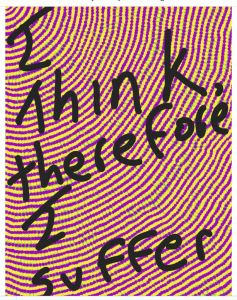
Remember my last post (I Think, Therefore I suffer. Sometimes) ? About how I was able to divert the ‘poor me’ thought train, to let the ‘I’m really and truly blessed’ express to roll on through? Well it occurred to me that this is a terrific example of accountability. Remember thoughts count as actions too.

I had the negative thoughts, which lead to the consequence of an onslaught of maudlin self-pity. and even in that sad state I realized that there could only be bad stuff come from that self-pity if left to fester – and it might not just be me who gets entangled: self-pity makes vibes, an atmosphere, and that affects everyone.

No, that was not going to happen, so other thoughts kicked in. In other words, I made changes: my thoughts of ‘woe is me’ transformed into ones of gratitude and acknowledgement of my true position.

Essentially I saw the consequences of my actions (or thoughts), realized at some level I was accountable to myself and others for those consequences (actual and potential), and I took action. As I said, this all was going on inside and happened in a flash really. Still, I am still witnessing the consequences of that little incident of being accountable for my actions and acting accordingly.

Enough I think I said? I realise that I have gone on and on and not given thought to the consequences to you, the suffering reader stuck with said verbosity. So, as a responsible hermit who has taken a vow to be a bit more silent at least sometimes, I will stop this post without further ado.

PS Just in case you’ve missed the previous posts in this series:
Part 1 The Introduction and overview
Part 2 Simplicity
Part 3 Purity