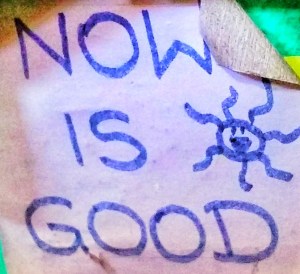
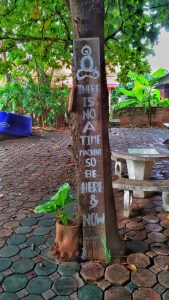
Am I Here & Now or There & Then?

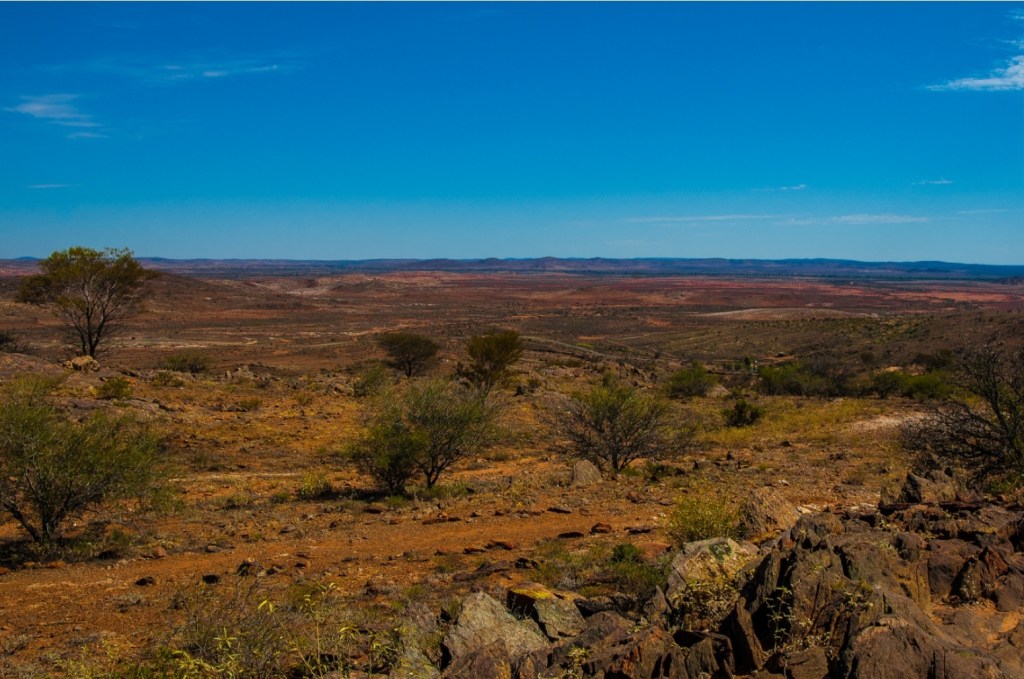
One week today and I will be there. In other words, this time next week at this time I will have arrived in the desert city of Broken Hill. Almost in the heart of the continent and right in the middle of the Outback. In fact they call that whole area The Big Red after the colour of its tens of thousands of square kilometres of desert sands.
Back to Country

It’s about 1500 kilometres from the Pacific Coast where I am right now. I’d like to write about the ‘call’ to the desert, which I am finally answering, but maybe I’ll get to that in another post.

Right now I only want to say how excited I am to be going. A bit anxious too (I’ve been there before, but still …), and plain and simple looking forward to getting there.

Acturally, to be perfectly clear about it: I can’t wait to be there. But, you see, herein lies the problem: I am so keen to get there that I’m feeling as if I am no longer here. I am not present; I am not living in the moment and in the place I’m in (which I love by the way, the place I mean).
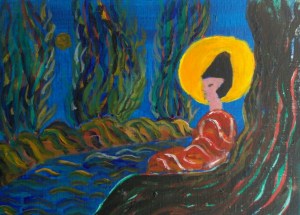
I don’t mean to say that I am some sort of Buddha who is usually fully present in each moment; or who is serene and calm when he knows change is coming. Any reader of this blog will tell you that presence isn’t necessarily my greatest strength.


But, I must say that lately I have improved (slightly) my living in the moment, being here and now, way of living. It’s just that I’ve been longing for this particular change (and all that I anticipate will come with it) so much that I just can’t help myself.

Did I mention already that this is a problem for me? Well, yes, I did, and it is. I prefer very much to be where I am and when I am and fully in the flow of the ongoing present.

Of course there is nothing wrong with wanting something to happen. The problem arises when one is so anxious for whatever it is to happen, that what’s happening here and now ceases to be where one is at—in other words: the trouble is that I stop being in the present.

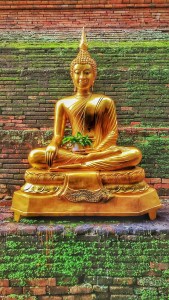
Buddha taught what are called The Four Noble Truths. (which pretty much form the core of Buddhist teachings) The second of these Truths says that attachment is the cause of suffering. Suffering here means anxiety, worry, regret, fear; all those kinds of things. Whenever we say something like, ‘I can’t wait to…’, then it is a sure sign we are attached to that want or desire.
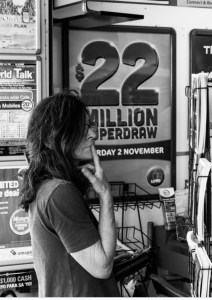
If I’m in it, will I win it?

By the way, the First Noble Truth is: Life is suffering. Suffering, The Buddha taught, is simply the price of being alive. We get hungry, we are conscious of pain (in all its guises), we grieve; we grow old; we get sick; and we die.

But, right now, I want to talk more about Noble Truths three and four. Number three says that suffering can be overcome. Nice clean, clear, and not to mention, succinct little statement. Of course, it’s easy for him to say isn’t it? He is Buddha after all.

Perfectly reasonable reaction from us suffering humans. But there is hope and we will find that in Noble Truth number four which gives us the how to overcome suffering. There are quite a few ways to put this Truth into words, but the one I like best says:
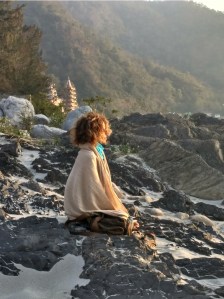
The way to overcome suffering is to sit.

What? Sit? Yes, sit. Be still; stop moving. Of course if we relate this Truth to my little dilemma for wanting to so badly to be somewhere else that I’m not able to be where I am now, we can expand this Truth to something like this:

Focus your full attention on what you are doing now, and where you are now as well. As much as you can, be open to change, but be less attached to the nature or timing of that change. After all, you can make all the plans you like, but who knows what’s really going to happen—you won’t know that till it actually happens.

So, that’s what I am trying to do. Instead of saying stuff like ‘I wish I could go sooner’, or ‘it’s only x days till I go’ (yes I know, that’s what I said way up there at the top of the post), I am going to ask myself, ‘What am I doing now?’, and I plan to look around me, and engage more with the reality of this moment. And try hard to realise the ongoingness of that everlasting moment.

As Ram Dass said,

Be Here Now.

Hey, that’s a great mantra isn’t it? Chanting it whenever I start getting out of the here and now mode, might just put me back there again. I mean here—and now. You know what I mean!

Love and blessings from me to you

Paul
Quiet and Free (A Haiku of Sorts)

Much speech leads to exhaustion;
guard your inner being.
And keep it free.
A bit of blue sky coming.

When a Day Off Isn’t a Day Off

Namaste and welcome

You know by now that I study the Bhagavad Gita. I’ve been at it a few years now, and it gives me a great deal of joy and comfort, not to mention the help it is to me as I struggle to understand Self and life, the Universe and everything (to borrow a well-worn phrase).

Yes, I love this book which is the story of a warrior king and his charioteer getting ready for battle. Arjuna, the warrior, is us. Or rather he is our ego, our lower self, the us that lives as a material entity in the material world.

The charioteer is actually Krishna, and he represents our Higher Self, the Self that is what some people call God, or the Divine, spirit, universal consciousness. In other words, my Higher self is having a conversation with my lower self as I battle or struggle with living in the material world.

Anyway, it’s enough to say that I am very fond of this book, the lessons it holds, the guidance I sometimes glean from it. And I try to spend time with it as often as I can. Daily mostly, but not always. I have to admit that sometimes I just want to give it a break, leave the words alone, just be with Self for a bit.

Actually, there is a verse that I wrote down long ago that does in fact sanction the student (that’s me) to take a break.

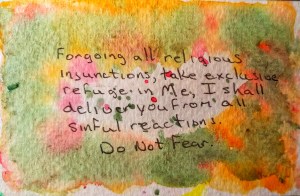
Forgoing all religious injunctions, take exclusive refuge in me. I shall deliver you from all sinful reactions. Do not fear

Bhagavad Gita Ch 18:66

This is Krishna speaking, giving instructions to Arjuna. Essentially it’s the higher Self telling our little selves to ignore outside rules, regulations and all that, and rely instead on what comes from within the Self; in other words, what our hearts tell us.

Now, he’s not saying ignore laws of the world, that’s not what this story is about. He’s telling Arjuna, look, don’t take notice so much of what the religious leaders tell you, or what instructions you read in holy books.

Then, after more or less consistent study over years, I came across yet another verse quite recently that confirms this one, but that hadn’t ever spoken to me before:

When your mind is fixed and unmoved and not confused by scriptural injunctions you shall attain yogic samadhi

Bhagavad Gita Ch 2:53

This verse actually says: don’t confuse yourself with stuff you read in the scriptures; instead keep your mind fixed and unmoved by the outside world. And if you do that, you will achieve that level of peace, self-realisation, and happiness, that you’re after.

So, do we have here a book of scripture that is in fact telling me not to take any notice of what it says in that book? That doesn’t sound very likely does it? No, I think what both these verses are getting at is this: The first and primary thing to do if you want to achieve happiness, peace, self-realisation, is focus inwards, on the Self.

Or God, or spirit, the Universe. We all call it by different names. But the point being made is that we aren’t going to find all the answers only in a book, or in the instructions from ‘religious’ leaders; overdoing the books or the slavish following of teachers only causes us (sorry I mean me) confusion.

Higher Self here (in the guise of Krishna, who is in the guise of a charioteer) is advising us to look to our Selves, not to the words of others to reach union with that Self. At least, that’s how I’ve chosen to interpret it.

What’s interesting here is that these are two of the very few verses for which I haven’t looked at commentaries or interpretations by other people. What I’ve done in other words, is take the advice given in these verses and looked inwards.

I don’t mean to suggest that I use these verses as ‘have a day off’ cards; most likely the contrary is true. On days when I don’t look at the Bhagavad Gita, I like to think I spend more time ‘just sitting’, perhaps chanting mantra, and contemplating.

Of course it doesn’t always work out like that naturally. But, at least on those occasions there is the heart and mind space available for a more direct communication or connection with Self. With that part of me that is one with all.

Peace and love

Is Life Too Short for Perfect Writing?

Greetings and welcome friends

Let me share a little secret with you: I have and always have had, atrocious handwriting. And it’s always been a major frustration (but a huge incentive to learn to type, which is one of the best things I’ve ever done).

Perhaps it’s because I had some sort of learning difficulty, maybe it happened because every state in Australia has a different way of teaching kids handwriting, or maybe its just that I was and am lazy. Actually, scratch this last one: I am not nor have I ever been lazy.

Anyway, it appears to be a fact of life, yet I do still get frustrated from time to time. But then there are times when I decide not to care, that it isn’t important, doesn’t matter. Being in one of those indifferent phases right now, has reminded me of an incident that should have taught me this lesson once and for all.

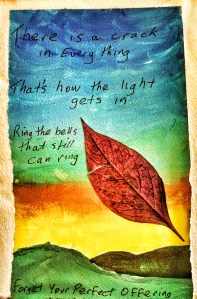
A while back I was gifted a small painting. The artist wasn’t satisfied with it as a background of a planned piece, and gave it to me thinking I might like to ‘do something with it’. I happened to think it quite a lovely painting in its own right actually, and as I was looking at it, I thought of a leaf I had collected a couple of weeks previously. A beautiful very soft and pliable purple leaf from a lovely shrub.

So, right away I just got to sticking that leaf onto the painting. As I pressed it down, a little tear appeared in the leaf. Immediately a lyric from Leonard Cohen‘s Anthem came into mind:

There is a crack, a crack in everything. Thats how the light gets in.

So, I began writing bits of the lyric onto the painting. Untidy, irregular and typically atrocious the hand writing, or printing, is. But then it struck me: that’s the point! I mean the point of Mr C’s sublime words:

Ring the bells that still can ring
Forget your perfect offering.
There is a crack, a crack in everything
Thats how the light gets in.

Here’s how I thought about what I’d written on the painting and how I’d written it: I rang a bell that I can still ring: I thought of and wrote down those beautiful lyrics to compliment the accident (is there any such thing as accident?) of tearing a leaf on a painting that ‘didn’t work’ for the artist, but that was working for me.

Therefore, the painting, the torn leaf and my handwriting was not a perfect offering in any kind of conventional sense as the world would view it. In other words there is a crack, both literal as in the tear in the leaf, and metaphorical as in the imperfections of the whole piece.

But—and here is the vital thing—this little painting, despite its initial rejection by the artist, and with its imperfections, its sloppiness, and its flaws, has provided a channel for light to get in. Into my life, into the piece itself, and now, through this sharing, into your life.

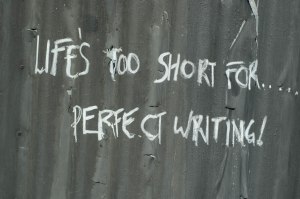
So, who cares if my handwriting is not conventionally perfect or is untidy, uneven, and even a bit tricky to read? I love the message in those lyrics; I felt that this lovely painting with its torn leaf to be the way to put that message in a concrete form. I mean, really, isn’t life too short for perfect (hand)writing?

PS I no longer collect leaves and trap them in this way. I may collect them, but after a time, I return them to their natural environment. Fallen leaves have their function in the cycles of nature too.

An Aspiration. A Prayer

Hello friends and welcome

The last couple of posts have had me thinking about what I actually do to contribute to the world, to life, to making changes that could bring peace, a safe environment, and a better life for all.

I have to say my commitment to my life as a hermit, as a pilgrim aspiring to live a life apart from ‘the world’ all the while dedicating myself to what we might call Self or God Realisation, has been strengthened.

I have once again come to the conclusion that living a life focused on spiritual development, on art, on prayer, and on contemplation, is the most valuable way I personally can contribute to change, to love, to the good of all. My true nature, my inclinations, my faith, my life experience, all these equip me for this life that has chosen me.

And at the same time, these same factors have left me ill-equipped for life ‘in the world’

In those last two posts, I talked about how so few of us think we have anything to offer a world teetering on the edge. But of course, as I pointed out, the opposite is true. I think I made the point that there is some unique role for each and every one of us in the continued unfolding, upliftment, protection and prospering of all life in this world.

Having said all that, I have to say that for me it’s not always easy to actually realise this in my heart. Intellectually it’s an easy concept to explain (well sort of anyway), but on that deeper heart level, well it’s tricky. Guilt rears its ugly head: ‘It’s all falling apart; I have to do more; But what can I do? It’s useless. I’m useless’.

As I mentioned in one of those posts I think, people have turned away from the horror, injustice, cruelty, and murderous greed and lust for power, for as long as these things have existed – which is obviously for as long as our species has been around. At certain times in history this move away from ‘the world’ has accelerated and intensified. And we are living in one of those periods now.

In the last century so many people have taken up the contemplative life, and many have chosen to make that life one of complete or partial solitude in order that they may be free from distraction in their prayer, study, and contemplative life.

But, many will say, ‘You are in denial. Now is the time you are needed out there. The world and all of life is in danger. You can’t escape and hide in a cave’.(read here stop watching the news, ignore politics, stop spending, become a literal or metaphorical hermit, go traveling, shirk your responsibility to the rest of the world).

Again guilt trips us up and we just keep on trying to find ways to at least rid ourselves of the guilt over our perception that we can do nothing.

But many such people, and that includes me, rather than being in denial, rather than shirking responsibility, have looked at the material world with its horrors, and said, ‘This isn’t right’, and have started to look at other ways to live and, seeing that continuing to struggle against the weight of the world on the world’s terms is pointless, seek to find other ways they can contribute to change. Ways that don’t perpetuate the playing of the game.

And rather than escaping these people (including me, I say with humility) face the world head on, dedicating their lives to the world through creativity, through prayer and meditation, and through the expression of freedom in their choice of lifestyle. They are, as Mahatma Gandhi is supposed to have said, being the change they want to see in the world.

While Gandhiji didn’t actually say those words, (Actually there’s a post coming in a couple of weeks in which I share the full text this quote is apparently derived from. Stay tuned for the link here), he certainly lived his life being the change he wanted to see.

But sadly, this ‘quote’ has come to be seen as a kind of feel good cliché, something the privileged are accused of mouthing while not actually even thinking about changing their lives. Just one more platitude you might say.

But for many, like me in my own way, it is much more: it is a call to action, a respectful and heartfelt request that I embark upon the quest for a more authentic way of living that has love, compassion, service, and truth at the centre of all I do.

This is my aspiration. This is my prayer.

Peace from me to you

Put Me in My Place. Please

Reverence the place and learn from what you see


Coming across this note last night, I was stumped. I coudln’t think where it had come from, where I’d seen it; nothing at all came to mind. And an online search just now failed to turn up anything either. I mean I must have read it somewhere. Or is it possible it came from me?

Of course it’s all the same: there is only one source. At any rate, it’s an injunction one can relate to anywhere, any place. It’s surely about presence?

And about learning from all that is to be seen (heard, felt, intuited, known) in whatever place one is in now. I mean, the place I’m in now. I am here and it is now.

I’m reminded of the faith affirmation (is it a prayer?) that seems to have been written for this particular hermit pilgrim:

As a a hermit, I am a pilgrim dependent on a pure faith that I am exactly where God wold have me be now.

Sometimes I think that too much thinking about and angst over places other than the one I’m actually in right now, is a sure and certain way to resist and reject any reverencing of the place I’m in, not to mention what’s to be learned or gifted from the experience of being here.

And of course that angst, worry, wishful thinking, or whatever, comes with its own issues of distraction, and of a taking away of one’s Self from the present, the notion that here and now is the only time and place that exists.

A poem of mine I came across the other day while looking for something else says it all quite nicely. This poem is called Transcendental Injunctions, and it’s a rap on presence, about being here, and being now.

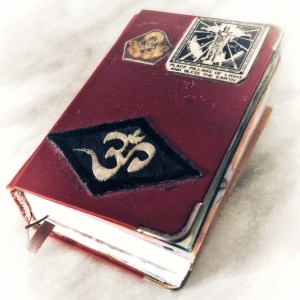
The central action describes how my senses can take me away from that here and now: I describe my habit of smelling my Bhagavad Gita (yes, as in putting my nose into the pages of the little book and inhaling the aroma of those pages) and how that takes me back to the shores of the River Ganges; another place, another time.

Anyway, allow me to share the final verse, which speaks of one such occasion:

Then, there is a voice:
I hear it with the ear of my heart:
There is no place to go.
What you seek is within.
There’s nothing to find:
God’s kingdom is within.

I suppose there is nothing left to say. I am here, and it is now

Peace to you from me

Food & Drink of the Gods

Namaste and Welcome friends

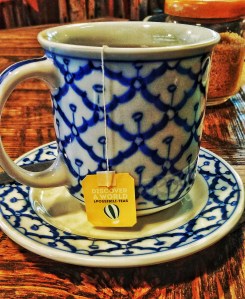
An idea that’s kept its hold on me for a while now concerns Black Tea and Dry Toast. It’s a part of my almost daily diet, and I’ve wanted to write about it. Anyway, here’s the note I first jotted down when the idea first came:

Black Tea and Dry Toast – In Reality is what we might call the food and drink of the Gods, of liberation, especially when I remember to offer it to Brahman and it becomes Prasada: simple, appetising, comforting, nourishing.
         What else?

Yes, sounds kind of weird, writing about such an apparently mundane subject. But, really, I  can say it definitely is for me the food and drink of the Gods. And as such, it moves beyond the little r reality of worldly food, of mundane considerations. It takes on the big R of Transcendental Reality.

Simple, plain food and drink. Pared down from all the extras and the padding, all the ‘additives’ we generally ply ourselves with. In a real sense this simplicity is in keeping with the uncluttered, minimal life I am called to live.

And everyone knows how comforting tea and toast is, how welcome it is pretty much any time of the day or night. Nourishing, too, for the spirit and the mind.

Actually for the body also. At least it is for me as a person who used to eat way too many biscuits, and take jam (thickly) on my toast. As I say, simple with no additives.

All of this equals in my view liberation. Freedom. Freedom at least sometimes, from harmful substances; Liberation from complicated preparations and the stresses and tedium that comes with it.

Black Tea and Dry Toast represents a snack (sometimes even a small meal) that at least for a short time can liberate us from stresses and tiredness. At other times, it gives us that freedom that comes from indulging in simple pleasures.

The food and drink of the Gods is not a complicated, invented and dressed up thing. It is plain, simple, comforting, nourishing.

And yummy.

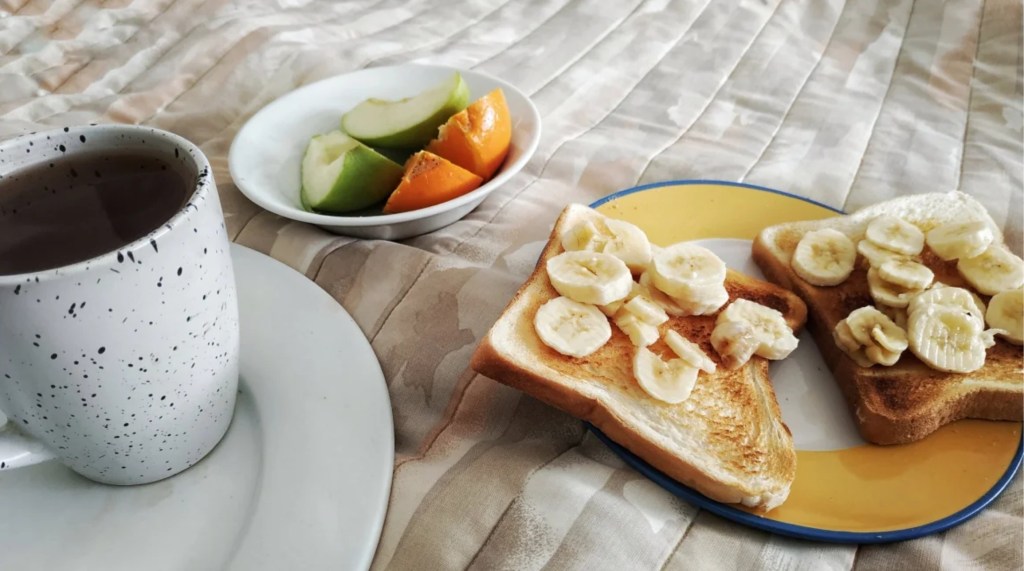
PS Okay. That photo stuck in the middle up there isn’t quite in keeping with the topic is it? Alright, I admit it: Sometimes I really indulge myself and add banana to my toast. And yes, sometimes apples and oranges too

Be Present in the Presence

Greetings and welcome

I write quite a lot about presence. I think a lot about presence, about being present, and all kinds of related ‘being in the moment’ kinds of musings.

Of course words like presence and present can have multiple meanings can’t they? About this time last year I read s book called Consider the Ravens. It’s about the history as well as the recent revival of interest in hermits and ways of living the hermit life.

If you are even remotely interested in living more in solitude, or living a simpler and more sustainable, life, or being more spiritually focused, then I can’t recommend this book highly enough.

There’s a paragraph from that book I’d like to share with you. It both describes some characteristics found in hermits and their way of life, as well as introducing us to a lovely phrase concerning the concept of presence.

Are hermits escapist? Yes. Is running away a bad thing? Like most choices it’s value is determined by its purpose. There are men and women who are selfishly seeking a sanctuary untouched by human pain. But there are others who deliberately choose to be powerless [in the eyes of the world], to live simply, and to use no more than their fare share of the world’s resources. They elect to be unknown, hidden, forgotten. And the goal? To become transparent to the Divine, or as [one hermit] succinctly phrased it: ‘to be always present to the Presence’.

Paul & Karen Fredette Consider the Ravens


I like that phrase; it’s what I’m aiming at. Actually, no. That’s not right: you can’t aim at being present, you can’t have presence as a goal to be attained in the future. I think that’s called an oxymoron. Anyway, all you can do is be; be present in the presence.

And it doesn’t matter what you call it: Presence; Truth; Reality; God; the Universe; the Cosmic Reality. They’re only names for that unnameable essence that we’d all agree can be called the Love that is in reality everything.

It’s that essence beyond all names – and forms. It’s what we sense is behind, above, and within all that exists in the world.

And, like a lot of people, I want to withdraw from that world of materialism. From the greed, the corruption, the cruelty and wilful ignorance, the … well, you get the point. My sense, and it is echoed in the quoted paragraph, is that presence is to be found in silence, and in solitude.

Of course it’s not necessary to be a hermit to be present – or in order to be present in the Presence. After all, few people believe they can go find a cave somewhere and withdraw totally from the world. (maybe it’s the belief that’s the problem?)

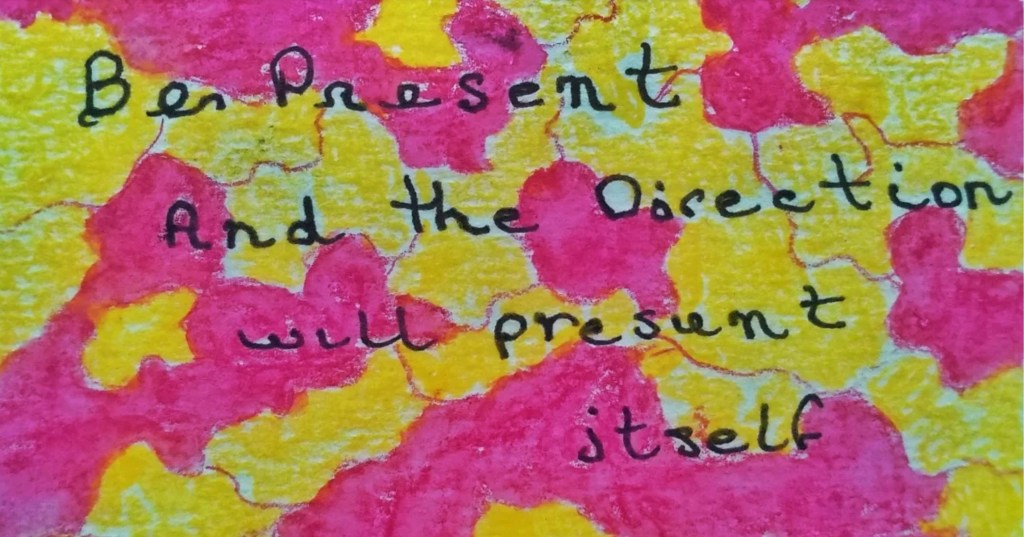
So, what to do? A wise person once gave a brilliant answer to that question and I have it on a card to remind me:

Yes. Be present and the direction will present itself.

Peace to you.

What’s ‘Ordinary’ Got to do With It?

Perhaps shameful is too strong a word, but that’s kind of how it feels. You see, I’ve been thinking of giving up on the book I’m reading at the moment. And you are thinking, this is a big deal? If you don’t like it, put it aside and try something else.

Yes, excellent advice, thank you. And usually that’s what I would do. In fact now I think about it there was a time when I would force myself to complete a book, even if I wasn’t enjoying it or was bored with it. But I learned a long time ago that this is a waste of time, waste of mind, waste of energy, and unfair to me.

Yet, on this occasion, I started to have some thoughts that took it a bit deeper. It’s true to say that I’m a bit bored with this book; it’s as if I’m not overly interested in the story the author is telling, and in the way she’s telling it. As well I had this feeling that the book was ‘ordinary’: meaning that it was a kind of day to day telling of a segment of a life with its mundane and routine elements included along with the ‘good bits’.

And it was that feeling of being not so interested that got me thinking. The author’s vocation, thinking, activities, and the subject of the book itself, is exactly in line with areas I am very interested in reading about, not only for entertainment but for my learning, for my own spiritual journey and way of life.

The way she’s telling it? Now, this one got to me even more. The book was put together after the author’s death and is made up of extracts from the author’s journals and from the many letters she wrote to family and friends during the period of her life the book covers.

That’s what I do isn’t it? Keep a journal? Write letters? These and the many many blog posts (which in a way are a lot like letters, and even journal entries do you think?) I’ve written over many years, and the journal I’ve been keeping for most of my life, are the core of at least the personal writing I have done over my lifetime. By rejecting this book I started to feel that I was rejecting my own, for want of a better word, genres.

Or, worse than that, I’m rejecting the invitation to share a life. And illogically I’m rejecting the life story and insights of a person whose own experience I actually value for my own quest and from whom I could learn a great deal.

And what about the feeling of boredom and that the book was too ‘ordinary’ and mundane? Well, to borrow a well-worn phrase, this really does take the cake. I mean if you were to look at much of my past writings and look at my photography blogs from times past, you would see that one of my main statements of belief was:

There are no ordinary moments, nor are there any ordinary people.

And I still believe this. Indeed, spiritual practice and study has only deepened my instincts that all there is is the moment; all there is is all the beings of the world experiencing that ongoing presence, that never-ending moment. There can be nothing in the least ordinary about that.

I’ve saved the best – or is it the worst? – for last: what the book is about. It tells the story of a three year period in the life of a person just out of university who looking for a deeper meaning to life and to finding a true course for her life, travels from her home to Japan and enters a Zen monastery to become a monk.

Her journals and letters give the reader an intimate and in-depth account of her experiences: what she learned; insights into the language, culture, and history of Japan and Zen itself; the people she met and knew, her own feelings and reactions to what was a huge shift in her life.

After three years the author left the monastery to travel slowly back to see family at home. Sadly she was killed in a bus crash along the way.

Pretty much everything that has to do with living a life. And here’s me rejecting it because it was ‘ordinary’ and some details were ‘boring’.

So, I’m going to stay with this book. It’s taught me a lot already, and I think there is more there for me. Perhaps, I can better put into practice by own so strongly held idea that there are no ordinary moments or ordinary people.

Peace and love from me to you

With These Words … Part 3

Well here we are at Part 3 of the mini series in which we’re looking at whether or not my ‘philosophy of life’ might be well described by living according to the vows used by many contemporary nuns and monks and that are a reinterpretation or evolution of the traditional vows.

As I’ve mentioned, I haven’t taken these vows, but when I learned about them (Simplicity, Purity, Accountability, and for some, Presence.) I thought I’d look at how well I live up to the life they dictate.

So, welcome. And if you haven’t yet seen the first two parts, please feel free to have a look at them. Part 1 is a sort of introduction and overview, while in Part 2 I asked whether or not I actually do manage to live a simple life.

Well, do I? To be honest, it was a nice challenge looking at that question; I mean it got me thinking about the reality of my life (like the rest of these posts will as well, obviously) and I would say yes, I think I do live a quite simple life, especially in the context of the dominant culture we live in, and society’s demands and pressures.

Anyway, time to get on with the next part of our little exploration.

Purity

Purity. It’s one of those words isn’t it? I mean, probably all of us think we know what it means, but it’s not a word we use on a day-to-basis is it? It’s a word we’d use rarely if ever to describe our behaviour or approach to life. So, what words do I use then?

Which reminds me: purity gets a bit of a bad rap I think. It’s often used to describe standards imposed by some group, or authority, a moral code thrust upon us, from someone or something outside of ourselves.

For me, Purity is really about my approach to life, to myself and other living beings, to the world, to everything actually.

So, with your permission I will try for the rest of this post to use words and ideas that actually mean something to me in my daily life and in the way I try to live.

Clean is a word that comes to mind. It sounds strange (and redundent) to say, but I try to live a clean life. Obviously I bathe regularly, wear clean cloths and try to not spill stuff too often. But, you might not know this, but clumsy is my middle name, so, yes spilling stuff is a curse I live with! (I just had an orange and I think more juice ended up on my shirt than in my mouth).

Now, actually that’s a good start: I mean to say, we’re all fallible beings; we all have things we can’t quite get right all the time: Pu … oops … the P word is a concept to hold on to in an aspirational way; it’s not a hard and fast set of rules or standards where I’m in a I am either, or I am not, scenario. Actually it’s very much to do with the present, but that literally is a story for another day isn’t it?

How else do I try to live clean? Thinking. I try, consciously, and all the time, to practise clean or we can say right thinking. Right thoughts about others, whether I like what they do or not. Right attitudes to others too are important aspirations for me as well.

To be truthful I’m not yet at the stage where I could say that having right attitudes to others has freed me to neither like or dislike people, situations, or whatever. Perhaps now and again, but certainly not all the time. Like everyone else I’m attached to my likes and dislikes, to my prejudices, and biases. As I said, it’s aspirational, something to work on continually.

Part of that right attitude, as well as living clean, is having a compassionate approach to other living beings. Meaning that with my actions, thoughts or behaviour I try to do as little harm as possible. Actually, it’s more than that: compassion for me must be an active thing, not just a vague feeling or intention informing my life.

In other words, I have designed my life (diet, clothing, transport, thinking, and the rest) so that I cause no more death or harm to any living thing than I can possibly manage.

Of course I realise we human beings are simply one more species among the many millions sharing this planet. Nothing any of us do in any sphere of life (our actions in the world, our thinking) can be accomplished without an impact on our fellow dwellers on Earth. All we can do is what we can do.

Aspiration. That’s what it boils down to for me. Did I mention it (you know … P) isn’t a you are or you are not kind of thing? Like the other P word, presence, it has at its main characteristic an ongoingness; there is no time when we can say I am P … .

Nor will there ever be a time when we can say in a way that that’s actually truth, ‘I give up, It’s too hard. I’m never going to be P… .

Which leads very nicely to Accountability, the next of our words to live by. But let’s get into that next time! Thank you sharing this time with me.

Peace and love