Mother Mary Come to Me

Namaste friends

During the early days of the pandemic, I lived in a small town out on the edge of the Outback. But after a few months, the time felt right to head for the coast. Slowly. With that in mind and headed in the right direction, I spent six weeks in another small town in that semiarid zone, staying in a motel.

I liked it there, at the Maria Motel in Moree. Described as a low-key 1960s era motel, the Maria is right across the street from the Artesian Hot Pools, which are Moree’s claim to fame. For me (for us), it was another temporary hermitage and safe haven on the side of the road in which to take shelter for a while.

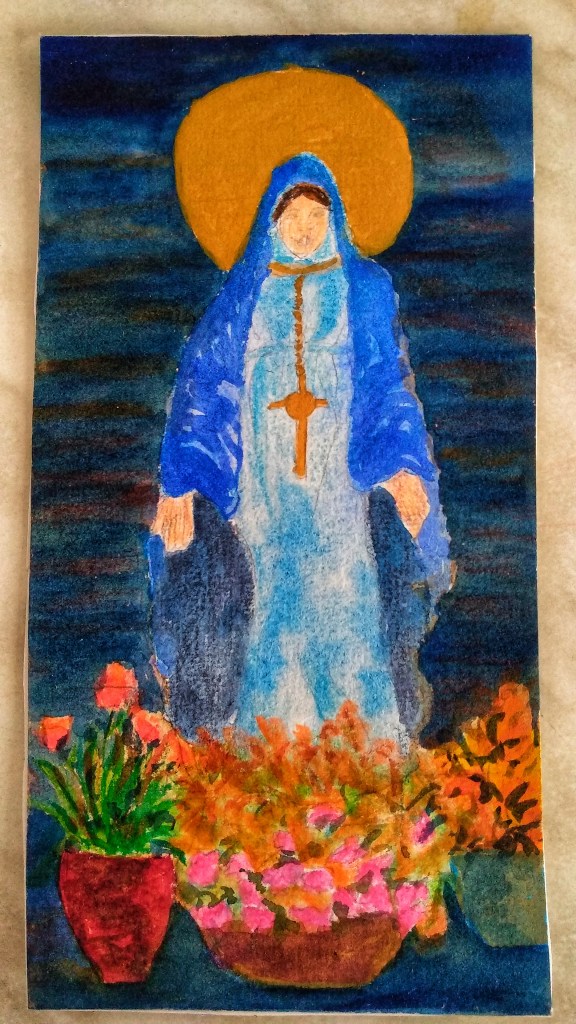
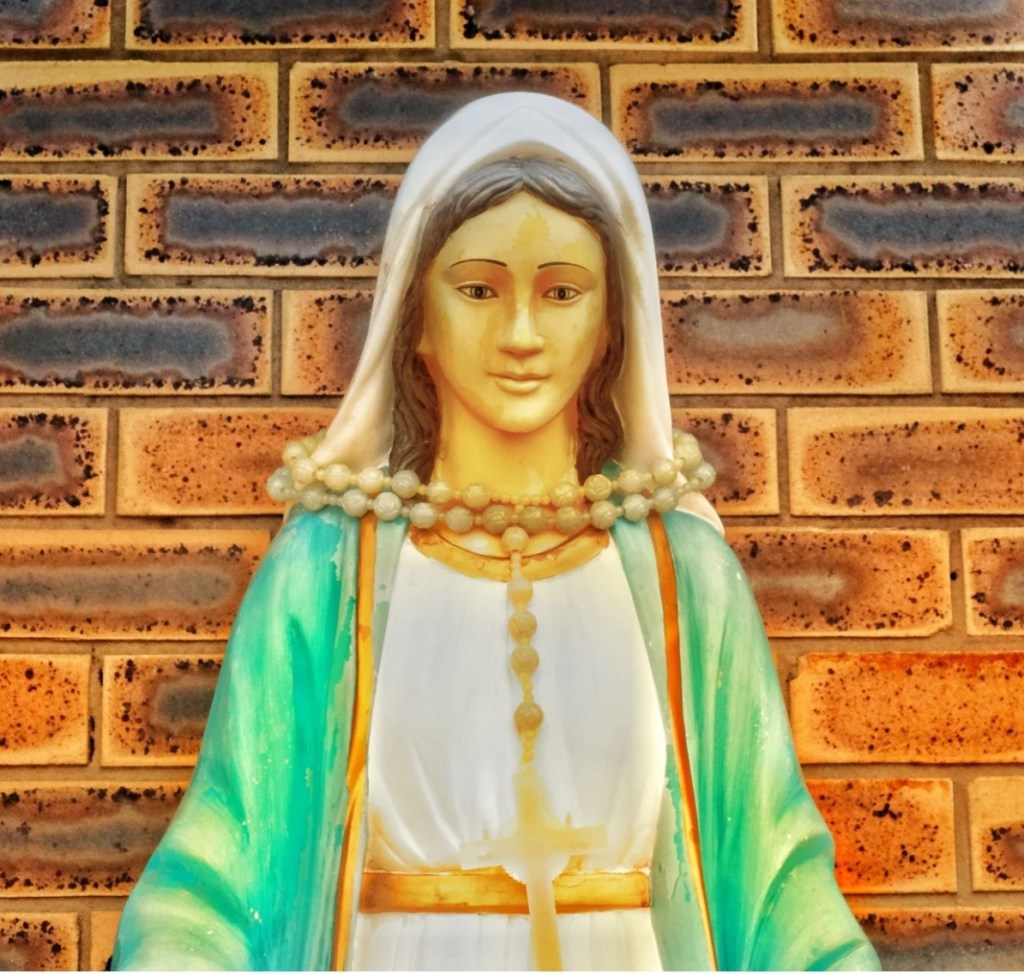
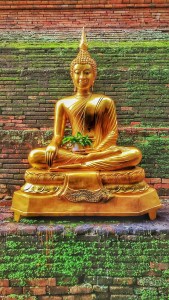
My favourite among the list of things I like about the Maria Motel is the statue of Mary out front in the courtyard. The Virgin Mary that is, Our Lady, the mother of Jesus. You know who I mean. And it isn’t only my Catholic upbringing and education that accounts for my fondness of Mary. It is more about what she symbolizes, what she stands for.

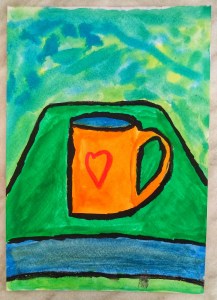
Watercolour by Pauline

For me Mary represents what I might call the feminine aspect of God. Some would call her the Earth Goddess. Mary is the mother, as in Mother Earth, Mother Nature. She is the feminine principle of the Universe. Respect and care for the mother is obviously the key to our survival.

This land from which this town was carved, has been inhabited since long before we began to mark time; since the beginning some say.

Those hot pools have been sacred for a very very long time. While nobody asked permission of the people who already lived here to build a town, at least when some of the invaders came they chose to honour the sacredness of the land they had appropriated by placing this statue representing the sacred feminine in sight of those ancient holy waters, and naming that temporary hermitage of mine, the Maria Motel.

An Idea From a Not So Random Corner of the Universe

Namaste and Greetings friends

Remember in my last post I mentioned that I like to ‘Let the noble thoughts come to me from all corners of the universe’? Well I’ve been exploring, investigating, studying, in one of those corners for a few years now.

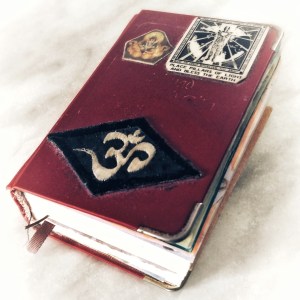
In 2016, in India, I gifted myself a small copy of the Bhagavad Gita. It’s a little red book, my Gita; no commentaries, just a plain, simple, and easy to understand translation of the 5000-year-old text known as the ‘Song of God’

Of course there are many sources of divine wisdom. No. That’s not right. Start again. Everything is a source of divine wisdom, of the word of God, universal knowledge, Truth, the Dharma. We can call it what we like.

But every living thing – human and non-human – every experience we have, and the entirety of the material and non-matieral creation, is divine wisdom in action.

Speaking for myself, I don’t always remember or realise (as in believe, trust, know) this never-ending, inexhaustible supply of wisdom. So I have to make use of some physical forms that help me narrow my focus, to centre my attention. It happens that the Bhagavad Gita is for me, one of those physical forms.

So today I want to talk about a verse from the Gita that really leapt out at me when I opened the book at random yesterday.
That verse comes from a chapter titled Self Knowledge and Enlightenment. It’s where Krishna – representing our Higher Self, Divine Wisdom; the real us, the real me – is telling Arjuna – the ego self, or little self, the us that thinks ‘this is me’, ‘puny, small, little me, just a sack of bones’ – all the various attributes and qualities of the Higher Self, the real us.

In other words, our Higher Self is helping our lower self to realise what we really are, trying to get us to see that there is a lot more to us than meets the (physical) eye.

Anyway, to the verse:

Of the strong, I am strength devoid of desire and passion, and I am love that is virtuous.

Bhagavad Gita Ch 7 verse 11

My sense is that the entire Bhagavad Gita is designed to help rid us of our attachments to the dualities of the world. Of course material life is obviously a state of dualities: we like good things, don’t like bad things; sometimes we’re happy, sometimes full of sorrow; we might at one time have many material possessions, then at another have nothing. You know where I’m going here; after all you dwell in the same world as I do!

Naturally none of us want bad things to happen, so we try to develop ways to be strong, to gather strength so we can face the bad stuff when it (inevitably) happens. And there’s nothing wrong with being strong, nothing amiss about having strength, but here Krishna (Higher Self) says that we don’t need to desire to get strength: we already are strength. Remember: Krishna is our Higher Self, so if Krishna is strength then that means we all are.

The desire and passion he talks about is really our attachment to outcomes, to expectations, to labelling things good or bad, or this or that, or wanting to feel this emotion but not that one. In other words, we are strength without any of these attachments;

So, when those inevitable ‘bad things’ happen, we already have the ability to flow with them, to cope with them, without judgements, without fear. Equally, when the inevitable ‘good things’ happen, we can rejoice, but we are strength, so there’s no need to hang onto them, wishing them to keep on happening, or being fearful of them changing.

You know there is an expression I used to loathe: It’s all good. It’s one of those non-commital, bland platitudes that really doesn’t mean anything. Well I don’t hate it quite as much as I used to but I still have trouble with it. Maybe we can take it a bit further?

Perhaps we could say instead: It all is. No good or bad; no joy or sorrow; no dualities of any kind. Sounds like heaven doesn’t it?

Well, while we’re in physical bodies here on Earth (and who can say what kind of bodies if any we’ll get to inhabit in the future), then the most that can ever happen is a glimpse – or maybe a few glimpses – of isness. Moments when we actually stop labelling, stop seeing dualities, and really and truly can know, it all is. For real.

And the love bit? Well, here we have Krishna (our Higher Self) saying he is love. He means us. He’s actually telling us that we are love. And virtuous love at that. Mind you, is there any other kind?

Peace

Seeking Justice: Commitments

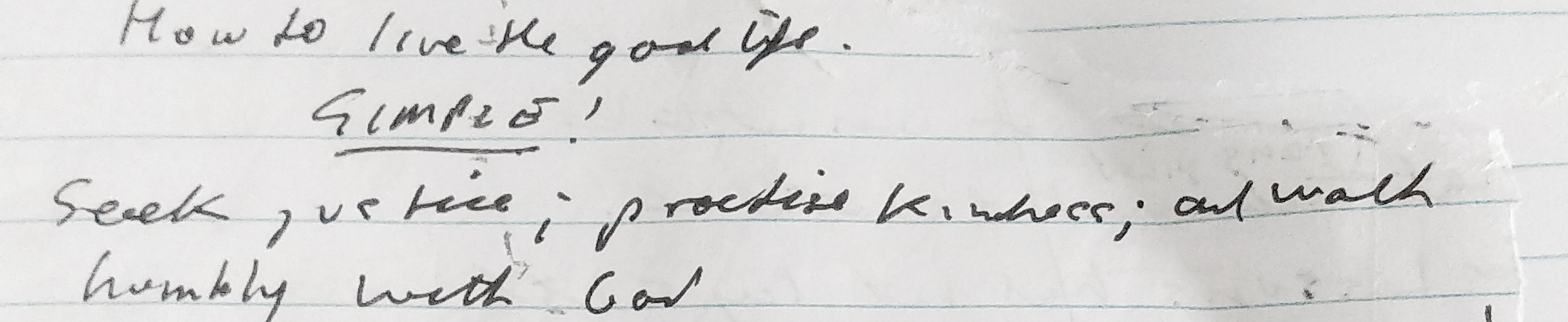
This morning I was just sitting, or at least trying to just sit. You know, being quiet, relaxing the mind. All that kind of thing. And of course, an idea sprung into that not so cooperative mind, so I grabbed my notebook. Just as I went to put this latest brainwave on paper I noticed a very extraordinary note I must have made I don’t know when:

I’ve just looked it up: It’s a slight paraphrase of a verse from the Old Testament, from the prophet Micah. Where I read it, I can’t say (the note is at least several weeks old). But to quote another little note from some unknown source, I always like to:

Let the noble thoughts come to me from all corners of the universe.

unknown

I’m just like everyone else, always wanting the easy solutions and you can tell that can’t you? ‘How to live the good life? Simple!’. I mean really; hardly humble in my approach in that note was I? Well, let’s talk about what Micah says, not my own lack of humility.

Seek justice; practise kindness; and walk humbly with [your] God.

There are numerous versions online of this verse (Micah, 6:8), so I will leave it to you to check those out for yourself. I’ve added the word your because all those versions do say ‘your God’. But even in this paraphrase it’s easy to see there is nothing at all simple about any of these injunctions.

I discovered that this verse is often invoked in times of grave injustice, or crisis. I think it goes without saying that we would be hard pressed to think of a time that was not a time of grave injustice or crisis. Certainly, we are living in one of those times of injustice and crisis.

There’s no need to or purpose served by getting into how ‘grave’ injustice is now compared to some other time; there’s no need or point to weighing up the relative severity of one crisis versus another. Injustice is injustice; a crisis is a crisis.

In other words, the present is always the time to heed the injunctions of this verse.

So, what do we do if we are to seek justice? Running the risk of sounding flippant, I would say that there are as many answers to this question as there are people to answer it. Now, you would think this would make the task impossible; too many cooks and all that. But actually it’s perfect. Why? Because it means that whoever you are, whatever your situation, you can actively seek justice.

Or, I am sorry: I should say I, me. Not you. I can actively seek justice. But, you say, you are a hermit; you live in a cave (not literally but I know what you mean); you hardly ever even talk to people in ‘real life’. Yes, all true. And I would say that the action I take is by no means at the level I know I want it to be. I’m doing nowhere enough.

Does that mean I’m leaving the cave? Going out into the world, onto the streets to join other brave souls seeking justice? Believe me, I ask myself such questions constantly. But to speak truth to you now, I will say that I know absolutely, in my heart, that my role is something different.

If anything, I need to go deeper into the cave; I need to go deeper into the inner world of my own Self. I know that in this way I will join with so many others in what I’ve come to call the Invisible Community of people all over the world living lives of contemplation and prayer. Or, speaking for me personally, trying to live a life of contemplation and prayer.

By so doing I am at least in a tiny way supporting those millions of others out there on the streets, in the aid groups, running campaigns, writing letters, helping the victims of injustice, in all kinds of miraculous, brave, and innovative ways.

So that’s my commitment to you. To deepen my prayer; to intensify my contemplation; to more fully realise my union with all living beings; and to really join with the invisible community in its efforts.

And, you ask, this blog? What’s it about then? Well, notes, musings, thoughts and reflections all aimed at reminding me of my responsibilities. And hopefully along the way, solidifying my union with you and the rest of creation, just a bit.

Peace and love

PS I haven’t forgotten ‘practise kindness’ or ‘walk humbly with your God’. Maybe another time.

What’s ‘Ordinary’ Got to do With It?

Perhaps shameful is too strong a word, but that’s kind of how it feels. You see, I’ve been thinking of giving up on the book I’m reading at the moment. And you are thinking, this is a big deal? If you don’t like it, put it aside and try something else.

Yes, excellent advice, thank you. And usually that’s what I would do. In fact now I think about it there was a time when I would force myself to complete a book, even if I wasn’t enjoying it or was bored with it. But I learned a long time ago that this is a waste of time, waste of mind, waste of energy, and unfair to me.

Yet, on this occasion, I started to have some thoughts that took it a bit deeper. It’s true to say that I’m a bit bored with this book; it’s as if I’m not overly interested in the story the author is telling, and in the way she’s telling it. As well I had this feeling that the book was ‘ordinary’: meaning that it was a kind of day to day telling of a segment of a life with its mundane and routine elements included along with the ‘good bits’.

And it was that feeling of being not so interested that got me thinking. The author’s vocation, thinking, activities, and the subject of the book itself, is exactly in line with areas I am very interested in reading about, not only for entertainment but for my learning, for my own spiritual journey and way of life.

The way she’s telling it? Now, this one got to me even more. The book was put together after the author’s death and is made up of extracts from the author’s journals and from the many letters she wrote to family and friends during the period of her life the book covers.

That’s what I do isn’t it? Keep a journal? Write letters? These and the many many blog posts (which in a way are a lot like letters, and even journal entries do you think?) I’ve written over many years, and the journal I’ve been keeping for most of my life, are the core of at least the personal writing I have done over my lifetime. By rejecting this book I started to feel that I was rejecting my own, for want of a better word, genres.

Or, worse than that, I’m rejecting the invitation to share a life. And illogically I’m rejecting the life story and insights of a person whose own experience I actually value for my own quest and from whom I could learn a great deal.

And what about the feeling of boredom and that the book was too ‘ordinary’ and mundane? Well, to borrow a well-worn phrase, this really does take the cake. I mean if you were to look at much of my past writings and look at my photography blogs from times past, you would see that one of my main statements of belief was:

There are no ordinary moments, nor are there any ordinary people.

And I still believe this. Indeed, spiritual practice and study has only deepened my instincts that all there is is the moment; all there is is all the beings of the world experiencing that ongoing presence, that never-ending moment. There can be nothing in the least ordinary about that.

I’ve saved the best – or is it the worst? – for last: what the book is about. It tells the story of a three year period in the life of a person just out of university who looking for a deeper meaning to life and to finding a true course for her life, travels from her home to Japan and enters a Zen monastery to become a monk.

Her journals and letters give the reader an intimate and in-depth account of her experiences: what she learned; insights into the language, culture, and history of Japan and Zen itself; the people she met and knew, her own feelings and reactions to what was a huge shift in her life.

After three years the author left the monastery to travel slowly back to see family at home. Sadly she was killed in a bus crash along the way.

Pretty much everything that has to do with living a life. And here’s me rejecting it because it was ‘ordinary’ and some details were ‘boring’.

So, I’m going to stay with this book. It’s taught me a lot already, and I think there is more there for me. Perhaps, I can better put into practice by own so strongly held idea that there are no ordinary moments or ordinary people.

Peace and love from me to you

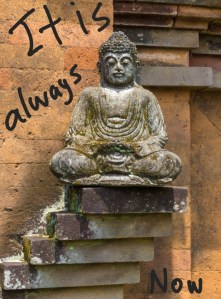
I love the Now. When else is there?

Over the last couple of months or so I’ve been listening on and off to Jimmy Buffett. I like Jimmy’s music, and I have liked it since the late 70s. I have at least ten of his albums in my Music folder.

Anyway, Buffett is an American singer/songwriter who writes and performs songs about beach life, sailing, exotic island paradises, and generally having a good time down at the beach and in and on the water. And preferably in sunny climes.

Yes. Hedonistic is a word that’s been used to describe his music and the lifestyle he celebrates. Still, I’ve liked him for a very long while now, and every so often I get into his ‘escapism’ and his relaxing in paradise kind of vibe.

Something a little rebellious about many of his lyrics too. But let’s not go there just now. What I want to talk about is a song I’ve listened to dozens of times, but when I played it again the other night, it got my attention in a way it never had before.

What I mean to say, is that for the first time I actually heard the song (Love the Now. Have a listen, you won’t regret it). I got what the writer was saying with his lyrics.

All the pain and the pleasure
I love the now
All the blood and the treasure

Then another verse:

The whole damn world’s gone crazy
The moon is jumping over the cow
How can you help
But not love the now?

It’s like he’s saying, ‘yeah, it’s all good.’ Not just hedonistic but nihilistic as well. Like he doesn’t care, doesn’t want to know. But, then, in another verse he writes:

It’s the only place I’ve ever been
It’s the only way that I know how

It is. That’s what he’s saying. ‘All the ranting and Ravin’ and ‘All the cussin’ and cravin’‘ are there for sure. Or, rather, they are all here. And now. But, dig a little deeper, read between the lines (so to speak).

Listen to this:

Don’t talk about your superstitions
Don’t talk about your cats meow
But don’t talk about tomorrow tonight
I Love The Now

You see? He doesn’t want to hear about your belief systems imposed on you by others. He doesn’t want to hear about your fears that have been manufactured by someone else to keep you in line. And he is not the slightest bit interested in your fancy material toys and other stuff (cat’s meow: a great expression coined in the 1920s meaning fancy, flashy, cool, awesome and other similar epiphets).

And don’t talk about some far off distant future (okay tomorrow night may sometimes seem awfully close to now, but you get the meaning).

The bottom line (literally and figuratively): he loves the now. And that’s because that’s all there is: the now.

So, on the face of it hedonistic, nihilistic even, as if he’s shrugging his shoulders in a ‘so what?’ kind of way. But he’s not doing that at all; he’s actually offering a solution to the overwhelming tidal wave of ‘things that are wrong with the world’, and about which many of us feel helpless and sometimes even hopeless.
The Now. It really is the only thing you’ve ever known, the only time and place you can ever hope to be. So why not love it? Why not just live it?

This is not resignation; it is not fatalism or a giving up (or in). In fact it is a courageous engagement with the total reality of life as it is right now.
Jimmy writes that:

Tomorrow’s right around the corner
I’ll get there somehow
But I’m stuck in [the] meantime

And, then, most importantly he says:

And I Love The Now

See the Tenderness

Over the years I’ve tried many types of meditation. But I always come back to the same method. I call it The Third Eye technique.

Once I’ve settled quietly, perhaps having taken a few deep breaths to relax a little, I bring my awareness to the centre of my forehead, the spot between my eyes. Traditionally, this is where the Third – or spiritual – eye is located.

(Actually that particular spot is in line with the Pineal gland  which is located in the centre of the brain between the hemispheres, and its function is to help regulate sleep patterns.)

And then? Well, I know I’m not alone when I say that, no matter how hard I try, it seems a lot of the time nothing happens. Well, thoughts happen. Anxieties and memories intrude their pesky (and sometimes ugly) presence. So much for emptying the mind and having transcendental experiences.

Well, in fact despite evidence to the contrary, I – along with all of you who ‘try to meditate’ – do sometimes achieve a state of no thought, of total quiet. The problem is, of course, in a state where there is no thought it’s impossible to think: ‘Hey, I’m having no thoughts.’

As for the (rare) transcendent experience referred to: on those occasions something other than a thought, memory, anxiety, comes up; something that transcends those mundane ‘normal’ things.

See the tenderness. See the tenderness. See the tenderness.

These words seemed to come right after I’d thought for the millionth time ‘nothing’s happening’ while I tried to meditate one day a while ago.

Not spoken by a voice exactly, yet heard with my internal or mental ear. Clear and distinct; the same fully formed injunction repeated three times.

But, see the tenderness? I’m not sure where these words came from. The truth is I am a gentle person by nature; I am not naturally ‘tough’ or ‘aggressive’ or anything like that. But it’s also true that I’ve been all those things over long periods of my life. Nature vs nurture you see.

Anyway, what tenderness? Where? Does it refer to the tenderness that exists in the world?

Perhaps it’s to do with what I am supposed to be reading or otherwise taking in? Books, movies, and other story sources that speak of tender things and people?

Or might it be an injunction for me to redouble my efforts to turn away from the wold? To turn away from the horrors and the nastiness of Maya or the material and essentially illusory world?

And by this turning away from the world, perhaps tenderness is to be found and seen in a turning to the interior world, in the spaces of contemplation within Self.

This injunction (repeated emphatically three times. Sorry I already said that didn’t I?) does seem to have come from some part of my Self that longs for a gentler way to be, for a more tender way to relate to others and to Self.

Ideas and questions to contemplate and to reflect upon. Meanwhile, it’s a good start to know that even if my mind tells me otherwise, when I meditate, something is happening. Sometimes.

Peace

Controlling the Mind: It ‘Ain’t Easy

Namaste friends

It’s so true isn’t it? The second you sit down, close your eyes and try to relax (or sleep, meditate, or just to get a little quiet) your mind jumps into high gear and suddenly there are all kinds of thoughts zapping all over.

Well, of course it is perfectly normal and nothing to become frustrated or annoyed about. Certainly you shouldn’t go thinking you’ve failed or are ‘doing it wrong’.

That’s been my trouble for a long time: if I wasn’t able to ’empty’ my mind then obviously it was something about the way I was going about it. I was the one making a mess of it.

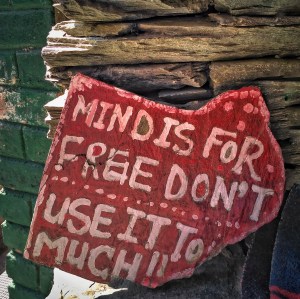
In the last while I’ve started to realize that it’s the mind’s job to keep itself busy. In other words you’re never going to stop it thinking.

The best we can hope for, I’m learning, is that we come to the point where we see where the thoughts are headed, and we’re able to gently, kindly and without fuss, refocus attention back onto our breath or whatever aid we use to help us focus. It’s not so much about pushing the thoughts away or trying to stop thinking. It’s really about putting our attention somewhere else

And then what might happen every so often is a time, usually only a few moments, when you’ve reached beyond your mind’s reach.

Meanwhile, don’t worry about where you are headed. I can’t find the exact quote, but Swami Ramdas also said something to the effect of

Once you set your feet upon the path you are already at your goal

Like most things in life, the journey itself is where it’s really at.

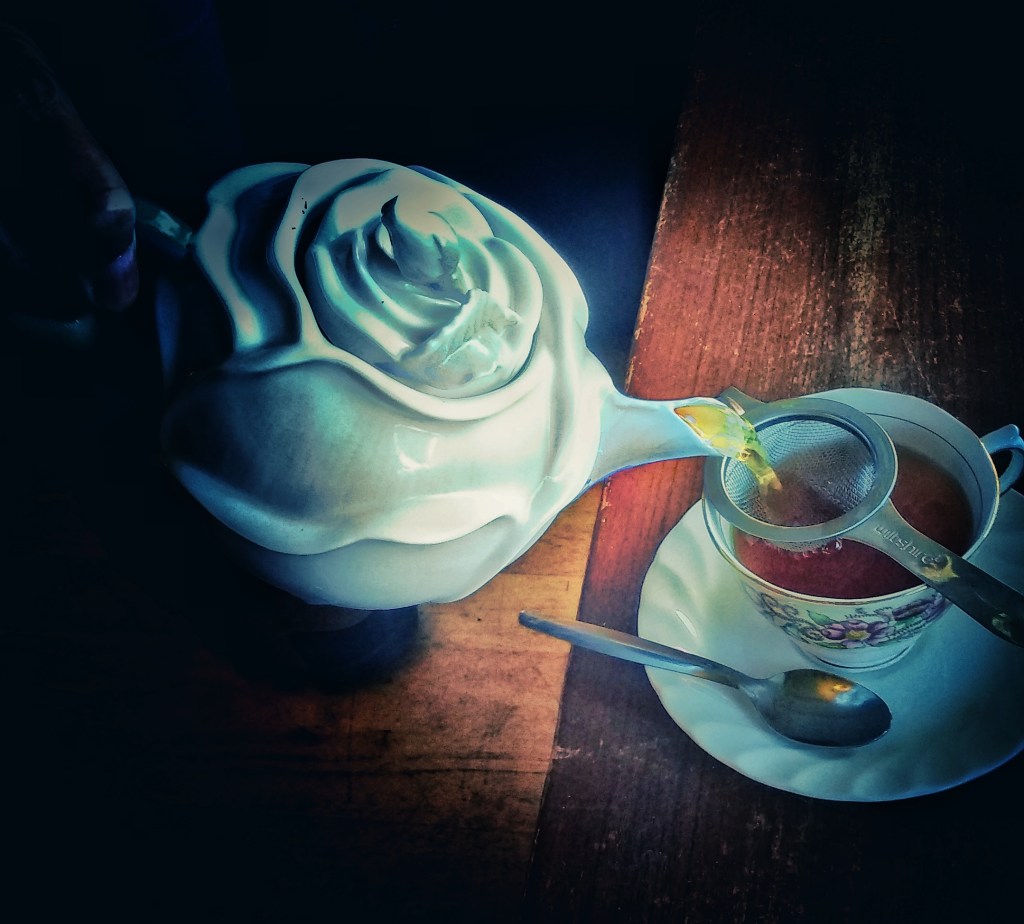
Pouring tea can help focus the attention

With These Words … Part 1

Namaste friends

At this early stage in the life of this blog, no doubt most visitors will really have only seen the Welcome and the About Me pages. The question I’m asking myself is what else can I tell you about myself and my life that you can’t see for yourself on those pages?

Well, I realized that I’d already, on another blog, shared some insights in a kind of miniseries of posts that speak about my philosophy of life as I call it. So, join me as I get into Part 1.

By now you probably worked out that I call myself a hermit. Perhaps I have explained what I mean by this somewhere else on this blog, but in a nutshell being a hermit to me means living a quiet life, without a lot of physical contact with other people; I visit shops and other businesses and so on, as little as I can manage. For example, I haven’t been to a cafe, restaurant, or other social gatherings for several years.

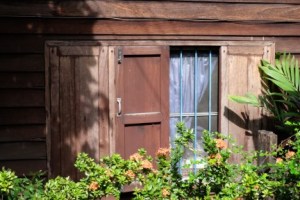
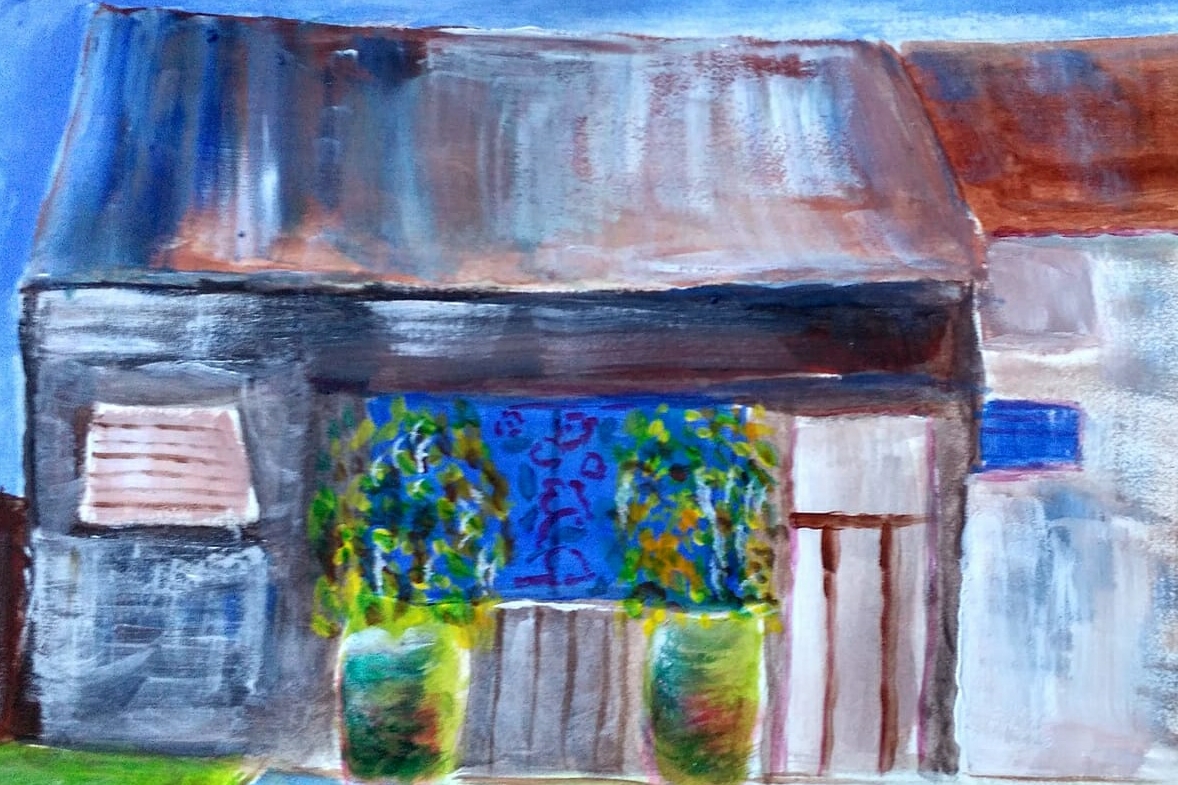
Just one of many hermitages we’ve found by the side of the road. This one way out in the desert country in Australia’s Outback
(Painting by my partner hermit Pauline)

Of course there are more esoteric or spiritual aspects to being a hermit, and I’m very much aware that it’s this spiritual quest side of things that is really the driver for the way I live. A quiet life lived apart from the world, means less distractions, more quiet, more time. All are great helps.

Obviously given the times we are living in right now, I’m far from the only one living a hermit life. At least I am blessed in that my way of living is by choice. At the same time, I’m actually quite excited to watch as the people of the world begin to slowly get back out there and into life again.

As no doubt I’m mentioned somewhere else, I was born with a nomadic nature and soul. So in a real sense it’s a pilgrimage I’ve always been on anyway. So perhaps I might be back out there on the road sometime soon

In the truest sense of the word, I aspire to live like a monk: A monk in (sort of), but not of the world you might say. However monks (and nuns) usually live in community, in a monastery or convent. It’s true to say that life with my partner has me living in community, though it’s only the two of us. Then there are the few places in cyberspace where I encounter and interact with others.

It’s well known that many monks and nuns take a number of vows when they join their communities. Traditionally these vows are: Poverty, Chastity, and Obedience. In many cases the additional vow of Stability is added, binding the monk or nun to a particular community in a particular place.

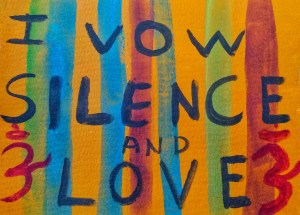
I’ve never been comfortable with those vows, so I’ve never made them. But as I have progressed in my spiritual journey, I have taken vows of various kinds. Mind you my vow to silence is having a hard time of it with me! As for the love part of this vow: well, that’s also a work in progress.

Anyway, recently I’ve been reading about communities (some religious, some secular, but always made up of people sharing the same or similar values, goals, and missions) who, also uncomfortable with those traditional vows, have reinterpreted them in a way that sits more comfortably.

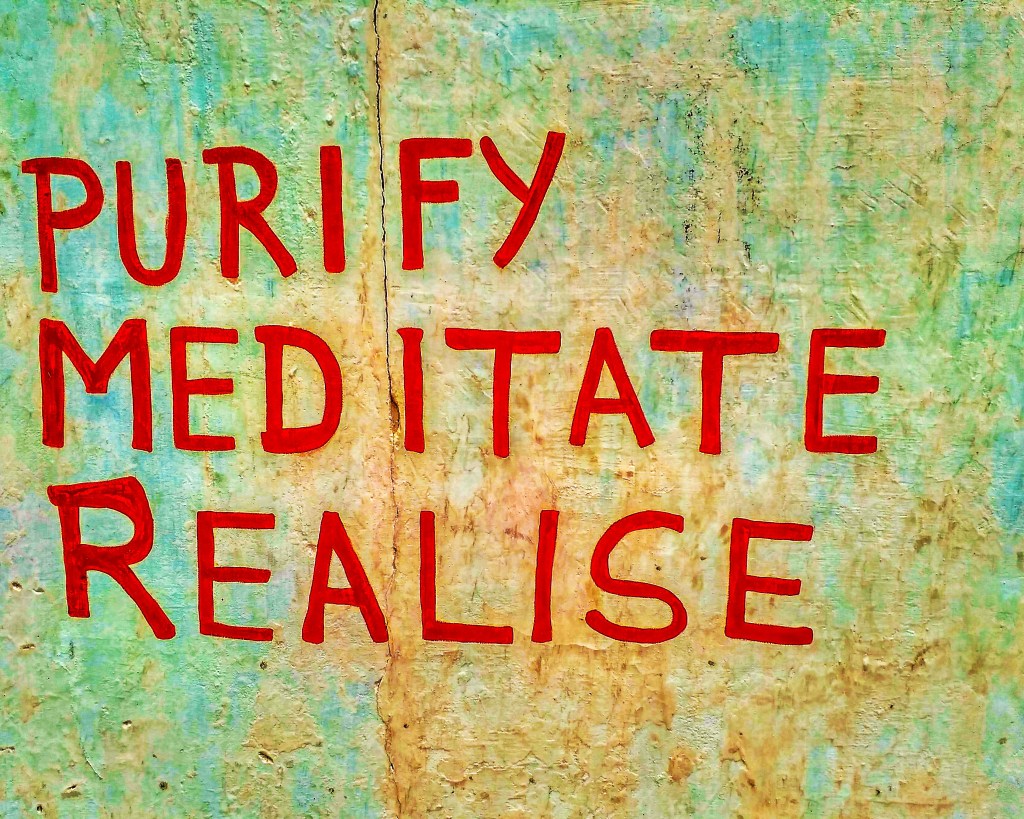
That renewed version is : Simplicity, Purity, and Accountability. In the place of the vow to stability, there is now what you could say is a more precise concept: Presence.

While I can’t say I have formally taken these vows, it has occurred to me that, put together, they do make up a fairly precise set of principles that could be said to apply already as I attempt to live authentically as hermit, monk, and pilgrim!

Please join me in Part 2 (appearing soon) when I will put this theory to the test.

Peace and love from me to you