In my last post I mentioned I would share a poem with you in this one. And here it is!
Just Passing Through … or Seeking Noble Truths, is, like the previous post, concerned with passing through, how as I go through life, I am always in some sort of passing through place. Before we get to the poem, just let me fill you in on a bit of the back story.
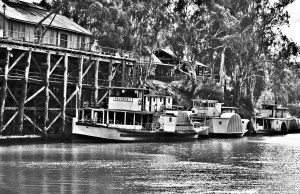
First, I wrote the poem as I walked home to our hermitage at the time in a town called Moama on the Murray River in Australia. Now, the Murray is the biggest river in the country and the then little town of Moama sits across the river from its bigger city sized sibling: Echuca, the biggest inland port in Australia.
Anyway, I’d just crossed the river bridge and the words just started coming to me. Not exactly as you read it here, but close. I am very lucky that I had only a few minutes walk left to get home, otherwise the whole lot could have been lost to memory.
The longer back back story? Well, as the poem suggests, I’d spent a lot of time hitchhiking, in Australia and a few other places too. It’s true what it says in the first lines: I’d done a lot of trudging through a rather large number of towns unknown to me then, and only some of which are better known to me now in much later years.
Okay, that’s enough back story to last a while, so let’s just present the star of the show. I share this, as I do all my efforts, with heart.
JUST PASSING THROUGH … OR SEEKING NOBLE TRUTHS
Many have been the nights I’ve trudged (and less often, strode) past illuminated windows framing. families sharing sit down meals. Or huddled worshipfully before flickering and silent (to my passing by ears) picture boxes in corners of cosy family rooms.
I am just one more invisible (to most), anonymous drifter. Just passing through the empty nighttime streets of one more anonymous town. Longing to enter the illumined frame. Longing to share one of those sit down meals. Longing to worship at the alter of the flickering picture box. Longing is loss.
The edge of town roadside summons this lonesome bodhisattva begging rides.
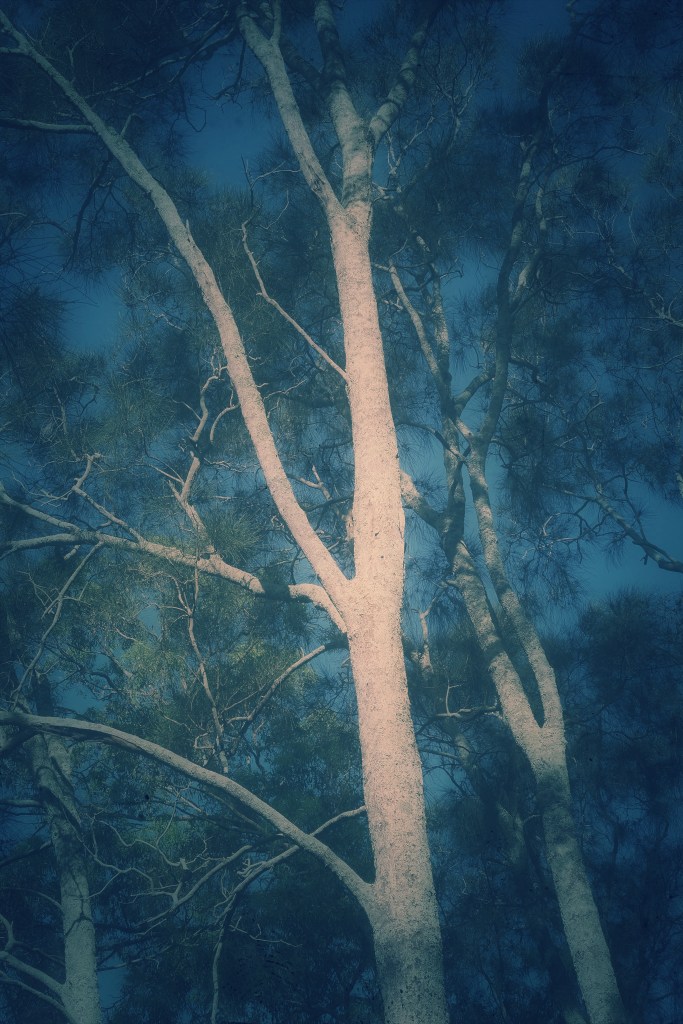
It’s just one more quiet and cold semi desert night. A high moon in a clear sky casts ghostly shadows through Eucalypts: my only company as the waiting game begins. Waiting to see headlights coming and going my way. Waiting to be rescued from this lonely edge of town roadside. Waiting for another ride, to another anonymous town. Waiting is wasteful
Better to be here, now, on this edge of town roadside. A place as good as any. Illumined by the moon, the ghostly gums create the frame in which this bodhisattva rests. And worships.
Thank you for allowing me to share these words with you. The road, as many of you will know, can be a teacher, a guru. I don’t hitch-hike anymore, but the road is still teaching me. And I am grateful.
Perhaps shameful is too strong a word, but that’s kind of how it feels. You see, I’ve been thinking of giving up on the book I’m reading at the moment. And you are thinking, this is a big deal? If you don’t like it, put it aside and try something else.
Yes, excellent advice, thank you. And usually that’s what I would do. In fact now I think about it there was a time when I would force myself to complete a book, even if I wasn’t enjoying it or was bored with it. But I learned a long time ago that this is a waste of time, waste of mind, waste of energy, and unfair to me.
Yet, on this occasion, I started to have some thoughts that took it a bit deeper. It’s true to say that I’m a bit bored with this book; it’s as if I’m not overly interested in the story the author is telling, and in the way she’s telling it. As well I had this feeling that the book was ‘ordinary’: meaning that it was a kind of day to day telling of a segment of a life with its mundane and routine elements included along with the ‘good bits’.
And it was that feeling of being not so interested that got me thinking. The author’s vocation, thinking, activities, and the subject of the book itself, is exactly in line with areas I am very interested in reading about, not only for entertainment but for my learning, for my own spiritual journey and way of life.
The way she’s telling it? Now, this one got to me even more. The book was put together after the author’s death and is made up of extracts from the author’s journals and from the many letters she wrote to family and friends during the period of her life the book covers.
That’s what I do isn’t it? Keep a journal? Write letters? These and the many many blog posts (which in a way are a lot like letters, and even journal entries do you think?) I’ve written over many years, and the journal I’ve been keeping for most of my life, are the core of at least the personal writing I have done over my lifetime. By rejecting this book I started to feel that I was rejecting my own, for want of a better word, genres.
Or, worse than that, I’m rejecting the invitation to share a life. And illogically I’m rejecting the life story and insights of a person whose own experience I actually value for my own quest and from whom I could learn a great deal.
And what about the feeling of boredom and that the book was too ‘ordinary’ and mundane? Well, to borrow a well-worn phrase, this really does take the cake. I mean if you were to look at much of my past writings and look at my photography blogs from times past, you would see that one of my main statements of belief was:
There are no ordinary moments, nor are there any ordinary people.
And I still believe this. Indeed, spiritual practice and study has only deepened my instincts that all there is is the moment; all there is is all the beings of the world experiencing that ongoing presence, that never-ending moment. There can be nothing in the least ordinary about that.
I’ve saved the best – or is it the worst? – for last: what the book is about. It tells the story of a three year period in the life of a person just out of university who looking for a deeper meaning to life and to finding a true course for her life, travels from her home to Japan and enters a Zen monastery to become a monk.
Her journals and letters give the reader an intimate and in-depth account of her experiences: what she learned; insights into the language, culture, and history of Japan and Zen itself; the people she met and knew, her own feelings and reactions to what was a huge shift in her life.
After three years the author left the monastery to travel slowly back to see family at home. Sadly she was killed in a bus crash along the way.
Pretty much everything that has to do with living a life. And here’s me rejecting it because it was ‘ordinary’ and some details were ‘boring’.
So, I’m going to stay with this book. It’s taught me a lot already, and I think there is more there for me. Perhaps, I can better put into practice by own so strongly held idea that there are no ordinary moments or ordinary people.
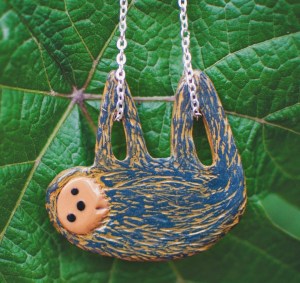
Sloth. Its a good word isn’t it? One of those words you don’t have to look up to know what it means. But if you do look it up, you’ll find it has a couple of meanings. One is: laziness, indolence and a reluctance to make an effort.
Is sloth a bad thing? Certainly it gets a bad rap; I mean: lazy? Indolent? Not willing to make an effort? Hardly words of praise. On the other hand we value words like busy, productive, efficient, hard working, and the rest. In our culture, these are definitely words of praise.
Go out and play; Read a book; Go to school; Study hard; Get a good job (whatever that means); How much do you make a year? When are up for promotion? Demands and questions like these are constants in all our lives, and they force us into defining ourselves by what we do whether we are a little kid at school, a teenager trying to sort life out, an adult trying to make our way in the world the best we can.
Yes, it’s true I think: it always seems to be a about defining ourselves by what we do, rather than who we are, or what we stand for. Always we have to be doing something. Ever heard that little identity joke, I’m a human being, not a human doing? I wonder how many of us would feel lost if we shifted from that need to be a doer to another definition of our identity, one less reliant on what we do or on what we’ve done in the past, or will do in the future.
Well, I hear you saying, this is all fine and dandy, but my boss won’t pay me unless I show up, there are meals to cook for the kids, I’m running late for an appointment, the lawn needs mowing and after that I have to write a report for my night class.
All very true, valid, and all of them things that do need to be done. We all have a life don’t we? But perhaps sometimes, even just now and again, and perhaps just for a few minutes at a time, you can stop. Just stop. Thats all. Stop and just do nothing, or rather stop and simply be.
Have I mentioned a favourite little two word sentence I really really like? Just sit. Don’t read, don’t think, don’t try to stop thinking, don’t ‘meditate’. All that’s required is to do nothing. Do No Thing. Actually, I think I’ve found a new favourite.
On, remember I said there are a couple of definitions of sloth? Well the other one tells us that a sloth is a slow moving nocturnal mammal noted for hanging upside down from tree branches. It lives entirely in the trees and is capable of only very slow movement on the ground.
So, I guess you should be very careful when you tell someone else I’m a sloth. Mind you, putting aside the hanging upside down bit, and the nocturnal requirement, it’s probably not such a bad way of being to emulate, do you think?
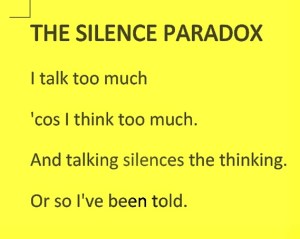
Silence isn’t my strong suit. Or I should say, keeping quiet isn’t what I’m known for. One of the main reasons l live the life I do is because I am very sensitive to noise, but my problems start when I seem to forget that other people, and my own peace of mind, are affected by excessive noise created by me too.
And noise includes talking too much. Of course there are any number of reasons a person talks too much. Some people even believe they talk so much because it quietens the mind. No, afraid not. Been there. Not for me anyway.
Insecurity, nervousness, fear, low confidence, compulsive behaviours. The list could go on and on. When you think about it, the why isn’t always so important as the how to fix it question.
I spend a lot of time alone, in solitude, that gives other people and on rare occasions my mind, a break. I spend a lot of time listening to music to which I always listen intently. Of course that works on a number of levels, and is uplifting most of the time.
Speaking of listening to music, I usually use headphones like a lot of people. And I am blessed, absolutely and truly blessed, to have really good noise cancelling on my headphones. Anyone who uses ANC knows that it’s almost a miracle and makes the experiencing of music even better than it already is.
But I have discovered another use for the noise cancelling. I don’t always want to listen to anything: sometimes even I want some quiet, some silence. So, probably not the first person to do this, but I use ANC just by itself, just to shut out external noise. But I’ve found it does more than this. Turning it on somehow creates another space. I actually feel like I’m enclosed in a space, or place. I hope that makes sense.
We tend to think of quiet and silence as meaning the same thing, and obviously they are similar and we use them interchangeably a lot of the time. But, sometimes they seem to be two distinct concepts. Quiet is an absence of noise. Whereas silence often seems to me to be a kind of solid state, an entity that comes into being for a short while (or longer hopefully) and encloses one in something like a cocoon or protected space.
Of course this state can be attained in different ways. For me lately I find with ANC on for itself alone, I can relax more quickly; I feel sort of ‘protected’ and safer somehow. Anyway, enough for this little tip from me. Perhaps headphone makers should change the label from Active Noise Cancelling, to Active Silence Creation
A few weeks ago I finished one of the most extraordinary books I have ever read. Yes, I know: we live in the days of hype and the redundant superlative. Everything is the best, biggest, greatest. Or, conversely, the worst, most tragic, saddest; it goes on and on.
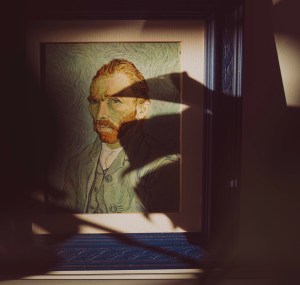
In this case however I am not exaggerating. This book was amazing. It’s Learning from Henry Nouwen and Vincent Van Gogh: A portrait of a compassionate Life, by Carol A. Berry. From this book I’ve learned as much and more about Van Gogh’s motivations, his vision, his art, and yes, his very nature and soul, than in everything I’ve read, seen or heard about Vincent until now put together. And that includes from several visits to the magnificent Van Gogh museum in Amsterdam.
The book had its genesis in a course the author sat in on in the 1970s put on by Henry Nouwen for Theology students. The course aimed at helping future ministers and pastors learn to connect with their future parishioners. Basically it was about accessing the compassionate sides of their own natures so they might better help others. Nouwen used Van Gogh as a the model of a person who had lived a life built on compassion for others.
The author has mined Vincent’s letters (mostly to his brother Theo) and studied deeply his paintings and drawings, in order to understand and demonstrate what it means to live a life of compassion, and to highlight the artist’s mission in life. For me that mission is summed up very nicely in a quote from one of Van Gogh’s letters:
Art is to console those who are broken by life.
Vincent Van Gogh to his brother Theo
I had a vague sense of Vincent’s spiritual leanings (I knew he’d been a missionary living among poor miners and their families to better understand and help them), and he’d tried to become a preacher. But, before finding this book my thinking hadn’t gone much deeper than that.
But, through reading this book I discovered Vincent was really what many of us might call a mystic. The author goes further and after what i’ve learned, I tend to agree with her: she thinks Van Gogh is a saint.
A mystic in the sense that he tried to live a holy and compassionate life. He viewed all nature (of which he concluded humans are simply one equal part) as being expressions of the divine. And a saint in that he dedicated his life to making art that would inject light and colour into the darkness of people’s lives.
As I mentioned, Vincent had been a missionary for a time. But his radical way of living among the poor and sharing their lives in order to know and love them better was shocking and way too extreme for his bosses, and he had to move on.
So, he finally settled on full-on immersion in his art. His mission was to make paintings that offered comfort and consolation to those who are suffering. And that’s all of us to one degree or another isn’t it?
You can see by now that this supremely accessible (and pleasurable to read) work has had a profound impact on me. This book isn’t only for artists, nor is it a religious book; it is as I have said an inspiration and guide to living a compassionate and loving life.
I don’t want to just say ‘I can’t recommend highly enough that you read this book’; I want to say instead Please, please read this book. Then obviously act on what you have read!
I’ve always admired – loved – Vincent, now I think I know why. Or as Don McLean says in one of the most profound love songs (Vincent) in history (remember, I never exaggerate):
Now, I understand, what you tried to say to me How you suffered for your sanity How you tried to set them free They would not listen, they did not know how Perhaps they’ll listen now
A couple of days ago when this powerful and important statement in the form of this illustration showed up on my social media, I was struck by something I don’t think I’d noticed before. Suddenly I saw: ‘might not change the world”. Might not? Which gave me the idea: it could as easily say ‘Helping one person might change the world …’.
But, you know, my thinking went even further: I realized that might and might not have nothing to do with it. The reality is that every action we take, and that includes the action of helping other living beings, actually does change the world.
Well, firstly, which of our actions help other beings, and thus change the world, we can’t always know. And obviously we can’t always (actually it’s more like very rarely) see the impacts of our actions. And even if we do, it’s likely that we’ll only directly get to see what happens in a limited and local sense. Nevertheless, all actions have a tendency to result in a domino, or cascade effect that literally never stops.
But, wait, there’s more. I kept thinking about it, and came up with a couple of ideas about why it could be a good idea to change the might not in this marvelous saying, which speaks of a negative possibility, to always will, which points to something definite.
All is one on the physical and the non-physical levels
We’ve all had those moments when we sense a connection with the rest of the world; we feel that we are part of nature, part of something bigger than just the one of us.
But, have you ever felt you were even more than just a ‘part of’ the world or nature? Have you ever had a sense that you are nature? Maybe this sounds a bit esoteric: we are one Self; we are all manifestations of the divine; we are all sparks of the one light, and so on.
And of course we can’t know for sure what goes on beyond the physical world. But, even at the most basic level of the material world, especially as we get down to the microscopic and even atomic levels, it’s hard to see any ‘separation’ between any individual and another. Atoms merge and cross over, interact, and change, energy fields collide and mingle, between all living and non-living things.
So, who’s to say that one small action on my part, one small change, won’t have a cascading effect as the ripples (that’s a good way to put it isn’t it?) from that action spread through the world and beyond?
The ‘What can One Person Do?’ Dilemma
Our Sydney Smith quote partially answers this agonising question for us as we’ve seen. Still, you might think that one person can’t do a lot when the needs are so many and so vast, and when most problems in our world seem to be so intractable. Mr Smith says that there is always something you as one person, as an individual can do, even if it’s a small thing you do.
Just think how many people everywhere are asking this same question: ‘What can one person do?’ If even a tiny percentage of those individuals answered that they could do something, then you would start to see changes taking place for sure. How could all those actions not add up to a changed world?
The Multiplyer Effect
Just now I used the words ‘add up’. Well actually it’s more like a multiplication effect isn’t it? If we say we change the world by helping just one person, then there has to be a Multiplyer at work I think.
We have all heard that aphorism that if you give food to a hungry person then you feed them for a day, but if you teach that person to produce their own food, then you feed them for a lifetime. Another truism definitely.
Still, once again, I think we can go further. Is it possible that by teaching one person to produce their own food you can help the whole world eat properly? Let me tell you a story I heard on an online video just a few days ago.
A man was traveling in a poor part of a country he loved. He’d spent the previous few years in another part of the same country building a house and growing his own vegetables and fruits.
He met a local person who was renting a small block of land, and that person asked him if he could help them build a house and teach them to grow their own food. It was a poor area, and the land was pretty much a little slice of jungle.
Anyway, this man agreed to help, and has been there for a few years now. He showed that local person how to grow various fruits and what looked to me to be a huge variety of vegetables. And they didn’t forget the flowers either. As the seasons passed, seeds were gathered and more land turned over to growing food.
Apparently from the very start they had a surplus of the fruits and vegetables they were growing, so they began offering them to neighbours, most of whom were also very poor.
Our traveling friend then showed them how to collect seeds from the food they ate (and the flowers too) and began to show these neighbours how to plant, fertilise, care for, and harvest what those seeds produced. In this way they too were able expand the amount of food they could grow.
So, already there is a growing area of this one slice of one country, that’s becoming self sufficient in fruit and vegetables. Now, that’s not the whole world obviously, but you’d have to agree, it’s a good start.
Anyway, just think: those people now have skills and surplus food and seeds to share further afield. Who can say how far such action might spread? It all sounds quite simplistic put like this, but it is the way that many grassroots movements for change have worked. And remember, nobody can reliably predict the ongoing impacts of any actions.
So, yes it is true, helping one person does indeed change the world for that one person. But whatever we do for one person, it also does definitely change the world beyond. As we’ve said, we may not see how or that it changes everything in the world and certainly not all at once.
We may think of ourselves as just one separate little individual, but we are united with all life. We may think that it’s all too much; too many problems; what can I do? The road to changing the world seems to be blocked, seems to be impassable.
Well, one teacher I admire is Swami Ramdas who founded Anandashram in India. Among the many great things he said, this one stands out for me above them all. I may have the wording a bit wrong, but basically the message is:
Once you have set your feet upon the path, then you are already at your goal
Which is another way of saying that if you help one person, then you have already changed the world.
Over the years I’ve tried many types of meditation. But I always come back to the same method. I call it The Third Eye technique.
Once I’ve settled quietly, perhaps having taken a few deep breaths to relax a little, I bring my awareness to the centre of my forehead, the spot between my eyes. Traditionally, this is where the Third – or spiritual – eye is located.
(Actually that particular spot is in line with the Pineal gland which is located in the centre of the brain between the hemispheres, and its function is to help regulate sleep patterns.)
And then? Well, I know I’m not alone when I say that, no matter how hard I try, it seems a lot of the time nothing happens. Well, thoughts happen. Anxieties and memories intrude their pesky (and sometimes ugly) presence. So much for emptying the mind and having transcendental experiences.
Well, in fact despite evidence to the contrary, I – along with all of you who ‘try to meditate’ – do sometimes achieve a state of no thought, of total quiet. The problem is, of course, in a state where there is no thought it’s impossible to think: ‘Hey, I’m having no thoughts.’
As for the (rare) transcendent experience referred to: on those occasions something other than a thought, memory, anxiety, comes up; something that transcends those mundane ‘normal’ things.
See the tenderness. See the tenderness. See the tenderness.
These words seemed to come right after I’d thought for the millionth time ‘nothing’s happening’ while I tried to meditate one day a while ago.
Not spoken by a voice exactly, yet heard with my internal or mental ear. Clear and distinct; the same fully formed injunction repeated three times.
But, see the tenderness? I’m not sure where these words came from. The truth is I am a gentle person by nature; I am not naturally ‘tough’ or ‘aggressive’ or anything like that. But it’s also true that I’ve been all those things over long periods of my life. Nature vs nurture you see.
Anyway, what tenderness? Where? Does it refer to the tenderness that exists in the world?
Perhaps it’s to do with what I am supposed to be reading or otherwise taking in? Books, movies, and other story sources that speak of tender things and people?
Or might it be an injunction for me to redouble my efforts to turn away from the wold? To turn away from the horrors and the nastiness of Maya or the material and essentially illusory world?
And by this turning away from the world, perhaps tenderness is to be found and seen in a turning to the interior world, in the spaces of contemplation within Self.
This injunction (repeated emphatically three times. Sorry I already said that didn’t I?) does seem to have come from some part of my Self that longs for a gentler way to be, for a more tender way to relate to others and to Self.
Ideas and questions to contemplate and to reflect upon. Meanwhile, it’s a good start to know that even if my mind tells me otherwise, when I meditate, something is happening. Sometimes.
It is an old belief, and it is a good belief, that our life is a pilgrims progress.
Vincent Van Gogh
The usual definition of a pilgrim is a person who goes on a journey to a special place, a place that has significance for them, often as a spiritual exercise or quest. Sometimes the journey can be over long distances and a difficult road.
The key characteristic of a pilgrimage is that it is to be undertaken on foot, or put another way, a pilgrimage is a journey we (as the pilgrim) travel on by our own efforts, under our own steam as they say.
In this quote Vincent is talking about that other pilgrimage: the one that goes on on the inside. It’s referring to the idea that our lives can be an inner spiritual journey (or pilgrimage) from our present imperfect condition to a place or state of beatitude. Or as some might say Heaven or Nirvana. Others call it Self or God Realisation. And some other people call it Enlightenment.
You could say that Vincent is suggesting that a pilgrim is one who goes on a special quest to find the answers to life’s big questions; a pilgrim is a person who travels (either out there in the world, or inside on a journey of the heart, mind, and soul) to see, to learn, to do and to grow as a human being.
And, if all goes well, we end up in Nirvana, or a state of spiritual advancement as a kind of nice bonus at the end of the road
Spiritual for me in this context refers to the things that affect or relate to the human spirit or soul and might not be concerned simply with the physical or material aspects of life.
But here is the funny paradox about this kind of inner spiritual pilgrimage: as we learn, as we discover new ways of being and relating to people; as we find answers for ourselves and as we grow as people, we find that changes start to take place in our physical world.
From simply directing the wheres and whens of our activities in the material world, to pushing us in a direction of study, to influencing what people we meet, to the type of work we end up doing and to the actual state of our mental and physical health. It’s that inner pilgrimage that really is running the show of our lives.
So, as we travel the long road of our lives, let’s continue to learn. Let’s keep alert for those insights that come with a desire to grow and to work out what our lives and the world are all about. Above all, let’s keep on pilgriming down that road, and allowing ourselves to be open to new experience, new people, new ways of being.
Another quote from Vincent that I particularly resonate with. This time from a letter to his brother Theo and talking about the lot of the pilgrim:











 Notes from the Hermit's Cave