The Ananda Mart is Closed Today

Hello and welcome dear reader

Almost four years ago now, we spent a couple of months in Bali. For a big portion of that time we based ourselves in a town called Ubud, on a street called Gautama. Yes, indeed, most auspicious.

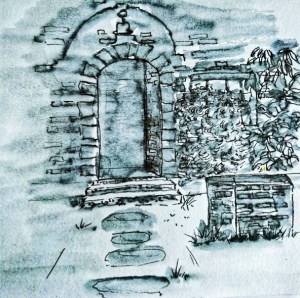
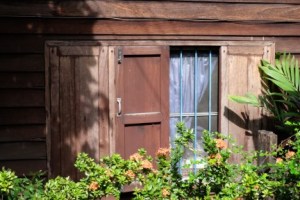
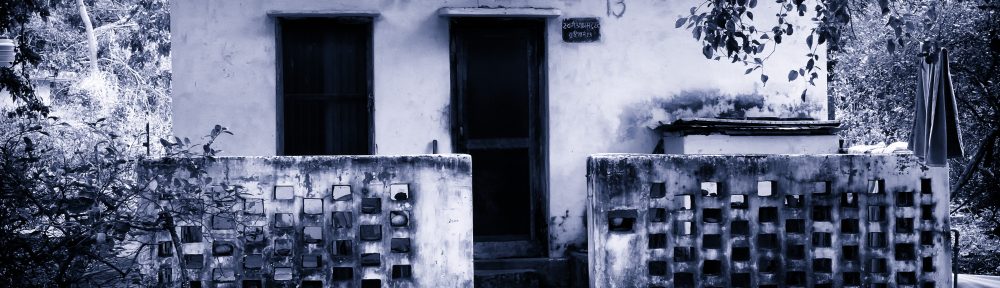
Anyway, one day I was walking down the street, going somewhere, and for a change without my camera. I passed a small shop that somehow looked unusual. and I stopped to make a photo with my phone.

That’s it: The Ananda Mart is closed today, I remember thinking. In the few weeks we’d been there, I don’t think I’d ever seen it closed before. On most days the man who runs the shop could be found sitting on the front steps. And mostly he’d have his dog for company.

In the early days of our time on Gautama Street, we’d buy bottles of water at the Ananda Mart. Each time I would smile, say hello, and enquire after the shopkeeper’s health. And while he always responded, it was never with what you’d call a friendly smile or a cheery wave. Probably grumpy grunt would be a more accurate way to describe his replies.
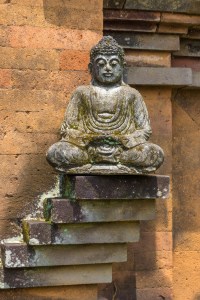
You know you’re on Gautama Street when you see the man himself at the corner

And each time I passed the shop, I would say hello. Again on a lucky day I’d get a grunt, but mostly he would say nothing and ignore me. Just as he ignored everyone who passed him and his dog. Eventually after a particularly rude response to me trying to purchase water, I, as they say, took my custom elsewhere.

Often in such situations I have been known to become irritable, angry even, and end up being just as rude (or ruder) than the other person. For some reason, this time I didn’t react that way. Instead I was interested in figuring out why the shopkeeper acted in this way and seemed to be in a world of his own which, from what I could see, he shared only with his dog.

Of course, being the overthinking speculator champion of the galaxy, I made many guesses: he is the owner of the Ananda Mart and is totally over people; being I thought in his 60s, maybe he’s just hanging out till he can retire. Given that the Ananda Mart is only one component of what looks to be a multi-armed business this could be a good guess. He’s one of the family elders, doing his part.

Above the door beneath the name it reads ‘cheap and friendly’. And it’s interesting to check the meaning of Ananda. In Hinduism, Buddhism, and Jainism it refers to extreme happiness, one of the highest states of being. In Sanatana Dharma philosophy for example, God is sat-chit-ananda or existence, consciousness, bliss.
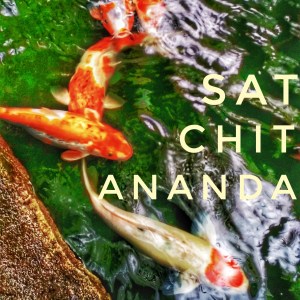
Now, before I ramble on too long, I will just say that really and truly ‘the real story’ is absolutely none of my business. I suppose what I’m getting at is, rather than dismiss him as a grumpy man in a shop, My reaction to our, shall we call it, our relationship was one of compassion and curiosity. Let’s just say my sense was that the Ananda Mart shopkeeper is perhaps not a happy man.
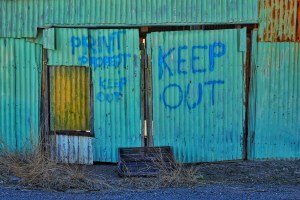
You see what I mean? I tell you that it’s none of my business, then I tell you how I kept sticking my mind in where it doesn’t belong. Makes me human I guess!

Paramhansa Yogananda, one of the first teachers to bring Yogic philosophy to the so-called West, and the author of Autobiography of a Yogi, says in that book that Ananda is different from the temporary happiness that comes from sense pleasures such as eating and other ‘material pursuits’. He said , too, that Ananda is not the kind of joy that we’d call monotonous and that always stays the same.

Yogananda wrote in Finding the Joy in Life, that Ananda refers to a joy that ‘changes and dances itself in many ways to enthral your mind and keep your attention occupied forever’.

It’s anybody’s guess really isn’t it? Whether our seemingly unhappy and not so friendly shopkeeper, has that kind of joy in his life. And perhaps his aloofness and ‘grumpiness’ is merely an expression of his weariness of the temporary joys of the material word with its emphasis on pleasures of the senses.

Anyway, as I say, it’s none of my business.
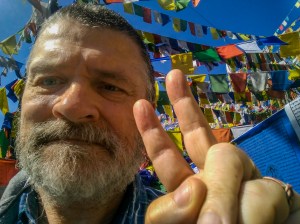
Peace to you from the Hermit

Put Me in My Place. Please

Reverence the place and learn from what you see


Coming across this note last night, I was stumped. I coudln’t think where it had come from, where I’d seen it; nothing at all came to mind. And an online search just now failed to turn up anything either. I mean I must have read it somewhere. Or is it possible it came from me?

Of course it’s all the same: there is only one source. At any rate, it’s an injunction one can relate to anywhere, any place. It’s surely about presence?

And about learning from all that is to be seen (heard, felt, intuited, known) in whatever place one is in now. I mean, the place I’m in now. I am here and it is now.

I’m reminded of the faith affirmation (is it a prayer?) that seems to have been written for this particular hermit pilgrim:

As a a hermit, I am a pilgrim dependent on a pure faith that I am exactly where God wold have me be now.

Sometimes I think that too much thinking about and angst over places other than the one I’m actually in right now, is a sure and certain way to resist and reject any reverencing of the place I’m in, not to mention what’s to be learned or gifted from the experience of being here.

And of course that angst, worry, wishful thinking, or whatever, comes with its own issues of distraction, and of a taking away of one’s Self from the present, the notion that here and now is the only time and place that exists.

A poem of mine I came across the other day while looking for something else says it all quite nicely. This poem is called Transcendental Injunctions, and it’s a rap on presence, about being here, and being now.

The central action describes how my senses can take me away from that here and now: I describe my habit of smelling my Bhagavad Gita (yes, as in putting my nose into the pages of the little book and inhaling the aroma of those pages) and how that takes me back to the shores of the River Ganges; another place, another time.

Anyway, allow me to share the final verse, which speaks of one such occasion:

Then, there is a voice:
I hear it with the ear of my heart:
There is no place to go.
What you seek is within.
There’s nothing to find:
God’s kingdom is within.

I suppose there is nothing left to say. I am here, and it is now

Peace to you from me

A Little Blogging Balance is Called For

Hello and welcome

In yesterday’s post I made mention of how Notes from the Hermit’s Cave is a month and ‘a bit’ old now. I thought when I typed that, ah yes, so it is; I don’t think I’d given a lot of thought to details like that.

So, first things first: Thank you for being there at the other end of all this, and for joining me on this new venture. Adventure really.

Anyway, as you could tell if you read that post, I just kept on typing with hopefully something reasonable coming out at the end!

Later when I told a wise one I know about that realisation, this person said to me:

‘Are you sure you’re getting enough new imput to keep coming up with new ideas for more writing?’

Good question. Wasn’t yesterday’s post about precisely the issue of an idea that wouldn’t (or maybe couldn’t) evolve into a post? But, wait, not having any ideas isn’t a problem is it? Or is it? So, what’s ‘enough new imput’?

So now I had two pieces of information that had me thinking: the running out of ideas is a possibility; having ideas that won’t or don’t work is a certainty. Together these bits of information came together to form a little bit of knowledge.

That’s how it’s supposed to work: we gather information, then we turn that information into knowledge. The trouble happens when we are overloaded with too much information and can’t sort out any of it to form anything like coherent knowledge.

Anyway, here am I getting distracted! What I was about to say was that the knowledge which came from those three pieces of information, was:

There’s a potential for ideas to run dry, but the other problem is that just because there are ideas apparently available now, doesn’t mean they are any good, or can be used, want to be used, or for a myriad of other reasons, I can’t connect with them. Either way, I am definitely going to need some new, perhaps different imput

What to do? Now, this is where the formation of wisdom comes into the picture: first there were seemingly random bits of information, which then came together to form a little parcel, nugget, insight (what do you call a piece of knowledge?). Some knowledge.

As we all know, simply gathering information, even if we somehow are able to turn that information into knowledge, is no guarantee that wisdom will follow.

However in this particular instance, wisdom did emerge. After some thinking, and some not thinking, I thought, I know: I’ll have a couple of days off. No posts. No blog (except to answer people who reach out to me obviously) stuff at all.

Ah wisdom. So simple really when you look at it isn’t it? I’ll just have a couple of days without thinking about, or looking at Notes from the Hermit’s Cave. So, what will I do instead? Well it’s not as if my time isn’t rather (very rewardingly) full with the other practices incumbent upon me as a hermit and a pilgrim. And a monk.

Still, I thought, I could use a bit more time just sitting still. You know: being quiet, eyes closed, not doing anything. Then, I’ve been a bit light on listening to music this last little while. And not listening to enough music is enough to cause trouble with anybody’s creative self isn’t it?

So, decision made. More time sitting and being. In silence so the inner mind is open to receive new ideas, to process existing ones, and to well, just be quiet. And some more music. Doesn’t matter what it is {well to a point it doesn’t): ideas come from and because of music.

Perhaps by this point, it has occured to you as it has to me, that there is an irony at work here. Here I am writing a blog post on the very first day of a couple of days off from writing blog posts. Okay, I get it. Time off starts … now!
No-post weekend starts … now!

Alright, I can’t make any promises; The creative spirit arises when it does; my heart opens when it does. Besides, as that same wise one said to me by way of an injunction on how to approach everything and anything:

No overthinking

PS I was just thinking, there’s a book I’ve been meaning to get to for weeks now, so … Never mind

There’s a tiger in the town. Is There Really?

Welcome friends to another post

In yesterday’s post  (which you can find here), I referred to a Chinese fable, and I said I’d share the story in its entirety with you. So, today, here it is. I came across the fable by chance (not that there is any such thing of course) and I have added a few of my own embellishments.

So please enjoy.

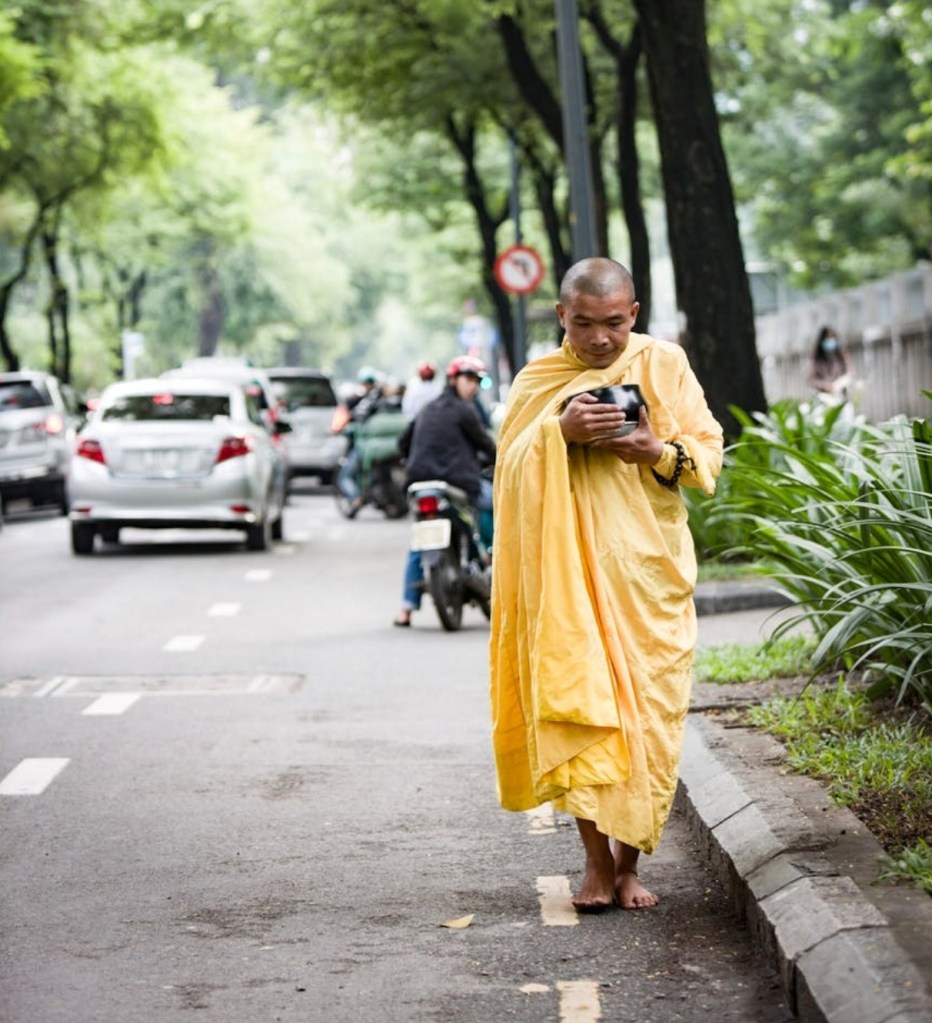
There was once a great sage, a wise wandering monk, who as he travelled from village to village would, by his simple presence and through conversations with the people he met, show people the Tao. Through his life and words he demonstrated to those he met how they could also follow The Way

One day as the sun was setting, the monk entered the outskirts of a rather large village, more a town of substance than a village. As was his custom, the great sage followed the road that would lead him to the centre of the town.

Before long, he was approached by a man dressed in the garb of a government official. The official bowed deeply to the monk and told him that his master, the town mayor, requested the visitor’s presence and would be greatly honoured if he would join his master for the evening meal at the mayor’s home.

Returning the bow, the sage readily accepted the summons and proceeded to follow the official to the mayor’s house where he was greeted by the mayor himself and his family.

After a sumptuous dinner the monk sat with the mayor sharing tea and conversing in a friendly manner. The sage posed a question to the mayor.

‘Tell me sir. Suppose a man came to your door and told you that there was a tiger running loose in the middle of the town. Would you believe him?’

The mayor, although surprised by ths unusual question, did not hesitate.

‘No,’ he said quietly. ‘If one man told me, I would not believe it.’

‘Well,’ the sage smiled as he began to speak again. ‘Suppose two men came to the door and told you there was a tiger loose in the middle of the town. Would you believe them?’

This time the mayor hesitated, giving himself time to think about his response.

‘No,’ he began after a moment’s thought. ‘If two men told me, I would not believe .’

‘Very well then,’ the sage said. ‘Let us suppose that three men came to your door and told you there was a tiger loose in the middle of the town. Would you believe them?’

This time the mayor had to really stop and think. After a couple of minutes he answered the sage.

‘Yes,’ he admitted. ‘If three men told me there was a tiger in the middle of the town, then I would beleive them.’

‘Very interesting,’ the wise one replied gently. ‘Interesting because there still is no tiger in the middle of the town.’

Truth Is

Namaste friends. Welcome.

Fake news, propaganda, misinformation, disinformation, manipulative advertising. Such a tsunami of information threatening to swamp us, all of it claiming to be ‘facts’ or ‘true’, mean we are almost continually asking, what is true? Who can tell anymore? When we look at the world we live in today it is a rare thing when we are able to tell if something or someone is real or true.

For me there is only one solution: stop looking to the world as the source of any kind of answers to anything, and particularly when it comes to trying to sort out what is true and what isn’t.

The only place you will find the answer to the question ‘what is the truth of …?’ and know for certain that it is true, is within yourself. You are the only one who can decide what is true and what isn’t, what is right and what is wrong.

It doesn’t mean you ignore all information from external sources; it only means that you appeal to that inner part of yourself, the intellect and beyond, to help you reach your own truth sifted from all that information.

It’s a well trod path in philosophical circles: the debate around absolute versus relative truth(s) has been going on for a few thousand years already, and it’s unlikely to reach any kind of resolution anytime soon.

I’m not saying that a thing might be true for you and not true for someone else. At the same time I’m not saying that there is some kind of externally arbitrated single, absolute truth that is always true regardless of whether one agrees or not.

What I am saying is that, if you come to the truth of a thing, situation, person, whatever, from within yourself and it is accompanied by that inner ‘I just know this is right’ feeling one gets sometime, then putting it simply, it is truth. Period; fullstop; that’s all there is to it. End of story.

If someone tells me there is a tiger in the centre of town, how can I really know if there actually is a tiger in the centre of town? And if three (or three hundred) people tell me there is a tiger in the centre of town? Well even then, how can I really know for sure if there is a tiger? There might be, or there might not be.

Okay then, how do I find out? Putting it like that the answer seems obvious doesn’t it? I go and look for myself.

But you know even then, do my eyes deceive me? Do I know what a tiger looks like? You see, even if my physical eyes see what I’ve been led to believe is a tiger, I still need to use my intellect, or even my intuition, to assess its real identity, to figure out the truth for myself. I mean, for my Self.

Afterword:

The tiger example is from a Chinese fable from the Taoist tradition. I’ll put my slightly elaborated version in my next post, and once it’s there you can find it here.

Food & Drink of the Gods

Namaste and Welcome friends

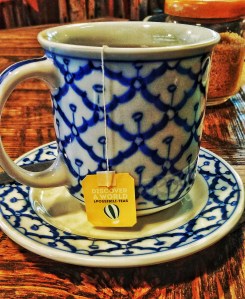
An idea that’s kept its hold on me for a while now concerns Black Tea and Dry Toast. It’s a part of my almost daily diet, and I’ve wanted to write about it. Anyway, here’s the note I first jotted down when the idea first came:

Black Tea and Dry Toast – In Reality is what we might call the food and drink of the Gods, of liberation, especially when I remember to offer it to Brahman and it becomes Prasada: simple, appetising, comforting, nourishing.
         What else?

Yes, sounds kind of weird, writing about such an apparently mundane subject. But, really, I  can say it definitely is for me the food and drink of the Gods. And as such, it moves beyond the little r reality of worldly food, of mundane considerations. It takes on the big R of Transcendental Reality.

Simple, plain food and drink. Pared down from all the extras and the padding, all the ‘additives’ we generally ply ourselves with. In a real sense this simplicity is in keeping with the uncluttered, minimal life I am called to live.

And everyone knows how comforting tea and toast is, how welcome it is pretty much any time of the day or night. Nourishing, too, for the spirit and the mind.

Actually for the body also. At least it is for me as a person who used to eat way too many biscuits, and take jam (thickly) on my toast. As I say, simple with no additives.

All of this equals in my view liberation. Freedom. Freedom at least sometimes, from harmful substances; Liberation from complicated preparations and the stresses and tedium that comes with it.

Black Tea and Dry Toast represents a snack (sometimes even a small meal) that at least for a short time can liberate us from stresses and tiredness. At other times, it gives us that freedom that comes from indulging in simple pleasures.

The food and drink of the Gods is not a complicated, invented and dressed up thing. It is plain, simple, comforting, nourishing.

And yummy.

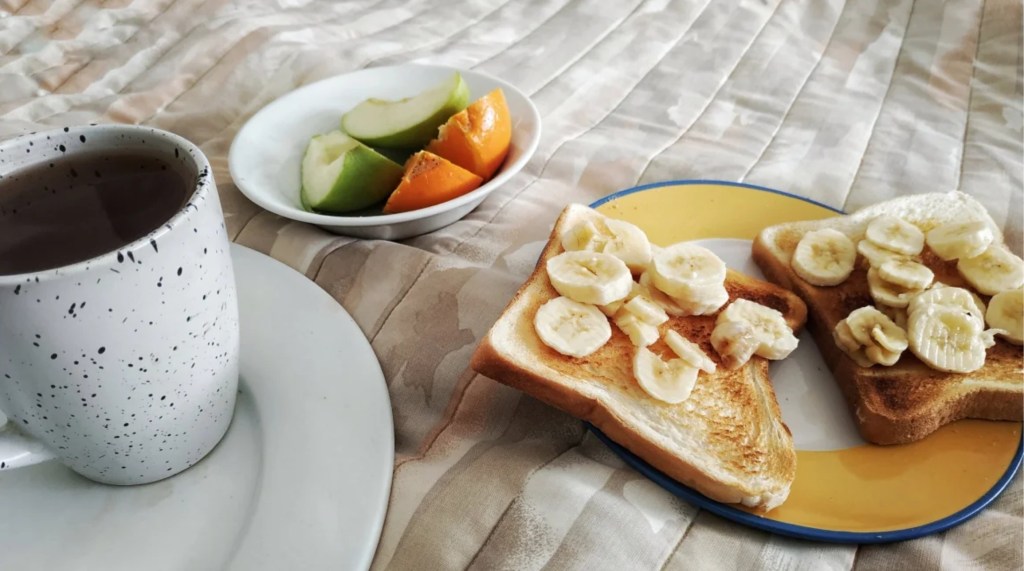
PS Okay. That photo stuck in the middle up there isn’t quite in keeping with the topic is it? Alright, I admit it: Sometimes I really indulge myself and add banana to my toast. And yes, sometimes apples and oranges too

An Idea From a Not So Random Corner of the Universe

Namaste and Greetings friends

Remember in my last post I mentioned that I like to ‘Let the noble thoughts come to me from all corners of the universe’? Well I’ve been exploring, investigating, studying, in one of those corners for a few years now.

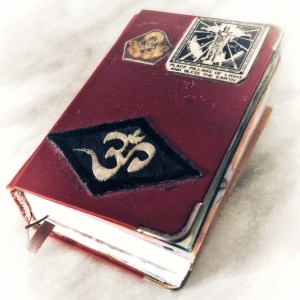
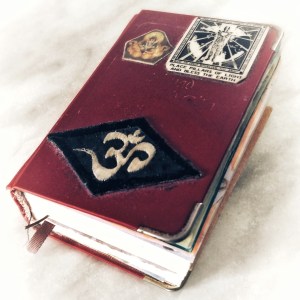
In 2016, in India, I gifted myself a small copy of the Bhagavad Gita. It’s a little red book, my Gita; no commentaries, just a plain, simple, and easy to understand translation of the 5000-year-old text known as the ‘Song of God’

Of course there are many sources of divine wisdom. No. That’s not right. Start again. Everything is a source of divine wisdom, of the word of God, universal knowledge, Truth, the Dharma. We can call it what we like.

But every living thing – human and non-human – every experience we have, and the entirety of the material and non-matieral creation, is divine wisdom in action.

Speaking for myself, I don’t always remember or realise (as in believe, trust, know) this never-ending, inexhaustible supply of wisdom. So I have to make use of some physical forms that help me narrow my focus, to centre my attention. It happens that the Bhagavad Gita is for me, one of those physical forms.

So today I want to talk about a verse from the Gita that really leapt out at me when I opened the book at random yesterday.
That verse comes from a chapter titled Self Knowledge and Enlightenment. It’s where Krishna – representing our Higher Self, Divine Wisdom; the real us, the real me – is telling Arjuna – the ego self, or little self, the us that thinks ‘this is me’, ‘puny, small, little me, just a sack of bones’ – all the various attributes and qualities of the Higher Self, the real us.

In other words, our Higher Self is helping our lower self to realise what we really are, trying to get us to see that there is a lot more to us than meets the (physical) eye.

Anyway, to the verse:

Of the strong, I am strength devoid of desire and passion, and I am love that is virtuous.

Bhagavad Gita Ch 7 verse 11

My sense is that the entire Bhagavad Gita is designed to help rid us of our attachments to the dualities of the world. Of course material life is obviously a state of dualities: we like good things, don’t like bad things; sometimes we’re happy, sometimes full of sorrow; we might at one time have many material possessions, then at another have nothing. You know where I’m going here; after all you dwell in the same world as I do!

Naturally none of us want bad things to happen, so we try to develop ways to be strong, to gather strength so we can face the bad stuff when it (inevitably) happens. And there’s nothing wrong with being strong, nothing amiss about having strength, but here Krishna (Higher Self) says that we don’t need to desire to get strength: we already are strength. Remember: Krishna is our Higher Self, so if Krishna is strength then that means we all are.

The desire and passion he talks about is really our attachment to outcomes, to expectations, to labelling things good or bad, or this or that, or wanting to feel this emotion but not that one. In other words, we are strength without any of these attachments;

So, when those inevitable ‘bad things’ happen, we already have the ability to flow with them, to cope with them, without judgements, without fear. Equally, when the inevitable ‘good things’ happen, we can rejoice, but we are strength, so there’s no need to hang onto them, wishing them to keep on happening, or being fearful of them changing.

You know there is an expression I used to loathe: It’s all good. It’s one of those non-commital, bland platitudes that really doesn’t mean anything. Well I don’t hate it quite as much as I used to but I still have trouble with it. Maybe we can take it a bit further?

Perhaps we could say instead: It all is. No good or bad; no joy or sorrow; no dualities of any kind. Sounds like heaven doesn’t it?

Well, while we’re in physical bodies here on Earth (and who can say what kind of bodies if any we’ll get to inhabit in the future), then the most that can ever happen is a glimpse – or maybe a few glimpses – of isness. Moments when we actually stop labelling, stop seeing dualities, and really and truly can know, it all is. For real.

And the love bit? Well, here we have Krishna (our Higher Self) saying he is love. He means us. He’s actually telling us that we are love. And virtuous love at that. Mind you, is there any other kind?

Peace

Seeking Justice: Commitments

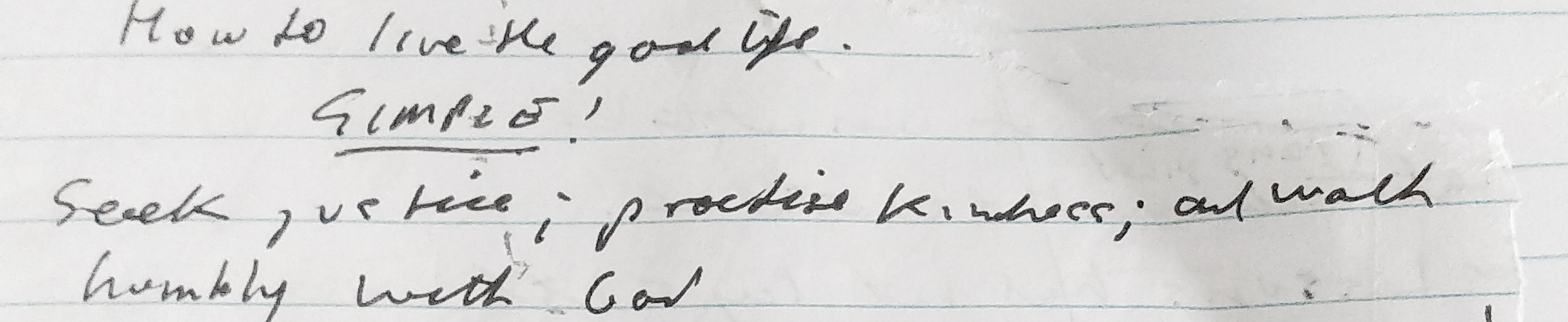
This morning I was just sitting, or at least trying to just sit. You know, being quiet, relaxing the mind. All that kind of thing. And of course, an idea sprung into that not so cooperative mind, so I grabbed my notebook. Just as I went to put this latest brainwave on paper I noticed a very extraordinary note I must have made I don’t know when:

I’ve just looked it up: It’s a slight paraphrase of a verse from the Old Testament, from the prophet Micah. Where I read it, I can’t say (the note is at least several weeks old). But to quote another little note from some unknown source, I always like to:

Let the noble thoughts come to me from all corners of the universe.

unknown

I’m just like everyone else, always wanting the easy solutions and you can tell that can’t you? ‘How to live the good life? Simple!’. I mean really; hardly humble in my approach in that note was I? Well, let’s talk about what Micah says, not my own lack of humility.

Seek justice; practise kindness; and walk humbly with [your] God.

There are numerous versions online of this verse (Micah, 6:8), so I will leave it to you to check those out for yourself. I’ve added the word your because all those versions do say ‘your God’. But even in this paraphrase it’s easy to see there is nothing at all simple about any of these injunctions.

I discovered that this verse is often invoked in times of grave injustice, or crisis. I think it goes without saying that we would be hard pressed to think of a time that was not a time of grave injustice or crisis. Certainly, we are living in one of those times of injustice and crisis.

There’s no need to or purpose served by getting into how ‘grave’ injustice is now compared to some other time; there’s no need or point to weighing up the relative severity of one crisis versus another. Injustice is injustice; a crisis is a crisis.

In other words, the present is always the time to heed the injunctions of this verse.

So, what do we do if we are to seek justice? Running the risk of sounding flippant, I would say that there are as many answers to this question as there are people to answer it. Now, you would think this would make the task impossible; too many cooks and all that. But actually it’s perfect. Why? Because it means that whoever you are, whatever your situation, you can actively seek justice.

Or, I am sorry: I should say I, me. Not you. I can actively seek justice. But, you say, you are a hermit; you live in a cave (not literally but I know what you mean); you hardly ever even talk to people in ‘real life’. Yes, all true. And I would say that the action I take is by no means at the level I know I want it to be. I’m doing nowhere enough.

Does that mean I’m leaving the cave? Going out into the world, onto the streets to join other brave souls seeking justice? Believe me, I ask myself such questions constantly. But to speak truth to you now, I will say that I know absolutely, in my heart, that my role is something different.

If anything, I need to go deeper into the cave; I need to go deeper into the inner world of my own Self. I know that in this way I will join with so many others in what I’ve come to call the Invisible Community of people all over the world living lives of contemplation and prayer. Or, speaking for me personally, trying to live a life of contemplation and prayer.

By so doing I am at least in a tiny way supporting those millions of others out there on the streets, in the aid groups, running campaigns, writing letters, helping the victims of injustice, in all kinds of miraculous, brave, and innovative ways.

So that’s my commitment to you. To deepen my prayer; to intensify my contemplation; to more fully realise my union with all living beings; and to really join with the invisible community in its efforts.

And, you ask, this blog? What’s it about then? Well, notes, musings, thoughts and reflections all aimed at reminding me of my responsibilities. And hopefully along the way, solidifying my union with you and the rest of creation, just a bit.

Peace and love

PS I haven’t forgotten ‘practise kindness’ or ‘walk humbly with your God’. Maybe another time.

What’s ‘Ordinary’ Got to do With It?

Perhaps shameful is too strong a word, but that’s kind of how it feels. You see, I’ve been thinking of giving up on the book I’m reading at the moment. And you are thinking, this is a big deal? If you don’t like it, put it aside and try something else.

Yes, excellent advice, thank you. And usually that’s what I would do. In fact now I think about it there was a time when I would force myself to complete a book, even if I wasn’t enjoying it or was bored with it. But I learned a long time ago that this is a waste of time, waste of mind, waste of energy, and unfair to me.

Yet, on this occasion, I started to have some thoughts that took it a bit deeper. It’s true to say that I’m a bit bored with this book; it’s as if I’m not overly interested in the story the author is telling, and in the way she’s telling it. As well I had this feeling that the book was ‘ordinary’: meaning that it was a kind of day to day telling of a segment of a life with its mundane and routine elements included along with the ‘good bits’.

And it was that feeling of being not so interested that got me thinking. The author’s vocation, thinking, activities, and the subject of the book itself, is exactly in line with areas I am very interested in reading about, not only for entertainment but for my learning, for my own spiritual journey and way of life.

The way she’s telling it? Now, this one got to me even more. The book was put together after the author’s death and is made up of extracts from the author’s journals and from the many letters she wrote to family and friends during the period of her life the book covers.

That’s what I do isn’t it? Keep a journal? Write letters? These and the many many blog posts (which in a way are a lot like letters, and even journal entries do you think?) I’ve written over many years, and the journal I’ve been keeping for most of my life, are the core of at least the personal writing I have done over my lifetime. By rejecting this book I started to feel that I was rejecting my own, for want of a better word, genres.

Or, worse than that, I’m rejecting the invitation to share a life. And illogically I’m rejecting the life story and insights of a person whose own experience I actually value for my own quest and from whom I could learn a great deal.

And what about the feeling of boredom and that the book was too ‘ordinary’ and mundane? Well, to borrow a well-worn phrase, this really does take the cake. I mean if you were to look at much of my past writings and look at my photography blogs from times past, you would see that one of my main statements of belief was:

There are no ordinary moments, nor are there any ordinary people.

And I still believe this. Indeed, spiritual practice and study has only deepened my instincts that all there is is the moment; all there is is all the beings of the world experiencing that ongoing presence, that never-ending moment. There can be nothing in the least ordinary about that.

I’ve saved the best – or is it the worst? – for last: what the book is about. It tells the story of a three year period in the life of a person just out of university who looking for a deeper meaning to life and to finding a true course for her life, travels from her home to Japan and enters a Zen monastery to become a monk.

Her journals and letters give the reader an intimate and in-depth account of her experiences: what she learned; insights into the language, culture, and history of Japan and Zen itself; the people she met and knew, her own feelings and reactions to what was a huge shift in her life.

After three years the author left the monastery to travel slowly back to see family at home. Sadly she was killed in a bus crash along the way.

Pretty much everything that has to do with living a life. And here’s me rejecting it because it was ‘ordinary’ and some details were ‘boring’.

So, I’m going to stay with this book. It’s taught me a lot already, and I think there is more there for me. Perhaps, I can better put into practice by own so strongly held idea that there are no ordinary moments or ordinary people.

Peace and love from me to you

Talking About Sloth

Sloth.  Its a good word isn’t it?  One of those words you don’t have to look up to know what it means.  But if you do look it up, you’ll find it has a couple of meanings.  One is: laziness, indolence and a reluctance to make an effort.

Is sloth a bad thing?  Certainly it gets a bad rap; I mean: lazy? Indolent? Not willing to make an effort? Hardly words of praise. On the other hand we value words like busy, productive, efficient, hard working, and the rest. In our culture, these are definitely words of praise.

Go out and play; Read a book; Go to school; Study hard; Get a good job (whatever that means); How much do you make a year? When are up for promotion?  Demands and questions like these are constants in all our lives, and they force us into defining ourselves by what we do whether we are a little kid at school, a teenager trying to sort life out, an adult trying to make our way in the world the best we can.

Yes, it’s true I think: it always seems to be a about defining ourselves by what we do, rather than who we are, or what we stand for.  Always we have to be doing something.  Ever heard that little identity joke, I’m a human being, not a human doing?  I wonder how many of us would feel lost if we shifted from that need to be a doer to another definition of our identity, one less reliant on what we do or on what we’ve done in the past, or will do in the future.

Well, I hear you saying, this is all fine and dandy, but my boss won’t pay me unless I show up, there are meals to cook for the kids, I’m running late for an appointment, the lawn needs mowing and after that I have to write a report for my night class.

All very true, valid, and all of them things that do need to be done. We all have a life don’t we? But perhaps sometimes, even just now and again, and perhaps just for a few minutes at a time, you can stop. Just stop. Thats all. Stop and just do nothing, or rather stop and simply be.

Have I mentioned a favourite little two word sentence I really really like? Just sit. Don’t read, don’t think, don’t try to stop thinking, don’t ‘meditate’. All that’s required is to do nothing. Do No Thing. Actually, I think I’ve found a new favourite.

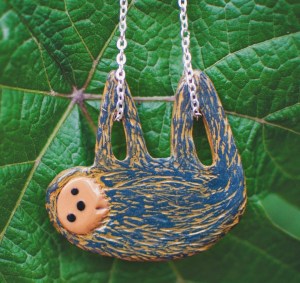
On, remember I said there are a couple of definitions of sloth?  Well the other one tells us that a sloth is a slow moving nocturnal mammal noted for hanging upside down from tree branches.  It lives entirely in the trees and is capable of only very slow movement on the ground.

So, I guess you should be very careful when you tell someone else I’m a sloth. Mind you, putting aside the hanging upside down bit, and the nocturnal requirement, it’s probably not such a bad way of being to emulate, do you think?

Have a lazy (slothful) day.