Are the Hermit Pilgrims Settling Down?

Stand by for an announcement:

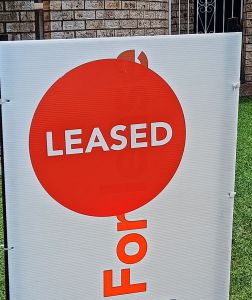
The Hermit Pilgrims have signed a lease for the rent of a house for a year. Not only have we signed a lease, we have, in fact as of yesterday, been residing in the said leased property.

Admittedly, it’s exactly the sort of small house which we had in fact been longing for for some time. It’s got many characteristics that make it for us, the ideal site for a hermitage: we even have a temple room!

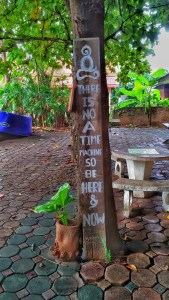
The lease is for a year initially, and if,  after a year we feel led to move on, then that’s what we shall do. But for now, – as in the present moment that is the ongoing now, the only ‘time’ one can talk about with any meaning or truth – we will be in the one hermitage, the one safehaven by the side of the road, for a longer period than in any other in the last many years.

Anyway, enough of this reflection on the nature of time; the big question on your mind I am sure is why? Well, the first little thing to say is that the pilgrimage goes on; it’s just that we’ve taken a tiny step towards the vow of stability many monks and nuns make as a matter of course. We’ve not really ever taken such a vow before. Mind you, a lease is a binding document, I wonder does that count as a vow?

Of course, as I’ve just laboriously spelled out, there is only the moment, the ongoing now; so who can possibly say about ‘a year’?

Next, let me tell you a bit about a book I’ve read a few times and like very much. It will possibly give you a flavour of the why.

Cave in the Snow  by Vicki Mackenzie tells the story of Tenzin Palmo, a Tibetan Buddhist nun and her, I think, twelve years in solitu6de in a nearly all year round snowed in cave in the high Himalayas.

Tenzin Palmo had been living in a rather remote monastery, but felt after some years the need for greater isolation and solitude. The monastery was too busy and noisy, with all sorts of comings and goings.

There was too much entanglement with the greater society in the form of the surrounding villages and town. She wanted some quiet basically

In an interview sometime after she came down from the mountains she was asked if going to a cave was perhaps an escape, an ‘evasion of the trials of an “ordinary” life. Her reply spoke to me when I first read it about 20 (or more?) years ago, and still does today:
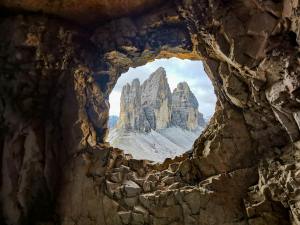
‘Not at all. To my mind worldly life is an escape,’ she replied to the interviewer. ‘When you have a problem you can turn on the television, phone a friend, go out for a coffee. In a cave, however, you have no one to turn to but yourself.

You have no choice, she says, when problems come up, and when things get tough, but to go through with them, till you come out the other side.

‘In a cave,’ she said, ‘ you face your own nature in the raw, you have to find a way of working with it and dealing with it.’

My situation is not quite like hers. For example there is more than one person in our community of hermits. Still her story does resonate and speaks very much to my own situation.

Not only is there never going to be any absolute certainty in our material world, there is never – ever – going to be anything in the realm of worldly things that will deliver us perfect peace and lasting happiness.

Easy to repeat, this tidbit of transcendental knowledge, but quite another to get oneself unattached to the idea that, well, maybe, just maybe, the next big thing, might just be different, might indeed be the forever answer to peace and happiness.

And it’s that attachment that I’m tackling at the moment.You see I long for a more pure hermit life, a life with a lot less engagement – and entanglement with – worldly things and situations.

I once wrote in a poem called Seeking Noble Truths or Just Passing Through that ‘longing is loss’, and it is, if one is attached or clings to the object of desire, or an outcome being exactly as is envisaged. Not being attached means less disappointment, less suffering, if as often happens, life does its thing and the outcome is not what we hoped it would be.

But here’s the thing: the bonds of my attachments in this area are loosening a little, bit by bit. And the paradox isn’t lost on me either: As I ‘settle’ into our (supposedly) longer term hermitage, I will, I hope, come closer to a point of stillness, of equanimity, and of silence. I will inch even closer to that state where attachments will all just fall away.
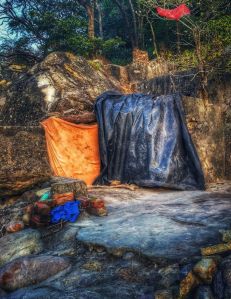
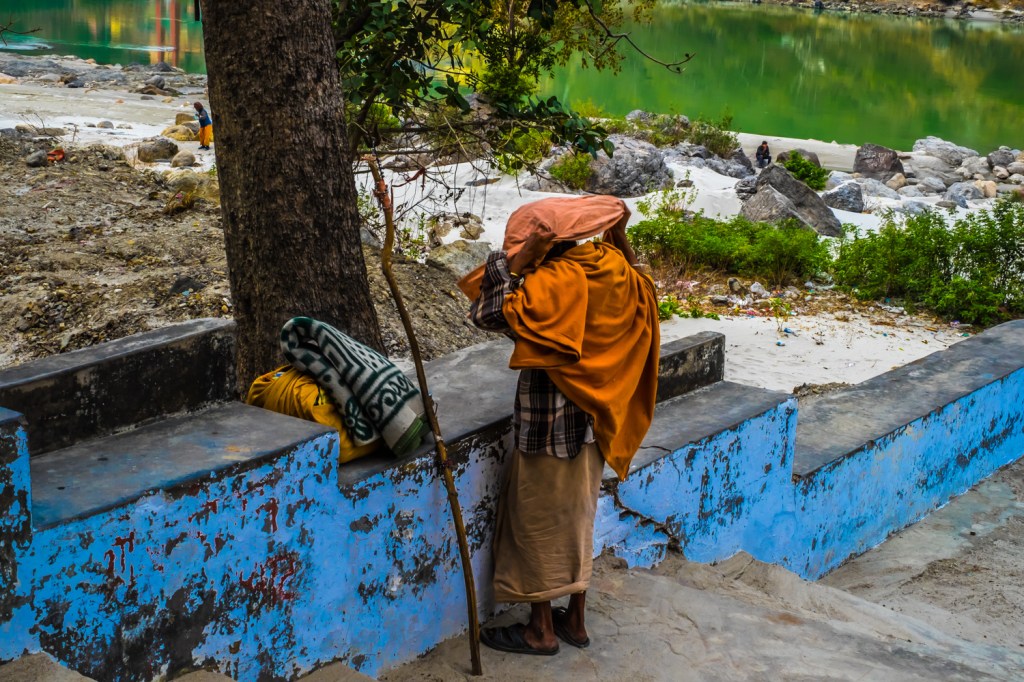
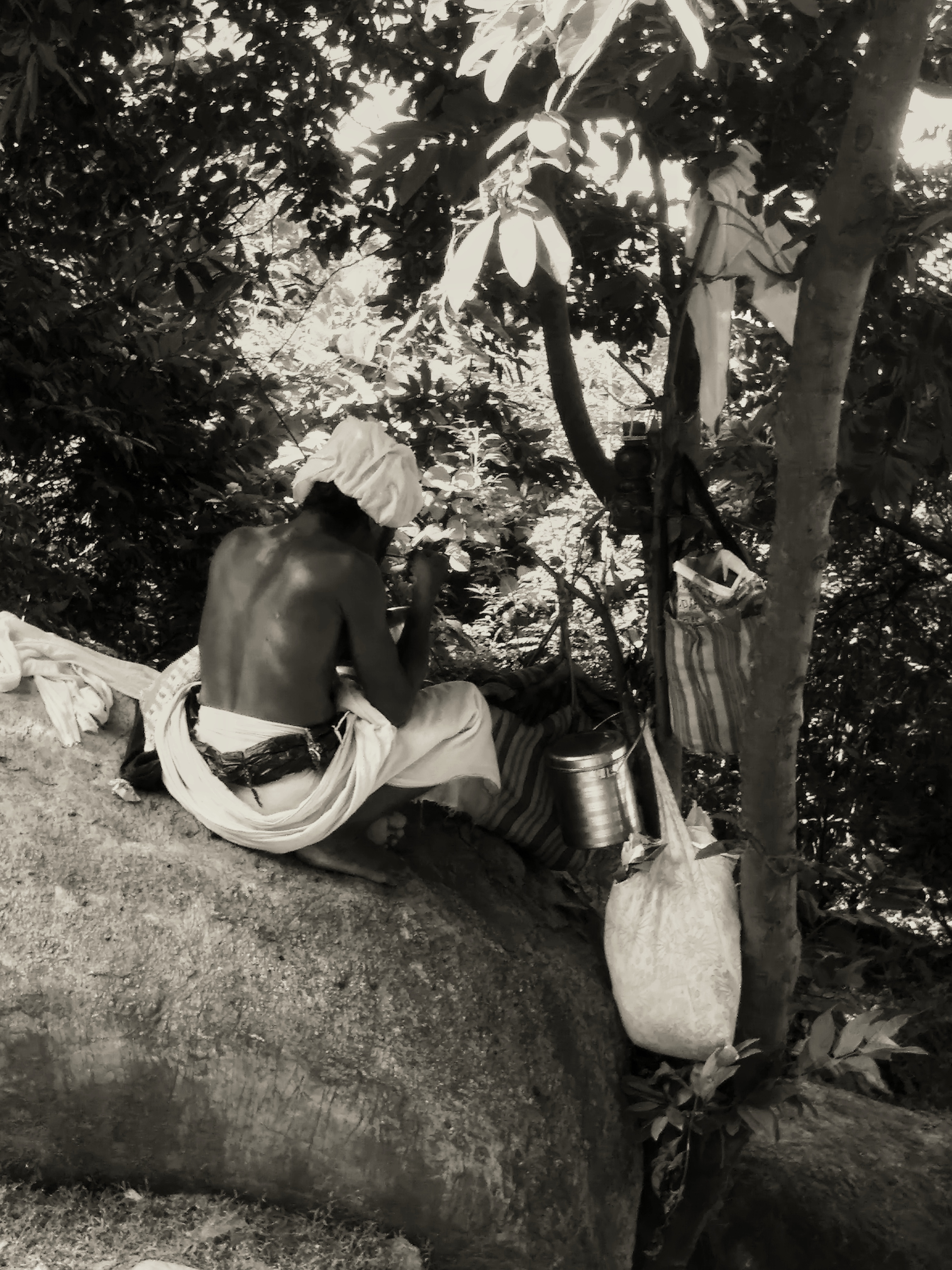
Hermit caves take many and varied forms

Now, in no particular order of priority or preference, I’ll try to convey in words some of the reasons we’re opting to continue our pilgrimage in a more long-term hermitage.

To be honest, as hard as I try to be present, to just live here and now, I just like the vast majority of my fellow human beings, find it extremely difficult to not be pulled ahead to the future (or dragged back to the past for that matter).

No sooner have we moved into a new hermitage, then we feel we have to start shopping around for the next one. Of course, one can’t ignore the practicalities, but for me it goes way beyond being a sensible planner.

And to be perfectly frank (I wonder who this ‘frank’ is anyway?) we’ve tired of it. The looking, the thinking, the talking and emailing to prospective places. It’s actually quite boring, to be stuck on that kind of merry-go-round .

It’s also extremely distracting. It gets in the way of our efforts to calm and quieten our minds for extended and deeper meditation and contemplation. Not to mention the ongoing (seems endless sometimes) discussions of the pros and cons of decisions to be made, as well as the frustrating second guessing I’m famous for.
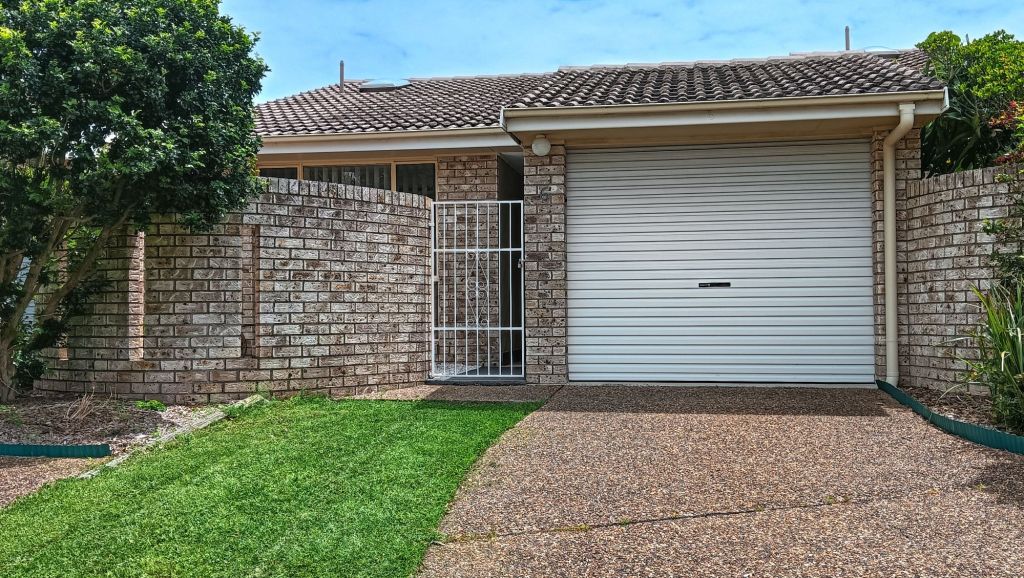
Portrait of a Hermitage

We all know from experience that there is never going to be any absolute certainty in anything we arrange in our lives. Of course I know very well that even a signed, sealed and delivered legally binding contract or lease, means very little if the parties involved put their minds to it or change plans somewhere along the way.

All things in the material world are relative, and always subject to change; there’s nothing we can do to bend that natural law. Given such a context we still feel okay about entering with a right-hearted intention, this agreement for a year (at least) in the new hermitage.

As the residents of the hermitage are prone to say really quite often: ‘Your will, not mine, be done’.

Then, when life does its thing, I’ll be more able to roll with it. Why? Because I will (hopefully) have better learned that it’s not my will that’s to be done, but the Divine Will, the natural law and order of the Universe.

So, If it be your will…
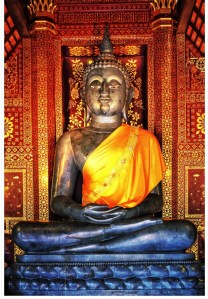
Buddhism’s Three Refuges: They’re for Everyone

Greetings and Welcome

To become a Buddhist, , there are a number of things a person must commit to. One of these consists of a kind of three in one resolution that’s welcomed by any aspirant. In fact, some say that in order to be a Buddhist, one has to repeat The Triratna or The Three Jewels. Three refuges is the other name used.

I take refuge in the Buddha
I take refuge in the Dharma
I take refuge in the Sangha

The exact words used may vary, but The Three Jewels is common throughout the Buddhist world. And of course there will be many meanings ascribed to ‘take refuge’, but the one I like is the one that any of us might use in, say, a heavy downfall of rain. What do we usually do in when the rain starts falling? We look for shelter, we take refuge.

I don’t mean to suggest that becoming a Buddhist automatically means that one is seeking a safe dry cosy place out of the storm. Though, now I’ve said that, it does make sense. I know myself that (though I am not a Buddhist) sometimes the only way forward, the only means to seek the truth, and to find peace, is to take refuge somewhere or in someone or something.

Not being a Buddhist as I said, I’m not qualified to speak about Buddhism in any real detail. What I have in mind is I would like to borrow the Three Refuges and reflect on how we could all use what me might call a ‘secular’ interpretation as a way of putting into words our own commitment to finding a refuge, a safe haven as we tackle what is for all of us born into a physical body, a life of trials, tribulations, ups and downs, storms and lulls, happy times and sad times, and all the rest of the package that’s called living a life.

Let’s take a look at each of the Three Jewels (also known as the Three Treasures which I like a lot), and think about how we can apply it to our own life, to our own seeking of refuge.

I take refuge in the Buddha.

For a Buddhist, the Buddha is the Guru, the teacher, the one who holds the Truth and shows the way. Many people would say right now, well that counts me out. I don’t follow a religion. I don’t have a teacher or guru. I’m just another regular person trying to make my way through life.

While it may be true that you don’t have a teacher or priest or guru, or anyone else in the role of guide, there is one person who is always there with and for you, one person who is always thinking about you, who is making decisions for you on which way to go, what to do and all the rest: you.


Yes, you. Your Self. When it comes down to it, who knows you better than you do? Take refuge in you, in the Self. Need to make a hard choice? Look within. Feeling tired, or ill or fed up? Look within you for the answers to what can be done. Follow your intuition. You, plus intuition, plus you taking refuge in you, equals teacher, guide. You are your own guru.

I take refuge in the Dharma.

Once again there’s a myriad of ways to define dharma. And once again, I have a favourite: Dharma (often represented by a wheel) according to the religious tradition we know as Hinduism is cosmic or universal law that underpins right behaviour. It is the eternal and inherent nature of reality. In other words it is Truth.

We can all say, regardless of our beliefs say, I take refuge in the truth and in what is right. It’s a commitment to always acting in the best interests of everyone – including ourselves (maybe even especially ourselves). It is taking shelter or refuge in what is right. Living such a life in our messed up world is never going to be easy, so it is best to think in terms of doing the best one can. But having it as your ongoing guide will ease the path.

I take refuge in the Sangha.

A Sangha is an association or a community. Often used to describe monastic communities of monks or nuns, it may also include lay people. If we step outside of the religious framework, then a Sangha is a community that shares common bonds, beliefs, commitments, interests, and so on. Family, tribe, workmates, recreational and sports clubs. You name it: all sorts of groups might be sanghas or communities.

Of course, and perhaps very obviously, not all groups will be communities, And equally we may not think we are a part of any community; we may think of ourselves as being quite outside any group. However there are no rules that say a community has to have a set number of members. Besides, being in community is a condition and has nothing to do with group size or composition.

So, if you find yourself in a community of one – or two or however many – take refuge there. Make a commitment there. As with any other real community, this one begins with you and your truth.

The Buddha, the Dharma, and the Sangha. The Teacher, the Truth, and the Community. Making commitments to the Three Refuges can create a solid foundation as we continue our journey through the world and our lives. The refuges – the safe havens we can call them – we have sought and found will support us through good and bad times.

Actually, I just thought: if we are genuinely able to take true refuge in these three treasures then we will conditioning our Selves to be more present, more in the here and now of who we are, what we’re doing, and what’s happening to us.

Peace to you from me

With These Words … Part 5

Well my friends, here we are at Part 5 of my little mini series. As it happens, it’s also the final part.

It’s been a fascinating trip, this little journey we’ve shared. Reflecting on the set of vows usually made by nuns and monks, and how my way of living fits with these undertakings. How well do I live these vows? As a philosophy directing my life, do they work?

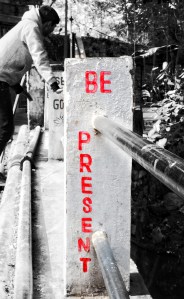
Let’s get on shall we? The final vow is Presence, which is the new interpretation on the vow of Stability taken when a person makes a life commitment to a particular place and or community. Obviously for one who moves as much as I do, presence is probably the appropriate concept to take its place

Presence

Just now I was thinking that by far the easiest of the topics we’re looking at here, is Presence. Yet at the same time it is the absolute hardest to write about – even worse to think about.

Why easy? Well, because in a very real sense there is nothing we can say about presence or the present. Of course I could spend the rest of my life reading books, studying, and even writing about it myself; how to live here and now. But all the time the obvious would be staring me in the face.

How can we be anything but present? How is it possible to be anywhere but here? And surely it’s always now? A thing called ‘the past’ doesn’t exist except in memory, and the future? Well, where is it? it doesn’t exist. Never will. I know it’s kind of common to hear things like ‘We’re living in the future’, but are we really? Of course not. So, end of story right there I guess.

Except that it’s not, is it? This is where it gets to be the hardest topic to talk about. It seems none of us – us humans anyway – can get our heads around the aforesaid obvious fact of life: we are always here, and it is always now. Why is this so?

Well, speaking only for myself, you understand, I think about it too much. I seem to have convinced myself (courtesy of my ever-busy mind) that there is a way to learn to be present; a how to guide, that I can read or invent myself that will finally allow me to put myself into the present, in the here and now.

And all Along I am sitting here, thinking and writing about how to be present or put another way, how to sit in this spot right now.Do you see where this is going? If I’m not here and it isn’t now, then where am I? And when is it?

Sorry, but I have no answers. Even asking the questions is denying the obvious: I am here, it is now. The trouble is my mind isn’t at all ever content and happy with the present, regardless of how I might feel about it.

In that case, can I say that in my way of living I am committed to presence? To be in the present? Well, speaking for me personally – whoever that me is – perhaps the better question might be: Do I fully realise that I can only be here and now because that’s all there is?

To that I would have to say definitely not. My mind is continually on the run between the deep past and the unreal and unknowable future and all points in between. And my mind loves repeat journeys too!

So how do I intend to come to that place of the realisation of presence? Well, before we go on, you can’t actually intend to be present. Intention is about …

Enough!!!! Enough mind stuff. Please

The truth is, there is nothing for me to DO. I am here; it is now. That’s all there is.

Except one more thing to do: I just have to wake up

With These Words … Part 3

Well here we are at Part 3 of the mini series in which we’re looking at whether or not my ‘philosophy of life’ might be well described by living according to the vows used by many contemporary nuns and monks and that are a reinterpretation or evolution of the traditional vows.

As I’ve mentioned, I haven’t taken these vows, but when I learned about them (Simplicity, Purity, Accountability, and for some, Presence.) I thought I’d look at how well I live up to the life they dictate.

So, welcome. And if you haven’t yet seen the first two parts, please feel free to have a look at them. Part 1 is a sort of introduction and overview, while in Part 2 I asked whether or not I actually do manage to live a simple life.

Well, do I? To be honest, it was a nice challenge looking at that question; I mean it got me thinking about the reality of my life (like the rest of these posts will as well, obviously) and I would say yes, I think I do live a quite simple life, especially in the context of the dominant culture we live in, and society’s demands and pressures.

Anyway, time to get on with the next part of our little exploration.

Purity

Purity. It’s one of those words isn’t it? I mean, probably all of us think we know what it means, but it’s not a word we use on a day-to-basis is it? It’s a word we’d use rarely if ever to describe our behaviour or approach to life. So, what words do I use then?

Which reminds me: purity gets a bit of a bad rap I think. It’s often used to describe standards imposed by some group, or authority, a moral code thrust upon us, from someone or something outside of ourselves.

For me, Purity is really about my approach to life, to myself and other living beings, to the world, to everything actually.

So, with your permission I will try for the rest of this post to use words and ideas that actually mean something to me in my daily life and in the way I try to live.

Clean is a word that comes to mind. It sounds strange (and redundent) to say, but I try to live a clean life. Obviously I bathe regularly, wear clean cloths and try to not spill stuff too often. But, you might not know this, but clumsy is my middle name, so, yes spilling stuff is a curse I live with! (I just had an orange and I think more juice ended up on my shirt than in my mouth).

Now, actually that’s a good start: I mean to say, we’re all fallible beings; we all have things we can’t quite get right all the time: Pu … oops … the P word is a concept to hold on to in an aspirational way; it’s not a hard and fast set of rules or standards where I’m in a I am either, or I am not, scenario. Actually it’s very much to do with the present, but that literally is a story for another day isn’t it?

How else do I try to live clean? Thinking. I try, consciously, and all the time, to practise clean or we can say right thinking. Right thoughts about others, whether I like what they do or not. Right attitudes to others too are important aspirations for me as well.

To be truthful I’m not yet at the stage where I could say that having right attitudes to others has freed me to neither like or dislike people, situations, or whatever. Perhaps now and again, but certainly not all the time. Like everyone else I’m attached to my likes and dislikes, to my prejudices, and biases. As I said, it’s aspirational, something to work on continually.

Part of that right attitude, as well as living clean, is having a compassionate approach to other living beings. Meaning that with my actions, thoughts or behaviour I try to do as little harm as possible. Actually, it’s more than that: compassion for me must be an active thing, not just a vague feeling or intention informing my life.

In other words, I have designed my life (diet, clothing, transport, thinking, and the rest) so that I cause no more death or harm to any living thing than I can possibly manage.

Of course I realise we human beings are simply one more species among the many millions sharing this planet. Nothing any of us do in any sphere of life (our actions in the world, our thinking) can be accomplished without an impact on our fellow dwellers on Earth. All we can do is what we can do.

Aspiration. That’s what it boils down to for me. Did I mention it (you know … P) isn’t a you are or you are not kind of thing? Like the other P word, presence, it has at its main characteristic an ongoingness; there is no time when we can say I am P … .

Nor will there ever be a time when we can say in a way that that’s actually truth, ‘I give up, It’s too hard. I’m never going to be P… .

Which leads very nicely to Accountability, the next of our words to live by. But let’s get into that next time! Thank you sharing this time with me.

Peace and love

With These Words … Part 1

Namaste friends

At this early stage in the life of this blog, no doubt most visitors will really have only seen the Welcome and the About Me pages. The question I’m asking myself is what else can I tell you about myself and my life that you can’t see for yourself on those pages?

Well, I realized that I’d already, on another blog, shared some insights in a kind of miniseries of posts that speak about my philosophy of life as I call it. So, join me as I get into Part 1.

By now you probably worked out that I call myself a hermit. Perhaps I have explained what I mean by this somewhere else on this blog, but in a nutshell being a hermit to me means living a quiet life, without a lot of physical contact with other people; I visit shops and other businesses and so on, as little as I can manage. For example, I haven’t been to a cafe, restaurant, or other social gatherings for several years.

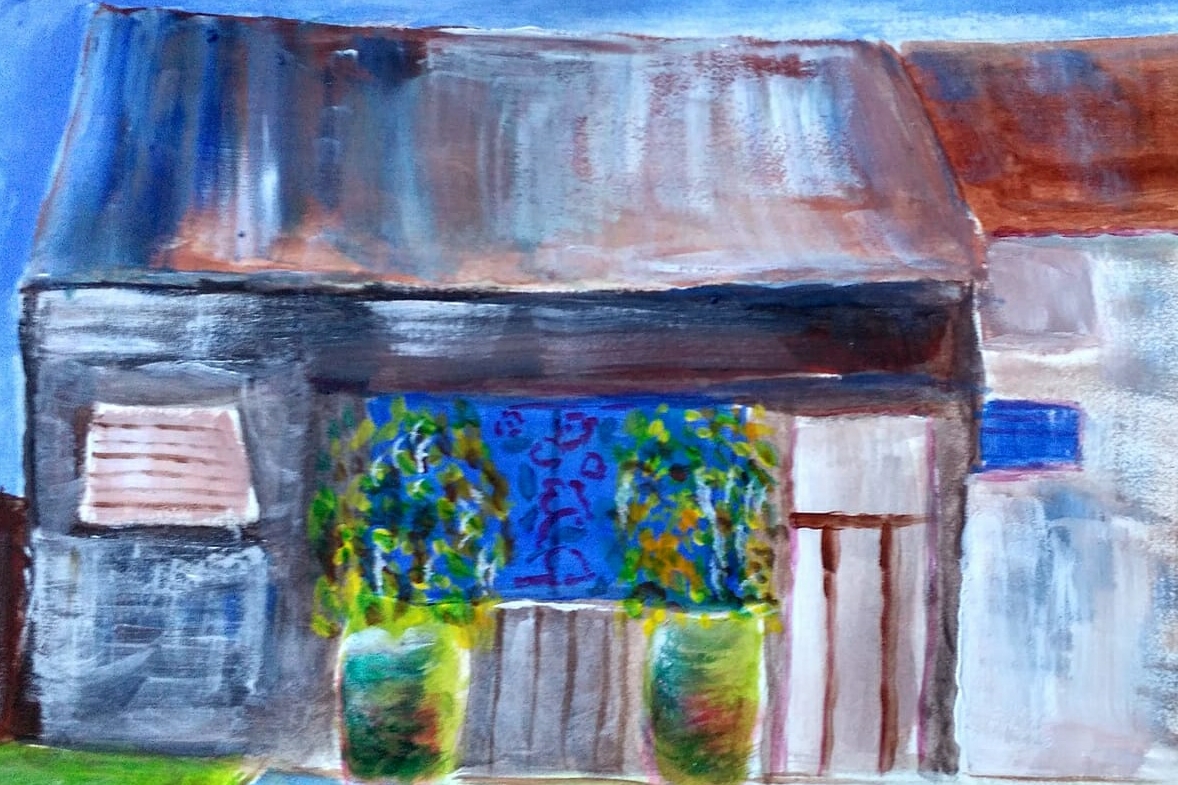
Just one of many hermitages we’ve found by the side of the road. This one way out in the desert country in Australia’s Outback
(Painting by my partner hermit Pauline)

Of course there are more esoteric or spiritual aspects to being a hermit, and I’m very much aware that it’s this spiritual quest side of things that is really the driver for the way I live. A quiet life lived apart from the world, means less distractions, more quiet, more time. All are great helps.

Obviously given the times we are living in right now, I’m far from the only one living a hermit life. At least I am blessed in that my way of living is by choice. At the same time, I’m actually quite excited to watch as the people of the world begin to slowly get back out there and into life again.

As no doubt I’m mentioned somewhere else, I was born with a nomadic nature and soul. So in a real sense it’s a pilgrimage I’ve always been on anyway. So perhaps I might be back out there on the road sometime soon

In the truest sense of the word, I aspire to live like a monk: A monk in (sort of), but not of the world you might say. However monks (and nuns) usually live in community, in a monastery or convent. It’s true to say that life with my partner has me living in community, though it’s only the two of us. Then there are the few places in cyberspace where I encounter and interact with others.

It’s well known that many monks and nuns take a number of vows when they join their communities. Traditionally these vows are: Poverty, Chastity, and Obedience. In many cases the additional vow of Stability is added, binding the monk or nun to a particular community in a particular place.

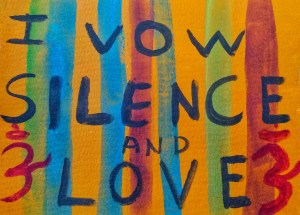
I’ve never been comfortable with those vows, so I’ve never made them. But as I have progressed in my spiritual journey, I have taken vows of various kinds. Mind you my vow to silence is having a hard time of it with me! As for the love part of this vow: well, that’s also a work in progress.

Anyway, recently I’ve been reading about communities (some religious, some secular, but always made up of people sharing the same or similar values, goals, and missions) who, also uncomfortable with those traditional vows, have reinterpreted them in a way that sits more comfortably.

That renewed version is : Simplicity, Purity, and Accountability. In the place of the vow to stability, there is now what you could say is a more precise concept: Presence.

While I can’t say I have formally taken these vows, it has occurred to me that, put together, they do make up a fairly precise set of principles that could be said to apply already as I attempt to live authentically as hermit, monk, and pilgrim!

Please join me in Part 2 (appearing soon) when I will put this theory to the test.

Peace and love from me to you