Buddhism’s Three Refuges: They’re for Everyone

Greetings and Welcome
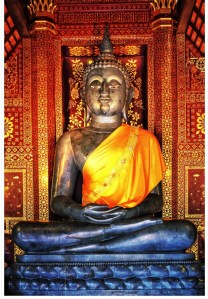
To become a Buddhist, , there are a number of things a person must commit to. One of these consists of a kind of three in one resolution that’s welcomed by any aspirant. In fact, some say that in order to be a Buddhist, one has to repeat The Triratna or The Three Jewels. Three refuges is the other name used.

I take refuge in the Buddha
I take refuge in the Dharma
I take refuge in the Sangha

The exact words used may vary, but The Three Jewels is common throughout the Buddhist world. And of course there will be many meanings ascribed to ‘take refuge’, but the one I like is the one that any of us might use in, say, a heavy downfall of rain. What do we usually do in when the rain starts falling? We look for shelter, we take refuge.
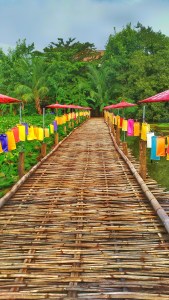
I don’t mean to suggest that becoming a Buddhist automatically means that one is seeking a safe dry cosy place out of the storm. Though, now I’ve said that, it does make sense. I know myself that (though I am not a Buddhist) sometimes the only way forward, the only means to seek the truth, and to find peace, is to take refuge somewhere or in someone or something.

Not being a Buddhist as I said, I’m not qualified to speak about Buddhism in any real detail. What I have in mind is I would like to borrow the Three Refuges and reflect on how we could all use what me might call a ‘secular’ interpretation as a way of putting into words our own commitment to finding a refuge, a safe haven as we tackle what is for all of us born into a physical body, a life of trials, tribulations, ups and downs, storms and lulls, happy times and sad times, and all the rest of the package that’s called living a life.

Let’s take a look at each of the Three Jewels (also known as the Three Treasures which I like a lot), and think about how we can apply it to our own life, to our own seeking of refuge.

I take refuge in the Buddha.
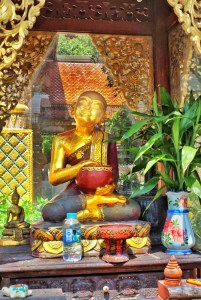
For a Buddhist, the Buddha is the Guru, the teacher, the one who holds the Truth and shows the way. Many people would say right now, well that counts me out. I don’t follow a religion. I don’t have a teacher or guru. I’m just another regular person trying to make my way through life.

While it may be true that you don’t have a teacher or priest or guru, or anyone else in the role of guide, there is one person who is always there with and for you, one person who is always thinking about you, who is making decisions for you on which way to go, what to do and all the rest: you.


Yes, you. Your Self. When it comes down to it, who knows you better than you do? Take refuge in you, in the Self. Need to make a hard choice? Look within. Feeling tired, or ill or fed up? Look within you for the answers to what can be done. Follow your intuition. You, plus intuition, plus you taking refuge in you, equals teacher, guide. You are your own guru.

I take refuge in the Dharma.

Once again there’s a myriad of ways to define dharma. And once again, I have a favourite: Dharma (often represented by a wheel) according to the religious tradition we know as Hinduism is cosmic or universal law that underpins right behaviour. It is the eternal and inherent nature of reality. In other words it is Truth.
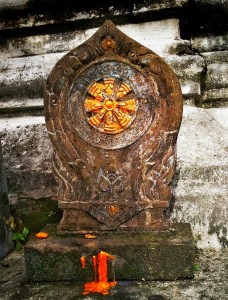
We can all say, regardless of our beliefs say, I take refuge in the truth and in what is right. It’s a commitment to always acting in the best interests of everyone – including ourselves (maybe even especially ourselves). It is taking shelter or refuge in what is right. Living such a life in our messed up world is never going to be easy, so it is best to think in terms of doing the best one can. But having it as your ongoing guide will ease the path.

I take refuge in the Sangha.

A Sangha is an association or a community. Often used to describe monastic communities of monks or nuns, it may also include lay people. If we step outside of the religious framework, then a Sangha is a community that shares common bonds, beliefs, commitments, interests, and so on. Family, tribe, workmates, recreational and sports clubs. You name it: all sorts of groups might be sanghas or communities.
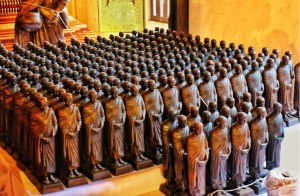
Of course, and perhaps very obviously, not all groups will be communities, And equally we may not think we are a part of any community; we may think of ourselves as being quite outside any group. However there are no rules that say a community has to have a set number of members. Besides, being in community is a condition and has nothing to do with group size or composition.

So, if you find yourself in a community of one – or two or however many – take refuge there. Make a commitment there. As with any other real community, this one begins with you and your truth.

The Buddha, the Dharma, and the Sangha. The Teacher, the Truth, and the Community. Making commitments to the Three Refuges can create a solid foundation as we continue our journey through the world and our lives. The refuges – the safe havens we can call them – we have sought and found will support us through good and bad times.

Actually, I just thought: if we are genuinely able to take true refuge in these three treasures then we will conditioning our Selves to be more present, more in the here and now of who we are, what we’re doing, and what’s happening to us.

Peace to you from me
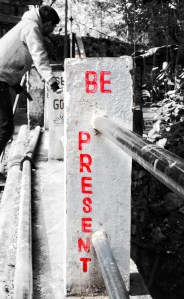
Be Present in the Presence

Greetings and welcome

I write quite a lot about presence. I think a lot about presence, about being present, and all kinds of related ‘being in the moment’ kinds of musings.

Of course words like presence and present can have multiple meanings can’t they? About this time last year I read s book called Consider the Ravens. It’s about the history as well as the recent revival of interest in hermits and ways of living the hermit life.

If you are even remotely interested in living more in solitude, or living a simpler and more sustainable, life, or being more spiritually focused, then I can’t recommend this book highly enough.

There’s a paragraph from that book I’d like to share with you. It both describes some characteristics found in hermits and their way of life, as well as introducing us to a lovely phrase concerning the concept of presence.

Are hermits escapist? Yes. Is running away a bad thing? Like most choices it’s value is determined by its purpose. There are men and women who are selfishly seeking a sanctuary untouched by human pain. But there are others who deliberately choose to be powerless [in the eyes of the world], to live simply, and to use no more than their fare share of the world’s resources. They elect to be unknown, hidden, forgotten. And the goal? To become transparent to the Divine, or as [one hermit] succinctly phrased it: ‘to be always present to the Presence’.

Paul & Karen Fredette Consider the Ravens


I like that phrase; it’s what I’m aiming at. Actually, no. That’s not right: you can’t aim at being present, you can’t have presence as a goal to be attained in the future. I think that’s called an oxymoron. Anyway, all you can do is be; be present in the presence.

And it doesn’t matter what you call it: Presence; Truth; Reality; God; the Universe; the Cosmic Reality. They’re only names for that unnameable essence that we’d all agree can be called the Love that is in reality everything.

It’s that essence beyond all names – and forms. It’s what we sense is behind, above, and within all that exists in the world.

And, like a lot of people, I want to withdraw from that world of materialism. From the greed, the corruption, the cruelty and wilful ignorance, the … well, you get the point. My sense, and it is echoed in the quoted paragraph, is that presence is to be found in silence, and in solitude.

Of course it’s not necessary to be a hermit to be present – or in order to be present in the Presence. After all, few people believe they can go find a cave somewhere and withdraw totally from the world. (maybe it’s the belief that’s the problem?)

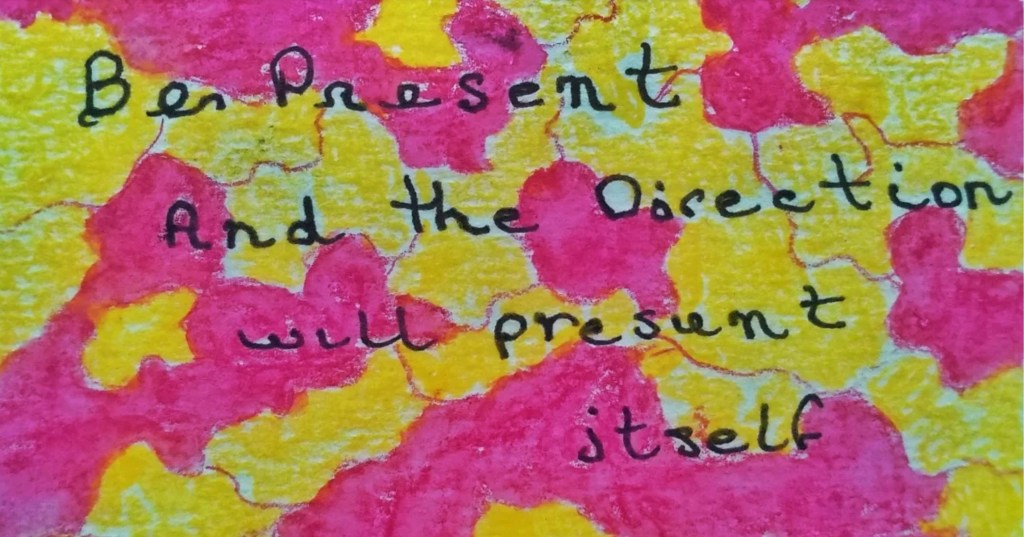
So, what to do? A wise person once gave a brilliant answer to that question and I have it on a card to remind me:

Yes. Be present and the direction will present itself.

Peace to you.

An Idea From a Not So Random Corner of the Universe

Namaste and Greetings friends

Remember in my last post I mentioned that I like to ‘Let the noble thoughts come to me from all corners of the universe’? Well I’ve been exploring, investigating, studying, in one of those corners for a few years now.

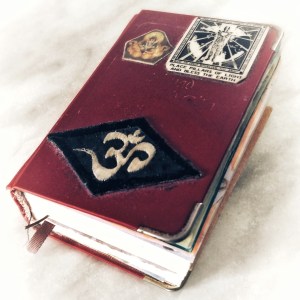
In 2016, in India, I gifted myself a small copy of the Bhagavad Gita. It’s a little red book, my Gita; no commentaries, just a plain, simple, and easy to understand translation of the 5000-year-old text known as the ‘Song of God’

Of course there are many sources of divine wisdom. No. That’s not right. Start again. Everything is a source of divine wisdom, of the word of God, universal knowledge, Truth, the Dharma. We can call it what we like.

But every living thing – human and non-human – every experience we have, and the entirety of the material and non-matieral creation, is divine wisdom in action.

Speaking for myself, I don’t always remember or realise (as in believe, trust, know) this never-ending, inexhaustible supply of wisdom. So I have to make use of some physical forms that help me narrow my focus, to centre my attention. It happens that the Bhagavad Gita is for me, one of those physical forms.

So today I want to talk about a verse from the Gita that really leapt out at me when I opened the book at random yesterday.
That verse comes from a chapter titled Self Knowledge and Enlightenment. It’s where Krishna – representing our Higher Self, Divine Wisdom; the real us, the real me – is telling Arjuna – the ego self, or little self, the us that thinks ‘this is me’, ‘puny, small, little me, just a sack of bones’ – all the various attributes and qualities of the Higher Self, the real us.

In other words, our Higher Self is helping our lower self to realise what we really are, trying to get us to see that there is a lot more to us than meets the (physical) eye.

Anyway, to the verse:

Of the strong, I am strength devoid of desire and passion, and I am love that is virtuous.

Bhagavad Gita Ch 7 verse 11

My sense is that the entire Bhagavad Gita is designed to help rid us of our attachments to the dualities of the world. Of course material life is obviously a state of dualities: we like good things, don’t like bad things; sometimes we’re happy, sometimes full of sorrow; we might at one time have many material possessions, then at another have nothing. You know where I’m going here; after all you dwell in the same world as I do!

Naturally none of us want bad things to happen, so we try to develop ways to be strong, to gather strength so we can face the bad stuff when it (inevitably) happens. And there’s nothing wrong with being strong, nothing amiss about having strength, but here Krishna (Higher Self) says that we don’t need to desire to get strength: we already are strength. Remember: Krishna is our Higher Self, so if Krishna is strength then that means we all are.

The desire and passion he talks about is really our attachment to outcomes, to expectations, to labelling things good or bad, or this or that, or wanting to feel this emotion but not that one. In other words, we are strength without any of these attachments;

So, when those inevitable ‘bad things’ happen, we already have the ability to flow with them, to cope with them, without judgements, without fear. Equally, when the inevitable ‘good things’ happen, we can rejoice, but we are strength, so there’s no need to hang onto them, wishing them to keep on happening, or being fearful of them changing.

You know there is an expression I used to loathe: It’s all good. It’s one of those non-commital, bland platitudes that really doesn’t mean anything. Well I don’t hate it quite as much as I used to but I still have trouble with it. Maybe we can take it a bit further?

Perhaps we could say instead: It all is. No good or bad; no joy or sorrow; no dualities of any kind. Sounds like heaven doesn’t it?

Well, while we’re in physical bodies here on Earth (and who can say what kind of bodies if any we’ll get to inhabit in the future), then the most that can ever happen is a glimpse – or maybe a few glimpses – of isness. Moments when we actually stop labelling, stop seeing dualities, and really and truly can know, it all is. For real.

And the love bit? Well, here we have Krishna (our Higher Self) saying he is love. He means us. He’s actually telling us that we are love. And virtuous love at that. Mind you, is there any other kind?

Peace

Talking About Sloth

Sloth.  Its a good word isn’t it?  One of those words you don’t have to look up to know what it means.  But if you do look it up, you’ll find it has a couple of meanings.  One is: laziness, indolence and a reluctance to make an effort.

Is sloth a bad thing?  Certainly it gets a bad rap; I mean: lazy? Indolent? Not willing to make an effort? Hardly words of praise. On the other hand we value words like busy, productive, efficient, hard working, and the rest. In our culture, these are definitely words of praise.

Go out and play; Read a book; Go to school; Study hard; Get a good job (whatever that means); How much do you make a year? When are up for promotion?  Demands and questions like these are constants in all our lives, and they force us into defining ourselves by what we do whether we are a little kid at school, a teenager trying to sort life out, an adult trying to make our way in the world the best we can.

Yes, it’s true I think: it always seems to be a about defining ourselves by what we do, rather than who we are, or what we stand for.  Always we have to be doing something.  Ever heard that little identity joke, I’m a human being, not a human doing?  I wonder how many of us would feel lost if we shifted from that need to be a doer to another definition of our identity, one less reliant on what we do or on what we’ve done in the past, or will do in the future.

Well, I hear you saying, this is all fine and dandy, but my boss won’t pay me unless I show up, there are meals to cook for the kids, I’m running late for an appointment, the lawn needs mowing and after that I have to write a report for my night class.

All very true, valid, and all of them things that do need to be done. We all have a life don’t we? But perhaps sometimes, even just now and again, and perhaps just for a few minutes at a time, you can stop. Just stop. Thats all. Stop and just do nothing, or rather stop and simply be.

Have I mentioned a favourite little two word sentence I really really like? Just sit. Don’t read, don’t think, don’t try to stop thinking, don’t ‘meditate’. All that’s required is to do nothing. Do No Thing. Actually, I think I’ve found a new favourite.

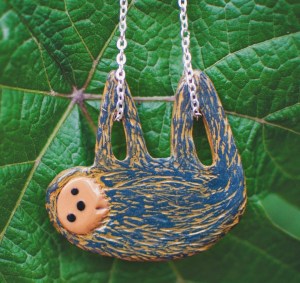
On, remember I said there are a couple of definitions of sloth?  Well the other one tells us that a sloth is a slow moving nocturnal mammal noted for hanging upside down from tree branches.  It lives entirely in the trees and is capable of only very slow movement on the ground.

So, I guess you should be very careful when you tell someone else I’m a sloth. Mind you, putting aside the hanging upside down bit, and the nocturnal requirement, it’s probably not such a bad way of being to emulate, do you think?

Have a lazy (slothful) day.

If You … Don’t Quote Me on This

I don’t remember when I began to collect quotes; my early teens I think. I just started making notes of quotes from books (even comics in those far off younger days), from conversations overheard. Then, later, little excerpts from my own journals and other writings. Even slogans I’d see on t-shirts, billboards, or wherever else.

This doesn’t mean much in these times when you can type in a search for quotes on any subject, for any occasion, by anyone from anytime in history. But, in those long ago days before computers were in our hands, and certainly way before the Internet, it wasn’t so quick and easy.

Anyway, fast forward to the not so distant past;One day I sat at the computer (it was time for computers, thank goodness) and typed up all those collected quotes stored in several boxes full of little notebooks and scraps of paper.

The result is literally hundreds of pages of tightly typed quotes. That typing (which in fact took me quite a bit longer than one day) was in fact the genesis of a book that has remains half written.

You see, as I typed I saw so many great words of wisdom that I just felt compelled to put some of them together somehow.
Ive now been at that task for many years: its a very intense process and takes so much energy and, as any writer will tell you, the muse has to strike before we can begin to strike those keyboard keys! Anyway, it will be done when its done; the very notion of presence, of there only being now, is actually one of the major themes of the book.

As I got to the end of that original typing marathon, I noticed that, strangely, the very last quote in that long long list reads simply, If you. Clearly a sentence begun but left hanging. Who will ever know what would or should or could have come next but never did?

Some time ago I remembered that interesting little fact and began to think about its meaning. I decided to do a quick search of the whole collection for that little conditional phrase. The search revealed that there are 139 instances of quotes beginning with If you.

So, dear readers, dear friends and fellow travellers on life’s journey, here are eight (why pick ten like everyone else would?) of those quotes, chosen at random (is there such a thing really?).

No commentary or comment from me; you, the reader, can do very nicely without my two cents worth thrown in. Well, okay, just 2c worth: I have often learned a lot from quotes such as these (not necessarily these ones specifically); sometimes a simple quote has led to a healing or an important insight.

So, I thought it would be a great idea to share some of my collection with you and perhaps there will be one or more that strikes a chord:

If You …

  • If you allow things to surprise you, you will get easily confused.
  • If you always do your best, you will be free from regrets.
  • If you follow the eternal law, you can understand how to love.
  • When you forget who you are, and dont know what to do, act the way you would if you did.
  • If you really dont care, you arent going to know if something is wrong. The thought would never occur to you. The act of pronouncing something wrong is a form of caring.
  • If you have to ask questions all the time, you never get time to just know.
  • If you are not interested in this, then why are you here?
  • If you deny even one person entrance to your life, youll never get their uniqueness from anyone else.

So, there you are. Theres much to reflect on here. Lots to focus on, to meditate on, and contemplate.

Love and blessings from me to you

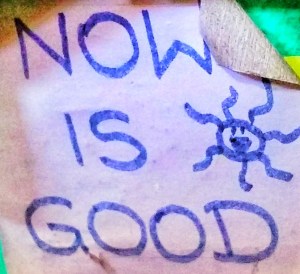
I love the Now. When else is there?

Over the last couple of months or so I’ve been listening on and off to Jimmy Buffett. I like Jimmy’s music, and I have liked it since the late 70s. I have at least ten of his albums in my Music folder.

Anyway, Buffett is an American singer/songwriter who writes and performs songs about beach life, sailing, exotic island paradises, and generally having a good time down at the beach and in and on the water. And preferably in sunny climes.

Yes. Hedonistic is a word that’s been used to describe his music and the lifestyle he celebrates. Still, I’ve liked him for a very long while now, and every so often I get into his ‘escapism’ and his relaxing in paradise kind of vibe.

Something a little rebellious about many of his lyrics too. But let’s not go there just now. What I want to talk about is a song I’ve listened to dozens of times, but when I played it again the other night, it got my attention in a way it never had before.

What I mean to say, is that for the first time I actually heard the song (Love the Now. Have a listen, you won’t regret it). I got what the writer was saying with his lyrics.

All the pain and the pleasure
I love the now
All the blood and the treasure

Then another verse:

The whole damn world’s gone crazy
The moon is jumping over the cow
How can you help
But not love the now?

It’s like he’s saying, ‘yeah, it’s all good.’ Not just hedonistic but nihilistic as well. Like he doesn’t care, doesn’t want to know. But, then, in another verse he writes:

It’s the only place I’ve ever been
It’s the only way that I know how

It is. That’s what he’s saying. ‘All the ranting and Ravin’ and ‘All the cussin’ and cravin’‘ are there for sure. Or, rather, they are all here. And now. But, dig a little deeper, read between the lines (so to speak).

Listen to this:

Don’t talk about your superstitions
Don’t talk about your cats meow
But don’t talk about tomorrow tonight
I Love The Now

You see? He doesn’t want to hear about your belief systems imposed on you by others. He doesn’t want to hear about your fears that have been manufactured by someone else to keep you in line. And he is not the slightest bit interested in your fancy material toys and other stuff (cat’s meow: a great expression coined in the 1920s meaning fancy, flashy, cool, awesome and other similar epiphets).

And don’t talk about some far off distant future (okay tomorrow night may sometimes seem awfully close to now, but you get the meaning).

The bottom line (literally and figuratively): he loves the now. And that’s because that’s all there is: the now.

So, on the face of it hedonistic, nihilistic even, as if he’s shrugging his shoulders in a ‘so what?’ kind of way. But he’s not doing that at all; he’s actually offering a solution to the overwhelming tidal wave of ‘things that are wrong with the world’, and about which many of us feel helpless and sometimes even hopeless.
The Now. It really is the only thing you’ve ever known, the only time and place you can ever hope to be. So why not love it? Why not just live it?

This is not resignation; it is not fatalism or a giving up (or in). In fact it is a courageous engagement with the total reality of life as it is right now.
Jimmy writes that:

Tomorrow’s right around the corner
I’ll get there somehow
But I’m stuck in [the] meantime

And, then, most importantly he says:

And I Love The Now

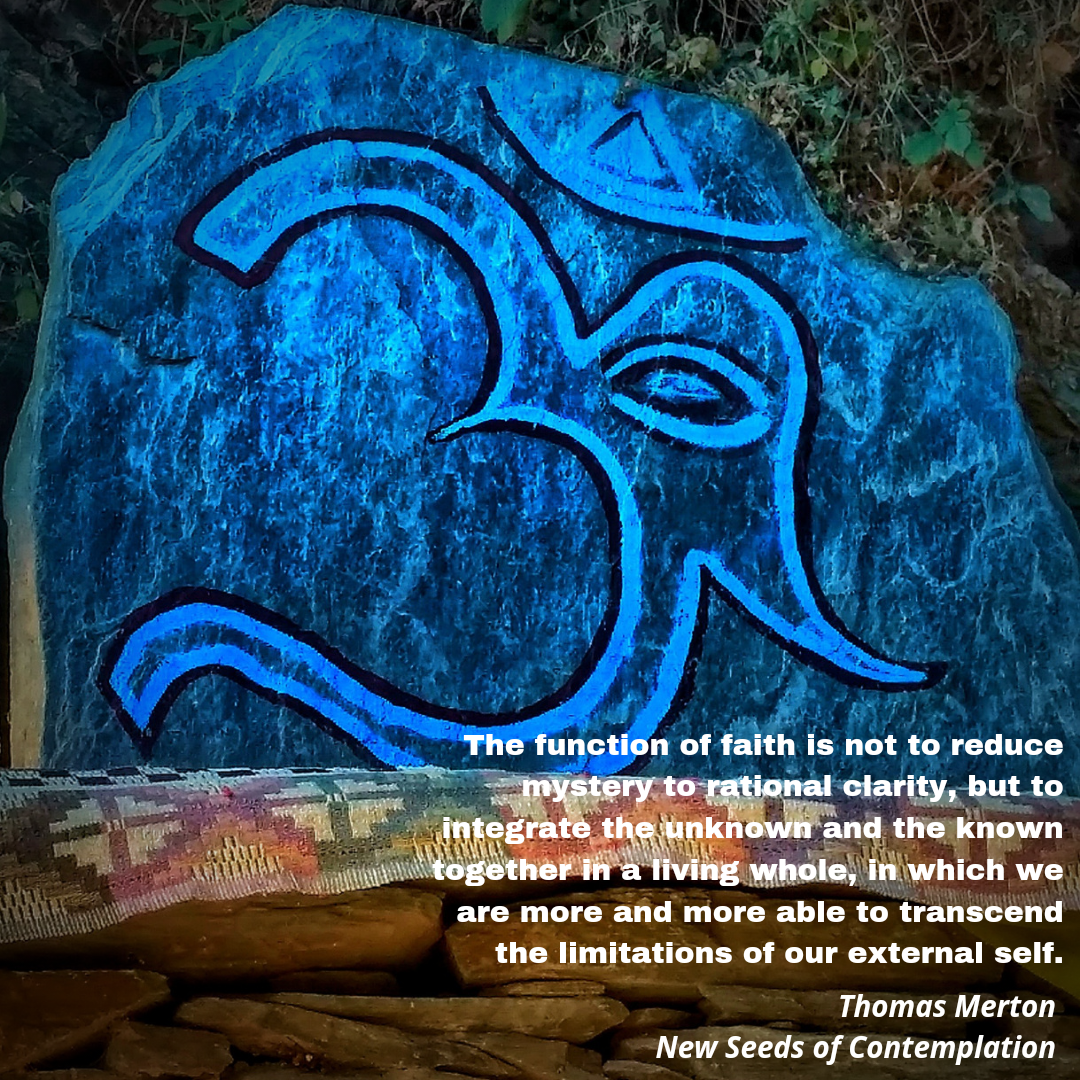
The Function of Faith

Lighting Candles, Learning Lessons

Not many people know this, but I’m a big fan of clichés. Not always, only when they serve a purpose, make a point, illustrate an idea, or have some other relevance or meaning. I remember an occasion when I witnessed a perfect illustration of a favourite cliché.

Once, many years ago I was sitting in a café in the Himalayas on a late monsoon afternoon when the clouds hung low and the lights were on so people could see. Suddenly, the lights went out.

A collective groan from the full café: people writing in journals, reading books and so on (no smartphones or laptops in those days), had to stop what they were doing. Although not an uncommon occurrence in those parts, lights going off was a bit of a pain for us spoiled tourists.

Anyway, one of the waiters fetched some candles, and began lighting one on each table. I think there were perhaps ten tables. I watched him as he moved slowly around the packed, but tiny café. As he lit the candle on the very last table, the electricity came back on.

Again the collective sighed, this time in relief, as light flooded the café. I heard one voice say something to the effect of: ‘he shouldnt have bothered, I mean the lights came on eventually’ .

‘Well, you know, if he hadn’t made the effort to make some light for us, maybe the power wouldn’t have come back so quickly’, I commented casually.

Another collective sigh and murmurs of, ‘Yes true’, and ‘far out’, ‘never thought of that’ and ‘so profound’. All this as response to some off the cuff, random remark by me.

And the cliché?

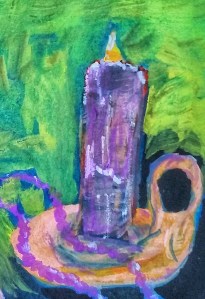
Its better to light a candle than to curse the darkness.

This cliché goes so well with something I like to say that has become a bit of cliché in itself (because I say it so often):

Just look at what you can do, not what you can’t do.

Of course, I didn’t invent this one, but still, to me it makes sense. For example, In the little scene described above, we couldn’t do anything to turn the electricity back on, but one of us (the waiter) could fetch and light some candles.

At Dictionary.com, it tells me that a cliché is:

a trite, stereotyped expression; … usually expressing a popular or common thought or idea, that has lost originality, ingenuity, and impact by long overuse.


Rubbish I say! Overuse? Why does using something a lot make it bad? Why should an idea or thought be robbed of its meaning or power, simply because its been around for a long time? There’s no need to overthink the topic; I’m not saying we should always use clichés. But at the same time, clichés have usually become clichés because they are true, or say something in a succinct and accessible way.

Anyway, this post isn’t about grammar, it’s about lighting candles and looking at and realising what you can do, and not cursing the darkness and being pulled down by thinking about what you can’t do.

Does it help? The lighting of candles? The realising of what you can do? Sometimes yes, sometimes no. Nothing, not even a cliché, is perfect.

Love and blessing from me to you.