

Towards the end of my last post I looked at where I was (or is it am?) on the Do your duty front. Do I actually do my duty? And if I do, then how well am I doing it?
My conclusion was that in some areas I am doing okay,, while in others I need to work harder to get them right. Now I’m thinking about it again, I would say that being here, in a physical body, suggests that I still have a way to go in all areas of life. I suggested in that last post that my aspiration to do my duty is a good motivator and incentive to keep on moving in the right direction.
In summary I can say I do my duty as best I am able, and, at the same time I aspire to do that duty in an even more complete and satisfactory manner.
Oh, one more conclusion – and I think it’s a really important point – is that nobody can tell you (and me) what your duty is; only you know your duty. And only you can get yourself doing it.
Which leads us nicely to our next injunction: Follow Dharma. Following Dharma will be a great help in allowing you to discover the knowledge of what your duty is and how to go about actually doing that duty. Of course there are quite a lot of other benefits to be had from following Dharma.
Follow Dharma
As I did with defining duty, I will talk here about my own definition of Dharma; and as with duty, I will be thinking about what it means to me. Once again, there are a number of ways to define Dharma, and I have my own ideas.
The easiest, most straightforward way to say what Dharma is is to say that what is right is Dharma, and what is not right (or wrong) is Adharma.
Here’s where we might ask ourselves, who gets to decide what’s right and what’s wrong? Remember in my last post I mentioned that I think I know the difference between right and wrong? Well, it’s the truth; it’s a Dharmic statement. And I suspect it applies in exactly the same way to you too.
Obviously I get it wrong – quite often actually. I’m simply a human being who is flawed, who gets tired, angry, forgetful, distracted, and even just plain lazy.
Which is another way of saying that, despite knowing right from wrong, I don’t always manage to act accordingly. So, what do I use as a guide, as a kind compass to steer me in the right direction? How do i in real life discern right from wrong? How do I know what path to follow?
When I was thinking about these questions, I thought, well, I just know: my intuition tells me how to behave, how to act. Clearly my intuition is not as foolproof as I would like, so thinking harder, I asked: is there a ‘code’ or something I follow that helps me keep on the Dharmic path?
Then it occured to me that, on a very much informal level, I try to follow Buddha’s Eightfold Path.
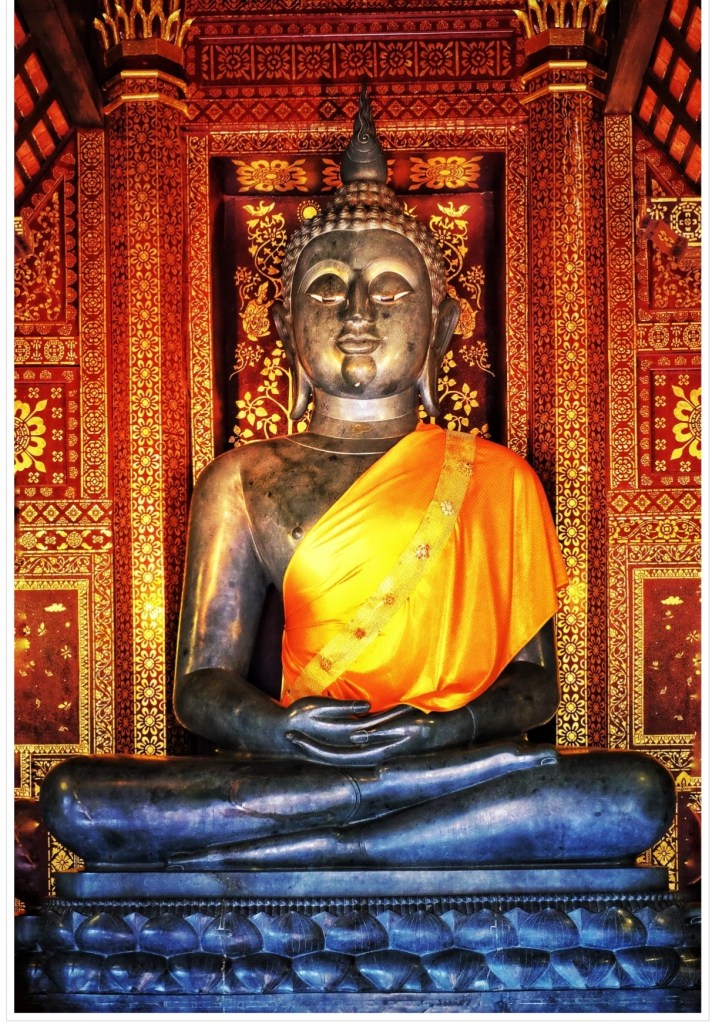
The Buddha taught this Eightfold Path as the means by which we might free ourselves from suffering.
The Path is not a set of commandments imposed by some outside authority. It’s not a set of rules or laws that we must obey for fear of punishment, either here in this life or in the next life.
What the Eightfold Path is is a series of pointers, a collection of concepts or ideas that can help us to navigate our lives directed by a moral compass that keeps us heading in the right direction.
The steps that make up the Eightfold Path are Right Understanding; Right Thought; Rght Speech; Right Action; Right Livelihood; Right Effort; Right Mindfulness; and Right Concentration.
A long time ago (and I’m sorry I no longer have the source) I read somewhere that one can summarise these eight steps with two short and direct sentences:
Be ethical in thought, word, and deed
Be a good, kind, and moral person.
You can probably guess what I’m going to say next: This is all way easier said than done. Well, exactly. For me it really comes down, once again, to aspiration, to trying.
In fact, one of the steps on the Eightfold Path addresses this point directly: Right Effort. Buddha recognised that it was never going to be an easy path to walk, so he reminds us that effort is as vital as any of the other steps. Perhaps, knowing how flawed I am, I would say it should be the number one step.
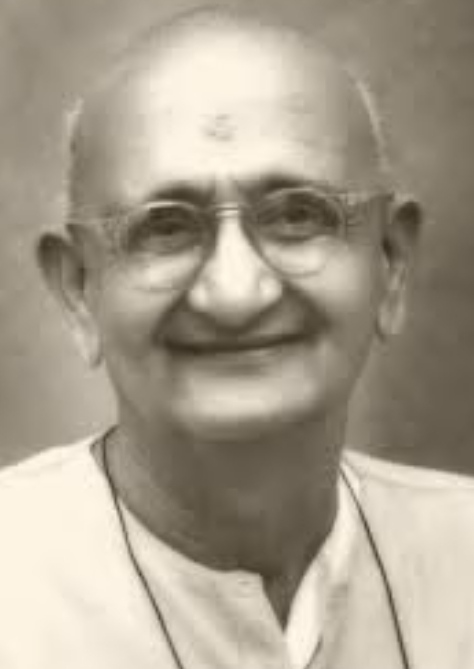
Essentially what The Buddha is saying here is what Swami Ramdas, another favourite teacher of mine, once said (I have to paraphrase a little here):
Once you step on the path, you have already reached the destination.
Again, it’s the effort, the trying, that is the point. For me it’s actually The Way itself.
And that’s where I’m at. Deeply flawed; deeply and seriously lacking in the right ‘thought, words, and deeds’. But I try; I’m making effort.
Live a Righteous Life
Well, at this stage, I have to wonder what else I can add. It seems to me that the aspiration to be ‘ethical in thought, word, and deed’ – not forgetting the effort to persue that aspiration – is already the grounds for living a righteous life. And at least I’ve made a start over many (or is it just one?) lifetimes.
Do good, be good, seek knowledge, celebrate all that is sacred, beautiful and is truth.
I think that’s about it, don’t you?
Peace









 Notes from the Hermit's Cave