DAYS OF AMSTERDAM CHANTING: A POEM FROM A CHANT SHARED

Reading the other day about the deeper meanings of the word Amen, a memory surfaced.

A memory from the summer of 1971. I was seventeen years old; young yes. I was hitchhiking around Europe, and as for this memory in particular, I was sitting day by day in the Dam Square in Amsterdam.

The memory of which we are speaking involves chanting. One day (or it could have been more), chanting, along with dozens, perhaps hundreds of hippies, freaks, travellers from all over the world, assorted tourists and locals.
Chanting Amen. Just like Sidney Poitier sings in Lilies of the Field. Minus all the verses; we chanted the chorus only. Amen. To help get the vibe, just go here.

Anyway, it was a nice memory, a memory of a day (and more) of music in a time of exploration, on the road and trying to be free.

More that that though: experiencing the memory gave me the feeling that that day, in the Square, had included at least a moment of devotion.

Sure, it was likely just one more tune among many sung during those times, but as I think about it now, I sense a distinct vibe of devotion and praise. I recall a sense of a kind of rejoicing in the word itself – Amen.

Anyway, here is the resulting poem. Do look up the chant; and do please join in, add your voice – your own distinct vibration – to the gathered voices.

Amen

DAYS OF AMSTERDAM CHANTING

Once upon a time
I hitchhiked to Holland.
Another mad attempted escape,
trying to leave the madness behind.
Amen.

Crashing in the park in the night,
beneath a bridge – when it rained,
behind the bushes – when it didn’t.
Amen.

Squatting in the Square in the day.
Sometimes singing days.
Dozens of hippies, freaks,
travellers, and even a few tourists and locals.
Amen.

Many memories of those days remain. Like this one:
I was 17, you see, in those days, squatting in the Square –    Dam Square.
Music in all directions. Truly surround sound.
Guitars, bongos, reedy things like flutes and whistles,
even a trumpet I can recall.
Amen.

Then, a chant erupts, and soon engulfs the gathered.
Amen … Amen … Amen, Amen, Amen.

And, now, I’ve joined the chanting,
maracas shaking held high, as if in exalted devotion,
as I sway to vibration overwhelming.
Amen.

This entrancing word, this creative vibration,
how long did it linger, permeating
the very air I was breathing?
Amen.

Memory informs: it was hours.
That is to say, it was eternal – or was it a mere moment? Same.
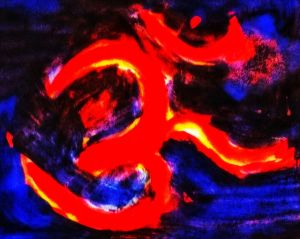
Of course, Amen – Om – the vibration of creation
was never born, is never changing, always existent.
Amen.

Always creating. Always dissolving.
Then again creating.
Making manifest that which was unmanifest.
Amen.

Or, is it a sound and light show?
Amen, the word, the vibration, the sound
shining a light on what is there already?
And what is there already,
is all there is.
Amen Amen Amen

The Q&A in the Scripture Part 4

A sooner rather than later return to our supposedly occasional series on the Q&A between Uddhava and his cousin Krishna on the eve of their departure from their soon to be engulfed in the nightmare of war hometown.

So, why sooner? After all it’s not been that long since our last installment. Well, I was just reading through my notes and the questions and answers we’re looking at today just sort of jumped out at me, asking to be contemplated. So, here we are then.

It’s another two-part question, but unlike with previous questions, we can look at these two in the one post. The reason being that the answers to both questions are, if not quite the same, are very closely related, as are the questions, come to think of it.

Okay, to the questions. Uddhava has already worked through quite a list, but now he gets to, what seem to me to be a couple of biggies:

What are reality and truth?

You see? I did say they were big questions. When you ask what’s reality and what’s truth, then you are really reaching for, well, I guess, what’s real and what’s true. No dilly-dallying, just right to the heart of things.

But, why these questions? Well, look at it from Uddhava’s perspective: his whole world, the only home he’s ever known, is about to be devastated by war. His world is completely turned upside down as he prepares to leave for an uncertain future perhaps never to return.

Like any of us, he’s probably on the verge of despairing, wondering to himself, ‘Is this really happening? I can’t tell what’s real anymore.’

Well, Krishna’s answers are short and succinct, and to the point. A lofty point, but then it would be wouldn’t it, coming from God?

Anyway, his answers:

Reality is seeing all the same.

and

Truth is the true speech uttered by the wise.

Reality does sound very dull if we take Krishna’s answer at face value. But he’s not talking about what we see with our physical eyes; he’s meaning seeing as in understanding, true realisation, as in ‘Ah yes. I get it now.’

But, ‘all the same’?

Obviously all the various beings in the Universe have their own unique names and forms and attributes; clearly they are not tall the same.

No, what Krishna is getting at here is that all beings in the Universe, all living and non-living things, are manifestations of the Divine. At that level all beings are one as the Universal Consciousness that pervades and underpins all that is in existence. Actually it’s not exactly right to say pervades and underpins: rather, consciousness is all there is, and that all is the Divine.

In other words, all beings are one and the same divinity. All the rest, all that we are and see and experience in the physical world are just those names and forms.

I’ve been told that there can’t be any exceptions to this reality, because there is only the one reality. Reality is non-dual in other words. One without a second as I like to say sometimes. One not followed by two and so on. Seems to me to be a simple way to describe this mind boggling (more like mind exploding) concept of nonduality.

Now, to the answer to Uddhava’s second question. Who are these ‘wise’ who utter ‘true speech’. And what is true speech anyway?

Well, the wise are those who have fully realised for themselves the answer to the what is reality question we just discussed. As you might guess, that’s a very small group of enlightened people.

Having said that, the answers to both questions mutually support the other. They each reinforce and promote realisation or understanding of the other.

Ritam (the Sanskrit word Krishna uses for Truth in his answer) is ‘expressive of the whole truth’, one dictionary tells me. It adds that it’s also a state of consciousness, though it’s probably more accurate to say that the ‘whole truth’ is a state of awareness, a state of being.

True Speech, is not just about what comes out of our mouths when we speak. Of course it can and does include what is spoken, written, thought and so on, but also encompasses our lives as a whole. It’s a state of being as mentioned above, and true speech includes all how we are in the world.

In other words all our thoughts, words, and actions.
True speech has to, obviously, be true. Sounds redundant  to say so, but because it’s not only about what is actually ‘spoken’ in words, it makes sense to mention it.

True Speech has to be pleasant. I think this isn’t to say that all that is true (in the world of matter) is necessarily nice; I think it means that in our attitudes, actions, speech itself, and thoughts towards other beings and ourselves too, we should be guided by courtesy, consideration, compassion, generosity and kindness. Love thy neighbours and thyself, in other words.

Last but certainly not least, True Speech is beneficial. In other words, your actual spoken words, as well as your thoughts and deeds in your life as a whole, should be intended to be beneficial for all concerned (which once again and significantly means you as well), or at least with the intent of causing no harm.

True Speech, the Truth, or Honesty, in our thoughts, word and deeds, come with these, what we can call three criteria. Just because you hate a new freind’s new hairstyle and you feel an obligation ‘to be honest’ doessn’t mean that if you hate it you are                           required to tell them it’s ugly and add for good measure it doesn’t suit them. That ‘letting it all hang out’ version of so-called ‘honesty’ is nothing of the sort, and doesn’t meet the criteria for being True Speech.

I mean to say that while it might be true in your opinion, and you deliver the bad news in a nice, pleasant and charming manner, still does not make up for the fact that, far from being beneficial to anyone, your supposed honesty is in reality hurtful, even cruel.

So, the reality – as in there is only one – is that I, and you, along with all other beings, are one consciousness . Our bodies, minds, our individual lives and ways of being in the world, may all be very different, and transient, but consciousness is one, whole, indivisible, indestructible , and never changing.

And, if we as individual entities inhabiting physical bodies, would like to act out our lives as expressive of that absolute reality that is our true nature, then our every thought, word, and deed, needs to be an expression of our acknowledgement of that oneness, that unity of one.

In other words, the only reality is that we are in fact that self same True Speech we’ve been talking about. To become wise (borrowing Krishna’s word here), all we have to do is be true. We need to fully realise that we are in fact Truth, and that Truth is all there is.

That’s it really. That’s the Reality.

Another Poetic Offering: Birds in the Bushes

‘I like writing reverent things,’ I said to my partner Hermit. I’d just shown her a poem I had written about a walk earlier in the day on the track on the crest of the sand dune near the hermitage.

Yes, it’s true I thought later. I do write around themes of solemn respect, deep praise, of love, of appreciation of beauty, of devotional things. About my devotion to all that is Divine – which of course is eveything that is!

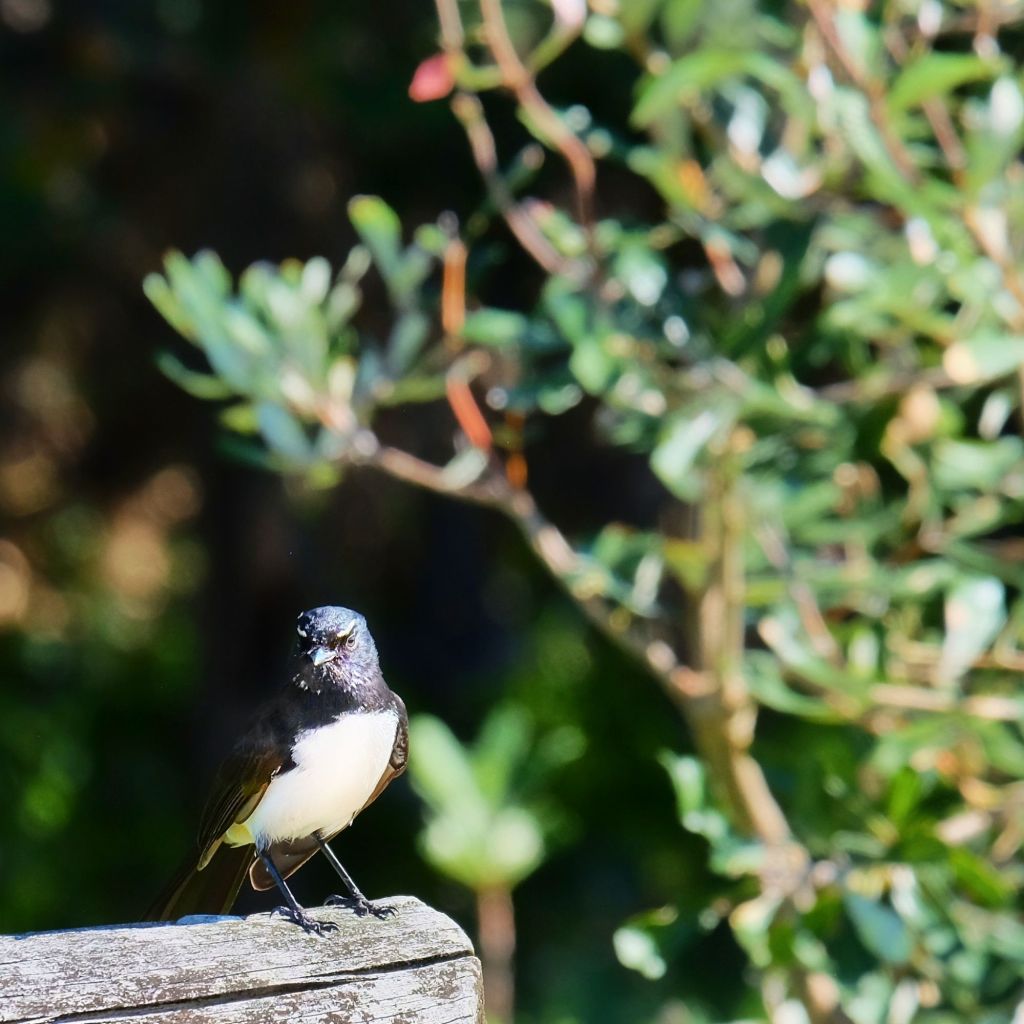
The walk began as a bit of a struggle, a bit challenging, though the challenge was eased somewhat by some winged friends. I know I’ve been writing a bit about angels lately, but this time the winged ones were birds. Mind you, angels can and do take many forms. Perhaps those birds were angels after all!

Anyway, as I recorded the original version while still ‘slogging’ through the sand on the track, I did so without intention. But, what emerged is, in my heart, a song of praise for those winged friends.

BIRDS IN THE BUSHES

Lumbering and stumbling, sometimes shambling
through deep and shifting drifts of sand
along coastal track
on the crest of dune.
Slow going on the track. Plodding.

But there are birds in the bushes
alongside the track.
Birds in the bushes twitter their encouragement.
Is it twitter? Is it tweeter?
Is it twirp? Twirping?
Are they twirping? Are they trilling?

In any case, there is encouragement in their serenade.
So, I continue on.
Plodding still
but a little lighter.

Poetics & Photographs: Shared Note

Namaste and greetings

Another poetic and photographic note to share with you today. In the last month or so I’ve written two poems which are about angels. And both connected in some way with rain, or at least impending rain in one and actual rain in the other.

Initially I thought to just include the most recent of the two, but as I put my fingers on the keyboard it just seems to be emerging that I shall share both with you. And as you know I’m not one to ignore the demands of what types me!

Anyway, I offer them to your for your reading pleasure and perhaps cause for contemplation. Last shall be first in this matter I think. Enjoy please!

Angels, they are everywhere.
Perhaps there are more than we know?
Personifications of love, of compassion.
Of charity too.

ON THE TEARS OF ANGELS

Is it good that angels cry?
Anyway, why do they cry at all?

To wash away all the sorrows,
to cleanse, to purify, to make new.
And to ease the world’s pain.

Then, there are those of us
who can’t conceive of ourselves
as angels.

For those ones – each and every one – the tears of angels
are cathartic; granting catharsis.

A CLOUD ANGEL SEEN

An angel wing
seen in a cloud, ephemeral, gossamer.
And the angel?
She stands concealed within the silver linings of clouds, neighbouring clouds,
heralding a soon to be descending deluge.

The Q&A in the Scripture Part 3

Welcome to another installment in our occasional series (see links to all previous installments at the end of this post) looking at some of the answers given by Krishna to his cousin Uddhava during a kind of Q&A session that takes place as both are about to leave their hometown which is on the brink of war. Krishna’s returning to Heaven, while Uddhava is heading for parts – and a future – unknown.

Hence all the questions around living a good true life, all driven by the knowledge that Krishna isn’t going to be around anymore to give Uddhava life advice.

And the question we’re discussing today is certainly a big one. In fact, though it is a single part of a three part question, I felt inclined to give it our full attention. To me it is that significant. In fact, thinking about it now, I could even add here that of all the questions and answers, this one could stand alone as the  question, the  answer.

To the question then, as asked by Uddhava to Krishna:

What is Charity?

Well, although I thought I knew what the word charity meant, and what charity is, I did end up looking it up, just to get a clearer and deeper picture.

Yes, a charity is an organization set up to give aid to those in need. And, as I also knew, charity is the voluntary giving of help – often in the form of money or other material goods – to those in need.

All just as I’d thought. But, then, I came across another entry that filled out the picture for me a little more. In addition to the above, this listing told me that the ‘true meaning‘ of charity is generosity and helpfulness.

Again, it specifies that this generosity, this helpfullness, is usually extended to the ‘suffering and needy’. Still it suggests that charity may be at least a little more universal an attitude toward functioning in the world, a world shared with so many other living beings.

(note from me: This latter definition comes from the Merriam-Webster Dictionary.  I’ve used this dictionary a great deal, and for very many years. It’s been my favourite go to, as they say.

PRESS THE PAUSE BUTTON PLEASE

Right, yes, I hear you loud and clear. Here I am going on as if this is a semantics blog. Sorry about that. Perhaps we should get back on track and allow Krishna to give the answer Uddhava and the rest of us have been waiting for:

Charity is the renunciation of aggression.

Perhaps you can see why I was at first a bit taken by surprise, and I puzzled over it for a while. Then after seeing that Merriam-Webster definition, I knew I’d found a clue: generosity and helpfullness.

Then it came to me: Ahimsa!! No, this is not some obscure exclamation reserved for Eureka! moments. Rather Ahimsa is a foundational principle underpinning many of the great religious traditions of India.

For me, Ahimsa is basically doing no harm, the practice of non-violence towards all living beings, through one’s thoughts, words (speech), attitudes, actions.

However because life is complicated (ie: there are no easy answers), various schools of thought over time have developed a kind of modification in which they say that Ahimsa is choosing to tackle the complexities of our lives in the world in such a way that we do as little harm as possible.

But how, one might ask, can we expand those dictionary definitions to include Ahimsa? Well, as far as I’ve been able to think about it so far, I’d say that Krishna’s answer itself is the root that we can graft those definitions onto

Which is to say, renouncing aggression is that root, that foundation on which to base the cultivation of charity and a charitable attitude and manner in our relationship with ourselves, with all other beings, and with the planet (and the rest of the Universe too of course).

(By the way, thank you to my Partner Hermit for that word: charitable. Not that I didn’t already know the word, obviously, it’s just that at the time I just could not find it anywhere in my slow-moving brain!)

That open, generous, helpful, compassionate, patient, kind, thoughtful (oh let me count the applicable words!), that charitable demeanour and behaviours with which we engage with the world (and with ourselves) are the result of removing aggression from our thoughts, words, and deeds.

Actually, thinking about cause and effect, and effect and cause, for a second: the way towards that state of charity is the same. In other words the means and the end don’t only justify each other, they are each other. One thing.

Don’t be ready for fight or flight each time you communicate with your boss, or your spouse, or your child, or your parent. Or with anyone else in any situation you find yourself in.

Listen to and observe with patience, care, compassion, and your full attention, the needs of others. Don’t assume you know best. And include yourself in this paying attention.

Look before you leap. Stop, listen, think, pause, before jumping into any situation that needs understanding, calm, quiet and time to alleviate any possible confusions, or misunderstandings.

If you make a mistake (or is it when?), don’t be so hard (aggression?) on yourself. Be just as open, friendly, forgiving, patient and the rest, with you as you would like to be with everyone else.

As to ‘generosity and helpfullness to the needy and suffering’? Well, all living beings suffer simply in the act of living itself. We are all well aware of this. The degree and forms of this suffering (and the needs that cause the suffering) will always vary, but even so, they are inevitable.

There’s a small mantra or prayer, I often use to end other prayers or reading, that I’ve always liked a lot:

Om Shanti, Shanti, Shanti

I have always thought that this was simply a prayer to the Divine that included the repetition of the word for peace three times.

Of course it is that, but recently I heard that it’s structured in this way with the three repetitions to make of it a deeper or more universal prayer:

Shanti: Peace within myself
Shanti: Peace to all living beings
Shanti: Peace to the world itself

I may have the words slightly off, but the essence is there. Anyway, for me this really does sound like Charity.
If you’ve missed earlier posts in this series please click on the links below

New Series Coming Soon: An Introduction

The Q&A in the Scripture: Part 1

The Q&A in the Scripture Part 2

Spotted on a Sand dune: A Poetic Sharing

With the current hermitage located not so much on the side of the road, as right on the side of a large sand dune system, you might imagine that I am at and on the beach every day.

While almost every day, I walk the track that follows the crest of the dunes in this particular area, I’ve only actually gone down to the beach itself a handful of times.

So, yesterday as start to my resolve to make amends for this omission, I climbed the dune, ignored the crest track leading left and right, and continued straight on and down the other side of the dune, and onto the beach itself. My intent was to spend an hour or so walking along the tide line.

And so it was.

Judging by such rare experience of the beach itself, I might easily say I am no ‘beachcomber’; no discoverer of coastal treasures, little natural beauties from the sea, or even the occasional oddity one might expect washed up. Until yesterday that is.

Not that I went to ‘comb’ the beach: rather I was there trying to put myself on the receiving end so to speak, to be a receptacle for what I might be blessed with (not to forget the need for exercise and movement).

And so it was.

This sense of grace and blessings, I hope I’ve conveyed in the small poetic effort (as well as its companion photo) that I now share with you.

SPOTTED ON THE SAND DUNE

Strolling (briskly mind you) along the sands,
There I was – deep in the liminal zone.
Ankle-deep – sometimes – seawater cooling my feet.
One way to receive Varuna’s blessings.

Back on dry sands (still in the liminal zone) I pause
to examine a spiral shell – an elegant and delicate sea creature.
It lives. Reverently, I move it to deeper water.

As I rise from my small task of union, of reunion,
I glance – still within the liminal zone – upwards.
There, near the crest of the sand dune sits a chair.
An armchair I spotted right there on the sand dune.

There it was, facing me – and the sea – in the middle of nowhere.
Though this is clearly somewhere for somebody.
The perfect perch for taking in
Pacific views.

Empty chair, lonely sight
overlooking the liminal zone.

When One Word is Actually Two & Becomes One Again

‘It’s good practis/ce sitting out here.’ So said my partner hermit as we sat sipping post evening meal tea on our little front porch that happens to face exactly due west.

It was on the tip of my tongue to ask: ‘Do you mean it’s a good thing (practice) to be doing regularly as in Sadhana,  a spiritual practice? In other words is it a good habit to cultivate?

‘Or do you mean it’s good as a kind of training – as practise – in improving our ability to sit in quiet and stillness?’

As I say, these questions were on the tip of my tongue, but then: Blog Alert!!. So, in a rare moment of triumph I managed to hold my tongue (metaphorically speaking) and let those questions sift through my mind so that later (it’s now the next day) a post to share with you might emerge.

So, here we are, setting the scene for this post. I know it’s about words, about language. Semantics is what it could be about, given that it’s about words and their meanings.

But, aren’t words simply symbols for the things they describe or represent? And so often semantics involves quibbles over meanings.

So let’s not make this about semantics, no quibbling required here. You see what set off the Blog Alert!!! was that here was the one word, that is actually two distinct words each with their own meanings, that just happen to sound alike.

Still no quibbling though: we don’t need to pick and choose between meanings – actual and/or intended. Two words, two symbols, two meanings (one for each word that is), so we can choose not to choose – remember no quibbling.

We can realise that in the context, both words are equal and correct. Both may be acknowledged as being meaningful to and in the moment, to the situation.

Lately I think I’ve been saying quite a lot about silence quiet – quietude – peace and calm. Stillness also. All are the same thing: all are states in which we might realise the truth of our natures as divine.

Same Sun Another time & place

Anyway, we had just finished our evening meal, and now sat with tea, having just witnessed the last remnants of the sun sink below the horizon (or was it the horizon coming up to meet and finally hide the sun?).

Quietly sitting, relaxing you might say, in post sunset peace and quiet, with only the occasional and softly spoken conversation going on.

Then that comment from my partner hermit, sharing that sitting as we were is good practis/ce.

Certainly for one such as me who has great difficulties in being quiet, being still, and cultivating silence, such occasions of quiet sitting (with tea naturally) is excellent practise, good training in the changing of long-established and conditioned habits and behaviours.

And, as such, it is a most excellent practice to cultivate, a great thing to do (I’d say action to take, but somehow that feels not quite right) to cultivate stillness and silence. I’ve written elsewhere that to cultivate or to rediscover silence is to realise that silence already existent as the divine, as consciousness, as all and everything.

My partner hermit is one of the wise ones, a sage. One spoken word that actually contains two words, two symbols, each with its own meaning, that finally merge into One.

No quibbling.

The Q&A in the Scripture: Part 2

Namaste

And welcome to Part 2 of The Q&A in the Scripture series in which we are looking at the answers given by Krishna to a list of questions asked by his cousin Uddhava in a scripture called the Uddhava Gita.

Remember the scene? Uddhava has asked Krishna a pile of questions about how to live a good life, how to live in the world with discernment.

These questions have become urgent because the cousins are about to leave their hometown which is on the brink of war. Both will be going their separate ways and both know they won’t be seeing each other for a while – perhaps never again.

Anyway, moving right along: In our last installment, we had Uddhava asking the first of his questions; this one happens to have two parts:

What is quietude and what is self-control?

We discovered that quietude is not the state in which one finds peace, silence, our true selves, or the Divine, but is itself that consciousness, that pervades and permeates all that is, silence, peace. In other words, quietude is  the Divine itself.

In the present post, we move to the second of Uddhava’s two-part question: what is self-control? Krishna’s answer is excellently short and sweet:

Dama  (self-control) is restraint of the senses.

Krishna in his response, makes it clear that restraining the (one’s own) senses includes mind as a kind of sixth sense in addition to the five physical senses. In the context you could almost say that it’s his mind that Uddhava is in most need of restraining. Maybe that’s the message for all of us?

Well, we are all well aware of the ways in which we have tried to control our senses; Uddhava knows too. But look at the situation these two cousins find themselves in:

It’s fine for Krishna: he’s returning home to Heaven, or wherever. But, Uddhava, who is also about to leave, is facing more uncertain prospects. He’s experiencing great turmoil, and fear over his and his familiy’s safety as the threat of war closes in. Most likely he’s also grieving over having to go into exile from his ancestral home.

Of course he’d be fearful for the future: where will he go? What will he do? How will he protect and provide for his family? Like I said, an onslaught of mental and emotional anguish.

Still, it does seem that Uddhava is maintaining quite a steady presence of mind. He’s thinking about the future; he is clear about the sort of stuff he needs to find out from his cousin (remember Krishna is God) in order to put and keep his life on the right track despite the challenges facing him now and in the future.

Then there’s the fact that this self-control thing is only one question on a list of 36. Clearly Uddhava is looking for a lot of advice.

Restrain the senses – all six of them – Krishna says. But how? What does it mean, ‘restrain the senses’? I think I alluded to the notion that we all have some ideas, some clues, about how we as individuals might restrain them, but let’s personalise this: What does it mean for me to restrain my senses?

Actually, now I’ve made that suggestion, I feel overwhelmed: Where would I start? Surely I need to do a whole series of posts, just on this one topic alone?

Oh wait, I can start right there. Exaggeration, hyperbole, over-dramatising, catastrophizing, all perfect examples of emotional reactions leaping from an unrestrained senses central: my mind.

Let’s put aside that mental stuff for a little while, and just say that all those emotional responses could do with a bit more restraining training. Just looking at the physical senses to begin with, I can easily say that they also, at least some of them sometimes, need various degrees of working on.

First, my sense of taste: it goes into overdrive sometimes, and then I eat too much. Not so much as in the past, but the restraint has a way to go still.

My sense of sight is pretty good, well restrained for the most part. But there are times when I lapse into old habits and spend too much time looking at a screen and scrolling in a mindless kind of way. Getting there though!

As for my sense of hearing: You might remember a post from a while ago when I talked about letting go of much of my music collection, some of which I’ve listened to my whole life.  I’m doing this because so much of what used to be ‘my favourite’ songs or artists, no longer serve my spiritual growth, nor does much of it reflect the view of life and the world that I’m trying to cultivate.

Well, I’ve made a good start, but occasionally I slip and find myself humming old tunes, or listening to an album that I really ‘should have’ deleted already. Restrained? Sort of, and I’m still encouraged.

Enough! Let’s get straight to the biggie: my mind. If I’m honest, I have to say that my mind, while not exactly in full agreement with my efforts at restraint, is starting to get into sync with me and my aspirations for a more controlled mind.

But still, those previously mentioned emotional reactions like exaggeration, over-dramatising and the rest, are still there. Falling into line, it’s true, still … .

Then there is the (more than) occasional first port of call reactions to pieces of news of various kinds: I’m prone to ask, just as I imagine Uddhava might have: Why don’t ‘they’ control themselves? Why can’t he or she or such and such country or politician show a little restraint?

Yes, I know, we’re all guilty of this one to some degree or other.

My quickness to anger is not quite, but almost, might soon be, won’t be long before it is, a thing of the past.

Then, there’s my tendency to ruminate: rehash endlessly real and imagined events and other stuff from the past – as well as the always imagined possibilities (as well as the impossibilities) for the future.

Again, I know I’m not alone in this emotional roller coaster ride, and I do know that I am nowhere near as much of a ruminator as I was; I have made great strides, significant inroads, and I am encouraged that the end of rumination is getting closer!

And now, here is the one thing I tend to think of one of my biggest, most tiresome and tedious, most annoying conditioned emotional responses: I talk too much. Not as much as I used to, but still too much for my comfort, and for the peace of mind of those around me. More restraint is called for.

Restraint has played its part in reducing my talking. But in a sense the major ally has been the ongoing quest I’m engaged in to discover my true nature, as consciousness, which is really my oneness with all that is.

And here our second question and answer leads us right back to the first: quietude.

I wrote in that post:

Quietude, calmness, peace of mind, are not where  you will find God, consciousness, or whatever we call it.  Quietude and the rest are God. They are consciousness.

Or putting it the other way round: cultivate silence, calm, peace of mind, and your senses will no longer need to be restrained. Your whole Self, including body and mind, will then be resting in Quietude, in your true nature.

That’s why I think these two questions are asked and answered together: Each leads to the other: by restraining our senses we are more easily able to achieve a state of calm, quiet, some level of peace of mind – in other words, Quietude.

Bright Lights on the Dunefields

Namaste and Welcome friends.

A poem for your reading pleasure. Written on site today in response to an experience while out walking on the dunes next to the hermitage.

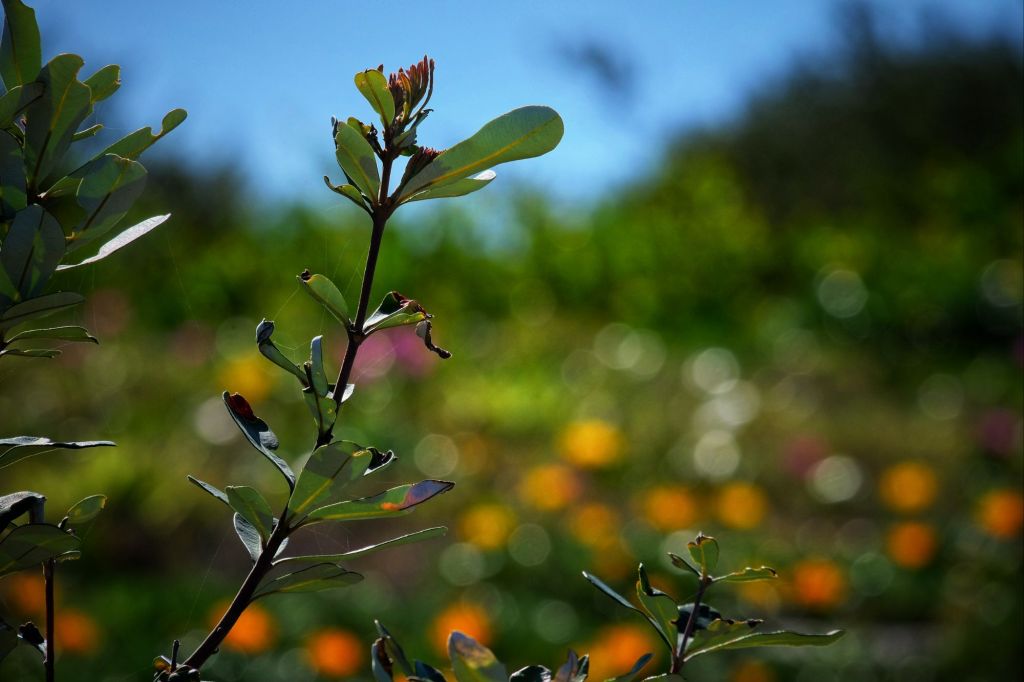
I’m including a photo I made a few weeks ago of the exact place where the poem was written,

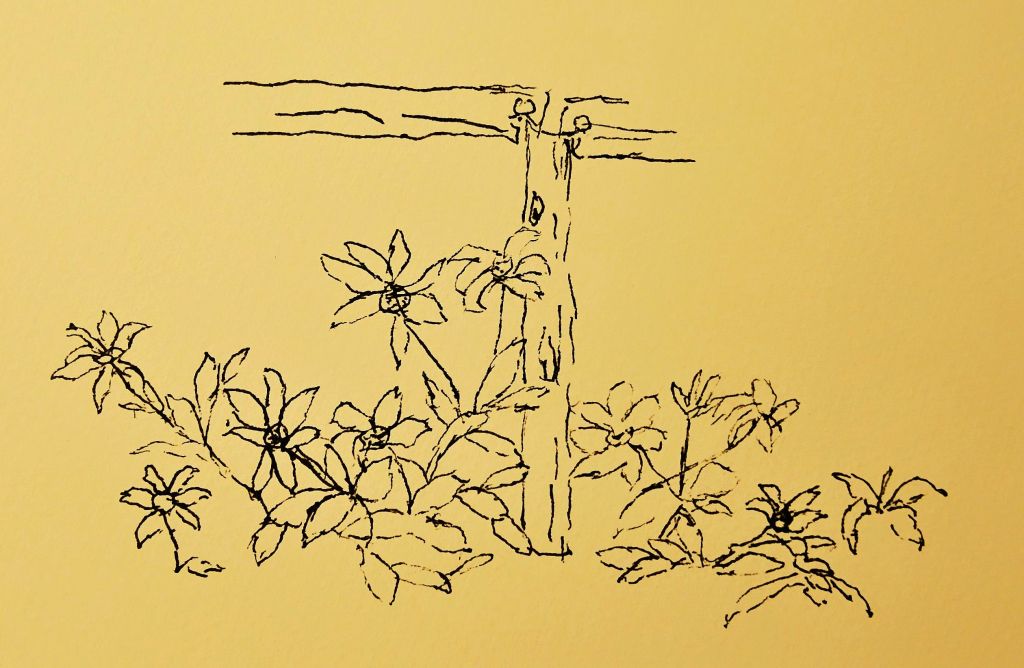
And many loving thanks to my partner hermit for the sketch made in the same area today (synchronistically it was made unknown to me and vica versa)

Please enjoy.

Love from Paul the Hermit

BRIGHT LIGHTS IN THE DUNEFIELDS


Today. On the Ocean Track.
Daily hiking across the top of the dunefields.
Not so sure-footed,
I trudge heavy-footed.

As I pass by, there are bright lights in the dunefields.
I pause in my passing as my eyes are drawn
(or is it my heart?)
to the bright lights in the dunefields.

I feast my senses upon
the bright lights in the dunefields.
They bless me, these bright lights.
They sing to me; they speak to me.

In my silence, I hear them.
But I hear not voices.
I see them.
But I see not colours, shapes or forms.

What I see, I see.
I see me, I see you.
They see me,
the bright lights in the dunefields.

They see you; can you see them?
These bright lights in the dunefields.

We are all bright lights in the dunefields.

Details in the Dunefields