
Less Desires, Less Entanglements Equals More Freedom

Along with many other spiritual seekers across many world cultures and over time as well, I have a more or less daily practice of opening a spiritual book, scripture, or other text ‘at random’ (as if there is such a thing) to receive a message, a lesson, or a little bit of guidance for the day.

In my case, that text has for ages now been the Bhagavad Gita. And over I think the last two or three years, one verse in particular has come up time and again, sometimes on two or three days in a row.
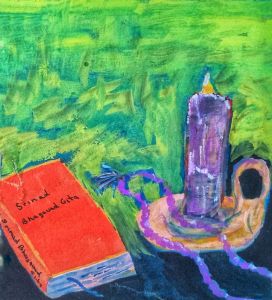
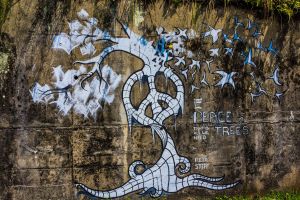
Much thanks to the Hermit Pilgrim who created this beautiful painting

So frequently has this occured that not only have I neglected to examine the verse in any depth, I actually began to ignore it when it came up and went right away to pick another one at random.

Well, this morning, I opened my Gita and there was that verse again – for the second day in a row. However, today, for some reason, I realised that this verse has been calling out to me. Or put it more sensibly: the Divine has been calling on me to take some notice of this verse and its meaning.

So, first of all, allow me to share with you the verse in question.

The Lord of Sri said:

It is said there is an eternal Banyan tree with its roots growing upwards and branches downwards, whose leaves are the Vedic hymns. One who knows this tree knows the Vedas

         Bhagavad Gita 15:01
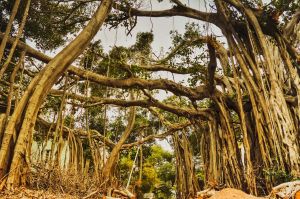
For me at least, this verse has always appeared quite complicated, complex really, and full of symbolism. Of course, being from an ancient religious text, it’s likely to be all those things isn’t it?

Still, despite reading the verse many times and studying and hearing a few commentaries on it, for some reason it has remained for me rather daunting. At least I can say that I was convinced of the notion that this verse confused me, entangling me in convoluted and sometimes upside down thinking.

Like the Banyan tree itself I guess. Considered especially sacred among all other sacred trees in India, the Banyan is well known for its way of growing willy nilly, every which way, until the whole thing becomes a complete and dense tangle.
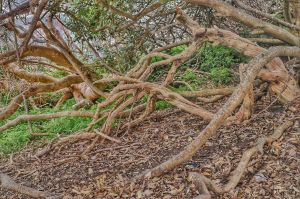
And it is this tangle that is at the heart of the metaphor used to illustrate the lesson in this chapter of the Bhagavad Gita: The tree is Samsara, the illusion that is the material universe in which all of us living beings are entangled. It’s as if we’ve walked into that tangle of branches and roots believing that’s where we will achieve our desires.
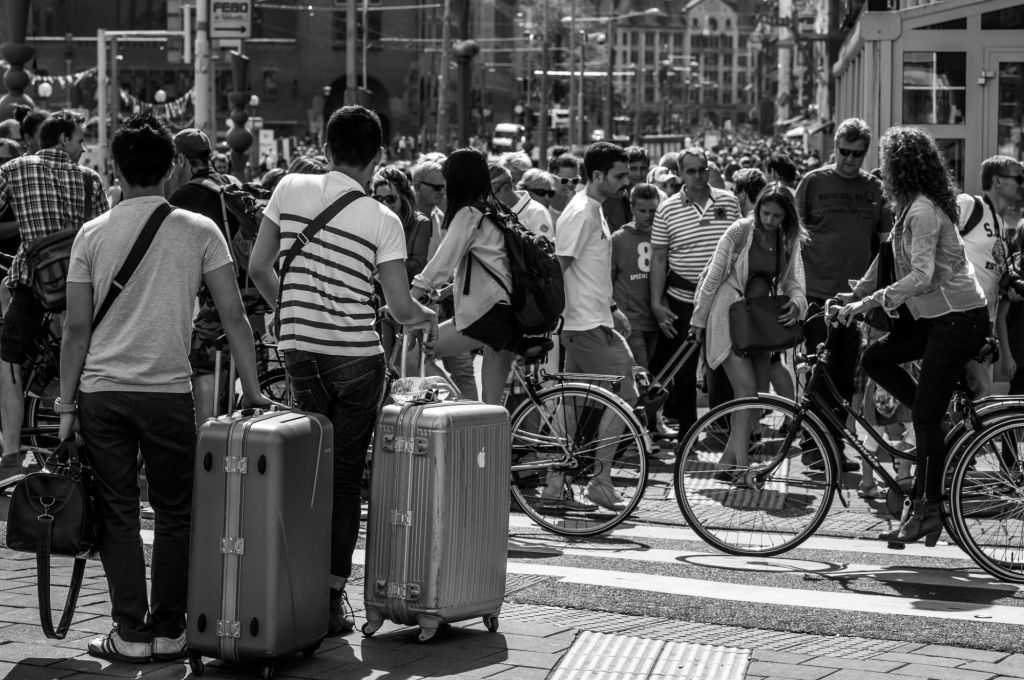
A major city in the middle of tourist season is another neat metaphor for this tangle we’re talking about. We look for worldly pleasures there, but find chaos, confusion, and often unhappiness

We are so attached that we identify completely with that physical world (convinced we are merely physical beings ourselves) and are convinced that this is where we can fulfill all our needs.

As the verse says, the leaves of the tree are the Vedas, and one who knows the tree, knows the Vedas. The Vedas are the sacred Hindu scriptures which in this context can be said to represent knowledge. But not knowledge of a mundane ‘ordinary’ kind.

The knowledge to realise (because we already possess this knowledge, we just aren’t aware of it yet) is that we are not the body, so we have no need to be bound to the tree of Samsara with its suffering and its endless entanglements. It is Self Knowledge.

This Self Knowledge leads us to develop what a following verse calls ‘the weapon of detachment’ with which we can chop down this very strong tree of attachments and illusions

A little note: I don’t like this weapon and chopping metaphor at all. I simply pass it on to you as written.

As we begin and progress with this process of truly realizing we aren’t the body, and therefore have no need to identify with or be attached to worldly objects and desires, then slowly the tangle binding us begins to clear, to fall away bit by bit.

I din’t think we need to actually get to that point of cutting down the whole tree before we begin to see results. to reap the benefits if you want to put it that way.

Each and every small thing, desire, compulsion or aversion we no longer feel ourselves bound to, frees us just that much more.

As with any tangle we get ourselves caught up in, once we loosen that first thread (to switch metaphors), the task of unravelling becomes easier.

It’s true – and I think I’ve mentioned it previously – some of my attachments and compulsions are loosening. Some (small ones I admit) have fallen away completely.

As you read in my little note, I’m not comfortable with the whole cutting down trees with weapons metaphor. Perhaps the loosening of threads, the unravelling of tangles and knots sits better with us.

Perhaps my – our? – efforts at detaching from the desires and aversions, from the compulsions for worldly things and objects, and for sense pleasures, can be achieved by a more gentle untying we could call it. A kinder, gentler, calmer, friendlier, means to realizing we are already free.

Are the Hermit Pilgrims Settling Down?

Stand by for an announcement:

The Hermit Pilgrims have signed a lease for the rent of a house for a year. Not only have we signed a lease, we have, in fact as of yesterday, been residing in the said leased property.

Admittedly, it’s exactly the sort of small house which we had in fact been longing for for some time. It’s got many characteristics that make it for us, the ideal site for a hermitage: we even have a temple room!

The lease is for a year initially, and if,  after a year we feel led to move on, then that’s what we shall do. But for now, – as in the present moment that is the ongoing now, the only ‘time’ one can talk about with any meaning or truth – we will be in the one hermitage, the one safehaven by the side of the road, for a longer period than in any other in the last many years.

Anyway, enough of this reflection on the nature of time; the big question on your mind I am sure is why? Well, the first little thing to say is that the pilgrimage goes on; it’s just that we’ve taken a tiny step towards the vow of stability many monks and nuns make as a matter of course. We’ve not really ever taken such a vow before. Mind you, a lease is a binding document, I wonder does that count as a vow?

Of course, as I’ve just laboriously spelled out, there is only the moment, the ongoing now; so who can possibly say about ‘a year’?

Next, let me tell you a bit about a book I’ve read a few times and like very much. It will possibly give you a flavour of the why.

Cave in the Snow  by Vicki Mackenzie tells the story of Tenzin Palmo, a Tibetan Buddhist nun and her, I think, twelve years in solitu6de in a nearly all year round snowed in cave in the high Himalayas.

Tenzin Palmo had been living in a rather remote monastery, but felt after some years the need for greater isolation and solitude. The monastery was too busy and noisy, with all sorts of comings and goings.

There was too much entanglement with the greater society in the form of the surrounding villages and town. She wanted some quiet basically

In an interview sometime after she came down from the mountains she was asked if going to a cave was perhaps an escape, an ‘evasion of the trials of an “ordinary” life. Her reply spoke to me when I first read it about 20 (or more?) years ago, and still does today:

‘Not at all. To my mind worldly life is an escape,’ she replied to the interviewer. ‘When you have a problem you can turn on the television, phone a friend, go out for a coffee. In a cave, however, you have no one to turn to but yourself.

You have no choice, she says, when problems come up, and when things get tough, but to go through with them, till you come out the other side.

‘In a cave,’ she said, ‘ you face your own nature in the raw, you have to find a way of working with it and dealing with it.’

My situation is not quite like hers. For example there is more than one person in our community of hermits. Still her story does resonate and speaks very much to my own situation.

Not only is there never going to be any absolute certainty in our material world, there is never – ever – going to be anything in the realm of worldly things that will deliver us perfect peace and lasting happiness.

Easy to repeat, this tidbit of transcendental knowledge, but quite another to get oneself unattached to the idea that, well, maybe, just maybe, the next big thing, might just be different, might indeed be the forever answer to peace and happiness.

And it’s that attachment that I’m tackling at the moment.You see I long for a more pure hermit life, a life with a lot less engagement – and entanglement with – worldly things and situations.

I once wrote in a poem called Seeking Noble Truths or Just Passing Through that ‘longing is loss’, and it is, if one is attached or clings to the object of desire, or an outcome being exactly as is envisaged. Not being attached means less disappointment, less suffering, if as often happens, life does its thing and the outcome is not what we hoped it would be.

But here’s the thing: the bonds of my attachments in this area are loosening a little, bit by bit. And the paradox isn’t lost on me either: As I ‘settle’ into our (supposedly) longer term hermitage, I will, I hope, come closer to a point of stillness, of equanimity, and of silence. I will inch even closer to that state where attachments will all just fall away.

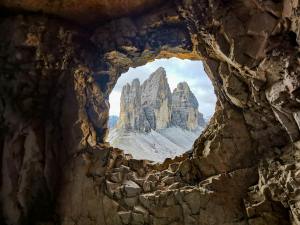
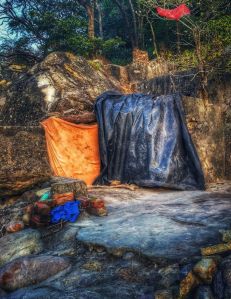
Hermit caves take many and varied forms

Now, in no particular order of priority or preference, I’ll try to convey in words some of the reasons we’re opting to continue our pilgrimage in a more long-term hermitage.

To be honest, as hard as I try to be present, to just live here and now, I just like the vast majority of my fellow human beings, find it extremely difficult to not be pulled ahead to the future (or dragged back to the past for that matter).

No sooner have we moved into a new hermitage, then we feel we have to start shopping around for the next one. Of course, one can’t ignore the practicalities, but for me it goes way beyond being a sensible planner.

And to be perfectly frank (I wonder who this ‘frank’ is anyway?) we’ve tired of it. The looking, the thinking, the talking and emailing to prospective places. It’s actually quite boring, to be stuck on that kind of merry-go-round .

It’s also extremely distracting. It gets in the way of our efforts to calm and quieten our minds for extended and deeper meditation and contemplation. Not to mention the ongoing (seems endless sometimes) discussions of the pros and cons of decisions to be made, as well as the frustrating second guessing I’m famous for.

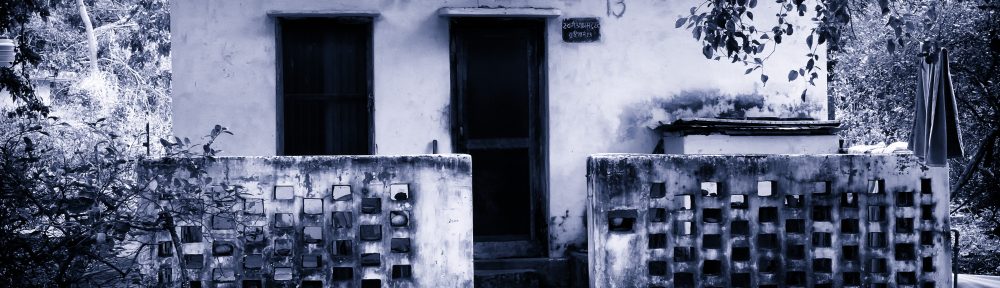
Portrait of a Hermitage

We all know from experience that there is never going to be any absolute certainty in anything we arrange in our lives. Of course I know very well that even a signed, sealed and delivered legally binding contract or lease, means very little if the parties involved put their minds to it or change plans somewhere along the way.

All things in the material world are relative, and always subject to change; there’s nothing we can do to bend that natural law. Given such a context we still feel okay about entering with a right-hearted intention, this agreement for a year (at least) in the new hermitage.

As the residents of the hermitage are prone to say really quite often: ‘Your will, not mine, be done’.

Then, when life does its thing, I’ll be more able to roll with it. Why? Because I will (hopefully) have better learned that it’s not my will that’s to be done, but the Divine Will, the natural law and order of the Universe.

So, If it be your will…