Do Good, Be Good: A How to Guide

Lately it’s been a bit hard to remember I’m actually a hermit. A lengthy hospital stay, doctors’ visits, sessions with physio and other therapists, moving to a new hermitage. There seems to be no end to the people and activities pulling me back out there into the world.
Sometimes I would like to just stop, do nothing and simply be.

But even a hermit isn’t exempt from performing actions  in the world. Of course the point of living in seclusion as a hermit is to minimise contact and interaction with the world of people and things of the world; to renouncing objects and pleasures of the senses and ridding oneself of desires for these material experiences.

Even so, no matter the degree to which one renounces action, it is simply not possible to cease all activity in this world.

Recently I came across a kind of list of the three types of categories or activities one must never renounce regardless  of the level of withdrawal from the world.

In fact, looking at it from another perspective, this little list could be described as a guide on the types of activities to undertake for not only hermits but all of us wanting to live a life of ‘being good and doing  good’. And as a means to make every single thing we do serve the Truth.
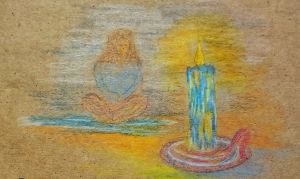
Actually, that brings us to the top most (for me at least) of the three categories of activity that are never to be renounced, which is the embracing of actions that contribute to my quest to understand my true nature, to fully realise the divinity within myself that is in fact the divinity that pervades and permeates all there is.
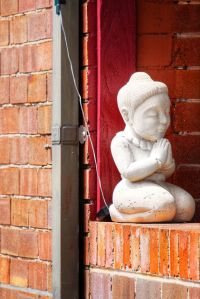
My intention is that all my activities are informed by loving devotion  to this divinity and a deep yearning to be of service to that divinity. Don’t relate to Divinity? That’s okay: substitute God, the Universe, Love, Beauty, Truth …

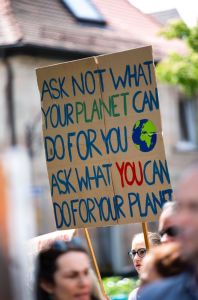
Which now leads me to the next category: I aspire to consider the welfare of all other living beings as I perform any action in this world. Being mindful at all times to ensure my actions, including my speech and thought, causes as little harm as possible; how can I be good?

Of course the other side of this mindfulness is to continually be asking myself, what can I actually do to contribute in a positive way to the welfare of all living beings; how can I do good?

The final of the three equal, mutually dependant, and intimately interconnected  categories of activities require once again a continual mindfulness to my own welfare, on all levels.

Sounds obvious: we all want be happy, to enjoy life and be healthy. But, speaking only for myself here, there are any number of activities I have engaged in (some I still do) in order to get some pleasure, to be happy, whatever, that might work for a while, but as with all worldly things, it never lasts. As the saying goes, that which at first tastes like nectar can end up being poison.

Like the relationship I share with Youtube. With no television in the Hermitage Youtube is the go to space for things to watch; an unlimited source for study, inspiration, and sometimes simply for entertainment.

But last night, and by no means for the first time, I realized I was spending far more time ‘looking’ (AKA scrolling) for something of interest to watch then actually watching anything.

Now, watching videos for study, inspiration, and even entertainment, may contribute to my welfare, but scrolling certainly does not. Time consuming, mind deadening, it leads to irritability, depression and exposure to content I want nothing to do with. Time for (another) break.

A life worth striving towards.

Do good, be good?

Keep doing it and it will become normal

(eventually).
We All Get to Stay

Sharing our prayers this morning, the hermits each reciting a prayer to the other so each can pray, and talking about the oneness of life (prompted by one of the shared prayers), the dependence of one species upon another.

As we reflected on that idea – of interdependence – it occured to me that perhaps, there might be a problem in how we as humans, interpret its meaning. We can maybe call it a kind of paradox, but we’ll get to that in a bit.

Our dependence – as humans beings – on so many other species is actually a well known, and I hope increasingly accepted, reality. For food, for shelter, for water, air to breathe. Everything.

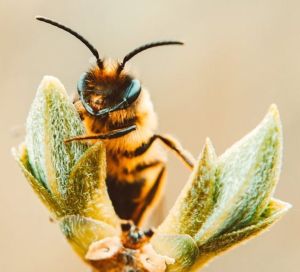
In any case, an aspect of this interdendcence idea that struck me as perhaps missing, that I’ve not really heard before (I haven’t researched this; just winging it thought and contemplation wise) is this; If, say, bees disappeared, or all trees were cut down, would humans survive? Definitely not.

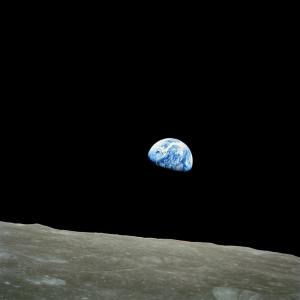
On the other hand, let’s say that in an instant or even over time, all humans on Earth disappeared. What would happen to all the other living beings? All the bugs, the fishes, the animals of all kinds, trees, grasses – all the living beings?

It seems to me that all those other species, all those beings of all kinds, would not only survive, they would most likely thrive.

Actually, now I think about it, I remember during the COVID lockdowns, people in various places around the world were amazed at the return of birds to usually busy polluted cities, and how the air seemed fresher in some places when in ‘normal times’ it was getting hard to breathe. And beaches and rivers looked a bit cleaner than usual.

Fewer people commuting; fewer planes flying; less goods being transported on congested roads; less waste going into rivers and the oceans. Seems life on Earth was doing better when we (humans) were out of the picture, even for a short while.

Which is to say, humans may not be necessary for the survival of planet Earth and the other life that lives here. Putting it very simply: We go, they thrive; They go, we go too.

But, my thought train races along its newly discovered track here, what if I’m wrong? What if I’m looking at the whole issue on just a superficial level? What if all I am seeing is the gross material level of the whole question? What if I’m missing the real point of it all?

Well it seems to me that on that purely physical, surface level, my theory (borrowed as it may be perhaps) might be right, the irony true: we go, they thrive; they go, we all go; they stay, we all get to stay.

But who are ‘they‘? Who are ‘we‘? For me it’s clear that we are not all simply and only our physical bodies and our minds living here in the material world; that’s all temporary and comes and goes. No, there has to be more to it than that.

Which is what I end up coming back to so very often: there is only one. No separation; no you and me; them or us. Just one. Without a second. Only Consciousness.

I think the best thing to do, just to be on the safe side is to look after each other – regardless of the particular body we happen to be inhabiting at the moment.

That way, we all get to stay, and we’ll all thrive

How Shall I Live?

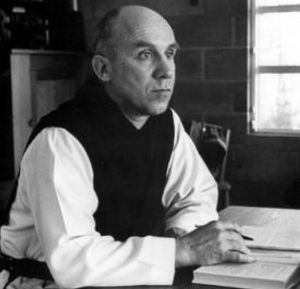
Thomas Merton in his hermitage (Courtesy Wikipedia)

The great study of the monk is to have an awakened heart

      Thomas Merton


There would be some – including me – who would say that all human beings, and not just monks, need to learn to awaken their hearts, to cultivate attitudes and a life of love, compassion, empathy, and kindness.

Who would disagree with such a suggestion?

Well, I’ve already said that I am one of the ‘some’ who would welcome such an evolution in human consciousness. But, at the same time, I don’t want to make pronouncements, form judgements, hold opinions, on what anybody should do, or be like. Only me. I am only responsible for my own behaviours, attitudes, ideas, thoughts, speech, and the rest of how to live my life. I just can’t – as in I’m not entitled – to tell anyone else what to do, what to think, what to say and so on.

Actually I’d even speculate that Merton is in fact talking about just the one monk: himself; he’s not preaching a prescription for the behaviour  of others.

I’ve read so much Merton that it’s impossible now for me to remember exactly where I read this statement of his, but I do know that when I first saw it and made a note, the concept resonated deeply for me as a great aspiration for my own life as a monk, and as a trying to be decent human being.

In other words, this monk – me, myself, and I – has a task to carry on with: to cultivate an awakened heart. And being a ‘great study’ it’s bound to be at least a lifetime’s project.

It’s an effort though, awakening one’s heart. It’s even a bit of a mystery at times what the phrase actually means in real terms.

Love, obviously, tops the list for any aspirant on the awakened heart path. And, yes, I do feel, express, and act out love – so deeply sometimes to the point of being overwhelmed or ‘flooded’; sometimes speechless (that’s the good bit), sometimes full of words.

But then there are times (oftentimes is the word) when that love is clouded or shrouded completely by angers and irritations, by regrets of what should be or shouldn’t be, could be or cant’t be, what isn’t.

The great study of the monk is to have an awakened heart
          Thomas Merton

All attachments to what is not as I think it should be. All barriers to love. All ways and means of keeping the heart asleep – or at best semi-awake, and still sleepy: slow to respond, slow to act, and with ongoing blockages to seeing how things actually are.

The quest to acquire an awakened heart and the outpourings of love, kindness, gentleness, generosity, that such a state would allow, is probably at the root, the foundation, of my life as a hermit monk, of my life as a pilgrim journeying through and to Self.

Living quietly and simply; developing a contemplative way of being in the world while definitely being not of the world; cultivating silence, peace and calm; all are activities and attitudes directed at cultivating an awakened heart.

All that generosity, patience, love, kindness, empathy, and all the rest are definitely all characteristics of an awakened heart. Here’s my dilemma  (only one among many that riddle my crazy monkey mind): they are also precisely the elements that need to be practised in order for one to acquire an awakened heart. What’s the expression? Catch 22?

Of course, it just occurs to me now, everything that is, is exactly as it’s meant to be, happening just as it ‘should’. So, in other words, all these words of reflection are simply a commentary on what has been and gone already, that which is in the past, and is no longer existing.

All that matters – all that exists – now is that at this moment, in its ongoingness, I am as loving, as kind, as patient, and as generous (not to forget compassionate, empathetic) as I’m able. To others obviously, as well as to myself.

All that wonderful list of characteristics of an awakened heart all exist right now within me. Perhaps I need to wake up my mind a bit more so I might see that reality. Then I might actually realise that I already have an awakened heart and that I simply got forgetful somewhere along the way.

with love
Paul the Hermit