Recycling. Blog posts that is. I don’t think I’ve ever really given much thought to whether or not bloggers recycle their posts on any kind of regular basis. I don’t mean to suggest that nobody ever does it, or that I have never reshared a post: there has been the occasional one I’ve recycled over the years on the various blogs I’ve been involved with
But, not routinely. That’s the word: I’ve not yet made it a routine part of blogging practice to reshare posts at regular (or even at not so regular) intervals.
Until now, that is. You see, a couple of days ago I was rereading random posts on this blog from the roughly two years or so that I’ve been writing it.
I came across one post that really resonated. Actually, I found it so inspirational that I read it twice! So I shared it with my partner hermit. She liked it, and suggested I should begin to reshare some of my older posts. Yes, I thought right away. That’s exactly what I’m going to do, I said.
It’s a good plan, I realized. After all, on that recent revisit to the blog, I rediscovered things I had either almost, or completely forgotten I’d written. In addition I even gained new insights, new ideas, that hadn’t occured to me when originally writing the posts or thinking about them. Not to mention managing to inspire myself a little.
I was going to just pop that aforementioned post here and now. But I think to keep at a minimum the time you need to spend reading my words, I will give the post its own, what to call it? Its own space.
If you’ve seen it in its previous incarnation, please feel free to read again: it might say something new to you it kept quiet about the first time round.
If you are new to the blog, then a warm and loving welcome to you. I hope you discover something helpful.
Last night I had a dream. Of course there’s nothing unusual in that: I dream every night, every time I sleep (and sometimes when I’m supposed to be meditating as well). Actually I’m no different than probably every other living being in the Universe: I dream when I sleep.
No. The particular dream isn’t my point here (though we’ll be discussing it soon enough). What makes it worth noting is the fact that last evening, before going to bed, I watched a documentary on Carl Jung and The Red Book.
Jung compiled The Red Book at a time of personal crisis and distress. Using dream analysis, his own imagination, and intense self reflection, he used both paintings and text to express what he saw and understood from these practices. Hauntingly beautiful, other worldly pictures depicting dream images, archetypes, both personal and universal, helped him delve deeply into his unconscious mind and the collective unconscious.
I gave up trying to interpret dreams a long long time ago. Don’t ask me why: I probably couldn’t say. Most likely something to do with a kind of wariness about going too much into where the mind wants to take me, and my sense that the “dream” doesn’t stop when we wake up.
Still, watching this doco prompted a lot of discussion with my partner hermit, and a lot of thinking on my part. The mind is not our enemy, though sometimes I feel that it is. Well, it can be the enemy if we allow it, but equally we can allow the mind to be our friend. After all, what activity of any kind is possible in the world without mind?
So, with that in mind (get it? in mind?) I will share with you that above mentioned dream from last night.
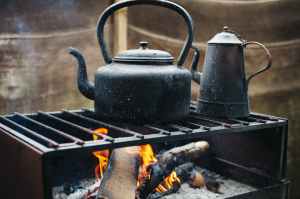
In the dream I was in a small kitchen, making tea. I’d put on a kettle to boil. A very large, heavy kettle, probably three or four times the size of a normal one. I was in the process of looking for a mug or cup, and just as I picked one up that I liked the look of, a crowd of five or six people came bustling noisily into this very crowded space.
‘I’ve just put the kettle on,’ I called loudly over the din. As it happened I’d filled the kettle almost to overflowing, much more than I needed for myself alone.
‘There’s plenty of boiling water to go round.’
Then I busied myself looking for something (a tea bag perhaps?), and when I finally turned back to the kettle to make my tea, I saw it was gone. I was very unhappy with this disappearance: After all, I was the one who had filled the kettle and put it on to boil. Then without a thought or a, what’s the expression? without a by your leave, it’s all gone, nothing left for me. Not only no more water, but nothing to boil more with.
I looked everywhere, even outside the kitchen. Outside was a camp ground and apartment complex, where I (and presumably all the other people) was staying.
Anyway, that’s it. All I remember at least. So, the meaning? Was I merely processing trivial facts and events from my day in this strange fashion? Or was I in touch with the deepest part of my psyche and with the collective unconscious? Possibly a bit of both.
It’s not a big job to make a guess about the meaning. I had a plentiful supply of water (or whatever), and without thought, put the needs of others before my own. But then, I actively resented what had been ‘taken from me’, even though I had freely given it in the first place.
So, the message I take from this dream? Just as I’ve been studying lately, the fruits of my actions are not my responsibility. I have no say over what, if anything, will happen as a result of actions I take. All I am responsible for is the taking of the action itself, the manner in which I undertake it, and the attitude with which I approach the actions I take. That’s it. That’s all I can do. The rest is up to the laws of the universe. Call it Karma, or Natural Law.
Another idea just occured to me: When I take action (like boiling the kettle) and then serve others, I am serving Self, all life, everyone and everything. And obviously that includes me. I’m not suggesting I should have made sure ahead of time that I’d ‘reserved’ enough water for myself, but at the same time …
I might keep this dream analysis thing as practice to practise occasionally, when the inclination or inspiration is there. No more blocking memories of dreams, no more stubborn refusal to reflect on dreams. After all, I spend a lot of time contemplating and reflecting on what I do in my waking life, how is it any different just because it happens while I’m asleep?
Indeed, it is clear to all who dwell there that through them the world is kept in being
I jotted down this note I forget how long ago. Over the last few years I’ve read a lot about the early Christian hermits who lived in the deserts of Egypt, Syria, and other areas of that area we label the Middle East.
While I think it was one of these early hermits who uttered these words, it may instead have been a monk or hermit from the 9th or 10th Century, living in the forests of Russia or Eastern Europe. (I wish was a lot less careless with sources for things I note down).
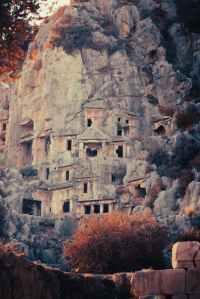
In any case, it was spoken by a hermit or monk who, along with perhaps thousands of other men and women, fled the strict dogmatism of both government and religious institutions , as well as the corruption, materialism, noise, and all the other distractions of the cities and towns.They went to the deserts, the forests, and other remote places, in search of solitude, silence, and peace.
They longed to commune with the divine. They chose to bypass the mire of worldliness, and hoped to find a better way to serve the divine and the world. The writer or speaker of our quote is pointing our attention to all those who went to the deserts, the forests, and other sanctuaries, who in her or his words, believe they are actually keeping the world going, and its people too.
These nuns, monks, priests and hermits, knew that by communing with the divine without distractions, and living a simple life completely and absolutely centred on the divine, was the way to save the world.
‘So’, you might be saying with a slightly cynical tone in your voice: ‘These are people who have ‘escaped’ from the world and are ignoring governments and the law, rejecting social status of any kind, not associating with other people like other good citizens. They’ve gone to sit in a hut or cave or whatever and are doing nothing productive at all. They’re not buying stuff so they aren’t contributing the the economy. And you say they are the ones keeping the world spinning round? Hardly.’
There are hermits everywhere.
Yes, I think they are. Keeping the world spinning I mean. Just as mystics from all the world’s religious traditions, these women and men of the deserts – and the forests too – knew that the world they’d left behind wasn’t real. Well, yes, it’s real enough of course: I mean we only have to look around us, and feel the workings of our bodies. It’s real alright.
But, realer (I know, it’s not a real word) than this physical world we are in and are an integral part of, is what lies within us as well as everything else in the Universe:
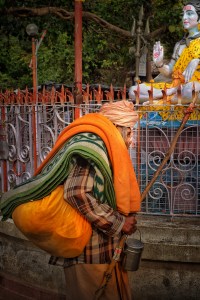
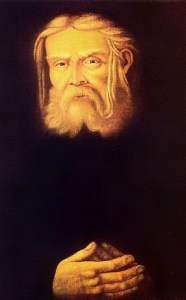
Holy Wanderer Detached from all Worldly Entanglements
The divine, God, the life force, Consciousness. So many names for the same thing. Many of us sense that at the core of ourselves there is ‘something else’; that there is some kind of intelligence for wont of a better word. This intelligence is what illumines life, as in life, the universe, and everything.
But, we don’t see this, or not so often anyway. The mire of worldliness (a phrase I mentioned earlier and which I like very much) seems to be specifically designed to keep us in the dark so to speak, about our true nature.
Think about the seemingly endless focus on materialism with its temptations and promises to make us happy; the conflict and competition among individuals and nations to acquire more power, possessions, land and anything else that ‘they’ve got and that we want’.
Mire is a good word: We’re trapped and sinking fast in a kind of quicksand.
And this mire keeps us from becoming aware, from realizing, that we are the Consciousness (the word I prefer but, as I said, names are just names) mentioned above. It keeps us ignorant of our true nature, and we go on and on struggling to keep afloat in the world.
The hermits of the past and the present, the nuns, monks and other contemplative people of all kinds, and, in many and various places, are all engaged in a quest to know – and yes, to realise – that they and everything else in the material and non-material universe is Consciousness.
I believe that, far from being unproductive, from ‘doing nothing’, It is the engagement by such people everywhere with this quest that does indeed keep the world in being.
Courtesy Wikimedia Commons Thank you
I would like to leave you with a couple of quotes if I may. The first is from Abba Moses, one of the greatest of the early desert fathers who was born in Ethiopia and lived in Egypt in the 4th Century:
‘Our objective is puritas cordis,’ Abba Moses told Cassian and Germanus [fellow monks]. ‘A heart kept free of all disturbance. The more we cultivate such inner stability, the more we can offer our lives in service to the world.’
Courtesy Wikimedia Commons Thank you
The second quote I would like to share is from Saint Seraphim of Sarov, a 19th Century Russian monk who lived as a hermit deep in the woods:
‘Acquire a peaceful spirit, and thousands around you will be saved.’
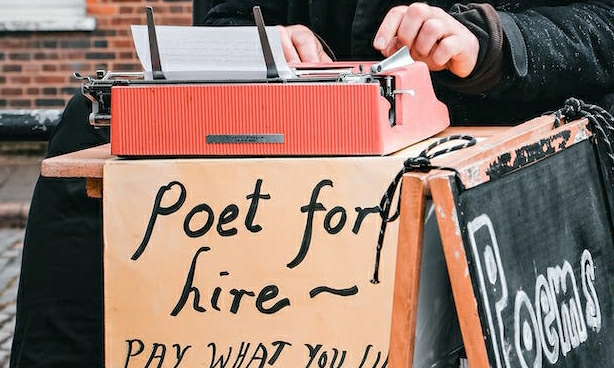
There used to be a thing – maybe it’s still a thing – that would happen sometimes. You’d be talking to someone and suddenly they’d burst out:
‘Hey that rhymes! You’re a poet and don’t know it!’
This exclamation, this sudden and surprising interruption, was always prompted by some sort of accidental rhyming happening in something you’d said.
Or, sometimes, it even happened when you had written something and had through no fault or thought on your part, created a rhyme, even a little impromptu and accidental poem.
Well, that’s what happened to be. It was a while ago now and I was writing in my journal. It must have been ages ago because I don’t keep a journal anymore.
In any case, with nobody reading over my shoulder, it was left to me to express surprise at a sudden outburst of poetics on the page. And along with the surprise, I was able to make a quick note of what I’d written:
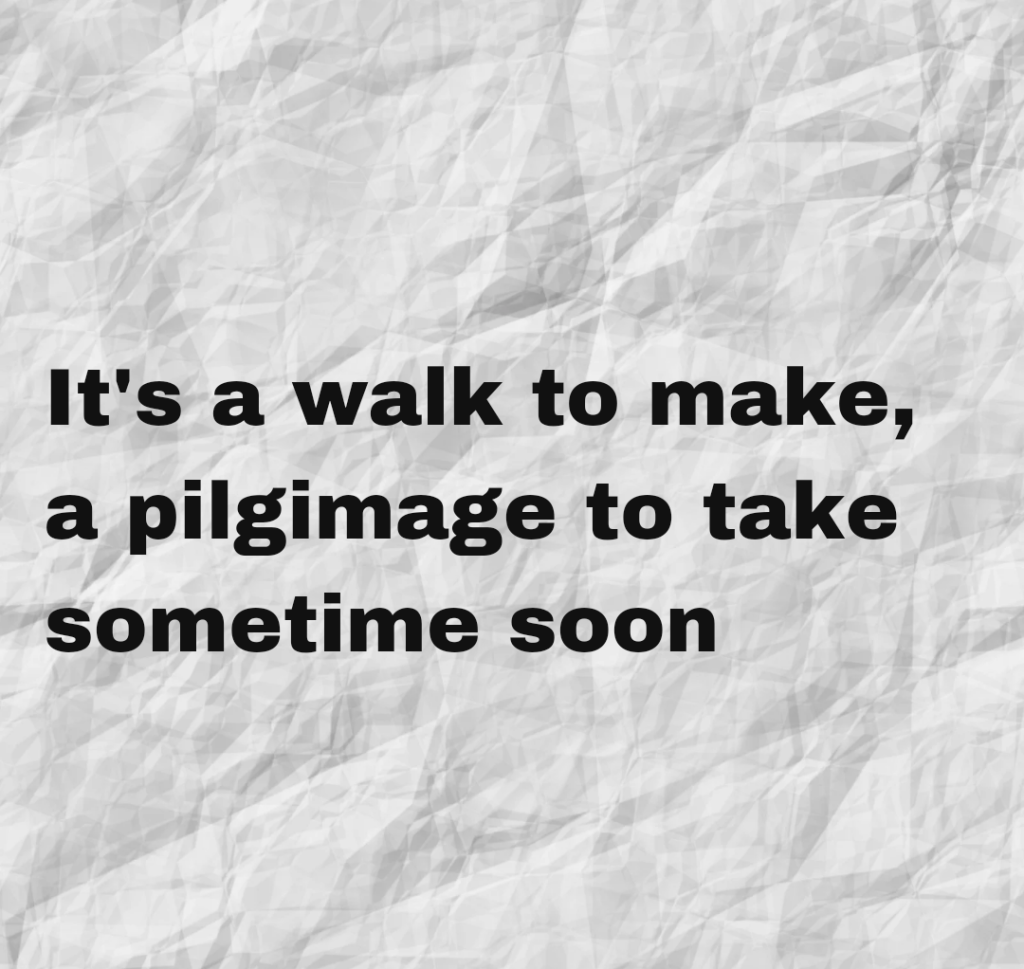
Anyway, this post isn’t about this little demonstration of spontaneous poetic genius; it’s actually about the ‘sometime soon’ tagging along on the end.
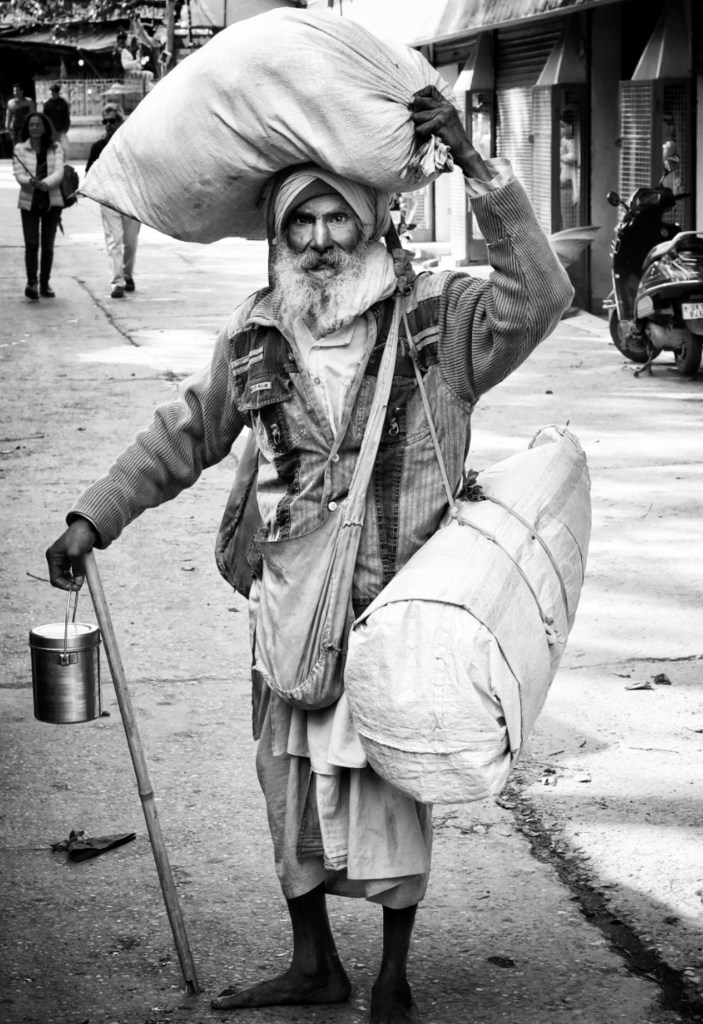
I have no idea where or what the walk to take, the pilgrimage to make, was – or is. Which suggests a rather obvious conclusion: ‘sometime soon’ never came. The walk was not taken; the pilgrimage was not made.
Now, I’m thinking to myself, if the walk under discussion was so appealing – as well as so significant that it transformed into a pilgrimage – then how come ‘sometime soon’ wasn’t right now, or rather right then. If you follow me.
Of course there’s no telling the reasons for the sometime soon. Maybe plans would have been required; travel to arrange; equipment to gather; fitness to acquire. Who knows?
Clearly I was inspired to at least put down in writing that I thought this walk, this pilgrimage, was (or would be) a good thing to do.
Meaning, in that moment, in the present that is (or was) of that moment, that walk/pilgrimage was a thing I wanted to undertake.
Now, while I might have longed to take that walk, to make that pilgrimage, in the present of that moment of writing, and even though planning may have been required, thereby putting off the actuality of the taking and making till some future time, I at the very least could have taken some action – again in the present of that moment – to get the ball rolling so to speak.
So, what’s the lesson here?
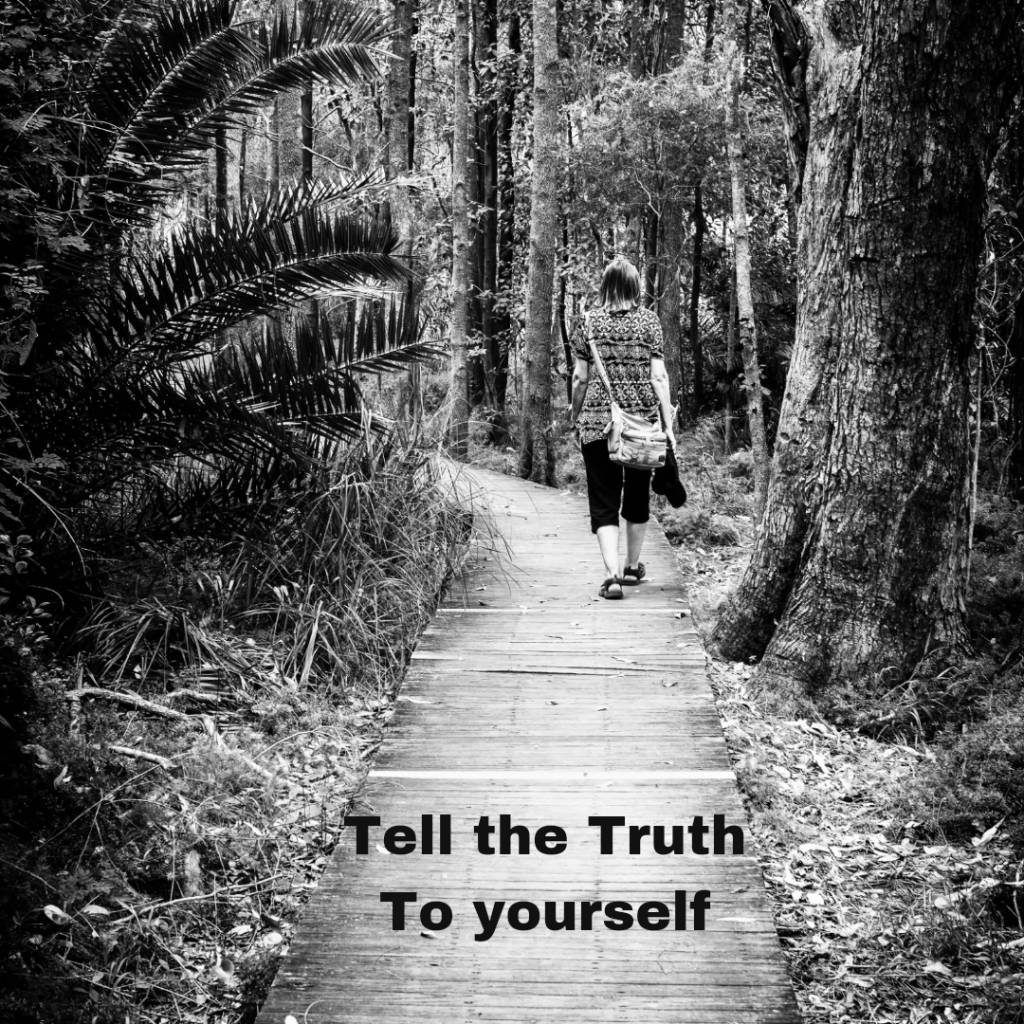
Well it’s simple really, very simple. Maybe simpler to say than to actually put into practice, but I think my lesson here is just this. Tell myself the truth as often and as much as I possibly can. In other words:
Be honest with myself
Let’s look at the options
If I’d really wanted to take this walk, to make this pilgrimage, no matter how remote, how complicated the logistics or planning, why didn’t I take action in that present? Or at least in some present before I actually forgot completely what the walk/pilgrimage was.
And why add ‘sometime soon’ if I didn’t actually desire or intend for this thing to happen? Well, possibly to put of any decision about doing or not doing. Or perhaps it was a way of saying (in completely other words), ‘Well, it sounds very nice, but I doubt I will ever end up doing it.’
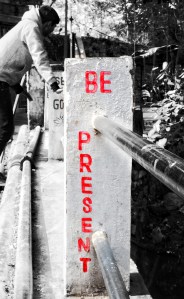
So, honesty, and clear thinking about what I want and what I don’t want. That way I won’t be so attached, so keen on clinging to outcomes that I can’t see clearly, can’t easily know what I am to do or not do. Presence. Being present is what this is really about isn’t it?
To be completely present, to be fully here and now, requires me (all of us I suppose) let go of the maybes, and the ifs and buts as well as the endless ruminations about do this or don’t do that.
If I want to take a walk, or make a pilgrimage, then I say to me: just get on with it! If I don’t, then just say so, and move on.
Last little comment: I would really love for the present to remind me of what this walk/pilgrimage was. I’m a bit curious I guess(yes I know, curiosity is a present moment deflater) Maybe it’ll come back to me now I’ve written this post.
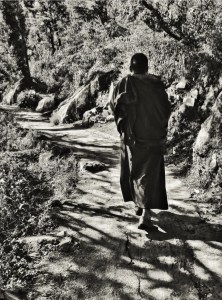
The Paradox of the Hermit Life (Courtesy of @travellinghermit3)
THE BEGINNING OF DEVOTION
Attention, paying attention. It’s the beginning of devotion. And when you see? When there is seeing? Well, seeing is praise.
When we see, what we see, is God. Not the god, or this or that god. There aren’t lots of gods, or so it seems. And in the end, there isn’t even one god: there is only God. So it was said by the sages.
I’m not completely sure where I found this prayer. But I have a feeling it is by Thomas Merton, one of my most favourite and significant teachers and guides.
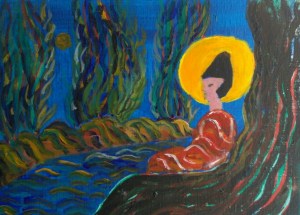
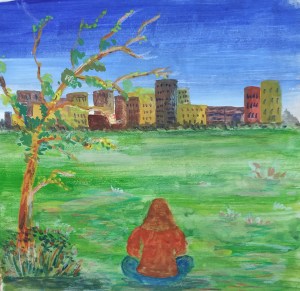
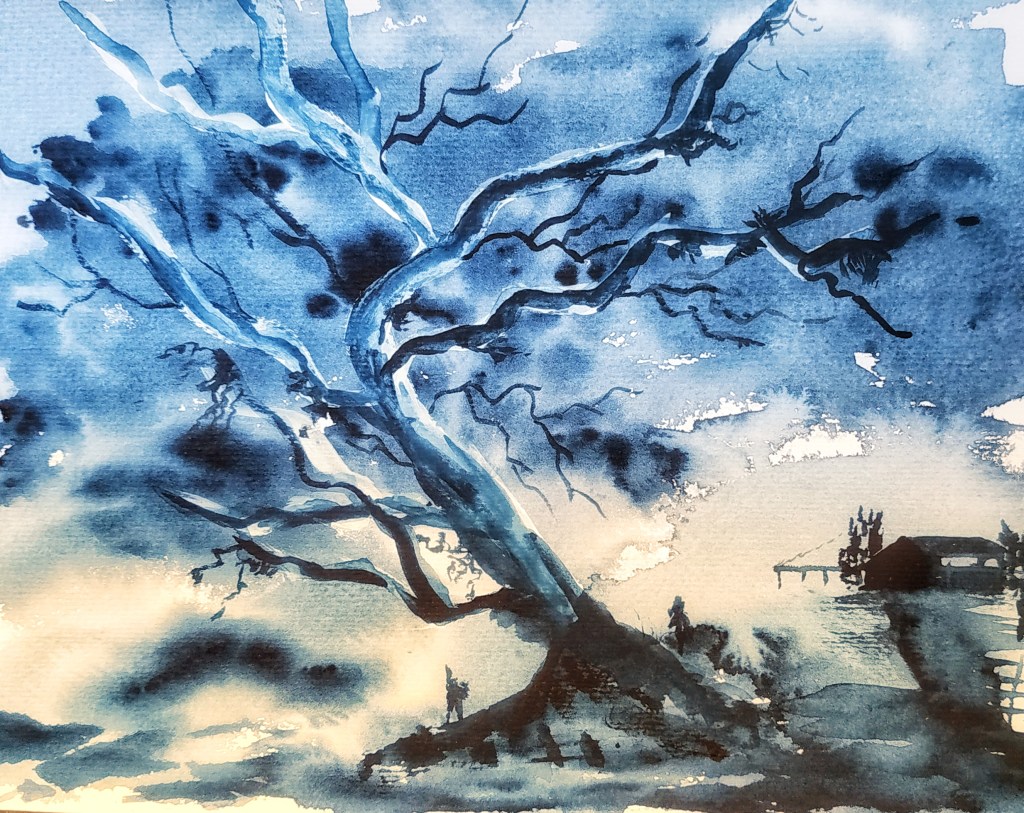
Watercolour by Pauline (with digital enhancement by the Hermit)
Vibing on the mystic trees, their upside is downside, their downside is upside selves telling me: You’ve got to cut through the attachments. Then, not a new, but old made new again, insight confirms, clarifies, brings details to, shines a light on the specifics: Stop desiring what you already have.
Strangely for one who lives a life that at least aspires to be outside the mainstream of our culture and society, I have a lot of rules to follow.
What I mean to say, is that, while for the most part I disdain the ‘rules and customs’, and the ‘demands and obligations’ of the dominent culture and our materialistic society, I seem to be quite capable of making up all kinds of rules for myself. I’m then more than able to put the exact same pressures on myself to obey, to comply and to conform.
One of those ‘rules’ is to try not to repeat topics of posts. Obviously there are posts that fall through the cracks of such strictness, but on the whole I like to keep coming up with new things to share with you.
But it’s been occuring to me lately that musings and contemplations don’t work that way. The mind, the heart, know no such rules as ‘no repittion’. (Actually, now I think about it, there are some things the mind likes to repeat all the time that I could do very well without thank you very much)
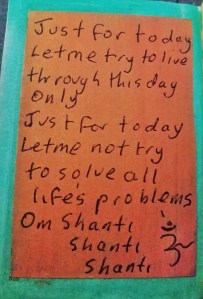
Sometime, not too long ago I think, I wrote about the beautiful George Harrison song, Just for today. I wrote about how I have a slightly paraphrased few lines from that song written in my Bhagavat Gita, and I read those lines every day:
I know I am not alone in my desire to not be constantly trying to sort out all life’s problems; I know many of us would just like a little peace, a little pause in the ongoing rush of life. Just for today, or even just for a minute.
What George is making a plea for here has resonated with me since I first heard this song so many years ago I can’t remember.
Anyway, this was supposed to lead up to the real topic of today’s post which was going to be about my decision last night to spend the next few days in a kind of retreat. Instead it’s turned into a bit of a rave about breaking self-imposed rules.
Actually though, one of the primary motivations for my decision was the very notion of presence, of being still for ‘this day only’. You know the idea: leave all life’s worries and issues, and worldly concerns out of mind, just for a bit.
In other words, in this case I don’t think I mind repeating myself, breaking my own (really rather silly if you ask me) rule. The retreat is timely, and it’s a good thing to be reminded that it really is about presence.
I’ve been getting too caught up in ‘what’s next?’ kind of questions. As well as the usual and very tedious existential angst over life, the universe, and everything past, present, and still yet to be!
So, at the risk of creating a classic oxymoron, it’s now the time to head off to find a little presence, and a little stillness.
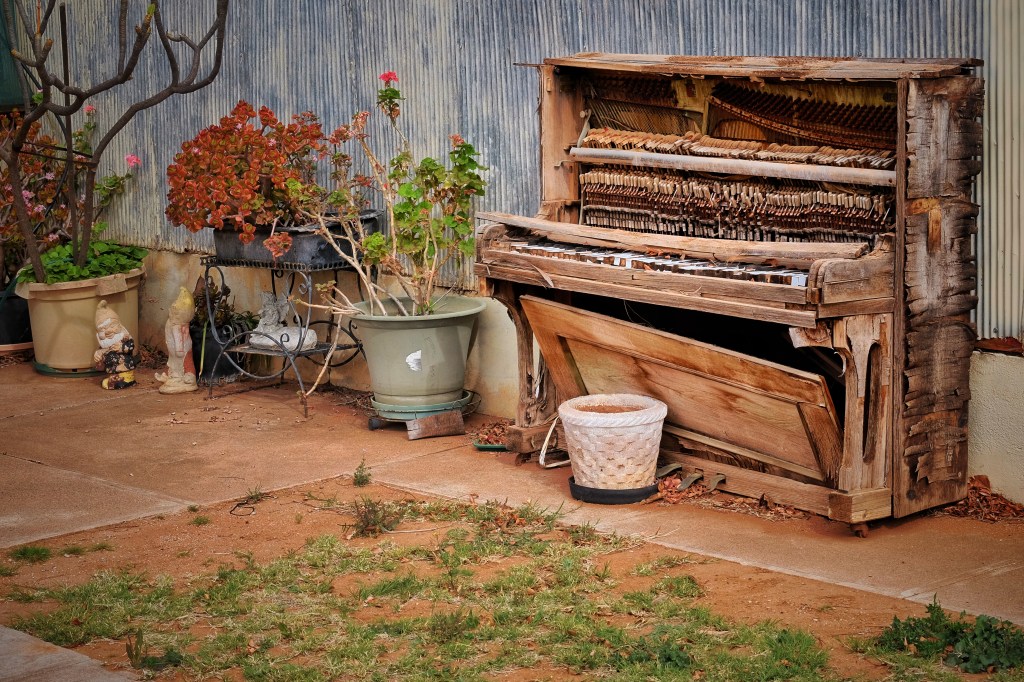
When thinking about a name for this photo I was really tempted to somehow reference the song American Pie by Don McLean. The phrase from the lyrics ‘the day the music died’, kept coming to mind – even as I made the photo of the scene.
And there was that brilliant MASH scene coming to mind. In the scene there is concert pianist who has lost the use of his right hand in battle. One of the doctors attempts to encourage him to not allow the music to die, to find other ways than actually playing piano to share the music.
Both connections seemed obvious: a very old dead piano decaying, returning to old forms of itself. But then it struck me: it was the instrument that had died and was changing forms. All material things change, die, becoming something else.
The music on the other hand, hasn’t died. It not only survived that plane crash and the transition of those three singers, it has thrived. Their music lives on. Music can’t die. Why?
Because music is life. Vibrations, harmony, and sound itself, are the foundations, the roots of ‘life the universe and everything’ (to borrow an old expression). As such, music is not a tangible, physical thing and it needs an instrument to make it manifest in the world; music merely passes through the instrument and emerges into being.
I liked that MASH episode. The doctor (stuffy Major Winchester) says to his patient, the wounded pianist, that as a skilled surgeon he has hands that ‘can make a scalpel sing’. But really, what he’s wanted all his life to is to experience music the way the pianist has.
He says he can play the notes, but he doesn’t have the gift that would allow the music (as in Chopin, Brahms and the rest) to flow through him. He tells his patient, who is depressed and unwilling or unable to consider that the music may not have died:
The gift does not live in your hands. The true gift is in your head, and in your heart, and in your soul.
Major Charles Winchester
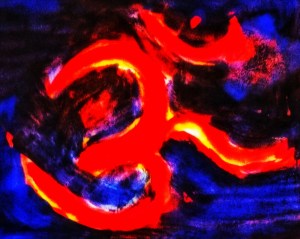
Hearing that line again reminded me of Om. There are a number of religious traditions that consider OM (sometimes spelt as AUM) to be the primordial sound, the very source of creation. The word itself, when written is considered sacred.
Then there is the verse from the Christian Bible that makes the exact same assertion:
In the beginning was the word and the word was with God and the word was God.
John 1:1-3
Well, music needs an instrument – whether in the form of a voice, body, mind, or in an object made of wood, strings, brass, or something else – in order to manifest into the material world and to be experienced by us.
Just think: the piano in my photo in the front garden of a house in a mining town has most likely allowed many generations to experience music. Accompanied them in celebrations and greivings; helped so many through good times and bad times; witnessed people laugh, cry, and even dance;
Of course, Major Winchester’s gifts as a surgeon are that he is a instrument for the vibration, the music of the universe, to make itself manifest in another way.
And what he is essentially saying to our wounded pianist is: ‘Look you can shut it off forever (his words) or you can continue making your gifts – your Self – available as an instrument that allows that music to come into the world for everyone to share’.
Well dear friends, I have pledged to carry on using my gifts and be available in just that way that allows the music to come through me in whatever form and shape it takes.
By gifts I mean those things that have been granted to every living being: the ability to create harmony; the ability to make and spread good vibrations; and the capacity to appreciate and celebrate beauty.
And when you think of it there is no way to put a limit on the number of ways that the music that is Life might be channelled through each and every one of us
A good place to pick up some good vibes, get into harmony with yourself and appreciate beauty all at the same time
In my own ways I try to make harmony in and around myself as much as I’m able. I am always attempting to cultivate behaviours and attitudes that help to create and spread good vibes. And I constantly seek to appreciate beauty, even when the world seems to be only ugliness.
Of course, as I say I am only the instrument. The music -the beauty, good vibes, and harmony – exist with or without me. But music in whatever shape and form it takes needs an instrument if it is to come into our material world and be there for all of us to share.
So, this is my prayer: that at least every once in a while, every now and then, I can actually be that instrument .
PS Just a little postscript. When passing that particular garden (the piano garden I call it now) I was drawn to this:
Eagle-eyed Garden Guardian
Just as I photographed this lovely creature, I heard my partner’s voice:
‘Did you see the piano?’
Now being in what you’ve heard me call the Zen Zone I was fully focused on and absorbed in, our winged friend. Coming back from wherever I’d been, I did in fact notice the piano.
You see, you just never never know where the music is going to come from. I might not have seen the piano with my own eagle eye but lucky for me music had a ready and willing instrument standing by to remind me of which way to look.
Yesterday found me (for a couple of hours anyway) out on the suburban streets close to the hermitage. Camera in hand and trying to cultivate an attitude of Contemplation. Working for the moment my heart, my head, and my mind all came together to help my camera make a photograph.
Well, in terms of contemplative photography, the outing was a bit of a struggle: getting into the Zen Zone isn’t always easy. And come to think of it, it’s not always part of the plan is it?
I don’t mean the little plans and intentions the ego comes up with about how things are going to turn out. I’m talking here about The Plan: what the Divine has in the works for us.
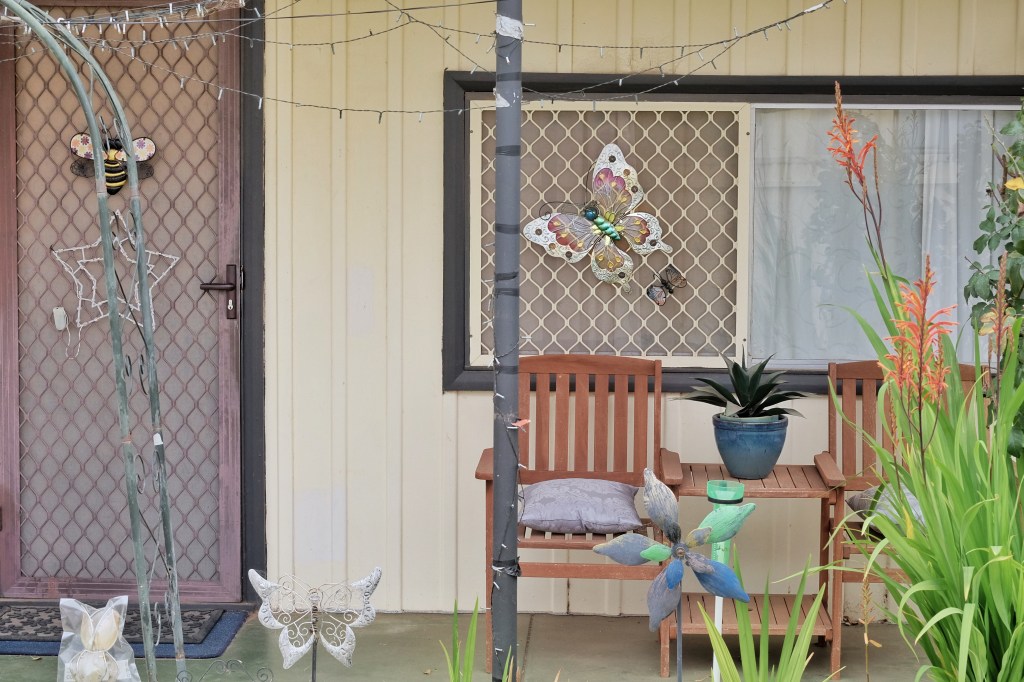
Anyway back to my walk. I kept walking, sometimes making photos. As I said, it wasn’t easy getting in the zone. Suddenly my eyes were drawn to a particular house. As I looked through the viewfinder I noticed a butterfly on the wall. On the window actually.
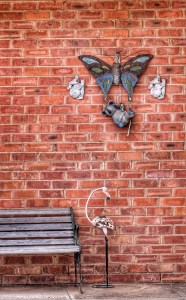
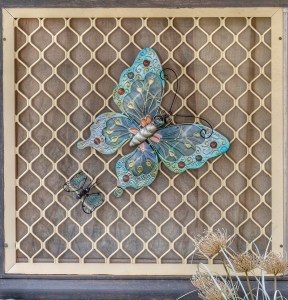
Not a living, flying, being as you can see. More of a kind of garden ornament attached to the front of the house. It struck me as I continued looking, that I’d already seen – and photographed – several ‘butterflies’ so far in that walk.
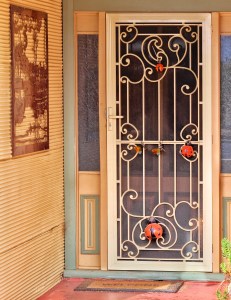
Four actually. In the space of an hour, and within a couple of streets of home. I’d seen them on walls, windows, and on doors.
Through time and in many places around the world, various cultures have looked at butterflies as symbols of transformation, for change, and renewal.
And, it seems to me, that butterflies can appear to us almost lighter than air. They kind of float on the air currents. They’re also known for their darting way of flying in what might seem to us one random direction then another.
So, butterflies have also been seen as symbolic of the human mind with its tendency to dart all over the place from one thought to another. They are said to remind us that we can in fact control and direct the mind.
In that case then, were these repeated encounters with butterflies – albeit of the ornamental variety – some sort of message for me? Perhaps I was to slow down, stop taking myself so seriously and to make changes? And of course remembering that I’m perfectly able to deal with consequences of any changes I make.
A Window for Two
Well, here’s the funny thing. Literally not until I sat down to draft this blog did it occur to me that I have in the last couple of days made what for me seem monumental changes. Or to be more exact, I have put into motion changes that are yet to reveal what if any transformations they might lead to.
You see, over the last few days I have been systematically deleting all my social media accounts (with the exception of a messenger app to speak to my son). I’ve had most of these accounts for up to 15 years or more. So, while I’m absolutely certain that this act of detachment from some of the things in the world that don’t sit well with my nature, I’m still feeling a bit lost, a little empty.
Okay, the butterflies: what have they to do with any of this? Transformation? Change? Lightness? And the ability to float through changes in life? Yes all of these. And we all know very well that butterflies undergo some pretty tough transformations as they evolve into what they are to become.
Who Invited the Lady Bugs?
Something I read once said that if you see a butterfly you should look at what you’re thinking; ask yourself what’s next for me? What changes are in store? Although all those butterflies of yesterday were ornaments on walls and so on, I have actually at other times been privileged to photograph living and flying ones.
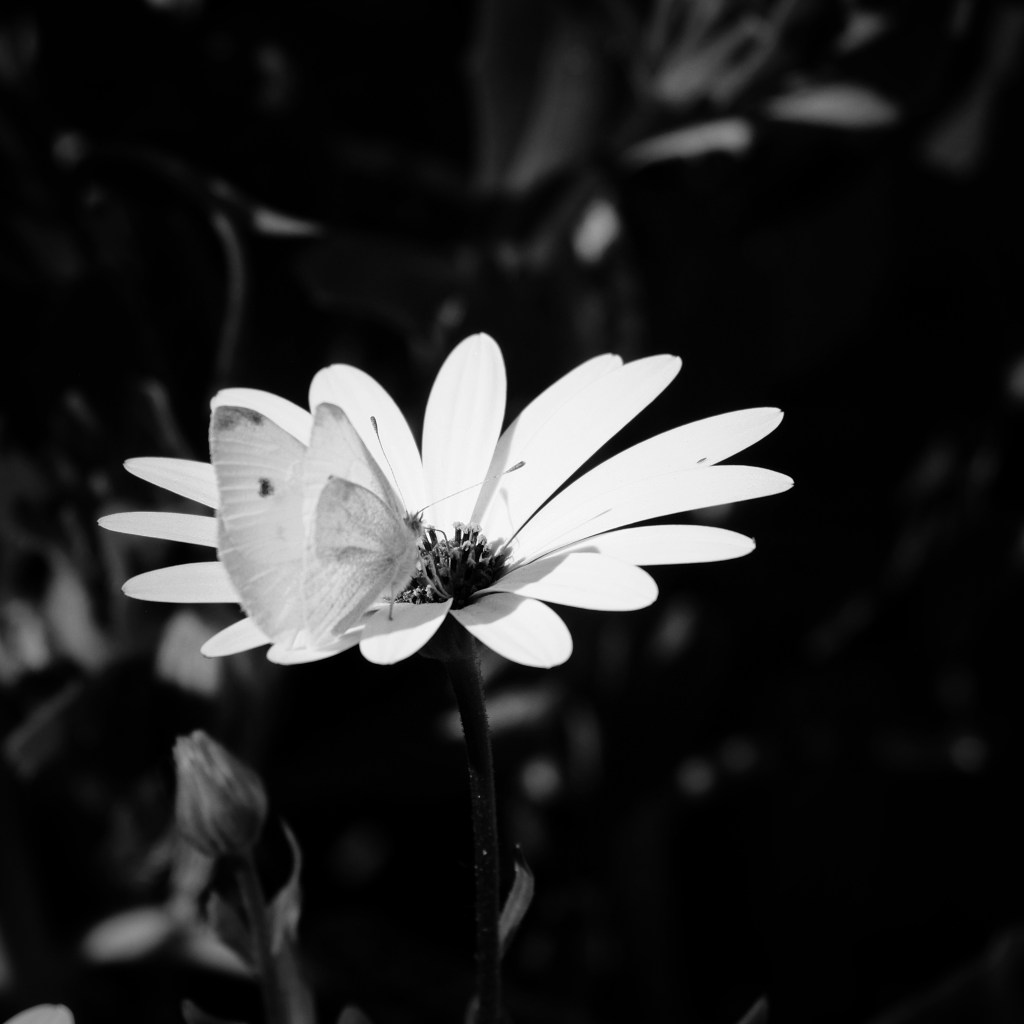
In fact just the day before yesterday I met a small white butterfly flitting from one white flower to flower. In the space of a very short time, this beautiful creature gifted me with a very small moment’s stillness, and it gave me a photograph. Here i share that one with you.
Early Christians associated the butterfly with the soul. So, yes, you could say that my meeting with that particular butterfly was a meeting of souls.
But what of the garden ornament, inanimate butterflies met yesterday?