Oh No! Another Blog About Chanting

Not too long ago, I completed what I’m now calling my first formal (structured) study of the entire Bhagavad Gita. Of course this wasn’t my first exposure to that text: I’d been reading it on my own for a few years before I came upon a teacher to act as guide.

Anyway, since that bitter-sweet day of completion, I’ve been looking at ‘random’ verses on a more or less daily basis as a way to keep in touch and to act as a reminder of what I’ve learned.

Just opening my Bhagavad Gita at random, just to see what the universe wants me to think about.
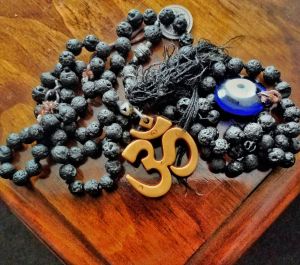
Today, I happened to open it up at what are a series of my favourite verses. (I know I’ve got a lot of favourites; it’s that kind of book). In these particular verses, Krishna describes the meaning and significance of the mantras Om Tat Sat.

In a nutshell, these three syllables, these mantras, are a way of describing the Absolute Reality of the Universe, or God, Consciousness, the Truth, the laws of nature and the universe. Whatever names we might use to encompass all existence.

Krishna details when and why to use the mantras (it’s one mantra made of three, for the technically minded). Again in a nutshell, it’s a mantra to use whenever we perform our duties, basically any actions, with a devotional mood.
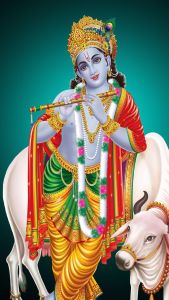
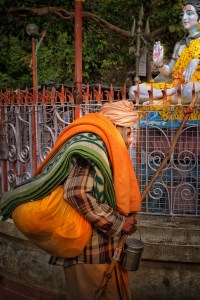
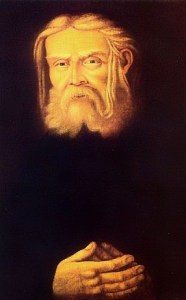
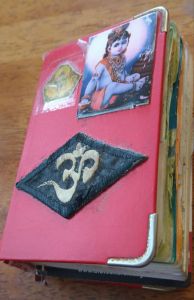
By the way, that, and the inclusion of my favourite image of Krishna, doesn’t necessarily imply that our actions have to have a ‘religious’ intent or flavour: Any action we undertake, for whatever purpose as long as it is motivated by Truth, Love and right thinking, qualifies as being devotional.

While you can see the actual verses yourself via the Om Tat Sat link above, I would like to share with you my very liberal paraphrasing of Krishna’s teaching on the mantra. Also, I am adding a few observations of my own that I hope serve to clarify this great teaching. Oh, please forgive any repetitions, if they occur.

The syllables Om Tat Sat are the symbolic representation of the Supreme Absolute Truth; what I choose to describe simply as all that is. It is called by any number of names or none. It’s existence itself.
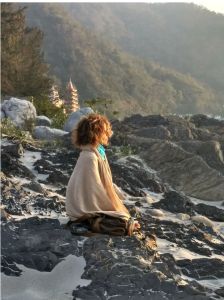
It’s an ancient practice, this chanting of these three syllables as a mantra. It is recited when one is engaged in any action in a mood of devotional service. Meaning any act that is imbued with a prayerful attitude and feeling, and with a mood or attitude of devotion to and recognition of, Truth in all things.

And it includes any and every action we undertake, from washing the dishes, to sitting in meditation or silent contemplation. And everything in between.

Om

Om is sometimes called the primordial sound, the creative principle, the word from which all creation sprung. I’ve also heard it defined as being the Big Bang, from which the universe emerged.

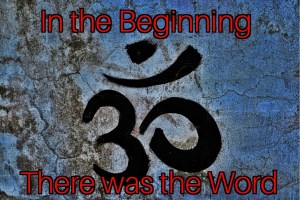
Om is considered the sacred sound and word by many cultures around our world. Consider the opening of John’s Gospel in the Christian New Testament :
Om is to be chanted when beginning and performing any and all actions motivated and driven by Truth. Chanting Om assists us to actually realise or understand with our heart and not just our mind, the presence of the divine or the universal consciousness in all that we do.

Tat

Tat is chanted by those wishing to be freed from attachment to material things, which includes the desire or compulsion to enjoy the fruits or rewards of our actions.

In the beginning was the word, and the word was with God, and the word was God

John 1:1 New Testament

Attachment is when we depend for our well-being or happiness (physical, mental, or spiritual) upon another thing (money, job, status, etc), person, or desired outcome. Attachment (and clinging, extreme longing, compulsivity), Buddha told us, is the cause of suffering: when things are going well with the things or people we are attached to we are elated; when things aren’t going so well, we are miserable and we suffer.

Sat

The syllable Sat indicates both reality and goodness. In other words, Sat is used to represent that Absolute Truth or Universal Consciousness that we’ve been discussing.

Sat follows very nicely on from Tat as it helps to strengthen our Dharmic (motivated by what’s right and true) actions, so that they actually become Sat – Truth.

So, chanting Om Tat Sat when performing any or all our activities in the world (as well as within) will help us to come to realise or understand that there is only the one Absolute Reality, the one consciousness that is not only universal in nature, but is actually the universe itself.
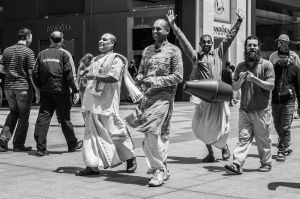
Oh one more quick note: Often you hear the chant with an extra word up front: Hari Om Tat Sat. Hari is a way to address that which removes darkness, that aids in the shining of the light of knowledge.

It’s a word that represents that Absolute Reality that we’ve talked about here. It can also refer to King or Lord, or otherwise influential entity. I find it rounds out the chant, and I like it!

Please feel free to explore Om Tat Sat for yourself. You will find a lot of great recordings of the chant on YouTube, and the wikipedia link at the beginning of this post is very Illuminating as well.

Om Tat Sat
Aspire to a Balanced Life

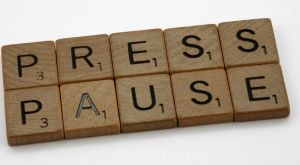
‘I pause to rest when I feel the need’.

Makes sense, don’t you think? It is a really excellent affirmation to give oneself isn’t it? A wise piece of advice also. And I agree with you: great advice, sensible, logical, very helpful for anyone and everyone. Unfortunately, it’s not something I can honestly tell you that I practise on any kind of regular basis. It’s more likely that I would have to admit to you that:
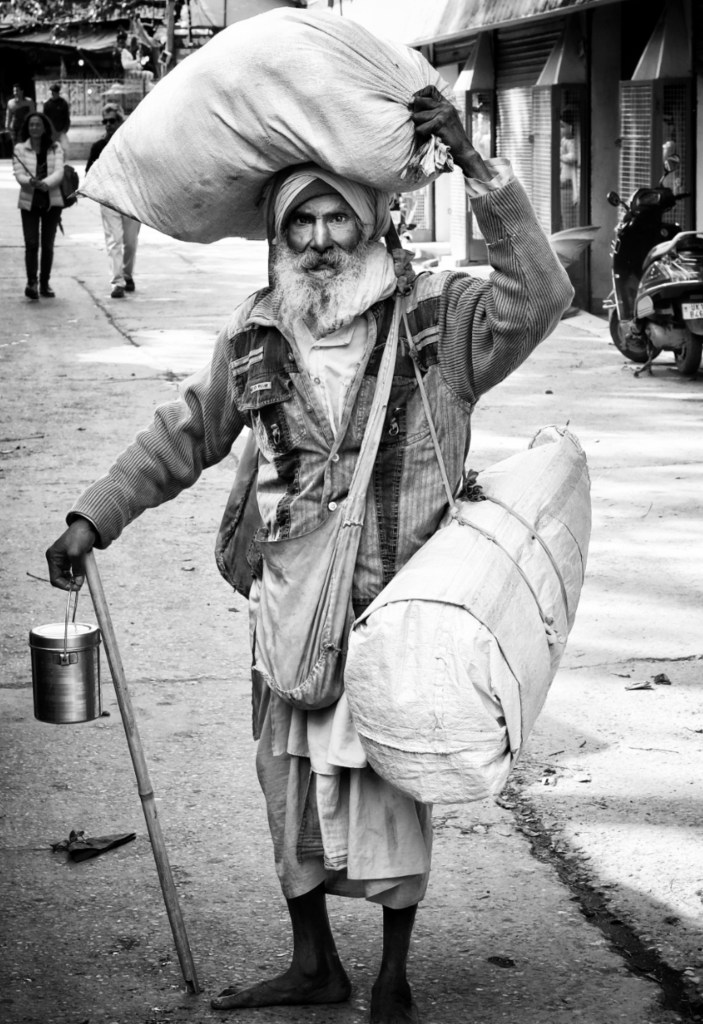
‘I am always hurrying to get things done, and until I do, there’s no rest. Doesn’t matter how I feel’.

And it doesn’t seem to matter whether I have a lot to do, or only a little – or even if there’s nothing needing my attention. Whatever the situation, you will catch me in a hurry, going as fast as I can to get whatever there is, done. ASAP.

Okay, I admit it: I am exaggerating slightly. But not by much. Always rushing, always ‘getting ahead of myself’, always in a hurry. It’s been a problem for, well, forever really.

And I know I’m not alone. The world – as in society, economics, education, and the rest – is in a never-ending race to do whatever they do, and to get it done as quickly as possible, regardless of the cost to the planet and all of us who live on Her.

And, obviously, we are all caught up in this ‘race’, in pretty much every area of our lives.

Whether it’s an exercise program we set for ourselves, or which has been forced upon on us by advertising, cultural shaming, false identification with our bodies. Or the intense and all-pervading pressure to be ‘more productive’ at work. Or the newest mobile app that will magically make even our off-work lives more productive and (supposedly) give us that extra edge in the marketplace (whatever that means).

And remember school? High school? College? The night classes you took for fun and relaxation? How many classes began with the teacher giving the following little speech:

‘Now, we can really take our time with this class/course/semester, and we will be able to take as many breaks as we like. We have plenty of time to cover all the material. So, sit back, relax, take your time and enjoy.’

Not many I’m guessing.

Now, as a hermit, you might think I lead a quiet life. And it’s true: I do. Relatively speaking that is. All of us are required to be constantly taking some kind of action in order to maintain life.

Just like everyone else I have to do whatever it takes to just be alive: Cooking, eating, cleaning, laundry, shopping, praying, meditating, relating to loved ones as well as other people I encounter.

Then there’s reading, studying, talking (way too much in my own case), thinking. Well, that’s probably enough to be getting on with, I think.

Despite my hermit life, all these and more I do. And for me, it’s always in a rush and hurry. Well, not always perhaps, but too often for my liking, and way too often for my mental health, peace of mind and for the calm, peaceful like, I aspire to.

Whatever our personal lifestyle, or way of living, we are all in the same boat, so to speak.

Fix your mind of truth and be free from the concerns of the material world.

So, what to do? How can we slow down, get some sort of equilibrium or balance in our lives? How do we stop the rush, the panic, the pressures that besiege us and sometimes overwhelm us?

Well, there’s the problem. I won’t say I have no idea. I can’t say I don’t know. But, and here’s the point, while I can tell you how I am trying to do.If you’ve read what I’ve told you already, you will realise that whatever I try only works sometimes. And a very few sometimes’s at that.

Mindfullness

I try all the time to make everything I do, even if it’s just walking down the street, or washing the dishes, a prayer. Which is really simply another way to say that I try to do everything mindfully.

Sounds really simple when I put it like this, but of course it’s not at all. It takes discipline (I want to talk about this a little more later on). It’s about focusing on how you are interacting with the world around you, and obviously this starts with being fully mindful in each moment as you take action in the world, whatever it might be.

Simplify.

Not easy, I know. Life is full of details and complications. It’s full of conflicting priorities, each with their own sense of urgency and importance. The simple advice is to do what you can. Once again, tackle all the things you have to do one step/thing at a time.

Did you notice the italics? Be alert to the old urgent vs important dichotomy: not everything is of equal importance, regardless of appearances. Equally, we have to discern a thing’s or action’s degree of urgency for ourselves. With obvious exceptions, most things aren’t as urgent or immediate as they are presented.

Minimise.

Sound familiar?

Listen carefully to the commands to buy, buy, buy, and do, do, do that we are constantly being bombarded with from all direction. Ask yourself one of the big self enquiry questions: Do I really need … ?

Related to this is the question of how much money we actually need to have a good life, support our families, and so on. No guru, teacher, book, or anything else can help with this one; we are all different and have our own unique and specific needs. Only you can know what is right for you.

Discipline.

I mentioned this aspect of the solution to bringing a calmer, slower, less pressured vibe of equilibrium to our lives. For me (self-discipline is what we’re talking about here) is not only about willpower, though of course, it’s an important part of the picture. A quote from Bhagavad Gita that I think points us in a helpful direction:

What does it mean, ‘fix your mind on truth’? While it is very often an extremely difficult thing to do, fixing your mind on truth simply means keeping your mind (and consequently your body and heart too) focused on what is actually real, important, and meaningful to you. It means staying focused on what truly resonates with you as the way you wish to live your life.

So hard is this for me to do, that I am engaged in an ongoing project (please forgive the productivity cult lingo) to keep focused on what is true and real to me. To be honest, while I’m pretty sure that it does get easier with practise, I will always be refocusing on my truth. As they say, it comes with the job description for all of us human beings.

Now, about the second half of that Bhagavad Gita quote. If we do manage to reach that stage where we are able to focus on the meaningful and important, the truth for us, will all our troubles, problems, pressures, commitments of all kinds, just magically go away? Can we eliminate completely ‘the concerns of the material world’?

Absolutely not. The only thing that will potentially cease is our constant state of  being stressed.

While the things we worry about now won’t disappear, the worry itself may lessen. Our abilities to function more effectively and happily in the world (in our family, our work, our own mind) will also improve. We really may become one of those people who always (or most of the time) take things in our stride.

But we should remember that the pressures, conflicts, health issues, the need to support ourselves and family, relationships with all their ups and downs, remain; they are part of the human condition; they are the natural order of things in this material world.

What we can do, is try as much as we can to control our minds, trying to remain focused on that which is true and meaningful to us.

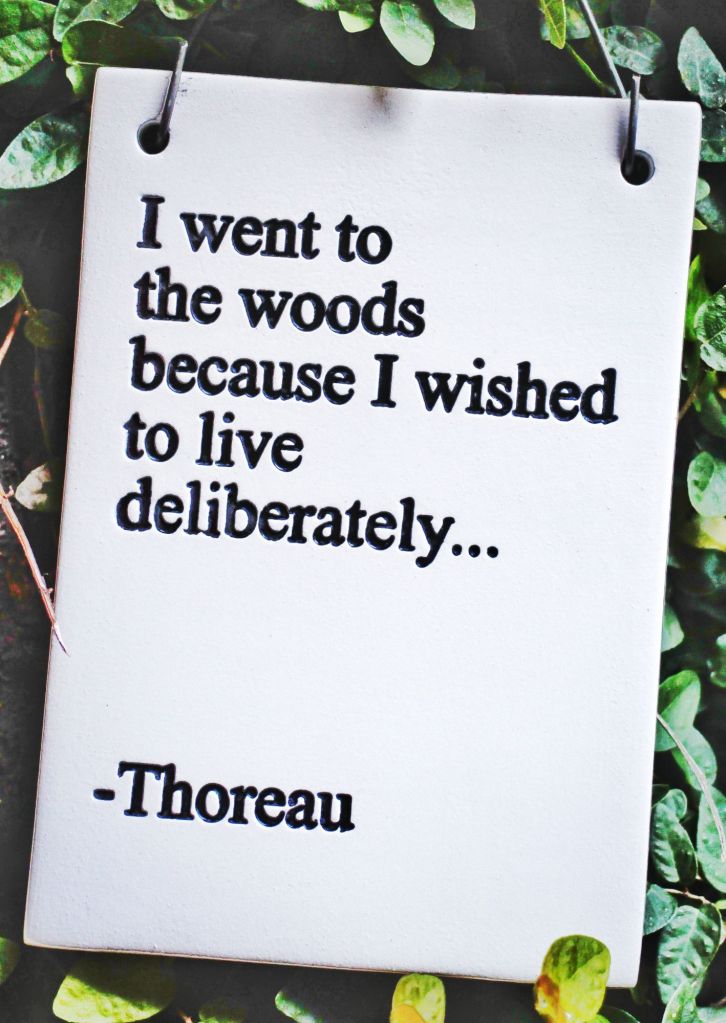
Minimise, simplify as far as possible in all everything. We can focus on all that is true and meaningful in the life you are creating on an ongoing basis. And, of course, it is one considered and deliberate step at a time.

For Thoreau, going to live in the woods was the natural thing to do. It resonated with his soul and heart.

Of course going to live in the woods isn’t for everyone, but if it speaks to  you; if it is in tune with your own truth and you feel it would give your life meaning, then why not?

All of us have within us our own ‘going to the woods’ equivalent. It might be anything. Go find it! Rest there.

The last words of this post are the same as the first. Actually as I think about it now, I see more clearly that this entire post with all its words and thoughts, might be summed up very nicely by that one small affirmative statement. Well, I might add three more words of my own:

In all things, I pause to rest whenever I feel the need.
Peace and love from me to you.

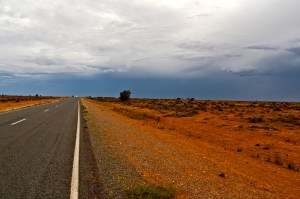
The Road Rises Up:  A poem about journeying (Reshared with a note added)

It’s a funny thing, but as soon as I start thinking about resharing older (let’s call them prior posts instead) all sorts of posts come up begging to be the next in line to be shared again.

Anyway, I’d sat down to write something on a quote I really like:

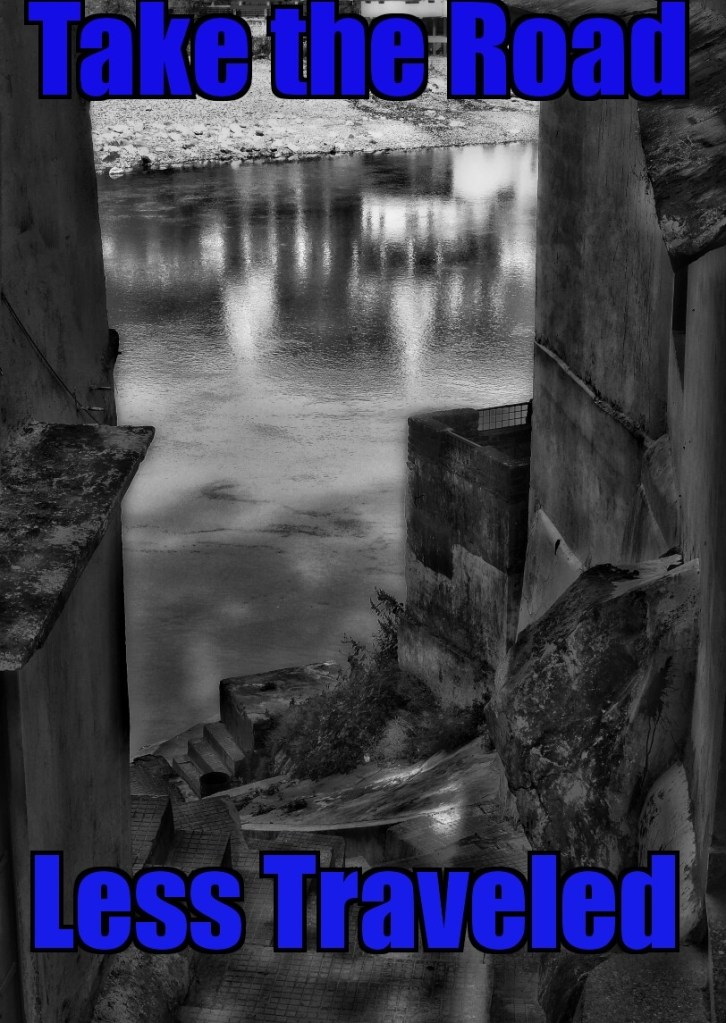
Forget all that and hit the road into exile.

FROM A LONG LOST DEEPLY BURIED NOTE-TAKING APP ON MY TABLET

But nothing was coming. Then suddenly I remembered: I’d already written (sort of, kind of, in a manner of speaking) about this topic, if not this particular quote.

Looking up the post, well it did its thing and said very clearly and in no uncertain terms, Post me!

So, here it is dear friends. I will let it speak for itself

Today I’d like to share a poem with you. I wrote it exactly a year ago, but it’s about a day many many years ago. At other places on this site I’ve mentioned that cliched but for me ever so real question: Am I running away from something or am I running towards something?

In one of those other places I joke about my answer: ‘Neither. I’m just a journey person’. Well, this poem began life as a story of the day I first met Jesus freaks as I hitchhiked on just one more random excursion.

Then it becomes at the same time a piece about running, or journeying towards. And, there’s more: it then speaks about the journey as the point of the journey; the movement is the thing

But the thing morphed into a rap about journey beginnings, or at least in the sense of my ongoing attempted, and until a lot of years later, futile escapes from the madness of family and circumstance. That’s the running away bit.

You see, there was something holy felt then, as now, about those seemingly random hitching trips (not that I would dream of hitching in these times). Somehow I knew the Road was the escape route from the growing madness and horror.

Of course I was only able to partially articulate this at that time, but I remember even at 17 (no, it was a year earlier when I’d made my first attempt. I’d forgotten about that) feeling a sort of specialness about the covering of new (for me) ground, the movement, then the arrival at new (for me) places, new towns and cities.

Much of this pilgrimming (for that is what it was) was done in solitude – except for interactions with drivers of course (one of whom was on the day in question one of the said Jesus Freaks) and other necessary people along the way.

I felt a sense of belonging when on the Road; a kind of being in place and in sync. A sense of belonging that I kept fucking up as I let the trickster ego with its taunting messages of fear, loneliness, greed for things and status, and the rest, take control of me and lead me on twisting and tricky roads back to madness.

And now, these 50 years later, I survey the damage done, the cost to self and others. Especially others. No use of course, to look back with wishful thoughts of what if things had been done differently, what if other choices had been made. Such is not truth, not real. Well, none of it’s real anyway is it? Samsara is all it is –  it’s all a sea of madness and illusion isn’t it?

Anyway, here is the poem. May it speak to you.
Peace

The Road Rises Up

I woke up that morning marooned in Albion
in a village of warriors, on a street, in a house,
going mad in a nest of madness
on an island of madness, in a sea of madness.
Escape, refuge, safety – waking thoughts.
Waking dreams. Looking for a way out.

The Road. The Road rose up in my mind.
The Road will save me. Not the shrink
the patriarch screamed I needed to see.
The Road was waiting; I found it waiting for me.
And my thumb in silent salutation and prayer
held aloft in supplication as I trudged on that seemingly straight but trickster road.

Welcome to the pilgrims’ way, the Road greeted me
as I trod ever more lightly
and Babylon’s chariots hurtled past me bound for far nowheres.
Or maybe somewheres.
All in the fast lanes and howling deceptively
of invitations and rejections, attractions and aversions.
Then – in time – an invitation proffered and accepted.
This pilgrim was on his way.

All I Had to Do Was Dream

Last night I had a dream. Of course there’s nothing unusual in that: I dream every night, every time I sleep (and sometimes when I’m supposed to be meditating as well). Actually I’m no different than probably every other living being in the Universe: I dream when I sleep.

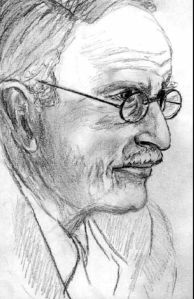
No. The particular dream isn’t my point here (though we’ll be discussing it soon enough). What makes it worth noting is the fact that last evening, before going to bed, I watched a documentary on Carl Jung and The Red Book.

Jung compiled The Red Book at a time of personal crisis and distress. Using dream analysis, his own imagination, and intense self reflection, he used both paintings and text to express what he saw and understood from these practices. Hauntingly beautiful, other worldly pictures depicting dream images, archetypes, both personal and universal, helped him delve deeply into his unconscious mind and the collective unconscious.

I gave up trying to interpret dreams a long long time ago. Don’t ask me why: I probably couldn’t say. Most likely something to do with a kind of wariness about going too much into where the mind wants to take me, and my sense that the “dream” doesn’t stop when we wake up.

Still, watching this doco prompted a lot of discussion with my partner hermit, and a lot of thinking on my part. The mind is not our enemy, though sometimes I feel that it is. Well, it can be the enemy if we allow it, but equally we can allow the mind to be our friend. After all, what activity of any kind is possible in the world without mind?

So, with that in mind (get it? in mind?) I will share with you that above mentioned dream from last night.

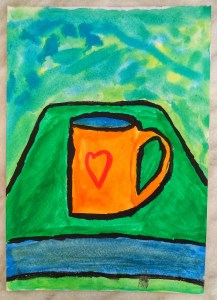
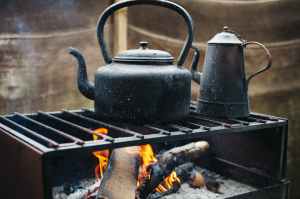
In the dream I was in a small kitchen, making tea. I’d put on a kettle to boil. A very large, heavy kettle, probably three or four times the size of a normal one. I was in the process of looking for a mug or cup, and just as I picked one up that I liked the look of, a crowd of five or six people came bustling noisily into this very crowded space.

‘I’ve just put the kettle on,’ I called loudly over the din. As it happened I’d filled the kettle almost to overflowing, much more than I needed for myself alone.

‘There’s plenty of boiling water to go round.’

Then I busied myself looking for something (a tea bag perhaps?), and when I finally turned back to the kettle to make my tea, I saw it was gone. I was very unhappy with this disappearance: After all, I was the one who had filled the kettle and put it on to boil. Then without a thought or a, what’s the expression? without a by your leave, it’s all gone, nothing left for me. Not only no more water, but nothing to boil more with.

I looked everywhere, even outside the kitchen. Outside was a camp ground and apartment complex, where I (and presumably all the other people) was staying.

Anyway, that’s it. All I remember at least. So, the meaning? Was I merely processing trivial facts and events from my day in this strange fashion? Or was I in touch with the deepest part of my psyche and with the collective unconscious? Possibly a bit of both.

It’s not a big job to make a guess about the meaning. I had a plentiful supply of water (or whatever), and without thought, put the needs of others before my own. But then, I actively resented what had been ‘taken from me’, even though I had freely given it in the first place.

So, the message I take from this dream? Just as I’ve been studying lately, the fruits of my actions are not my responsibility. I have no say over what, if anything, will happen as a result of actions I take. All I am responsible for is the taking of the action itself, the manner in which I undertake it, and the attitude with which I approach the actions I take. That’s it. That’s all I can do. The rest is up to the laws of the universe. Call it Karma, or Natural Law.

Another idea just occured to me: When I take action (like boiling the kettle) and then serve others, I am serving Self, all life, everyone and everything. And obviously that includes me. I’m not suggesting I should have made sure ahead of time that I’d ‘reserved’ enough water for myself, but at the same time …

I might keep this dream analysis thing as practice to practise occasionally, when the inclination or inspiration is there. No more blocking memories of dreams, no more stubborn refusal to reflect on dreams. After all, I spend a lot of time contemplating and reflecting on what I do in my waking life, how is it any different just because it happens while I’m asleep?

Making Peace with Poetry and a Prayer

Namaste my friends

The poem I want to share with you today has, I think, been shared on this blog before. I haven’t checked because I didn’t want to be tempted to censor myself and not post it again if it has been posted.

The poem, titled simply Peace Prayer, has a repeating refrain in each verse:

Our Lady Queen of Peace Pray for us.

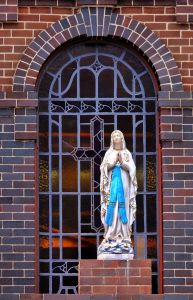
A couple of days ago I came across a church dedicated to this particular manifestation of the Divine Feminine. I know it doesn’t seem to be such a far-out coincidence, but up till then, I had never encountered a church with this name.


So, obviously, it reminded me of my poem, written a couple of years ago now. As well as the story that prompted its writing:

When I was 12 my father went to war. As a professional soldier, he went as a part of this country’s commitment to its American allies in its war against Vietnam.

Our family was, at least nominally, Christian at that time, and anyway, desperate times do indeed call for desperate measures.

Which means we, my mother, my sisters, and I, formed a tiny prayer circle every night for over a year to pray for my father and for peace.

These days I no longer label my beliefs, not if I can help it anyway. What I seek now is the Divine wherever it is to be found. Which is everywhere of course!

In any case, here is my poem. It’s always the right time to pray for peace, though we should always remember our prayers are really directed at ourselves. It’s up to us to answer the prayer as we are able and see fit.

Peace and love to you all.

Peace Prayer

The father, the husband, the man of the house
He’s away. At the war.
Our Lady Queen of Peace pray for us.

Away at the war, yes,
In a far off land. Not his own.
Our Lady Queen of Peace pray for us.

Away at the war. “Incountry”.
that’s what they call it.
Our Lady Queen of Peace pray for us.

At home the children, the wife and mother wait.
Wait and pray.
Our Lady Queen of Peace pray for us.

At home they wait yes.
Each night on their knees,
in a circle. Prayer circle.

Away at the war, he is fighting. For what?
At home, they are praying. For what?
Our Lady Queen of Peace pray for us.

The Best Job in the World

Indeed, it is clear to all who dwell there that through them the world is kept in being

I jotted down this note I forget how long ago. Over the last few years I’ve read a lot about the early Christian hermits who lived in the deserts of Egypt, Syria, and other areas of that area we label the Middle East.

While I think it was one of these early hermits who uttered these words, it may instead have been a monk or hermit from the 9th or 10th Century, living in the forests of Russia or Eastern Europe. (I wish was a lot less careless with sources for things I note down).

In any case, it was spoken by a hermit or monk who, along with perhaps thousands of other men and women, fled the strict dogmatism of both government and religious institutions , as well as the corruption, materialism, noise, and all the other distractions of the cities and towns.They went to the deserts, the forests, and other remote places, in search of solitude, silence, and peace.

They longed to commune with the divine. They chose to bypass the mire of worldliness, and hoped to find a better way to serve the divine and the world. The writer or speaker of our quote is pointing our attention to all those who went to the deserts, the forests, and other sanctuaries, who in her or his words, believe they are actually keeping the world going, and its people too.

These nuns, monks, priests and hermits, knew that by communing with the divine without distractions, and living a simple life completely and absolutely centred on the divine, was the way to save the world.

‘So’, you might be saying with a slightly cynical tone in your voice: ‘These are people who have ‘escaped’ from the world and are ignoring governments and the law, rejecting social status of any kind, not associating with other people like other good citizens. They’ve gone to sit in a hut or cave or whatever and are doing nothing productive at all. They’re not buying stuff so they aren’t contributing the the economy. And you say they are the ones keeping the world spinning round? Hardly.’

There are hermits everywhere.

Yes, I think they are. Keeping the world spinning I mean. Just as mystics from all the world’s religious traditions, these women and men of the deserts – and the forests too – knew that the world they’d left behind wasn’t real. Well, yes, it’s real enough of course: I mean we only have to look around us, and feel the workings of our bodies. It’s real alright.

But, realer (I know, it’s not a real word) than this physical world we are in and are an integral part of, is what lies within us as well as everything else in the Universe:

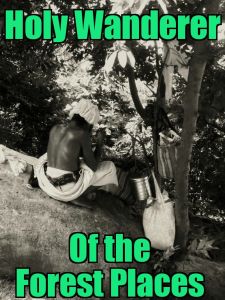
Holy Wanderer
Detached from all Worldly Entanglements

The divine, God, the life force, Consciousness. So many names for the same thing. Many of us sense that at the core of ourselves there is ‘something else’; that there is some kind of intelligence for wont of a better word. This intelligence is what illumines life, as in life, the universe, and everything.

But, we don’t see this, or not so often anyway. The mire of worldliness (a phrase I mentioned earlier and which I like very much) seems to be specifically designed to keep us in the dark so to speak, about our true nature.

Think about the seemingly endless focus on materialism with its temptations and promises to make us happy; the conflict and competition among individuals and nations to acquire more power, possessions, land and anything else that ‘they’ve got and that we want’.

Mire is a good word: We’re trapped and sinking fast in a kind of quicksand.

And this mire keeps us from becoming aware, from realizing, that we are the Consciousness (the word I prefer but, as I said, names are just names) mentioned above. It keeps us ignorant of our true nature, and we go on and on struggling to keep afloat in the world.

The hermits of the past and the present, the nuns, monks and other contemplative people of all kinds, and, in many and various places, are all engaged in a quest to know – and yes, to realise – that they and everything else in the material and non-material universe is Consciousness.

I believe that, far from being unproductive, from ‘doing nothing’, It is the engagement by such people everywhere with this quest that does indeed keep the world in being.

Courtesy Wikimedia Commons Thank you

I would like to leave you with a couple of quotes if I may.
The first is from Abba Moses, one of the greatest of the early desert fathers who was born in Ethiopia and lived in Egypt in the 4th Century:

Our objective is puritas cordis,’ Abba Moses told Cassian and Germanus [fellow monks].A heart kept free of all disturbance. The more we cultivate such inner stability, the more we can offer our lives in service to the world.’

Courtesy Wikimedia Commons Thank you

The second quote I would like to share is from Saint Seraphim of Sarov, a 19th Century Russian monk who lived as a hermit deep in the woods:

‘Acquire a peaceful spirit, and thousands around you will be saved.’

Probably the best gig in the world I would say.

Peace and love

‘Sometime Soon’: When is it?

There used to be a thing – maybe it’s still a thing – that would happen sometimes. You’d be talking to someone and suddenly they’d burst out:

‘Hey that rhymes! You’re a poet and don’t know it!’

This exclamation, this sudden and surprising interruption, was always prompted by some sort of accidental rhyming happening in something you’d said.

Or, sometimes, it even happened when you had written something and had through no fault or thought on your part, created a rhyme, even a little impromptu and accidental poem.

Well, that’s what happened to be. It was a while ago now and I was writing in my journal. It must have been ages ago because I don’t keep a journal anymore.

In any case, with nobody reading over my shoulder, it was left to me to express surprise at a sudden outburst of poetics on the page. And along with the surprise, I was able to make a quick note of what I’d written:

Anyway, this post isn’t about this little demonstration of spontaneous poetic genius; it’s actually about the ‘sometime soon’ tagging along on the end.

I have no idea where or what the walk to take, the pilgrimage to make, was – or is. Which suggests a rather obvious conclusion: ‘sometime soon’ never came. The walk was not taken; the pilgrimage was not made.

Now, I’m thinking to myself, if the walk under discussion was so appealing – as well as so significant that it transformed into a pilgrimage – then how come ‘sometime soon’ wasn’t right now, or rather right then. If you follow me.

Of course there’s no telling the reasons for the sometime soon. Maybe plans would have been required; travel to arrange; equipment to gather; fitness to acquire. Who knows?

Clearly I was inspired to at least put down in writing that I thought this walk, this pilgrimage, was (or would be) a good thing to do.

Meaning, in that moment, in the present that is (or was) of that moment, that walk/pilgrimage was a thing I wanted to undertake.

Now, while I might have longed to take that walk, to make that pilgrimage, in the present of that moment of writing, and even though planning may have been required, thereby putting off the actuality of the taking and making till some future time, I at the very least could have taken some action – again in the present of that moment – to get the ball rolling so to speak.

So, what’s the lesson here?

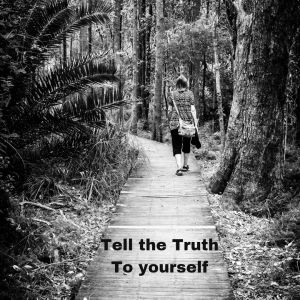
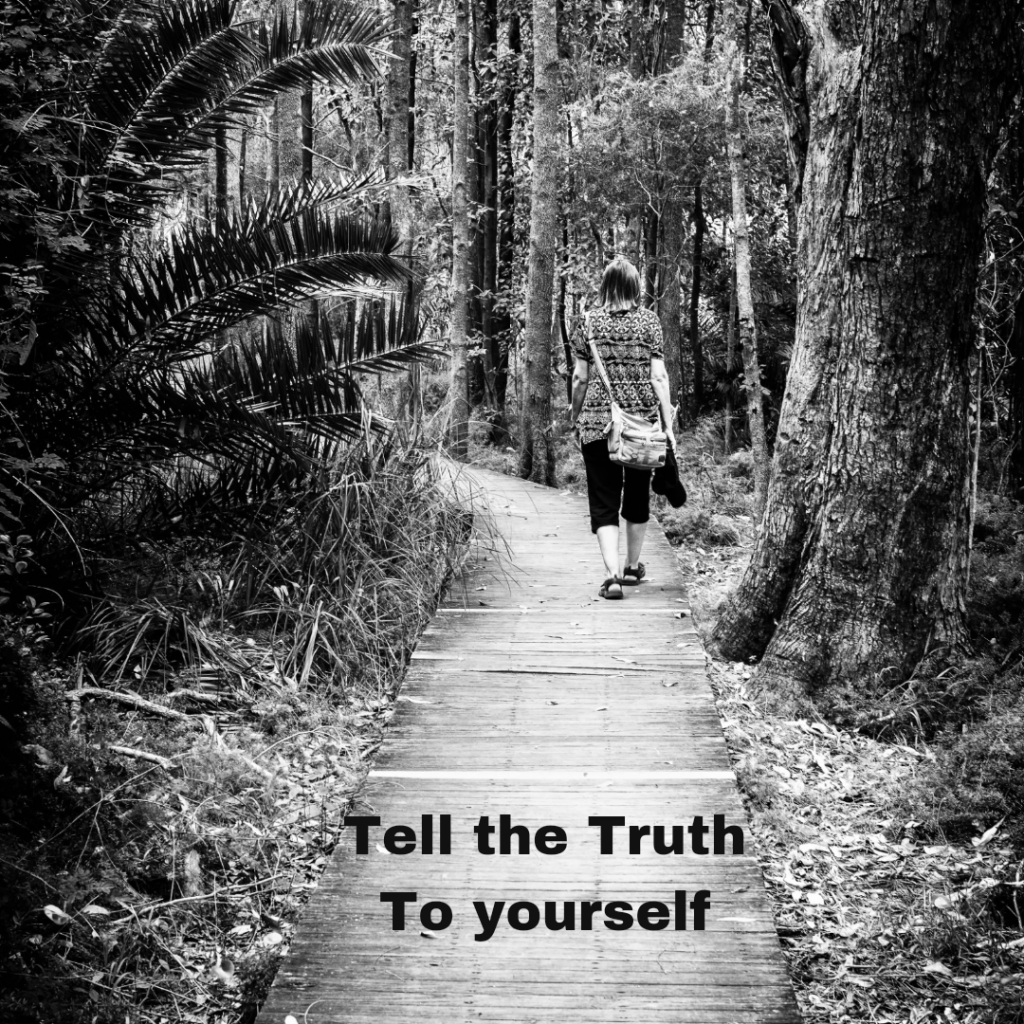
Well it’s simple really, very simple. Maybe simpler to say than to actually put into practice, but I think my lesson here is just this. Tell myself the truth as often and as much as I possibly can. In other words:

Be honest with myself

Let’s look at the options

If I’d really wanted to take this walk, to make this pilgrimage, no matter how remote, how complicated the logistics or planning, why didn’t I take action in that present? Or at least in some present before I actually forgot completely what the walk/pilgrimage was.

And why add ‘sometime soon’ if I didn’t actually desire or intend for this thing to happen? Well, possibly to put of any decision about doing or not doing. Or perhaps it was a way of saying (in completely other words), ‘Well, it sounds very nice, but I doubt I will ever end up doing it.’

So, honesty, and clear thinking about what I want and what I don’t want. That way I won’t be so attached, so keen on clinging to outcomes that I can’t see clearly, can’t easily know what I am to do or not do. Presence. Being present is what this is really about isn’t it?

To be completely present, to be fully here and now, requires me (all of us I suppose) let go of the maybes, and the ifs and buts as well as the endless ruminations about do this or don’t do that.

If I want to take a walk, or make a pilgrimage, then I say to me: just get on with it! If I don’t, then just say so, and move on.

Last little comment: I would really love for the present to remind me of what this walk/pilgrimage was. I’m a bit curious I guess(yes I know, curiosity is a present moment deflater) Maybe it’ll come back to me now I’ve written this post.

Peace

Changing the World: Maybe not such a Tall Order

I’ve always liked this idea, this notion, that by helping one person, you can change their world. I’ve always believed it to be true; after all,

Nobody ever made a bigger mistake than one who did nothing because they could only do a little.

  Sydney Smith

Reading this great quote again recently, I was struck by something I don’t think I’ve noticed before. Suddenly I saw: ‘might not change the world’. Might not? Then I thought why not turn the whole think around: I could as easily say ‘Helping one person might change the world …’.

But, you know, my thinking went even further: I realized that might and might not have nothing to do with it. The reality is that every action we take, and that includes the action of helping other living beings (as well as harming them, which is a whole other story for another time), actually does change the world.

Obviously we can’t always (actually it’s more like very rarely) see those changes, nor are we able to dictate what the changes will be or predict all the possible outcomes. We may think we know what the results of our actions will be; we may even guess right. Whatever the case, all we can do is take action while realising that impacts always occur and just keep on happening in a kind of cascading effect that literally never stops.

Then I thought about it some more, wondering how we can actually come to fully realise that the might not in this marvelous saying, which speaks of a negative possibility, is more an always will, which points to something definite, as well as a whole lot more positive.

All is One on the physical and the non-physical levels

We all have had at some time a sense that we are all connected; we feel that we are part of nature, part of something bigger than just a lone disconnected individual. But, have you ever had the feeling that you might be more than just a ‘part of’ the world or nature’? Have you ever had a sense that you are nature? Maybe this sounds a bit esoteric: But we are one Self; we are all physical manifestations of the one consciousness, the one Divine.

And of course we can’t know for sure what goes on beyond the physical world. But, even at that most basic level of the material, especially as we get down to the microscopic and even atomic levels, it’s hard to tell individual beings apart. Atoms merge and cross over, interact, and change, between all living and non-living things.

So, who’s to say that one small action on my part, one small change, won’t have a cascading effect as the ripples (that’s a good way to put it isn’t it?) from that action spread through the world and beyond.

The ‘What can One Person Do?’ Dilemma

Our Sydney Smith quote in a sense tackles this agonising question for us. Still, you might think that one person can’t do a lot when the needs are so vast and so many and so intractable. There is always something we can do, even at the supposedly one person, one individual level, even if as Mr Smith says, it’s a small thing we do.

Just think how many people everywhere are asking this same question: ‘What can one person do?’

If even a tiny percentage of those questioning individuals answered that they could do something, then you would start to see changes taking place for sure. How could all those actions not add up to a changed world?

The Multiplier Effect

Just now I used the words ‘add up’. Well actually it’s more like a multiplication effect.

Remember we mentioned earlier the idea of a cascading effect always in action whenever any action of any kind is performed? Isn’t there a saying that goes something like: if a butterfly flaps its wings in a forest somewhere in the world, then a polar bear in the Arctic sneezes? Okay, that’s not quite it but you know what I mean.

Then there is that concept of ‘pay it forward’. It’s an easy concept to grasp, though I don’t especially like the language.  For me it’s more to do with love, compassion, empathy, and a desire to make things better.

So, the truth is, helping one person does indeed change the world for that one person. And whatever we do for that one person, it also does definitely change the whole world. It may not appear to us personally that everything in the world has changed simply because of our one, apparently tiny action, but the world, (and that includes all of us who live here or anywhere else for that matter) is one living entity, one being, so those multiplying impacts just go on affecting everything and everyone in some way.

We may think of ourselves as just one separate little individual, but we are more than simply united with all life; we are that life, just as all life is us. And, as for believing we can be ‘agents of change’, we may think that it’s all too hard; too many problems; what can I do? The road to changing the world seems to be blocked, seems to be impassable.

Well, one teacher I admire is Ramdas. Among the many great things he said, this one stands out for me above them all. I may have the wording a bit wrong, but basically the message is:

If you set your feet upon the path, then you are already at your goal


Which is another way of saying that if you help one person, then you have changed the world.


Peace

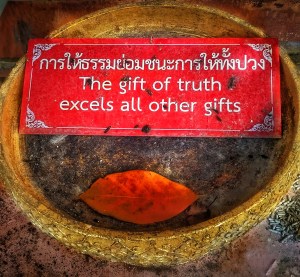
A Small Gift

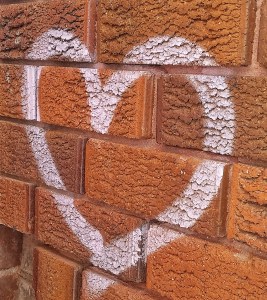
An Encircling Embrace (Unknown and brilliant street artists)

From the Hermit’s Cave to You, wherever you are

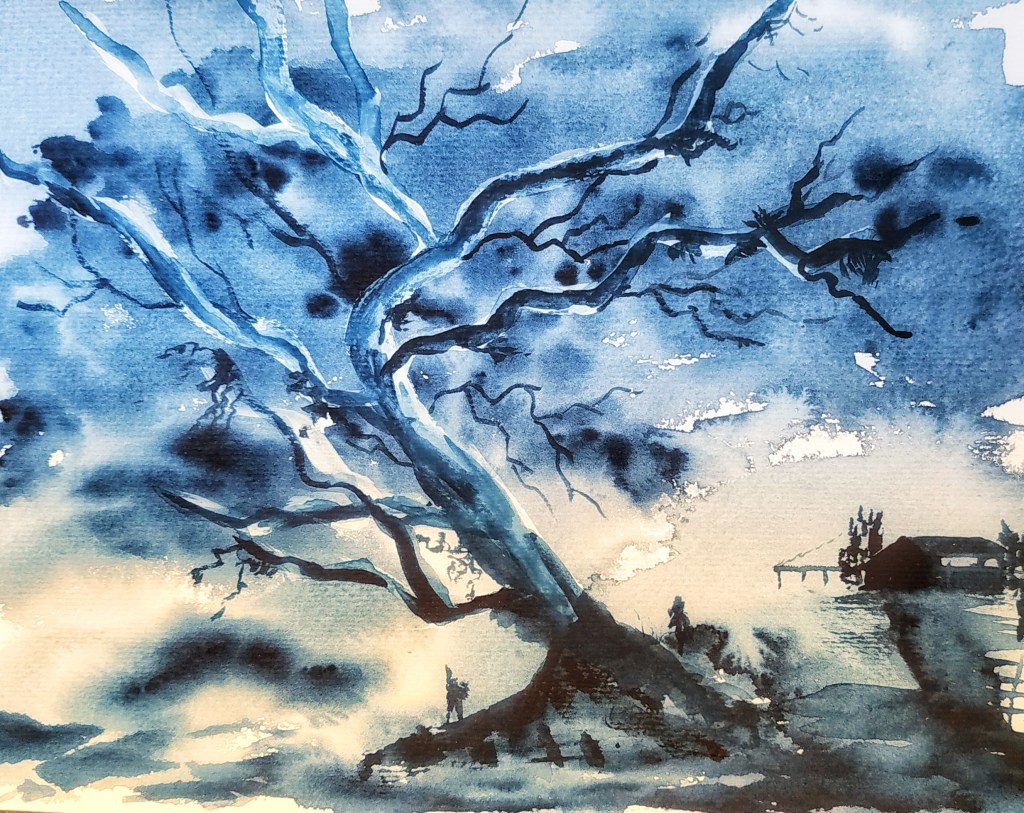
When Trees Speak

Watercolour by Pauline (with digital enhancement by the Hermit)

Vibing on the mystic trees,
their upside is downside, their downside is upside
selves telling me:
You’ve got to cut through the attachments.
Then, not a new, but old made new again, insight
confirms, clarifies, brings details to,
shines a light on the specifics:
Stop desiring what you already have.