Flee, Be Silent, and Pray Always

A few days ago I began a new work to study and contemplate in my not quite daily Lectio Divina practice. It’s actually a spiritual classic that, although I’ve read it before, I felt the need to explore a little more, dig a little deeper, rather than simply reading through it as I did the first time.

It is The Way of the Heart: The Spirituality of the Desert Fathers and Mothers by Henri Nouwen. It is essentially a sort of guide book for those of us who are looking to live more spiritually oriented lives. And I agree with the author when he suggests that the Desert fathers and mothers are the ultimate examples for us to today, even though they lived several hundred years ago.

I haven’t gotten very far in the book; like I say it’s going to be a slower, more reflective process this time (I’m amazed how little I remember as I reread now). A small story the author tells us by way of describing how he’s structured the book, is actually where I’ve left off, so that I can share it with you before I go on with the text and forget!
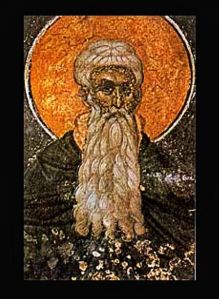
Abba Arsenius (courtesy Wikipedia)

It concerns Abba Arsenius who was a high ranking Roman official working in the household of the Emperor. Clearly he was looking for a more meaningful, more spiritually oriented lifestyle away from the dogma running people’s lives, politics, the decadence and the rest, because he constantly prayed to God, seeking a way out that would lead him ‘to salvation’. He was wanting badly to be free.

Well, he heard an answer, from deep within his soul:

Flee, be silent and pray always.
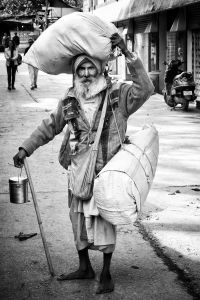
So, that’s what he did, fleeing first obviously. I don’t know the rest of his story. I mean I could look him up, but for our purposes here today, all we need to know is that he took off secretly to Egypt and went to live alone in the desert.

Nouwen believes:

“The words flee, be silent and pray summarize the spirituality of the desert. They indicate the three ways of preventing the world from shaping us in its image and are thus the three ways to life in the Spirit.”

Flee. It’s quite a strong word isn’t it? On the face of it, it simply means run away or escape. But it seems to suggest something more urgent, as if the one doing the fleeing needs to get away as quickly as possible; sticking around could be (or actually is) dangerous.

And that, as I said, is where I stopped to think. Sorry, I mean contemplate. I was so struck by the concept: in its essence, it is exactly the life I am attempting to live. Anyway, since reading it I’ve been thinking a lot about the three imperatives given to Arsenius in that very succinct answer he received to his question.

In fact, looking the word up just now I see that some slang terms for flee are: bolt, scram, schedaddle, or get the heck of out Dodge (or in the case of Arsenius, Rome). Let’s just say, to flee means to run away as quickly as you can, to escape imminent danger of some kind, real or metaphorical.

I read once of a woman who had the debilitating Chronic Fatigue Syndrome. In an attempt to recover and heal, she moved to a remote cottage in a tiny town ‘in the middle of nowhere’. Why such a drastic move? Surely if she is ill she should stay near to doctors and other resources?
Well, for her being in a city was the problem. Noise, crowds, pollution, pressure to conform and consume, interaction on so many levels all the time with other people, trying to meet daily needs in a complex, crowded and hectic environment was precisely what was making her ill.

Not to mention the effects on mental health that living in such conditions has on a lot of people, and I think we can all relate to some degree to this idea. We’ve all felt sometimes (or even very often) how we would like to just get away from it all.

For me it was about the gross materialism, the lack of ethical and moral thinking in the running of businesses, governments, and the rest; I longed also for a deeper connection with what one might call the sacred; more time and space for contemplation and just a simpler, slower, less rushed, less complex life.
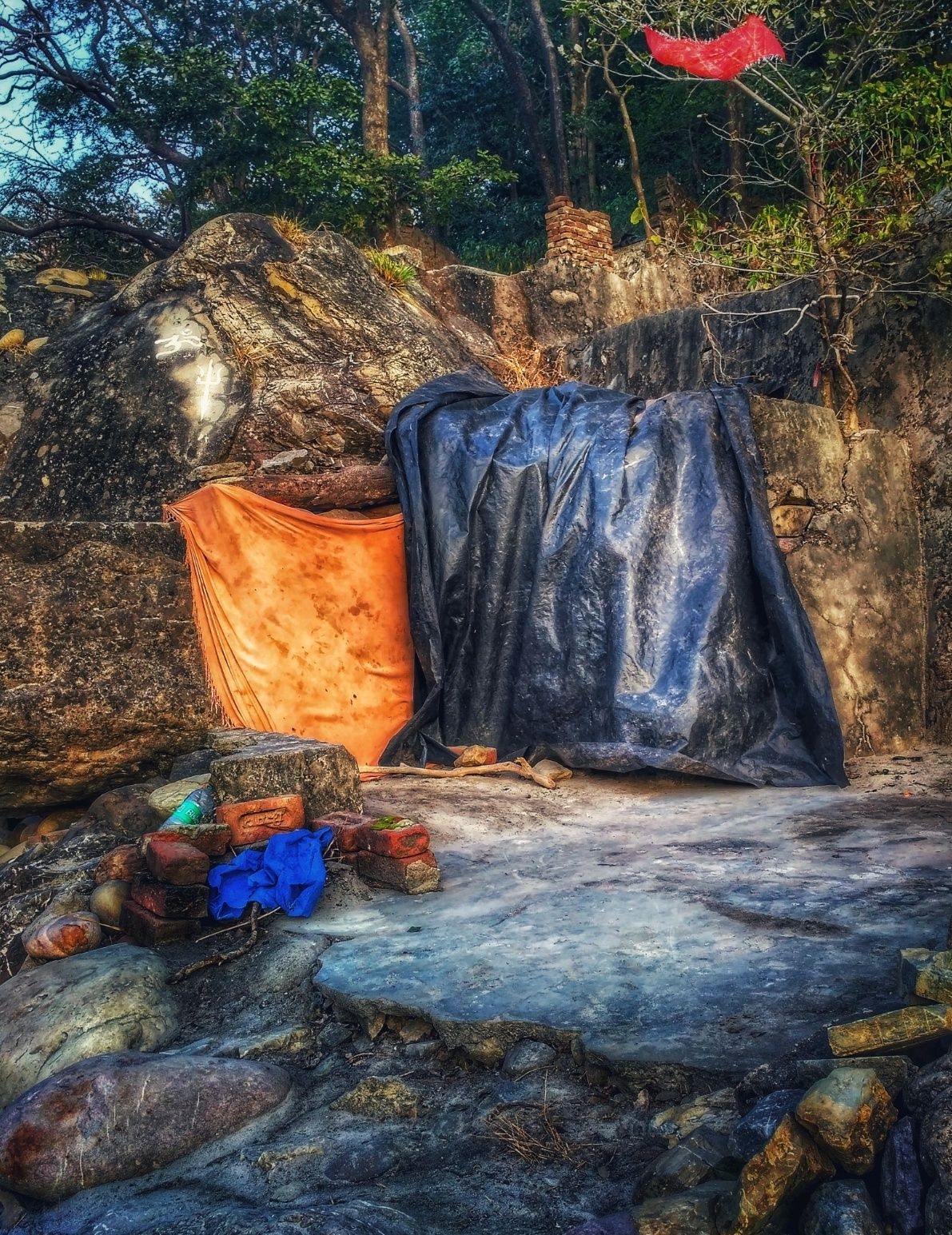
Now, I hear you saying: ‘not everyone can or should just give up everything and take off to live in a cave’. (or desert, wherever). And you are right, of course. In fact, we can say the cave is a metaphor for all sorts of spaces one might feel drawn to when fleeing and seeking separation from the world.  Actually, we’ll be talking more about this later when we get to the be silent bit.           

For these Hermit Pilgrims ‘fleeing from the world’  has meant a nomadic lifestyle, few possessions and material needs, a hermit life where our engagement or entanglement with the world is kept to a minimum, and in which we feel less of a pressure to conform, to ‘be shaped’ by the world around us’).

The reality is of course, at the end of the day for most of us and for most of our lives we have to make money to feed and clothe ourselves and our families. And for that we need to work. And in order to work we need a house to live in, and to have a house to live in we (perhaps) have to get a mortgage, and to get a mortgage … . Well I guess you get the point.
But, for a moment ask yourself: What would it look like for me to ‘flee’? For each person it’s going to take on its own unique meaning. I suppose the easiest way to put it is to say that fleeing for all of us essentially means laying aside those things (or people, places, behaviours) that we look at as ‘dangerous’ , ‘bad for us’, or from which we constantly feel the need to escape. Sometimes they’re little things, sometimes more serious.

It might be that we’ve taken on too many social media ‘obligations’ that are swallowing up any precious spare moments we have, that we’d like to be free of. Or it could be our compulsion for bringing our work home that we are desperate to give up (the bringing work home, though of course it might be the job too), so we can actually make some more free moments.

Perhaps it’s our drive to ‘know what’s going on’ by watching the news every night that’s doing our head in. These are some of the so-called minor things that we know are shaping who we are, and often against our own wishes too. Now I think about it, maybe none of it’s ‘minor’ after all.

Oh dear, I’ve done it again: word count is very nearly 1000. Too many words is another thing people try to flee from: we’re flooded, overwhelmed by words. And as much as I personally love words, I get the point and I will leave our contemplation on what was actually a message of very few words, till the next post.

Thank you for being here. Peace and love

Paul the Hermit
Oh No! Another Blog About Chanting

Not too long ago, I completed what I’m now calling my first formal (structured) study of the entire Bhagavad Gita. Of course this wasn’t my first exposure to that text: I’d been reading it on my own for a few years before I came upon a teacher to act as guide.

Anyway, since that bitter-sweet day of completion, I’ve been looking at ‘random’ verses on a more or less daily basis as a way to keep in touch and to act as a reminder of what I’ve learned.

Just opening my Bhagavad Gita at random, just to see what the universe wants me to think about.

Today, I happened to open it up at what are a series of my favourite verses. (I know I’ve got a lot of favourites; it’s that kind of book). In these particular verses, Krishna describes the meaning and significance of the mantras Om Tat Sat.

In a nutshell, these three syllables, these mantras, are a way of describing the Absolute Reality of the Universe, or God, Consciousness, the Truth, the laws of nature and the universe. Whatever names we might use to encompass all existence.

Krishna details when and why to use the mantras (it’s one mantra made of three, for the technically minded). Again in a nutshell, it’s a mantra to use whenever we perform our duties, basically any actions, with a devotional mood.

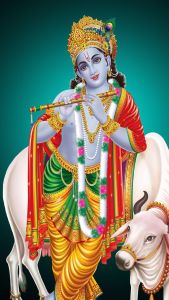
By the way, that, and the inclusion of my favourite image of Krishna, doesn’t necessarily imply that our actions have to have a ‘religious’ intent or flavour: Any action we undertake, for whatever purpose as long as it is motivated by Truth, Love and right thinking, qualifies as being devotional.

While you can see the actual verses yourself via the Om Tat Sat link above, I would like to share with you my very liberal paraphrasing of Krishna’s teaching on the mantra. Also, I am adding a few observations of my own that I hope serve to clarify this great teaching. Oh, please forgive any repetitions, if they occur.

The syllables Om Tat Sat are the symbolic representation of the Supreme Absolute Truth; what I choose to describe simply as all that is. It is called by any number of names or none. It’s existence itself.

It’s an ancient practice, this chanting of these three syllables as a mantra. It is recited when one is engaged in any action in a mood of devotional service. Meaning any act that is imbued with a prayerful attitude and feeling, and with a mood or attitude of devotion to and recognition of, Truth in all things.

And it includes any and every action we undertake, from washing the dishes, to sitting in meditation or silent contemplation. And everything in between.

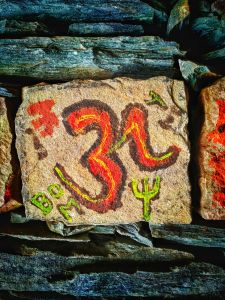
Om

Om is sometimes called the primordial sound, the creative principle, the word from which all creation sprung. I’ve also heard it defined as being the Big Bang, from which the universe emerged.

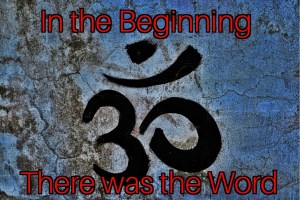
Om is considered the sacred sound and word by many cultures around our world. Consider the opening of John’s Gospel in the Christian New Testament :

Om is to be chanted when beginning and performing any and all actions motivated and driven by Truth. Chanting Om assists us to actually realise or understand with our heart and not just our mind, the presence of the divine or the universal consciousness in all that we do.

Tat

Tat is chanted by those wishing to be freed from attachment to material things, which includes the desire or compulsion to enjoy the fruits or rewards of our actions.

In the beginning was the word, and the word was with God, and the word was God

John 1:1 New Testament

Attachment is when we depend for our well-being or happiness (physical, mental, or spiritual) upon another thing (money, job, status, etc), person, or desired outcome. Attachment (and clinging, extreme longing, compulsivity), Buddha told us, is the cause of suffering: when things are going well with the things or people we are attached to we are elated; when things aren’t going so well, we are miserable and we suffer.

Sat

The syllable Sat indicates both reality and goodness. In other words, Sat is used to represent that Absolute Truth or Universal Consciousness that we’ve been discussing.

Sat follows very nicely on from Tat as it helps to strengthen our Dharmic (motivated by what’s right and true) actions, so that they actually become Sat – Truth.

So, chanting Om Tat Sat when performing any or all our activities in the world (as well as within) will help us to come to realise or understand that there is only the one Absolute Reality, the one consciousness that is not only universal in nature, but is actually the universe itself.

Oh one more quick note: Often you hear the chant with an extra word up front: Hari Om Tat Sat. Hari is a way to address that which removes darkness, that aids in the shining of the light of knowledge.

It’s a word that represents that Absolute Reality that we’ve talked about here. It can also refer to King or Lord, or otherwise influential entity. I find it rounds out the chant, and I like it!

Please feel free to explore Om Tat Sat for yourself. You will find a lot of great recordings of the chant on YouTube, and the wikipedia link at the beginning of this post is very Illuminating as well.

Om Tat Sat

Truth Is (Reshared)

Greetings. Just now as I scrolled my blog at random as I like to do from time to time, I came across a pair of posts from successive days almost exactly two years ago.

It was kind of neat rereading, so naturally I thought I would like to share them with you again.

Please enjoy

Peace and love

Aspire to a Balanced Life

‘I pause to rest when I feel the need’.

Makes sense, don’t you think? It is a really excellent affirmation to give oneself isn’t it? A wise piece of advice also. And I agree with you: great advice, sensible, logical, very helpful for anyone and everyone. Unfortunately, it’s not something I can honestly tell you that I practise on any kind of regular basis. It’s more likely that I would have to admit to you that:

‘I am always hurrying to get things done, and until I do, there’s no rest. Doesn’t matter how I feel’.

And it doesn’t seem to matter whether I have a lot to do, or only a little – or even if there’s nothing needing my attention. Whatever the situation, you will catch me in a hurry, going as fast as I can to get whatever there is, done. ASAP.

Okay, I admit it: I am exaggerating slightly. But not by much. Always rushing, always ‘getting ahead of myself’, always in a hurry. It’s been a problem for, well, forever really.

And I know I’m not alone. The world – as in society, economics, education, and the rest – is in a never-ending race to do whatever they do, and to get it done as quickly as possible, regardless of the cost to the planet and all of us who live on Her.

And, obviously, we are all caught up in this ‘race’, in pretty much every area of our lives.

Whether it’s an exercise program we set for ourselves, or which has been forced upon on us by advertising, cultural shaming, false identification with our bodies. Or the intense and all-pervading pressure to be ‘more productive’ at work. Or the newest mobile app that will magically make even our off-work lives more productive and (supposedly) give us that extra edge in the marketplace (whatever that means).

And remember school? High school? College? The night classes you took for fun and relaxation? How many classes began with the teacher giving the following little speech:

‘Now, we can really take our time with this class/course/semester, and we will be able to take as many breaks as we like. We have plenty of time to cover all the material. So, sit back, relax, take your time and enjoy.’

Not many I’m guessing.

Now, as a hermit, you might think I lead a quiet life. And it’s true: I do. Relatively speaking that is. All of us are required to be constantly taking some kind of action in order to maintain life.

Just like everyone else I have to do whatever it takes to just be alive: Cooking, eating, cleaning, laundry, shopping, praying, meditating, relating to loved ones as well as other people I encounter.

Then there’s reading, studying, talking (way too much in my own case), thinking. Well, that’s probably enough to be getting on with, I think.

Despite my hermit life, all these and more I do. And for me, it’s always in a rush and hurry. Well, not always perhaps, but too often for my liking, and way too often for my mental health, peace of mind and for the calm, peaceful like, I aspire to.
Whatever our personal lifestyle, or way of living, we are all in the same boat, so to speak.

Fix your mind of truth and be free from the concerns of the material world.

So, what to do? How can we slow down, get some sort of equilibrium or balance in our lives? How do we stop the rush, the panic, the pressures that besiege us and sometimes overwhelm us?

Well, there’s the problem. I won’t say I have no idea. I can’t say I don’t know. But, and here’s the point, while I can tell you how I am trying to do.If you’ve read what I’ve told you already, you will realise that whatever I try only works sometimes. And a very few sometimes’s at that.

Mindfullness

I try all the time to make everything I do, even if it’s just walking down the street, or washing the dishes, a prayer. Which is really simply another way to say that I try to do everything mindfully.

Sounds really simple when I put it like this, but of course it’s not at all. It takes discipline (I want to talk about this a little more later on). It’s about focusing on how you are interacting with the world around you, and obviously this starts with being fully mindful in each moment as you take action in the world, whatever it might be.

Simplify.

Not easy, I know. Life is full of details and complications. It’s full of conflicting priorities, each with their own sense of urgency and importance. The simple advice is to do what you can. Once again, tackle all the things you have to do one step/thing at a time.

Did you notice the italics? Be alert to the old urgent vs important dichotomy: not everything is of equal importance, regardless of appearances. Equally, we have to discern a thing’s or action’s degree of urgency for ourselves. With obvious exceptions, most things aren’t as urgent or immediate as they are presented.

Minimise.

Sound familiar?

Listen carefully to the commands to buy, buy, buy, and do, do, do that we are constantly being bombarded with from all direction. Ask yourself one of the big self enquiry questions: Do I really need … ?

Related to this is the question of how much money we actually need to have a good life, support our families, and so on. No guru, teacher, book, or anything else can help with this one; we are all different and have our own unique and specific needs. Only you can know what is right for you.

Discipline.

I mentioned this aspect of the solution to bringing a calmer, slower, less pressured vibe of equilibrium to our lives. For me (self-discipline is what we’re talking about here) is not only about willpower, though of course, it’s an important part of the picture. A quote from Bhagavad Gita that I think points us in a helpful direction:

What does it mean, ‘fix your mind on truth’? While it is very often an extremely difficult thing to do, fixing your mind on truth simply means keeping your mind (and consequently your body and heart too) focused on what is actually real, important, and meaningful to you. It means staying focused on what truly resonates with you as the way you wish to live your life.

So hard is this for me to do, that I am engaged in an ongoing project (please forgive the productivity cult lingo) to keep focused on what is true and real to me. To be honest, while I’m pretty sure that it does get easier with practise, I will always be refocusing on my truth. As they say, it comes with the job description for all of us human beings.

Now, about the second half of that Bhagavad Gita quote. If we do manage to reach that stage where we are able to focus on the meaningful and important, the truth for us, will all our troubles, problems, pressures, commitments of all kinds, just magically go away? Can we eliminate completely ‘the concerns of the material world’?

Absolutely not. The only thing that will potentially cease is our constant state of  being stressed.

While the things we worry about now won’t disappear, the worry itself may lessen. Our abilities to function more effectively and happily in the world (in our family, our work, our own mind) will also improve. We really may become one of those people who always (or most of the time) take things in our stride.

But we should remember that the pressures, conflicts, health issues, the need to support ourselves and family, relationships with all their ups and downs, remain; they are part of the human condition; they are the natural order of things in this material world.

What we can do, is try as much as we can to control our minds, trying to remain focused on that which is true and meaningful to us.

Minimise, simplify as far as possible in all everything. We can focus on all that is true and meaningful in the life you are creating on an ongoing basis. And, of course, it is one considered and deliberate step at a time.

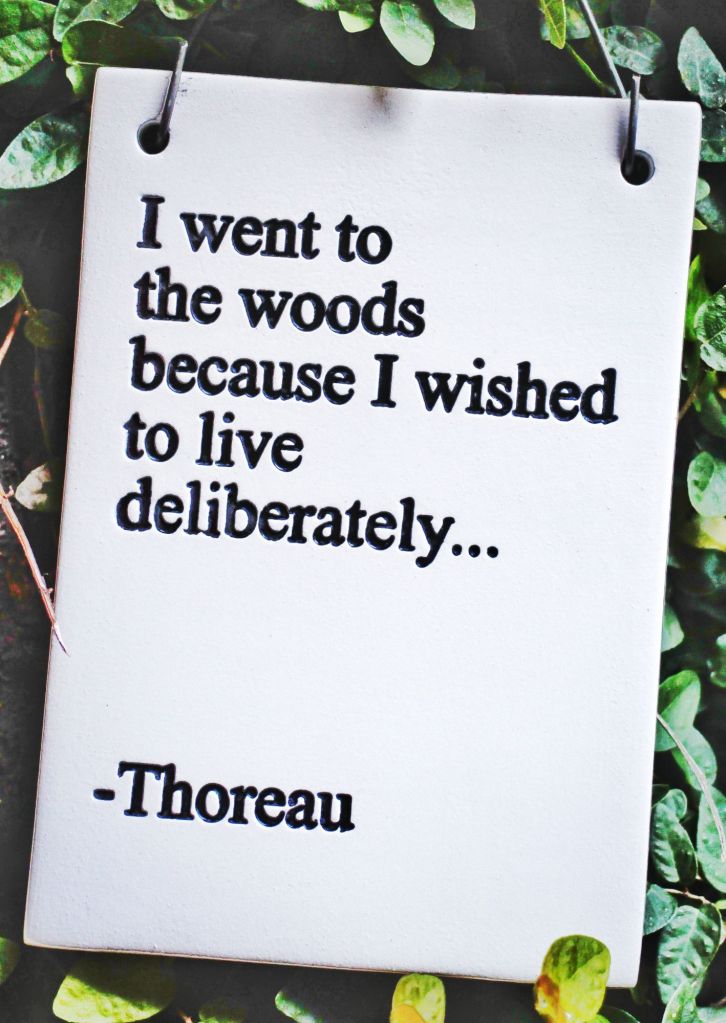
For Thoreau, going to live in the woods was the natural thing to do. It resonated with his soul and heart.

Of course going to live in the woods isn’t for everyone, but if it speaks to  you; if it is in tune with your own truth and you feel it would give your life meaning, then why not?

All of us have within us our own ‘going to the woods’ equivalent. It might be anything. Go find it! Rest there.

The last words of this post are the same as the first. Actually as I think about it now, I see more clearly that this entire post with all its words and thoughts, might be summed up very nicely by that one small affirmative statement. Well, I might add three more words of my own:

In all things, I pause to rest whenever I feel the need.
Peace and love from me to you.

It’s only words. Or is it?

The other day, while listening to a talk by my teacher Swami Tadatmananda,  I was struck by something he said. Of course, being my teacher, there are many things that he says that have significance and that resonate with me. But these statements in particular found a home in me that day:

Words can’t get you there (ie realisation of our oneness with the Divine, God, Universal Consciousness, we may call it many things), but words can help you get rid of everything else.

Talking with my partner hermit this morning about this idea, I suddenly thought that for the vast majority of us there are only a given number of words used on a daily basis. And I think this would apply to whatever language we speak – even when you think of specialist groups like scientists, religious people, engineers, – any group.
I’m not talking here about whether me or you as an individual has a ‘wide’ vocabulary, or a ‘limited’ one; I’m just saying that there are only so many words we need to get by while living in our particular worlds.

And that thought led to a not so original idea that those words will be used to achieve all kinds of ends, including opposing goals and purposes.

In other words (no pun intended, I promise!), words may be used to attack and hurt others and ourselves; or in the relaying or writing of the news telling us (constantly and repetitively) all the bad things going on in the world; to express hate; to promote violence; in advertising for anything and everything; to threaten and dominate – have power over – other living beings or Earth herself.

Then, on the other hand, those exact same words can be used to heal others and ourselves; spread news about good things happening around us; in the prayers many of us utter every day; in the many holy scriptures and other sacred texts so many hold dear; to promote love and express love; to promote harmony and unity among peoples and with Earth and all her life; to empower ourselves and others to live well and to thrive.

So, where’s the difference? Well, I think there is a theme developing in this post: it’s going to be packed solid with obvious, even clichéd words and statements. What I’m getting at is this: Two very well worn clichés just popped into mind:

Sticks and stones might break my bones, but words will never hurt me.

And the other:

The pen (or any other means of communication) is mightier than the sword.

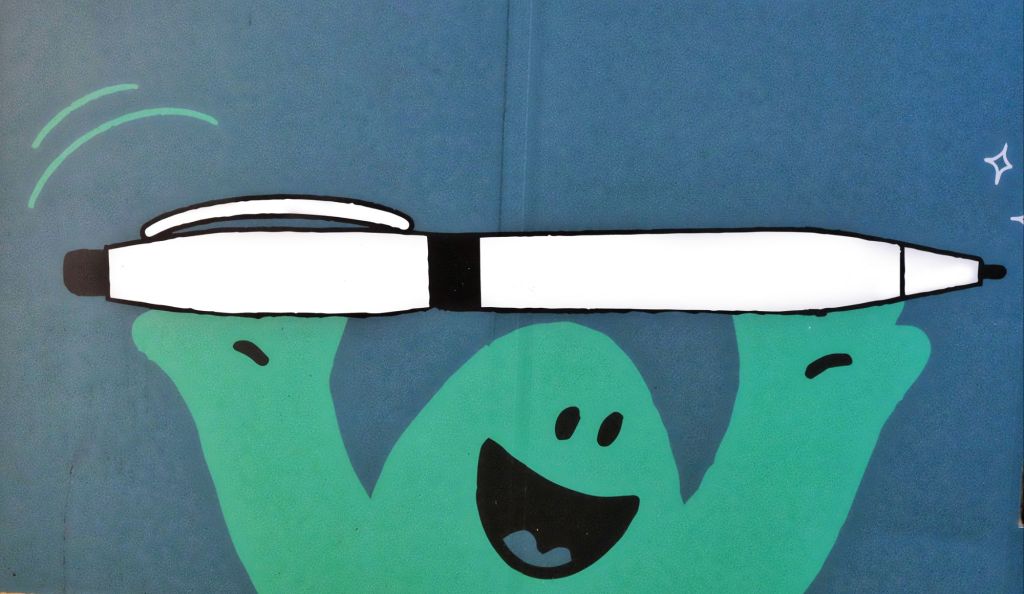
Behold the Mighty Pen

It seems to me that these two statements appear to be at odds with each other; kind of opposite ideas aren’t they? Well, clichés may be ‘hackneyed oft-repeated aphorisms’ (I read that definition somewhere ages ago), but I rather think that a great many clichés are merely truths passed down the ages that have been remembered and treasured precisely because they are true and have proven helpful.

Words can hurt; we have all experienced that truth for ourselves. Of course, for ‘enlightened ‘ people words might roll over them like, (forgive another cliché or two) like water off a duck’s back, or those words will go in one ear and out the other. But, I think most of us have a way to go before enlightenment, certianly it’ll be a rather high number of lifetimes before I’m even close.

Which means that before that day of enlightenment comes, words will continue to hurt. Or heal. All of us can think of many examples of words that can be used in so many ways, but let’s just take one example:

Power or powerful. In how many ways can we use that word? What does it mean if I say: ‘He’s a powerful politician’.?

Does it mean this politician is a dictator who forces people to do what he wants? Does he ban anyone who disagrees with him? Is he a believer in the myth that the people are all there to serve him? Does he raise taxes so he can live luxuriously? Does he make policies that keep people poor or hungry?

Or does it mean that this politician is a strong, good, and compassionate leader? Does he know how to empower people to move themselves and society forward? Is he sensitive to the needs of all the people he serves? Does he listen to the people and follow through on what they tell him? Does he do his best to ensure that nobody goes poor and hungry?

You probably get the point I think? Exactly the same words; two diametrically opposed meanings. Of course, we could all cite countless examples of this duality: same words, different meanings. And you know something? We all do it.

So, what’s the solution? How can we find words that don’t hurt? How are we to learn that our ‘pen’ (read voice, keyboard, paintbrush, camera, or any medium we use to ‘speak with’) is mightier? Well, until that aforementioned day of enlightenment is upon us, all we can do is practise; after all, practise makes perfect (sorry).

Okay then, how shall we practise? I can only tell you what I am trying to do myself. Focus on truth in all your actions, words, thoughts. Turn away, as your default response, from all that you know to be untrue. Develop your powers of discernment so you will know what is true and what isn’t.

And this requires that you remind yourself constantly that you already do know the difference. Your heart will tell you, so listen to it as well!

Does all this work. Yes. Maybe. Sometimes. But what I can say for sure is that practising this way of reconditioning your thoughts, words, and deeds so that they are all on the same page, (there I go again with the clichés again)  advances you ever so steadily on that road that leads to enlightenment, when we will know exactly what, when, and how to say what we need to say whenever we try to express ourselves in any given situation.

One Way to Look at Life

Yes, it’s true: life is precious.
But gold? Silver?
And what about diamonds?
Something to think about.

Peace & love

The Road Rises Up:  A poem about journeying (Reshared with a note added)

It’s a funny thing, but as soon as I start thinking about resharing older (let’s call them prior posts instead) all sorts of posts come up begging to be the next in line to be shared again.

Anyway, I’d sat down to write something on a quote I really like:

Forget all that and hit the road into exile.

FROM A LONG LOST DEEPLY BURIED NOTE-TAKING APP ON MY TABLET

But nothing was coming. Then suddenly I remembered: I’d already written (sort of, kind of, in a manner of speaking) about this topic, if not this particular quote.

Looking up the post, well it did its thing and said very clearly and in no uncertain terms, Post me!

So, here it is dear friends. I will let it speak for itself

Today I’d like to share a poem with you. I wrote it exactly a year ago, but it’s about a day many many years ago. At other places on this site I’ve mentioned that cliched but for me ever so real question: Am I running away from something or am I running towards something?

In one of those other places I joke about my answer: ‘Neither. I’m just a journey person’. Well, this poem began life as a story of the day I first met Jesus freaks as I hitchhiked on just one more random excursion.

Then it becomes at the same time a piece about running, or journeying towards. And, there’s more: it then speaks about the journey as the point of the journey; the movement is the thing

But the thing morphed into a rap about journey beginnings, or at least in the sense of my ongoing attempted, and until a lot of years later, futile escapes from the madness of family and circumstance. That’s the running away bit.

You see, there was something holy felt then, as now, about those seemingly random hitching trips (not that I would dream of hitching in these times). Somehow I knew the Road was the escape route from the growing madness and horror.

Of course I was only able to partially articulate this at that time, but I remember even at 17 (no, it was a year earlier when I’d made my first attempt. I’d forgotten about that) feeling a sort of specialness about the covering of new (for me) ground, the movement, then the arrival at new (for me) places, new towns and cities.

Much of this pilgrimming (for that is what it was) was done in solitude – except for interactions with drivers of course (one of whom was on the day in question one of the said Jesus Freaks) and other necessary people along the way.

I felt a sense of belonging when on the Road; a kind of being in place and in sync. A sense of belonging that I kept fucking up as I let the trickster ego with its taunting messages of fear, loneliness, greed for things and status, and the rest, take control of me and lead me on twisting and tricky roads back to madness.

And now, these 50 years later, I survey the damage done, the cost to self and others. Especially others. No use of course, to look back with wishful thoughts of what if things had been done differently, what if other choices had been made. Such is not truth, not real. Well, none of it’s real anyway is it? Samsara is all it is –  it’s all a sea of madness and illusion isn’t it?

Anyway, here is the poem. May it speak to you.
Peace

The Road Rises Up

I woke up that morning marooned in Albion
in a village of warriors, on a street, in a house,
going mad in a nest of madness
on an island of madness, in a sea of madness.
Escape, refuge, safety – waking thoughts.
Waking dreams. Looking for a way out.

The Road. The Road rose up in my mind.
The Road will save me. Not the shrink
the patriarch screamed I needed to see.
The Road was waiting; I found it waiting for me.
And my thumb in silent salutation and prayer
held aloft in supplication as I trudged on that seemingly straight but trickster road.

Welcome to the pilgrims’ way, the Road greeted me
as I trod ever more lightly
and Babylon’s chariots hurtled past me bound for far nowheres.
Or maybe somewheres.
All in the fast lanes and howling deceptively
of invitations and rejections, attractions and aversions.
Then – in time – an invitation proffered and accepted.
This pilgrim was on his way.

Let the Music Play (Reshared)

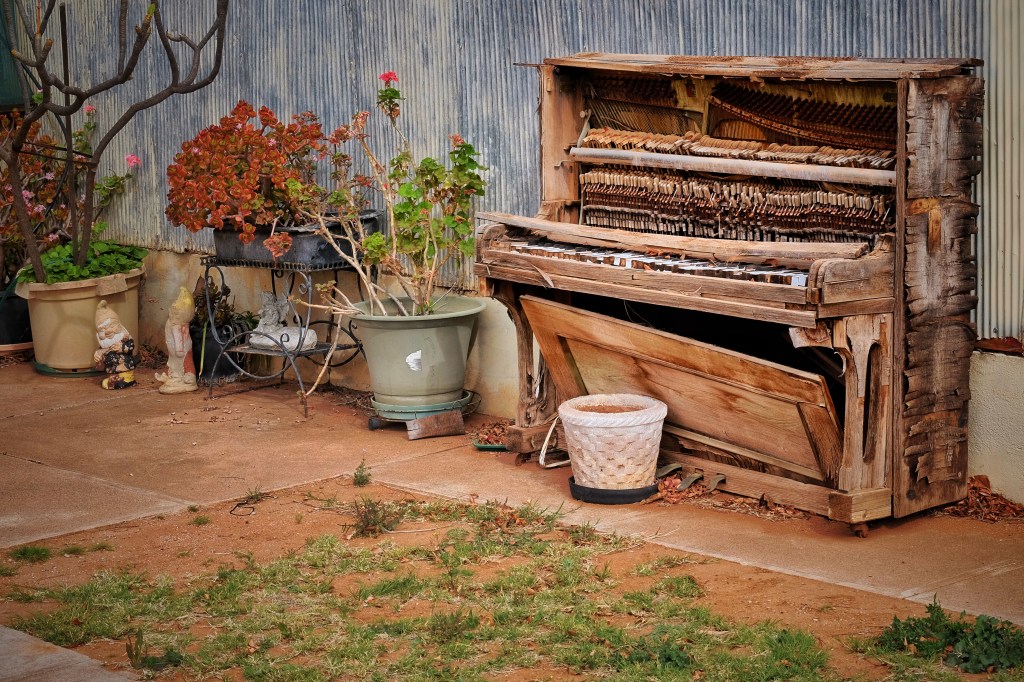
When thinking about a name for this photo I was really tempted to somehow reference the song American Pie by Don McLean. The phrase from the lyrics ‘the day the music died’, kept coming to mind – even as I made the photo of the scene.

By the way, ‘the day the music died’ refers to the plane crash in 1959 in which the up and coming Buddy Holly, and the more well known Ritchie Valens and The Big Bopper were killed.

And there was that brilliant MASH scene coming to mind. In the scene there is concert pianist who has lost the use of his right hand in battle. One of the doctors attempts to encourage him to not allow the music to die, to find other ways than actually playing piano to share the music.

Both connections seemed obvious: a very old dead piano decaying, returning to old forms of itself. But then it struck me: it was the instrument that had died and was changing forms. All material things change, die, becoming something else.

The music on the other hand, hasn’t died. It not only survived that plane crash and the transition of those three singers, it has thrived. Their music lives on. Music can’t die. Why?

Because music is life. Vibrations, harmony, and sound itself, are the foundations, the roots of ‘life the universe and everything’ (to borrow an old expression). As such, music is not a tangible, physical thing and it needs an instrument to make it manifest in the world; music merely passes through the instrument and emerges into being.

I liked that MASH episode. The doctor (stuffy Major Winchester) says to his patient, the wounded pianist, that as a skilled surgeon he has hands that ‘can make a scalpel sing’. But really, what he’s wanted all his life to is to experience music the way the pianist has.

He says he can play the notes, but he doesn’t have the gift that would allow the music (as in Chopin, Brahms and the rest) to flow through him. He tells his patient, who is depressed and unwilling or unable to consider that the music may not have died:

The gift does not live in your hands. The true gift is in your head, and in your heart, and in your soul.

Major Charles Winchester

Hearing that line again reminded me of Om. There are a number of religious traditions that consider OM (sometimes spelt as AUM) to be the primordial sound, the very source of creation. The word itself, when written is considered sacred.

Then there is the verse from the Christian Bible that makes the exact same assertion:

In the beginning was the word and the word was with God and the word was God.JOHN 1:1-3

Well, music needs an instrument – whether in the form of a voice, body, mind, or in an object made of wood, strings, brass, or something else – in order to manifest into the material world and to be experienced by us.

Just think: the piano in my photo in the front garden of a house in a mining town has most likely allowed many generations to experience music. Accompanied them in celebrations and greivings; helped so many through good times and bad timeswitnessed people laugh, cry, and even dance;

Of course, Major Winchester’s gifts as a surgeon are that he is a instrument for the vibration, the music of the universe, to make itself manifest in another way.

And what he is essentially saying to our wounded pianist is: ‘Look you can shut it off forever (his words) or you can continue making your gifts – your Self – available as an instrument that allows that music to come into the world for everyone to share’.

Well dear friends, I have pledged to carry on using my gifts and be available in just that way that allows the music to come through me in whatever form and shape it takes.

By gifts I mean those things that have been granted to every living being: the ability to create harmony; the ability to make and spread good vibrations; and the capacity to appreciate and celebrate beauty.

And when you think of it there is no way to put a limit on the number of ways that the music that is Life might be channelled through each and every one of us

A good place to pick up some good vibes, get into harmony with yourself and appreciate beauty, all at the same time

In my own ways I try to make harmony in and around myself as much as I’m able. I am always attempting to cultivate behaviours and attitudes that help to create and spread good vibes. And I constantly seek to appreciate beauty, even when the world seems to be only ugliness.

Of course, as I say I am only the instrument. The music -the beauty, good vibes, and harmony – exist with or without me. But music in whatever shape and form it takes needs an instrument if it is to come into our material world and be there for all of us to share.

So, this is my prayer: that at least every once in a while, every now and then, I can actually be that instrument .

PS Just a little postscript. When passing that particular garden (the piano garden I call it now) I was drawn to this:

Eagle-eyed Garden Guardian

Just as I photographed this lovely creature, I heard my partner’s voice:

‘Did you see the piano?’

Now being in what you’ve heard me call the Zen Zone I was fully focused on and absorbed in, our winged friend. Coming back from wherever I’d been, I did in fact notice the piano.

You see, you just never never know where the music is going to come from. I might not have seen the piano with my own eagle eye but lucky for me music had a ready and willing instrument standing by to remind me of which way to look.

A Note on Recycling & Introducing the Next Post

Recycling. Blog posts that is. I don’t think I’ve ever really given much thought to whether or not bloggers recycle their posts on any kind of regular basis. I don’t mean to suggest that nobody ever does it, or that I have never reshared a post: there has been the occasional one I’ve recycled over the years on the various blogs I’ve been involved with

But, not routinely. That’s the word: I’ve not yet made it a routine part of blogging practice to reshare posts at regular (or even at not so regular) intervals.

Until now, that is. You see, a couple of days ago I was rereading random posts on this blog from the roughly two years or so that I’ve been writing it.

I came across one post that really resonated. Actually, I found it so inspirational that I read it twice! So I shared it with my partner hermit. She liked it, and suggested I should begin to reshare some of my older posts. Yes, I thought right away. That’s exactly what I’m going to do, I said.

It’s a good plan, I realized. After all, on that recent revisit to the blog, I rediscovered things I had either almost, or completely forgotten I’d written. In addition I even gained new insights, new ideas, that hadn’t occured to me when originally writing the posts or thinking about them. Not to mention managing to inspire myself a little.

I was going to just pop that aforementioned post here and now. But I think to keep at a minimum the time you need to spend reading my words, I will give the post its own, what to call it? Its own space.

If you’ve seen it in its previous incarnation, please feel free to read again: it might say something new to you it kept quiet about the first time round.

If you are new to the blog, then a warm and loving welcome to you. I hope you discover something helpful.

peace and love

Behold the Mighty Pen

Illusion, fear and wrong thinking? A good question

Greetings to you, visitors to the cave

Let me begin this post by asking you a question. No. I’ll start again: I’m going to begin this post by asking me a question. It’s a question prompted by prayers I recite every day, not only during my morning practice, but at random times during the day. Here goes with the question:

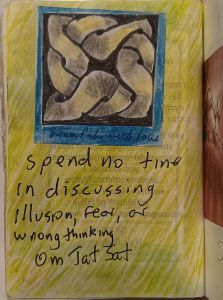
How much time do I spend discussing illusion, fear, and wrong thinking?

Well the short answer is, a lot! Despite all my efforts, prayers, meditation, discipline, and the rest, I spend way too much time pondering all kinds of illusions, indulging in an ever revolving range of fears, and thinking about all sorts of ridiculous, irrelevant, and unwanted stuff.

Oh, before I go on, I should mention that there are actually two prayers I’m referring to:

This prayer, which you might call an affirmation comes, I think, from the teachings of the ancient Indian Rishi Adi Shankara. I’ve not been able to track down the exact source. Getting a little ahead of ourselves here, but a perfect example of wrong thinking would be to berate myself for not being more careful with sources.

So, what does it mean to spend time discussing illusion, fear, and wrong thinking? Well, I know I said I was asking myself this question, but I think it would not be out of order to say that we are all prone to spending time on these things.

Discussing is obvious: talking about, thinking about, angsting over, worrying over. Illusion? Anything that isn’t real, stuff that’s ‘make believe’ as the expression goes. Anything that we are imagining for good or bad.

Our illusions are often about worst-case scenarios, or at the other end of the spectrum, they can be about some fantasy, an idealized perfect outcome to a situation. There is a lot written about how we are so very much trapped in illusion; it’s not the place here for that discussion.

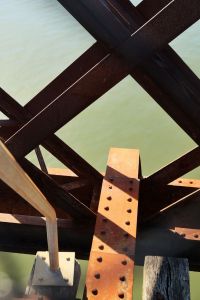
Fears: pretty obvious what fears are. I don’t know about you, but I can get to thinking of stuff to be fearful of anytime, anywhere, even things I know I can face without fear. Like a couple of days ago I was walking across a rail and walking bridge near our current hermitage. A long time ago I had huge paralysing fears of high bridges, especially over water as this one is.

But for a long time now I’ve felt I have mastered this fear and then suddenly on this occasion I looked down to the river below and shocked myself with ‘What am I doing?’ type thinking and fear returned. Mind you, it passed quite quickly as I reminded myself I’d walked over this bridge (and many others) a lot of times without a second thought.

And then there are fears about the future, fears of consequences of past actions, fears of not making the right choices now, fears for health, loved ones, the world. Anything goes when it comes to fear doesn’t it?

Ah, now we get to the biggie: wrong thinking. Again I think it’s safe to say that we all spend far too much time in the company of wrong thoughts. And again, they can be about anything, and can pop up to take over our mind without warning.

Consider how often we think about things that are either none of our business, or they are things we can’t do anything about. We obsess over what we see on the news,  or what celeb is doing what and with whom. Think about how interested we often are in what other people are doing, thinking, saying.

Then there’s blindly following fashion, thinking so much about things we don’t have (and how everyone except us has those things already) that we give into advertising, and end up buying lots of stuff we don’t need, maybe can’t afford, and might not ever use. And don’t forget about the one we all fall for: gossiping about others whether they are famous, our family or friends, or simply our neighbours.

A huge case of wrong thinking are the harsh judgements we make on ourselves; and the amount of time we spend thinking about our faults and failings. And don’t forget the other end of the ego spectrum: it’s also wrong thinking to be constantly telling ourselves how great we are.

There are endless examples of wrong thinking. We need to bear in mind Buddha’s central teachings: there is a middle path that can be taken in all things. Well, this maxim applies to thinking as well. Remember that our mind can be our enemy or our friend.

Even enlightened ones such as sages, rishis, saints and the like, fall victim to illusion, fears, and wrong thinking. Of course as they are enlightened, they perhaps are less affected, less inclined to fall to the depths, as the rest of us might.

Of course, there are ways we can put ourselves on the path to that enlightenment. But in truth, it is a subject that is dealt with very adequately by all great scriptures of the world, not to mention the visionaries who have delved deeply into psychology, philosophy, and the human condition.

And this leads me to the second prayer:

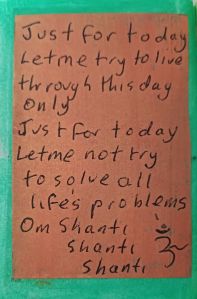
This one comes from a song by George Harrison, titled Just for Today. I actually did a post on this song a couple of years ago that you can find here. As well, if you do check out the lyrics of this masterpiece, you will see that my prayer is a rather generous paraphrase. I don’t think George would mind; I hope you don’t either.

Just for Today (the song and, a little less articulately, this, my paraphrased prayer) is a prayer for presence, a plea to be in this place, and in this time. In other words, an affirmation that I (or you) may remember that there is only here, and only now.

But, and it’s a big big but, we need to make of our entire lives a prayer.

Of course that means using the words, but it also requires a whole lot more. Discipline, self-control, deliberate actions (saying prayers is obviously also an action), meditation, silence, contemplation, and to put it simply: good behaviour in all that we do and think.

Now, this prayer inspired by George is a good place to finish. Or rather, it’s a good place to remind ourselves we can’t solve all life’s problems at once.

Being present, being here and now, really says we have no other choice but to live through this day only. Or perhaps we can paraphrase once more and say we have to actually realise what is already true: we can only live through this one, ever-evolving and moving moment.

So, how do we get to that point of spending less time discussing illusion, fears, and wrong thinking? By coming to realise that being in this moment, and in this place, we are already perfectly fine. All we can and need to do is remember that one simple fact. But don’t worry, all you need to do is remember it just for today.

peace and love