Most likely I’m not alone when I say that when first listening to new information, a lecture, teachings or anything else for that matter, I will often forget either part of what I’m trying to learn or even all of it. In fact, I’m sure there are more than a few scholarly research papers that will tell us all about this universal phenomena with all facts and figures along with all the whys and wherefores.
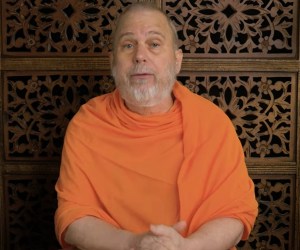
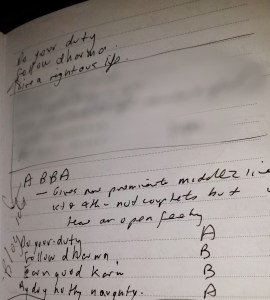
Anyway, I was listening to my teacher ( Swami Tadatmananda) recently. He summarized the teachings he was giving on that occasion in three succinct, pithy lines. Thinking back now, I have no memory of the teachings being presented, and all I have is a quick note jotted down of the teacher’s summary:
Do your duty Follow Dharma Live a righteous life.
Fast forward a couple of days and I was watching a video about 19th Century English poets. Once again I’m not able to tell you the names of all those poets or what the show was about (actually to be honest, I got bored and stopped watching half way).
And, again, all that remains is a scribbled note about the pioneering of a particular rhyming scheme by one of the featured poets.
That revolutionary rhyming scheme is ABBA (where the first line of a verse rhymes with the fourth, and the middle two rhyme with each other). It’s as well that I did jot down a note: I have never been able to take in, much less retain in memory, all the technical stuff to do with poetics. Never.
But for some reason this particular idea appealed to me. Maybe it’s to do with how I was once a big fan of the Swedish pop group Abba? (okay, maybe I still am)
As it happens, my note on this appears in my notebook just below the first one I mentioned above. So, as I thought about ABBA (the rhyming scheme, not the pop group), I saw that first note and started playing with it:
Do your duty Follow Dharma Earn good Karma Do nothing naughty
Okay, I know, it’s not exactly great literature is it? Never mind; it’s only an experiment. But, having said that, I do quite like this little, what shall we call it? This little ditty. It seems to be a nice, even quirky, little rephrasing of my teacher’s own summary.
This is all very well and good you might think, but what does it all mean? Does it actually mean anything? Well, my short answer is yes: for me it does indeed definitely mean something.
Actually, it means a lot. But as this post seems to be dragging on a bit, perhaps we will have to continue in another post.
I’m actually scheduling this one to publish sometime in the future. The reason is that, as I reread it now, I see I’ve used ideas, and even some sentences here that appear in a couple of recent posts. The thing is, I think this is a post worth reading, so I’m kind of sneaking it in via a touch of time travel. In any case, please enjoy, and by the way, thank you for sticking with me for this long (however long this is).
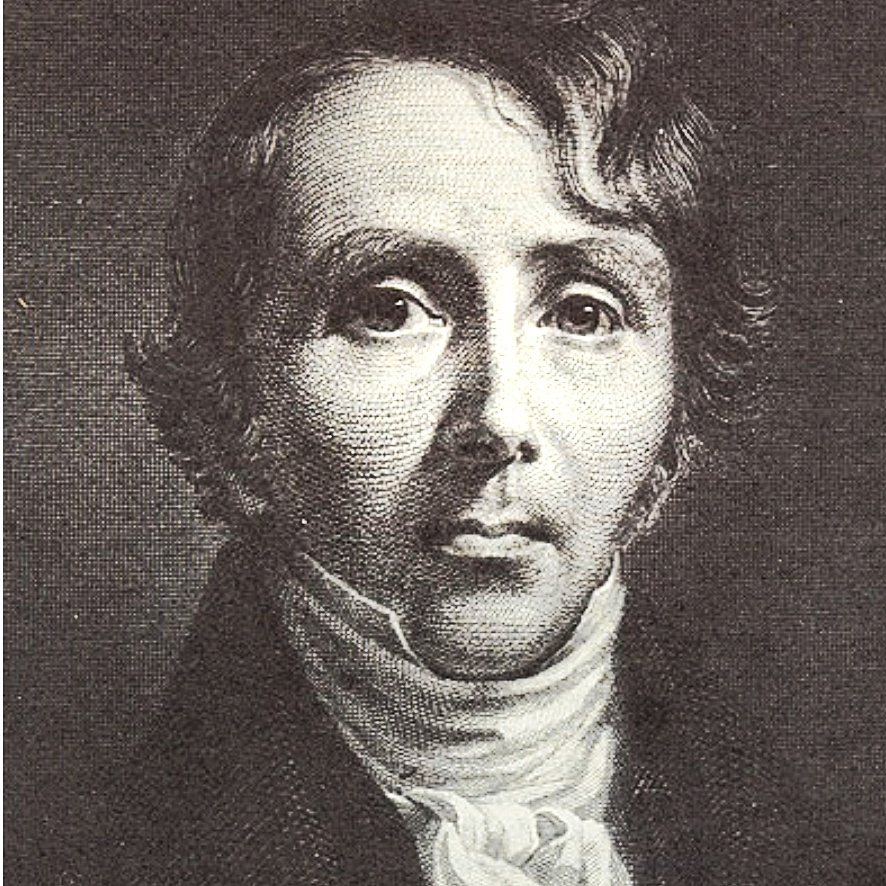
It was a revolutionary idea for its time, the early 19th Century. Come to think of it, it still is. A reform minded Christian minister, William Ellery Channing proposed that the proper goal for each of us human beings is perfection.
William Ellery Channing (Public Domain)
Or rather, the goal should be a realisation of the perfection that is already our true natural state, our true selves, which we’ve forgotten as we have got on with the rarely easy business of living in a material world. You see? I did say it was a revolutionary idea.
After all, he wasn’t talking about the obsessive perfectionism that often curses so many of us anxious types. Or the myths propogated by mass media of what it means to be ‘perfect’. No, he was proposing a complete and thorough shift in the prevailing thinking about the nature of humans, and in reality, of all life.
Anyway, he posed the question:
Do you ask in what this perfection consists?
He then proceeded to answer his own rhetorical question:
I answer: in knowledge, in love, and in activity
When I came across this little vignette in an unrelated book I’ve recently finished reading, I was a little bit mind-blown. Channing’s formula is more or less identical to that presented over millennia in a number of the world’s religious or spiritual traditions.
For example in the tradition I am studying these last years, Sanātana Dharma, this little formula constitutes pretty much the foundation for any kind of spiritual growth. It could be said that in a real sense it is the very basis of all Yoga:
Jnana Yoga (knowledge, study, includes meditation, contemplative practices and so on), Bhakti Yoga (Divine Love. In the sense that love is always divine) and Karma Yoga (often called the Yoga of action. It basically includes everything we do in the physical world. The Karma bit is about our actions becoming selfless).
In other words, just sitting there on their own these three Yogas offer a pretty succinct answer to the question many of us ask ourselves constantly: How can I live a good life?
We pursue knowledge for many reasons: it may be a reluctant pursuit as we sit through the interminable years of high school; or later as we head to university or college to train for a career that we hope will support us. The thirst for knowledge might arise when we come upon a topic or an area of interest and fascination that we just have to learn more about.
Just as with the infinity of knowledge, love comes in equally infinite guises. Unlike knowledge, however, I don’t think there are ‘reasons’ we can give for love. Love is love; it is its own reward (and it’s own torture), it just is what it is. Divine is as good a word as any. Any love, all love, is love for all and for everything.
And then there is the kind of knowledge we pursue as we try to answer what I like to call the Who am I? questions. Things such as: What’s the meaning of life? Where am I from? Where am I going? Is this all there is? Oh, and of course the real biggie: Who am I?
Now, at the risk of having to take the prize for the most obvious statement ever made, let me make the point that all living things have to take action all the time if they are to remain alive. So obvious that I’m even having to take several different actions in order to tell you this. So, you might well ask, what’s the big deal? What’s Channing and all the others through the ages getting at? What activity?
Well, I think Channing was getting at the notion that every action we take needs to be informed by knowledge and love. But, what knowledge? Well, clearly we are caught in a tsunami of information much of which goes to making ‘fake’ knowledge, propaganda, deceptive advertising, biased education, and the rest.
In other words how often do we see knowledge not used correctly? And, how often is humanity’s use of knowledge – our actions – informed by love? Now we can begin to realise how revolutionary this idea is, and always has been.
I think that’s why the Sanātana Dharma teachings and world view embody the concept Bhakti, or divine love. As I noted, all love is divine. These teachings tell us that all action is to be undertaken with love, without attachment to rewards or outcomes, and dedicated to the welfare of all life.
Channing had the same idea: for him all life is pure and perfect already. And of course it follows I think that all actions we take have the potential to be informed by a wisdom gained from proper use of knowledge, and to be informed by love, whether it’s for self, for other people, other animals, Earth herself.
So, pretty revolutionary stuff eh? I guess a lot of us have heard that famous quote from Gandhi:
Be the change you wish to see in the world.
Well, here’s the freaky bit. Just now as I looked up the quote to make sure I got it right, I discovered that he never actually said those words. Not in that form anyway. Here’s what he actually did say. It’s a long quote but I think it’s an interesting note to finish on. I think for me it clarifies many of the questions this little discussion has raised in my own mind, as it will for you I hope.
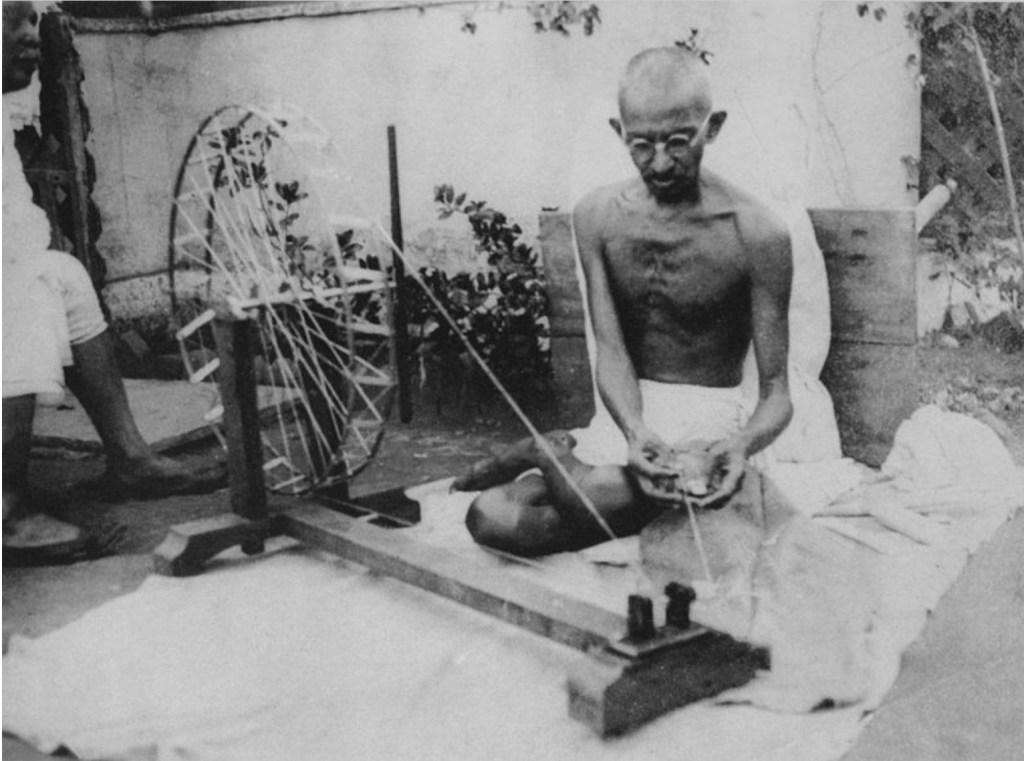
Gandhiji at his spinning wheel (thank you Wikimedia Commons)
Knowledge; Love; Activity
We but mirror the world. All the tendencies present in the outer world are to be found in the world of our body. If we could change ourselves, the tendencies in the world would also change. As a man [sic] changes his own nature, so does the attitude of the world change towards him. This is the divine mystery supreme. A wonderful thing it is and the source of our happiness. We need not wait to see what others do.
So, anyway, here I am. Just sitting. It’s what I do, when I can, when I’m able. Well, to be completely accurate, here I am sitting and typing. Writing yes.
But every day, I sit. I try to sit. On a comfortable chair or bed. Here is where I commune with the Divine. It’s where I say my prayers, empty my mind, try to be silent, sometimes read holy books.
Whatever I do when I am just sitting, the sitting bit isn’t always easy; it requires effort and patience. Just being still can be hard; everyone knows that. But it’s part of the practice, part of the sadhana, the way to liberation. All that.
Of course I’m not the only one you might find just sitting. Why, just today on my way home from buying fruit I saw some other people sitting. One had his eyes fixed, completely transfixed on his phone’s flickering screen; head bowed, the world around him shut out.
The other sat, head bent forward, arms crossed; I couldn’t see her eyes. Perhaps she was sleeping, perhaps feigning sleep, perhaps trying for sleep. Whatever, resting it looked like.
These two were a lot like me I thought: just sitting, being quiet, resting even. Mind you, they were younger than me. Though of course what’s age got to do with it? I carried shopping bags; they sat beside a very full shopping trolley.
But, wait, my bags held fresh fruits to top up our supply. Their trolley overflowed with, what shall we call them? All their worldly goods? Personal effects? All they own?
And another difference? I’m going home with my bags. They have no home to house those effects; no soft bed to rest upon or commune at leisure with the divine.
Whereas I sit under a roof, in a room, on a soft bed, they sit in a bus shelter. Sure, there’s a roof but it offers scant protection from the approaching storm, and none at all from the incessant wind that will soon be full of rain blowing.
It’s no use asking why am I in a comfortable house, and they are in a bus shelter, just as I was and they were, the last time I saw them. There’s nothing for me to say that will mean anything to them, to anyone else, or even to myself.
I suppose I or you or someone else might remind me (remind all of us) that the world can be hard, is hard: bad things happen to all of us. Of course that’s true. I actually truly believe that the world by its very being in existence is hard. What did The Buddha say? Life is suffering?
But, as they say, that just doesn’t cut it, does it? All just words don’t you think? It’s what I think today anyhow. Oh yes, I’ve been praying since I passed them by (and I did pass them by with no words, no smile or greeting, my face turned away. I am ashamed).
I thought of them as angels there to remind me of my own advantages and privilege. Even those very thoughts themselves prove my own failing to understand, to actually get it.
But, yes: all just words. Meaning very little. I suppose after all that perhaps all I can do is pray.
For all of us.
Peace
Not as if I don’t bloody live here is it? Yeah. I know, I know. Its a bloody bus stop. But, geez, a fella’s gotta live somewhere. Don’t he?
Welcome to another post. Just a little note before we get into it: This one picks up where the last one left off. Kind of. No need to read that one first, unless you want to.
And that’s the whole thing in one sentence, or at least in part of a sentence: unless you want to: none of it is any of my business. What do I mean when I say ‘none of it’? Just that. None of it. Or we can say it in another way: the only thing that is your business is you.
But, all of us are bound to ask, how can I simply mind my own business in a world torn by endless war? How can I ignore the environment I live in and that it’s dying before my eyes? How can I turn away from the evils of racism, injustice, greed, and cruelty?
Well, the simple answer is we can’t and we shouldn’t. Of course, in order to reconcile this apparent contradiction, it would be helpful to clarify exactly what we mean by minding our own business.
In essence my business (or yours or anyone’s) is anything that has to do with me: what I do; how I behave; what I think, feel, and believe; my behaviour and attitudes towards others; and—and this is the key—how I interact with and respond to the world as I experience it as I go about living my life.
So, it isn’t completely accurate to say that the wars, racism, injustice, and the killing of the environment (and everything else) is none of my business; my business is limited to my interaction with and response to all of it. And that has to be determined by a range of factors like my nature, my abilities, my circumstances, and so on.
Above all, and as Susan Sontag, American writer, philosopher, and political activist, said in a speech in 2004:
To be a moral human being is to pay, be obliged to pay, certain kinds of attention.
While the theme of that speech had to do with the writer’s responsibility to truth, I think her assertion applies here and may provide a solution to the seeming contradiction between minding our own business while at the same time stating that our business can, should, and does indeed include what goes on outside of ourselves (actually as we shall see, in reality there is no outside or inside)
How we utilise our own personal resources is in the end for each of us to decide. In the sense of our engagement with the world, the most precious of these resources are arguably time and attention.
Each of us possesses these things in our own unique quantities, just as we all have our own unique qualities, so each of us has the opportunity to decide how we use our time, and what we pay attention to.
It is so very easy to be overwhelmed by the constant torrent of information detailing the horrors threatening to consume and destroy our poor Earth and the life she supports. It is so very tempting to throw up our hands in defeat, and shrug our shoulders as we turn away exclaiming ‘It’s none of my business’.
While none of us would blame anyone for retreating in this way, a great many of us realise that for us this is not an option. Well, as the Buddha taught, there is a middle way. A way that allows us to avoid this kind of ‘none of my business’ denial, at the same time as protecting us from being overwhelmed and beaten down by the scale of it all.
The first step involves surrender. Surrender to the idea that there is no ‘me’; there is no ‘you’. There is no ‘them’, no ‘us’. There is only ‘I’. Surrender to the notion that not only is all life ‘connected’ or linked, but to the thought that all life—human, other animals, plant, mineral — everything — is one. There is no separation.
Easy eh? Hardly. But this is where the paying attention thing comes in. Rather than being swamped by the never-ending tsunami, choose where to put your attention. Ask yourself, where am I able to place my attention? How can I—how am I able to—use my time so that I avoid drowning yet still contribute to the well-being of the whole of which I am a part?
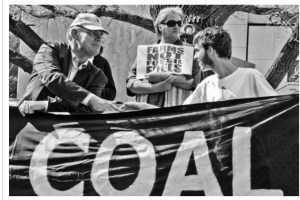
Obviously, as I hinted at above, the answers will be different for each and every one of us. For some, the kind of attention they pay will involve being on the literal front lines, working in the political field, or with activist groups working for social justice.
Then there will be those whose nature compels them to choose to put their attention on a life of prayer, meditation, and contemplation.
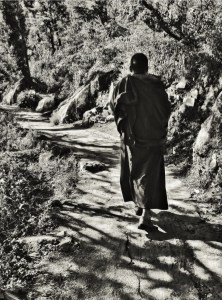
For these people this requires the quiet and solitude of monastery, ashram, or cave (whether it be in forest, mountain, or suburban home). And along the huge spectrum in between, there is a a unique spot for every one of us.
Each of us is a part of the whole. Everything we do affects the whole. Remember that saying that goes something like: A butterfly flutters it’s wings in the forest and the sun rises? Okay, maybe I’m pushing it a bit, but you know what I mean.
Never underestimate what (you perceive of as the little) you’re able to do; no one can say what impact it will have. All that is required of you is that you mind your own business.











 Notes from the Hermit's Cave