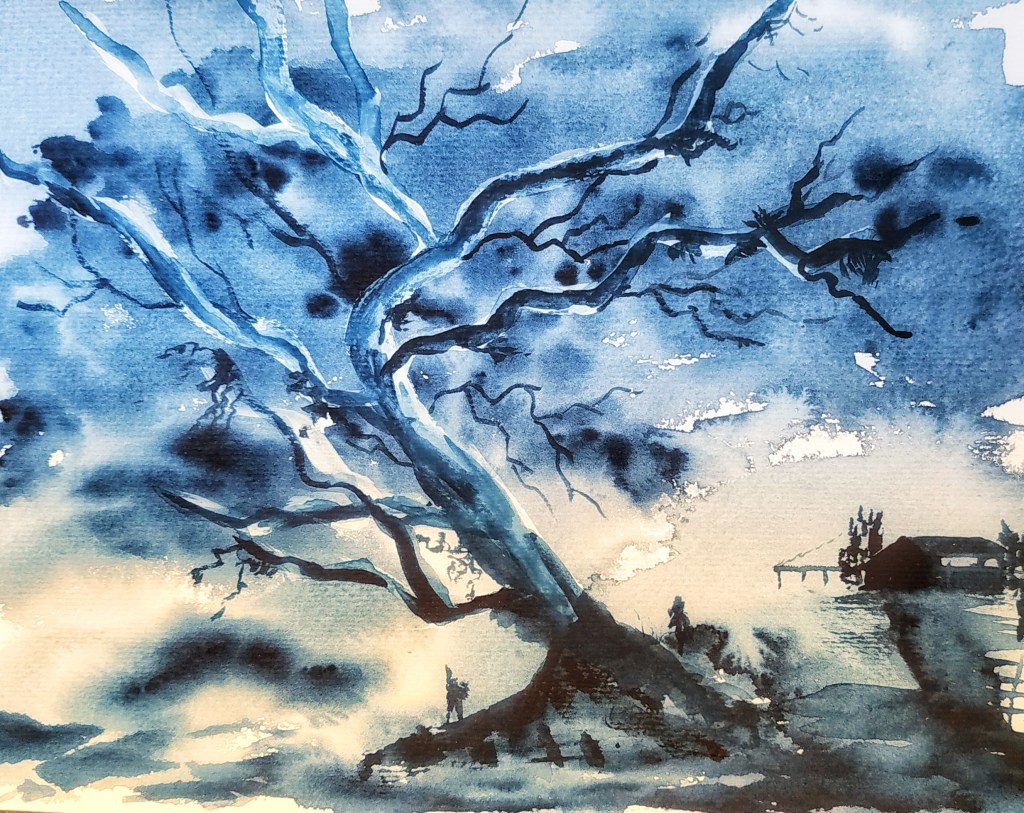
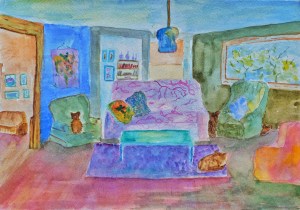
Watercolour by Pauline (with digital enhancement by the Hermit)
Vibing on the mystic trees, their upside is downside, their downside is upside selves telling me: You’ve got to cut through the attachments. Then, not a new, but old made new again, insight confirms, clarifies, brings details to, shines a light on the specifics: Stop desiring what you already have.
By the River’s Light I’ll Live My Life out of sight of Babylon
A Note From Me: I can’t tell you who wrote these words. Maybe I did; maybe it’s a song lyric; or maybe it’s a quote from someone famous. Whatever the case, a half hour internet search failed to come up with anything even close. So, The best I can do is thank whoever did bring these beautiful words into the world. I hope you are pleased with how I’ve made use of them.
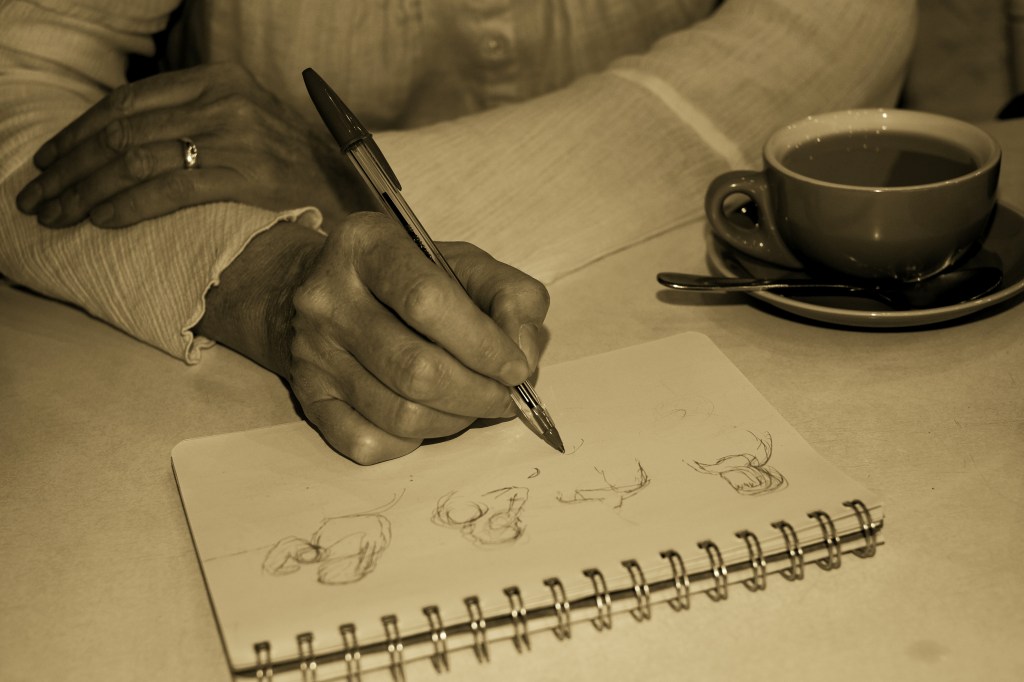
My eyes follow the line her pen inscribes across the page, its whiteness coming alive. In such moments, I know that it is true : I know that God is truly in the ink.
I can’t remember when I wrote my last post. And of course it isn’t relevant at all is it? I mean to say that in the contemplative life, time sometimes seems to take on some other kind of character.
Or at least I should say that one’s perception of the passage of time shifts; nothing unusal there I hear you say, and of course you’re right. Just thinking out loud I suppose.
For me, having a right perception of time is an important aspect of my Sadhana, my practice: yes, it’s true: time is seen to fly, or it is frustratingly felt to drag. But my aspiration is to see time as simply a human construction that we use to limit, structure, bind, define, and place all kinds of restrictions on our lives.
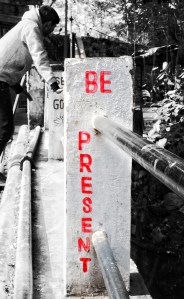
Which for me, simply means that there is only presence or Presence; only the ongoing continous moment (what we often call The Now). Easier said than done mind!
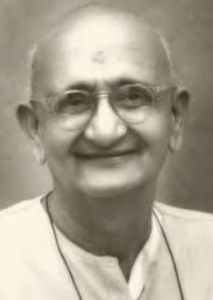
Swami Ramdas (known as Papa to his followers)
In any case, here I am, just where God would have me be. Feeling strongly to reach out to you, I remember the poem (it’s not really about time in the sense we’re discussing it so far) that emerged the other day after reading a quote from Swami Ramdas that seemed to be an answer to some thoughts I’d been having.
I’m grateul for this, all of this. And for you too, the reader of these musings offered with humility and thanks.
Peace and love from me to you.
GOD IS MY ALL
Thinking thoughts as if battered by demons. Memories arising of my own evil deeds, selfish and cruel. Right away I turn to God: God is my all; Hare Krishna
Forego repentance, relinquish regrets; you are filled with God, the supreme essence of life. God is my all; Hare Krishna.
Through Papa Ramdas I hear the Universe speak: Forgiveness is from God; and it has been granted. God is my all; Hare Krishna.
Greetings and Welcome after what feels like a gap of forever since my last post.
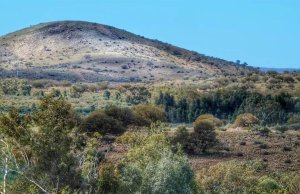
Two weeks today since I moved into a rented house way out here Outback in the mining town of Broken Hill, on the traditional lands of the Wilyakali people whose ongoing presence on this country I acknowledge and give thanks for.
And now, it is the location of my hermitage, my safe haven and refuge. But, no, therein lies the conundrum: I love it here; I know I’ve come to the right place to which I’ve been called. But after two weeks, I’m still not feeling grounded; I’m not really here yet.
Culture shock, fatigue, new environment, excitement; call it what you will; something has me not yet settled and in place. Yesterday a small poem came to me that I think expresses exactly the problem.
And now I’m sharing it with you as a way of explaining why the gap, why the block.
Peace and love from me to you.
The call to the desert has been answered. And now, I am here. No, to tell the truth, I’m not actually. Here I mean. So, where am I?
Not there, back there where I came from. Not even sure if ‘there’ really exists, if you know what I mean.
Mind you, when I said ‘here now” I meant it’s been a short now: Now that I’m here. Just. A short stretch – so far.
Here; there; now; so far; it’s all too much. And you know what? It’s all in my head. In my mind I mean.
A wise teacher once taught: First thought, best thought. But for here and now? As in being here now? No thought, more like, is best thought.
Coming across this note last night, I was stumped. I coudln’t think where it had come from, where I’d seen it; nothing at all came to mind. And an online search just now failed to turn up anything either. I mean I must have read it somewhere. Or is it possible it came from me?
Of course it’s all the same: there is only one source. At any rate, it’s an injunction one can relate to anywhere, any place. It’s surely about presence?
And about learning from all that is to be seen (heard, felt, intuited, known) in whatever place one is in now. I mean, the place I’m in now. I am here and it is now.
I’m reminded of the faith affirmation (is it a prayer?) that seems to have been written for this particular hermit pilgrim:
As a a hermit, I am a pilgrim dependent on a pure faith that I am exactly where God wold have me be now.
Sometimes I think that too much thinking about and angst over places other than the one I’m actually in right now, is a sure and certain way to resist and reject any reverencing of the place I’m in, not to mention what’s to be learned or gifted from the experience of being here.
And of course that angst, worry, wishful thinking, or whatever, comes with its own issues of distraction, and of a taking away of one’s Self from the present, the notion that here and now is the only time and place that exists.
A poem of mine I came across the other day while looking for something else says it all quite nicely. This poem is called Transcendental Injunctions, and it’s a rap on presence, about being here, and being now.
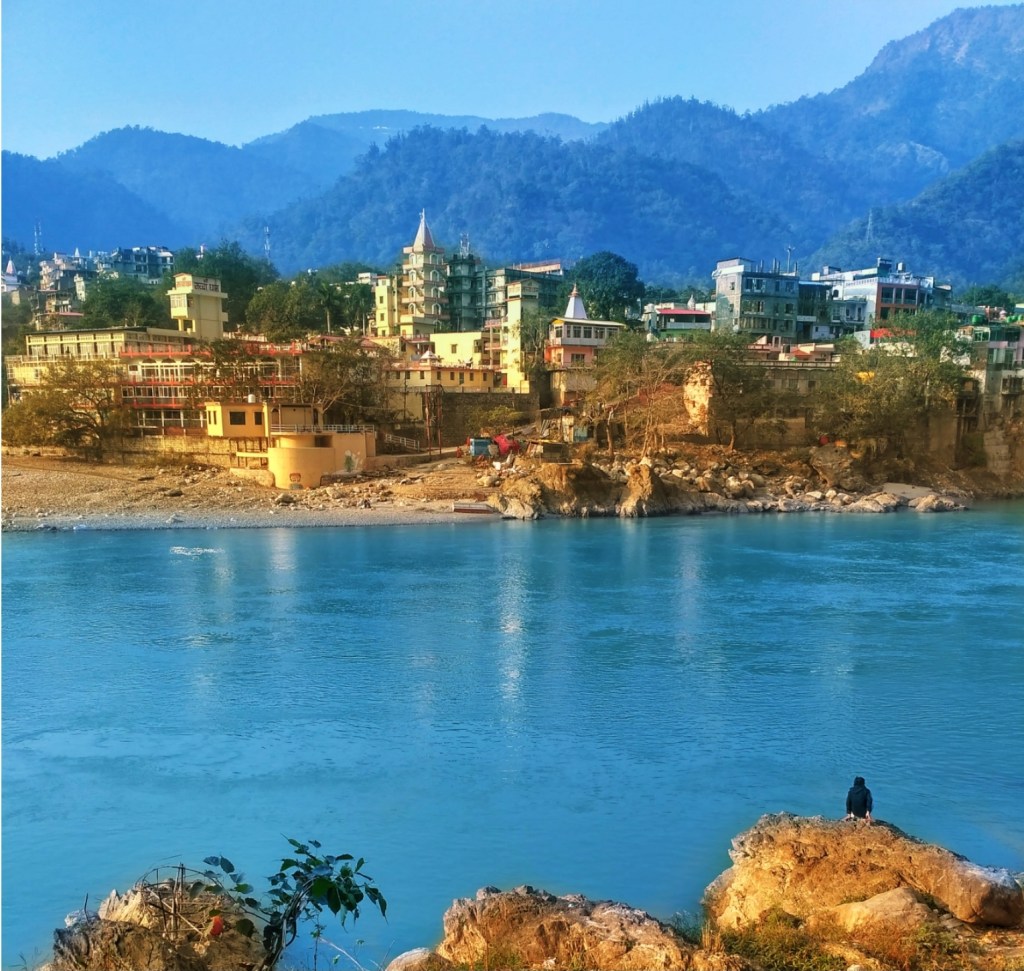
The central action describes how my senses can take me away from that here and now: I describe my habit of smelling my Bhagavad Gita (yes, as in putting my nose into the pages of the little book and inhaling the aroma of those pages) and how that takes me back to the shores of the River Ganges; another place, another time.
Anyway, allow me to share the final verse, which speaks of one such occasion:
Then, there is a voice: I hear it with the ear of my heart: There is no place to go. What you seek is within. There’s nothing to find: God’s kingdom is within.
I suppose there is nothing left to say. I am here, and it is now
Since I launched this blog (a whole month and a bit ago already), I’ve had an idea for a post. A short, spontaneous, chatty but informative little piece on my favourite name and form of the Divine Feminine (often referred to as the Goddess): Saraswati.
Well, as the keenly observant among you will have noticed, no such post has appeared. Procrastination in overdrive you might say. Or perhaps it was that the Goddess just wasn’t keen on me doing the post about her?
You see, I did some research, made a ton of notes, and discovered all kinds of fascinating things and I just felt I wanted to share what I’d learned. Somehow, though, the idea didn’t go any further. I’ve thought about it from time to time, but still, nothing has come. Then, a couple of days ago, I came across my notes and reread what I’d discovered.
Now, here’s a key moment: as I reread those notes, I thought (paraphrasing here), ‘I really must post this. It’s all so fascinating and would interest a lot of people and even be helpful.’ Something like that anyway. Yet, still, it is not written.
So, despite my notes seemingly begging for my attention, I guess that maybe it’s not the time. Now my notes are safely tucked into a few nice little folders within a larger folder somewhere in the depths of my harddrive.
All that struggle; all that thinking and fretting over what was supposed to be a short, spontaneous couple of hundred words on a subject I love. Still, the episode has got me thinking about intuition and how it can disguise itself – with our help – as procrastination. And vice versa.
Yes, I know, obvious question: how can we ever know the difference? When are we inventing all kinds of reasons for putting something off, and when is it really intuition trying to guide us?
Well, it’s complicated. As creatures able to reason, we are always ready to come up with arguments for and against, to think endlessly and agonize over the smallest and most trivial details while ignoring the big stuff. Really, in my case that’s all there is to it: I just think too much.
Sticking to the Saraswati blog post episode (a catchy title don’t you think? Watch out for a post headed up ‘The Saraswati Blog Post Episode‘), I don’t recall why I didn’t just get right to writing it. It might have been any number of things: a perceived lack of time; a promise to self to ‘give it some more thought’; a resistance to the actual ‘labour’ required. Who knows?
Or, was it more that, while the idea was a good one, I just wasn’t feeling it? Maybe the timing just wasn’t right? The problem is that sometimes an intuition comes in a flash of knowing – with a capital K – that you can’t possibly miss.
Then, other times, it creeps up so slowly and quietly that it gets drowned out and ignored as our monkey mind takes over with its endless arguments for and against, pros and cons, advantages and disadvantages,
The lesson I was given here was this: What is going to get done, will get done; what is not going to get done, won’t. Sounds simple really, but so often we make it more complicated with our overthinking, our coming up with excuses. We procrastinate.
Then, at other times, we just dive in the deep end, flowing with the intuition. It may be right or it may be wrong, but it’s done. Actually, I am trying to realise that there is no right or wrong about a decision made: it just is as it is. Easy to type, hard to do.
Flowing. That’s a good word actually. Saraswati, along with many other characteristics, embodies flow. As in the flow of the river of life. She’s the Goddess of all things creative as well as any activity that helps one to discover the essence of self.
So, flash or gradual realisation; right or wrong; left or right, be the river: flow with what happens or doesn’t happen. Don’t fret about the twists and turns, the ebb and flow of tides, the rocks in the stream that force us to flow around or over, or to change direction completely. In 1946 the poet Jorge Luis Borges wrote an essay about time. In that essay, among other things he says:
Time is the substance I am made of. Time is a river which sweeps me along, but I am the river (emphasis is mine)
Many years ago now, a wise person I know used these words to remind me of a fact of life that, even now, I sometimes (to be honest, this should read very often) forget: we are – all of us – only passing through. For me, the words have extra resonance beyond what you might call that overarching reality of the temporary nature of our time in this world: I was, born and still am, a nomad.
Even though I very much see myself as being on a never-ending pilgrimage, I do often get anxious about should I move? should I do this? Should I do that? Existential and other kinds of angst are common to all of us I think. So, now and again it’s a good idea to hit the refresh button and click the reminder that I am always in a passing through place.
I often find myself singing (usually very quietly or in my mind) the chorus from Passing Through, a very special Leonard Cohen:
Passing through, passing through. Sometimes happy, sometimes blue, Glad that I ran into you. Tell the people that you saw me passing through
Leonard Cohen – Passing Through
And that’s the refresh: It is literally true to say – both in terms of my internal life journey and where I might be geographically speaking at any given time – that I am only passing through.
Change is constant, that’s the message here. Being sometimes happy, sometimes blue are just facts of life Leonard’s song tells us. But putting the whole chorus together you can see it’s about presence. It’s about being in the ongoing present moment; the moment that just keeps on keeping on. It’s about living in and being conscious of that ongoingness, whether we’re happy or blue.
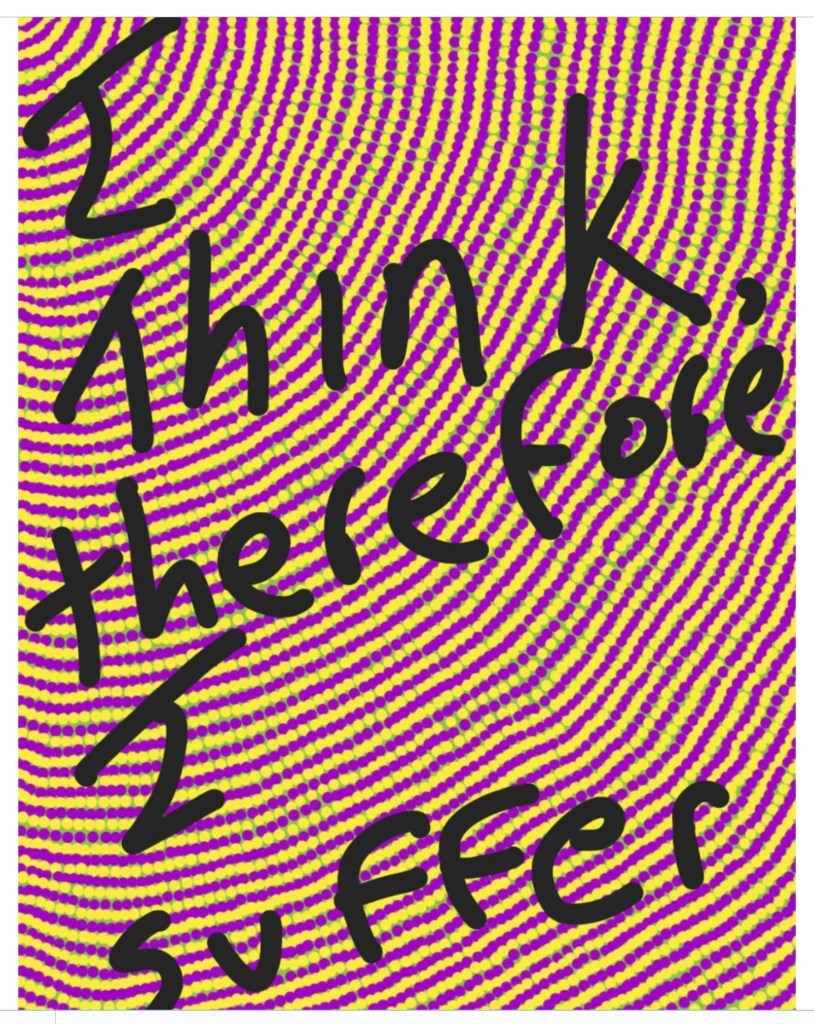
As I typed that last sentence, about states of happiness and blueness, I suddenly thought of a poem I wrote quite a while ago now. Just Passing Through. Or Seeking Noble Truths. It, too, is about presence, about the attachment to outcomes (like being happy, or not being blue) being the cause of our suffering. Of course this isn’t my idea: it’s one of the Buddha’s Four Noble Truths.
I think I would like to share that poem with you. But let’s do it next time shall we? Because, while there might be no time like the present, as we’ve just seen, the present is ongoing.





 Notes from the Hermit's Cave