
From the Hermit’s Cave to You, wherever you are

From the Hermit’s Cave to You, wherever you are
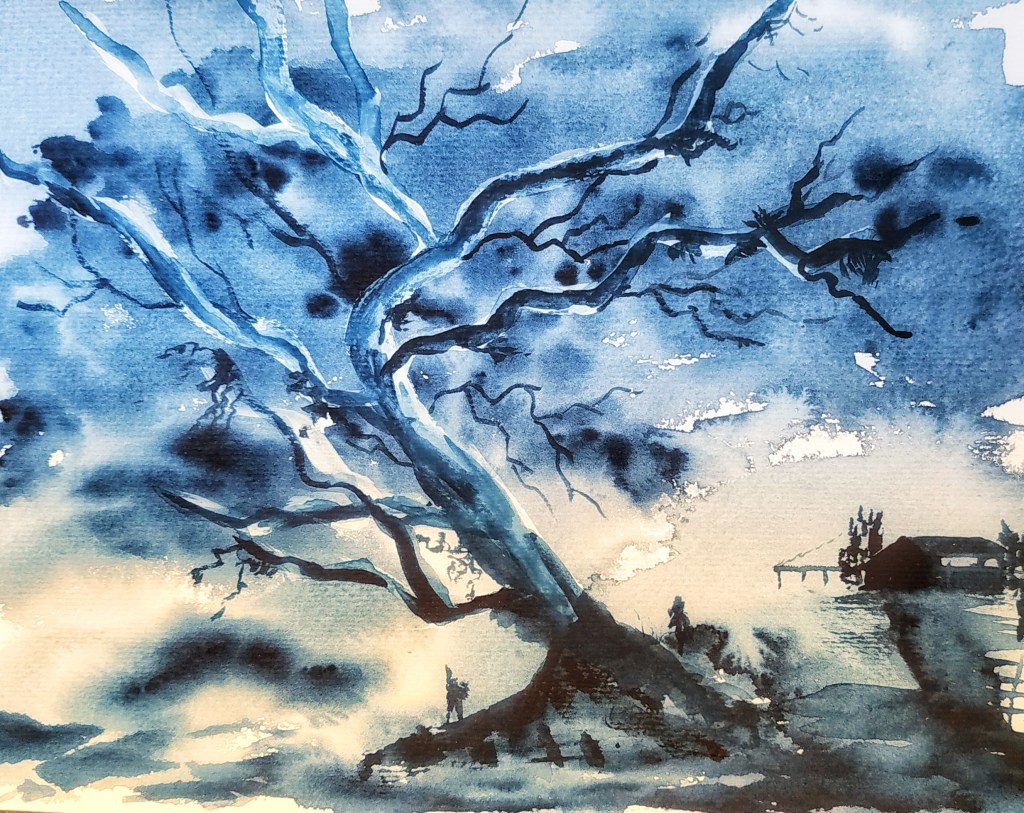
Vibing on the mystic trees,
their upside is downside, their downside is upside
selves telling me:
You’ve got to cut through the attachments.
Then, not a new, but old made new again, insight
confirms, clarifies, brings details to,
shines a light on the specifics:
Stop desiring what you already have.

By the River’s Light
I’ll Live My Life
out of sight of Babylon
A Note From Me: I can’t tell you who wrote these words. Maybe I did; maybe it’s a song lyric; or maybe it’s a quote from someone famous. Whatever the case, a half hour internet search failed to come up with anything even close. So, The best I can do is thank whoever did bring these beautiful words into the world. I hope you are pleased with how I’ve made use of them.
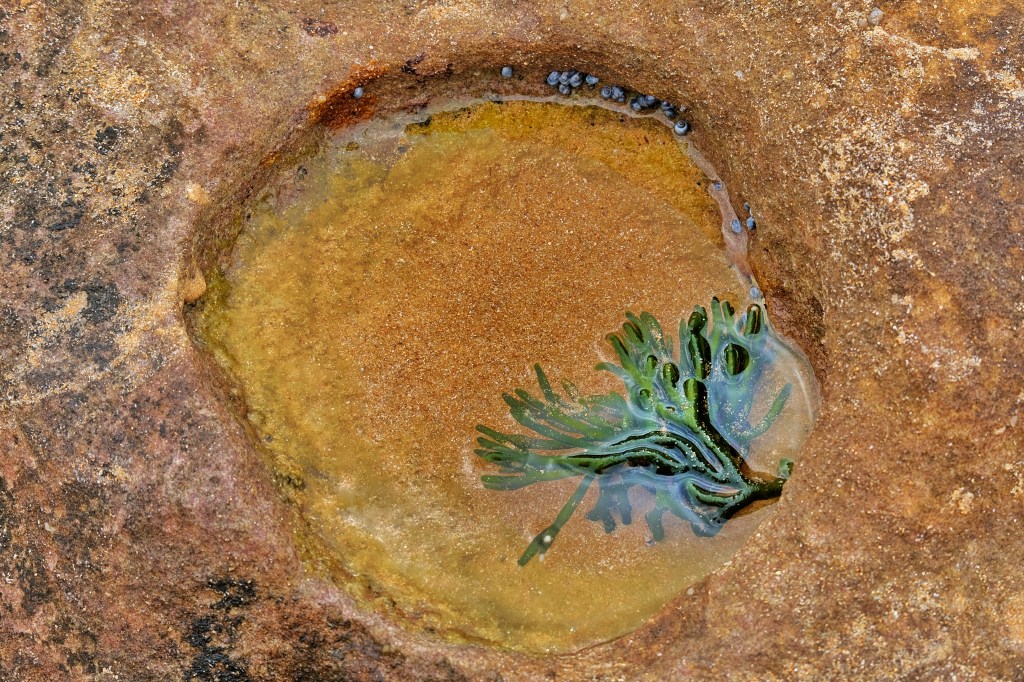
Yellow-Golden sands
carpet the floors
of tidal rockpools,
home to crustations and seagrasses.
And the coffee tasted like medicine.
What a piece of magic this is!

No, it’s not a quote from Shakespeare. Mind you, now I think about it, there’s a line in Hamlet, where the man himself is monologuing about the human condition and declaims a strong-felt sentiment:
What a piece of work is man! [sic]
The reality is that first quote is from someone far more mundane than the bard: me. The occasion on which I uttered this equally impassioned statement was as I sat holding my smartphone and listening to the music flowing from it through bluetooth fairy land and into the headphones I was wearing.
The truth is I was at that moment just awestruck and a bit overwhelmed with what I was hearing, and just as significantly, with how I was hearing a particular song.
Not being a materialist by any measure, my phone and headphones are nowhere the latest or top of the line models, but still, to me, what I was hearing was magnificent. It’s the only word that fits really.
Anyway, that isn’t exactly what I want to write about today. Reflecting on the experience described above, got me thinking about the actual song I was listening to. And that’s what I want to write about now.
The song in question is written and sung by Australian singer-songwriter Cyndi Boste (died 2018) and is called Cry Down on Me. Here are the lines that have struck me particularly:
I’m not afraid of your tears.
Cry down on me
I’ll make sure nobody hears
Cry down on me.

Before we go on, a short note. Until I started research for this post I had my own idea of what ‘Cry down on me’ means. Seems I got it wrong. However, for this post I am choosing to believe that the songwriter agrees with me. If you look up the meaning and then listen carefully to the lyrics, you’ll see that perhaps I didn’t get it wrong after all.
Essentially here we have the singer/protagonist reassuring another person (friend? lover? sibling? We don’t really find out, but if I had to guess, I’d say they are lovers) that they are safe to share their tears, their sadness, anger, fears and so on. Most of us at some time or another (or always?) have been afraid to express or share our emotions, to show our tears.
So, why is our protagonist going to make sure nobody hears the other’s tears? Well, she is obviously aware that the other is at the very least embarrassed, perhaps afraid of being ridiculed, rejected, or perhaps they’re worried about appearing ‘weak’ or making themselves seem vulnerable.
And how did she come to that awareness? I think she has seen this other with the eyes of her heart, seen their need. And now she’s telling them: ‘Look don’t worry, I am listening to you with my heart and I can hear you.’

We are exposed to so much ‘noise’ from everywhere all the time. Even the tears of a loved one can be lost in the overall din that sometimes threatens to smother us all.
And of course we’re not just talking about literal tears here, and the sound the shedding of them makes: anything said, written or otherwise made known that is of substance, or real importance and meaning, is threatened with annihilation by all the trivia, gossip, advertising, round the clock news, and what I often call the general blah blah, that passes for life in the modern materialistic world.

Of course to protect ourselves from all that noise, it’s no surprise that we so often only listen with our physical ears, see with our physical eyes. Actually having said that, I know from my own experience that even that level of engagement and attention can be a struggle sometimes. And doesn’t that struggle sometimes lead us to closing down altogether?
I guess the answer lies in what Buddha call The Middle Way or Path: The bottom line is that we can choose what we listen to (or look at) and what we don’t. No need to switch off and isolate ourselves completely from the ‘outside’. Nor is it necessary to leave ourselves wide open to all that noise.
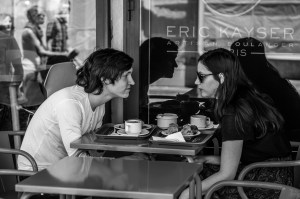
Like our protagonist in the song, we can listen with the ears of our hearts; we can see with the eyes of our hearts. It is in our hearts that love lies, where Truth lives. We can say to that other that we are listening and seeing with our hearts, while at the same time reassuring them that nobody, including us, is going to simply be hearing or seeing you only with physical ears and eyes.
The last time I listened to the song (yesterday: it’s become a big favourite) I had the thought that maybe our protagonist is reminding her Self that she’s listening. Sometimes our ‘real’ self can feel like a stranger, as if that Self is someone unknown, and living as a separate entity outside of us can’t it?
It’s at that heart level where we can truly listen, truly see, the other. And whether that other is one’s Self or another person, the truth is there really is no difference: your heart is truth, the other’s heart is truth, and it’s the same Truth.
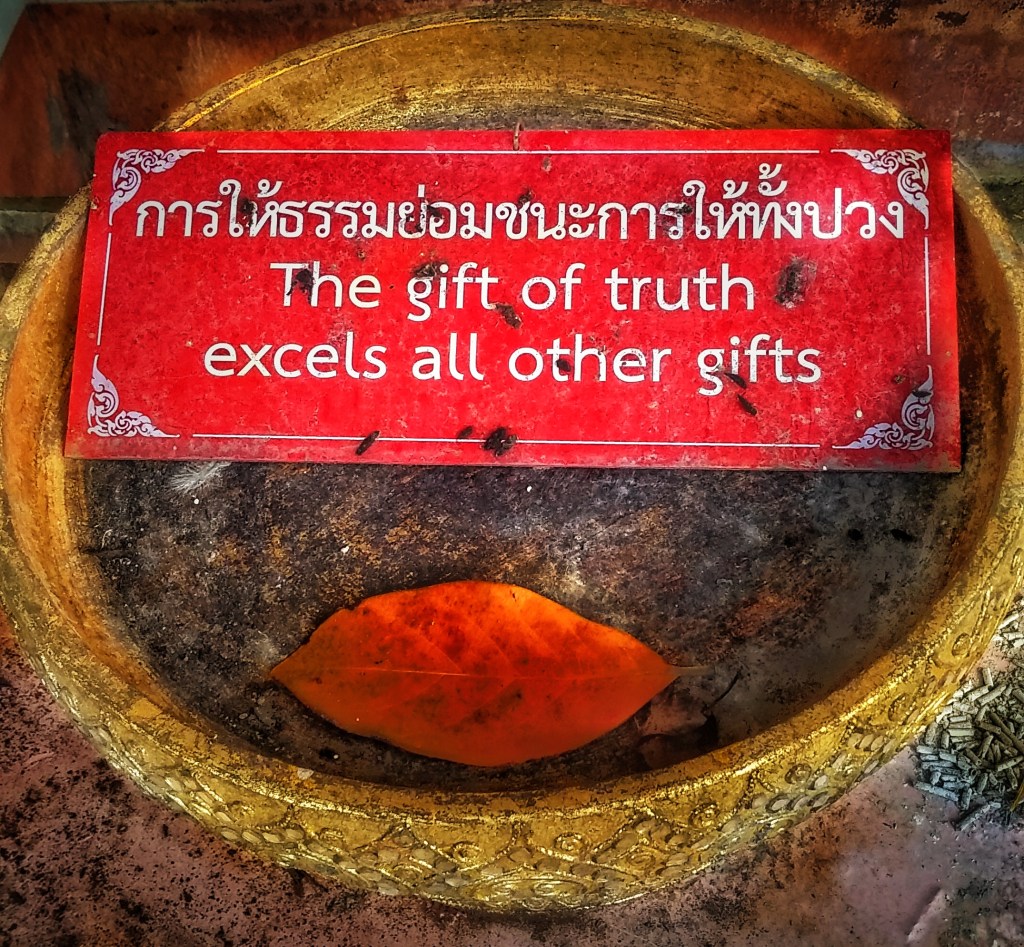
Strangely for one who lives a life that at least aspires to be outside the mainstream of our culture and society, I have a lot of rules to follow.
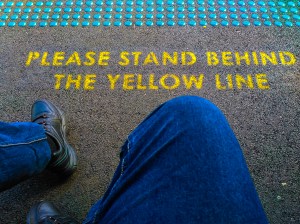
What I mean to say, is that, while for the most part I disdain the ‘rules and customs’, and the ‘demands and obligations’ of the dominent culture and our materialistic society, I seem to be quite capable of making up all kinds of rules for myself. I’m then more than able to put the exact same pressures on myself to obey, to comply and to conform.
One of those ‘rules’ is to try not to repeat topics of posts. Obviously there are posts that fall through the cracks of such strictness, but on the whole I like to keep coming up with new things to share with you.
But it’s been occuring to me lately that musings and contemplations don’t work that way. The mind, the heart, know no such rules as ‘no repittion’. (Actually, now I think about it, there are some things the mind likes to repeat all the time that I could do very well without thank you very much)
Sometime, not too long ago I think, I wrote about the beautiful George Harrison song, Just for today. I wrote about how I have a slightly paraphrased few lines from that song written in my Bhagavat Gita, and I read those lines every day:
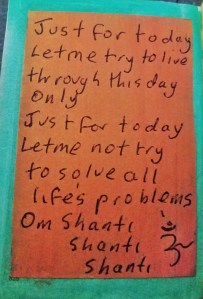
I know I am not alone in my desire to not be constantly trying to sort out all life’s problems; I know many of us would just like a little peace, a little pause in the ongoing rush of life. Just for today, or even just for a minute.
What George is making a plea for here has resonated with me since I first heard this song so many years ago I can’t remember.
Anyway, this was supposed to lead up to the real topic of today’s post which was going to be about my decision last night to spend the next few days in a kind of retreat. Instead it’s turned into a bit of a rave about breaking self-imposed rules.
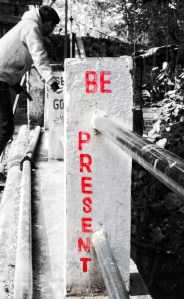
Actually though, one of the primary motivations for my decision was the very notion of presence, of being still for ‘this day only’. You know the idea: leave all life’s worries and issues, and worldly concerns out of mind, just for a bit.
In other words, in this case I don’t think I mind repeating myself, breaking my own (really rather silly if you ask me) rule. The retreat is timely, and it’s a good thing to be reminded that it really is about presence.
I’ve been getting too caught up in ‘what’s next?’ kind of questions. As well as the usual and very tedious existential angst over life, the universe, and everything past, present, and still yet to be!
So, at the risk of creating a classic oxymoron, it’s now the time to head off to find a little presence, and a little stillness.
Just for today.

Welcome dear reader
Have I shared with you my Bhagavad Gita? Well, I know I’ve mentioned a few times that it’s one of, if not the primary resource for study and guidance for me.
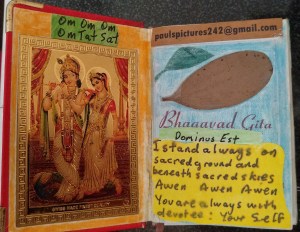
As you’ve probably guessed, this is a quick photo of the inside of the front cover. And, again as you’ve noticed, I like to stick things in my books, especially this little one. (Actually now I mention it, this is the only book in the traditional format as in made of paper, I own). It’s an old practice and for me adds multiple dimensions and depths to what is already a treasure.
Sometime I’d like to go through and describe to you all that I have added, but for today, do you see the little green section with the words Dominus Est printed?
In the religious tradition I was raised in, these two words have a specific meaning and use. However, it’s only recently that I’ve come to think of this little Latin phrase (well technically it’s a sentence, but …) in the sense of the literal meaning of the words themselves: God is.
That’s it. Or the Lord is, or the Master is. If we change the Dominus, we can use this tiny sentence to define our conception of the divine, the holy, in any way that seems right: Truth is, Beauty is, Art is. For me, God is, sits right. As do the others in this list. Same same.
So, God Is. What else could possibly be said that would add to this already very emphatic and simple statement? Nothing at all. It’s stand-alone, complete in itself.
Why? Well, if we were to add anything at all to these two words, such as God is Truth, or God is Love, or God Resides in …, or God is called … , then we are in fact stating only a little of the truth. Sure, God is truth and love, and goes by many names and is found in many forms, but once we say what something is, we are actually making more of a statement about what it is not.
Mind you, it’s perfectly natural, and for many of us helpful, even necessary, to ascribe to God a name and or form. We are ourselves material beings, living in a material universe; it’s logical that we would choose (or need) to see God in a word, a physical object, or attribute some other kind of materiality to our notions of the divine.

I must say that I am one of those who find it difficult to envisage an invisible, non-physical, and impersonal ‘God’. Of course, our little statement, God is, does indeed say just this doesn’t it? Isness is pretty non-corporeal, certainly not in the least physical. And isn’t even a ‘spirit’ or ‘entity’ of any kind; Isness just is. The moment we label something (including ourselves) we miss that isness, that essence.
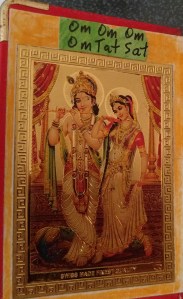
You see my picture of Krishna and Radha? This form, or forms, is one of the several that I feel right in having as a kind of focus, or centre of my devotion to and love for the divine; for love, for truth, and for it all.
You might be saying, this guy does believe in a personal God. He just told us. The truth is I don’t believe or not believe that Krishna (or any of the myriad names and forms we’ve invented) is God. God simply is. And my heart tells me that this is enough.
There are a pair of theological ideas known as Cataphatic Theology, and Apophatic Theology. Cataphatic describes or approaches the divine by stating what God is, while Apothatic (you guessed it) describes God by speaking only of what God is not.
My guess is that pretty much everybody, from whatever tradition, would approach the divine (and not only the divine) in one or other of these ways. But for me it was such a relief to realise that there was no need to go there at all. I could stop with the definitions and the descriptions, the what is and what is not. I have the freedom to not have to believe or not beleive. None of it matters. Dominus Est. God is.
Am I there yet? Have I let go of dualities? Hardly. Maybe the odd glimpse, but it’s rare. And it always will be for as long as I live in a physical body. But to paraphrase something Swami Ramdas said:
I’ve set my feet upon the path, so I am already at the goal.
Peace and love from me to you
Greetings and Welcome after what feels like a gap of forever since my last post.
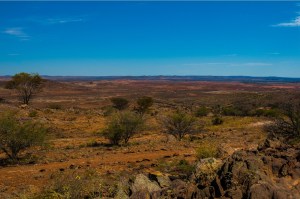
Two weeks today since I moved into a rented house way out here Outback in the mining town of Broken Hill, on the traditional lands of the Wilyakali people whose ongoing presence on this country I acknowledge and give thanks for.
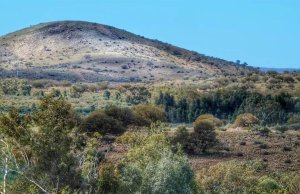
And now, it is the location of my hermitage, my safe haven and refuge. But, no, therein lies the conundrum: I love it here; I know I’ve come to the right place to which I’ve been called. But after two weeks, I’m still not feeling grounded; I’m not really here yet.
Culture shock, fatigue, new environment, excitement; call it what you will; something has me not yet settled and in place. Yesterday a small poem came to me that I think expresses exactly the problem.

And now I’m sharing it with you as a way of explaining why the gap, why the block.
Peace and love from me to you.
The call to the desert
has been answered.
And now, I am here.
No, to tell the truth, I’m not actually. Here I mean.
So, where am I?
Not there, back there
where I came from.
Not even sure if ‘there’ really exists,
if you know what I mean.
Mind you, when I said ‘here now”
I meant it’s been a short now:
Now that I’m here. Just.
A short stretch – so far.
Here; there; now; so far;
it’s all too much.
And you know what?
It’s all in my head.
In my mind I mean.
A wise teacher once taught:
First thought, best thought.
But for here and now?
As in being here now?
No thought, more like,
is best thought.





 Notes from the Hermit's Cave