Friend Or Foe?

Your enemies will now question your capabilities. Is there anything more painful and shameful than that?

Bhagavad Gita 2:36

Thanks to inspiration from my partner hermit, I’ve once again begun reading Bhagavad Gita from the beginning. The quoted verse came up this morning as I continued through chapter 2.

Setting the scene, the Bhagavad Gita is a conversation between Krishna (God) and Arjuna, a famous warrior who’s leading the army of the ‘good guys’. The context is actually a metaphor for the battle that goes on constantly between what some call the Higher Self (represented by Krishna of course), and our lower selves, our ego, mind, and the rest of the worldly us (represented by the very worldly Arjuna).

Knowing that, sometimes a verse will jump out at me as being in some direct way related to me. This verse, this morning seemed spookily all knowing about my mood of just slightly earlier.

Before we move on, I should point out that Arjuna has just realised that if the battle goes ahead, he’s going to have to kill many relatives and friends, teachers, and others he respects. And he’s just decided he’s not going to do it and sits down depressed and dejected on his chariot.

Now while I personally applaud this decision (he even says it might be better if he went off into the forest and lived the life of a wandering monk rather than be in this battle), I have to remind myself that it’s not for real, it’s a metaphor for the battle between our two selves.

Krishna says to Arjuna that you’re going to look really bad if you don’t fight the fight to uphold the Truth as you know it. Lesson number one when studying the Gita: don’t sweat the context!

Anyway, to our current story.

I’d just finished my breakfast cup of tea, and I knew it was time to ‘get on with the day’ as the saying goes. Today, though, Tamas** was strong. Which left me feeling, I don’t really want to get on with the day.

Instead I felt I wanted to not get on with anything; I wanted to lie down and sleep, and not think about anything, or do anything else either!

This picture is called Lunchtime Sleeper but it’s how I felt after breakfast this morning!

Mind you, not in the ’empty your mind of random thoughts, relax the body, realise the Divine’ kind of mood. No, more like ‘lay down, block out everything, blank the mind, sleep.’ Blank as it blot out!

Then, the famous second thought kicks in: No, I said to myself. I will not allow Tamas to take control. So, I got up, brushed my teeth, washed my face, and got ready to begin my practice.

I guess you could say that Tamas finds it easy to take control when one’s mind is in enemy mode as I like to call it (somewhere else in the Gita, Krishna says the mind can be our friend or our enemy).

My mind in particular doesn’t usually need a lot of help to disparage me, put me down. Getting me to question my own capabilities is one of its favourite activities – sometimes.

And it’s exactly right, perhaps I should be questioning myself: If I allow Tamas (mind and ego etc) to have free rein, the pain and the shame is all I feel. Well, perhaps not all, and not always, but still, it’s not a good thing.

So, what’s going on now? I’ve been reading Bhagavad Gita, and now I’m making these notes. Tamas is on the run and my mind is being ever so friendly.

**Tamas is that aspect of our (human) nature that has us leaning towards lethargy, laziness, that ‘I can’t be bothered’ feeling, and excess sleep, and all the other slothful stuff. Blotting out, as I termed it earlier.


The Q&A in the Scripture Part 3

Welcome to another installment in our occasional series (see links to all previous installments at the end of this post) looking at some of the answers given by Krishna to his cousin Uddhava during a kind of Q&A session that takes place as both are about to leave their hometown which is on the brink of war. Krishna’s returning to Heaven, while Uddhava is heading for parts – and a future – unknown.

Hence all the questions around living a good true life, all driven by the knowledge that Krishna isn’t going to be around anymore to give Uddhava life advice.

And the question we’re discussing today is certainly a big one. In fact, though it is a single part of a three part question, I felt inclined to give it our full attention. To me it is that significant. In fact, thinking about it now, I could even add here that of all the questions and answers, this one could stand alone as the  question, the  answer.

To the question then, as asked by Uddhava to Krishna:

What is Charity?

Well, although I thought I knew what the word charity meant, and what charity is, I did end up looking it up, just to get a clearer and deeper picture.

Yes, a charity is an organization set up to give aid to those in need. And, as I also knew, charity is the voluntary giving of help – often in the form of money or other material goods – to those in need.

All just as I’d thought. But, then, I came across another entry that filled out the picture for me a little more. In addition to the above, this listing told me that the ‘true meaning‘ of charity is generosity and helpfulness.

Again, it specifies that this generosity, this helpfullness, is usually extended to the ‘suffering and needy’. Still it suggests that charity may be at least a little more universal an attitude toward functioning in the world, a world shared with so many other living beings.

(note from me: This latter definition comes from the Merriam-Webster Dictionary.  I’ve used this dictionary a great deal, and for very many years. It’s been my favourite go to, as they say.

PRESS THE PAUSE BUTTON PLEASE

Right, yes, I hear you loud and clear. Here I am going on as if this is a semantics blog. Sorry about that. Perhaps we should get back on track and allow Krishna to give the answer Uddhava and the rest of us have been waiting for:

Charity is the renunciation of aggression.

Perhaps you can see why I was at first a bit taken by surprise, and I puzzled over it for a while. Then after seeing that Merriam-Webster definition, I knew I’d found a clue: generosity and helpfullness.

Then it came to me: Ahimsa!! No, this is not some obscure exclamation reserved for Eureka! moments. Rather Ahimsa is a foundational principle underpinning many of the great religious traditions of India.

For me, Ahimsa is basically doing no harm, the practice of non-violence towards all living beings, through one’s thoughts, words (speech), attitudes, actions.

However because life is complicated (ie: there are no easy answers), various schools of thought over time have developed a kind of modification in which they say that Ahimsa is choosing to tackle the complexities of our lives in the world in such a way that we do as little harm as possible.

But how, one might ask, can we expand those dictionary definitions to include Ahimsa? Well, as far as I’ve been able to think about it so far, I’d say that Krishna’s answer itself is the root that we can graft those definitions onto

Which is to say, renouncing aggression is that root, that foundation on which to base the cultivation of charity and a charitable attitude and manner in our relationship with ourselves, with all other beings, and with the planet (and the rest of the Universe too of course).

(By the way, thank you to my Partner Hermit for that word: charitable. Not that I didn’t already know the word, obviously, it’s just that at the time I just could not find it anywhere in my slow-moving brain!)

That open, generous, helpful, compassionate, patient, kind, thoughtful (oh let me count the applicable words!), that charitable demeanour and behaviours with which we engage with the world (and with ourselves) are the result of removing aggression from our thoughts, words, and deeds.

Actually, thinking about cause and effect, and effect and cause, for a second: the way towards that state of charity is the same. In other words the means and the end don’t only justify each other, they are each other. One thing.

Don’t be ready for fight or flight each time you communicate with your boss, or your spouse, or your child, or your parent. Or with anyone else in any situation you find yourself in.

Listen to and observe with patience, care, compassion, and your full attention, the needs of others. Don’t assume you know best. And include yourself in this paying attention.

Look before you leap. Stop, listen, think, pause, before jumping into any situation that needs understanding, calm, quiet and time to alleviate any possible confusions, or misunderstandings.

If you make a mistake (or is it when?), don’t be so hard (aggression?) on yourself. Be just as open, friendly, forgiving, patient and the rest, with you as you would like to be with everyone else.

As to ‘generosity and helpfullness to the needy and suffering’? Well, all living beings suffer simply in the act of living itself. We are all well aware of this. The degree and forms of this suffering (and the needs that cause the suffering) will always vary, but even so, they are inevitable.

There’s a small mantra or prayer, I often use to end other prayers or reading, that I’ve always liked a lot:

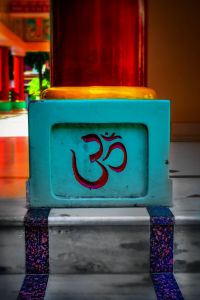
Om Shanti, Shanti, Shanti

I have always thought that this was simply a prayer to the Divine that included the repetition of the word for peace three times.

Of course it is that, but recently I heard that it’s structured in this way with the three repetitions to make of it a deeper or more universal prayer:

Shanti: Peace within myself
Shanti: Peace to all living beings
Shanti: Peace to the world itself

I may have the words slightly off, but the essence is there. Anyway, for me this really does sound like Charity.

If you’ve missed earlier posts in this series please click on the links below

New Series Coming Soon: An Introduction

The Q&A in the Scripture: Part 1

The Q&A in the Scripture Part 2

New Series Coming Soon: An Introduction

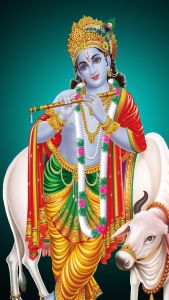
Lord Krishna

Namaste and greetings friends

Not long ago I began studying an Indian scripture called The Uddhava Gita. It’s quite a lovely book actually: it’s poetic, actually it is a poem, or song, and beautifully written. The title means The song of Uddhava and is an account of a conversation between Krishna wearing his God of the Universe hat, and his cousin Uddhava.

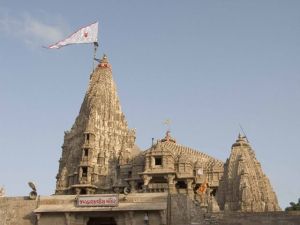
The story takes place in their home town of Dwarka in the state of Gujarat (Krishna was also a regular family man with a huge extended family) which is about to explode in a destructive civil war. Soon Krishna is leaving to return to his heavenly abode, and at the opening of our story, he advises Uddhava that he too should leave town ASAP.

I should point out at this juncture that I do not see this Gita as a historical document. It’s a story created as a backdrop against which to place a long conversation in which Krishna, or God, passes some spiritual teaching to Uddhava.

Dwarkadheesh Temple Dwarka India
By Scalebelow – Own work, CC BY-SA 3.0, https://commons.wikimedia.org/w/index.php?curid=5739970

Although the location of the story is a real place and exists today, we don’t learn anything beyond that this is the setting for this little chat.

The purpose was to present these teachings in an entertaining and accessible format. Like so many scriptures around the world, this one is a song, making it easier to learn and pass from one person to another over time in a society that was not yet universally literate.

So, why am I writing about this text? Well, in one section Uddhava is asking his cuz all sorts of questions, that have obviously been on his mind for a while. He knows Krishna is leaving he planet soon and he thinks that this might be his last chance to get some answers.

He asks questions like: What are reality and truth? And, What is a person’s strength. Then there are queries like: Who is a friend? What is home? Many are related to spiritual matters and practice, and all are concerning qualities and attributes a person should possess to live a good life, a honest life. A Dharmic life.

Actually, if I were to condense all of Uddhava’s questions into one big question, it would probably go something like this:

How can I change my lifestyle so I might live a righteous life, a good and honest life in which I can learn the truth and live my whole life according to that truth?

Now, here’s the thing: Uddhava asks a total of 36 questions, some singularly, some are multiple questions containing two or three queries. Krishna then proceeds to answer the questions, all of them in fairly quick succession.

I would like to share a few of those answers with you. I don’t get the sense that the questions are asked or answered in any particular order or pattern, so perhaps those I share will be an idiosyncratic selection, or it may be entirely random. Not that there is such a thing of course, so I guess you will just have to wait and discover for yourself the chosen questions.

Don’t worry! I have no intention of burdening you with the complete set of 36. In addition to saving you that fate, some of the questions and or answers didn’t resonate; others didn’t feel overly relevant to this blog.

I’d like to devote an individual post to each of the questions, bearing in mind some of them are multiples. I learned about all 36 questions and their answers in an hour long class. Needless to say that experience was more than slightly mind-blowing. One or two (or maybe three) at a time will be just fine for all concerned I think.

So, next post, I look forward to sharing with you the first of Uddhava questions along with Krishna’s answer. It will in fact be literally the first one asked; I thought discussing it at the start would sort of set the scene and the tone for us.
After that one there will be further posts. Again don’t worry, I’m planning a fairy short and occasional only series.