The Beginning of Devotion: A Poem

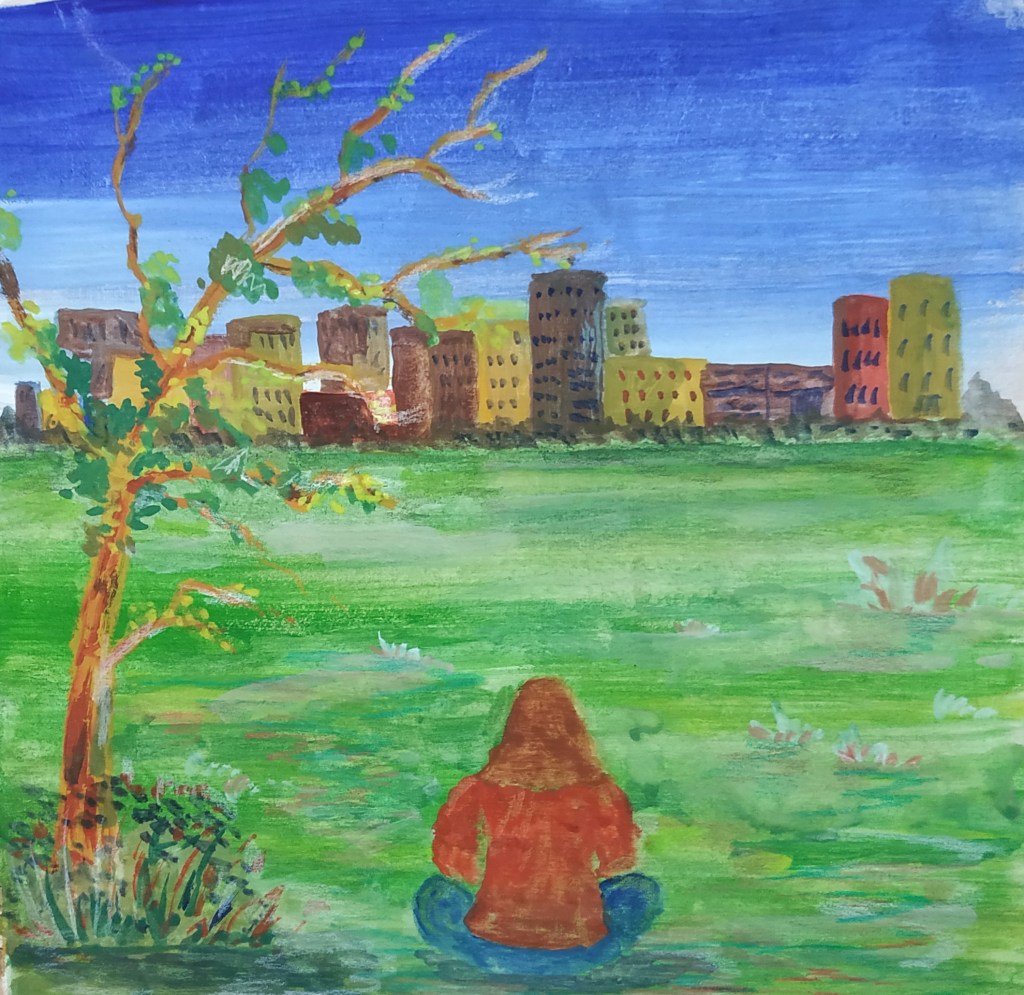
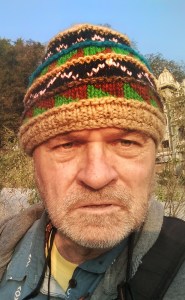
The Paradox of the Hermit Life (Courtesy of @travellinghermit3)

THE BEGINNING OF DEVOTION

Attention, paying attention.
It’s the beginning of devotion.
And when you see? When there is seeing?
Well, seeing is praise.

When we see, what we see,
is God.
Not the god, or this or that god.
There aren’t lots of gods,
or so it seems.
And in the end, there isn’t even one god:
there is only God.
So it was said by the sages.

My take on Dharma, Karma, & Living a Good Life Part 2

The inclination to seek knowledge is, for me, a gift, a blessing. And we live in a time when there are so many sources, so many resources available, and many are freely available too. There seems to be no limit to what the genuine seeker of knowledge can uncover.

Yes, of course, we’re swamped with information from all sides. We are deceived by fake news. And everything these days is a commodity, a thing to be bought, sold, acquired, or otherwise used for profit in the material world.


All true. However, this is where one’s discernment comes into play. It’s up to each of us as seekers of knowledge (on whatever topic or subject) to discern for ourselves the truth or otherwise of the information we use to form the knowledge we are seeking.

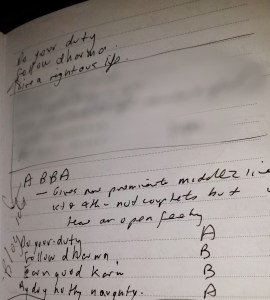
In my last post, I began to talk about two notes that I made in my notebook. These notes were quickly jotted down while seeking knowledge from two different sources about two distinct topics. Feel free to have a look at that post here if you happened to miss it.

Do your duty
Follow Dharma
Live a righteous life

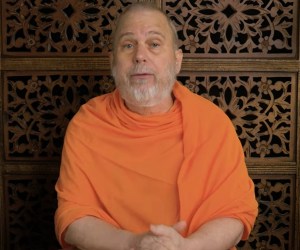
These three lines are the sum of what remains of a session with my teacher, Swami Tadatmananda. It’s his short, succinct summary of the teachings I was trying to absorb from him that day.

You’ve probably guessed I am not a great note-taker; I like to just let sink in what wants to sink in, absorb what resonates for me. Perhaps on that day, I felt the summary was all I needed as a basis for later contemplation.

With that in mind, I would like, in this post, to reflect on these three injunctions, try to work out how I’m doing when it comes to taking notice of them, and actually where I’m at with actually living by them.

Do Your Duty

What does it mean, ‘Do your duty’? And what does it mean, for me, to do my duty?

Firstly, let me try to define duty. Not from the dictionary meaning, not from some outside ‘authority’. No, this is me talking about how I define duty.

Duty, for me, is defined by the activities I choose to prioritize in my life. These are the things that I believe best serve my true, essential nature. Acting in accordance with this true nature includes responsibilities such as taking care of my physical, emotional, and mental health. While this may not always be easy and sometimes feels impossible, it is my duty because my mind and body are manifestations of my true self, of the divinity.

Duty, again for me, means persuing activites – in the world as well as within myself – that nurture, protect, and grow, who or what I percieve that Self to be.

This Self I refer to is not restricted to the apparently separate entity I call ‘me’. That apparent separation is just that, an appearance: Self is all there is; I am not simply bonded or joined with all other living (and non-living) beings: I am those beings, just as they are me.

As such, my duty is to act in ways that benefit (or at the very least do as little harm as possible to) all beings, all life. Here, I guess, we could talk about Karma. But let’s leave that for now. It’s enough to say that nobody can tell me – or you – what is our duty. In fact, the truth is I already know the full extent of my duty, as we all do.

The only thing lacking for me is what I might call a full disclosure of what that duty is. That full disclosure can only come from me – as in the Self. As they say, I might know in my head what my duty is, but I’ve yet to fully realise it in my heart. And if I’m honest with myself I can say that my aspiration to do my duty is a constant reminder and motivation to do always the best I can to fulfill my duty.

In some areas I think I do my duty pretty well, but in others I have a long way to go.

Courtesy of @travellinghermit3

In my next post (and the final one in this series: there just seems to be such a lot to think about when contemplating this topic), I will look at what it is to follow Dharma. Once again, it’ll be a very personal, subjctive answer because, to put it perhaps too simply, I like to think that I know right from wrong.

I hope this post has been of at least a little interest and value to you. I will look forward to seeing you here for my next post.

Thank you and I wish you peace.

My take on Dharma, Karma, & Living a Good Life Part 1

Most likely I’m not alone when I say that when first listening to new information, a lecture, teachings or anything else for that matter, I will often forget either part of what I’m trying to learn or even all of it. In fact, I’m sure there are more than a few scholarly research papers that will tell us all about this universal phenomena with all facts and figures along with all the whys and wherefores.

Anyway, I was listening to my teacher ( Swami Tadatmananda) recently. He summarized the teachings he was giving on that occasion in three succinct, pithy lines. Thinking back now, I have no memory of the teachings being presented, and all I have is a quick note jotted down of the teacher’s summary:

Do your duty
Follow Dharma
Live a righteous life.

Fast forward a couple of days and I was watching a video about 19th Century English poets. Once again I’m not able to tell you the names of all those poets or what the show was about (actually to be honest, I got bored and stopped watching half way).

And, again, all that remains is a scribbled note about the pioneering of a particular rhyming scheme by one of the featured poets.

That revolutionary rhyming scheme is ABBA (where the first line of a verse rhymes with the fourth, and the middle two rhyme with each other). It’s as well that I did jot down a note: I have never been able to take in, much less retain in memory, all the technical stuff to do with poetics. Never.

But for some reason this particular idea appealed to me. Maybe it’s to do with how I was once a big fan of the Swedish pop group Abba? (okay, maybe I still am)

As it happens, my note on this appears in my notebook just below the first one I mentioned above. So, as I thought about ABBA (the rhyming scheme, not the pop group), I saw that first note and started playing with it:

Do your duty
Follow Dharma
Earn good Karma
Do nothing naughty

Okay, I know, it’s not exactly great literature is it? Never mind; it’s only an experiment. But, having said that, I do quite like this little, what shall we call it? This little ditty. It seems to be a nice, even quirky, little rephrasing of my teacher’s own summary.

This is all very well and good you might think, but what does it all mean? Does it actually mean anything? Well, my short answer is yes: for me it does indeed definitely mean something.

Actually, it means a lot. But as this post seems to be dragging on a bit, perhaps we will have to continue in another post.

Meanwhile, be blessed

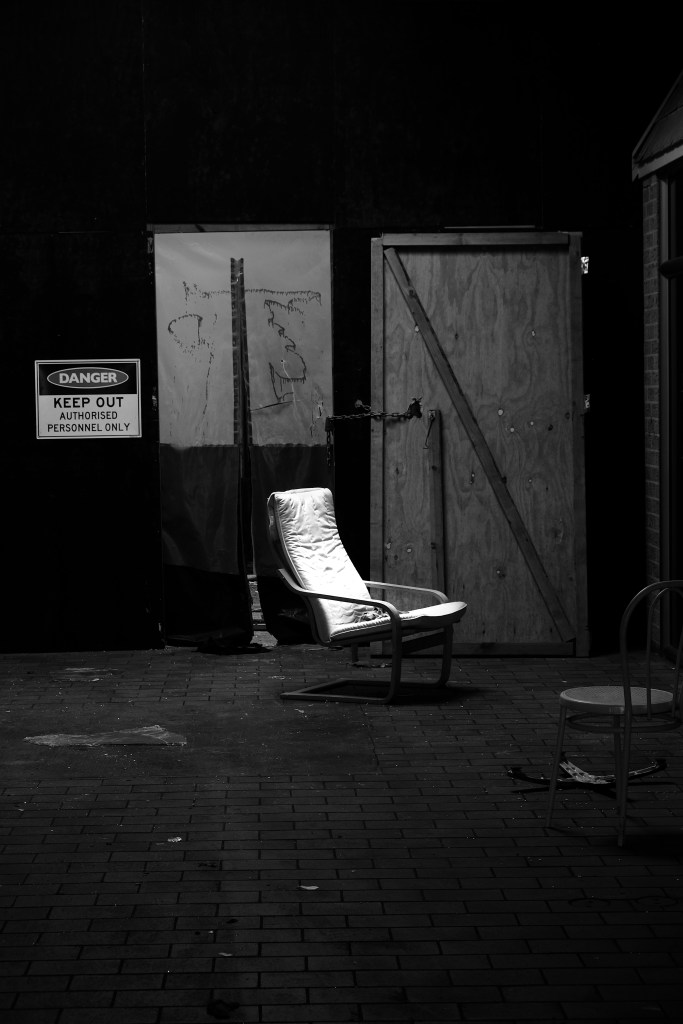
Looks Like a Comfy Chair

‘Looks like a comfy chair’.

That was the first thing my partner said when I showed her this photo. Her eyes – and perhaps even her heart – had found that which is illuminated by the sun, even though it’s surrounded by wreckage and ruin.

The wreckage by the way, of an abandoned and trashed store front. One of several in a small arcade, that’s long sat empty.

Ah, I thought: one more illustration of a metaphor I’ve been hearing a lot lately in my studies about consciousness.

Allow me, please, to adopt our teacher’s metaphor which, for me, really clarifies this concept of consciousness, or Atma as it’s called in Sanskrit.

Is the brilliant light streaming into this room and onto this chair affected in any way whatsoever because the chair is sitting amidst all that wreckage?

Is the sun shining any less brightly on the chair than it would if the chair was sitting in a luxuriously decorated space instead?

Of course the answer to both questions is no. The sun, and its brilliance remains undimmed, and completely unaffected, untouched, regardless of what it shines on.

The ‘I’ that photographed this scene, and my partner’s ‘I’ whose eyes were drawn to the chair in the scene, are both consciousness. Not ‘my’ consciousness; not ‘her’ consciousness. Consciousness is all; all there is. Boundaryless, infinite, all pervading. We can’t even say there is one consciousness, because there is only consciousness.

Ah, I hear you say: there is one sun shining on our world; and the sun isn’t ‘all there is’. Well, as our teacher likes to remind us, all metaphors are flawed: you can only take them so far.

Metaphors, are only meant to illustrate, to show us the way, point us in the right direction as it were. In our little example here, the metaphor is meant to help us gain some knowledge.

The knowledge that we are not what we see, hear, taste, touch, think or feel. We are that light – consciousness – that allows us to know what we experience with our senses.

One more thing: The light of the sun, flooding the chair with its brilliance, enabled my partner to see that it was comfy, even though it was sitting in that wrecked, abandoned and lonely place.

Just as in our lives, when everything seems to be crashing down around us and we feel we are the ones stranded in that wreckage, we can remember that the light of our own consciousness, is the way in which we may shine our attention on the truth of our unchanging eternal, and true nature, that is who we really are: perfect, eternal, absolutely unaffected by anything at all.

Peace and love

NETI NETI

On the going down and the coming up
silvered and golded stairs
to and from the Underworld.
It’s all just a giant mirror
In which we see who we are not.

I’m Not Afraid of Your Tears

What a piece of magic this is!

Sarah Bernhardt as Prince Hamlet (Public Domain image)

No, it’s not a quote from Shakespeare. Mind you, now I think about it, there’s a line in Hamlet, where the man himself is monologuing about the human condition and declaims a strong-felt sentiment:

What a piece of work is man! [sic]

The reality is that first quote is from someone far more mundane than the bard: me. The occasion on which I uttered this equally impassioned statement was as I sat holding my smartphone and listening to the music flowing from it through bluetooth fairy land and into the headphones I was wearing.

The truth is I was at that moment just awestruck and a bit overwhelmed with what I was hearing, and just as significantly, with how I was hearing a particular song.

Not being a materialist by any measure, my phone and headphones are nowhere the latest or top of the line models, but still, to me, what I was hearing was magnificent. It’s the only word that fits really.

Anyway, that isn’t exactly what I want to write about today. Reflecting on the experience described above, got me thinking about the actual song I was listening to. And that’s what I want to write about now.

The song in question is written and sung by Australian singer-songwriter Cyndi Boste (died 2018) and is called Cry Down on Me. Here are the lines that have struck me particularly:

I’m not afraid of your tears.
Cry down on me
I’ll make sure nobody hears
Cry down on me.

Before we go on, a short note. Until I started research for this post I had my own idea of what ‘Cry down on me’ means. Seems I got it wrong. However, for this post I am choosing to believe that the songwriter agrees with me. If you look up the meaning and then listen carefully to the lyrics, you’ll see that perhaps I didn’t get it wrong after all.

Essentially here we have the singer/protagonist reassuring another person (friend? lover? sibling? We don’t really find out, but if I had to guess, I’d say they are lovers) that they are safe to share their tears, their sadness, anger, fears and so on. Most of us at some time or another (or always?) have been afraid to express or share our emotions, to show our tears.

So, why is our protagonist going to make sure nobody hears the other’s tears? Well, she is obviously aware that the other is at the very least embarrassed, perhaps afraid of being ridiculed, rejected, or perhaps they’re worried about appearing ‘weak’ or making themselves seem vulnerable.

And how did she come to that awareness? I think she has seen this other with the eyes of her heart, seen their need. And now she’s telling them: ‘Look don’t worry, I am listening to you with my heart and I can hear you.’

We are exposed to so much ‘noise’ from everywhere all the time. Even the tears of a loved one can be lost in the overall din that sometimes threatens to smother us all.

And of course we’re not just talking about literal tears here, and the sound the shedding of them makes: anything said, written or otherwise made known that is of substance, or real importance and meaning, is threatened with annihilation by all the trivia, gossip, advertising, round the clock news, and what I often call the general blah blah, that passes for life in the modern materialistic world.

Of course to protect ourselves from all that noise, it’s no surprise that we so often only listen with our physical ears, see with our physical eyes. Actually having said that, I know from my own experience that even that level of engagement and attention can be a struggle sometimes. And doesn’t that struggle sometimes lead us to closing down altogether?

I guess the answer lies in what Buddha call The Middle Way or Path: The bottom line is that we can choose what we listen to (or look at) and what we don’t. No need to switch off and isolate ourselves completely from the ‘outside’. Nor is it necessary to leave ourselves wide open to all that noise.

Like our protagonist in the song, we can listen with the ears of our hearts; we can see with the eyes of our hearts. It is in our hearts that love lies, where Truth lives. We can say to that other that we are listening and seeing with our hearts, while at the same time reassuring them that nobody, including us, is going to simply be hearing or seeing you only with physical ears and eyes.

The last time I listened to the song (yesterday: it’s become a big favourite) I had the thought that maybe our protagonist is reminding her Self that she’s listening. Sometimes our ‘real’ self can feel like a stranger, as if that Self is someone unknown, and living as a separate entity outside of us can’t it?

It’s at that heart level where we can truly listen, truly see, the other. And whether that other is one’s Self or another person, the truth is there really is no difference: your heart is truth, the other’s heart is truth, and it’s the same Truth.

When Misreading is no Mistake

We’ve all  had this experience I think. I’ll be reading something, and right away I’ll come to a conclusion, become either sure of something or the complete opposite; I can be confused, force myself to ask more questions. I can even have brilliant insights or realizations.

No? Well, maybe it’s really just me then. But, wait there’s more: this is a two part experience. When that second part happens we will come to realise that what we think we read is nothing at all like what the words on the paper (or screen) actually said in a factual sense.

Yes, you’ve probably guessed by now that there’s a story coming. In fact this exact thing happened to me this morning, all the way to the brilliant insight or realisation bit.

In fact it was a brilliant realisation, the only problem was that it was based on only on what I thought I read, not what was actually being said.

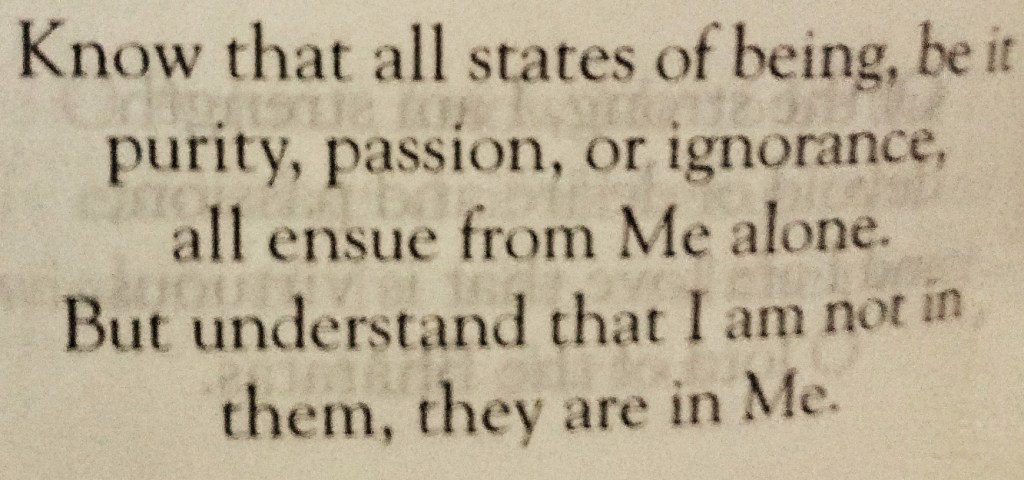
Anyway, I was reading the verse quoted below, from my Bhagavad Gita and a sudden flash of insight hit me.

Despite these five lines saying a particular thing in a clear and precise manner, I somehow misread the first three lines to say:

All beings ensue from Me.

Bhagavad Gita Ch 7:12

Somehow my mind skipped the ‘states of’ bit and made a leap that actually lead to a great realisation: Of course, I thought; God is not in us (as in living beings), it’s we who are in God.

Which to me means that we are all part and parcel of God. I’m not saying, I’m God; I’m not saying you are either. What I am saying is that all creation as one, unified whole, is in God. And if that one unified whole does indeed ensue from God, then it follows that all of creation is God.

As individualized, embodied entities, we (along with all life everywhere) are simply manifestations in the material form of that divine energy, that life, that truth; that which we often call God.

Now, this is an instance of a flash of insight leading to a truth, when the receiver of the insight (that’s me) is engaged with what you might call some other factual reality, that is, the actual words on the page.

At first I thought, that’s weird: how did I misread all those words related to states of being? I mean they are pretty clear right? But then I thought, no, maybe not so weird. In fact, it makes sense.

How can my material mind and intellect possibly be expected to always keep its millions of thoughts, ideas, impulses and the rest, in perfect order each thought or whatever following completely logically from the one before and to the one after? It’s never going to happen is it? Not for any of us (Well maybe I’m overstating my case here, but you know what I mean).

And if mind does indeed operate on what seems on the face of it to be a random basis, then it’s perfectly reasonable to suppose that one might be prompted to some momentous insight by, well by anything really. Even if it’s a conclusion jumped to after the misreading of a text.

In this case though, that jumping to conclusions, even though based a misreading, has turned out to be a genuine realisation that I feel on an intuitive level; my instincts tell me it’s Truth.

Jai Gurudev
All that I am today is by your grace.

Tell Me: What is God? Dominus Est

Welcome dear reader

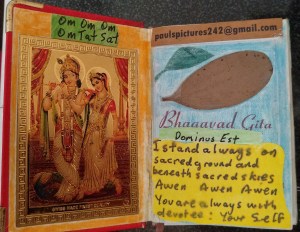
Have I shared with you my Bhagavad Gita? Well, I know I’ve mentioned a few times that it’s one of, if not the primary resource for study and guidance for me.

As you’ve probably guessed, this is a quick photo of the inside of the front cover. And, again as you’ve noticed, I like to stick things in my books, especially this little one. (Actually now I mention it, this is the only book in the traditional format as in made of paper, I own). It’s an old practice and for me adds multiple dimensions and depths to what is already a treasure.

Sometime I’d like to go through and describe to you all that I have added, but for today, do you see the little green section with the words Dominus Est printed?

In the religious tradition I was raised in, these two words have a specific meaning and use. However, it’s only recently that I’ve come to think of this little Latin phrase (well technically it’s a sentence, but …) in the sense of the literal meaning of the words themselves: God is.

That’s it. Or the Lord is, or the Master is. If we change the Dominus, we can use this tiny sentence to define our conception of the divine, the holy, in any way that seems right: Truth is, Beauty is, Art is. For me, God is, sits right. As do the others in this list. Same same.

So, God Is. What else could possibly be said that would add to this already very emphatic and simple statement? Nothing at all. It’s stand-alone, complete in itself.

Like asking who or what is God, we can answer: ‘I am this’ or ‘I am not that’. Or we can realise what for me is becoming the only answer:
I am.

Why? Well, if we were to add anything at all to these two words, such as God is Truth, or God is Love, or God Resides in …, or God is called … , then we are in fact stating only a little of the truth. Sure, God is truth and love, and goes by many names and is found in many forms, but once we say what something is, we are actually making more of a statement about what it is not.

In the beginning there was the word, and the word was with God, and the word was God.

Mind you, it’s perfectly natural, and for many of us helpful, even necessary, to ascribe to God a name and or form. We are ourselves material beings, living in a material universe; it’s logical that we would choose (or need) to see God in a word, a physical object, or attribute some other kind of materiality to our notions of the divine.

I must say that I am one of those who find it difficult to envisage an invisible, non-physical, and impersonal ‘God’. Of course, our little statement, God is, does indeed say just this doesn’t it? Isness is pretty non-corporeal, certainly not in the least physical. And isn’t even a ‘spirit’ or ‘entity’ of any kind; Isness just is. The moment we label something (including ourselves) we miss that isness, that essence.

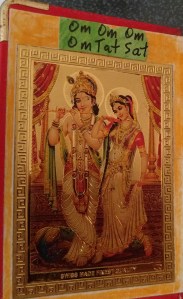
You see my picture of Krishna and Radha? This form, or forms, is one of the several that I feel right in having as a kind of focus, or centre of my devotion to and love for the divine; for love, for truth, and for it all.

You might be saying, this guy does believe in a personal God. He just told us. The truth is I don’t believe or not believe that Krishna (or any of the myriad names and forms we’ve invented) is God. God simply is. And my heart tells me that this is enough.

There are a pair of theological ideas known as Cataphatic Theology, and Apophatic Theology. Cataphatic describes or approaches the divine by stating what God is, while Apothatic (you guessed it) describes God by speaking only of what God is not.

My guess is that pretty much everybody, from whatever tradition, would approach the divine (and not only the divine) in one or other of these ways. But for me it was such a relief to realise that there was no need to go there at all. I could stop with the definitions and the descriptions, the what is and what is not. I have the freedom to not have to believe or not beleive. None of it matters. Dominus Est. God is.

Am I there yet? Have I let go of dualities? Hardly. Maybe the odd glimpse, but it’s rare. And it always will be for as long as I live in a physical body. But to paraphrase something Swami Ramdas said:

I’ve set my feet upon the path, so I am already at the goal.

Peace and love from me to you

God is My All: A Reaching Out, a Rap on time, & a (sort of) unrelated poem

Namaste and Welcome to you.

I can’t remember when I wrote my last post. And of course it isn’t relevant at all is it? I mean to say that in the contemplative life, time sometimes seems to take on some other kind of character.

Or at least I should say that one’s perception of the passage of time shifts; nothing unusal there I hear you say, and of course you’re right. Just thinking out loud I suppose.

For me, having a right perception of time is an important aspect of my Sadhana, my practice: yes, it’s true: time is seen to fly, or it is frustratingly felt to drag. But my aspiration is to see time as simply a human construction that we use to limit, structure, bind, define, and place all kinds of restrictions on our lives.

Which for me, simply means that there is only presence or Presence; only the ongoing continous moment (what we often call The Now). Easier said than done mind!

Swami Ramdas (known as Papa to his followers)

In any case, here I am, just where God would have me be. Feeling strongly to reach out to you, I remember the poem (it’s not really about time in the sense we’re discussing it so far) that emerged the other day after reading a quote from Swami Ramdas that seemed to be an answer to some thoughts I’d been having.

I’m grateul for this, all of this. And for you too, the reader of these musings offered with humility and thanks.

Peace and love from me to you.

GOD IS MY ALL

Thinking thoughts
as if battered by demons.
Memories arising of my own evil deeds, selfish and cruel.
Right away I turn to God:
God is my all;
Hare Krishna

Forego repentance,
relinquish regrets;
you are filled with God,
the supreme essence of life.
God is my all;
Hare Krishna.

Through Papa Ramdas
I hear the Universe speak:
Forgiveness is from God;
and it has been granted.
God is my all;
Hare Krishna.

Broken Hill, Australia
9 July 2022

Allow Me to Introduce My Mask

Greetings friends

At the moment I’m reading a book (Myths of Light: Eastern Metaphors of the Eternal) by Joseph Campbell, the brilliant, more than brilliant scholar, writer, teacher, and philosopher of all things having to do with myth.

Actually, to be honest, it’s truly riveting reading, but still, it’s a hard book to get my head around, but I’m taking it in little chunks, and the effort is, you can believe me, well worth it.

Campbell makes so many fascinating observations and his insights are genius. One section that gave me much to think about was where he talked about Carl Jung‘s idea of masks:

… he [Jung] points out that each one of us is invited by his [sic] society to play a certain role, a certain social function …
… We all have to put on a mask of some sort in order to function in the society. And even those who choose not to function in the society, to revolt from the society, put on masks too. They wear certain insignia that indicate, “I am in revolt.”

Yes, I know, it’s an idea we’re all pretty much familiar with: we all put on masks: work masks, school masks, relationship masks, masks to impress, masks to hide behind, all kinds of masks. But here’s what got me thinking: If you saw my last post, you’ll remember just near the end I said something like, ‘I am a hermit and a pilgrim’.

Now, normally, I tend to think I don’t wear masks. But, surely such a statement declares that I have simply put on one more mask? And, given the usual perceptions of hermits and even pilgrims, am I telling anyone who will listen (especially myself) that ‘I am in revolt’?

And that got me thinking more, about that ‘especially myself’ thing. I don’t think there’s anything wrong with wearing masks; after all as our quote says we wear them in order to function, to have a role or roles in our society.

But we also wear masks for ourselves, so we can give ourselves an identity, a role, a function. So a mask, you might say, is just how we get on in the world, and in our own minds; we take them off, and put them on according to the situation and needs of the moment.

Which says of course that we all are, I am, many things at different times and stages of our lives, our days, our careers, and so on. At this stage of my life I have put on the hermit/pilgrim mask I’ve carried around on the inside all my life. I am asking myself again, does this make me a rebel?

Well, before I donned the hermit/pilgrim mask properly, yes I wore the mask of the rebel, of the angry and outraged advocate of complete and total social change. And perhaps from some people’s point of view, I might still be a rebel: rebelling against the expectations, demands, and easy temptations of my society.

Anyway, I seem to have taken the very long route to the main point of my thoughts on all this rebel insignia stuff. The reality is, I’m not rebelling against anything. Except for those times (all too frequent) when I let anger and outrage slip through. After all, I am still human and have my weaknesses. ‘Tipping points’ as a wise person has called those moments when ‘it all gets too much’.

I see my role, the role of the mask I wear, as a creative one, one of building up, not tearing down.  This particular mask is still in the development stages, but isn’t that how everything works

There’s an aphorism I like very much:

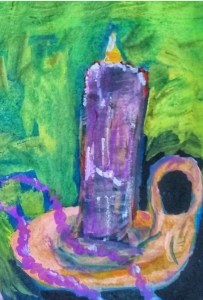
It is better to light a candle than curse the darkness.

(back in March I wrote a post describing a real-life event that illustrates this wonderful expression, both literally and metaphorically. If you missed it, do check it out).

Now, as of this moment in my life and in my progress on whatever path I’m on, I can truly say that I spend time – a lot of time – cursing the darkness. I mean, how could I not? That probably makes me still a bit of a rebel.

Yet, at the same time, I think I’m learning to understand the pointlessness of only cursing the darkness. Maybe it’s not a case of all one way or the other. Okay, I’m human, so I curse the darkness? There is a great deal of darkness to curse isn’t there?

Perhaps I can allow that cursing to lead me to action? And, well it has. At least that’s what I’m working on, aspiring to. Living as simply, quietly, and in as much solitude, as I am able; buying fewer things; letting compassion inform my eating, clothing, and travel choices (actually all my choices); having as little to do with what I call ‘the mainstream’ as possible; acting as far as I’m able in accordance with my true nature.  All these measures are aspects of the hermit/pilgrim role.

But I’ve missed the greatest, most important and vital aspect that goes with the responsibility of wearing the hermit/pilgrim mask: Prayer. Quiet prayer and contemplation. Sometimes just sitting (I know, it’s a favourite thing to do for me), letting the quiet come. Letting the light come.

You know, in some post, somewhere on this blog I’ve mentioned that often repeated statement:

It’s too late for thoughts and prayers

Well, more and more I am getting to grips with the notion that, far from being too late, this is precisely the exact moment when thoughts and prayers are needed most.

I hope that my little efforts can at least contribute in some small measure to the efforts of all the other people out there in the world who, while they may not be hermits or pilgrims, and while their natures might lead them to any number of differing activities in the world, nonetheless share with me the aspiration to light a few candles.