How Shall I Live?

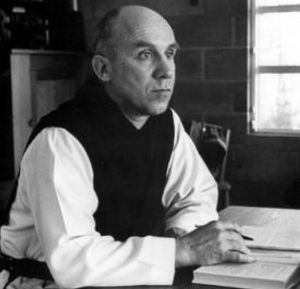
Thomas Merton in his hermitage (Courtesy Wikipedia)

The great study of the monk is to have an awakened heart

      Thomas Merton


There would be some – including me – who would say that all human beings, and not just monks, need to learn to awaken their hearts, to cultivate attitudes and a life of love, compassion, empathy, and kindness.

Who would disagree with such a suggestion?

Well, I’ve already said that I am one of the ‘some’ who would welcome such an evolution in human consciousness. But, at the same time, I don’t want to make pronouncements, form judgements, hold opinions, on what anybody should do, or be like. Only me. I am only responsible for my own behaviours, attitudes, ideas, thoughts, speech, and the rest of how to live my life. I just can’t – as in I’m not entitled – to tell anyone else what to do, what to think, what to say and so on.

Actually I’d even speculate that Merton is in fact talking about just the one monk: himself; he’s not preaching a prescription for the behaviour  of others.

I’ve read so much Merton that it’s impossible now for me to remember exactly where I read this statement of his, but I do know that when I first saw it and made a note, the concept resonated deeply for me as a great aspiration for my own life as a monk, and as a trying to be decent human being.

In other words, this monk – me, myself, and I – has a task to carry on with: to cultivate an awakened heart. And being a ‘great study’ it’s bound to be at least a lifetime’s project.

It’s an effort though, awakening one’s heart. It’s even a bit of a mystery at times what the phrase actually means in real terms.

Love, obviously, tops the list for any aspirant on the awakened heart path. And, yes, I do feel, express, and act out love – so deeply sometimes to the point of being overwhelmed or ‘flooded’; sometimes speechless (that’s the good bit), sometimes full of words.

But then there are times (oftentimes is the word) when that love is clouded or shrouded completely by angers and irritations, by regrets of what should be or shouldn’t be, could be or cant’t be, what isn’t.

The great study of the monk is to have an awakened heart
          Thomas Merton

All attachments to what is not as I think it should be. All barriers to love. All ways and means of keeping the heart asleep – or at best semi-awake, and still sleepy: slow to respond, slow to act, and with ongoing blockages to seeing how things actually are.
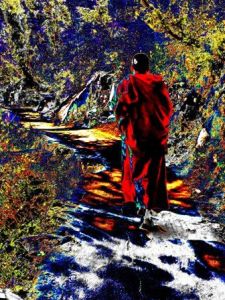
The quest to acquire an awakened heart and the outpourings of love, kindness, gentleness, generosity, that such a state would allow, is probably at the root, the foundation, of my life as a hermit monk, of my life as a pilgrim journeying through and to Self.

Living quietly and simply; developing a contemplative way of being in the world while definitely being not of the world; cultivating silence, peace and calm; all are activities and attitudes directed at cultivating an awakened heart.

All that generosity, patience, love, kindness, empathy, and all the rest are definitely all characteristics of an awakened heart. Here’s my dilemma  (only one among many that riddle my crazy monkey mind): they are also precisely the elements that need to be practised in order for one to acquire an awakened heart. What’s the expression? Catch 22?

Of course, it just occurs to me now, everything that is, is exactly as it’s meant to be, happening just as it ‘should’. So, in other words, all these words of reflection are simply a commentary on what has been and gone already, that which is in the past, and is no longer existing.

All that matters – all that exists – now is that at this moment, in its ongoingness, I am as loving, as kind, as patient, and as generous (not to forget compassionate, empathetic) as I’m able. To others obviously, as well as to myself.
All that wonderful list of characteristics of an awakened heart all exist right now within me. Perhaps I need to wake up my mind a bit more so I might see that reality. Then I might actually realise that I already have an awakened heart and that I simply got forgetful somewhere along the way.

with love
Paul the Hermit
In the Dream The Word Was Written

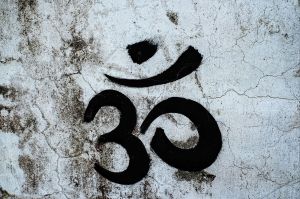
I dreamed I was drawing an OM symbol. Nothing else, no memory of a dream setting or situation, no other dream characters; only the view – as from my own eyes – of my hand making that sacred mark.

It is quiet during morning prayers today. At one point, after completing one prayer, I turned the page, and began praying the prayer there. Attentively and prayerfully, which is a really nice thing for me to notice because oftentimes I can be a lip level prayer sayer.

As I prayed, I was drawn to the part of that page labelled ‘blank space’. It was at that moment the memory of that dream began to arise.

Instinctively, without thought, I reached for my pen – this pen I now use to make these notes – and inscribed (as that dream memory seemed to demand) the sacred OM in that formerly blank space.

This all transpired as the memory unfolded; really only a matter of a just a few seconds of clock time. But, of course, what meaning is there to ‘clock time’?

In the beginning was the Word, and the Word was with God. And the Word was God. And the Word is God. No beginning. No end.

Om Om Om

PS Thank you John for allowing me to use your words. I know I have paraphrased and modified them a little with my own words, but somehow I don’t think you’d mind.

It’s All There Is

This is my second attempt to start this post. In the first try I just couldn’t see or feel my voice, myself. Right away, as I began making notes, I launched into and quickly became bogged down, in a wordy, overly complex rational discussion.

It seemed more suited to some kind of academic essay (not that I am remotely qualified to write such essays) than a note from the heart of a hermit contemplating from deep within his cell.

So, here I am beginning again. This time I hope I’ll find a little more of me in what I write, perhaps discern something a little more authentically heartfelt.

This post emerged from my desire to share with you a little about a small item that helps me as I chant my mantra. My mind seems to switch into strong wandering mode when I try to settle into Japa or chanting mantra mode.

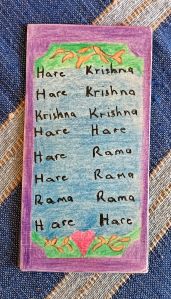
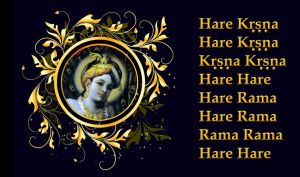
So, I have a small card, made from a cereal box and measuring about 15×7.5 centimetres, decorated with lovely colour pencil designs, with the mantra written in pen. Oh, it’s covered in plastic for protection and longevity, and was given to me as a gift.

Having it in hand or close by when chanting allows me to focus on the words if my mind wanders. I read them slowly, mindfully and I find it puts my chanting back on track – until the next wandering thoughts announce their presence!

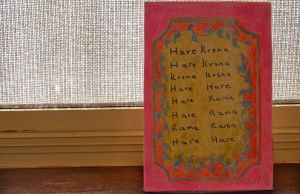
Actually we have a couple of similar cards scattered around the Hermitage. One lives on the window ledge above the kitchen sink, and always acts as a timely reminder to make even the washing of dishes an opportunity for prayer.

The View from the Kitchen Sink

Having my card acts as more than a prompter to me to remember and focus; it acts as a kind of tool for contemplation: when looking at the mantra written there, I often sense the meaning of the words, the importance and place of them. I don’t call this mind wandering, this is contemplation and I welcome it.

While on this level, my card can be viewed as a mere ‘prompt’, there are some who would – and do – say that the card, and the very words written on it, are in fact, much more than being simply physical stuff.

They would say that the card, and especially the words are literally, factually, and in truth the Divine (in this case in the form of Krishna). Just as some traditions maintain that ordinary bread is transformed through ritual, into the actual body and blood of their God who was once made human.

Not mine. I’ve had this as a file for ages, and love it. I think it was originally the size of a visiting card

For much of my life I dismissed such notions as mere fantasy, the products of literal interpretations accepted as dogma through blind faith. I’ve even in the past used the word nonsense to describe and dismiss such superstitions.

Nowadays though (and here comes the but, the however, the on the other hand) I’ve come to a slightly different view of the idea. Is my little card literally a piece of cereal box, decorated with nice coloured pencil work, with words written on it? Obviously it is. Of course it is a material thing existing in a material world.

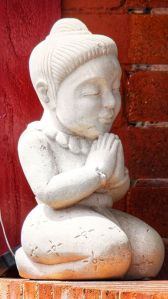
Is the statue of a deity or saint in a church or temple a lump of stone, wood, metal, or other physical material? Again, it’s obviously a material thing with a material existence . Just as communion bread and wine are baked in a bakery, and brewed in a winery.

So, is my card, along with these other examples, merely a stand in, a symbol, a represention of the Divine?

No, I don’t think so.

Over recent times, my instinct, my heart, senses that, in truth, there is only God, only the Divine, only the Absolute Reality, what we can call existence, or being, itself. It seems to me that this Absolute Reality is everything, is everywhere; there can be nothing else.

One without a second, I’ve heard it described. It’s why, I think, we can look at a flower, a tree, the ocean, a person, or some other material object and be able to in awe remark ‘this is divine’. Or how when we hear birds singing in a nearby tree (or on a neighbour’s roof as I can now as I type this) we may have a sense that we have actually had an encounter with the Divine.

Lately I’ve become bored, uninterested, even irritated, with dogma (my own or that of others) and my constant striving for rational and logical answers. My heart tells me – it feels – that the Divine is all there is.

You, me, all that is visible, and all that is invisible, is all there is, one unity. No, not even a unity: that implies the union of one thing with another.

One without a second. Yes, that says it all for me. Those four words, now I think about it, really do encapsulate all there is.

Including my own heartfelt aspiration to fully realise this Truth in the heart and soul of Self.

A Day of Silence Observed

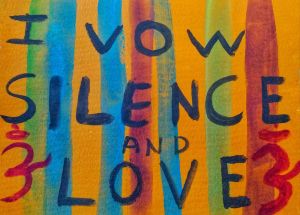
A few days ago we observed a day of silence here in the Hermitage. Our initial idea was to have a day of less talking, more quiet, which we hoped would help us reach a state of silence. We timed our little effort to coincide with a similar event being observed in an ashram in India whose foundation teacher we admire very much. A way for us to perhaps associate with others on a similar path out there (in there?) in the invisible community.

It’s not that we don’t experience periods of quiet (no talking) and even the aspired to silence, we do. Quite often they can be reasonably extended periods too, when meditating, chanting, studying, and so on.

But, it does have to be said, that we do spend a lot of time talking with its associated thinking – and unthinking too; with its listening – and not listening.

Of course, there are things we actually want or need to talk about; just that for us, sometimes we end up talking about stuff that’s not needed, as well we fall into what we call the adharmic trap of gossip, judgement, needless repetition, and the rest of the not so right speech.

Anyway, we wanted our day of quiet to be as complete as possible, so we agreed to not even discuss mundane and practical things unless it was absolutely essential. (Who gets to decide what’s ‘essential’ and not? Good question).

Around midday on the day in question I made a few notes on how my day was going so far. I had a vague notion I would make notes periodically through the day as a kind of ‘casual log. Needless to say, an approach of such vague casualness resulted in the notes made at midday being the only ones to actually come into existence.

Still, even though the notes were made relatively early in the day, I do think that they are a pretty good summary of my feelings on the day as a whole. So, let me share those brief reflections with you now:

Thus far (about 12) we are keeping silence (or at least not talking) – mostly. Practical things are sometimes tricky, sometimes not. It’s easy for example to point to a cup which translates to ‘Would you like a cup of tea?’. The reply which was ‘no thank you but I would like half a cup of soya drink’ took a bit more translational effort. Due of course to an almost complete lack of experience in speaking without umm, speaking.

Mind you,only three or four actual words spoken, along with a ton of hand gestures and facial expressions, did result in the transmitting and receiving  of understanding.

PLUSES SO FAR  

A sample of what it is like to be quiet, and actually being in quiet. And a happy anticipation (along with a sense of relief experienced in the present) of not having to talk about all the tired old things: the weather, the world, the ins and outs of teachings, teachers or writers, as well as ‘other people’, which often end up in judgements, criticisms, and plain simple gossip.

Alongside this overall positive vibe, there is a kind of nervousness. Where it comes from, I can’t say; probably an anxiety to do with not talking about the usual things. Though of course it’s only been a few hours.

While there has been little out loud talking, my mind has been running crazy, and I’ve had a strong compulsion to keep busy. Put these issues with the nervousness? To be expected really I think given my lack of experience with intentional quiet.

One step at a time.


Well, clearly that compulsion to keep busy didn’t extend to further note keeping, but, yes I have to say I did keep busy. Ironically some of that ‘busyness’ did in fact result in a few glimpses of silence.

I spent time working on an art piece in a prayerful manner, and in a quiet state; none of the all too usual chatter. Silence. I meditated for longer periods than usual, which allows for a deepening of a quiet mind (in theory that is). And when I chanted mantra, I think I may have been a little calmer and quieter of mind than usual.

Clearly the cultivation of silence – and even the seemingly straightforward task of simply not talking – is a practice that requires more practise, quite a lot of practise in my case.

We need to develop alternative communication strategies – hand signals, signs, gestures – to minimise speaking even more. Having said that if we’re to develop silence then even communicating about mundane stuff in other ways would get in the way. Too much talking!

Well, I occasionally make photos out there in the world

One very pleasing outcome is that I feel slightly less inclined to ‘talk about the outside world’ and other people. Less idle chatter. It’s a good start and it can only get better with some of the aforementioned practice.

Actually, thinking about it now, you’d think that a hermit who rarely goes out of the Hermitage except for a walk or occasional visits to a shop, who doesn’t watch the news or social media and the rest, wouldn’t have a lot to gossip or blah blah about.

That’s why, you see, I say that I really do need quite a lot more practice. Making silence is a long term project, an aspiration if you like, to find inner peace and make myself more able to radiate love to the world.

Love and Peace

Paul the Hermit
Let It Be

I’m not complaining, nor am I bemoaning my lot, when I say that for much of the time I feel totally and absolutely exhausted.

Well, there might be the odd time when I might feel ‘just a bit tired’, but generally speaking, I’d say that exhaustion is closer to what I mean.

But, then, this morning, as I pottered around in the kitchen, making tea, putting dishes away while I waited for water to boil, I had, what I can only describe as a sudden awakening of a sense that this – the perception of permanent and total exhaustion – might not be completely true.

I sensed, in a kind of wordless insight, that – at least in this instance – it wasn’t exhaustion I felt overwhelmed by. Perhaps, there are at least fleeting moments when I am actually relaxed and I’ve simply mistaken that feeling for fatigue, not having had enough experience of being relaxed to know the difference.

The same slow movements: mindfulness and relaxed, or tiredness?

The same slow and considered speech (and thought): again, slow and mindful, or fatigue?

Even the overwhelming sadness and melancholy that often goes hand in hand with exhaustion might be something else: perhaps it is in reality a slowing down (though it often feels far from slow, more like a racing) of the mind, combined with a state of intense inner contemplation, mistaken for sadness or whatever.

After all, the meditation I practise, the ‘just sitting’ times of quiet restful contemplation, the study of texts meant to be ‘road maps’ to inner peace, calm, and liberation, all are claimed to produce, just that mindfulness, contentment, and inner peace that I am describing.

So, how to know? How can I discern the difference? Am I absolutely and totally exhausted, consumed by melancholy and the horror thoughts that go with it?

Or am I relaxed and calm, having slowed both body and mind, and in a state of inner enquiry (contemplation) that’s ridding my mind of the horror thoughts and the sadnesses?

Thinking about it now, when I ask myself these questions, it seems to me that I am questioning what I’m experiencing as opposed to states of being as such.

And experiences are never permanent, they are always in flux, changing. New ones come, old ones go. Then more and more come and go. That is, I guess, what being alive does.

Next I’m thinking, if I truly were in a relaxed, calm state of non-suffering, wouldn’t I actually know it, and therefore have no need to ask?

Mmm; maybe. Still another thought just occured to me. Perhaps what happened, as I pottered in he kitchen was a kind a surprise reaction, or rather a reaction to a surprise. My mind – heart, soul, whatever – was so shocked by that feeling of being relaxed, content, happy even, that it simply had to pose the question out of disbelief.

Meaning, as I ramble on in my usual overly wordy way, that what happened was I noticed a change in my state of being; for that moment I was not exhausted, sad, suffering. Perhaps – for that moment – I had entered a state of relaxation and freedom from suffering.

Let it be, I say. Stop the words; give up the analysis. Let the experiences come and go. It might be that, if I can allow those changes in states of being to be just as they are, then they’ll have a chance to develop, to evolve, perhaps even to make the changes permanent!

Scribbling let it be just now, put in my mind the Beatles song of that name, especially one small snippet of the lyric, a chorus really. Even a mantra (now there’s a thought):

Let it be, let it be, let it be.
Whisper words of wisdom, let it be.

With love and peace

Who is whispering the words of wisdom? And when and where?

When I find myself in times of trouble,

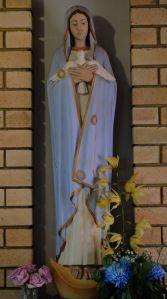
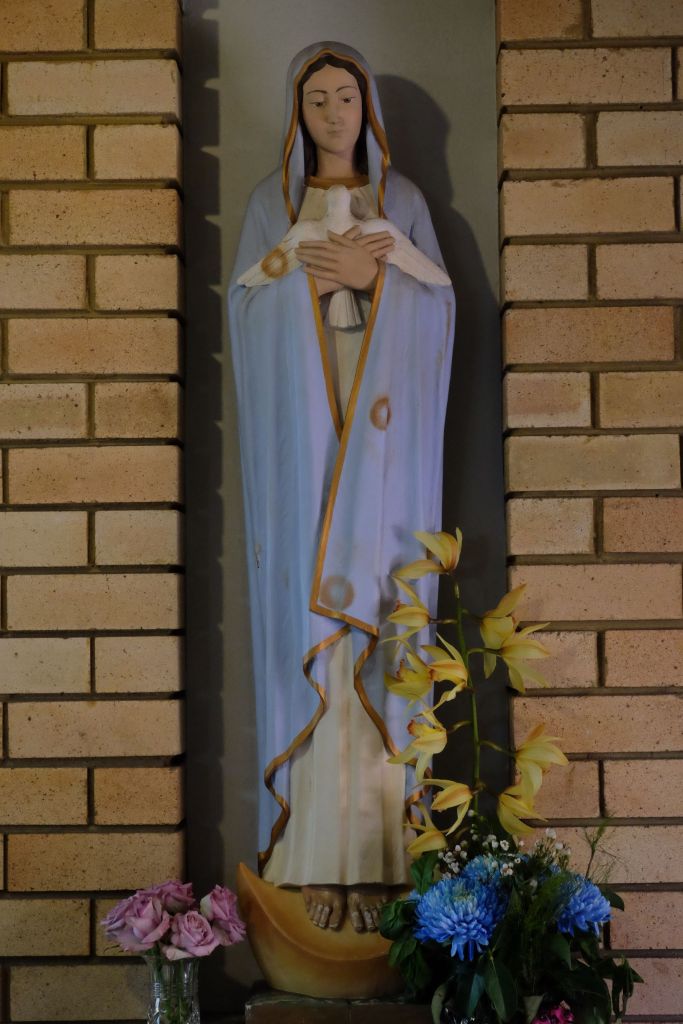
Mother Mary comes to me

Speaking words of wisdom, let it be

And in my hour of darkness she is standing right in front of me
Speaking words of wisdom, let it be.

Mary. The Divine Mother

Jai Maa

Paul the Hermit
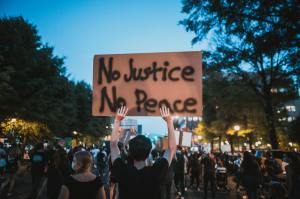
PS I was 16 when Let It Be was released by the Beatles. I loved it at first hearing (didn’t everyone?) and I love it now. It meant a lot then, even more now. Thank you very much for the music.

You’re the Voice, Try and Understand It

One of the things I like about one of our local coffee shops is that they play a nice wide selection of music. Mostly popular songs from pretty much every decade back to the ’60s. I think they have one of those looping playlists you hear sometimes in shops and cafés.

It must be quite a long list because you don’t necessarily hear the same songs repeated at every visit. Which is a nice thing too.

Anyway, yesterday the chorus of a song I heard played got stuck in my head. The song, You’re the Voice, was a hit around the world in 1986 when it was released by Australian singer John Farnham.

It’s essentially a protest song reminding us that we all have a voice, and encouraging us to use our voices to stand up against corruption and war. One of the co-writers Chris Thompson missed out on going to an anti-nuclear protest because he slept late. He felt so badly about sleeping in that he wrote the lyrics reminding us about taking personal responsibility and making our voices heard.

Okay, back to the chorus getting stuck in my head.

You’re the voice, try and understand it
Make a noise and make it clear Oh woah.
We’re not gonna sit in silence
We’re not gonna live in fear Oh woah

You see? It’s very catchy, and an excellent piece of advice too. And, for a hermit monk, it’s actually advice I could and do aspire to live by. Just not quite in the sense the song intends perhaps.

This morning, when my partner hermit suggested we just sit in silence for a while, I spontaneously started singing the chorus, though a slightly modified version:

We’re just gonna sit in silence
We’re not gonna live with fear.

Then, as I sat in said silence, I got to thinking about the words of the chorus.  Nobody wants to live in fear, yet it is an aspect of the human condition and something so many people live with constantly all over the world. All through human history as well.

The message of the song reminds us all that we have a voice which we can use to help create a state of affairs in which we don’t have to live in quite so much fear, fear that’s coming at us from so many sources.

For me, this is a vital, fundamental, and absolutely essential principle. Without those who do stand up, those who do use their voices to try to right wrongs, then, well I can’t think of what that might mean.

Yet, for me, I’ve chosen silence. Not only chosen I must admit: temperament, my own nature, health, all are factors that have made silence the best course for me to take. Silence as in seclusion from the world, minimizing outside imput, and reducing as much as possible the attachment to the world and its things and fears.

And this way of living ironically allows me to use my voice in my own ways to address the Truth as I see it; to help effect change and contribute to the healing so sorely needed.

Being ‘out there’ and engaged with worldly things and activities and interacting with people constantly causes me so much anxiety that it threatens my health and ability to act in the world.

There is also the personal choice aspect, common to so many who live a contemplative life. Silence – when I can actually achieve such a state – gives me the energy and clarity to write; it gives me the mental, emotional and spiritual ‘space’ and energy to pray, to contemplate, and to foster the ‘good vibrations’ I feel are also necessary to turn the world towards peace, healing, and truth, as well as to assist in maintaining the wellbeing of all life.

The world, and all of life, needs both those who can’t or won’t be silent (I’m definitely not suggesting the world needs more noise). We all need people who can and do raise their voices against war, poverty, corruption, and all the ills that plague us.

And it needs those who are able to ‘just sit in silence’. The work to be done is the same; the outcomes perused are the same; and in essence the means themselves aren’t all that different either. Silence as mentioned can include the use of our voices in ‘quiet’ ways, in ways that don’t have to relate so directly the affairs of the world.

It really is a symbiosis: Those of us living secluded and contemplative lives with our prayers, our witness, our creative endeavours, support those active and vocal ones out there trying to heal the world.

And at the same time those out there in the world support the secluded and contemplative ones. Their efforts and hard work, and simply knowing they are there, are encouraging and nurturing for the secluded and contemplative ones.

We are One after all.
Yet our voices are all unique, each and every one.
That’s what I understand to be true.

Note to Self: Have a Little Faith Will Ya?

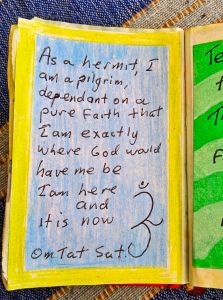
As a hermit, I am a pilgrim, dependent on a pure faith that I am exactly where God would have me be. I am here, and it is now.

I forget in which of his books I read this, but it’s a prayer written by Thomas Merton shortly after he’d finally moved into his hermitage full time. The ‘I am here, and it is now’ I added, though of course it’s also borrowed.

It’s a prayer, an affirmation, I recite at least once a day. And, like Merton, I aspire to that ‘pure faith’. Faith is a strange thing: it may grow and develop and then it does indeed support me in my intentions and living, not to mention the comfort it provides..

But, all of a sudden it can just flow away, leaving me adrift, bereft, and not sure of anything.

I am a pilgrim, it’s true. But as Bhajan (a bhajan is a sacred song, a hymn) singer Krishna Das sings:

I am a pilgrim/the road’s so long.

And sometimes it seems a lot longer than this particular pilgrim would like. Still, as they say, how long’s a piece of string? And it’s rougher than I’d like as well. but again how rough is rough? Layers of meaning in that word longer.

Yes, I am a  hermit, and my mind’s not the same, as Jackson VanHorn sings. Same as what? Whose mind is mine different from? Is my mind somehow not that same as it once was? True though: my mind is hardly ever the same.Here’s the whole chorus as it spoke to me:

Yes I am a hermit
My mind is not the same
Yes I am a hermit and ecstacy’s
my game.

For this hermit, ecstacy is not a stage experienced all that often. Mind you, there are fleeting moments, but like the pilgrim road, there are long distances to be trod between one of those moments and the next.

And as for Tim Moore claiming he’s

‘… sittin’ peacefully on Hermit Rock’?

Well, yes the rock – the hermitage – has much potential for peacefulness; a peace expereienced quite often actually. It’s a sacred space

But, as in any way of living, any way of being, peace comes and peace goes. And when it goes, it can seem like it never existed, and that ‘sittin’ peacefully’ is, and always will be a fantasy never to be realised or made real.

It’s about equinimity 

That’s something else I heard today. Well, there’s not a lot of equinimity in this hermit pilgrim today. Seems, then, that there needs to be some shifting of perspective; some peace needs to be restored
My Lord Ishvara

Deep withn the still centre of my being

May I find peace.

Silently withing the quiet of the grove

May I share peace.

Gently and powerfully in the wider circle of humankind

May I radiate peace.

Om Tat Sat

Om Shanti Shanti Shanti

Afterword:

A few hours have passed since I made these notes; I have regained a little balance, but still thought it was important to publish this post.

Thank you for your patience

Love and peace

Paul the hermit
To Sleep or To Not Sleep?

One of the stories I’ve been telling myself for pretty much as long as I can remember, is that my life has been impacted, influenced, directed, controlled, by depression and fatigue. As with all stories, there are elements of fact, fiction, fantasy, real life experience, truth, and the not so true in this one.

Anyway, with the fatigue factor in mind, I’ve recently made an intention (I call it a sankalpa) to lie down for an hour or two every day whether I ‘felt like’ it or not. The idea was that a daily break would be like a catch up, a preemptive measure if you like. Even if I didn’t sleep, it’d be an opportunity to just be still, listen to nice music, relax for a while, a quiet time.

Today, just after breakfast, and getting deeply into my spiritual practice, I suddenly experienced an epiphany. Or to be a little less grandiose about it, I had a little insight which has lead to me to make these notes.

Despite that feeling of exhaustion, and despite the previously mentioned intention to rest more, I resisted going to lie down, thinking I can lie down later in the day.

Why? Surely a person who thinks their life has been ruled by depression and fatigue, would welcome any pretext to lie down, to sleep, to shut the world out for a while.

And, then comes the insight: All of a sudden I realised why I was resisting taking rest: Well, the fact was that I didn’t want to sleep because, well, I’d be asleep. I’d not be able to continue my practice, read, write, to ‘live now’. Putting it another way, I simply wanted to keep on keeping on doing exactly what I was doing.

But wait, I hear you asking: how can you fully live now when you’re so tired?

Excellent question; the exact question in fact that I asked myself. The answer I got from Self was interesting: fatigue as a symptom and outcome of depression is one thing; fatigue resulting from living a full life with enthusiasm (sort of sometimes) is quite a different thing.

Actually, now I think about it, there’s another little insight making its way to the surface of this over-active, over-full mind: The very fact that I thought I had living to do now is a very clear signal that, for at least the moment, depression is not dragging me around, or down, or anywhere else.

Just that concept of wanting to be awake to live this moment? Well, isn’t that a joyful thing? But what about being so tired? Should I go and lie down now anyway?

Ummm… Actually I don’t know; I can’t say really. So, I think I will just keep on doing what I was doing when I began these notes.

Which was chanting the names of God.

Hare Krishna Hare Krishna Krishna Krishna Hare Hare
Hare Rama Hare Rama Rama Rama Hare Hare.

Now that should wake me up for a bit.

PS It’s a bit later in the day, and I’m typing up the notes as a post for the blog. I did in fact carry on chanting for a while, I’ve had lunch, and I think after I post this, I might go for a walk around the neighbourhood. And no, I haven’t had to lie down yet.

Maybe later!

A Story of a Door

The walk from the Hermitage to the coffee shop at the Village Green takes around five minutes or so. This morning, noticing a pause in the rain, we thought we might take the opportunity to get some fresh air and a walk, at the end of which there would be coffee. So, we stepped bravely forward, with the faith that the gods of the rain were indeed taking a break.

‘Look over there, ‘ said my partner hermit as we passed through the centre of the village. ‘There’s a door that can only be opened from the inside.’
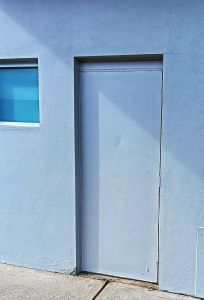
‘I’ve never noticed that before,’ I replied, looking across the street to a wall into which was set a door with no visible handles or lock. The only things that suggested that it was in fact a door were the hinges on one side, as well as its size and shape.

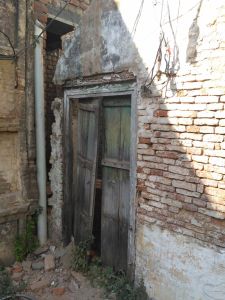
Now don’t ask me how many times I’d passed that spot. Most likely dozens of times, on both sides of the road. Still, now that I had been shown it, I was intrigued. Mentally I was captured: I thought, what a wonderful thing: the one or ones on the other side of the door have complete control over who or what is allowed to enter.

With such a door, one that only opens from your side, you could easily choose to rarely – or even never – open it. Ah, peace at last went my thoughts.

But, right away, those thoughts were dismissed, sent packing: too simplistic, too extreme, to heavy a response. Though, you know, I do feel strongly that such a response to the world – shutting it all out completely – is perfectly understandable, completely reasonable, and oftentimes even an absolute necessity .

Still, I had that feeling towards my reactive thoughts of ‘too extreme’ (inner editor’s note: he has no idea what he’s saying does he? If you ask me, right this minute he will be thinking his initial reaction was spot on and he’d love to have a door like that. Anyway, we’ll let him have it his way).

Some further, more careful thought is required here I think. For a start, here’s a question: If I were to keep the door shut all the time, how would I ever be able to allow my own light, my own love, my own Self, out into the world?

Maybe there’s a way to keep the door open sometimes, then at other times choose to keep it closed to bar access to unwanted intruders in the form of people, thoughts, events, emotions and so on.

After all, it is my door (in this little fantasy at least), the door to the inside, where resides the ‘real’ me, the Self within, beyond and above, the physical form that I so tenaciously cling to as as being the real me. Talk about attachment!

Perhaps slightly exagerated, but this is close to how I see my actual door working as distinct from the story I’m telling in this post.

Where was I? Oh yes. With that door that opens only from the inside, I might come – eventually – to realise that there is nothing to disturb me – unless I open the door and let whoever or whatever that is unwanted, through the door.

I am my own gatekeeper, and without my consent my gate (door) cannot be opened and entered.

And, getting back to the choices I am able to make to sometimes open the door to allow some light and love to flow out from me, out the door and into the world. The more I’m able to discern when, and for how long, to open the door as a way to control what comes in, to what can reach me, the more resources of said love and light I shall be able to build up.

Which, in turn, will lead to more and more opportunities I’ll have to open the door in order to share some of that good.

I can envisage a state reached where my door could quite possibly be left to stand ajar all the time.

You see, the more love and light pouring out, the less that disturbs me can get in. Love and light is transforming, isn’t it?

Yes. Now I’ve noticed – recognised – the door that can only be opened from the inside: It’s me! Now, where did I leave my door keys?

Don’t Stick Your Feet Out

Just now (as in earlier today) I had some perfectly natural, normal, and expected thoughts about my prayer life. If I’m to be honest though, and perhaps a tad overly tough on myself, the thoughts I had felt slightly ridiculous given my professed commitment to praying constantly, and my supposed understanding of the meaning and function of prayer.  In other words, there I was again: putting some kind of unrealistic expectations on myself – again!

Anyway, enough of that. To sum up those thoughts: I was thinking they – my prayers – aren’t working. Nothing is happening. And I was asking myself questions: What’s been achieved? What’s coming from all the effort? Where are the results?

And then, exactly at the moment I was writing down those thoughts and questions, I lifted my eyes from my notebook to see my partner-hermit approaching.

‘It’s my blessing at the moment,’ she said walking by my chair.

Why did she say that?

Because, right there before my eyes was evidence that none of my ridiculous thoughts and questions on my prayer life, had any meaning whatsoever. There was the answer, walking past me.

As I said, right there before my eyes.