And in Conclusion: According to the Text Message

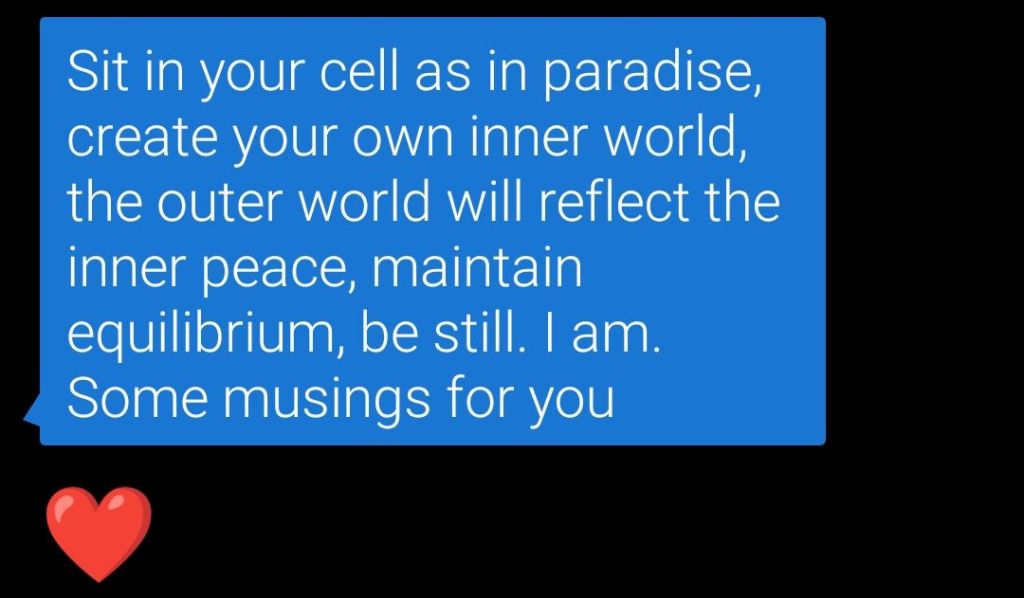
Welcome to the continuation and conclusion of the topic we were discussing in our last post. We are spending some time reflecting on a text message I received some days ago.

A multi layered text and one full of treasures on leading a purposeful and satisfying spiritual or inner life. If you missed it, please feel free to visit that post here.

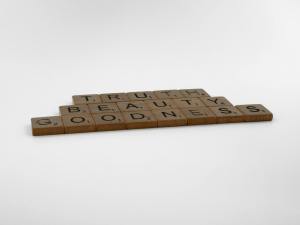
In that previous post I included an image of the text in question, and we ended up looking rather deeply and prayerfully at the first sentence in the text:

Go sit in your cell and your cell with teach you everything.

In today’s post I hope to share with you my contemplation and rigorous reflections on the remainder of the text message.

So, let’s carry on with the next little bit of that text message.

Create your own inner world

This little gem speaks directly to the notion that it is your body and mind themselves that are the primary places in which you dwell; they are your cell that you carry around with you (or perhaps it is they that carry you around) always and everywhere.

And in that cell, where you dwell, you are the creator of the world. It needn’t be a fantasy world, as we might think of an inner world we create for ourselves. It need not be made up of wishful thinking, dreams, or endless thinking about the past, future, fears, regrets and all the other stuff we are prone to.

Rather it can be a place where you content yourself with the constant efforts to remain in the present; it can be a place in which your disciplined and focused mind and heart remain on those self enquiry questions which will ultimately lead you to the full realisation of who you really are, what is your true nature.

There’s a paradox here it occurs to me as I type: while everything that exists in the universe is simply a manifestation of Absolute Reality, (and that includes you and me obviously) the only way to actually discover or realise this knowledge is by delving deeply in our own hearts and minds – and sitting in our cells. We won’t find it ‘out there’.

The outer world will reflect the inner peace

So, with all this inner – self – enquiry cause the big shift? Will you see and experience only bliss and happiness? Will the ills of your body suddenly vanish never to return?
Well, yes. And no.

No because as living entities we are able to do our bit in making our lives what they can be; we can do our part in keeping a healthy body and mind; we can play our part in making the world a better place for all living beings.

Ultimately, though, it is the natural order, the natural laws of the universe that controls, directs, and manifests how all of the material world – including us obviously – operates and works itself out.

Yes, because the committed and rigorous discipline necessary to sit in our cells and enquire into our true natures, will over time and step by step help us to change the way we look at all the troubles and events of the world and our own minds and bodies. Our perspective will undergo a big shift (not quite the one mentioned earlier; this one’s for real).

You see, there are three sources from which our suffering come from: other people, nature, and our own bodies and minds. Self-Enquiry will lead us to realise that our true nature is in fact the totality of all there is, the Absolute Reality.

After this realisation of the truth of our natures, the sources of suffering (other people, nature, and our own body and mind) are still going to be there, going about their business as usual. It’s just that we won’t be as affected by them like we were before; we won’t suffer as we once did.

Maintain Equilibrium
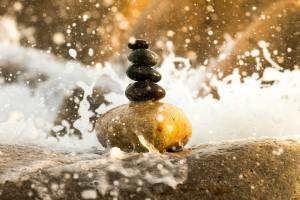
Having read this far you might well be thinking that, yes indeed, the realisation of our true natures, the evolving knowledge that we are not simply the mind and body, and that we are in fact the Absolute Reality, just might lead to a life of balance, of equilibrium. Of calm in the face of crises and problems, peace in the wake of strife.

Well, umm yes, that’s all entirely true. But as for me, I can say I’m nowhere near that state yet. And I suspect nor are most people, and most of us will be trying for a few more lifetimes (if there are any more that is) before we make it.
Mind you, equilibrium does seem to come in little bursts, like a kind of reconditioning process. Sometimes I realise that I am indeed acting more calmly, with more equanimity to situations that might once have thrown me completely off balance.

I’ll admit, though it’s an issue that frustrates me (you see? That proves I’m still identifying with and attached to, the idea that I am a body and mind only). I ask myself, how come with all the spiritual practice, the meditation, and all the sitting in my cell, I can still suffer with annoyance and irritation or collapse with existential angst, rant at injustice … You know what I’m talking about.

All I can do, all any of us can do, is persevere with the enquiry into self; Who is it exactly that’s losing it right now?
Of course it’s ‘me’, but is it really? It is the mind and its emotions and the ego. But it isn’t me, and it’s not you.

Be Still
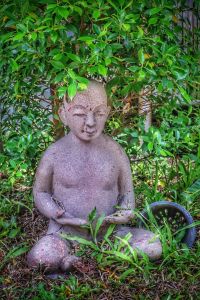
One of the beauties of this wonderful text message, is that the individual injunctions have built – are building – one upon the other in a nicely logical and understandable way.

Now, the advice to be still: Of course we can take it at face value and take it to mean we are to literally sit with our bodies very still in the one place, in the one spot. Not moving.

Well, it seems the Desert Fathers and Mothers  had a saying or a word of advice to fit every situation. I came across a quote from Abba Ammonas, that sits as a kind of caveat, or perhaps a sort of reality check when thinking of sitting still:

A person may remain for a hundred years in his [sic] cell without learning to live in the cell.

Meaning obviously, that thinking we are still doesn’t mean we actually are still. Well, yes it does actually. But it’s only a part of the picture that we name stillness.

For example, right this moment I am making these notes, I’m looking up references online, listening to Bob Marley on my headphones, and every few minutes I’m taking a sip of tea.

Yet I feel quite still. I sense real focus on every one of these particular tasks as I’m performing them. I am feeling pretty calm and even a tad relaxed. Believe it, for me these are big achievements. Actually this very much speaks to a concept called Action in Inaction, and Inaction in Action. If you’re interested, there’s a fascination article here.

In other words, I think I am actually being still. My thoughts are focused as I said. I’m even in the moment well enough to pause everything else to listen to something from Bob in my ear that speaks to me.

I don’t think anyone can tell you how to be still. Not only is it going to be different from every one of us, being still will always vary and fluctuate in quality and degree. You might say it’s one of those ‘it depends’ kind of things.

I am

Ask yourself: Who am I? Usually the answer comes back: I am … followed by a name, designation, label, an identity of some kind.

Nothing wrong with this. In fact it is natural: it’s how members of our species place ourselves – and everyone else – in the order of things; we need to know our position and that of others in order to negotiate our way through and in the world.

So, what happens when I ask myself that big who am I question? Well, I could answer: I am Paul, I am a hermit, I am a writer, I am servant of God, I am tall, I am a friend, I am a …
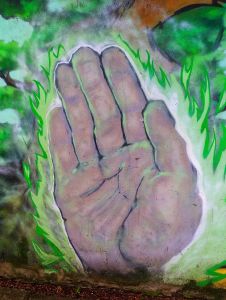
Stop! These are all things I do or roles I take on and fill by choice or otherwise. They’re not me, though they are ways for me to describe the ‘me’ that exists and acts in the material world.

It seems according to Ramana‘s teachings on Self-Enquiry that the only way we can discover who or what we are is to list instead what we are not.

Neti Neti it’s called: not this, not this. But most of us feel very strongly that we do in fact exist. In other words we are – or referring to myself – I am.

If I’m not to confuse myself with the misidentification , the temporary labels, and other limiting beliefs as I try to answer my own Who am I? question, then the best I can do is metaphorically shrug my shoulders and answer, ‘Well, I am’.

Which means I think we’ve reached the point where we may finally realise that there is actually no answer to our enquiry; we simply are.

There is nothing to ask; nothing to answer. Only pure being, as in existing: the Absolute Reality. There’s nobody to do the asking.

And in the example of this text message the expression I am, speaks as a kind of signature of the text sender. No names, no labels or self-identifiers or anything else. I aim.

Some musings for you

Last, but most definitely not least is this, a final PS if we can call it that. A reminder that I am to contemplate on all the above, that I am to reflect on the words of the text.

And I’m very happy that I’ve spent this time sharing that contemplation, those reflections, with you.

I am. You are. We are
(actually there is only I am, but you know what I mean

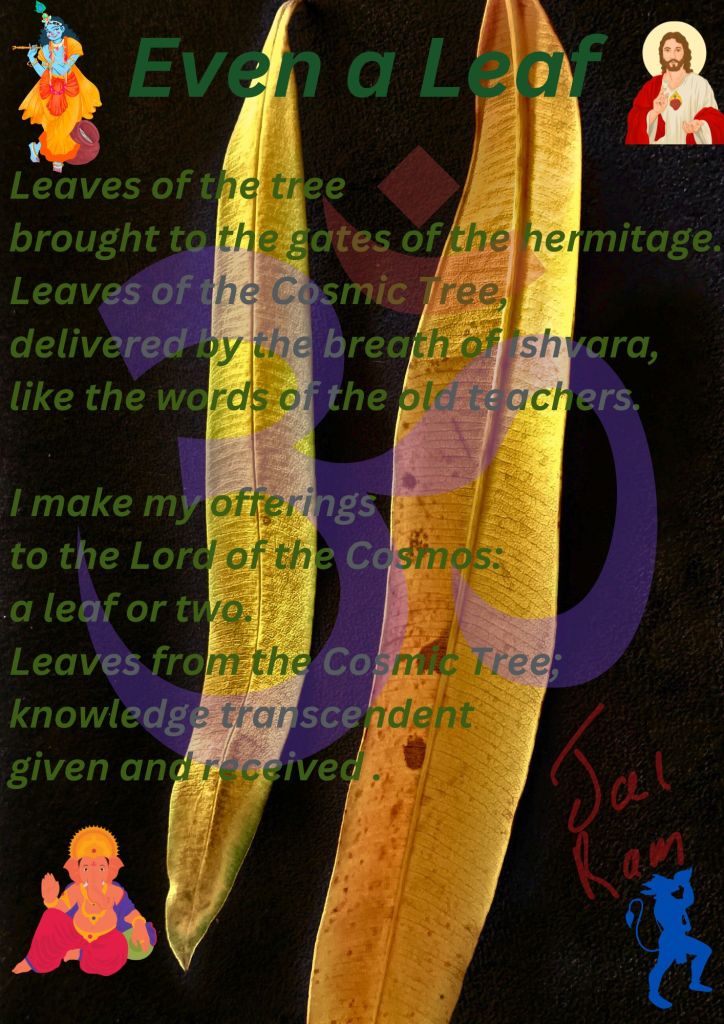
Even a Leaf: A Poetic Offering

Namaste and greetings my friends

Today, a poem for your reading and contemplative pleasure. The title of the poem comes references a verse from the Bhagavad Gita in which Lord Krishna talks about what are acceptable offerings: He tells Arjuna that God, or the Divine will accept even a leaf as an offering of devotion.

So, when I returned to the Hermitage one day recently to find two leaves on the ground at the front gate, I recalled that verse and decided to make of those leaves, just such an offering.

Allow me now to share that offering with you.

Peace and love

Paul the Hermit

When You Say It All in a Text Message

It wouldn’t be quite correct to say that I never get calls or texts on my phone. What would be correct is to say is that the vast majority are to do with what I might call The Bureaucracy: Reminders of Doctor and dentist appointments, notices from various government bodies, library notices; all that kind of thing.

And there is another emerging category that’s actually a lot more welcome: while my partner hermit and I have always phoned each other, lately we’ve been texting more and more as an extra way to communicate with each other.

Sometimes these texts are about the mundane things we all have to do in the world, but then there’s another dimension in which texting allows us to keep in touch with each other’s feelings, thoughts, doings, and simply as a means of keeping the connection open and strong.

The other day, for example, such a text arrived unannounced in my phone. Like some I get from The Bureaucracy, this one was essentially a little series of reminders. But rather than being about the things of the outside world, these ones, in this text, spoke directly and deeply to the enrichment of the inner life – my inner life.

Powerful messages, all of them, that really go to the heart of one’s (my) efforts to live a life more centred on my spiritual quest and my commitment to living more in sync with Absolute Reality.

On first reading of this text (and on each rereading, of which there have been many), I really felt strongly that I needed to contemplate deeply and prayerfully on the pieces of this whole. And, as well, to share my reflections with you.

Sit in your cell as in Paradise

This little – yet tremendous – injunction references an answer to a question posed to Abba Moses, one of the early Desert Fathers:

Go sit in your cell and your cell will teach you everything.

Essentially Moses’ advice is, remain within the confines of your dwelling place – whatever and wherever form that place takes. This can be a literal geographical location, or even your own body as it moves in the world. We all have a body, we all dwell there.

Sitting in one’s cell is not a simple or passive activity. It is in fact hard work as we wrestle with the mad monkey mind, and attempt to grow spiritually.

So, what about the ‘as in Paradise’ bit? Well, to me this feels very much like thinking of one’s cell as the place to be. What I mean to say is that it’s the only you can possibly be in right now, in the present of the here and now.

It’s not about judgements of is it good or bad, pleasant or unpleasant, painful or not. Just acceptance of where youu’re at right now. Doesn’t mean you’re stuck there and by no means suggests you resign yourself to your circumstances. It simply means you see it like it is, at this moment.

And it’s about understanding that, while you are in that place, it’s where you know you need to be. Your cell – your dwelling place – has within it everything you need to live, grow, learn, and prosper in the spiritual life.

Whatever the ‘place’ you are in is like, we can try to cocoon ourselves, make a space within the space, even if it is just being aware of our bodies sitting in the space. Cocoon myself is an expression I’ve been using lately to describe the act of isolating myself in any way I can from my surroundings. This can apply on the macro scale or the micro as we seek to centre ourselves and find quiet and a peaceful place.

It’s not as if in this cocoon (or whatever it might be)  that  all will be bliss and light all of a sudden. No, I think the suggestion here is we try to develop an attitude of non-attachment towards the things of the world that trouble us, those things that cause us suffering, precisely because we are attached to them.

That is the purpose of sitting in your cell. That is the everything that your cell will teach you.

You know my friends, I’m a bit weary tonight, and with your permission I will continue with this sharing of my contemplation, my reflections, in my next post.

Thank you for staying with me.

Peace and love

Paul the Hermit

Are the Hermit Pilgrims Settling Down?

Stand by for an announcement:

The Hermit Pilgrims have signed a lease for the rent of a house for a year. Not only have we signed a lease, we have, in fact as of yesterday, been residing in the said leased property.

Admittedly, it’s exactly the sort of small house which we had in fact been longing for for some time. It’s got many characteristics that make it for us, the ideal site for a hermitage: we even have a temple room!

The lease is for a year initially, and if,  after a year we feel led to move on, then that’s what we shall do. But for now, – as in the present moment that is the ongoing now, the only ‘time’ one can talk about with any meaning or truth – we will be in the one hermitage, the one safehaven by the side of the road, for a longer period than in any other in the last many years.

Anyway, enough of this reflection on the nature of time; the big question on your mind I am sure is why? Well, the first little thing to say is that the pilgrimage goes on; it’s just that we’ve taken a tiny step towards the vow of stability many monks and nuns make as a matter of course. We’ve not really ever taken such a vow before. Mind you, a lease is a binding document, I wonder does that count as a vow?

Of course, as I’ve just laboriously spelled out, there is only the moment, the ongoing now; so who can possibly say about ‘a year’?

Next, let me tell you a bit about a book I’ve read a few times and like very much. It will possibly give you a flavour of the why.

Cave in the Snow  by Vicki Mackenzie tells the story of Tenzin Palmo, a Tibetan Buddhist nun and her, I think, twelve years in solitu6de in a nearly all year round snowed in cave in the high Himalayas.

Tenzin Palmo had been living in a rather remote monastery, but felt after some years the need for greater isolation and solitude. The monastery was too busy and noisy, with all sorts of comings and goings.

There was too much entanglement with the greater society in the form of the surrounding villages and town. She wanted some quiet basically

In an interview sometime after she came down from the mountains she was asked if going to a cave was perhaps an escape, an ‘evasion of the trials of an “ordinary” life. Her reply spoke to me when I first read it about 20 (or more?) years ago, and still does today:

‘Not at all. To my mind worldly life is an escape,’ she replied to the interviewer. ‘When you have a problem you can turn on the television, phone a friend, go out for a coffee. In a cave, however, you have no one to turn to but yourself.

You have no choice, she says, when problems come up, and when things get tough, but to go through with them, till you come out the other side.

‘In a cave,’ she said, ‘ you face your own nature in the raw, you have to find a way of working with it and dealing with it.’

My situation is not quite like hers. For example there is more than one person in our community of hermits. Still her story does resonate and speaks very much to my own situation.

Not only is there never going to be any absolute certainty in our material world, there is never – ever – going to be anything in the realm of worldly things that will deliver us perfect peace and lasting happiness.

Easy to repeat, this tidbit of transcendental knowledge, but quite another to get oneself unattached to the idea that, well, maybe, just maybe, the next big thing, might just be different, might indeed be the forever answer to peace and happiness.

And it’s that attachment that I’m tackling at the moment.You see I long for a more pure hermit life, a life with a lot less engagement – and entanglement with – worldly things and situations.

I once wrote in a poem called Seeking Noble Truths or Just Passing Through that ‘longing is loss’, and it is, if one is attached or clings to the object of desire, or an outcome being exactly as is envisaged. Not being attached means less disappointment, less suffering, if as often happens, life does its thing and the outcome is not what we hoped it would be.

But here’s the thing: the bonds of my attachments in this area are loosening a little, bit by bit. And the paradox isn’t lost on me either: As I ‘settle’ into our (supposedly) longer term hermitage, I will, I hope, come closer to a point of stillness, of equanimity, and of silence. I will inch even closer to that state where attachments will all just fall away.

Hermit caves take many and varied forms

Now, in no particular order of priority or preference, I’ll try to convey in words some of the reasons we’re opting to continue our pilgrimage in a more long-term hermitage.

To be honest, as hard as I try to be present, to just live here and now, I just like the vast majority of my fellow human beings, find it extremely difficult to not be pulled ahead to the future (or dragged back to the past for that matter).

No sooner have we moved into a new hermitage, then we feel we have to start shopping around for the next one. Of course, one can’t ignore the practicalities, but for me it goes way beyond being a sensible planner.

And to be perfectly frank (I wonder who this ‘frank’ is anyway?) we’ve tired of it. The looking, the thinking, the talking and emailing to prospective places. It’s actually quite boring, to be stuck on that kind of merry-go-round .

It’s also extremely distracting. It gets in the way of our efforts to calm and quieten our minds for extended and deeper meditation and contemplation. Not to mention the ongoing (seems endless sometimes) discussions of the pros and cons of decisions to be made, as well as the frustrating second guessing I’m famous for.

Portrait of a Hermitage

We all know from experience that there is never going to be any absolute certainty in anything we arrange in our lives. Of course I know very well that even a signed, sealed and delivered legally binding contract or lease, means very little if the parties involved put their minds to it or change plans somewhere along the way.

All things in the material world are relative, and always subject to change; there’s nothing we can do to bend that natural law. Given such a context we still feel okay about entering with a right-hearted intention, this agreement for a year (at least) in the new hermitage.

As the residents of the hermitage are prone to say really quite often: ‘Your will, not mine, be done’.

Then, when life does its thing, I’ll be more able to roll with it. Why? Because I will (hopefully) have better learned that it’s not my will that’s to be done, but the Divine Will, the natural law and order of the Universe.

So, If it be your will…

Japa in the Dunes

Japa, or the chanting of the names of God or the Divine, is a central spiritual practice for me. In fact, as time goes by, it becomes even more important for me as I try to spend more time chanting than not!

With Japa in mind I climbed yesterday to the crest of the sand dune on which our current hermitage is situated, to spend a while with the sea and the dunefield flowers, the birds, and as I planned to be doing some chanting, also with those unseen aspects of the Divine that I would be addressing with my words.

As seems to be happening quite often these days when I immerse myself in the beauty that is to be found all around me, all that is to be seen and experienced ‘up there’ as it’s come to be called, a poem wrote itself about yesterday’s particular excursion and experience.

I share it with you now in the hope you will enjoy reading it; thank you for reading it!

SAND DUNE KIRTAN

Perched upon the crest of a sand dune,
I chant the names of the Lord
Hare Krishna Hare Krishna
Hare Rama Hare Rama

I am still; the Lord’s names vibrate in my mind.
But Varuna’s energy washes saltwater back and forth
in the middle distance.
Sea waves manifest from depths unknown.
Sea waves dissolve on the shore
in the middle distance.

Now, in the near distance,
near to me where I rest and chant on sacred ground,
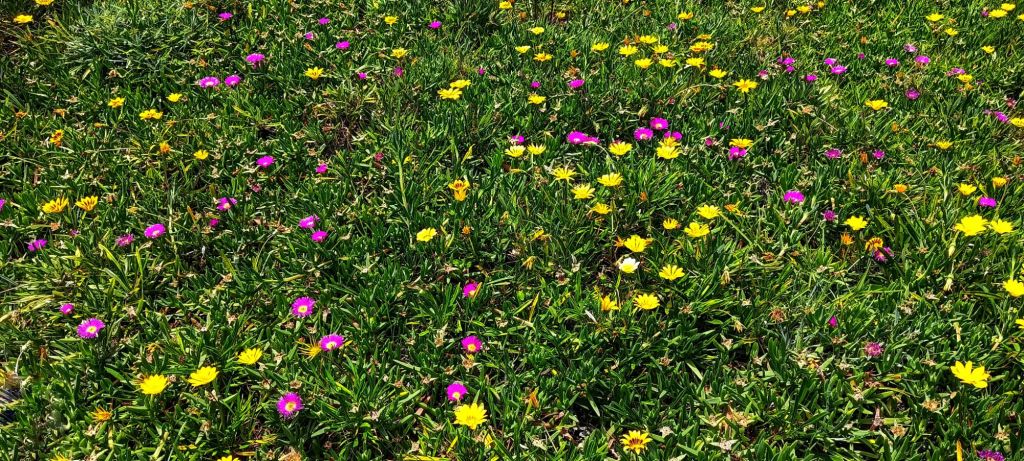
flowers with yellow heads, purple heads, wave in the wind
as if ecstatically dancing to a holy Kirtan
gifted them by the wind.

These myriad jewels in the dunefield join me in my japa.
Or is it that I merge with their sacred dances?

It’s neither, and yet it’s both:
The beautiful blooms are me,
and I am them.
We are the One,
Chanting and dancing
the names of the One.

The Q&A in the Scripture Part 3

Welcome to another installment in our occasional series (see links to all previous installments at the end of this post) looking at some of the answers given by Krishna to his cousin Uddhava during a kind of Q&A session that takes place as both are about to leave their hometown which is on the brink of war. Krishna’s returning to Heaven, while Uddhava is heading for parts – and a future – unknown.

Hence all the questions around living a good true life, all driven by the knowledge that Krishna isn’t going to be around anymore to give Uddhava life advice.

And the question we’re discussing today is certainly a big one. In fact, though it is a single part of a three part question, I felt inclined to give it our full attention. To me it is that significant. In fact, thinking about it now, I could even add here that of all the questions and answers, this one could stand alone as the  question, the  answer.

To the question then, as asked by Uddhava to Krishna:

What is Charity?

Well, although I thought I knew what the word charity meant, and what charity is, I did end up looking it up, just to get a clearer and deeper picture.

Yes, a charity is an organization set up to give aid to those in need. And, as I also knew, charity is the voluntary giving of help – often in the form of money or other material goods – to those in need.

All just as I’d thought. But, then, I came across another entry that filled out the picture for me a little more. In addition to the above, this listing told me that the ‘true meaning‘ of charity is generosity and helpfulness.

Again, it specifies that this generosity, this helpfullness, is usually extended to the ‘suffering and needy’. Still it suggests that charity may be at least a little more universal an attitude toward functioning in the world, a world shared with so many other living beings.

(note from me: This latter definition comes from the Merriam-Webster Dictionary.  I’ve used this dictionary a great deal, and for very many years. It’s been my favourite go to, as they say.

PRESS THE PAUSE BUTTON PLEASE

Right, yes, I hear you loud and clear. Here I am going on as if this is a semantics blog. Sorry about that. Perhaps we should get back on track and allow Krishna to give the answer Uddhava and the rest of us have been waiting for:

Charity is the renunciation of aggression.

Perhaps you can see why I was at first a bit taken by surprise, and I puzzled over it for a while. Then after seeing that Merriam-Webster definition, I knew I’d found a clue: generosity and helpfullness.

Then it came to me: Ahimsa!! No, this is not some obscure exclamation reserved for Eureka! moments. Rather Ahimsa is a foundational principle underpinning many of the great religious traditions of India.

For me, Ahimsa is basically doing no harm, the practice of non-violence towards all living beings, through one’s thoughts, words (speech), attitudes, actions.

However because life is complicated (ie: there are no easy answers), various schools of thought over time have developed a kind of modification in which they say that Ahimsa is choosing to tackle the complexities of our lives in the world in such a way that we do as little harm as possible.

But how, one might ask, can we expand those dictionary definitions to include Ahimsa? Well, as far as I’ve been able to think about it so far, I’d say that Krishna’s answer itself is the root that we can graft those definitions onto

Which is to say, renouncing aggression is that root, that foundation on which to base the cultivation of charity and a charitable attitude and manner in our relationship with ourselves, with all other beings, and with the planet (and the rest of the Universe too of course).

(By the way, thank you to my Partner Hermit for that word: charitable. Not that I didn’t already know the word, obviously, it’s just that at the time I just could not find it anywhere in my slow-moving brain!)

That open, generous, helpful, compassionate, patient, kind, thoughtful (oh let me count the applicable words!), that charitable demeanour and behaviours with which we engage with the world (and with ourselves) are the result of removing aggression from our thoughts, words, and deeds.

Actually, thinking about cause and effect, and effect and cause, for a second: the way towards that state of charity is the same. In other words the means and the end don’t only justify each other, they are each other. One thing.

Don’t be ready for fight or flight each time you communicate with your boss, or your spouse, or your child, or your parent. Or with anyone else in any situation you find yourself in.

Listen to and observe with patience, care, compassion, and your full attention, the needs of others. Don’t assume you know best. And include yourself in this paying attention.

Look before you leap. Stop, listen, think, pause, before jumping into any situation that needs understanding, calm, quiet and time to alleviate any possible confusions, or misunderstandings.

If you make a mistake (or is it when?), don’t be so hard (aggression?) on yourself. Be just as open, friendly, forgiving, patient and the rest, with you as you would like to be with everyone else.

As to ‘generosity and helpfullness to the needy and suffering’? Well, all living beings suffer simply in the act of living itself. We are all well aware of this. The degree and forms of this suffering (and the needs that cause the suffering) will always vary, but even so, they are inevitable.

There’s a small mantra or prayer, I often use to end other prayers or reading, that I’ve always liked a lot:

Om Shanti, Shanti, Shanti

I have always thought that this was simply a prayer to the Divine that included the repetition of the word for peace three times.

Of course it is that, but recently I heard that it’s structured in this way with the three repetitions to make of it a deeper or more universal prayer:

Shanti: Peace within myself
Shanti: Peace to all living beings
Shanti: Peace to the world itself

I may have the words slightly off, but the essence is there. Anyway, for me this really does sound like Charity.

If you’ve missed earlier posts in this series please click on the links below

New Series Coming Soon: An Introduction

The Q&A in the Scripture: Part 1

The Q&A in the Scripture Part 2

The Q&A in the Scripture: Part 2

Namaste

And welcome to Part 2 of The Q&A in the Scripture series in which we are looking at the answers given by Krishna to a list of questions asked by his cousin Uddhava in a scripture called the Uddhava Gita.

Remember the scene? Uddhava has asked Krishna a pile of questions about how to live a good life, how to live in the world with discernment.

These questions have become urgent because the cousins are about to leave their hometown which is on the brink of war. Both will be going their separate ways and both know they won’t be seeing each other for a while – perhaps never again.

Anyway, moving right along: In our last installment, we had Uddhava asking the first of his questions; this one happens to have two parts:

What is quietude and what is self-control?

We discovered that quietude is not the state in which one finds peace, silence, our true selves, or the Divine, but is itself that consciousness, that pervades and permeates all that is, silence, peace. In other words, quietude is  the Divine itself.

In the present post, we move to the second of Uddhava’s two-part question: what is self-control? Krishna’s answer is excellently short and sweet:

Dama  (self-control) is restraint of the senses.

Krishna in his response, makes it clear that restraining the (one’s own) senses includes mind as a kind of sixth sense in addition to the five physical senses. In the context you could almost say that it’s his mind that Uddhava is in most need of restraining. Maybe that’s the message for all of us?

Well, we are all well aware of the ways in which we have tried to control our senses; Uddhava knows too. But look at the situation these two cousins find themselves in:

It’s fine for Krishna: he’s returning home to Heaven, or wherever. But, Uddhava, who is also about to leave, is facing more uncertain prospects. He’s experiencing great turmoil, and fear over his and his familiy’s safety as the threat of war closes in. Most likely he’s also grieving over having to go into exile from his ancestral home.

Of course he’d be fearful for the future: where will he go? What will he do? How will he protect and provide for his family? Like I said, an onslaught of mental and emotional anguish.

Still, it does seem that Uddhava is maintaining quite a steady presence of mind. He’s thinking about the future; he is clear about the sort of stuff he needs to find out from his cousin (remember Krishna is God) in order to put and keep his life on the right track despite the challenges facing him now and in the future.

Then there’s the fact that this self-control thing is only one question on a list of 36. Clearly Uddhava is looking for a lot of advice.

Restrain the senses – all six of them – Krishna says. But how? What does it mean, ‘restrain the senses’? I think I alluded to the notion that we all have some ideas, some clues, about how we as individuals might restrain them, but let’s personalise this: What does it mean for me to restrain my senses?

Actually, now I’ve made that suggestion, I feel overwhelmed: Where would I start? Surely I need to do a whole series of posts, just on this one topic alone?

Oh wait, I can start right there. Exaggeration, hyperbole, over-dramatising, catastrophizing, all perfect examples of emotional reactions leaping from an unrestrained senses central: my mind.

Let’s put aside that mental stuff for a little while, and just say that all those emotional responses could do with a bit more restraining training. Just looking at the physical senses to begin with, I can easily say that they also, at least some of them sometimes, need various degrees of working on.

First, my sense of taste: it goes into overdrive sometimes, and then I eat too much. Not so much as in the past, but the restraint has a way to go still.

My sense of sight is pretty good, well restrained for the most part. But there are times when I lapse into old habits and spend too much time looking at a screen and scrolling in a mindless kind of way. Getting there though!

As for my sense of hearing: You might remember a post from a while ago when I talked about letting go of much of my music collection, some of which I’ve listened to my whole life.  I’m doing this because so much of what used to be ‘my favourite’ songs or artists, no longer serve my spiritual growth, nor does much of it reflect the view of life and the world that I’m trying to cultivate.

Well, I’ve made a good start, but occasionally I slip and find myself humming old tunes, or listening to an album that I really ‘should have’ deleted already. Restrained? Sort of, and I’m still encouraged.

Enough! Let’s get straight to the biggie: my mind. If I’m honest, I have to say that my mind, while not exactly in full agreement with my efforts at restraint, is starting to get into sync with me and my aspirations for a more controlled mind.

But still, those previously mentioned emotional reactions like exaggeration, over-dramatising and the rest, are still there. Falling into line, it’s true, still … .

Then there is the (more than) occasional first port of call reactions to pieces of news of various kinds: I’m prone to ask, just as I imagine Uddhava might have: Why don’t ‘they’ control themselves? Why can’t he or she or such and such country or politician show a little restraint?

Yes, I know, we’re all guilty of this one to some degree or other.

My quickness to anger is not quite, but almost, might soon be, won’t be long before it is, a thing of the past.

Then, there’s my tendency to ruminate: rehash endlessly real and imagined events and other stuff from the past – as well as the always imagined possibilities (as well as the impossibilities) for the future.

Again, I know I’m not alone in this emotional roller coaster ride, and I do know that I am nowhere near as much of a ruminator as I was; I have made great strides, significant inroads, and I am encouraged that the end of rumination is getting closer!

And now, here is the one thing I tend to think of one of my biggest, most tiresome and tedious, most annoying conditioned emotional responses: I talk too much. Not as much as I used to, but still too much for my comfort, and for the peace of mind of those around me. More restraint is called for.

Restraint has played its part in reducing my talking. But in a sense the major ally has been the ongoing quest I’m engaged in to discover my true nature, as consciousness, which is really my oneness with all that is.

And here our second question and answer leads us right back to the first: quietude.

I wrote in that post:

Quietude, calmness, peace of mind, are not where  you will find God, consciousness, or whatever we call it.  Quietude and the rest are God. They are consciousness.

Or putting it the other way round: cultivate silence, calm, peace of mind, and your senses will no longer need to be restrained. Your whole Self, including body and mind, will then be resting in Quietude, in your true nature.

That’s why I think these two questions are asked and answered together: Each leads to the other: by restraining our senses we are more easily able to achieve a state of calm, quiet, some level of peace of mind – in other words, Quietude.

The Q&A in the Scripture Part 1

Welcome to the first in a short – and occasional – series centred on a text containing a kind of Q & A session between Krishna (God) and Uddhava (his cousin).

Thirty six questions in all, with which Uddhava asks Krishna how he can live a good and honest life, dedicated to doing right and living the truth.

If you haven’t already, it would be really helpful if you read the Introduction post here, before going much further; just so you have a better handle on the context, the background etc. It will just help to set the scene a little more.

Now that’s been said, let’s get on and into it. The very first question Uddhava puts to Krishna is actually two questions in one.

What is quietude and self-control

Good questions, the both of them, given the circumstances Uddhava finds himself in. His hometown (it’s Krishna’s too) is about to descend into a nasty civil war and is most likely a chaotic, noisy, overwhelming and frightening environment to be stuck in.

Uddhava, like the rest of us just wants a peaceful life, and as to the second question, well he’s bound to be asking himself the same question we’d ask: Why can’t these people just control themselves before it’s too late? Not to mention the onslaught of emotional and mental anguish he’d be suffering himself.

Anyway, Uddhava is about to leave town following his cousin’s advice, and would like to find out how he can go on to live a good, righteous and honest life, while he’s in exile from his home.

Krishna chooses (sensibly I’d say: they’re both big questions) to answer one question at a time and he begins by explaining what is quietude:

Quietude is fixing the mind on me.

Krishna is not saying here: ‘Look, once I’m gone [I think I’ve mentioned that he’s leaving too, going back to Heaven or wherever he lives on a permanent basis] try to remember your dear old cuz in the odd quiet moment now and again will you?’

What I think he is actually saying is: ‘If you fix your mind on me, then that’s quietude’. We could call it silence as well. He’s not saying ‘I am in the silence’, nor is he saying ‘Through silence (or quietude) you will come closer to me’. No, what he says is ‘Quietude is what I am’.

So, what about those of us not in a first names relationship with Krishna? Well, think of Krishna as being a name and form of Universal Consciousness. Yes, the same Universal Consciousness  that is all created and non-created things; the sun, Earth herself, trees, the oceans, all living and non-living beings in the Universe, in all universes if there are more than one.

There are a whole list of synonyms for quietude: equanimity, calmness, peace of mind, rest, serenity, dispassion. Just to name a few.

These further definitions are really quite helpful. What I mean to say is that we rarely if ever associate that calmness, equanimity, peace, and the rest, with actually being the Universal Consciousness, that is also all of us and everything else that is. Again, think of Consciousness as the Divine, God, or by any other name and form, you attribute to the natural order and flow of the Universe.

Forgive the repetition : Quietude, calmness, peace of mind, are not where you will find God or consciousness, or whatever. They are all consciousness.

The beach is also dog friendly

Have I mentioned that the current hermitage is a cottage on the side of a large sand dune, on the other side of which is a stunning stretch of Pacific Coast beach. Sitting on the top of the dune and looking out over the beach and ocean it is easy to think of all that’s seen as divine.

It is most definitely a peace of mind, calm and quiet inducing experience to sit there. Certainly it is quietude itself with the only sounds being the song of the universe in the form of the waves and wind.

A question I asked myself, and I now pose to you: If what we’ve been calling Universal Consciousness is actually all that is, then why not a state of mind like quietude, calmness, balance, and the rest? Like everything else perhaps these states are simply elements of that consciousness or Absolute Reality, or oneness, or what some call God, the Divine, or … ?

In any case, I have a feeling that’s what Krishna was getting at with his answer, and what Uddhava somehow intuited with his question.

Thank you for joining me on this little pilgrimage. in the next post in this series (it could appear anytime, so stay tuned!) we will discuss Krishna’s answer to Uddhava’s second question: What is self-control?

Peace

Un hommage à tous les ailés

New Series Coming Soon: An Introduction

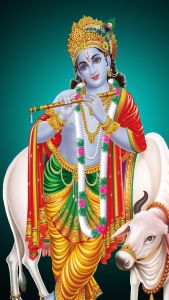
Lord Krishna

Namaste and greetings friends

Not long ago I began studying an Indian scripture called The Uddhava Gita. It’s quite a lovely book actually: it’s poetic, actually it is a poem, or song, and beautifully written. The title means The song of Uddhava and is an account of a conversation between Krishna wearing his God of the Universe hat, and his cousin Uddhava.

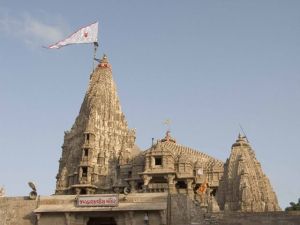
The story takes place in their home town of Dwarka in the state of Gujarat (Krishna was also a regular family man with a huge extended family) which is about to explode in a destructive civil war. Soon Krishna is leaving to return to his heavenly abode, and at the opening of our story, he advises Uddhava that he too should leave town ASAP.

I should point out at this juncture that I do not see this Gita as a historical document. It’s a story created as a backdrop against which to place a long conversation in which Krishna, or God, passes some spiritual teaching to Uddhava.

Dwarkadheesh Temple Dwarka India
By Scalebelow – Own work, CC BY-SA 3.0, https://commons.wikimedia.org/w/index.php?curid=5739970

Although the location of the story is a real place and exists today, we don’t learn anything beyond that this is the setting for this little chat.

The purpose was to present these teachings in an entertaining and accessible format. Like so many scriptures around the world, this one is a song, making it easier to learn and pass from one person to another over time in a society that was not yet universally literate.

So, why am I writing about this text? Well, in one section Uddhava is asking his cuz all sorts of questions, that have obviously been on his mind for a while. He knows Krishna is leaving he planet soon and he thinks that this might be his last chance to get some answers.

He asks questions like: What are reality and truth? And, What is a person’s strength. Then there are queries like: Who is a friend? What is home? Many are related to spiritual matters and practice, and all are concerning qualities and attributes a person should possess to live a good life, a honest life. A Dharmic life.

Actually, if I were to condense all of Uddhava’s questions into one big question, it would probably go something like this:

How can I change my lifestyle so I might live a righteous life, a good and honest life in which I can learn the truth and live my whole life according to that truth?

Now, here’s the thing: Uddhava asks a total of 36 questions, some singularly, some are multiple questions containing two or three queries. Krishna then proceeds to answer the questions, all of them in fairly quick succession.

I would like to share a few of those answers with you. I don’t get the sense that the questions are asked or answered in any particular order or pattern, so perhaps those I share will be an idiosyncratic selection, or it may be entirely random. Not that there is such a thing of course, so I guess you will just have to wait and discover for yourself the chosen questions.

Don’t worry! I have no intention of burdening you with the complete set of 36. In addition to saving you that fate, some of the questions and or answers didn’t resonate; others didn’t feel overly relevant to this blog.

I’d like to devote an individual post to each of the questions, bearing in mind some of them are multiples. I learned about all 36 questions and their answers in an hour long class. Needless to say that experience was more than slightly mind-blowing. One or two (or maybe three) at a time will be just fine for all concerned I think.

So, next post, I look forward to sharing with you the first of Uddhava questions along with Krishna’s answer. It will in fact be literally the first one asked; I thought discussing it at the start would sort of set the scene and the tone for us.
After that one there will be further posts. Again don’t worry, I’m planning a fairy short and occasional only series.

Sharing a Poem with its Photo

Namaste friends, greetings and welcome

Today, a poem and a photo for  you.  I made the photo just over a year ago, and was very fond of it from the start. Then when I put into an editing app, it evolved to what you see today.

As well as that, as I ‘worked on’ the image, the little poem, (a kind of freestyle Haiku I think it could be called … sort of!) just emerged and I had to hurry to write it down.

Last night I was going through some poems of mine, and came across this one again. Not so much that I’d forgotten about it, more that I hadn’t thought of it since way back then.

So, I went on a search for the photo (also not forgotten, just buried deep in the hard drive!), so I could share it and the poem here with you on this blog. First the photograph:

Golden Light Reflections on the House of God

And now for the little poetic treat.

Please enjoy and may Surya illumine your day.

As Gaia Turns

Surya illumines

with his fiercely gentle life-giving light.

Gothic panes receive and reflect

golden impressions

                  as Gaia turns.