Flee, Be Silent, Pray Always Part 2

Welcome friends

Thank you for bearing with me as I chose to post a short story before I got onto this post, the next part in our small series. Actually, I hope you enjoyed the story, and if you missed it, then please feel free to have a look. You will find it here.

Anyway, welcome to Part 2 in our little series of contemplations on the answer that Abba Arsenius received to his question: How can I be saved? (from the world with its  sorrows and noise and traps of all kinds)

The answer he heard from deep within his own Self – what he called God -was the succinct, to the point, no nonsense:

Flee, Be Silent, and Pray Always.

In Part 1 we realised that fleeing (from the world) doesn’t necessarily mean we have to leave everything and everyone behind and go live in a cave in the desert as he did. For some of course it might mean exactly that or some 21st Century equivalent, but I think for the vast majority of us, fleeing simply involves some modification of our current lifestyle, changes to our habitual ways of thinking and behaviours in order to rid ourselves of attachment to and entanglement in the things, situations, and people in the world that aren’t working for us.

And, now, in this post we will spend some time in contemplating the second injunction given to Arsenius: Be Silent.

Be Silent

I haven’t actually given a lot of thought to this topic since our last post. Nor have I done any online research, or watched YouTubes (I checked for fun and there seems to be hundreds, maybe thousands) about silence.

No, at least in this I have tried to remain silent and simply wait for the post to come together of its own accord in its own time. Perhaps this decision came from that same place Mr A heard from when he had his question.

So, what does it mean to be silent? Well, as I just mentioned, there are seemingly unlimited answers out there just waiting for us to grab on to. The better question would probably be, what does it mean for me to be silent?

First thing to say is that I’ve come to realise (okay, it’s an ongoing process of coming to realise, not there quite yet) that there is absolutely no person, no circumstance, and no place that I can rely on to provide me with silence. So, I’m coming to accept, there is no point in looking anywhere, or to anyone, as the source of silence, at least not in the physical world.

Of course, one key element of achieving silence may be the absence of noise. Maybe. so living where there is less traffic, less focus on materialism and commerce, fewer people, less media imput (news, TV, Internet, and all the rest) might be a place for some to start.

Even if it isn’t possible to to avoid all these things completely, I try to drop or change the things I can which for me sometimes at least, gives me a chance at a little silence.

Having said that, I’m reminded of an aphorism I once read: A hermit living alone, in a cave on a remote mountain, away from any kind of road, no radio, TV, etc, is never going to manage to be in silence if his mind and emotions are always busy with thoughts, memories, desires, fears and other emotions.

On the other hand a person living on a busy city street in the midst of all kinds of chaos and noise, may be living in perfect silence. If they have a still mind, steady emotions, that give them the ability to ‘sail through life’ as the saying goes.

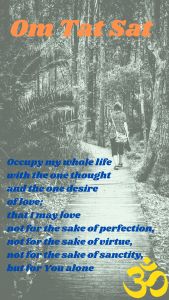
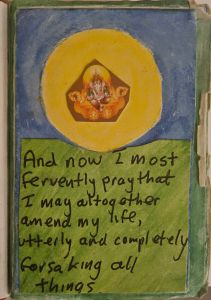
But what about me? Well, this prayer says it all In order to achieve a state in which I can actually be silent, I am attempting to amend my life – utterly and completely.
I can be quite self-critical on this, badgering myself with desperate questions how come I can’t just be silent (and quiet in the accepted sense of the word as well). It’s a dilemma which frustrates and disappoints me. But, to be a little fair to myself, I suspect I’m not very different to most other people when it comes to silence. After all, if it was so easy, how come we need thousands of books, articles, YouTubes on how it’s done?

As mentioned, the absence of noise isn’t necessarily a prerequisite to achieving silence. But, I have to say, that for me, it’s pretty important. Being surrounded by the noise of the world, as well as my own hyperactive mind and seesawing emotions, are for me blocks to silence. Though, when I think about it, there are glimpses, even when one of our temporary hermitages is on a busy street, or under an airport flightpath.

As a bottom-line starting point, I don’t watch or read news; I don’t (anymore) randomly scroll the Internet even when ‘looking for something to watch’ on YouTube. And of course I don’t use television. Ever.

I’m not saying that when I do watch a video online that it’s always only spiritual or holy stuff. Nor do I only read books about saints and spiritual matters. Mind you, I would say more and more lately I’ve been tending in that direction. It’s just happening naturally I think.

A reason for that progression is effects of the amount of time I spend meditating, chanting mantra, and ‘just sitting’. Never enough time spent, but I’m getting there.

In all these three activities there is of course always lot of mental noise trying to mess things up. Not to mention the dreaded external noises. But, even then, there are gaps, spaces between breaths, pauses between repetitions of the mantra, and even when just sitting there are (if my mind has mercy on me) little moments free of thoughts, fleeting gifts of silence.

I think most of us have a tendency to focus on the problem of noise and disturbance, both external and internal, and ignore those fleeting little moments of silence.

With the momentary absence of thoughts it’s like when we ‘get lost in a beautiful piece of music’ as my teacher says. We’re still there, we can still hear, it’s just that we – as in our ego in one of its many and varied forms, our mind – is absent. And that means there is silence. Then we are in that legendary blissful state of being one with the music (or whatever the activity we are ‘lost in’).
Because our thinking mind seems to be absent (no thought equals no mind), there is nothing to judge whether there is silence or not. Just as when we are in deep sleep, as opposed to the dreaming state, there is silence, the absence of thought; no ego dialogues; all is silence. That’s why often don’t realise we have achieved that silent state: no mind to record the experience, so when we do resume thinking, we assume we’ve not stopped thinking at all.

Despite these many years of meditating, chanting, and sitting, I seem to still expect something spectacular to occur. Some blissful state, some revelation of enlightenment, or some other magical happening, maybe visions or some genius idea or something. It’s not a rational expectation of course, but …

Yes. It’s still hard to let go of the search for some kind of ‘signal’ buried under all the ‘noise’. Lately, however, I’m slowly coming to realise that looking for signal is really my ego/mind looking outside in the world for some kind of experience of silence. But to belabour the obvious, silence is silence; what’s to experience?

That doesn’t mean that there’s nothing. Nor that it’s some kind of void, just emptiness and ‘nothingness’. Silence is the space in which the seeds or knowledge are able to take root before they can become manifest in our material world.

It’s just that we might not notice untill sometime later when we see or sense a change in our thinking, our behaviour, or how we feel about the people, places, things, and circumstances of our lives.

See you next post when we look at the final of the three injunctions given to our friend Arsenius, Pray Always.

Thank you and may you realise the silence that already is present within you.

Oh No! Another Blog About Chanting

Not too long ago, I completed what I’m now calling my first formal (structured) study of the entire Bhagavad Gita. Of course this wasn’t my first exposure to that text: I’d been reading it on my own for a few years before I came upon a teacher to act as guide.

Anyway, since that bitter-sweet day of completion, I’ve been looking at ‘random’ verses on a more or less daily basis as a way to keep in touch and to act as a reminder of what I’ve learned.

Just opening my Bhagavad Gita at random, just to see what the universe wants me to think about.

Today, I happened to open it up at what are a series of my favourite verses. (I know I’ve got a lot of favourites; it’s that kind of book). In these particular verses, Krishna describes the meaning and significance of the mantras Om Tat Sat.

In a nutshell, these three syllables, these mantras, are a way of describing the Absolute Reality of the Universe, or God, Consciousness, the Truth, the laws of nature and the universe. Whatever names we might use to encompass all existence.

Krishna details when and why to use the mantras (it’s one mantra made of three, for the technically minded). Again in a nutshell, it’s a mantra to use whenever we perform our duties, basically any actions, with a devotional mood.

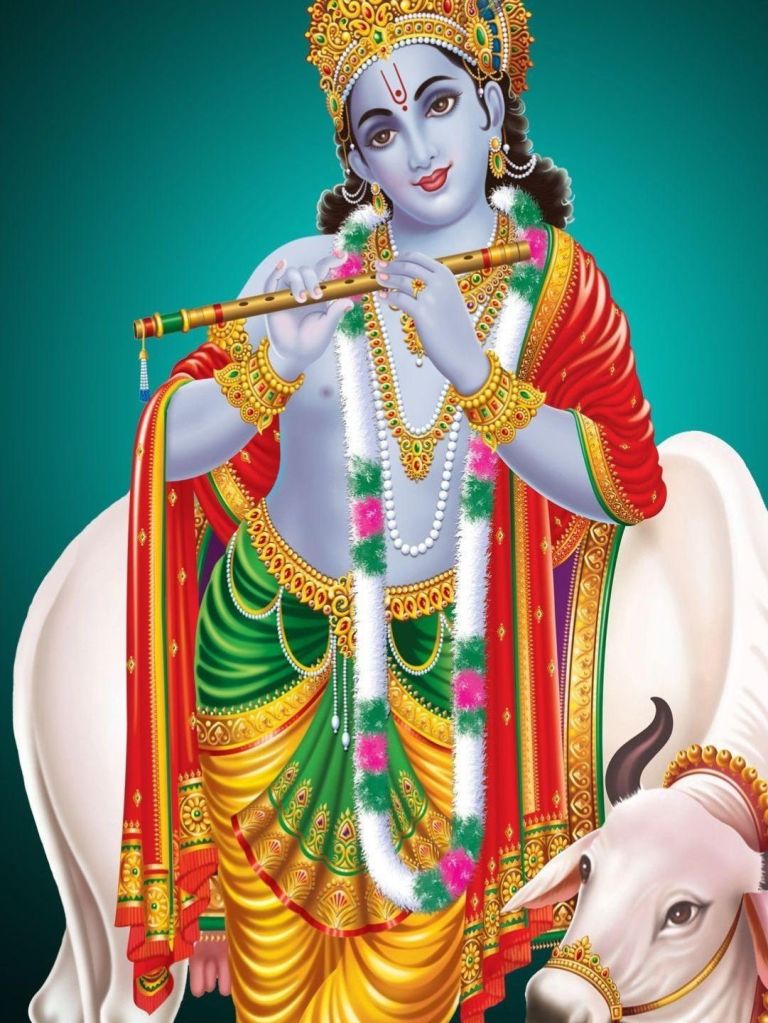
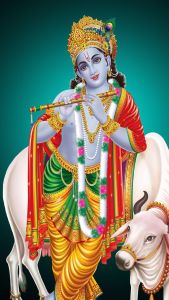
By the way, that, and the inclusion of my favourite image of Krishna, doesn’t necessarily imply that our actions have to have a ‘religious’ intent or flavour: Any action we undertake, for whatever purpose as long as it is motivated by Truth, Love and right thinking, qualifies as being devotional.

While you can see the actual verses yourself via the Om Tat Sat link above, I would like to share with you my very liberal paraphrasing of Krishna’s teaching on the mantra. Also, I am adding a few observations of my own that I hope serve to clarify this great teaching. Oh, please forgive any repetitions, if they occur.

The syllables Om Tat Sat are the symbolic representation of the Supreme Absolute Truth; what I choose to describe simply as all that is. It is called by any number of names or none. It’s existence itself.

It’s an ancient practice, this chanting of these three syllables as a mantra. It is recited when one is engaged in any action in a mood of devotional service. Meaning any act that is imbued with a prayerful attitude and feeling, and with a mood or attitude of devotion to and recognition of, Truth in all things.

And it includes any and every action we undertake, from washing the dishes, to sitting in meditation or silent contemplation. And everything in between.

Om

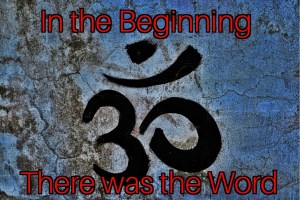
Om is sometimes called the primordial sound, the creative principle, the word from which all creation sprung. I’ve also heard it defined as being the Big Bang, from which the universe emerged.

Om is considered the sacred sound and word by many cultures around our world. Consider the opening of John’s Gospel in the Christian New Testament :

Om is to be chanted when beginning and performing any and all actions motivated and driven by Truth. Chanting Om assists us to actually realise or understand with our heart and not just our mind, the presence of the divine or the universal consciousness in all that we do.

Tat

Tat is chanted by those wishing to be freed from attachment to material things, which includes the desire or compulsion to enjoy the fruits or rewards of our actions.

In the beginning was the word, and the word was with God, and the word was God

John 1:1 New Testament

Attachment is when we depend for our well-being or happiness (physical, mental, or spiritual) upon another thing (money, job, status, etc), person, or desired outcome. Attachment (and clinging, extreme longing, compulsivity), Buddha told us, is the cause of suffering: when things are going well with the things or people we are attached to we are elated; when things aren’t going so well, we are miserable and we suffer.

Sat

The syllable Sat indicates both reality and goodness. In other words, Sat is used to represent that Absolute Truth or Universal Consciousness that we’ve been discussing.

Sat follows very nicely on from Tat as it helps to strengthen our Dharmic (motivated by what’s right and true) actions, so that they actually become Sat – Truth.

So, chanting Om Tat Sat when performing any or all our activities in the world (as well as within) will help us to come to realise or understand that there is only the one Absolute Reality, the one consciousness that is not only universal in nature, but is actually the universe itself.

Oh one more quick note: Often you hear the chant with an extra word up front: Hari Om Tat Sat. Hari is a way to address that which removes darkness, that aids in the shining of the light of knowledge.

It’s a word that represents that Absolute Reality that we’ve talked about here. It can also refer to King or Lord, or otherwise influential entity. I find it rounds out the chant, and I like it!

Please feel free to explore Om Tat Sat for yourself. You will find a lot of great recordings of the chant on YouTube, and the wikipedia link at the beginning of this post is very Illuminating as well.

Om Tat Sat

Insights Gained on the Kora (A Follow On Post to our last one).

Namaste and greetings friends

The previous post on this blog was about the notion of Kora, or the circumambulation of a sacred site or object on foot as a kind of pilgrimage. If you missed it, you can find that post here.

While researching for that blog, I came across an old file in a forgotten folder which also touched on Kora as a topic. I’d forgotten all about it as it was really only a first draft of a proposed post that, at the time didn’t go any further.

Reading it again, I right away realized it was a great theme for its own post and would follow on quite nicely. So, before I share that with you, allow me a minute to set the context.

In early 2020 we had just arrived in a small outback town in central NSW. We’d planned our arrival to coincide with the onset of the very first lockdown put in effect as a response to the outbreak of Covid 19. Our hermitage remained there for about six months before that first (of several as it turned out, though we didn’t know it at the time) lockdown eased and we moved on.

As with that last post, this one features a sports ground, and my adoption of it for the purposes of my own circular pilgrimage practice.

Thank you for your patience

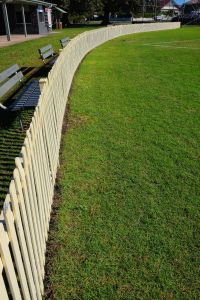
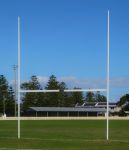
Across the road from the little apartment in which we took refuge a few months ago as fear of the Corona virus spread and travel was restricted, is a sports ground. In freer, safer times, they play cricket, and – in the winter – football there.

That ground, or rather the oval shaped fenceline surrounding it, has become a Kora for us. A Kora is a kind of pilgrimage in the form of a mindful and meditative Circumambulation.

Kora is a Tibetan word, but the concept of pilgrimages circling sacred sites is common to most religious traditions. I guess you might say, we’ve kind of adapted the practice to suit our purposes.

Anyway, a few days ago I noticed that markings had been painted on the grass: a set of giant squares and other lines. I realized that football must soon be returning, along with the reopening of cafes, restaurants, and so on in the town.

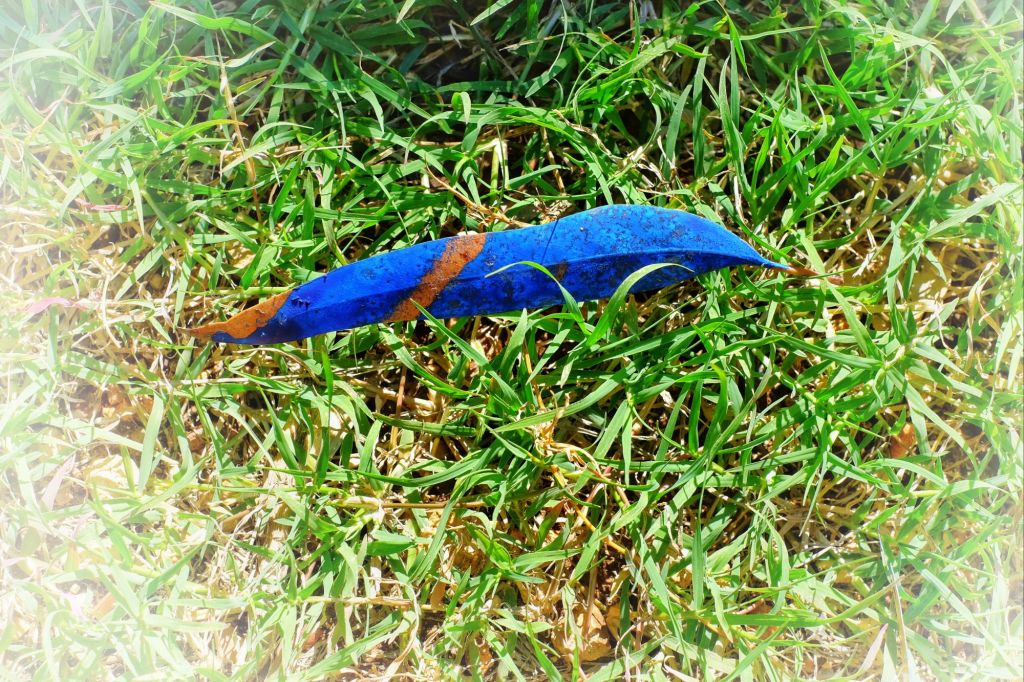
As I continued on my Kora that day, I began to notice that many leaves had been painted along with the grass. It occurred to me that these blue-hued leaves could be seen as a kind of symbol for at least one aspect of the current ‘crisis’ that I’d been thinking about already.

Since first adopting this ground as my own Kora, I’d often seen – and sometimes collected – leaves blown from neighbouring trees by winter winds. I’m always doing stuff like that. Sort of my way of connecting with nature.

Then, on the day in question, I saw the return of human activity to that grassy leaf-strewn space.

I make no comment here, no judgements about rights and wrongs. Life must go on. And with life, the cultural activities of all human communities must resume.

I simply point out that it seemed to me that blue paint on winter-blown leaves is an apt metaphor for the impacts that we, the human species, have on the world we live in.

Also, as you can see from my photo, that impact isn’t always ugly, or bad. In this case, I think it’s actually quite beautiful.

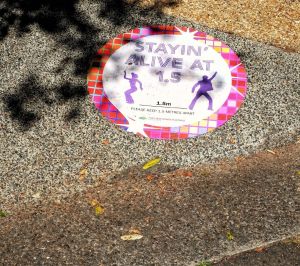
The other thing to say is (as I read on a sign taped to the fence on the same sports ground) please remember to social distance. (note: the pandemic is officially no longer with us, but when you think about it, it might be seen as a wise precaution at any time. There are always germs around waiting to spread!)

Oh okay, one more thing. In a time – in a world – where social distance has become a verb, remember that the only distance between any of us is purely physical and an invented mental construct. All life, despite seemingly unlimited names and forms, is one. There is no separation.

Peace and Love

Circling Sacred Sites is Good for You (Me)

As a self-described Hermit Pilgrim, I aspire always to live a contemplative and secluded life, as far apart from wordly concerns as I can manage. At the same time, I am a pilgrim, in both the sense of the internal journey of the Self as I study and meditate, as well as in the world itself: I move from one living space to another – one temporary hermitage to another- as I feel directed or led.

In the last several years I’ve noticed how often I seem to find myself in one more temporary hermitage that ‘just happens’ to be located right next door or across the road from a sports-ground, or what’s often called ‘a local oval’.

At least three times in recent years, that I can recall. And it is so at the moment. This time the hermitage is in a suburb of a mid-size city (by Australian standards) that in reality is more a low-key and small seaside town on a peninsular.

Anyway, just as with those other occasions, I have been grateful for the oval across the road: It makes for an ideal Kora.

Kora is a Tibetan words that means the act of walking around or circumamabulating a sacred place or object.

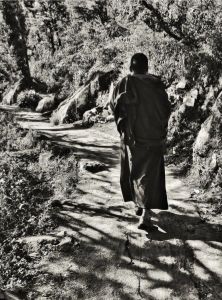
A monk on the Kora around the home and temple of the Dalai Lama in the Indian Himalayas

Tibetan Buddhists do Kora as a form of pilgrimage and walking meditation. It is a devotional practice and it is said to have transformative powers.

Of course Buddhists are not alone in practising this kind of circumamabulation (from the Latin circum (around) and ambulare (to walk).): Muslims circle seven times around the Kaaba in Mecca as the final stage of Hajj .

Many religious traditions consider Mount Kailish in Tibet a sacred place and circling it on foot, even once, is considered by some to be the equivalant of one complete lifetime.

In south India there is another sacred hill called Mount Arunachala. Each year millions of pilgrims walk around its base, which takes a couple of days. In India, the word pradakshina is used to describe such circular acts of devotion and pilgrimage.

And the list goes on: as I said many if not most religious traditions have a practice of walking around sacred sites or places as acts of pilgrimage or devotion.

So, what has any of this have to do with me walking around local ovals or sports grounds and calling what I do a Kora? Well, my intentions are similar to those other pilgrims but perhaps more humble. Let me explain.

Not being a sports-oriented person (not into competition and team sports at all really) I can’t comment too much on the idea that a sportsground is sacred ground because of the sports played there.

I do acknowledge and understand how it is that so many people do in fact consider the games played there as sacred activity with winnings and losings and full of heroic deeds. This indeed makes these places sacred sites.

Then there is the fact that many such grounds are named in memory of local people who have been prominent in the community. And, as is the case with the oval over the road from the current hermitage, ovals do actually become sites of memory.

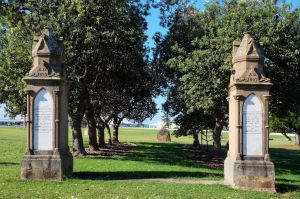
This one, called Lynn Oval hosts several memorials at its periphery: there are tributes to miners who have died in accidents in local mines.

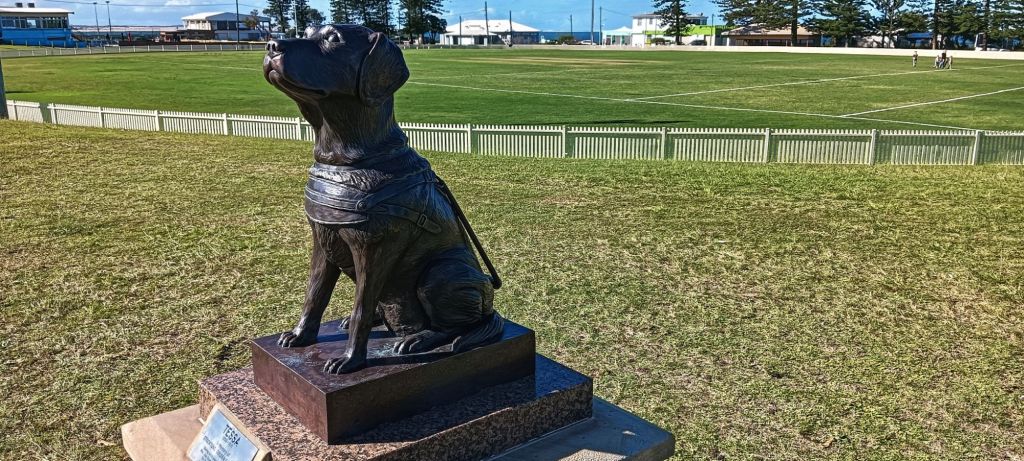
And there is a lovely statue of a guide (service dog for people who have vision impairments) dog called Tessa who is famous in the area for helping to raise a lot of money for more guide dogs.

Lastly but, for me, probably the most significant ‘evidence’ for a local oval being sacred ground is that it, well it just is. Just as all ground is sacred. An affirmation borrowed from First Nations’ Peoples says it all very nicely:

We stand always on sacred ground and beneath sacred skies.

In other words, everthing, everytwhere is sacred. All the rest, the memorials, the games played, they are not what makes the ground sacred, they are the things that people layer onto the space as a way of acknowledging the inherent sacredness.

And that is how it is for me. It’s not me walking around the oval chanting mantra (or at other times ‘just thinking’) that makes it sacred ground, despite being sacred acts in their own right.

I mentioned earlier an alternative word for Kora, pradakshina. This comes from the Sanskrit for ‘to the right’, because traditionally the idea was to always circle the sacred site or object clockwise, so the sacred object remains on one’s right.

Obvioiusly there isn’t much to see on the middle of the oval as I walk around the boundary fence (it’s about 400 to 500 meters by the way). Mind you, the other day a flock of pigeons were feeding in the centre while I walked. Then, at another oval, in another town, there would often be a lone Ibis sitting almost in the centre. It’s all sacred.

This idea of centre has me realising that the whole point for me of walking around ovals chanting my mantra, is the reach my centre. The temple I’m circumamabulating is me; I’m the container so to speak, for the Consciousness which pervades and actually is all there is.

Peace and Love

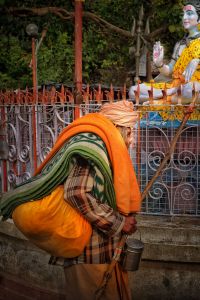
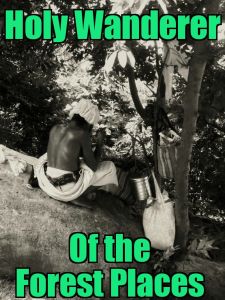
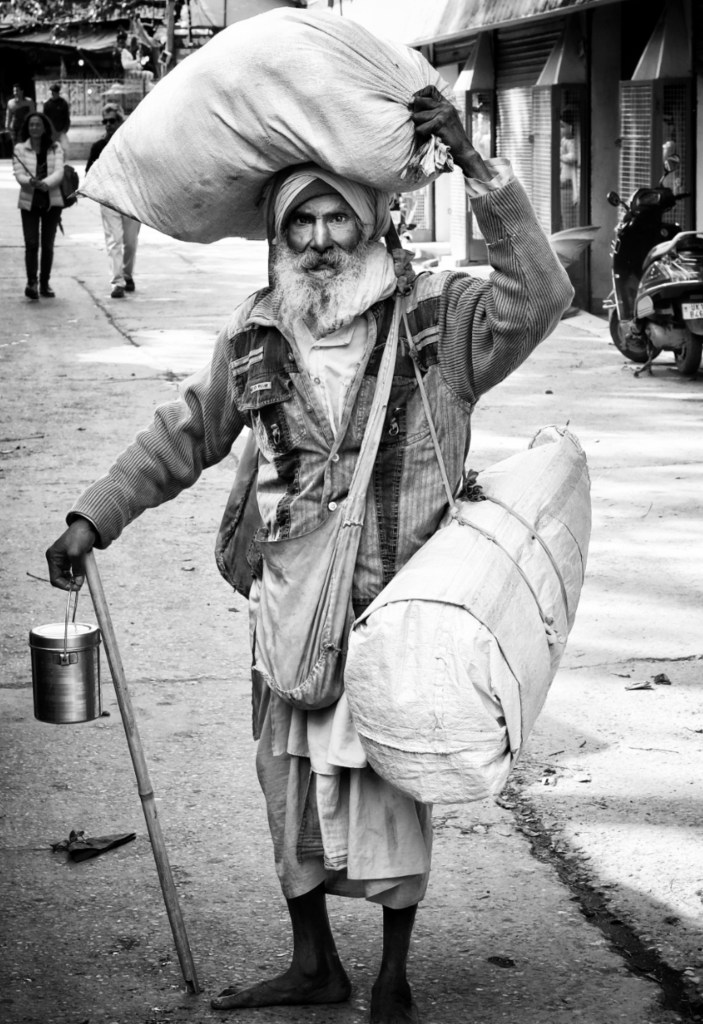
Holy Wanderer: A Saddhu performs pradakshina around a shrine to Shiva in Rishikesh India

PS: I’ve written another post, also related to Kora. Please feel free to visit that post here

Truth Is (Reshared)

Greetings. Just now as I scrolled my blog at random as I like to do from time to time, I came across a pair of posts from successive days almost exactly two years ago.

It was kind of neat rereading, so naturally I thought I would like to share them with you again.

Please enjoy

Peace and love

Aspire to a Balanced Life

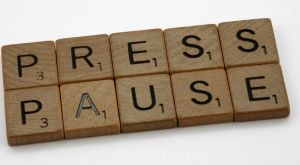
‘I pause to rest when I feel the need’.

Makes sense, don’t you think? It is a really excellent affirmation to give oneself isn’t it? A wise piece of advice also. And I agree with you: great advice, sensible, logical, very helpful for anyone and everyone. Unfortunately, it’s not something I can honestly tell you that I practise on any kind of regular basis. It’s more likely that I would have to admit to you that:

‘I am always hurrying to get things done, and until I do, there’s no rest. Doesn’t matter how I feel’.

And it doesn’t seem to matter whether I have a lot to do, or only a little – or even if there’s nothing needing my attention. Whatever the situation, you will catch me in a hurry, going as fast as I can to get whatever there is, done. ASAP.

Okay, I admit it: I am exaggerating slightly. But not by much. Always rushing, always ‘getting ahead of myself’, always in a hurry. It’s been a problem for, well, forever really.

And I know I’m not alone. The world – as in society, economics, education, and the rest – is in a never-ending race to do whatever they do, and to get it done as quickly as possible, regardless of the cost to the planet and all of us who live on Her.

And, obviously, we are all caught up in this ‘race’, in pretty much every area of our lives.

Whether it’s an exercise program we set for ourselves, or which has been forced upon on us by advertising, cultural shaming, false identification with our bodies. Or the intense and all-pervading pressure to be ‘more productive’ at work. Or the newest mobile app that will magically make even our off-work lives more productive and (supposedly) give us that extra edge in the marketplace (whatever that means).

And remember school? High school? College? The night classes you took for fun and relaxation? How many classes began with the teacher giving the following little speech:

‘Now, we can really take our time with this class/course/semester, and we will be able to take as many breaks as we like. We have plenty of time to cover all the material. So, sit back, relax, take your time and enjoy.’

Not many I’m guessing.

Now, as a hermit, you might think I lead a quiet life. And it’s true: I do. Relatively speaking that is. All of us are required to be constantly taking some kind of action in order to maintain life.

Just like everyone else I have to do whatever it takes to just be alive: Cooking, eating, cleaning, laundry, shopping, praying, meditating, relating to loved ones as well as other people I encounter.

Then there’s reading, studying, talking (way too much in my own case), thinking. Well, that’s probably enough to be getting on with, I think.

Despite my hermit life, all these and more I do. And for me, it’s always in a rush and hurry. Well, not always perhaps, but too often for my liking, and way too often for my mental health, peace of mind and for the calm, peaceful like, I aspire to.

Whatever our personal lifestyle, or way of living, we are all in the same boat, so to speak.

Fix your mind of truth and be free from the concerns of the material world.

So, what to do? How can we slow down, get some sort of equilibrium or balance in our lives? How do we stop the rush, the panic, the pressures that besiege us and sometimes overwhelm us?

Well, there’s the problem. I won’t say I have no idea. I can’t say I don’t know. But, and here’s the point, while I can tell you how I am trying to do.If you’ve read what I’ve told you already, you will realise that whatever I try only works sometimes. And a very few sometimes’s at that.

Mindfullness

I try all the time to make everything I do, even if it’s just walking down the street, or washing the dishes, a prayer. Which is really simply another way to say that I try to do everything mindfully.

Sounds really simple when I put it like this, but of course it’s not at all. It takes discipline (I want to talk about this a little more later on). It’s about focusing on how you are interacting with the world around you, and obviously this starts with being fully mindful in each moment as you take action in the world, whatever it might be.

Simplify.

Not easy, I know. Life is full of details and complications. It’s full of conflicting priorities, each with their own sense of urgency and importance. The simple advice is to do what you can. Once again, tackle all the things you have to do one step/thing at a time.

Did you notice the italics? Be alert to the old urgent vs important dichotomy: not everything is of equal importance, regardless of appearances. Equally, we have to discern a thing’s or action’s degree of urgency for ourselves. With obvious exceptions, most things aren’t as urgent or immediate as they are presented.

Minimise.

Sound familiar?

Listen carefully to the commands to buy, buy, buy, and do, do, do that we are constantly being bombarded with from all direction. Ask yourself one of the big self enquiry questions: Do I really need … ?

Related to this is the question of how much money we actually need to have a good life, support our families, and so on. No guru, teacher, book, or anything else can help with this one; we are all different and have our own unique and specific needs. Only you can know what is right for you.

Discipline.

I mentioned this aspect of the solution to bringing a calmer, slower, less pressured vibe of equilibrium to our lives. For me (self-discipline is what we’re talking about here) is not only about willpower, though of course, it’s an important part of the picture. A quote from Bhagavad Gita that I think points us in a helpful direction:

What does it mean, ‘fix your mind on truth’? While it is very often an extremely difficult thing to do, fixing your mind on truth simply means keeping your mind (and consequently your body and heart too) focused on what is actually real, important, and meaningful to you. It means staying focused on what truly resonates with you as the way you wish to live your life.

So hard is this for me to do, that I am engaged in an ongoing project (please forgive the productivity cult lingo) to keep focused on what is true and real to me. To be honest, while I’m pretty sure that it does get easier with practise, I will always be refocusing on my truth. As they say, it comes with the job description for all of us human beings.

Now, about the second half of that Bhagavad Gita quote. If we do manage to reach that stage where we are able to focus on the meaningful and important, the truth for us, will all our troubles, problems, pressures, commitments of all kinds, just magically go away? Can we eliminate completely ‘the concerns of the material world’?

Absolutely not. The only thing that will potentially cease is our constant state of  being stressed.

While the things we worry about now won’t disappear, the worry itself may lessen. Our abilities to function more effectively and happily in the world (in our family, our work, our own mind) will also improve. We really may become one of those people who always (or most of the time) take things in our stride.

But we should remember that the pressures, conflicts, health issues, the need to support ourselves and family, relationships with all their ups and downs, remain; they are part of the human condition; they are the natural order of things in this material world.

What we can do, is try as much as we can to control our minds, trying to remain focused on that which is true and meaningful to us.

Minimise, simplify as far as possible in all everything. We can focus on all that is true and meaningful in the life you are creating on an ongoing basis. And, of course, it is one considered and deliberate step at a time.

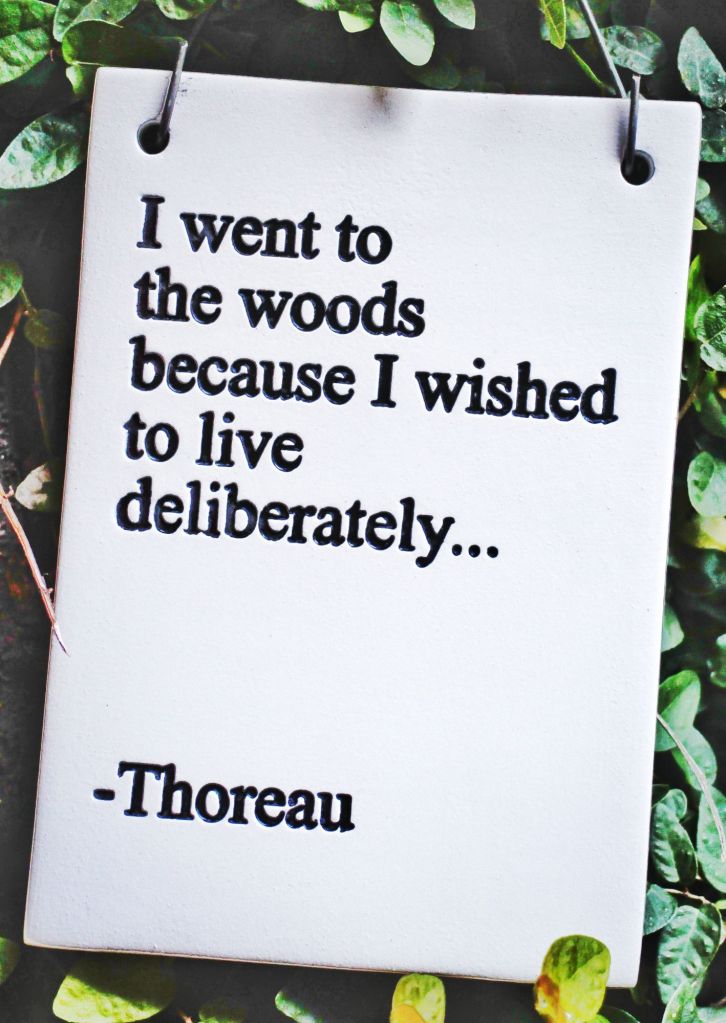
For Thoreau, going to live in the woods was the natural thing to do. It resonated with his soul and heart.

Of course going to live in the woods isn’t for everyone, but if it speaks to  you; if it is in tune with your own truth and you feel it would give your life meaning, then why not?

All of us have within us our own ‘going to the woods’ equivalent. It might be anything. Go find it! Rest there.

The last words of this post are the same as the first. Actually as I think about it now, I see more clearly that this entire post with all its words and thoughts, might be summed up very nicely by that one small affirmative statement. Well, I might add three more words of my own:

In all things, I pause to rest whenever I feel the need.
Peace and love from me to you.

All I Had to Do Was Dream

Last night I had a dream. Of course there’s nothing unusual in that: I dream every night, every time I sleep (and sometimes when I’m supposed to be meditating as well). Actually I’m no different than probably every other living being in the Universe: I dream when I sleep.

No. The particular dream isn’t my point here (though we’ll be discussing it soon enough). What makes it worth noting is the fact that last evening, before going to bed, I watched a documentary on Carl Jung and The Red Book.

Jung compiled The Red Book at a time of personal crisis and distress. Using dream analysis, his own imagination, and intense self reflection, he used both paintings and text to express what he saw and understood from these practices. Hauntingly beautiful, other worldly pictures depicting dream images, archetypes, both personal and universal, helped him delve deeply into his unconscious mind and the collective unconscious.

I gave up trying to interpret dreams a long long time ago. Don’t ask me why: I probably couldn’t say. Most likely something to do with a kind of wariness about going too much into where the mind wants to take me, and my sense that the “dream” doesn’t stop when we wake up.

Still, watching this doco prompted a lot of discussion with my partner hermit, and a lot of thinking on my part. The mind is not our enemy, though sometimes I feel that it is. Well, it can be the enemy if we allow it, but equally we can allow the mind to be our friend. After all, what activity of any kind is possible in the world without mind?

So, with that in mind (get it? in mind?) I will share with you that above mentioned dream from last night.

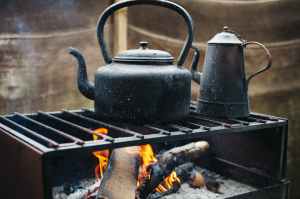
In the dream I was in a small kitchen, making tea. I’d put on a kettle to boil. A very large, heavy kettle, probably three or four times the size of a normal one. I was in the process of looking for a mug or cup, and just as I picked one up that I liked the look of, a crowd of five or six people came bustling noisily into this very crowded space.

‘I’ve just put the kettle on,’ I called loudly over the din. As it happened I’d filled the kettle almost to overflowing, much more than I needed for myself alone.

‘There’s plenty of boiling water to go round.’

Then I busied myself looking for something (a tea bag perhaps?), and when I finally turned back to the kettle to make my tea, I saw it was gone. I was very unhappy with this disappearance: After all, I was the one who had filled the kettle and put it on to boil. Then without a thought or a, what’s the expression? without a by your leave, it’s all gone, nothing left for me. Not only no more water, but nothing to boil more with.

I looked everywhere, even outside the kitchen. Outside was a camp ground and apartment complex, where I (and presumably all the other people) was staying.

Anyway, that’s it. All I remember at least. So, the meaning? Was I merely processing trivial facts and events from my day in this strange fashion? Or was I in touch with the deepest part of my psyche and with the collective unconscious? Possibly a bit of both.

It’s not a big job to make a guess about the meaning. I had a plentiful supply of water (or whatever), and without thought, put the needs of others before my own. But then, I actively resented what had been ‘taken from me’, even though I had freely given it in the first place.

So, the message I take from this dream? Just as I’ve been studying lately, the fruits of my actions are not my responsibility. I have no say over what, if anything, will happen as a result of actions I take. All I am responsible for is the taking of the action itself, the manner in which I undertake it, and the attitude with which I approach the actions I take. That’s it. That’s all I can do. The rest is up to the laws of the universe. Call it Karma, or Natural Law.

Another idea just occured to me: When I take action (like boiling the kettle) and then serve others, I am serving Self, all life, everyone and everything. And obviously that includes me. I’m not suggesting I should have made sure ahead of time that I’d ‘reserved’ enough water for myself, but at the same time …

I might keep this dream analysis thing as practice to practise occasionally, when the inclination or inspiration is there. No more blocking memories of dreams, no more stubborn refusal to reflect on dreams. After all, I spend a lot of time contemplating and reflecting on what I do in my waking life, how is it any different just because it happens while I’m asleep?

Silence, Solitude: Where can I find it?

Remain in your cell, and your cell will teach you everything

This piece of advice from one of the early Christian desert hermits to a follower has been going round in my head for ages. And I mean a couple of years at least. I’d read it in several books at the time, and I’ve seen it in a few since.

Of course, most of the writers of those books interpreted this advice at face value, literally advising the student, hermit, monk, or other contemplative person to stay in their physical cell (hut, cave monastery cell, suburban bedroom, wherever is their permanent dwelling) and listen, meditate, study, and contemplate. The advice is, stay in that space in silence and seclusion. Quite possibly forever.

‘But it could be the cell of your Self,’ my partner hermit said to me one time. And yes, I thought, that’s exactly right. I liked the symbolism. The actual literal, physical space and its geographical location isn’t necessarily the important factor. What’s important is that you, the real you is actually fully present wherever you are, right here, right now.

Think about what it really means to be present – to be here now: It means that you can say, ‘This is the only space and the only moment that exists. Right here and right now.’

Living life is an ever-flowing movement or process, and at the same time (excuse the unintended pun) is always occuring in the present. And in that ongoing moment you – your Self -is always there.

Of course along for the ride is your little s self with its ego, chattering and never quiet mind reminding you of the distractions, stresses, anxieties, worries about things to do or not do, memories of the past, and fears for the future. It goes on and on.

But, still, that space within where you can meditate, pray, contemplate quietly, that’s your Self, your ‘cell’.

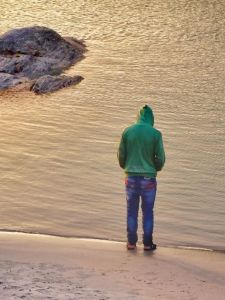
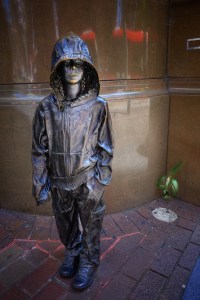
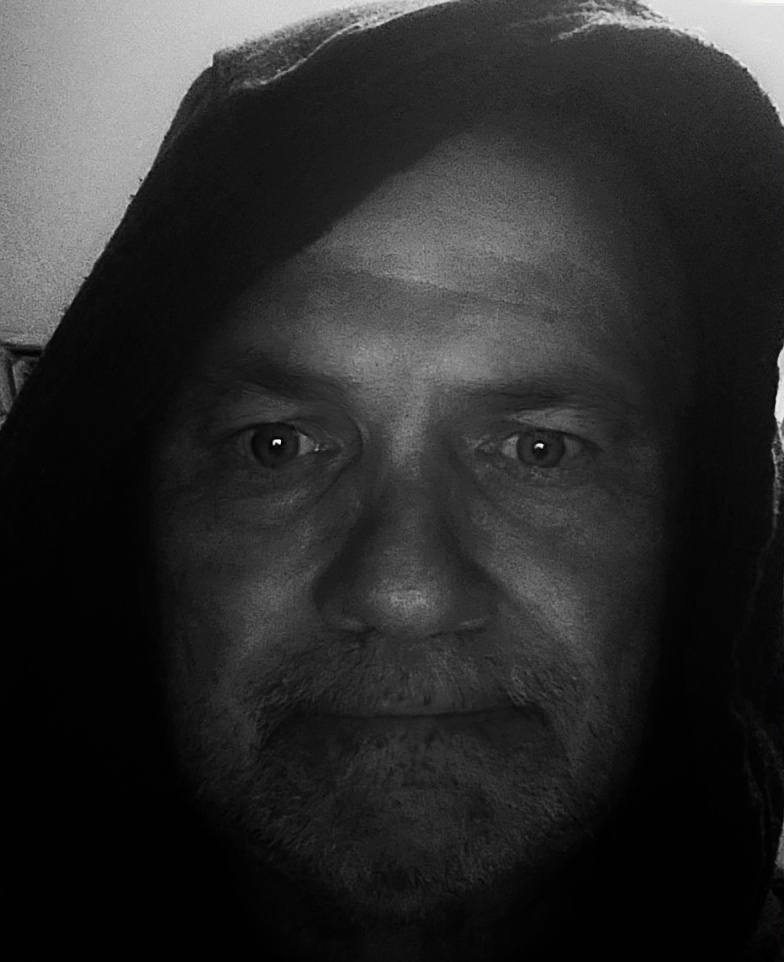
I’ve always liked and worn hoodies. I guess a lot of people do. For some it’s about fashion; others wear them for warmth in cold weather or to keep the sun off when it’s hot; some people even use them to hide.

Then there are others such as nuns, monks, priests and others too, for whom a hood is a part of the robe they wear as a member of their particular group.

In those cases, a hood is called a cowl and most often it’s a largish loose hood sewn onto the robe or habit. Just like a regular hoodie.

I read somewhere (I forget where) that some groups nickname these cowls ‘cells’. In other words, the wearer carries their cell with them wherever they go.

Of course they don’t always actually wear the hood on their heads, but whenever they wish or need to retreat to their cells, all they have to do is simply pull their hood up and over their head and all of a sudden they are in their own private and solitary world; they are in their cell.

As I said earlier, I like the symbolism. But more than that: I find wearing a hood on my head or simply in standby mode, comforting.

I’m not overly good with crowds, or in close proximity to other people on a bus or train or whatever. I like knowing that just by pulling my hood on, I’m able to create my own space apart from my surroundings. In that space I can feel safe and kind of apart.

Even at home I wear a hood when I’m meditating or praying. It’s just one more opportunity to retreat into my cell, into Self

Peace from the Hermit to you

‘Sometime Soon’: When is it?

There used to be a thing – maybe it’s still a thing – that would happen sometimes. You’d be talking to someone and suddenly they’d burst out:

‘Hey that rhymes! You’re a poet and don’t know it!’

This exclamation, this sudden and surprising interruption, was always prompted by some sort of accidental rhyming happening in something you’d said.

Or, sometimes, it even happened when you had written something and had through no fault or thought on your part, created a rhyme, even a little impromptu and accidental poem.

Well, that’s what happened to be. It was a while ago now and I was writing in my journal. It must have been ages ago because I don’t keep a journal anymore.

In any case, with nobody reading over my shoulder, it was left to me to express surprise at a sudden outburst of poetics on the page. And along with the surprise, I was able to make a quick note of what I’d written:

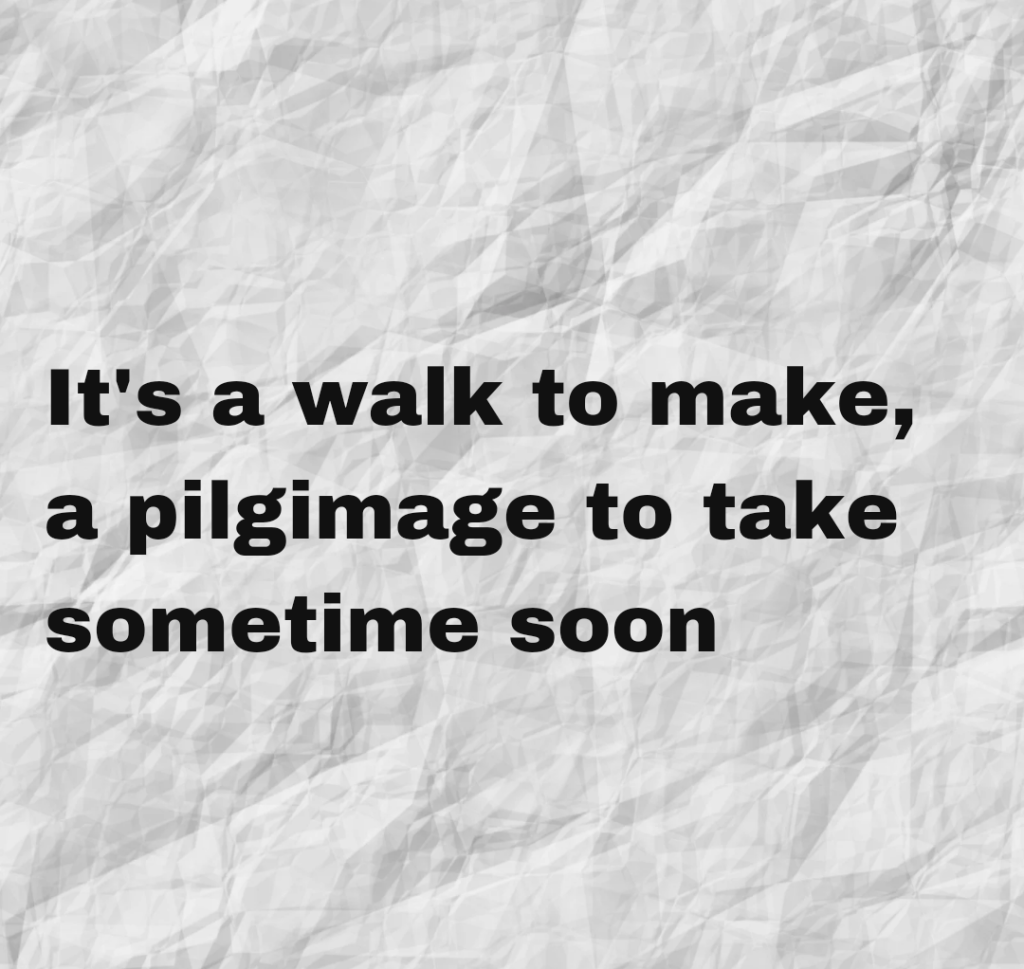
Anyway, this post isn’t about this little demonstration of spontaneous poetic genius; it’s actually about the ‘sometime soon’ tagging along on the end.

I have no idea where or what the walk to take, the pilgrimage to make, was – or is. Which suggests a rather obvious conclusion: ‘sometime soon’ never came. The walk was not taken; the pilgrimage was not made.

Now, I’m thinking to myself, if the walk under discussion was so appealing – as well as so significant that it transformed into a pilgrimage – then how come ‘sometime soon’ wasn’t right now, or rather right then. If you follow me.

Of course there’s no telling the reasons for the sometime soon. Maybe plans would have been required; travel to arrange; equipment to gather; fitness to acquire. Who knows?

Clearly I was inspired to at least put down in writing that I thought this walk, this pilgrimage, was (or would be) a good thing to do.

Meaning, in that moment, in the present that is (or was) of that moment, that walk/pilgrimage was a thing I wanted to undertake.

Now, while I might have longed to take that walk, to make that pilgrimage, in the present of that moment of writing, and even though planning may have been required, thereby putting off the actuality of the taking and making till some future time, I at the very least could have taken some action – again in the present of that moment – to get the ball rolling so to speak.

So, what’s the lesson here?

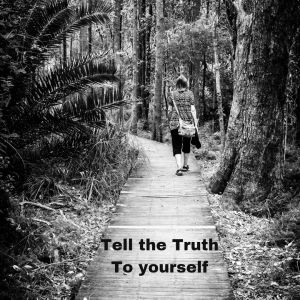
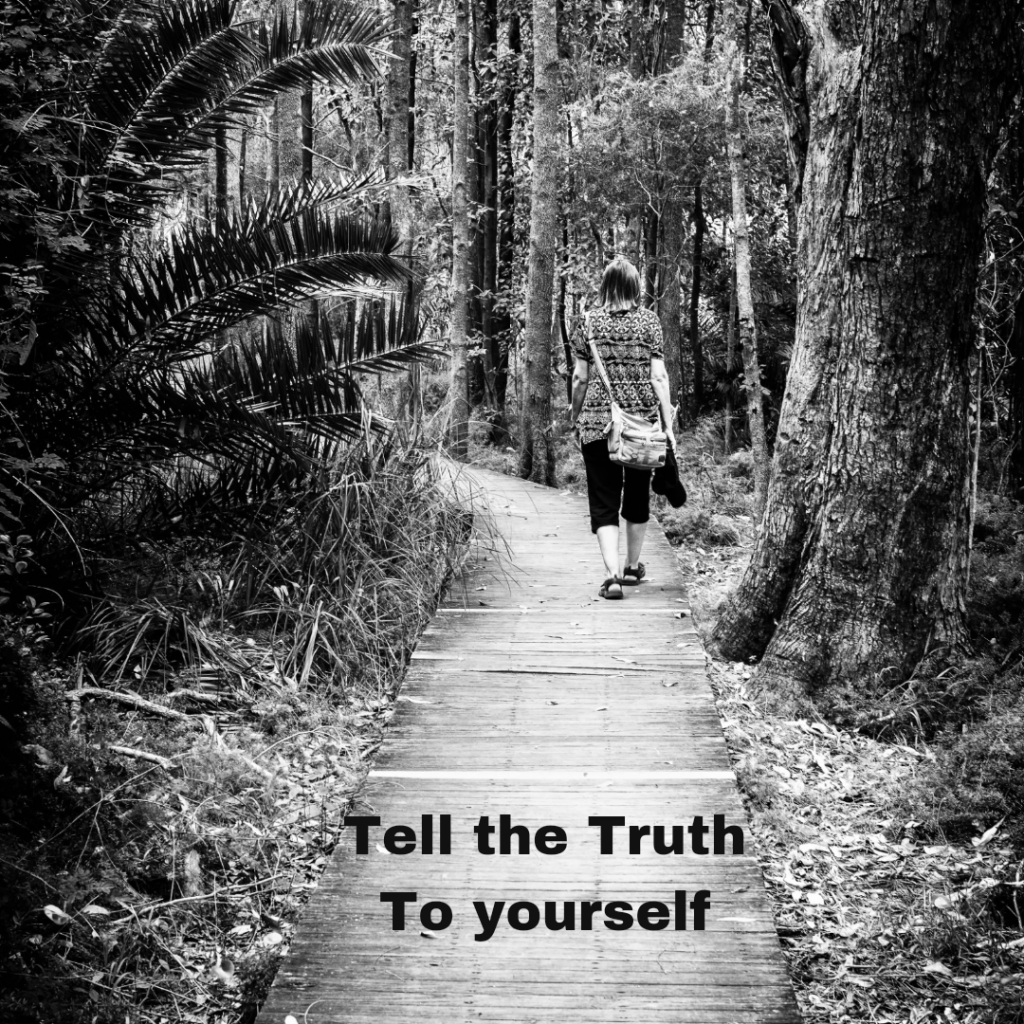
Well it’s simple really, very simple. Maybe simpler to say than to actually put into practice, but I think my lesson here is just this. Tell myself the truth as often and as much as I possibly can. In other words:

Be honest with myself

Let’s look at the options

If I’d really wanted to take this walk, to make this pilgrimage, no matter how remote, how complicated the logistics or planning, why didn’t I take action in that present? Or at least in some present before I actually forgot completely what the walk/pilgrimage was.

And why add ‘sometime soon’ if I didn’t actually desire or intend for this thing to happen? Well, possibly to put of any decision about doing or not doing. Or perhaps it was a way of saying (in completely other words), ‘Well, it sounds very nice, but I doubt I will ever end up doing it.’

So, honesty, and clear thinking about what I want and what I don’t want. That way I won’t be so attached, so keen on clinging to outcomes that I can’t see clearly, can’t easily know what I am to do or not do. Presence. Being present is what this is really about isn’t it?

To be completely present, to be fully here and now, requires me (all of us I suppose) let go of the maybes, and the ifs and buts as well as the endless ruminations about do this or don’t do that.

If I want to take a walk, or make a pilgrimage, then I say to me: just get on with it! If I don’t, then just say so, and move on.

Last little comment: I would really love for the present to remind me of what this walk/pilgrimage was. I’m a bit curious I guess(yes I know, curiosity is a present moment deflater) Maybe it’ll come back to me now I’ve written this post.

Peace

A Journey to the Centre of the World (sort of)

Namaste and greetings

Yesterday I came across a couple of stories – true ones – that I wrote years ago. They are what we might loosely call ‘travellers’ tales. I thought it might be nice to share them here. So here’s the first one. Enjoy

Not the Manu temple I write about, but another one close by

I’d walked up to Old Manali, and I’d kept walking through the town. Then higher still, past the temple to Manu, and the scattering of traditional houses and small fields clustered around the temple.

Three near-naked and stoned saddhus invited me into their cave – more a kind of overhanging rock shelf poking out from the foundations of the temple itself.

Naturally I declined. Politely. I wasn’t, never had been, and never shall be a stoner. Besides, here I was deep in the Himalayas walking through ancient villages and past temples to ancient gods. Seems to me that that’s enough to bring on a high all its own and like no other.

Then, a little higher up the trail. I rounded a corner to be greeted by a kind of open forest glade; a grassed and flowered field protected by a semi circle of forest sentinels, their crowns maybe thirty metres above my head.

And there, in the middle of this magic field, a large flat rocky area, like a series of ‘shelves’ layered one on the other. This maybe twenty square metre tiered platform was probably the remnants of an ancient hill (or mountain?) that got in the way of a more recent but clearly relentless glacier.

Whatever the history, here was an arena with views no theatre or movie could ever hope to reproduce. This natural amphitheatre faced several layers of peaks across the valley. But, before those peaks, and directly in front of me, just down the slope, stood the temple, then more trees, reaching down into the valley. Here the river flowed, surrounded by farmers’ fields and the brown dots of houses.

Then the forests begin again, thick at the bottom in the valley, but becoming more scattered on the higher ground. Then those many layers of higher and higher hills, mountains really, rolling off into the distance to, where on the horizon and behind it all, a row of the really high peaks covered in their permanent snows.

‘This is a special place, a sacred place,’ I heard myself sigh out loud. Sitting cross-legged now, I let my eyes wander over the scene taking in the blue sky, the white peaks, the multiple greens of the forests, the sliver ribbon of the river, and the rest.

At such times and in such places, one’s eyes tend to close of their own accord. And so it was for me then and there. I let myself drift. Thoughts came and went, to be replaced by more thoughts that came and went.

Then, my eyes opened. Again of their own accord. After a few seconds of that cliched ‘where am I?’ feeling one has when startled out of one state and into another, I made out the figure of a person standing facing me a few metres from where I sat.

‘I’m sorry,’ I heard her voice call to me. ‘You just looked so peaceful sitting there meditating, I just had to stop and watch you.’

She told me she’s been watching me for about fifteen minutes, which gave me a start: It’d felt l Ike I’d only just sat down and closed my eyes.

‘They say the light of the world is held about twelve kilometres up this trail. That means it’s the centre of the world.’

I had to stand to try to take in a revelation of this magnitude.

‘And apparently,’ she went on, ‘they’re going to move it soon and nobody knows where.’

Was she an angel? Was I dreaming? They, whoever they were, are about to shift the centre of the world? Even in India one doesn’t hear this kind of news everyday. Actually, I doubt you’d ever hear it on any day.

Then she was gone, headed up the trail. I didn’t follow. I remember thinking: twelve kilometres was too far for me especially as I already had a long walk downhill to my hotel back down in the new town.

Yes, mundane, practical musings, a typical response to news of such a wild and far-out nature. So, not exactly in shock, yet not quite myself, I turned back. Down. Through the village, past the temple with three crashed out saddhus out front, back into the town.

There are cafes there. They sell Chai there. I needed one.

Actually, given the momentous news I was going to have to digest, I might even have a couple extras.

This is a true story; it actually happened more or less the way it’s described here.

Of course, there is no ‘light of the world’ stored in some secret spot, somewhere on Earth.

Well, I suppose if there is a light of the world, then it’s likely to be the world itself, I mean Earth, all the beings who live on this planet. Life itself I guess you could say. Life is light; Life is love.

Peace