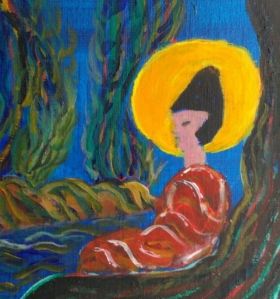
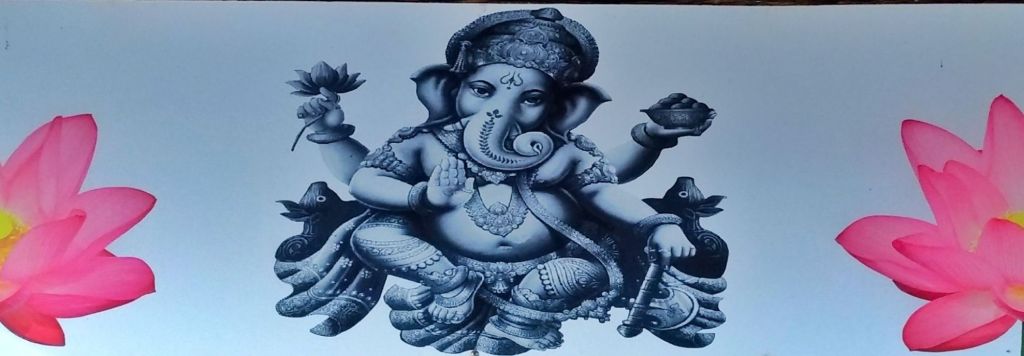
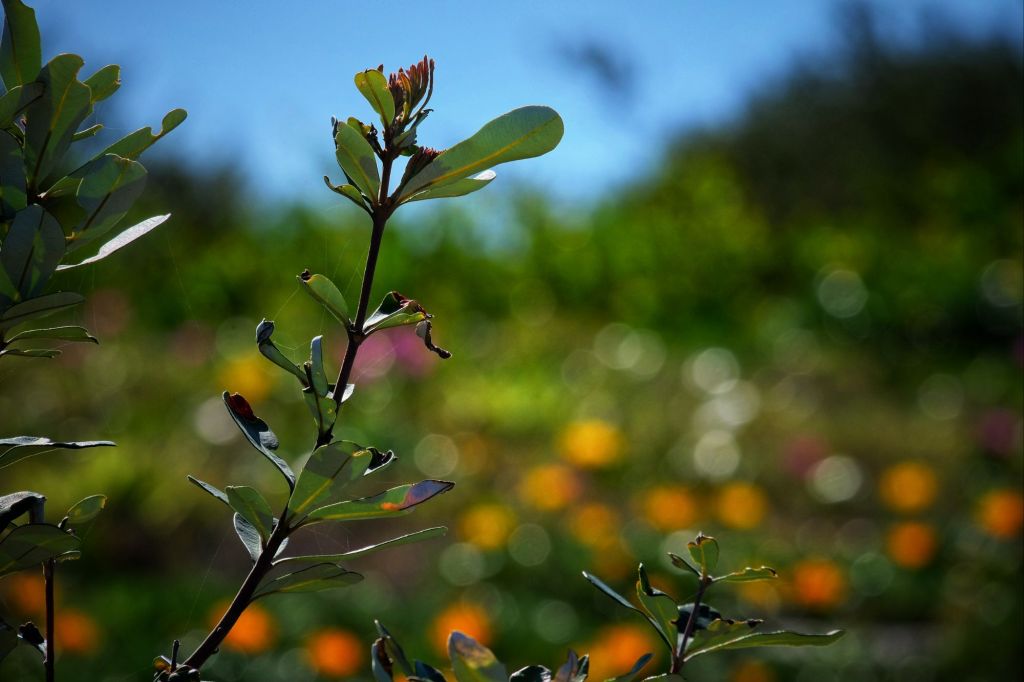
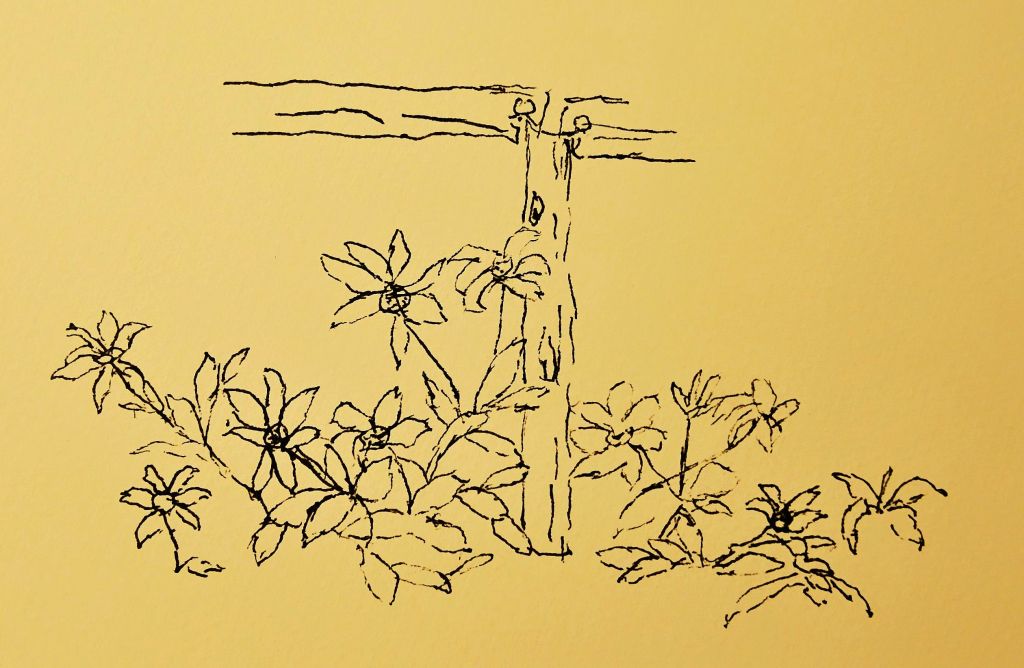
A poem for your reading pleasure. Written on site today in response to an experience while out walking on the dunes next to the hermitage.
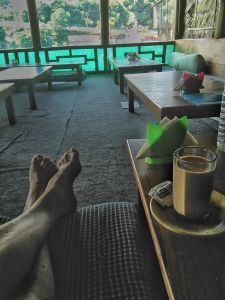
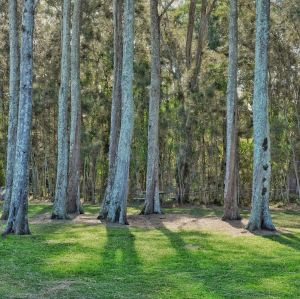
I’m including a photo I made a few weeks ago of the exact place where the poem was written,
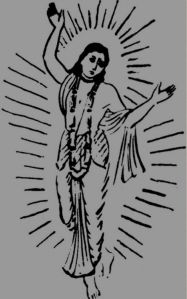
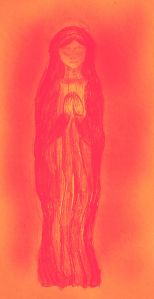
And many loving thanks to my partner hermit for the sketch made in the same area today (synchronistically it was made unknown to me and vica versa)
Please enjoy.
Love from Paul the Hermit
BRIGHT LIGHTS IN THE DUNEFIELDS
Today. On the Ocean Track. Daily hiking across the top of the dunefields. Not so sure-footed, I trudge heavy-footed.
As I pass by, there are bright lights in the dunefields. I pause in my passing as my eyes are drawn (or is it my heart?) to the bright lights in the dunefields.
I feast my senses upon the bright lights in the dunefields. They bless me, these bright lights. They sing to me; they speak to me.
In my silence, I hear them. But I hear not voices. I see them. But I see not colours, shapes or forms.
What I see, I see. I see me, I see you. They see me, the bright lights in the dunefields.
They see you; can you see them? These bright lights in the dunefields.
Today I went on a pilgrimage.Not that I don’t undertake all kinds of little pilgrimages all the time. And even more, it’s not as if my whole life – just like yours and everyone else’s – isn’t one ongoing and continuing pilgrimage.
All true; but this one, today, was embarked upon in what might be called, a classic manner: on foot, to a place of sacred significance, and in a spirit of contemplation of the nature of the journey as well on that which is being pilgrimed too. (I am positive there is no such word!)
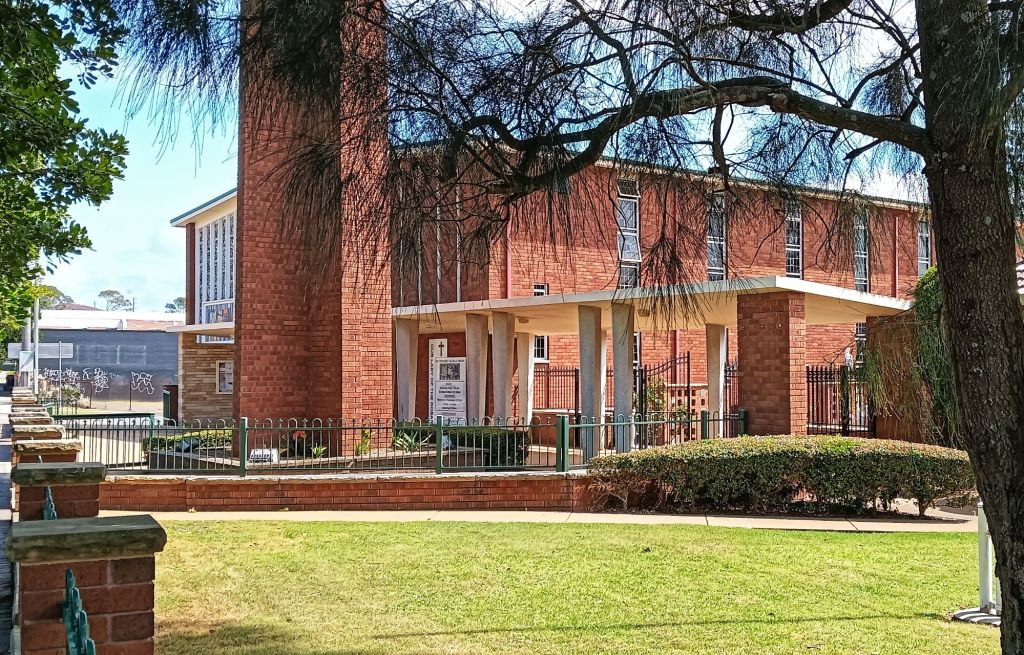
In this case, today’s pilgrimage, that place was a church about two and a half kilometres from the hermitage. It’s a place I have visited several time, but today was the first time I set out as a pilgrim and walked in the way and spirit of the pilgrim.
Our Lady of the Rosary is a Catholic church dedicated to the Mother of Jesus in her role as patron of the Holy Rosary, a Catholic way of prayer that has evolved over time and is a key part of the lives of many Catholic people.
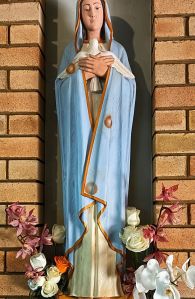
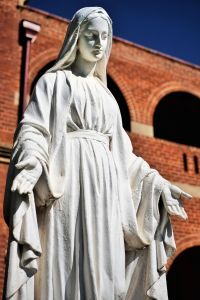
Just to the right, just inside the door there is a plain brick wall in which there is a small niche. The niche holds an almost life-size statue of Mary. She stands, hands folded over her chest on which sits the Dove of Peace.
You can see from the photo that the church itself is a lovely, quiet, serene place full of good vibes and nice peaceful energies. The object, however, of my pilgrimage was not the church in itself, but stood just inside the side door accessed through an equally peaceful, fountain centred garden.
I have come to offer her – this form or manifestation of the Divine Mother – the prayer I wrote to her which I hope you saw when I posted it on this blog recently.
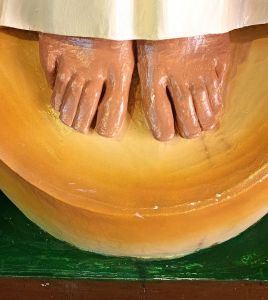
I had decided that my pilgrimage vow would be fulfilled once I had knelt at her feet and offered her the words of my heart in prayer.
My reverence for the Divine Mother is well known, and especially in her form as Mary the Mother of Jesus. Or Our Lady as we called her as good little Catholic children way back in the long ago. And I know I have said often that the entirety of the material and non-material cosmos is a manifestation of the Divine.
So, why then a special trip on foot, that I’m labeling a pilgrimage to a specific site, so I can kneel at the feet of a statue that I know perfectly well is made of stone or plaster and is simply a symbol of one aspect of the Divine?
Actually, the question has answered itself. The pilgrimage and my associated actions worded in that question tell us the why.
It is about acknowledging at a heart level and in my own way, that that symbol, that form, is actually representing a particular aspect of the Divine that I revere.
Besides, I’m not the first person who’s knelt at that spot, at Mary’s feet. I don’t know the age of the church, nor do I know the history of that particular statue, but I think we can say for certain that many hundreds, if not thousands of other people have been there where I was and spoken words from their hearts.
Being honest and true now, what I can say is that, as I said to my partner hermit: ‘I feel like i’ve been on a pilgrimage’.
And I do. I’ve walked – praying and chanting – to a sacred place where I have prayed at the feet of the Divine in the form of a likeness of Mary. I feel blessed that I actually got to offer the prayer I wrote to the Divine Mother.
Somehow I feel a link was established. A heart (mine) opened ever so slightly. I acknowledged the Divine, and I sense that I might just be – ever so slightly again! – topped up with a bit of the Grace that is in reality our true state.
Mary in the Garden (enhanced by a fellow Hermit Pilgrim. Thank you)
So, this is the story of my pilgrimage. I was absolutely exhausted when I arrived back at the hermitage. Most likely that was due to the heat, the traffic, and the noise encountered on the way I trod.
But, now I’ve shared this little tale with you, I’m not tired. Anyway, the Way is not always easy, and we are all very well aware of that aren’t we?
Namaste friends. The Divine in me salutes the Divine in you.
It’s a walk to take,
a pilgrimage to make.
Sometime soon.
Said by me long ago, I don’t know when or where. It was one of those ‘You’re a poet and don’t know it’ moments.
Welcome to the first in a short – and occasional – series centred on a text containing a kind of Q & A session between Krishna (God) and Uddhava (his cousin).
Thirty six questions in all, with which Uddhava asks Krishna how he can live a good and honest life, dedicated to doing right and living the truth.
If you haven’t already, it would be really helpful if you read the Introduction post here, before going much further; just so you have a better handle on the context, the background etc. It will just help to set the scene a little more.
Now that’s been said, let’s get on and into it. The very first question Uddhava puts to Krishna is actually two questions in one.
What is quietude and self-control
Good questions, the both of them, given the circumstances Uddhava finds himself in. His hometown (it’s Krishna’s too) is about to descend into a nasty civil war and is most likely a chaotic, noisy, overwhelming and frightening environment to be stuck in.
Uddhava, like the rest of us just wants a peaceful life, and as to the second question, well he’s bound to be asking himself the same question we’d ask: Why can’t these people just control themselves before it’s too late? Not to mention the onslaught of emotional and mental anguish he’d be suffering himself.
Anyway, Uddhava is about to leave town following his cousin’s advice, and would like to find out how he can go on to live a good, righteous and honest life, while he’s in exile from his home.
Krishna chooses (sensibly I’d say: they’re both big questions) to answer one question at a time and he begins by explaining what is quietude:
Quietude is fixing the mind on me.
Krishna is not saying here: ‘Look, once I’m gone [I think I’ve mentioned that he’s leaving too, going back to Heaven or wherever he lives on a permanent basis] try to remember your dear old cuz in the odd quiet moment now and again will you?’
What I think he is actually saying is: ‘If you fix your mind on me, then that’s quietude’. We could call it silence as well. He’s not saying ‘I am in the silence’, nor is he saying ‘Through silence (or quietude) you will come closer to me’. No, what he says is ‘Quietude is what I am’.
So, what about those of us not in a first names relationship with Krishna? Well, think of Krishna as being a name and form of Universal Consciousness. Yes, the same Universal Consciousness that is all created and non-created things; the sun, Earth herself, trees, the oceans, all living and non-living beings in the Universe, in all universes if there are more than one.
There are a whole list of synonyms for quietude: equanimity, calmness, peace of mind, rest, serenity, dispassion. Just to name a few.
These further definitions are really quite helpful. What I mean to say is that we rarely if ever associate that calmness, equanimity, peace, and the rest, with actually being the Universal Consciousness, that is also all of us and everything else that is. Again, think of Consciousness as the Divine, God, or by any other name and form, you attribute to the natural order and flow of the Universe.
Forgive the repetition : Quietude, calmness, peace of mind, are not where you will find God or consciousness, or whatever. They are all consciousness.
The beach is also dog friendly
Have I mentioned that the current hermitage is a cottage on the side of a large sand dune, on the other side of which is a stunning stretch of Pacific Coast beach. Sitting on the top of the dune and looking out over the beach and ocean it is easy to think of all that’s seen as divine.
It is most definitely a peace of mind, calm and quiet inducing experience to sit there. Certainly it is quietude itself with the only sounds being the song of the universe in the form of the waves and wind.
A question I asked myself, and I now pose to you: If what we’ve been calling Universal Consciousness is actually all that is, then why not a state of mind like quietude, calmness, balance, and the rest? Like everything else perhaps these states are simply elements of that consciousness or Absolute Reality, or oneness, or what some call God, the Divine, or … ?
In any case, I have a feeling that’s what Krishna was getting at with his answer, and what Uddhava somehow intuited with his question.
Thank you for joining me on this little pilgrimage. in the next post in this series (it could appear anytime, so stay tuned!) we will discuss Krishna’s answer to Uddhava’s second question: What is self-control?
Did you know that Thoreau, when he was staying at Waldon Pond would sometimes sit on the front steps of his cabin right after sunrise.
Often he would look up and discover that it was already midday or even late afternoon; he’d spent those several hours in a reverie.
Being in a reverie is most often described as being a pleasant experience, just like a nice day-dream. It is also universally (at least in the context of my short Google searches) described as being ‘lost in thought’, as well as being a place of fantasy, a place in which fanciful and impractical ideas are born.
In other words, a reverie while being pleasant, does not seem to be looked upon as a useful, productive, or worthwhile experience.
The outcome of this contemplation and the above-mentioned little bits of Googling, is that I don’t agree at all with the dictionaries when they tell us that reveries are almost useless and have little or no benefits.
Even the Hourihans dismiss the value of reveries when compared to the practice of formal meditation. Listen to what they say:
There is a difference between the two. Meditation means effort, concentration of the total mind. What Thoreau has experienced is reverie – passive, beautiful and enchanting, but not true meditation.
My reaction to this dismissal? Well, I say, what’s wrong with an experience that is passive (there might be a book in the idea that reveries might not be all that passive after all) beautiful and enchanting?
And on the other side? Why is it seen as virtuous to be always making efforts and concentrating the total mind all the time? Speaking for me and I suspect several billion other people, I get tired, always trying, making effort, always concentrating and the rest.
I’m not saying at all that I’m not in favour of meditation. Indeed, I spend hours each day (in theory that is) in some kind of effortful, concentrated meditation. But, really, isn’t it nice now and again to just give up the effort, lose concentration, just for a bit? Just rest.
Of course when one’s mind wanders in reverie, fanciful ideas and thoughts will arise. Mind you it’s equally likely that some of those thoughts and ideas won’t be fanciful, but be helpful. And you know, I doubt there’s a meditator in the universe who would not report exactly the same thoughts and fancies come up despite all their meditatory efforts and concentration That’s just how our minds work.
The notion of being ‘lost in thought’ is interesting to look at too. I don’t think it’s quite the right way to refer to what happens in reveries. At least not completely.
Was Thoreau really lost in thought when he would suddenly realise that several hours had passed without him being aware?
Perhaps it’s more likely that at least a proportion of those hours were spent in a thought free state, just as in deep sleep when our mind is absent.And we all know how restful and satisfying deep, dreamless sleep can be. Maybe that’s why reveries are described as ‘pleasant’ experiences.
My teacher talks about how sometimes when we’re listening to a favourite piece of music, we can become ‘lost in the music’. We all know how that feels. He then asks us to consider, what is it exactly that ‘gets lost’?
Well, just as with deep sleep or when in a state of Samadhi or deep meditation, it is the mind that disappears – along with its self-idenifying ego sense. In other words, whoever we think we are goes missing or absent for a while.
When I’ve experienced that state when listening to music, I would describe it as losing track of time, or rather not being aware of time at all. Thoughts come and go but don’t often stay long, ‘just floating by like clouds’ as someone recently described it to me. And afterwards when I return to ‘normal’ I sometimes have a sense that for a time I and the music were one, no separation or judgements, non-different.
And so it is when ‘lost’ in a reverie: the ego disappears; thoughts come and go. What’s left is the space between thoughts – a bit like the silence that exists between notes in a musical composition.
Some say that it is this silence, this space when mind and ego are absent, is where the divine is to be found. It is said, by some, that it is in this space, this silence, one may experience God, or Absolute Reality.
So, no ego; no monkey mind jumping about; no ‘I’ to interfere with the state of silence, stillness, and peace. And quiet!
And if one removes the letter ‘I’ from the word reverie? We are left with revere. Perhaps those who tell us that the silence is God, those who say that the absence of thoughts, ego and so on, allows us to detect the Divine, are onto something. That silence, and the process by which it is realised, are to be revered.
Being ‘lost’ (the dictionary’s word not mine) in a reverie might just be the most useful and the most productive (not the world’s definition, but more in the sense of the actions that make for the betterment of Self) thing we can do when the mood, the moment, and the inclination strike.
At one point in my last post on Bhakti (if you missed it you can find it here) I mentioned that I hoped to soon publish a recently written prayer titled A Prayer of Praise and Gratitude to Trees.
Even as I typed those words in that previous post, I thought: ‘soon’? Why the delay? What’s wrong with now? So, without any further delay, here is our next post and in it I’m very glad to be sharing that prayer with you.
As my comment in that previous post explained, this prayer (and others too) is one more little step in my ongoing effort to cultivate a mood or feeling, and a practice, of Bhakti or loving devotion to the Divine.
If you’ve read that last post you will recall that I stressed my deeply held and heartfelt conviction that the Divine is everything. As I may have actually said: there is only the Divine; one, whole, partless and indivisible. Now, to knowingly repeat myself: The Divine is one without a second; that’s all there is.
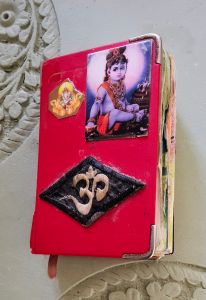
This prayer to trees is an attempt to acknowledge that oneness of which each and every tree – just like you and me and all other beings – is a manifestation, each with its own unique name and form.
This prayer, though composed by this particular name and form, is in fact just one more expression of that oneness we all share. As such it is as equally yours as it is mine. As I said earlier, I am glad we are sharing this now.
With this prayer we greet you. We offer you our praise, and our gratitude.
When we come into your presence, you remind us that in meeting and greeting you, we are in fact meeting and greeting God.
We bless you and we thank you for the shelter that you steadfastly provide to so many living beings. In so doing you support, protect, and nurture the continuance of life for all of us.
Your every exhalation is for so many other living beings the breath of life, of Prana – the life force itself.
You remind us as we witness your strength, your resilience, and your calm flowing with the winds of change that we too share that strength, resilience and the potential for calm flowing with those winds of change that are also constantly buffeting us.
Om Aranyani Namah
PS Who is Aranyani? She is a Hndu deity of the forests and all that dwell within the forests. Basically she is the Goddess of Trees and here is simply the name and form representing all trees.
Frustrated, depressed, annoyed, and even angry at times. All because I know for certain sure that it’s God’s will that I write more – as in more often, more volume, and more quality too. And I’ve vowed to do God’s will in all things to the best of my ability.
No, actually those extremely un-monklike emotional reactions are not because of this knowledge of the will of the Universe or my vow to obey; I have those unhappy emotions because of the other vow I’ve yet to mention: I have vowed to find ways to content myself with how the universe unfolds for my life, and for the world.
I’m not saying that I have promised to resign myself to ‘fate’ or ‘destiny’ or whatever one might call it. No. And it’s a big no because while what happens in the material world is working out according to the laws of nature, it’s equally true that I am in that mix: I have my part to play in the universal scheme of things, just like we all do. It’s a matter of I do my bit, and the Universe (or God) does its bit.
And then it struck me. Blew my mind is more like it. All my frustration, depression, anger, and whatever, over not writing to my own desired level, is really nothing more than a raging against God’s will. Needless to say, this reaction is really quite a distance from obedience!
Another thought on the topic of God’s will – the laws of nature and the natural order of the Universe: By obvious definition those laws and order must (obviously again) apply to all things in what we call the Cosmos or Universe.
All material things, such as bodies, as well as non-material things like minds, emotions and the like. You name it; All there is is bound by the same set of natural laws.
So, speaking for myself alone, not being able to write to my expected or desired for level is only one – and quite a minor one it has to be said – of numerous areas in my life and the world that cause me frustration and all the rest, as I struggle to to be content with the will of the Universe.
Too big a topic, or should I say too many topics to get into here. In any case, shall we set aside that not so little aside for now?
So, where were we? Right: Raging against God’s will; resisting the ways in which the natural laws of the universe are working themselves out. Sounds terrible when you see it writen down like that doesn’t it?
Anyway, it’s clear to me that the Universe , the will of God, is trying to say something to me, which sounds something like this:
‘Look you may very well want to write, you might even be desperate to get those words and ideas out of your head and onto the page, but that’s just not the way things are right now is it?
‘Of course the smooth running of the Universe involves you, and in a big big way too, but you are still just one element in what is really quite a complex, not to mention gigantic, system.’ Nature can put you in your place for sure sometimes.
‘In fact it might be,’ this spokesperson for the Universal order continued, ‘that the Universe is trying to get a none too subtle message across to you? Do you think that desperately clinging to some outcome you want or desire that strongly but can’t seem to get, is causing you pain? Of course it is. Anger, depression, all those sad and negative emotions, they are just not necessary.’
The Universe (in its manifestation as my discursive mind) can be very vocal sometimes, but I think I sort of get it. Essentially what that Universal spokesperson is saying is that the order of the Universe is working out just as it’s supposed to. Actually it can’t do otherwise. I play my part (which according to the spokesperson is bigger than I imagine), and really that’s all there is to it.
In other words, If I’m not writing, then that is precisely what is supposed to be happening (or not happening) right now. And not only that, but because I am an active participant in the way the Universe looks and behaves right now, then it’s also pretty obvious that I already know – deep down somewhere – that it’s really alright. It’s all just as it’s meant to be.
Once again speaking just for myself, I find it quite tricky finding the balance between what part I am to play, and what’s the Universe’s bit, in controlling the direction my life takes or in affecting the conditions that impact me.
Perhaps the best way, indeed it might be the only way, to have a positive impact on my own happiness, peace, contentment, and having a calm mind, is to give up any desires for things that won’t contribute to my spiritual and personal growth or the wellbeing of other beings, while at the same time acting upon without attachment to the outcomes, those desires that seem to me to be for the good of all, including Self.
Being attached – driven by compulsions or aversion – to the outcome of our desires, however, simply leads to more desires even when fulfilled. And when they are not fullfilled, there is suffering due to clinging to those compulsions.
Bottom line? I am seriously attached to my desire to write more (as well as so many other things as I alluded to earlier), that not being able to do that right now is causing a lot of suffering. Enough of that I say! Oh, that balance thing: it’s about discernment isn’t it? Okay I get it, story for another day.
PS I’m so glad I got that all out of my head and onto the page. Thanks for listening friends.
Growing up Catholic, attending Catholic schools from age six to fifteen, going to Confession most weeks, going to mass once a week, oftentimes more, I was deeply immersed in a particular cultural environment of Catholicism. Over time I was (we all were) inculcated with, among other things, a deep love and a reverence for Mary, the mother of Jesus.
I say deep love. No, I’m not being quite precise enough to let it slide. Sure we were taught to love her, but in a kind of limited way. We should love her because she is the mother of Jesus. Not that being the mother of Jesus was what you would label a ‘limited’ role of course. But other than that we were taught to view Mary as an intercessor for us, a conduit if you like between us and our wants, and her son Jesus. So love yes, but a kind of conditional love.
Mind you I was always very fond of Our Lady as we called her. Through a serious dedication (for a time) to The Rosary, and the numerous Hail Marys imposed as penances in Confession, I grew close to her.
And, even as I moved on and out of that Catholic sub-culture and began to explore other ideas and ways of being, I still maintained that fairly deep reverence for Mary, a reverence that has pretty much stayed with me all my life. I only realised today that it wasn’t until quite recently that I stopped calling her Our Lady.
But, in truth, my concept of her evolved beyond her being the mother of Jesus. Indeed, I came to a point when I realised it wasn’t at all relevant if Mary herself was an actual historical figure or not (this was much much later though).
For me Mary had come to represent or symbolise the female aspect of the Divine. Still, in the early days, very dualistic of course, but a huge step from the ‘second place’ she occupied in the earlier days when we weren’t even allowed to worship her as Divine. Worship was reserved for God – who was emphatically and indisputably male, sitting in heaven, entry to which was held tightly in the hands of more males in a male controlled and dominated institution. Which, it does have to be said merely reflected the world it operated in.
Anyway, let’s jump ahead half a life time of, (shall we say for our purposes here?) living, to put ourselves into the present day. Well, recent times anyway.
To put a very long story into one sentence (again for our purposes here today) I will simply say that I moved away from Christianity and especially the denomination of my childhood. Okay, we need another sentence: In more recent times, through a whole lot of circuitous meanderings, I have come to realise that there is only God.
That is to say, all there is is God, only God, nothing else. ‘Not one God, only God.’ as my teacher’s teacher used to say.
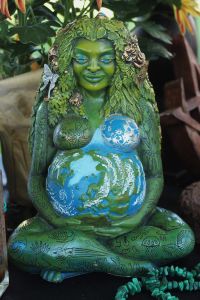
Earth Mother (Courtesy of Amber Avalona, CC0, via Wikimedia Commons)
Nowadays I still love and revere Mary. As symbol. A symbol of the creative energies responsible for bringing the Universe into existence, and which is engaged in the ongoingness of its maintainance through the laws of nature. She is one manifestation among so many of this divine creativity. In a very real sense for me, she is the Divine Mother.
So, a prayer written by me to and for the Great Mother who manifests in whatever form – or no form – in which any of us may choose to worship and love her.
Who am I to even contemplate composing a commentary on the Bhagavad Gita (BG) after only seven or eight years of study, some formal with a teacher and some more casual alone?
Well, what I am is nowhere near qualified, nowhere near ready. Actually I don’t feel qualified in any way for such a thing. So much less so was I when I first sat down with my newly gifted BG in a tiny cafe called The Office in Rishikesh, literally hanging over the river Ganges.
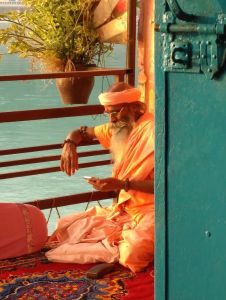
A Saddhu or Holy man and his phone at The Office
With the best fruit salad in the Universe, and fine chai to match, it was the ideal place for contemplation – that is when it wasn’t bursting at the seams and crazy.
But, as I sat there with my new BG I was one of only a couple of customers, so it was a conducive atmosphere for the aforementioned contemplation. Instead I think what happened as I thought about how to proceed to a proper study, was I allowed the sugar from the just ingested fruit salad go to my head.
You see, I decided, as I sipped a post-fruit salad chai, that the perfect study method would be to write a commentary on the whole thing starting with Chapter one, Verse one.
I no longer possess the diary in which this masterpiece was begun. Nor do I recall much, actually nothing, of what I wrote. It’s enough to say however that nothing I wrote could possibly have had any significance or depth or proper perspective.
So, as you might guess, I rambled and waffled for a couple of verses before I snapped out of my ego-driven state of arrogance and hubris. I realised I had absolutely no business taking on such a task. My lack of knowledge, wisdom, experience, all disqualified me from even thinking I had a right to try.
Now, even with the small amount of knowledge I have managed to acquire after all the study, I’m stunned at that arrogance and hubris – even if it was sugar induced. I mean, I’d never even read more than a few verses of the BG before. So, how could I even form a ‘first impression’ or ‘casual opinion’, much less a full blown commentary?
A couple of days ago I read a couple of verses that really resonated with me, as they have before. So, just like that fool sitting in The Office all those years ago, I confidently asserted that I was more than up to the job of making a commentary on those verses for this blog.
But, and here’s the really weird thing: I only just now realised, as I’ve been writing these notes, that the two verses which I will quote for you shortly, address precisely my behaviour on that post fruit salad, sugar shock induced ego trip.
I realised that it’s as if I have indeed written a commentary on those verses. And I have used a personal experience to illustrate the text. Absolutely unintentionally as it happens.
Regardless of what excuse I come up with the error in judgement in thinking I could write a full blown BG commentary all those years ago, the reality is that I failed to act with discrimination, or what I would call discernment.
In the high holy lands wrong thinking can still happen
Somehow I ignored (or totally forgot) the facts: I knew nothing! I’d lost the ability to discern what I could do and what I couldn’t do, what was a sensible action and what was a ridiculous one.
Stop! Memo to Self: Please stop picking on me!
Anyway, moving right along, here are the verses – free from commentary!
‘Thinking about sense objects brings an attachment towards them. Attachment leads to desire and desire leads to frustration, which in turn leads to delusion. When you are deluded you lose your memory [the knowledge and experiences you could draw on to make proper decisions; sometime even to the extent of compromising your own values] and with the loss of memory the power of discrimination is destroyed; with the destruction of discrimination your self itself is lost’ .
Bhagavad Gita Chapter 2 Verses 62-63 (my version of the BG sometimes combines verses as it has here)
These last couple of days I’ve been getting a good lesson in enlightenment. Wait, that’s a silly thing to say. What I mean is that these last couple of days I’ve been getting a good lesson in what it means to be not enlightened. That’s a bit better I think.
Not that I’m not receiving lessons all the time; the reality of not being enlightened, is that the entirety of one’s life is really one long ongoing lesson.
Anyway, moving right along.
Not our actual hermitage
We’re about to move to another hermitage, to one more safe-haven by the side of the road (in this case a very small, very quiet road). Obviously it’s a process we’ve been through quite a few times. This time, the concept excited us (well it usually does!) and the arrangements began on a smooth and happy note.
But, just as when any of us make a plan, take some action to fulfil that plan, and proceed from a good start, the path forward doesn’t always remain smooth and hiccup free.
And so it is this time with the hermits’ plan to relocate: one or two quite small hiccups have cropped up that we have had no control over.
‘Quite small’ are the key words here: it’s more my reaction to said hiccups that’s the point of this post.
You see, I’m not enlightened, nor am I the toughest kid on the block, and my skin’s not that thick. As well as that I’m no expert at letting things run off me like water off a duck’s back (guess who is a cliché lover?).
You talkin’ ’bout us?
The hiccups under discussion themselves are trivial and as I say out of our hands. As such, they are not especially interesting to talk about.
Getting back to the water off a duck’s back thing: it’s actually a pretty neat description of what occurs when one in enlightened. Just a thought for now.
Contrary to popular myth, being enlightened isn’t a flash or some sort of mystical thunderbolt from heaven or from some other transcendental wherever, a flash that leads to bliss ongoing, superhuman or magical powers; It doesn’t render the enlightened one an intellectual or any other kind of giant.
And right to the point, being enlightened will not protect the enlightened one from the normal, natural apparently real troubles, ups and downs, pain, illnesses, sorrow and grief, and all the rest of being a physical creature living in a physical world.
What enlightenment does mean – in my interpretation at any rate – is the enlightened one is able to let these perfectly normal problems, hurts, pain, illness, and so on, (Oh the joy of repeating a great cliché) to roll off them like water off a duck’s back.
Of course the enlightened ones still experience the pain, the sadness, grief, the disappointments and so on; it’s just that those ones have attained to the knowledge – been enlightened to -that none of those things can really hurt them.
Sure they are still there, the pains in the body, the sadness or whatever in the mind. But the real us – the true Self that is the consciousness that witnesses all that’s going on in our lives right now – is unaffected.
That true Self, that Consciousness, is constant, it is and has always been existent and unchanging. All those pains in our bodies, those emotions, distress and the rest in our minds, will pass; they aren’t permanent. However that Self, that ‘I’ won’t pass, and it is permanent.
Anyway, back to the current topic. What happened to me was this: the hiccups refered to were minor – less than trivial in the context of the ‘real world’ – yet the disappointment resulting from one, and the annoyance coming from the other, were profound.
An enlightened person might say ‘That was disappointing.’ Or, ‘That was annoying.’ But me? Well I sank into a pit of negative emotions and negative (to put it mildly) thinking. I may as well have declared: ‘I am disappointment embodied. I am annoyance itself.’
Look dear reader, this was supposed to be a fairly light, quick telling of me reminding myself that the pains, sorrows and other stuff of the world can’t hurt me. That ‘me’ is the Self I talked about earlier, the ‘I’ who is, as I said, the witness to my experience here and now.
So, in conclusion as they say, all there’s left for me to say (in this post at any rate) is that I am most definitely not enlightened. Having said that, I wouldn’t say that I’m completely unenlightened. There was a time (a long stretch of time) when, far from letting things roll off me like water off a duck’s back, they very often overwhelmed and threatened to drown me.
Of course there is a lot more to be said on the subject of enlightenment. Suffice it to say that it is my dream and deep, deep aspiration to one day, one life (if there is indeed another one waiting for me) to get there, to realise enlightenment.
PS There is no need to worry. I feel a bit better now. I managed to gain a little perspective, a truer perspective. In fact gaining perspective is an important step on the path to enlightenment. The tricky thing about perspective though is hanging onto it once it’s been gained.
Everyday I affirm, I pray with longing and with hope, these words:
Let me keep silence in this world
Some days, like today for instance, the prayer feels empty, devoid of any hope, or faith on my part, that I will at some point really be able to attain at least a degree of silence.
Yes, I know, prayer is not some kind of magic formula by which one utters the words of the prayer as in some kind of incantation, then in due course that which has been prayed for appears or comes to pass as if by magic.
Prayer, rather, is affirmation in which the one praying places full attention on the words prayed and their meanings. And more importantly on the notion that the Universe is in perfect balance all of the time, and that things – all things – are manifesting how and where and when and why, and in precisely the manner that they’re supposed to.
Prayer is more a kind of wake-up call, a reminder notification to Self that everything is exactly as it is, and is meant to be that way.
Fine theory. Yet it’s a theory I sometimes know to be much more than a theory.
Other times, this being one of those times, I have a hard time, or I should say my mind can’t accept that silence does indeed exist. My mind is simply not able to grasp that silence is already within me, ready and able to give me peace.
Closed Cafe at the End of Lonely Street: Silence comes in many and varied forms
It is obvious to all of us I think, that silence is not simply the mere absence of words, of speech. Not talking is simply one aspect of silence; it’s like silence is a thing, an entity or state of being that doesn’t only imply an absence but suggests an adding on of a new state of being.
When I pray Let me keep silence, it is true that I am seeking the silence of the mind, the inner silence that can bring calm and quiet to the heart and whole of Self too. But, to be truly upfront as they say, it is the silence or quiet that emerges from time spent not speaking that I long for.
Long for? I use that word quite often and it’s occured to me that, while to long for something is to have a desire for that thing, a longing is actually more than a simple desire. It’s a very strong desire, a kind of desperate wanting or wishing for that thing. You might even call it a compulsion.
Now I think about it, what is the desire or drive that keeps me doing exactly the opposite? Why do i feel the need to be talking (thinking too, but here I’m thinking about talking too much) all the time? It is clearly also a compulsion. That’s the only conclusion I can come to.
So then, why the compulsion to talk all the time?
Well, to once again be frank, upfront, I don’t really care about the reasons for or causes of, this compulsion. Probably stems from deep-seated anxiety, long-standing low self-esteem, old habits, fear. The list of explanations could go on and on, but what would be the point of that?
The real point, for me, is that compulsive talking is no mere bad or inconvenient habit. Personally it can actually cause physical symptoms of the ‘feeling sick’ variety, as well as guilt, shame, even sadness and regret.
And even far worse still is that this compulsion causes at the very least for those around me annoyance and frustration. Incessant talking distracts them from their own thoughts and activities, disturbs their own desire for silence. It’s all very obvious to me.
So, while I am compelled to talk all the time and too much, at the same time I have a strong aversion to that very act of talking too much (and all the time). The talking too much causes suffering to myself and others, while my inability to change also causes suffering. A kind of no-win situation arises, has risen, is always present.
Okay then, what is the solution? Or, more to the point,is there a solution? Well, I didn’t start making these notes with the hope that I would somehow come up with a solution to this dilemma . But, having said that, I’ve been thinking while writing that I do seem hugely attached to the idea that I talk too much, and too often.
As well, I also seem desperately attached to the desire to stop talking so much and so often.
While doing all this (possibly excessive) thinking, I was reminded that the Buddha didn’t say that the cause of suffering is desire; what he said was (allow me to paraphrase): the cause of suffering is attachment to desires.)
You know, another thing I write and think of a lot, is the idea that things work out exactly as they’re meant to. Of course not so easy to actually believe all the time, especially when things aren’t going according our personal wants, desires, and wishes. But it’s another of the prayers if you like, the affirmations which speak of the truth of the balance of the workings of the Universe.
In a way then, despite the lack of intention, I may have nevertheless stumbled upon at the very least a hint of a solution to my dilemma.
We ourselves are merely one more manifestation or result of those workings of the Universe, of that natural order, of those laws of nature that keep it all (including us) in motion.
So, I’m back where I started when I described what I believe prayer to be: an affirmation and a statement of faith in the reality that the Universe is unfolding exactly as it should.
Perhaps if I spent more time (not to forget more heart, more mind, more love) in reminding myself of that reality, and less in toying with my compulsions and aversions and with all my efforts to shift and maneuver the natural order of things to my liking, then I might find that equilibrium , that – what’s the word? – equipoise – in which I may actually realise the balance that I know already and always exists. Maybe then I can finally attain silence.
Deep with the still centre of my being, may I find peace.
Silently within the silence of the grove, may I share peace.
Gently & powerfully within the greater circle of humankind, may I radiate peace.
Just a quick final note: my idea that the universe is working out exactly as it’s supposed to is not mine and it’s not new. I’ve quoted the beautiful poem/prayer Desiderata (the word is from Latin for things desired) before, but there’s a line from it that I’ve borrowed heaps of times:
No doubt the Universe is unfolding as it should
Thank you for allowing me the privilege of sharing all of this, which is really one long prayer, with you.