
The Q&A in the Scripture Part 3

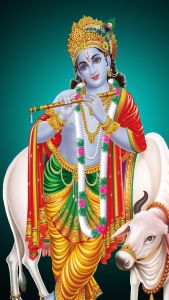
Welcome to another installment in our occasional series (see links to all previous installments at the end of this post) looking at some of the answers given by Krishna to his cousin Uddhava during a kind of Q&A session that takes place as both are about to leave their hometown which is on the brink of war. Krishna’s returning to Heaven, while Uddhava is heading for parts – and a future – unknown.

Hence all the questions around living a good true life, all driven by the knowledge that Krishna isn’t going to be around anymore to give Uddhava life advice.

And the question we’re discussing today is certainly a big one. In fact, though it is a single part of a three part question, I felt inclined to give it our full attention. To me it is that significant. In fact, thinking about it now, I could even add here that of all the questions and answers, this one could stand alone as the  question, the  answer.

To the question then, as asked by Uddhava to Krishna:

What is Charity?

Well, although I thought I knew what the word charity meant, and what charity is, I did end up looking it up, just to get a clearer and deeper picture.

Yes, a charity is an organization set up to give aid to those in need. And, as I also knew, charity is the voluntary giving of help – often in the form of money or other material goods – to those in need.

All just as I’d thought. But, then, I came across another entry that filled out the picture for me a little more. In addition to the above, this listing told me that the ‘true meaning‘ of charity is generosity and helpfulness.

Again, it specifies that this generosity, this helpfullness, is usually extended to the ‘suffering and needy’. Still it suggests that charity may be at least a little more universal an attitude toward functioning in the world, a world shared with so many other living beings.

(note from me: This latter definition comes from the Merriam-Webster Dictionary.  I’ve used this dictionary a great deal, and for very many years. It’s been my favourite go to, as they say.

PRESS THE PAUSE BUTTON PLEASE

Right, yes, I hear you loud and clear. Here I am going on as if this is a semantics blog. Sorry about that. Perhaps we should get back on track and allow Krishna to give the answer Uddhava and the rest of us have been waiting for:

Charity is the renunciation of aggression.

Perhaps you can see why I was at first a bit taken by surprise, and I puzzled over it for a while. Then after seeing that Merriam-Webster definition, I knew I’d found a clue: generosity and helpfullness.

Then it came to me: Ahimsa!! No, this is not some obscure exclamation reserved for Eureka! moments. Rather Ahimsa is a foundational principle underpinning many of the great religious traditions of India.
For me, Ahimsa is basically doing no harm, the practice of non-violence towards all living beings, through one’s thoughts, words (speech), attitudes, actions.

However because life is complicated (ie: there are no easy answers), various schools of thought over time have developed a kind of modification in which they say that Ahimsa is choosing to tackle the complexities of our lives in the world in such a way that we do as little harm as possible.

But how, one might ask, can we expand those dictionary definitions to include Ahimsa? Well, as far as I’ve been able to think about it so far, I’d say that Krishna’s answer itself is the root that we can graft those definitions onto

Which is to say, renouncing aggression is that root, that foundation on which to base the cultivation of charity and a charitable attitude and manner in our relationship with ourselves, with all other beings, and with the planet (and the rest of the Universe too of course).

(By the way, thank you to my Partner Hermit for that word: charitable. Not that I didn’t already know the word, obviously, it’s just that at the time I just could not find it anywhere in my slow-moving brain!)
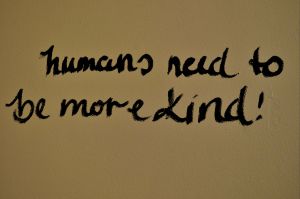
That open, generous, helpful, compassionate, patient, kind, thoughtful (oh let me count the applicable words!), that charitable demeanour and behaviours with which we engage with the world (and with ourselves) are the result of removing aggression from our thoughts, words, and deeds.

Actually, thinking about cause and effect, and effect and cause, for a second: the way towards that state of charity is the same. In other words the means and the end don’t only justify each other, they are each other. One thing.

Don’t be ready for fight or flight each time you communicate with your boss, or your spouse, or your child, or your parent. Or with anyone else in any situation you find yourself in.

Listen to and observe with patience, care, compassion, and your full attention, the needs of others. Don’t assume you know best. And include yourself in this paying attention.

Look before you leap. Stop, listen, think, pause, before jumping into any situation that needs understanding, calm, quiet and time to alleviate any possible confusions, or misunderstandings.

If you make a mistake (or is it when?), don’t be so hard (aggression?) on yourself. Be just as open, friendly, forgiving, patient and the rest, with you as you would like to be with everyone else.

As to ‘generosity and helpfullness to the needy and suffering’? Well, all living beings suffer simply in the act of living itself. We are all well aware of this. The degree and forms of this suffering (and the needs that cause the suffering) will always vary, but even so, they are inevitable.
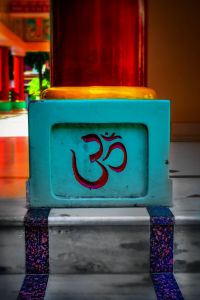
There’s a small mantra or prayer, I often use to end other prayers or reading, that I’ve always liked a lot:

Om Shanti, Shanti, Shanti

I have always thought that this was simply a prayer to the Divine that included the repetition of the word for peace three times.

Of course it is that, but recently I heard that it’s structured in this way with the three repetitions to make of it a deeper or more universal prayer:

Shanti: Peace within myself
Shanti: Peace to all living beings
Shanti: Peace to the world itself

I may have the words slightly off, but the essence is there. Anyway, for me this really does sound like Charity.

If you’ve missed earlier posts in this series please click on the links below

New Series Coming Soon: An Introduction

The Q&A in the Scripture: Part 1

The Q&A in the Scripture Part 2

Spotted on a Sand dune: A Poetic Sharing

With the current hermitage located not so much on the side of the road, as right on the side of a large sand dune system, you might imagine that I am at and on the beach every day.

While almost every day, I walk the track that follows the crest of the dunes in this particular area, I’ve only actually gone down to the beach itself a handful of times.

So, yesterday as start to my resolve to make amends for this omission, I climbed the dune, ignored the crest track leading left and right, and continued straight on and down the other side of the dune, and onto the beach itself. My intent was to spend an hour or so walking along the tide line.

And so it was.

Judging by such rare experience of the beach itself, I might easily say I am no ‘beachcomber’; no discoverer of coastal treasures, little natural beauties from the sea, or even the occasional oddity one might expect washed up. Until yesterday that is.

Not that I went to ‘comb’ the beach: rather I was there trying to put myself on the receiving end so to speak, to be a receptacle for what I might be blessed with (not to forget the need for exercise and movement).

And so it was.

This sense of grace and blessings, I hope I’ve conveyed in the small poetic effort (as well as its companion photo) that I now share with you.

SPOTTED ON THE SAND DUNE

Strolling (briskly mind you) along the sands,
There I was – deep in the liminal zone.
Ankle-deep – sometimes – seawater cooling my feet.
One way to receive Varuna’s blessings.

Back on dry sands (still in the liminal zone) I pause
to examine a spiral shell – an elegant and delicate sea creature.
It lives. Reverently, I move it to deeper water.

As I rise from my small task of union, of reunion,
I glance – still within the liminal zone – upwards.
There, near the crest of the sand dune sits a chair.
An armchair I spotted right there on the sand dune.

There it was, facing me – and the sea – in the middle of nowhere.
Though this is clearly somewhere for somebody.
The perfect perch for taking in
Pacific views.

Empty chair, lonely sight
overlooking the liminal zone.

When One Word is Actually Two & Becomes One Again

‘It’s good practis/ce sitting out here.’ So said my partner hermit as we sat sipping post evening meal tea on our little front porch that happens to face exactly due west.

It was on the tip of my tongue to ask: ‘Do you mean it’s a good thing (practice) to be doing regularly as in Sadhana,  a spiritual practice? In other words is it a good habit to cultivate?

‘Or do you mean it’s good as a kind of training – as practise – in improving our ability to sit in quiet and stillness?’

As I say, these questions were on the tip of my tongue, but then: Blog Alert!!. So, in a rare moment of triumph I managed to hold my tongue (metaphorically speaking) and let those questions sift through my mind so that later (it’s now the next day) a post to share with you might emerge.

So, here we are, setting the scene for this post. I know it’s about words, about language. Semantics is what it could be about, given that it’s about words and their meanings.

But, aren’t words simply symbols for the things they describe or represent? And so often semantics involves quibbles over meanings.

So let’s not make this about semantics, no quibbling required here. You see what set off the Blog Alert!!! was that here was the one word, that is actually two distinct words each with their own meanings, that just happen to sound alike.

Still no quibbling though: we don’t need to pick and choose between meanings – actual and/or intended. Two words, two symbols, two meanings (one for each word that is), so we can choose not to choose – remember no quibbling.

We can realise that in the context, both words are equal and correct. Both may be acknowledged as being meaningful to and in the moment, to the situation.

Lately I think I’ve been saying quite a lot about silence quiet – quietude – peace and calm. Stillness also. All are the same thing: all are states in which we might realise the truth of our natures as divine.

Same Sun Another time & place

Anyway, we had just finished our evening meal, and now sat with tea, having just witnessed the last remnants of the sun sink below the horizon (or was it the horizon coming up to meet and finally hide the sun?).

Quietly sitting, relaxing you might say, in post sunset peace and quiet, with only the occasional and softly spoken conversation going on.

Then that comment from my partner hermit, sharing that sitting as we were is good practis/ce.

Certainly for one such as me who has great difficulties in being quiet, being still, and cultivating silence, such occasions of quiet sitting (with tea naturally) is excellent practise, good training in the changing of long-established and conditioned habits and behaviours.

And, as such, it is a most excellent practice to cultivate, a great thing to do (I’d say action to take, but somehow that feels not quite right) to cultivate stillness and silence. I’ve written elsewhere that to cultivate or to rediscover silence is to realise that silence already existent as the divine, as consciousness, as all and everything.

My partner hermit is one of the wise ones, a sage. One spoken word that actually contains two words, two symbols, each with its own meaning, that finally merge into One.

No quibbling.

Bright Lights on the Dunefields

Namaste and Welcome friends.

A poem for your reading pleasure. Written on site today in response to an experience while out walking on the dunes next to the hermitage.

I’m including a photo I made a few weeks ago of the exact place where the poem was written,

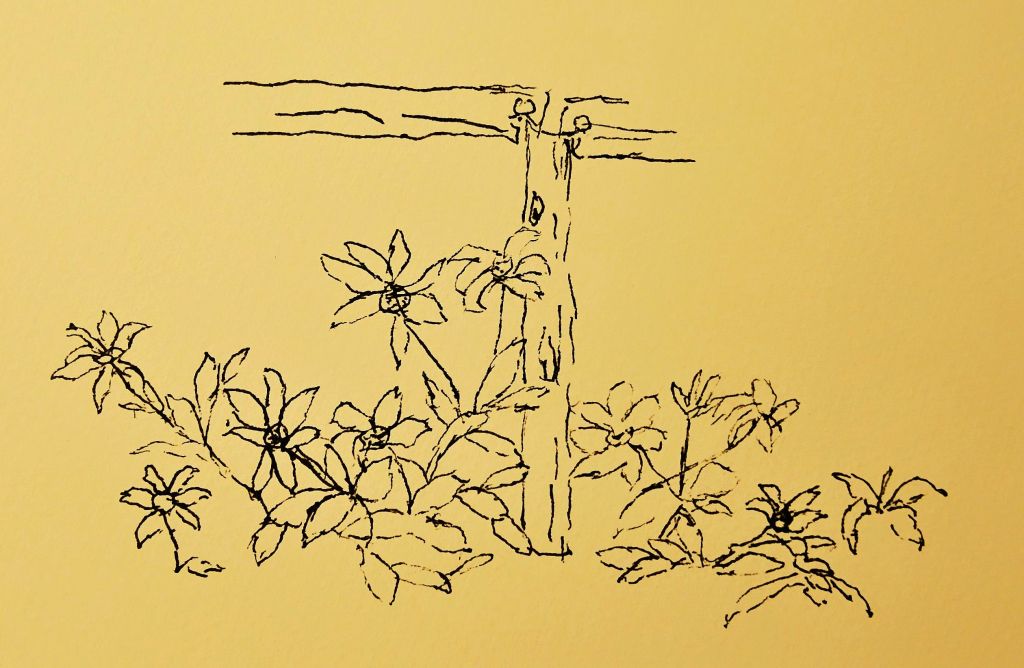
And many loving thanks to my partner hermit for the sketch made in the same area today (synchronistically it was made unknown to me and vica versa)

Please enjoy.

Love from Paul the Hermit

BRIGHT LIGHTS IN THE DUNEFIELDS


Today. On the Ocean Track.
Daily hiking across the top of the dunefields.
Not so sure-footed,
I trudge heavy-footed.

As I pass by, there are bright lights in the dunefields.
I pause in my passing as my eyes are drawn
(or is it my heart?)
to the bright lights in the dunefields.

I feast my senses upon
the bright lights in the dunefields.
They bless me, these bright lights.
They sing to me; they speak to me.

In my silence, I hear them.
But I hear not voices.
I see them.
But I see not colours, shapes or forms.

What I see, I see.
I see me, I see you.
They see me,
the bright lights in the dunefields.

They see you; can you see them?
These bright lights in the dunefields.

We are all bright lights in the dunefields.

Details in the Dunefields

On a Pilgrim’s Way

Today I went on a pilgrimage.Not that I don’t undertake all kinds of little pilgrimages all the time. And even more, it’s not as if my whole life – just like yours and everyone else’s – isn’t one ongoing and continuing pilgrimage.

All true; but this one, today, was embarked upon in what might be called, a classic manner: on foot, to a place of sacred significance, and in a spirit of contemplation of the nature of the journey as well on that which is being pilgrimed too. (I am positive there is no such word!)

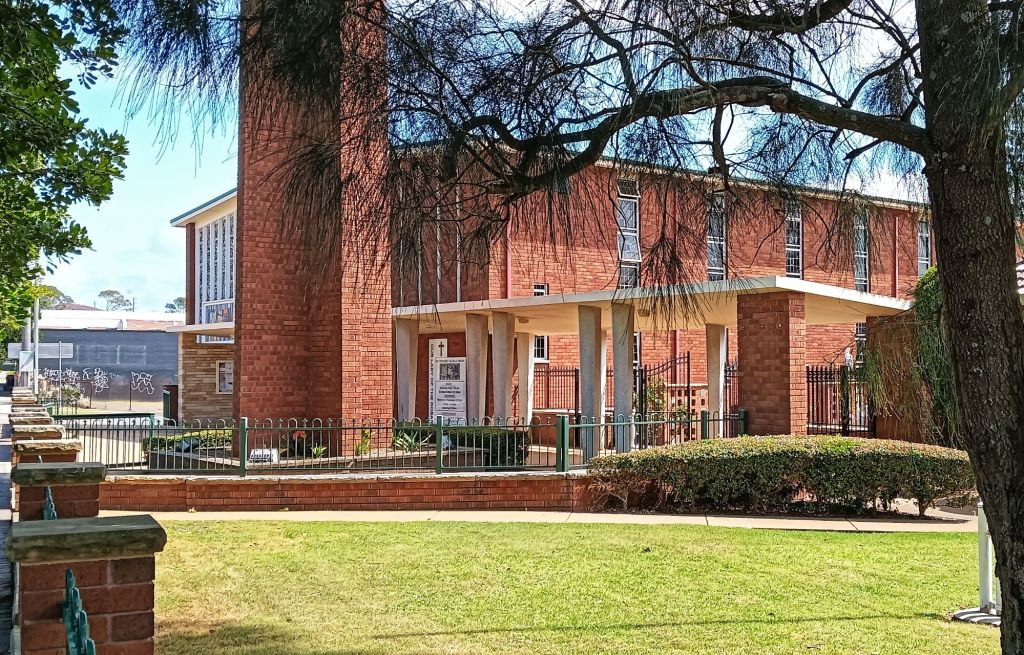
In this case, today’s pilgrimage, that place was a church about two and a half kilometres from the  hermitage. It’s a place I have visited several time, but today was the first time I set out as a pilgrim and walked in the way and spirit of the pilgrim.

Our Lady of the Rosary is a Catholic church dedicated to the Mother of Jesus in her role as patron of the Holy Rosary, a Catholic way of prayer that has evolved over time and is a key part of the lives of many Catholic people.

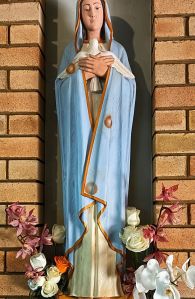
Just to the right, just inside the door there is a plain brick wall in which there is a small niche. The niche holds an almost life-size statue of Mary. She stands, hands folded over her chest on which sits the Dove of Peace.

You can see from the photo that the church itself is a lovely, quiet, serene place full of good vibes and nice peaceful energies. The object, however, of my pilgrimage was not the church in itself, but stood just inside the side door accessed through an equally peaceful, fountain centred garden.

I have come to offer her – this form or manifestation of the Divine Mother – the prayer I wrote to her which I hope you saw when I posted it on this blog recently.

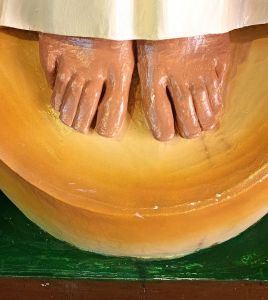
I had decided that my pilgrimage vow would be fulfilled once I had knelt at her feet and offered her the words of my heart in prayer.

My reverence for the Divine Mother is well known, and especially in her form as Mary the Mother of Jesus. Or Our Lady as we called her as good little Catholic children way back in the long ago. And I know I have said often that the entirety of the material and non-material cosmos is a manifestation of the Divine.

So, why then a special trip on foot, that I’m labeling a pilgrimage to a specific site, so I can kneel at the feet of a statue that I know perfectly well is made of stone or plaster and is simply a symbol of one aspect of the Divine?

Actually, the question has answered itself. The pilgrimage and my associated actions worded in that question tell us the why.

It is about acknowledging at a heart level and in my own way, that that symbol, that form, is actually representing a particular aspect of the Divine that I revere.

Besides, I’m not the first person who’s knelt at that spot, at Mary’s feet. I don’t know the age of the church, nor do I know the history of that particular statue, but I think we can say for certain that many hundreds, if not thousands of other people have been there where I was and spoken words from their hearts.

Being honest and true now, what I can say is that, as I said to my partner hermit: ‘I feel like i’ve been on a pilgrimage’.

And I do. I’ve walked – praying and chanting – to a sacred place where I have prayed at the feet of the Divine in the form of a likeness of Mary. I feel blessed that I actually got to offer the prayer I wrote to the Divine Mother.

Somehow I feel a link was established. A heart (mine) opened ever so slightly. I acknowledged the Divine, and I sense that I might just be – ever so slightly again! – topped up with a bit of the Grace that is in reality our true state.

Mary in the Garden (enhanced by a fellow Hermit Pilgrim. 
Thank you)

So, this is the story of my pilgrimage. I was absolutely exhausted when I arrived back at the hermitage. Most likely that was due to the heat, the traffic, and the noise encountered on the way I trod.

But, now I’ve shared this little tale with you, I’m not tired. Anyway, the Way is not always easy, and we are all very well aware of that aren’t we?

Namaste friends. The Divine in me salutes the Divine in you.

It’s a walk to take,

a pilgrimage to make.

Sometime soon.

Said by me long ago, I don’t know when or where. It was one of those ‘You’re a poet and don’t know it’ moments.

Peace!

The Q&A in the Scripture Part 1

Welcome to the first in a short – and occasional – series centred on a text containing a kind of Q & A session between Krishna (God) and Uddhava (his cousin).

Thirty six questions in all, with which Uddhava asks Krishna how he can live a good and honest life, dedicated to doing right and living the truth.

If you haven’t already, it would be really helpful if you read the Introduction post here, before going much further; just so you have a better handle on the context, the background etc. It will just help to set the scene a little more.

Now that’s been said, let’s get on and into it. The very first question Uddhava puts to Krishna is actually two questions in one.

What is quietude and self-control

Good questions, the both of them, given the circumstances Uddhava finds himself in. His hometown (it’s Krishna’s too) is about to descend into a nasty civil war and is most likely a chaotic, noisy, overwhelming and frightening environment to be stuck in.

Uddhava, like the rest of us just wants a peaceful life, and as to the second question, well he’s bound to be asking himself the same question we’d ask: Why can’t these people just control themselves before it’s too late? Not to mention the onslaught of emotional and mental anguish he’d be suffering himself.

Anyway, Uddhava is about to leave town following his cousin’s advice, and would like to find out how he can go on to live a good, righteous and honest life, while he’s in exile from his home.

Krishna chooses (sensibly I’d say: they’re both big questions) to answer one question at a time and he begins by explaining what is quietude:

Quietude is fixing the mind on me.

Krishna is not saying here: ‘Look, once I’m gone [I think I’ve mentioned that he’s leaving too, going back to Heaven or wherever he lives on a permanent basis] try to remember your dear old cuz in the odd quiet moment now and again will you?’

What I think he is actually saying is: ‘If you fix your mind on me, then that’s quietude’. We could call it silence as well. He’s not saying ‘I am in the silence’, nor is he saying ‘Through silence (or quietude) you will come closer to me’. No, what he says is ‘Quietude is what I am’.

So, what about those of us not in a first names relationship with Krishna? Well, think of Krishna as being a name and form of Universal Consciousness. Yes, the same Universal Consciousness  that is all created and non-created things; the sun, Earth herself, trees, the oceans, all living and non-living beings in the Universe, in all universes if there are more than one.

There are a whole list of synonyms for quietude: equanimity, calmness, peace of mind, rest, serenity, dispassion. Just to name a few.

These further definitions are really quite helpful. What I mean to say is that we rarely if ever associate that calmness, equanimity, peace, and the rest, with actually being the Universal Consciousness, that is also all of us and everything else that is. Again, think of Consciousness as the Divine, God, or by any other name and form, you attribute to the natural order and flow of the Universe.

Forgive the repetition : Quietude, calmness, peace of mind, are not where you will find God or consciousness, or whatever. They are all consciousness.

The beach is also dog friendly

Have I mentioned that the current hermitage is a cottage on the side of a large sand dune, on the other side of which is a stunning stretch of Pacific Coast beach. Sitting on the top of the dune and looking out over the beach and ocean it is easy to think of all that’s seen as divine.

It is most definitely a peace of mind, calm and quiet inducing experience to sit there. Certainly it is quietude itself with the only sounds being the song of the universe in the form of the waves and wind.

A question I asked myself, and I now pose to you: If what we’ve been calling Universal Consciousness is actually all that is, then why not a state of mind like quietude, calmness, balance, and the rest? Like everything else perhaps these states are simply elements of that consciousness or Absolute Reality, or oneness, or what some call God, the Divine, or … ?

In any case, I have a feeling that’s what Krishna was getting at with his answer, and what Uddhava somehow intuited with his question.

Thank you for joining me on this little pilgrimage. in the next post in this series (it could appear anytime, so stay tuned!) we will discuss Krishna’s answer to Uddhava’s second question: What is self-control?

Peace

Un hommage à tous les ailés

New Series Coming Soon: An Introduction

Lord Krishna

Namaste and greetings friends

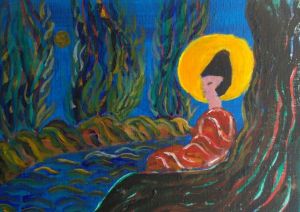
Not long ago I began studying an Indian scripture called The Uddhava Gita. It’s quite a lovely book actually: it’s poetic, actually it is a poem, or song, and beautifully written. The title means The song of Uddhava and is an account of a conversation between Krishna wearing his God of the Universe hat, and his cousin Uddhava.

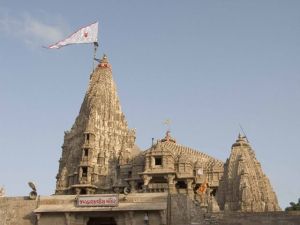
The story takes place in their home town of Dwarka in the state of Gujarat (Krishna was also a regular family man with a huge extended family) which is about to explode in a destructive civil war. Soon Krishna is leaving to return to his heavenly abode, and at the opening of our story, he advises Uddhava that he too should leave town ASAP.

I should point out at this juncture that I do not see this Gita as a historical document. It’s a story created as a backdrop against which to place a long conversation in which Krishna, or God, passes some spiritual teaching to Uddhava.

Dwarkadheesh Temple Dwarka India
By Scalebelow – Own work, CC BY-SA 3.0, https://commons.wikimedia.org/w/index.php?curid=5739970

Although the location of the story is a real place and exists today, we don’t learn anything beyond that this is the setting for this little chat.

The purpose was to present these teachings in an entertaining and accessible format. Like so many scriptures around the world, this one is a song, making it easier to learn and pass from one person to another over time in a society that was not yet universally literate.

So, why am I writing about this text? Well, in one section Uddhava is asking his cuz all sorts of questions, that have obviously been on his mind for a while. He knows Krishna is leaving he planet soon and he thinks that this might be his last chance to get some answers.

He asks questions like: What are reality and truth? And, What is a person’s strength. Then there are queries like: Who is a friend? What is home? Many are related to spiritual matters and practice, and all are concerning qualities and attributes a person should possess to live a good life, a honest life. A Dharmic life.

Actually, if I were to condense all of Uddhava’s questions into one big question, it would probably go something like this:

How can I change my lifestyle so I might live a righteous life, a good and honest life in which I can learn the truth and live my whole life according to that truth?

Now, here’s the thing: Uddhava asks a total of 36 questions, some singularly, some are multiple questions containing two or three queries. Krishna then proceeds to answer the questions, all of them in fairly quick succession.

I would like to share a few of those answers with you. I don’t get the sense that the questions are asked or answered in any particular order or pattern, so perhaps those I share will be an idiosyncratic selection, or it may be entirely random. Not that there is such a thing of course, so I guess you will just have to wait and discover for yourself the chosen questions.

Don’t worry! I have no intention of burdening you with the complete set of 36. In addition to saving you that fate, some of the questions and or answers didn’t resonate; others didn’t feel overly relevant to this blog.
I’d like to devote an individual post to each of the questions, bearing in mind some of them are multiples. I learned about all 36 questions and their answers in an hour long class. Needless to say that experience was more than slightly mind-blowing. One or two (or maybe three) at a time will be just fine for all concerned I think.

So, next post, I look forward to sharing with you the first of Uddhava questions along with Krishna’s answer. It will in fact be literally the first one asked; I thought discussing it at the start would sort of set the scene and the tone for us.
After that one there will be further posts. Again don’t worry, I’m planning a fairy short and occasional only series.

Sharing a Poem with its Photo

Namaste friends, greetings and welcome

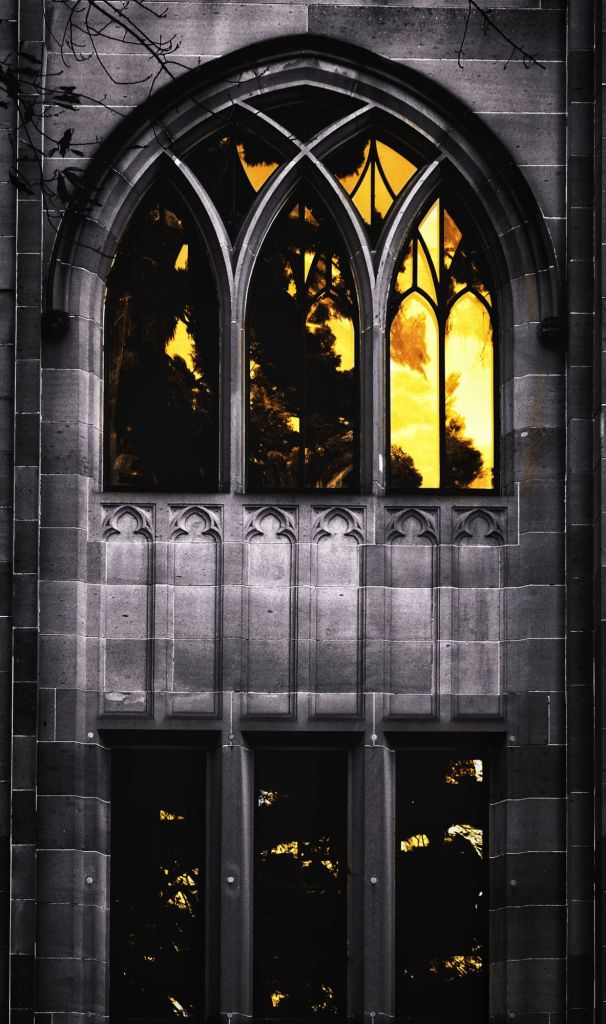
Today, a poem and a photo for  you.  I made the photo just over a year ago, and was very fond of it from the start. Then when I put into an editing app, it evolved to what you see today.

As well as that, as I ‘worked on’ the image, the little poem, (a kind of freestyle Haiku I think it could be called … sort of!) just emerged and I had to hurry to write it down.

Last night I was going through some poems of mine, and came across this one again. Not so much that I’d forgotten about it, more that I hadn’t thought of it since way back then.

So, I went on a search for the photo (also not forgotten, just buried deep in the hard drive!), so I could share it and the poem here with you on this blog. First the photograph:
Golden Light Reflections on the House of God

And now for the little poetic treat.

Please enjoy and may Surya illumine your day.

As Gaia Turns

Surya illumines

with his fiercely gentle life-giving light.

Gothic panes receive and reflect

golden impressions

                  as Gaia turns.

I Confess: I have an Ego

Today I scrapped a planned post that I’d been meditating on, angsting over, and making notes for, over the last several days. And now, I’m thinking about my reactions to this startling event. Startling in that it’s not as if this is the first time. Not even close. So what’s the situation with this not so rare occurence? Let me try to explain.

To begin, let me say that I haven’t quite subdued my Ego. Not in the sense of both my attachment to my own actions as well as not in my false identification with this body and mind. Both are still going quite strong.

Mind you, having said that I need to be honest and confess that I don’t feel like I’m an ego maniac (in either meaning of the word as I see it).

Stop! Get to the point will you?

Okay sorry. The point is I still get affected by having to dispose of a project I’ve worked long and hard on. There: I’ve said it.

Of course it’s not that such an event bruises my ego (the attachment and ‘pride’ meaning this time). So why? Why does such a thing still get to me? I think it is simply a sense of disappointment that I’ve failed at an endeavour that I had thought important.

Ah, so it is ego then? Yes, I suppose it’s true. Ego and attachment. Both are of the mind and they love playing those old old mind games in which they have the final word.

I’ve written before about my attachment to the desire to write more often, in more quantity , and with more quality. So, no need to revisit that topic. Unless of course you want to.

Anyway, why do I write what and how I do? Why do I publish this blog?

Well, if you have read the Welcome and About the blog page, you will learn that this blog is an element in my ongoing quest to fully realise the oneness of all life – which of course means all of you, me and everything that exists.

Also on that page I think I say that I, as a hermit retreating more and more from the entanglements of the world, nevertheless feels a strong sense that I need to share my life with the world – again, that’s you.

So, my writing is about my life. It’s about me opening up about my experiences, my learnings, my ideas, and any occasional insight I might be blessed with. As well, I write to share my aspirations for, and my reflections on, the spiritual journey – at least my little bit of it.

And I do that by thinking, meditating, sometimes writing then posting the conclusions. Or as happened today, I think, meditate, write, throw away writing, then don’t post.

In a sense there is no need for disappointment when that happens. I’m always aspiring to write from my heart, and share what I hope is in alignment with the Absolute Reality, or if you like, the Divine, or the will of God.

In other more straightforward words what comes out onto the page is supposed to, and, if at some point along the path what emerges ceases to ‘feel right with the Universe’, then throwing it all away is easy and ego and attachment free. Well that’s the theory I’m going to try to work from.

What I’m trying to say is that my writing in general and this blog in particular, is not my property; I don’t own any of it. All of it belongs to that Absolute Reality in the form of the natural order and flowing or unfoldment of the Universe.

Belonging to that Absolute Reality, to the Universe in other words, then it is yours too. Everbody’s and everything’s.
So I thank you for allowing me to share my life with you.

PS If my ego ever pops up again, just ignore it. One day I hope to do just that!

Reflections on a Word

Henry David Thoreau

Did you know that Thoreau, when he was staying at Waldon Pond would sometimes sit on the front steps of his cabin right after sunrise.

Often he would look up and discover that it was already  midday or even late afternoon; he’d spent those several hours in a reverie.

Being in a reverie is most often described as being a pleasant experience, just like a nice day-dream. It is also universally (at least in the context of my short Google searches) described as being ‘lost in thought’, as well as being a place of fantasy, a place in which fanciful and impractical ideas are born.

In other words, a reverie while being pleasant, does not seem to be looked upon as a useful, productive, or worthwhile experience.

I’ve been thinking about the word, reverie, and the state to which it refers for a couple of days now. In fact since I read the anecdote opening post in a truly wonderful and illuminating book called Thoreau’s Quest: Mysticism in the Life and Writings of Henry David Thoreau, by Paul and Anna Hourihan.

The outcome of this contemplation and the above-mentioned little bits of Googling, is that I don’t agree at all with the dictionaries when they tell us that reveries are almost useless and have little or no benefits.

Even the Hourihans dismiss the value of reveries when compared to the practice of formal meditation. Listen to what they say:

There is a difference between the two. Meditation means effort, concentration of the total mind. What Thoreau has experienced is reverie – passive, beautiful and enchanting, but not true meditation.

My reaction to this dismissal? Well, I say, what’s wrong with an experience that is passive (there might be a book in the idea that reveries might not be all that passive after all) beautiful and enchanting?

And on the other side? Why is it  seen as virtuous to be always making efforts and concentrating the total mind all the time? Speaking for me and I suspect several billion other people, I get tired, always trying, making effort, always concentrating and the rest.

I’m not saying at all that I’m not in favour of meditation. Indeed, I spend hours each day (in theory that is) in some kind of effortful, concentrated meditation. But, really, isn’t it nice now and again to just give up the effort, lose concentration, just for a bit? Just rest.

Of course when one’s mind wanders in reverie, fanciful ideas and thoughts will arise. Mind you it’s equally likely that some of those thoughts and ideas won’t be fanciful, but be helpful. And you know, I doubt there’s a meditator in the universe who would not report exactly the same thoughts and fancies come up despite all their meditatory efforts and concentration That’s just how our minds work.

The notion of being ‘lost in thought’ is interesting to look at too. I don’t think it’s quite the right way to refer to what happens in reveries. At least not completely.

Was Thoreau really lost in thought when he would suddenly realise that several hours had passed without him being aware?

Perhaps it’s more likely that at least a proportion of those hours were spent in a thought free state, just as in deep sleep when our mind is absent.And we all know how restful and satisfying deep, dreamless sleep can be. Maybe that’s why reveries are described as ‘pleasant’ experiences.

My teacher talks about how sometimes when we’re listening to a favourite piece of music, we can become ‘lost in the music’. We all know how that feels. He then asks us to consider, what is it exactly that ‘gets lost’?

Well, just as with deep sleep or when in a state of Samadhi or deep meditation, it is the mind that disappears – along with its self-idenifying ego sense. In other words, whoever we think we are goes missing or absent for a while.

When I’ve experienced that state when listening to music, I would describe it as losing track of time, or rather not being aware of time at all. Thoughts come and go but don’t often stay long, ‘just floating by like clouds’ as someone recently described it to me. And afterwards when I return to ‘normal’ I sometimes have a sense that for a time I and the music were one, no separation or judgements, non-different.

And so it is when ‘lost’ in a reverie: the ego disappears; thoughts come and go. What’s left is the space between thoughts – a bit like the silence that exists between notes in a musical composition.

Some say that it is this silence, this space when mind and ego are absent, is where the divine is to be found. It is said, by some, that it is in this space, this silence, one may experience God, or Absolute Reality.

So, no ego; no monkey mind jumping about; no ‘I’ to interfere with the state of silence, stillness, and peace. And quiet!

And if one removes the letter ‘I’ from the word reverie? We are left with revere. Perhaps those who tell us that the silence is God, those who say that the absence of thoughts, ego and so on, allows us to detect the Divine, are onto something. That silence, and the process by which it is realised, are to be revered.

Being ‘lost’ (the dictionary’s word not mine) in a reverie might just be the most useful and the most productive (not the world’s definition, but more in the sense of the actions that make for the betterment of Self) thing we can do when the mood, the moment, and the inclination strike.