
The Q&A in the Scripture Part 3

Welcome to another installment in our occasional series (see links to all previous installments at the end of this post) looking at some of the answers given by Krishna to his cousin Uddhava during a kind of Q&A session that takes place as both are about to leave their hometown which is on the brink of war. Krishna’s returning to Heaven, while Uddhava is heading for parts – and a future – unknown.

Hence all the questions around living a good true life, all driven by the knowledge that Krishna isn’t going to be around anymore to give Uddhava life advice.

And the question we’re discussing today is certainly a big one. In fact, though it is a single part of a three part question, I felt inclined to give it our full attention. To me it is that significant. In fact, thinking about it now, I could even add here that of all the questions and answers, this one could stand alone as the  question, the  answer.

To the question then, as asked by Uddhava to Krishna:

What is Charity?

Well, although I thought I knew what the word charity meant, and what charity is, I did end up looking it up, just to get a clearer and deeper picture.

Yes, a charity is an organization set up to give aid to those in need. And, as I also knew, charity is the voluntary giving of help – often in the form of money or other material goods – to those in need.

All just as I’d thought. But, then, I came across another entry that filled out the picture for me a little more. In addition to the above, this listing told me that the ‘true meaning‘ of charity is generosity and helpfulness.

Again, it specifies that this generosity, this helpfullness, is usually extended to the ‘suffering and needy’. Still it suggests that charity may be at least a little more universal an attitude toward functioning in the world, a world shared with so many other living beings.

(note from me: This latter definition comes from the Merriam-Webster Dictionary.  I’ve used this dictionary a great deal, and for very many years. It’s been my favourite go to, as they say.

PRESS THE PAUSE BUTTON PLEASE

Right, yes, I hear you loud and clear. Here I am going on as if this is a semantics blog. Sorry about that. Perhaps we should get back on track and allow Krishna to give the answer Uddhava and the rest of us have been waiting for:

Charity is the renunciation of aggression.

Perhaps you can see why I was at first a bit taken by surprise, and I puzzled over it for a while. Then after seeing that Merriam-Webster definition, I knew I’d found a clue: generosity and helpfullness.

Then it came to me: Ahimsa!! No, this is not some obscure exclamation reserved for Eureka! moments. Rather Ahimsa is a foundational principle underpinning many of the great religious traditions of India.

For me, Ahimsa is basically doing no harm, the practice of non-violence towards all living beings, through one’s thoughts, words (speech), attitudes, actions.

However because life is complicated (ie: there are no easy answers), various schools of thought over time have developed a kind of modification in which they say that Ahimsa is choosing to tackle the complexities of our lives in the world in such a way that we do as little harm as possible.

But how, one might ask, can we expand those dictionary definitions to include Ahimsa? Well, as far as I’ve been able to think about it so far, I’d say that Krishna’s answer itself is the root that we can graft those definitions onto

Which is to say, renouncing aggression is that root, that foundation on which to base the cultivation of charity and a charitable attitude and manner in our relationship with ourselves, with all other beings, and with the planet (and the rest of the Universe too of course).

(By the way, thank you to my Partner Hermit for that word: charitable. Not that I didn’t already know the word, obviously, it’s just that at the time I just could not find it anywhere in my slow-moving brain!)

That open, generous, helpful, compassionate, patient, kind, thoughtful (oh let me count the applicable words!), that charitable demeanour and behaviours with which we engage with the world (and with ourselves) are the result of removing aggression from our thoughts, words, and deeds.

Actually, thinking about cause and effect, and effect and cause, for a second: the way towards that state of charity is the same. In other words the means and the end don’t only justify each other, they are each other. One thing.

Don’t be ready for fight or flight each time you communicate with your boss, or your spouse, or your child, or your parent. Or with anyone else in any situation you find yourself in.

Listen to and observe with patience, care, compassion, and your full attention, the needs of others. Don’t assume you know best. And include yourself in this paying attention.

Look before you leap. Stop, listen, think, pause, before jumping into any situation that needs understanding, calm, quiet and time to alleviate any possible confusions, or misunderstandings.

If you make a mistake (or is it when?), don’t be so hard (aggression?) on yourself. Be just as open, friendly, forgiving, patient and the rest, with you as you would like to be with everyone else.

As to ‘generosity and helpfullness to the needy and suffering’? Well, all living beings suffer simply in the act of living itself. We are all well aware of this. The degree and forms of this suffering (and the needs that cause the suffering) will always vary, but even so, they are inevitable.

There’s a small mantra or prayer, I often use to end other prayers or reading, that I’ve always liked a lot:

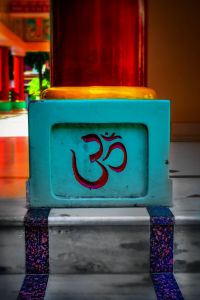
Om Shanti, Shanti, Shanti

I have always thought that this was simply a prayer to the Divine that included the repetition of the word for peace three times.

Of course it is that, but recently I heard that it’s structured in this way with the three repetitions to make of it a deeper or more universal prayer:

Shanti: Peace within myself
Shanti: Peace to all living beings
Shanti: Peace to the world itself

I may have the words slightly off, but the essence is there. Anyway, for me this really does sound like Charity.

If you’ve missed earlier posts in this series please click on the links below

New Series Coming Soon: An Introduction

The Q&A in the Scripture: Part 1

The Q&A in the Scripture Part 2

A Lesson Learned: Love & Truth

Greetings my friends

You know it’s funny how sometimes it takes a lot of time, many years in some cases, for a life event or some happening or other to finally emerge to express itself in some kind of creative form or other.

Just this minute (literally) I was reading through some poems of mine and I came across one I wrote only two months ago. I won’t say I’d completely forgotten about it, but at the same time, I can’t recall thinking of it again since writing. Until that moment five minutes ago that is.

The poem was prompted by an event that took place thirty- seven years ago. Not a major event on the face of it, just a small interaction between a mother and son. Here’s the backstory.

My mother loved Bingo, and played it at various venues several times a week. I’d just returned from several years overseas and she asked me if I’d like to be the security guard at that night’s particular venue. The regular guy couldh’t make it and they needed someone to just hang out in the car park so everyone would feel safe.

The River of Life rarely flows in a straight line

Well they were very different days, and I wasn’t who I am now, so I jumped at this very easy, relaxed, sounding gig. And off we went at the appropriate time.

It’s not part of the poem’s story but thinking about it now, I remember my mother’s joy and relaxed vibe as she interacted with her ‘Bingo family’. That’s a treasured memory.

Anyway, later in the evening I was wandering around, zigzagging through the parking lot, when I saw Mam waving at me to come to her.

And the poem takes it from there as they say.

I said the piece is about a simple mother son interaction and it is. But there is more to it really. The poem is about, at another level, Love and Truth.

It’s also about a fundamental concept I try hard to govern my life by: Ahimsa. This is an approach to life based on doing the least harm one can do in all areas of living in the world. It’s not strictly speaking a prohibition on telling untruths, nor does it mandate an absolute ban on violence. It’s complicated, as they say.

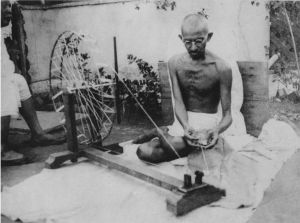
Gandhiji adhered to Ahimsa as his life’s guiding principle. While his style of living was to trust in Truth, he knew that at times, the way of least harm requires loving, compassionate discernment as we are faced with dilemmas of what’s right and what’s wrong in the infinite number of situations we are confronted with on a daily basis.

So, my friends, here is my poem. Read in peace.

WITH THE EYES OF THE HEART

I ate a hotdog once upon a time,
even though a vegan I am.
On the spot, split second decison; I considered it fine.
You see, as a fait accompli it was presented to me – by my Mam.

‘It’s a special vege kind I got for you.’
So the offered food I did receive,
though I clearly saw it wasn’t true.
Sometimes you need more than eyes to see what you believe.

My acceptance acknowledged her thoughtfulness
and validated her gesture of mother-to-son love.
So, to any karmic consequences, I will submit with grace.

Thank you for allowing me to share this story and poem with you. And even more of a thank you for reading how I learned a lesson about love and truth and how sometimes truth may actually sometimes need to be followed even if the so-called facts say different.

Blessings and love