Remember that old Bee Gees‘ song Words? It’s about one person offering all they have to another. Well, the one doing the offering must have been a writer because, while the song’s a love story, it’s words that are the big thing on offer here:
It’s only words, and words are all I have To take your heart away
Well, as this is a blog, words are the way it hopes to reach your heart. Actually, the posts also include photos and sometimes other art, but the main vehicle used here is words.
So, with that in mind I have a couple of words to offer you today. Well, one word and its opposite. Have a look at this sentence from Thomas Merton:
If Irish monks affirmed his Celtic spirit in their mastery of cataphatic contemplation of the wonders of divinity in nature, Buddhist monks evoked his Zen mind and drew him into the apophatic path of formless ’emptiness’…
As sentences go (though this is obviously only part of a sentence) this has to rank pretty close to the top for length and denseness.
Kataphatic. What a word! Of course I had to look it up; I’d never heard the word before (this post is a rewrite from notes written a while ago that I never got around to posting.), and even though the sentence seems to suggest the meaning, I was still curious.
Looking at Wikipedia – where they spell it with a ‘C’ like Merton, as well as with a ‘K’- I learned that cataphatic is an adjective that describes an approach to theology that uses ‘positive terminology to describe or refer to the divine (God, Truth, Dharma, Spirit. You know what I mean: the divine).
Apophatic, as you probably figured out already, is when one uses ‘negative terminology to indicate what it is believed the divine is not’. A process of negation or we could say you get to what the divine is by a process of elimination.
Pretty simple concept really, but with a couple of big words to label it, and a lot of words to define it. No, don’t worry, I won’t bore you with the meaning and origin of the words and all the rest. Mainly because I don’t know and I’m not especially interested anyway in all that technical stuff.
I simply resonated with the word, and the concept. Cataphatic made me think of Dick Van Dyke and Julie Andrews singing Supercalifragilisticexpialidocious in Mary Poppins. But let’s not go there: this is a serious blog after all. Except to say there’s more to that word than you might imagine.
Putting aside the aesthetic appeal of the word for a minute, let’s contemplate a while on cataphatic, and it’s opposite, apothatic.
To begin thinking about these two words, it’s necessary to acknowledge the existence of the divine. We can call it God, if we like. Or Dharma, Truth, Spirit, Love, Beauty.
As the quote suggests, a cataphatic approach, ideology, theology, or whatever we call it, ascribes names and forms to the divine, as well as describing where and in what the divine may reside.
Whereas apothatic, again as the quote suggests, does not ascribe names and forms to the divine. Instead it seeks to discover what or who god is or isn’t by a process of negation as described already.
For a long time I labelled myself as a Humanist. I had decided that this physical body is all there is; the physical or material universe is all there is, and that there is no ‘god’ separate from us or who has special powers to affect our lives. No God at all in fact.
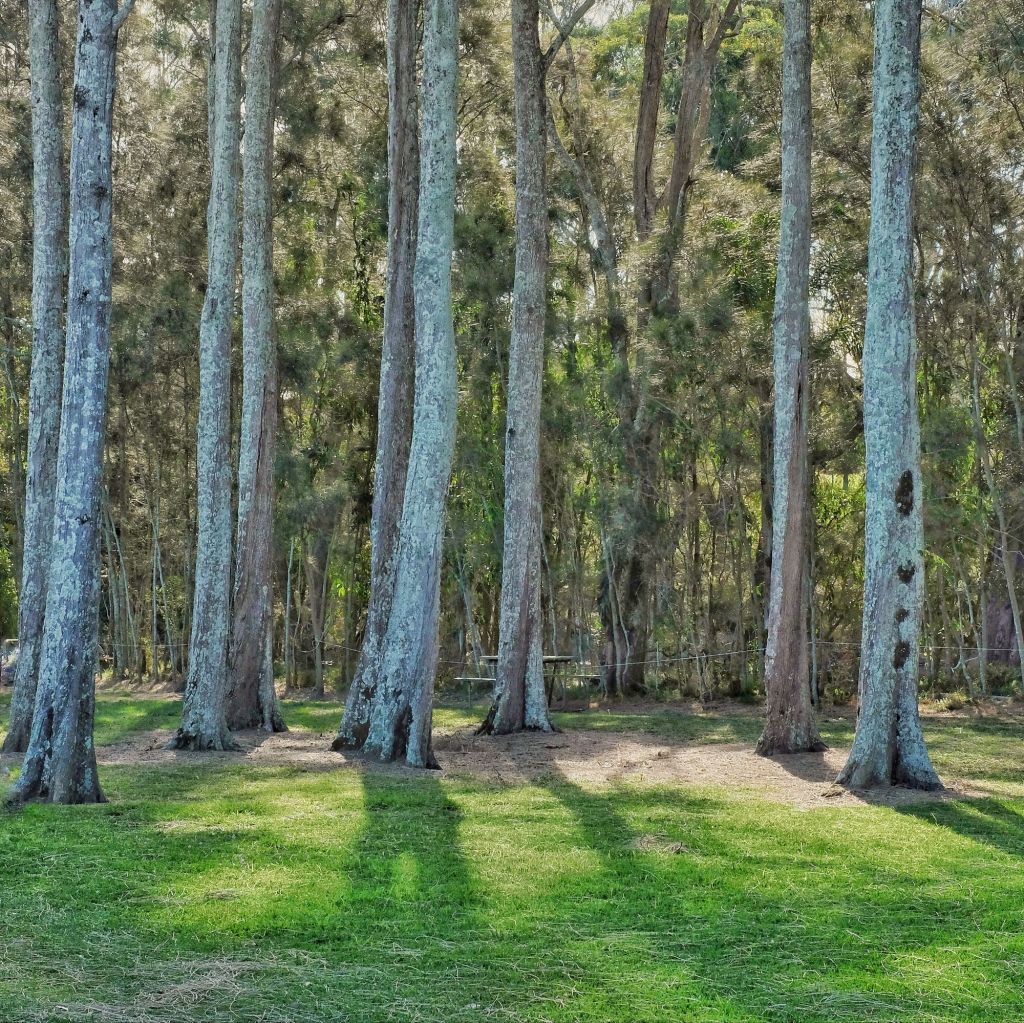
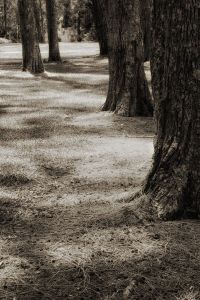
In the Grove of the Sentinals
But, all that while, I just knew that there was something else, something more than just the physical. And over time, I came to the knowledge that there is indeed more than the simply phsical universe (including we humans).
I’ve thought about it a lot over the years and I came to the conclusion not that many years ago, that I had simply been afraid to name or define that something more. It would have meant admitting to myself that something more really did exist.
That is to say, I was scared of taking the cataphatic approach – and I’d never even heard the word.
Well brothers and sisters, I saw the light. The truth was revealed to me. And what is that truth? Well, to put it simply, I wasn’t scared anymore. Not of names and forms, and not of what I couldn’t see.
Now I could take both the Catophatic and the Apothatic approach: that the something else I had actually always known just was, really is, and can have a name and form, or not. The divine is not an omniscient being or any kind of being at all; As I’m very fond of saying, the divine (or truth, God, Dharma) simply is. And it’s all there is.
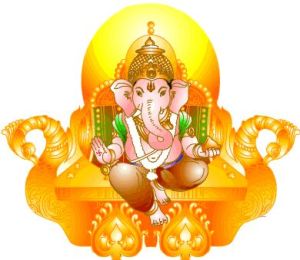
Some of you might know that I am really quite fond of the Indian deity, Ganesha . Do I believe that a man with the head of an elephant actually exists or ever existed?. Of course not. Do I actually think that he resides in the lovely painted icon that sits by my bed? Well, obviously not.
But do I believe that there is a spark or aspect or attribute in all life, in you and me, in nature, in (scary word time) creation, that we can tap into to help us overcome obstacles? Or that we can access when we begin new ventures of whatever kind, or when we need strength to face challenges? Yes, I do. Very definitely.
And do I believe in a blue boy called Krishna who lived in India 5000 years ago and spent his time playing in the fields with the village cows and his friends, entertaining them with his flute? Again, of course not. Does he live in the other beautiful icon by my bed? The answer is obvious: no.
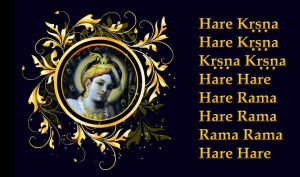
But do I chant the Hare Krishna mantra in an effort to come closer to the divine that is… well, that just is? Yes, again, very definitely.
Words. It’s all only words. Only words? Only??
In the beginning was the word, and the word was with God and the word was God. (from the opening of the Gospel of John)
Well, here we are with the third and final part of our contemplations on Flee, Be silent, Pray Always, the answer discovered by our friend Arsenius who was looking for a way to be saved from the the things of the world.
In a very real sense, this third injunction might be seen as the most important of the three. Indeed, again in a very real sense, those first two seem to me to be prerequisites for the third. Certainly, many of us would like to flee to a place and state of silence in order to escape the world and its many and varied causes of our suffering. Such people are simply and completely over the noise, the chaos, war, greed, the complexity of relationships, and all the rest.
Then there are many many others who, rather than looking to escape the world, are wanting to ‘flee’ towards a place and state of silence in order to engage more fully with the world by contemplation, meditation, and most of all, prayer. Such people are working towards making their entire lives a prayer.
And then there are the third group which is made up of those who have some sense of running away from the world while at the same time they feel compelled to move towards a contemplative life that they sense will be the best way they can actually serve the world.
I think I can include myself in this last group. I’ve never coped well with masses of people, being in the workforce, or dealing with the horrors that the world seemed to be overwhelmed with.
At the same time, I’ve always wanted to (and have tried to) combat injustice, racism, violence and the rest. I guess you could sum it up by putting it this way: I was (still am) an oversensitive person who one day had had enough of trying to ‘fight the system’ when it was the system making and changing the rules of the game as it went along.
Better I thought, to turn inwards in order to reach or realise my oneness with all living things. I’ve always been predisposed to praying as well, so it was a natural evolution in many ways. My intention and commitment these last few years has been (and still is of course) to pray continuously and with all my being.
My prayer is for the release from suffering for all living beings and that’s my central focus for prayer. For me, it feels very much that I am a lot more use to others living what I think of as a prayerful contemplative life than being actively engaged with the world out there in the midst of it all so to speak.
Pray Always
Prayer for me is not so much about petitioning some all-powerful being who is seemingly on a whim able to grant or refuse my wishes. For me it is more an affirmation of the reality of my already existent oneness with the entirety of the universe. It’s a way of seeking to actually realise that this oneness is my very Self.
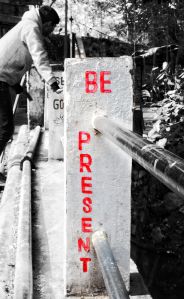
Prayer is about being present, not wishing blindly that things be different than they are. In praying I seek to affirm that the ‘universe is unfolding as it should’, as it says in a famous poem I’ve always loved. (Actually if you don’t know about Desiderata [Things Desired] then please do check it out; you’ll love it).
I think that in this sense, prayer is in fact an act of mindfulness, or rather an act which will help develop a mindfulness practice. It is a way to practise being fully focused and present to whatever is going on, whatever circumstances we find ourselves in.
And if we’re able to be present – even on a temporary or momentary basis – then we will be more calm, more at peace, and more able to achieve some clarity in our lives and with whatever is the intention with our prayer.
I know it might sound like a clumsy attempt at a clever play on words, but we’ve described mindfulness as the practice of being fully present. But we can put it another way. We can define that state of being fully present as being in presence. Like what we might say to a friend who is daydreaming while we are trying to talk to them. We might say something like ‘so and so, your presence would be appreciated’.
In presence of what? I would say everything. When we are absolutely in the present moment (again even momentarily), when we are able to realise our oneness with all things. Essentially the universe is there – or is it here? – with you in that present moment. It’s a moment when we may indeed feel we are in the presence of all that is.
Some may call that presence God, or the Divine, or Universal Consciousness. Others may see it as being in the presence of their own true and authentic Self.
That leads quite nicely to the next aspect of prayer that I want us to look at. Praying to God. I’ve spent so long on mindfulness because I wanted to stress that I don’t think it’s necessary to have a personal name or form for God, or even a notion of an unmanifested, invisible ‘force’ called God, in order to pray.
On the other hand for me, and I know for a lot of people, there are names and forms of the universal consciousness that pervades and permeates the universe, that I personally resonate with and I can reach out to them whenever the feeling or inclination arises. It sounds a bit odd to say, but for me to think that all that is, is all that is, sort of sums it up.
And as a result of that, any prayer I pray is addressed to my own Self which is simply part and parcel of all there is. In other words, it’s a personal choice for any one of us what form or name we choose to pray to. Or if we don’t pray to a name and form at all. All is one.
One thing I’ve mentioned I think a couple of times is the idea of making all our activities into a prayer, but other than the discussion on mindfulness and presence, I’ve not really addressed the how and why.
Why is pretty obvious. Because living and acting mindfully helps us in so many way such as being more peaceful, more relaxed, happier, and so on. The how, now I’m thinking about it is the purpose of this post. And it’s also true to say we’ve been talking about it since this series began.
That is to say, we flee from the aspects of our lives that don’t serve us and which can be changed. This might be a decision to spend 30 minutes every day sitting quietly and undisturbed. And as we’ve mentioned a few times already it could be going all out and moving to a desert cave somewhere.
In both those scenarios we give ourselves the opportunity to be silent and, hopefully also surrounded by silence. How to pray always? There’s an expression I love and try to live by: Follow your Dharma. Here Dharma means your own truth, being authentic to who you are, having the intention to do what’s right in all situations. And of course actually following through with that intention if at all possible. In this way you transform every action into prayer.
Living a life of prayer does seem on the face of it to not involve much use of spoken prayers, as in saying prayers with words. Well, I don’t intend to be humourous here, but a great deal of prayer does it fact involve talking to one’s Self. To the real self, that part of us that’s part of everything else. It can do us good to have these deep conversations.
Then of course there are the many many prayers that already exist to serve people from so many traditions, cultures, to suit all kinds of purposes and intentions.
Many of us will be familiar with a number of prayers learnt when we were children. If you’re anything like me, they still pop up by themselves from time to time.
Actually as I deepen my prayer practice, I’m discovering that I’m remembering all sorts of prayers from many and varied sources. I think as I dig deeper, more and more are coming up to the surface.
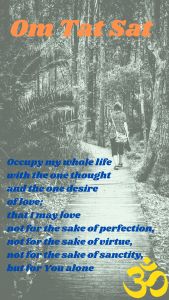
This prayer (by Thomas Merton I think) resonates deeply with me
If these ‘pre-prepared’ prayers say what you want to say and in a way that resonates with you, then you are free to choose those that feel right for you. I guess I mix and match the prayers I use; it’s always dependent on my feelings, thoughts, and intentions at the time.
Like Arsenius, I try to be open and responsive to whatever the ‘answers’ are, even though my ego does sometimes when it doesn’t like the answer, try and control outcomes.
One point about such prayers: I find it tempting oftentimes to simply recite them at what I’ve heard described as lip level. By rote and without emotion, in other words. At those times I try to slow down or pause to reflect on what I’m doing and why to get back in touch with Self.
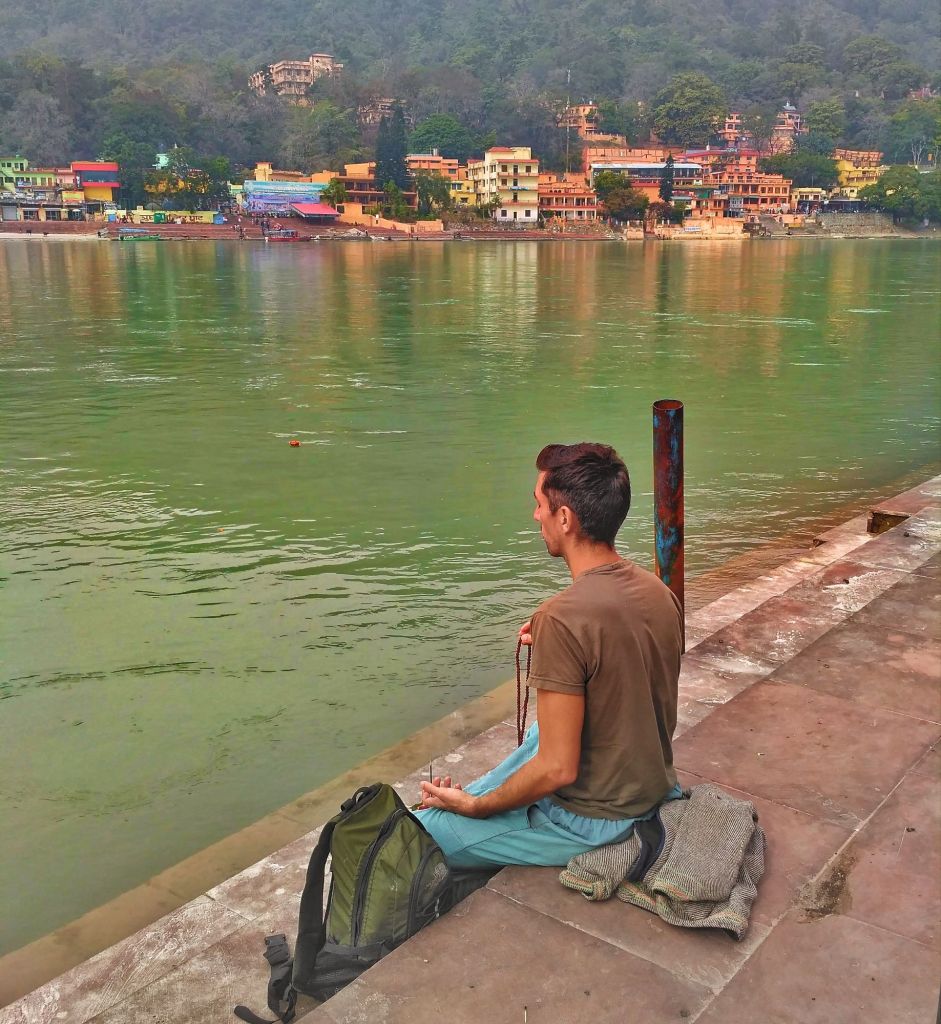
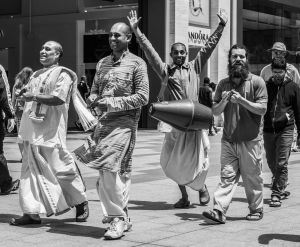
A major part of my prayer life is chanting mantra. I try to spend more time chanting as time passes. There are a number that I use depending on inclination and need.
I chant anywhere and sometimes a mantra will start chanting itself, surprising me by its arrival
(This photo isn’t me by the way)
Now, probably one of the most important aspects of my own prayer life: I know I’ve mentioned my intentions in praying at all, but one aspect I haven’t mentioned is praying as devotion.
Devotion as in worship, praise, as in gratitude for the beauty in my life, as an expression of love. Knowing with the mind that all is one is fine, but these kinds of prayers help us to cement our awareness of that oneness of all living beings. As I said earlier, I, like you or anyone else, may use particular names and forms to represent this oneness, but, well, it’s all one, so we are non-different from all those names and forms.
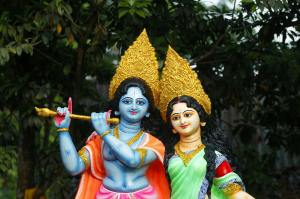
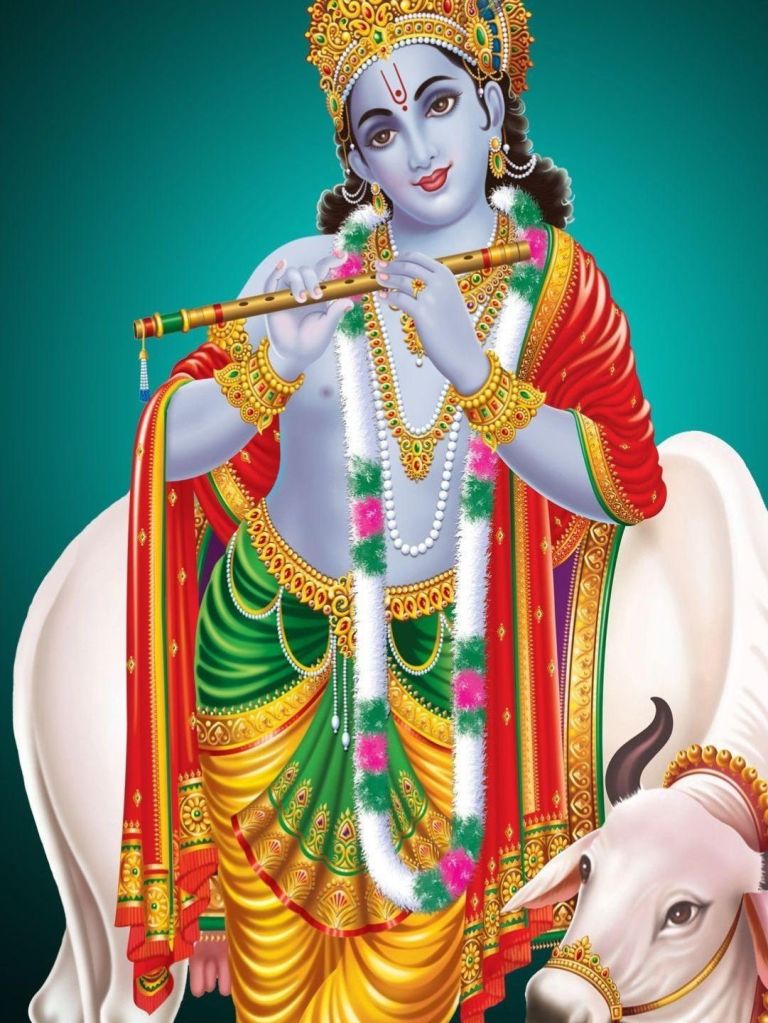
Lord Sri Krishna is among my favourite forms of Universal Consciousness (also known as Brahman)
There are many representations of the Divine, but Krishna and this picture of Him are special to me.
Focusing your devotion on a particular form seems to help make it easier or more real. It’s tricky to pray to and with a thing that has no form and is invisible.
So, my friends I hope what I’ve said here is of some little interest to you and that you have found at least something you can use for your own life.
Yesterday I came across a couple of stories – true ones – that I wrote years ago. They are what we might loosely call ‘travellers’ tales. I thought it might be nice to share them here. So here’s the first one. Enjoy
Not the Manu temple I write about, but another one close by
I’d walked up to Old Manali, and I’d kept walking through the town. Then higher still, past the temple to Manu, and the scattering of traditional houses and small fields clustered around the temple.
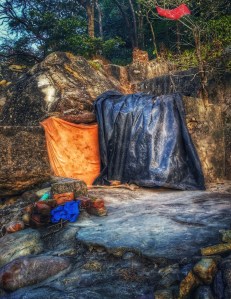
Three near-naked and stoned saddhus invited me into their cave – more a kind of overhanging rock shelf poking out from the foundations of the temple itself.
Naturally I declined. Politely. I wasn’t, never had been, and never shall be a stoner. Besides, here I was deep in the Himalayas walking through ancient villages and past temples to ancient gods. Seems to me that that’s enough to bring on a high all its own and like no other.
Then, a little higher up the trail. I rounded a corner to be greeted by a kind of open forest glade; a grassed and flowered field protected by a semi circle of forest sentinels, their crowns maybe thirty metres above my head.
And there, in the middle of this magic field, a large flat rocky area, like a series of ‘shelves’ layered one on the other. This maybe twenty square metre tiered platform was probably the remnants of an ancient hill (or mountain?) that got in the way of a more recent but clearly relentless glacier.
Whatever the history, here was an arena with views no theatre or movie could ever hope to reproduce. This natural amphitheatre faced several layers of peaks across the valley. But, before those peaks, and directly in front of me, just down the slope, stood the temple, then more trees, reaching down into the valley. Here the river flowed, surrounded by farmers’ fields and the brown dots of houses.
Then the forests begin again, thick at the bottom in the valley, but becoming more scattered on the higher ground. Then those many layers of higher and higher hills, mountains really, rolling off into the distance to, where on the horizon and behind it all, a row of the really high peaks covered in their permanent snows.
‘This is a special place, a sacred place,’ I heard myself sigh out loud. Sitting cross-legged now, I let my eyes wander over the scene taking in the blue sky, the white peaks, the multiple greens of the forests, the sliver ribbon of the river, and the rest.
At such times and in such places, one’s eyes tend to close of their own accord. And so it was for me then and there. I let myself drift. Thoughts came and went, to be replaced by more thoughts that came and went.
Then, my eyes opened. Again of their own accord. After a few seconds of that cliched ‘where am I?’ feeling one has when startled out of one state and into another, I made out the figure of a person standing facing me a few metres from where I sat.
‘I’m sorry,’ I heard her voice call to me. ‘You just looked so peaceful sitting there meditating, I just had to stop and watch you.’
She told me she’s been watching me for about fifteen minutes, which gave me a start: It’d felt l Ike I’d only just sat down and closed my eyes.
‘They say the light of the world is held about twelve kilometres up this trail. That means it’s the centre of the world.’
I had to stand to try to take in a revelation of this magnitude.
‘And apparently,’ she went on, ‘they’re going to move it soon and nobody knows where.’
Was she an angel? Was I dreaming? They, whoever they were, are about to shift the centre of the world? Even in India one doesn’t hear this kind of news everyday. Actually, I doubt you’d ever hear it on any day.
Then she was gone, headed up the trail. I didn’t follow. I remember thinking: twelve kilometres was too far for me especially as I already had a long walk downhill to my hotel back down in the new town.
Yes, mundane, practical musings, a typical response to news of such a wild and far-out nature. So, not exactly in shock, yet not quite myself, I turned back. Down. Through the village, past the temple with three crashed out saddhus out front, back into the town.
There are cafes there. They sell Chai there. I needed one.
Actually, given the momentous news I was going to have to digest, I might even have a couple extras.
This is a true story; it actually happened more or less the way it’s described here.
Of course, there is no ‘light of the world’ stored in some secret spot, somewhere on Earth.
Well, I suppose if there is a light of the world, then it’s likely to be the world itself, I mean Earth, all the beings who live on this planet. Life itself I guess you could say. Life is light; Life is love.
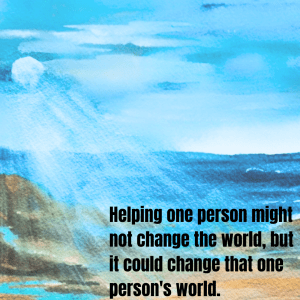
Reading this great quote again recently, I was struck by something I don’t think I’ve noticed before. Suddenly I saw: ‘might not change the world’. Might not? Then I thought why not turn the whole think around: I could as easily say ‘Helping one person might change the world …’.
But, you know, my thinking went even further: I realized that might and might not have nothing to do with it. The reality is that every action we take, and that includes the action of helping other living beings (as well as harming them, which is a whole other story for another time), actually does change the world.
Obviously we can’t always (actually it’s more like very rarely) see those changes, nor are we able to dictate what the changes will be or predict all the possible outcomes. We may think we know what the results of our actions will be; we may even guess right. Whatever the case, all we can do is take action while realising that impacts always occur and just keep on happening in a kind of cascading effect that literally never stops.
Then I thought about it some more, wondering how we can actually come to fully realise that the might not in this marvelous saying, which speaks of a negative possibility, is more an always will, which points to something definite, as well as a whole lot more positive.
All is One on the physical and the non-physical levels
We all have had at some time a sense that we are all connected; we feel that we are part of nature, part of something bigger than just a lone disconnected individual. But, have you ever had the feeling that you might be more than just a ‘part of’ the world or nature’? Have you ever had a sense that you are nature? Maybe this sounds a bit esoteric: But we are one Self; we are all physical manifestations of the one consciousness, the one Divine.
And of course we can’t know for sure what goes on beyond the physical world. But, even at that most basic level of the material, especially as we get down to the microscopic and even atomic levels, it’s hard to tell individual beings apart. Atoms merge and cross over, interact, and change, between all living and non-living things.
So, who’s to say that one small action on my part, one small change, won’t have a cascading effect as the ripples (that’s a good way to put it isn’t it?) from that action spread through the world and beyond.
The ‘What can One Person Do?’ Dilemma
Our Sydney Smith quote in a sense tackles this agonising question for us. Still, you might think that one person can’t do a lot when the needs are so vast and so many and so intractable. There is always something we can do, even at the supposedly one person, one individual level, even if as Mr Smith says, it’s a small thing we do.
Just think how many people everywhere are asking this same question: ‘What can one person do?’
If even a tiny percentage of those questioning individuals answered that they could do something, then you would start to see changes taking place for sure. How could all those actions not add up to a changed world?
The Multiplier Effect
Just now I used the words ‘add up’. Well actually it’s more like a multiplication effect.
Remember we mentioned earlier the idea of a cascading effect always in action whenever any action of any kind is performed? Isn’t there a saying that goes something like: if a butterfly flaps its wings in a forest somewhere in the world, then a polar bear in the Arctic sneezes? Okay, that’s not quite it but you know what I mean.
Then there is that concept of ‘pay it forward’. It’s an easy concept to grasp, though I don’t especially like the language. For me it’s more to do with love, compassion, empathy, and a desire to make things better.
So, the truth is, helping one person does indeed change the world for that one person. And whatever we do for that one person, it also does definitely change the whole world. It may not appear to us personally that everything in the world has changed simply because of our one, apparently tiny action, but the world, (and that includes all of us who live here or anywhere else for that matter) is one living entity, one being, so those multiplying impacts just go on affecting everything and everyone in some way.
We may think of ourselves as just one separate little individual, but we are more than simply united with all life; we are that life, just as all life is us. And, as for believing we can be ‘agents of change’, we may think that it’s all too hard; too many problems; what can I do? The road to changing the world seems to be blocked, seems to be impassable.
Well, one teacher I admire is Ramdas. Among the many great things he said, this one stands out for me above them all. I may have the wording a bit wrong, but basically the message is:
If you set your feet upon the path, then you are already at your goal
Which is another way of saying that if you help one person, then you have changed the world.
By the River’s Light I’ll Live My Life out of sight of Babylon
A Note From Me: I can’t tell you who wrote these words. Maybe I did; maybe it’s a song lyric; or maybe it’s a quote from someone famous. Whatever the case, a half hour internet search failed to come up with anything even close. So, The best I can do is thank whoever did bring these beautiful words into the world. I hope you are pleased with how I’ve made use of them.
Greetings friends. I welcome you from my new hermitage in desert country.
You know, it’s an old idea, a cliché even, to say that we, all of us, are on a pilgrimage called life, a Hero’s Journey as it’s called by the Mythologists. And, on any such journey there is what those same scholars call a Call to Adventure.
They are the times when we are challenged by life to commit to an action that will stretch us somehow, take us out of our comfort zone, change our life; to make a move; take a risk; embark on a journey either internally or out in the physical world.
So, when I tell you I got a call to come out here to the desert, and that I answered it, why the necessity to add ‘eventually’? What happened to delay that journey? Well, that’s what our Mythologist friends call The Refusal of the Call.
They’re the times when, once we’ve heard the call, and when we’ve felt its rightness, we still say no. Not now. And we come up with all kinds of perfectly reasonable explanations for our refusal.
In my case, I said, hey, it’s fine here; I’m near the beach; I really have no reason to move; there are plenty of ‘other places’ to check out first. The excuses went on and on.
All along though, there was this place, this country, calling. Of course ‘the desert’ isn’t always or for everybody the literal sand covered land, that gets very hot, and is generally thought of as barren and even hostile. It can also be a metaphor for any place – or no place in particular – that is a place of retreat, a quiet place, a place for living apart from the mainstream of human life.
For some people inclined to a life of contemplation and solitude, this place might be a small hut in a forest or a wood, or a camp on a remote beach on an even more remote island. Then there are others who are called to an actual cave high in the mountains, or on the banks of some sacred river somewhere.
And, equally, the desert, the place of retreat, quiet, solitude, and living apart, may well be an apartment or house in a suburb, or even in the centre, of a big city.
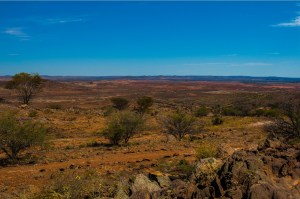
Then there’s me: called to this desert town of Broken Hill, almost but not quite in the centre of the continent of Australia. It is deep in the arid zone: it’s very far out back here in the Outback, 1500 kilometres inland from the east coast to be precise.
Yes, well this is all well and good, but shouldn’t I be answering my own question: why eventually? Well, we’ve covered the excuses, but really isn’t that just plain old procrastination? Yes indeed. If we get back to our Mythologist friends once more, we learn there is a stage in this Hero’s Journey that follows on from the Refusal: The Supernatural Act.
These are the times when things happen that seem to come at us out of the blue, from no rational, logical, or explainable source. Something that we might find hard to beleive at first because it’s way out there; supernatural like it says.
But that supernatural bit doesn’t have to take a spooky form, it might be that the ‘supernatural act’ is an internal insight or realisation triggered by a perfectly natural occurance. That’s what happened for me. What was this non-spooky, natural event that prompted such internal insights and realisations in me and got me moving?
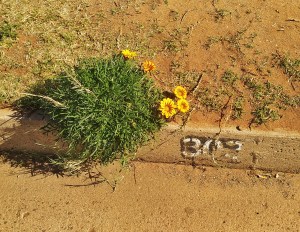
Rain. Yes, rain. It rained almost every day for over six months. I am very very blessed that I wasn’t affected by flooding as so many in nearby area were, and I am thankful for that. But it’s safe to say that rain, mud, no sun, and limited or no access to the outside for days or weeks at a time, soured my romance with the coastal lifestyle.
You could say that through the sound of rain on the roof, I could still hear the call of the desert. In fact it got so loud that, eventually, I could no longer ignore it.
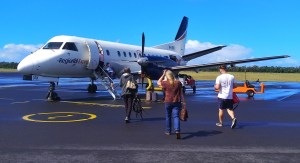
So, eventually, I answered the call, and here I am. Here is a small miner’s cottage and my new hermitage, my new safe haven by the side of the road. The cottage is situated in a mining town that sprung up in the 1880s. So this cottage has been home to miners and their families for generations, including the current owners.
In a sense it’s quite likely that I am the first occupant who hasn’t been or isn’t a miner. Though you might say that my excavations, rather than being in the dark underworld beneath the surface of Mother Earth, are taking place in the equally dark, hidden interior places of Self. A mining of another sort you might say.
Before flying out here, I was thinking about what was actually calling me to the desert (putting aside the rain for a moment). After all, I lived in a small cabin in a park like setting literally five minutes walk to a pristine Pacific Coast beach; I had trees and forest like spaces all round, as well as a small river two minutes walk. And that’s not even thinking about the abundance of wildlife.
And it occured to me that it is the stillness of the desert that was calling to me. This town of Broken Hill is a mid size town (actually a small city with about 15000 people), with the usual shops, cars, people, and the rest.
Yet there is a stillness. No longer can I hear the constant sound of seawaves crashing. No longer can I sense the never stopping coming in and going out of sea tides. And out here, it seems like even the people are moving quite a bit slower too. I’ve yet to see a single person rushing about. And they seem to smile a lot as well.
The street I live on is extremely quiet, and even on the so-called ‘busy streets’ there isn’t the mad acceleration and braking we’d see everywhere on the coast. Of course there is the odd driver who thinks every car is a racecar, but where don’t you get that?
But, actually it’s more than this. There is, beyond the actual literal quietness, a silence that seems to exist as an entity or state of being in its own right.
A stillness that is a solid thing, just as on the coast there was (is I suppose) a constant frenetic atmosphere that seemed to overlay everything. People rushing – on foot or in cars – even when there seems to be no reason for hurry (though of course you can never tell can you?). And not so many smiles either.
Contemplative people, those seeking solitude, and peace and quiet in which to pray, to live slowily, and to explore the divine, have been drawn or called to deserts (in all its forms) for thousands of years or longer. And I am fortunate enough to have finally (eventually) heeded the call myself.
Here, away from the incessant acceleration and braking (I do like this expresion), and in that stillness that envelops this land, perhaps I can dig a little deeper, uncover a bit of quiet, and discover a piece of solitude.
Out here, in the Outback, life can be harsh for all living beings, often dangerous in its aridity and isolation. It’s a long way from major cities, food and supply chains are extended to extreme limits, and the human hold on the land is precarious at best.
Yet, the paradox exists: out here far from the fertile coasts, the soft sandy beaches, the major urban centres where the mainstream of (human) life goes on, there is a quiet, a peace, a stillness that seems to pervade the very air one breathes.
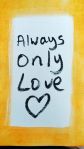
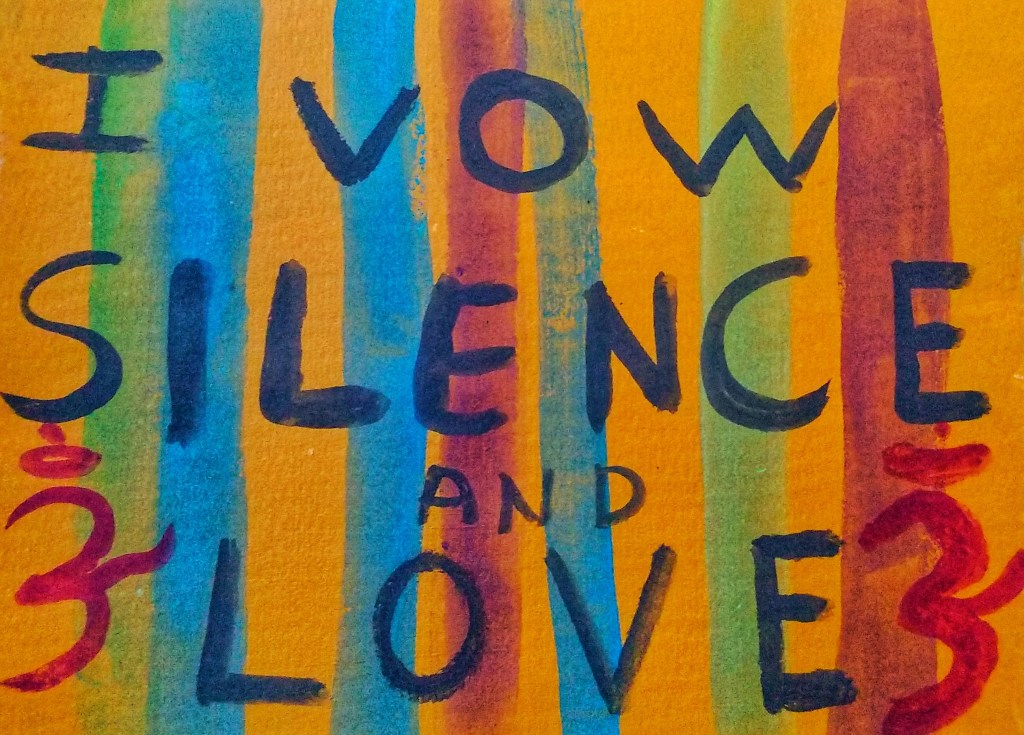
A wise person wrote something short and sweet that sums all this up for me:









 Notes from the Hermit's Cave