Sharing our prayers this morning, the hermits each reciting a prayer to the other so each can pray, and talking about the oneness of life (prompted by one of the shared prayers), the dependence of one species upon another.
As we reflected on that idea – of interdependence – it occured to me that perhaps, there might be a problem in how we as humans, interpret its meaning. We can maybe call it a kind of paradox, but we’ll get to that in a bit.
Our dependence – as humans beings – on so many other species is actually a well known, and I hope increasingly accepted, reality. For food, for shelter, for water, air to breathe. Everything.
In any case, an aspect of this interdendcence idea that struck me as perhaps missing, that I’ve not really heard before (I haven’t researched this; just winging it thought and contemplation wise) is this; If, say, bees disappeared, or all trees were cut down, would humans survive? Definitely not.
On the other hand, let’s say that in an instant or even over time, all humans on Earth disappeared. What would happen to all the other living beings? All the bugs, the fishes, the animals of all kinds, trees, grasses – all the living beings?
It seems to me that all those other species, all those beings of all kinds, would not only survive, they would most likely thrive.
Actually, now I think about it, I remember during the COVID lockdowns, people in various places around the world were amazed at the return of birds to usually busy polluted cities, and how the air seemed fresher in some places when in ‘normal times’ it was getting hard to breathe. And beaches and rivers looked a bit cleaner than usual.
Fewer people commuting; fewer planes flying; less goods being transported on congested roads; less waste going into rivers and the oceans. Seems life on Earth was doing better when we (humans) were out of the picture, even for a short while.
Which is to say, humans may not be necessary for the survival of planet Earth and the other life that lives here. Putting it very simply: We go, they thrive; They go, we go too.
But, my thought train races along its newly discovered track here, what if I’m wrong? What if I’m looking at the whole issue on just a superficial level? What if all I am seeing is the gross material level of the whole question? What if I’m missing the real point of it all?
Well it seems to me that on that purely physical, surface level, my theory (borrowed as it may be perhaps) might be right, the irony true: we go, they thrive; they go, we all go; they stay, we all get to stay.
But who are ‘they‘? Who are ‘we‘? For me it’s clear that we are not all simply and only our physical bodies and our minds living here in the material world; that’s all temporary and comes and goes. No, there has to be more to it than that.
Which is what I end up coming back to so very often: there is only one. No separation; no you and me; them or us. Just one. Without a second. Only Consciousness.
I think the best thing to do, just to be on the safe side is to look after each other – regardless of the particular body we happen to be inhabiting at the moment.
So said I to my partner hermit yesterday. You see, for a few days I’d felt the coming on of a blog post: no topic, no clue as to ideas, and no hint of anything, only that it was on its way. Hence the exasperated outburst.
What’s wrong with wishing for something we want? Absolutely nothing. Sort of. Contrary to popular rumours, erroneous teachings, misunderstandings, mistranslations, or just a simple lack of information, Buddha’s Second Noble Truth does not say ‘The cause of suffering is wishes’ or we can say desires.
What he actually taught was that the cause of suffering is clinging. Clinging, being attached to a desire so strongly that failing to fulfil that desire causes us to suffer through annoyance, frustration, sadness and all those other things that impact on our mental or emotional wellbeing.
My teacher uses the word compulsion. Compulsion to chase after what you want, compulsion to run away from what you don’t want.
Using me as an example: yesterday I wanted so badly to write, and was so frustrated that I couldn’t write just then, that I caused myself suffering. Because I couldn’t have what I wanted immediately, I made myself miserable.
Just as an aside (or perhaps not?), I realise that this little annoyance hardly means anything in the larger context of living and suffering that all of us experience simply by being alive.
But in a way, that’s my point. How many of the things we desperately want or that we desperately don’t want are the ‘little things’? Aren’t they so often the very things that, on a daily basis, cause us the most annoyance, frustration, anger, and even sorrow?
In any case, I had made myself annoyed with myself, frustrated too. However as soon as it was suggested that I needed to just down and type something – anything – if only to get the words flowing, I felt much better. I had the answer!
So, here I am, albeit a day late, and not typing as it happens, but scribbling in my notebook. Actually I don’t know why I don’t type it all up first thing, cutting out the middle step. I mean, it really does flow better on the screen (via my fingers on the keyboard of course), and it’s also, as an added incentive, a whole lot easier to read than my scratchings.
I suppose I could say that not all old habits that have not quite died just yet, are necessarily ‘bad’ ideas. I happen to like my notebook.
Now, here’s the thing, the paradox if you like. I had felt a post coming on, and because I wished so badly for it to emerge and it wouldn’t, I suffered. And then, I sat to write something (anything as was suggested) and voila: the desperately, compulsively, longed for post obedeintly appears.
Cause and effect? I mean to say, which came first? Did I at some deeper subconscious level already have an idea to write a blog post about how clinging and compulsions and attachments to the things we want – and aversions and compulsions to get away from things we don’t want – cause us suffering?
Did that existing but deeply buried idea then manifest itself as a real world situation to give me the ‘material’ to write from?
Or, perhaps more simply, I got annoyed because I couldn’t write, so I made myself write (took a day to get to it though; remember me saying?), and well, what you see is what you get when one sits to write – words on a page.
Who can say? There are theories that propose effects can and do often precede causes. It’s a tough one to get my head around, and somehow I don’t think there’s any point in trying to.
We know instinctively that everything that exists in the Universe is constantly changing, evolving, devolving, mutating, never still. And we also know that we can affect what happens in our lives and in the world around us through our own actions. Some might disagree with me on that last one; it’s only my opinion.
The tricky bit is that oftentimes we forget that those changes as well as the lack of fulfilment or otherwise of our desires (wishes also), and even the results of our own actions aren’t always to our liking. Well, it’s not that we don’t know it in our minds and through personal experience, but when it comes down to it, we all usually as part of our normal conditioning, suffer when outcomes aren’t to our liking. It’s like we know it but we haven’t realised the truth of it yet.
Sounds like a trivial or flippant, even silly and pointless, thing to say, but it’s demanding to be said anyway: things (as in life and the rest) always work out how they work out.
But if you think about it, it’s true whether we like it or not. Actually, in a sense this is one of the very important, even pivotal points, of my ongoing studies, meditations, and contemplations. To realise fully that I, along with every other living thing, has a place within, no, not just a place within but is actually an indivisible part of, if I may be forgiven a cliché, the grand scheme of things. Not only that, but we in our essential true natures as Consciousness remain untouched and genuinely okay whatever transpires here in the material world.
I do what I do; you do what you do; and regardless of whether we like the outcomes or not, things work out as they do. Sorry to be repeating myself. Just seemed the right thing to say again.
And here’s another tricky bit: it’s not about resigning ourselves to ‘fate’ or ‘destiny; or whatever we might call not having control over our own lives.
Just by way of exploring that last point, and finishing this post, I would like to leave you with a quote. Yes, I know, we are all bombarded by quotes from famous (and not so famous) people, aphorisms of all sorts, and affirmations that claim they will improve our lives.
I truly believe this flood (mixing my metaphors here) of good words, written with good intentions, has numbed us to their actual value and usefulness to us in assisting us to live good lives.
So, here is one such, that I think puts it in a nutshell, in a very simple, straightforward way, an important Truth. It’s called the Serenity Prayer, and rereading it just now, I see clearly that serenity would indeed be the outcome if we are able to take this invocation to heart, and begin to live by it.
God grant me the serenity to accept the things I cannot change,
Courage to change the things I can,
and the wisdom to know the difference
Peace and Love from Paul the Hermit
PS: This version is only one among many. In fact, the Wikipedia entry linked above is a fascinating (though apparently quite flawed) exploration of this prayer and its origins.
Well, here we are with the third and final part of our contemplations on Flee, Be silent, Pray Always, the answer discovered by our friend Arsenius who was looking for a way to be saved from the the things of the world.
In a very real sense, this third injunction might be seen as the most important of the three. Indeed, again in a very real sense, those first two seem to me to be prerequisites for the third. Certainly, many of us would like to flee to a place and state of silence in order to escape the world and its many and varied causes of our suffering. Such people are simply and completely over the noise, the chaos, war, greed, the complexity of relationships, and all the rest.
Then there are many many others who, rather than looking to escape the world, are wanting to ‘flee’ towards a place and state of silence in order to engage more fully with the world by contemplation, meditation, and most of all, prayer. Such people are working towards making their entire lives a prayer.
And then there are the third group which is made up of those who have some sense of running away from the world while at the same time they feel compelled to move towards a contemplative life that they sense will be the best way they can actually serve the world.
I think I can include myself in this last group. I’ve never coped well with masses of people, being in the workforce, or dealing with the horrors that the world seemed to be overwhelmed with.
At the same time, I’ve always wanted to (and have tried to) combat injustice, racism, violence and the rest. I guess you could sum it up by putting it this way: I was (still am) an oversensitive person who one day had had enough of trying to ‘fight the system’ when it was the system making and changing the rules of the game as it went along.
Better I thought, to turn inwards in order to reach or realise my oneness with all living things. I’ve always been predisposed to praying as well, so it was a natural evolution in many ways. My intention and commitment these last few years has been (and still is of course) to pray continuously and with all my being.
My prayer is for the release from suffering for all living beings and that’s my central focus for prayer. For me, it feels very much that I am a lot more use to others living what I think of as a prayerful contemplative life than being actively engaged with the world out there in the midst of it all so to speak.
Pray Always
Prayer for me is not so much about petitioning some all-powerful being who is seemingly on a whim able to grant or refuse my wishes. For me it is more an affirmation of the reality of my already existent oneness with the entirety of the universe. It’s a way of seeking to actually realise that this oneness is my very Self.
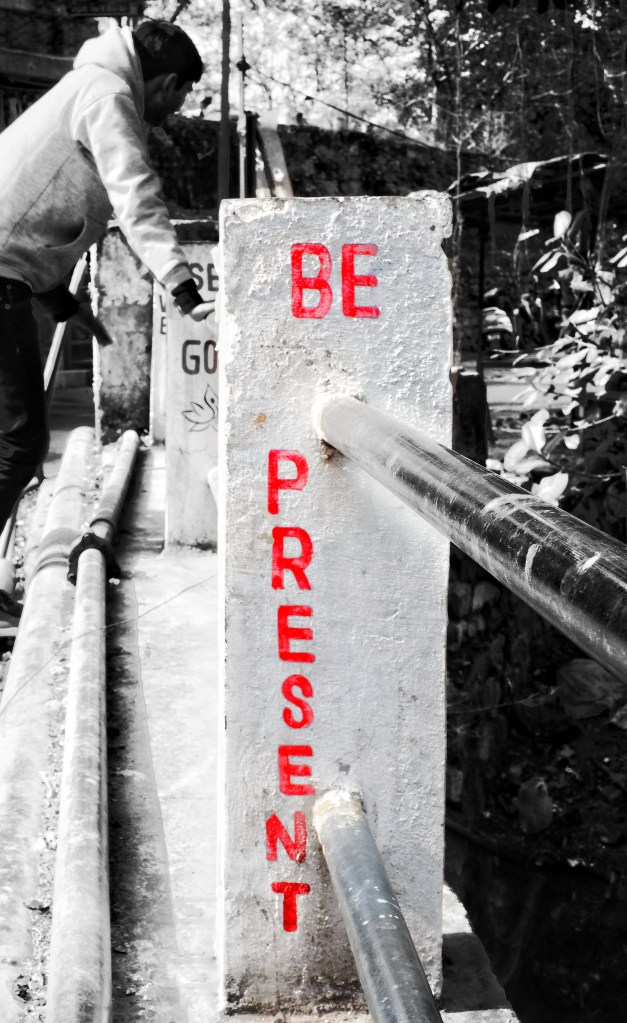
Prayer is about being present, not wishing blindly that things be different than they are. In praying I seek to affirm that the ‘universe is unfolding as it should’, as it says in a famous poem I’ve always loved. (Actually if you don’t know about Desiderata [Things Desired] then please do check it out; you’ll love it).
I think that in this sense, prayer is in fact an act of mindfulness, or rather an act which will help develop a mindfulness practice. It is a way to practise being fully focused and present to whatever is going on, whatever circumstances we find ourselves in.
And if we’re able to be present – even on a temporary or momentary basis – then we will be more calm, more at peace, and more able to achieve some clarity in our lives and with whatever is the intention with our prayer.
I know it might sound like a clumsy attempt at a clever play on words, but we’ve described mindfulness as the practice of being fully present. But we can put it another way. We can define that state of being fully present as being in presence. Like what we might say to a friend who is daydreaming while we are trying to talk to them. We might say something like ‘so and so, your presence would be appreciated’.
In presence of what? I would say everything. When we are absolutely in the present moment (again even momentarily), when we are able to realise our oneness with all things. Essentially the universe is there – or is it here? – with you in that present moment. It’s a moment when we may indeed feel we are in the presence of all that is.
Some may call that presence God, or the Divine, or Universal Consciousness. Others may see it as being in the presence of their own true and authentic Self.
That leads quite nicely to the next aspect of prayer that I want us to look at. Praying to God. I’ve spent so long on mindfulness because I wanted to stress that I don’t think it’s necessary to have a personal name or form for God, or even a notion of an unmanifested, invisible ‘force’ called God, in order to pray.
On the other hand for me, and I know for a lot of people, there are names and forms of the universal consciousness that pervades and permeates the universe, that I personally resonate with and I can reach out to them whenever the feeling or inclination arises. It sounds a bit odd to say, but for me to think that all that is, is all that is, sort of sums it up.
And as a result of that, any prayer I pray is addressed to my own Self which is simply part and parcel of all there is. In other words, it’s a personal choice for any one of us what form or name we choose to pray to. Or if we don’t pray to a name and form at all. All is one.
One thing I’ve mentioned I think a couple of times is the idea of making all our activities into a prayer, but other than the discussion on mindfulness and presence, I’ve not really addressed the how and why.
Why is pretty obvious. Because living and acting mindfully helps us in so many way such as being more peaceful, more relaxed, happier, and so on. The how, now I’m thinking about it is the purpose of this post. And it’s also true to say we’ve been talking about it since this series began.
That is to say, we flee from the aspects of our lives that don’t serve us and which can be changed. This might be a decision to spend 30 minutes every day sitting quietly and undisturbed. And as we’ve mentioned a few times already it could be going all out and moving to a desert cave somewhere.
In both those scenarios we give ourselves the opportunity to be silent and, hopefully also surrounded by silence. How to pray always? There’s an expression I love and try to live by: Follow your Dharma. Here Dharma means your own truth, being authentic to who you are, having the intention to do what’s right in all situations. And of course actually following through with that intention if at all possible. In this way you transform every action into prayer.
Living a life of prayer does seem on the face of it to not involve much use of spoken prayers, as in saying prayers with words. Well, I don’t intend to be humourous here, but a great deal of prayer does it fact involve talking to one’s Self. To the real self, that part of us that’s part of everything else. It can do us good to have these deep conversations.
Then of course there are the many many prayers that already exist to serve people from so many traditions, cultures, to suit all kinds of purposes and intentions.
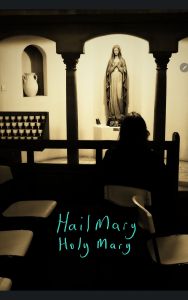
Many of us will be familiar with a number of prayers learnt when we were children. If you’re anything like me, they still pop up by themselves from time to time.
Actually as I deepen my prayer practice, I’m discovering that I’m remembering all sorts of prayers from many and varied sources. I think as I dig deeper, more and more are coming up to the surface.
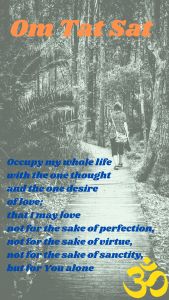
This prayer (by Thomas Merton I think) resonates deeply with me
If these ‘pre-prepared’ prayers say what you want to say and in a way that resonates with you, then you are free to choose those that feel right for you. I guess I mix and match the prayers I use; it’s always dependent on my feelings, thoughts, and intentions at the time.
Like Arsenius, I try to be open and responsive to whatever the ‘answers’ are, even though my ego does sometimes when it doesn’t like the answer, try and control outcomes.
One point about such prayers: I find it tempting oftentimes to simply recite them at what I’ve heard described as lip level. By rote and without emotion, in other words. At those times I try to slow down or pause to reflect on what I’m doing and why to get back in touch with Self.
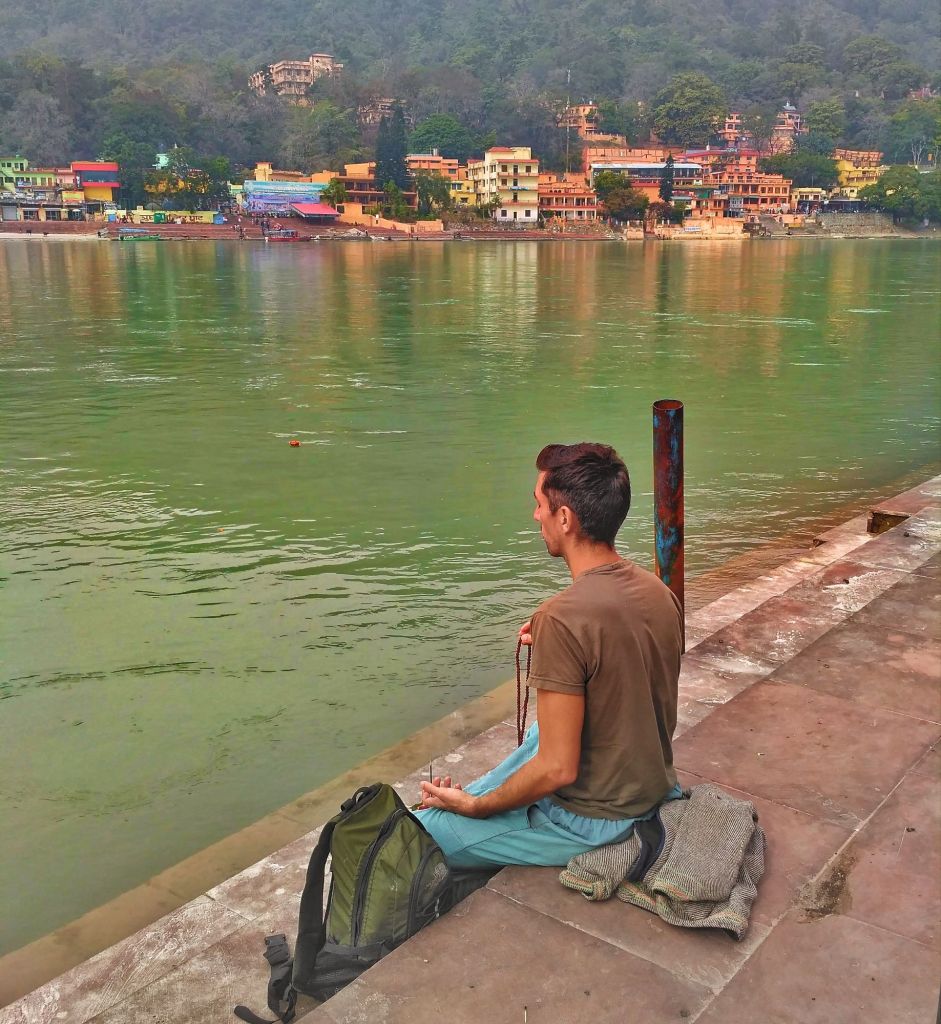
A major part of my prayer life is chanting mantra. I try to spend more time chanting as time passes. There are a number that I use depending on inclination and need.
I chant anywhere and sometimes a mantra will start chanting itself, surprising me by its arrival
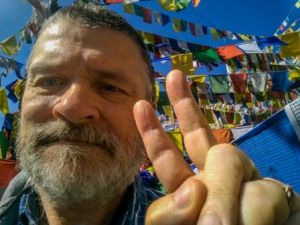
(This photo isn’t me by the way)
Now, probably one of the most important aspects of my own prayer life: I know I’ve mentioned my intentions in praying at all, but one aspect I haven’t mentioned is praying as devotion.
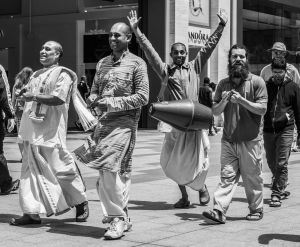
Devotion as in worship, praise, as in gratitude for the beauty in my life, as an expression of love. Knowing with the mind that all is one is fine, but these kinds of prayers help us to cement our awareness of that oneness of all living beings. As I said earlier, I, like you or anyone else, may use particular names and forms to represent this oneness, but, well, it’s all one, so we are non-different from all those names and forms.
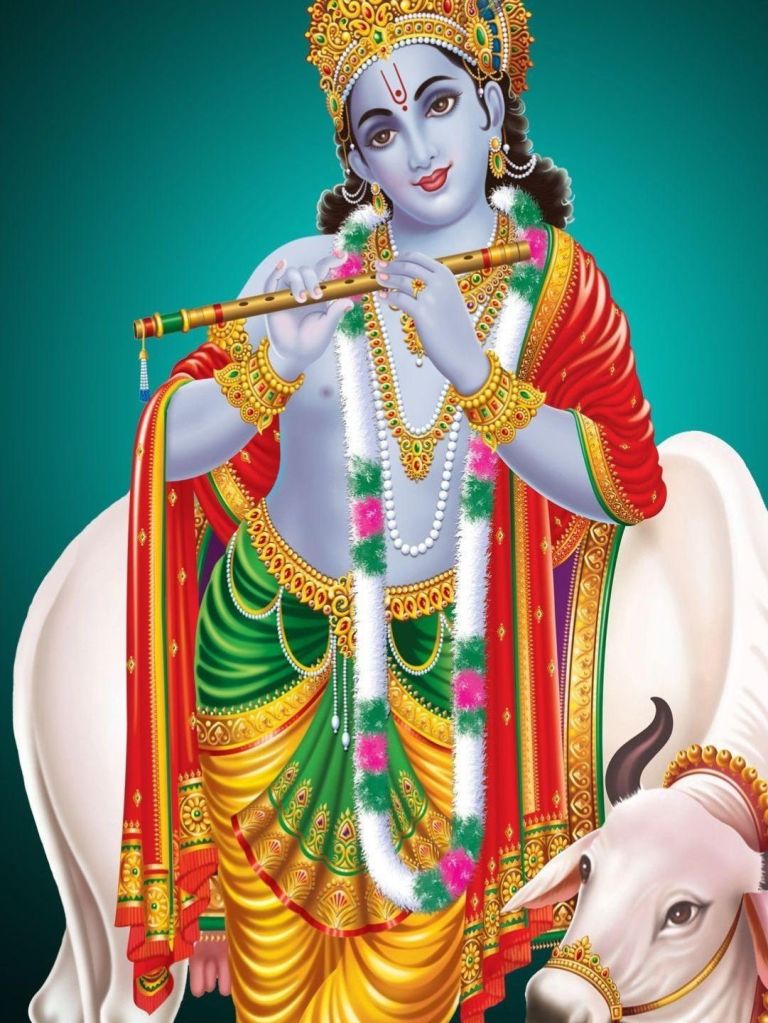
Lord Sri Krishna is among my favourite forms of Universal Consciousness (also known as Brahman)
There are many representations of the Divine, but Krishna and this picture of Him are special to me.
Focusing your devotion on a particular form seems to help make it easier or more real. It’s tricky to pray to and with a thing that has no form and is invisible.
So, my friends I hope what I’ve said here is of some little interest to you and that you have found at least something you can use for your own life.
Let me begin this post by asking you a question. No. I’ll start again: I’m going to begin this post by asking me a question. It’s a question prompted by prayers I recite every day, not only during my morning practice, but at random times during the day. Here goes with the question:
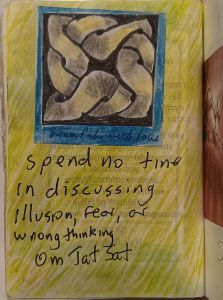
How much time do I spend discussing illusion, fear, and wrong thinking?
Well the short answer is, a lot! Despite all my efforts, prayers, meditation, discipline, and the rest, I spend way too much time pondering all kinds of illusions, indulging in an ever revolving range of fears, and thinking about all sorts of ridiculous, irrelevant, and unwanted stuff.
Oh, before I go on, I should mention that there are actually two prayers I’m referring to:
This prayer, which you might call an affirmation comes, I think, from the teachings of the ancient Indian Rishi Adi Shankara. I’ve not been able to track down the exact source. Getting a little ahead of ourselves here, but a perfect example of wrong thinking would be to berate myself for not being more careful with sources.
So, what does it mean to spend time discussing illusion, fear, and wrong thinking? Well, I know I said I was asking myself this question, but I think it would not be out of order to say that we are all prone to spending time on these things.
Discussing is obvious: talking about, thinking about, angsting over, worrying over. Illusion? Anything that isn’t real, stuff that’s ‘make believe’ as the expression goes. Anything that we are imagining for good or bad.
Our illusions are often about worst-case scenarios, or at the other end of the spectrum, they can be about some fantasy, an idealized perfect outcome to a situation. There is a lot written about how we are so very much trapped in illusion; it’s not the place here for that discussion.
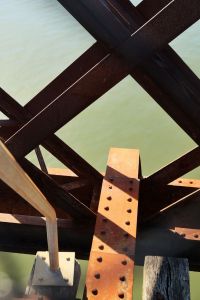
Fears: pretty obvious what fears are. I don’t know about you, but I can get to thinking of stuff to be fearful of anytime, anywhere, even things I know I can face without fear. Like a couple of days ago I was walking across a rail and walking bridge near our current hermitage. A long time ago I had huge paralysing fears of high bridges, especially over water as this one is.
But for a long time now I’ve felt I have mastered this fear and then suddenly on this occasion I looked down to the river below and shocked myself with ‘What am I doing?’ type thinking and fear returned. Mind you, it passed quite quickly as I reminded myself I’d walked over this bridge (and many others) a lot of times without a second thought.
And then there are fears about the future, fears of consequences of past actions, fears of not making the right choices now, fears for health, loved ones, the world. Anything goes when it comes to fear doesn’t it?
Ah, now we get to the biggie: wrong thinking. Again I think it’s safe to say that we all spend far too much time in the company of wrong thoughts. And again, they can be about anything, and can pop up to take over our mind without warning.
Consider how often we think about things that are either none of our business, or they are things we can’t do anything about. We obsess over what we see on the news, or what celeb is doing what and with whom. Think about how interested we often are in what other people are doing, thinking, saying.
Then there’s blindly following fashion, thinking so much about things we don’t have (and how everyone except us has those things already) that we give into advertising, and end up buying lots of stuff we don’t need, maybe can’t afford, and might not ever use. And don’t forget about the one we all fall for: gossiping about others whether they are famous, our family or friends, or simply our neighbours.
A huge case of wrong thinking are the harsh judgements we make on ourselves; and the amount of time we spend thinking about our faults and failings. And don’t forget the other end of the ego spectrum: it’s also wrong thinking to be constantly telling ourselves how great we are.
There are endless examples of wrong thinking. We need to bear in mind Buddha’s central teachings: there is a middle path that can be taken in all things. Well, this maxim applies to thinking as well. Remember that our mind can be our enemy or our friend.
Even enlightened ones such as sages, rishis, saints and the like, fall victim to illusion, fears, and wrong thinking. Of course as they are enlightened, they perhaps are less affected, less inclined to fall to the depths, as the rest of us might.
Of course, there are ways we can put ourselves on the path to that enlightenment. But in truth, it is a subject that is dealt with very adequately by all great scriptures of the world, not to mention the visionaries who have delved deeply into psychology, philosophy, and the human condition.
And this leads me to the second prayer:
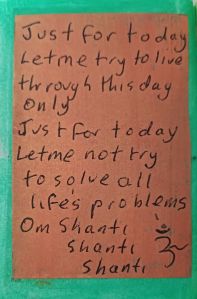
This one comes from a song by George Harrison, titled Just for Today. I actually did a post on this song a couple of years ago that you can find here. As well, if you do check out the lyrics of this masterpiece, you will see that my prayer is a rather generous paraphrase. I don’t think George would mind; I hope you don’t either.
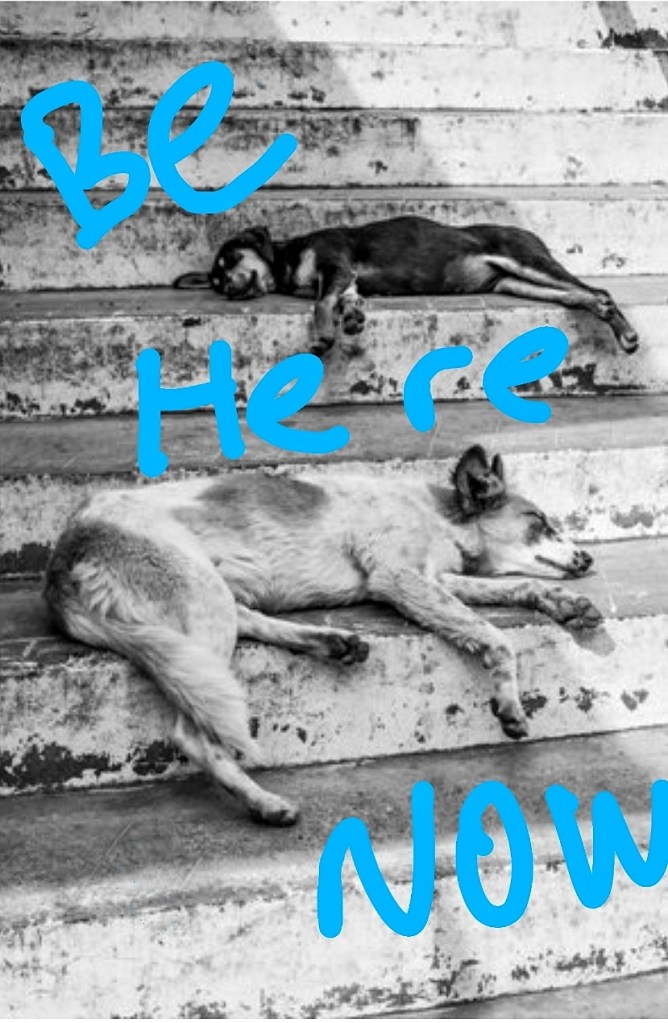
Just for Today (the song and, a little less articulately, this, my paraphrased prayer) is a prayer for presence, a plea to be in this place, and in this time. In other words, an affirmation that I (or you) may remember that there is only here, and only now.
But, and it’s a big big but, we need to make of our entire lives a prayer.
Of course that means using the words, but it also requires a whole lot more. Discipline, self-control, deliberate actions (saying prayers is obviously also an action), meditation, silence, contemplation, and to put it simply: good behaviour in all that we do and think.
Now, this prayer inspired by George is a good place to finish. Or rather, it’s a good place to remind ourselves we can’t solve all life’s problems at once.
Being present, being here and now, really says we have no other choice but to live through this day only. Or perhaps we can paraphrase once more and say we have to actually realise what is already true: we can only live through this one, ever-evolving and moving moment.
So, how do we get to that point of spending less time discussing illusion, fears, and wrong thinking? By coming to realise that being in this moment, and in this place, we are already perfectly fine. All we can and need to do is remember that one simple fact. But don’t worry, all you need to do is remember it just for today.
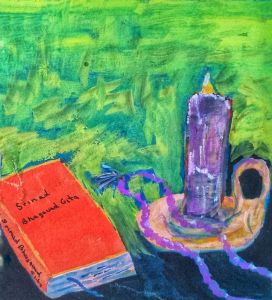
This morning I completed the penultimate lesson in a course of classes on the Bhagavad Gita. The classes were held once a week for I think 3 or 4 years and finished a few months ago. As it happens the entire course was recorded giving me and so many others the opportunity to study it online.
Anyway, at the start of the lesson today Swamiji ( Swami Tadatmananda, resident teacher at the Arsha Bodha Centre) reminded us that the course will soon be over. I thought (and it was by no means the first time I’ve had this thought): what an achievement; finishing this long and complicated course; fancy me sticking with it till the end.
Second thought, following a nano-second behind: What an odd idea, to think how great I am simply for finishing my study. Especially when it is not in the slightest way true. I’ll be studying the Bhagavad Gita (and I hope many other teachings) for the rest of my life. This period of study has been simply an introduction, a foretaste of what is to come.
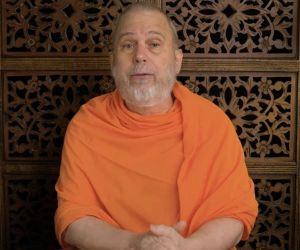
Swami Tadatmananda
Having said all that, I have to say that this time of digging deep into the Gita has been a terrific ride. I’d been studying it by myself for a few years, but that’s nothing compared to having a qualified teacher guide me through such an in depth study and contemplation of this great teaching.
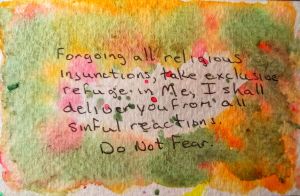
While I do know a few of the 800 verses by heart, I understand that this is not ‘ordinary’ knowledge. As the disclaimer goes: it is very much a pointer to the knowledge; the key is to not to confuse the pointer with the very much transcendental knowledge that is to be gained from what the pointer points to.
Probably my favourite verse written on a little card that I treasure
My partner hermit has been responding to some of my photos when I post them with little Haiku-like writings. Yesterday (or was it the day before?) I said to her:
‘You’ve done 71 so far.’ I was thinking to praise the achievement.
She replied (with much wisdom as always):
‘I don’t count them. One or seventy one, it’s all the same.’ I’m paraphrasing here.
Looks as if I might be only just at the beginning of my lessons.
Greetings friends A poem today for you to read and enjoy
If the Tea Needs Stirring: Lessons in Presence
Just now, just here, stirring the tea. A flash, an insight; in reality a realisation dawned as the tea brewed.
Suddenly I’d seen the solution to finding the real Self, to success in the search, to completing the quest for Truth.
Just keep doing this. That was the sense of it. That’s what I heard with the mind’s ear.
Stir the tea? Yes. Then? Keep on keeping on. Step by step, One task – or no task – to the next. Just a wu wei flow. In, through and on the ongoing moment; on the path of least resistance. But beware, take care: That path is not the slippery slope of apathy, of indifference. It’s not the way of doing nothing.
It is the way of being, Of being within your doing. Fully present, only present. The tea needs stirring? Then stir it.
Be the actor – the stirrer. Be the spoon, Be the tea. That’s all there is.
Journalling always seemed to go along with tea drinking
About a year or so ago I stopped keeping a journal. And, when I say stopped keeping, I mean keep as in both senses of the word. Let me explain.
I began writing my life in a journal in my teens. I stopped for a while in my late teens and early twenties, then later in my twenties, took to it again. I then kept my Journal going ever since. That is, until last year.
Of course, some periods saw a more intense, even daily journal keeping. And then there were periods where the journal only saw me every now and again. On the whole though, I’d been completely dedicated to my Journal for more than 40 years.
What over 40 years of journalling looks like
So, why suddenly end it? What prompted me to just stop keeping it – again in both senses of the word – after almost a lifetime committed to it?
Yes. A good, good question. First of all, it wasn’t a sudden decision; I didn’t ‘just stop’. For some time I hadn’t been feeling quite so committed, quite as excited about keeping a journal (as in using it to write my feelings, ideas, and essentially my life). And, just as with so many of the decisions we make thoughout our lives, this one had a practical, even a pragmatic ‘seed’ as well:
See the picture above? That’s my journal. The rest of the Old blue tin trunk would get itself filled with all kinds of stuff not needed on rhe road. The trunk lived with my cousin for a few years, then it was my sister’s turn; she had it on and off for many years.
As you are no doubt beginning to guess, this arrangement began to wear thin. We (the hermit pilgrims) were constantly asking ourselves, what’s the point of storing this stuff for years? Do we really need it?
My answer had always been yes. I needed my journal. I might read it again someday; I might need it to write books or whatever. So, we’d keep the trunk, filling the remaining space with stuff and things.
Then, on the penultimate occasion we had the old blue tin trunk shipped to us in our latest (then) current roadside cave, I looked at it, and thought: What’s the point?
Somehow the attachment – the compulsion to hold onto my Journal – had gone. It was a liberation, a freeing of my mind. I suddenly realised that the prospect of me ever rereading the thing, or needing it for some other purpose, was remote. Actually such a prospect was also extremely unappealing.
I should add here that that particular aversion and disinterest in rereading my journal, seemed to cement my already growing disinterest in keeping a journal in that sense I mentioned earlier of writing down feelings, ideas and so on. Now, both the idea of keeping the journal in the sense of storing the physical volumes for a rainy day, and that need to keep a journal by constantly writing my life, collided. Time to stop keeping!
So, I sat and leafed through every volume, more as a kind of farewell ritual than anything else. I did ‘rescue’ the odd bit and piece, most of which have since gone the way of their host volumes. Then I simply set the lot on its way to oblivion.
I mentioned that this whole chain of events happened on our penultimate reunification with the old blue trunk; what about the ultimate time? Well, we’d kept it full of various pieces of art by both of us; with various household things; ornaments; and other stuff I can’t remember.
Repacking it to ship back to my sister’s as we got ready to move on from that particular cave, we both just said, let’s leave it all behind.To cut a long story short, that’s exactly what we did. My son, a couple of charity shops, and the house we’d been sheltering in, were all recipients of the last of the contents of that old blue trunk – and the blue trunk itself.
Now, do I miss my journal? Well yes and no.
No I don’t miss having the thing as in owning it. Or maybe it’s better to say I don’t miss always having it in storage and out of reach the great majority of time. Like I said, I went completely off the idea of holding onto it – keeping it – just in case someday I might want to read it all again or use to for research. Now I think, why would I ever want to do that? (okay, I think I might have already said that)
The yes is kind of qualified. Yes, I miss writing in it. Yes I miss having a vehicle for expressing feelings, thoughts, and ideas.
I say that this yes is qualified because while I say this to myself from time to time, I don’t actually seem to ever really feel it. So perhaps it’s less a yes and no than it is an unequivocal no.
Besides if I have the urge to write, to put pen to paper, fingers to keyboard, then there’s nothing to stop me.
After all, that’s precisely what I’m doing now isn’t it?














 Notes from the Hermit's Cave