Flee, Be Silent, Pray Always Part 3

Namaste and welcome

Well, here we are with the third and final part of our contemplations on Flee, Be silent, Pray Always, the answer discovered by our friend Arsenius who was looking for a way to be saved from the the things of the world.

In a very real sense, this third injunction might be seen as the most important of the three. Indeed, again in a very real sense, those first two seem to me to be prerequisites for the third. Certainly, many of us would like to flee to a place and state of silence in order to escape the world and its many and varied causes of our suffering. Such people are simply and completely over the noise, the chaos, war, greed, the complexity of relationships, and all the rest.

Then there are many many others who, rather than looking to escape the world, are wanting to ‘flee’ towards a place and state of silence in order to engage more fully with the world by contemplation, meditation, and most of all, prayer. Such people are working towards making their entire lives a prayer.

And then there are the third group which is made up of those who have some sense of running away from the world while at the same time they feel compelled to move towards a contemplative life that they sense will be the best way they can actually serve the world.

I think I can include myself in this last group. I’ve never coped well with masses of people, being in the workforce, or dealing with the horrors that the world seemed to be overwhelmed with.
At the same time, I’ve always wanted to (and have tried to) combat injustice, racism, violence and the rest. I guess you could sum it up by putting it this way: I was (still am) an oversensitive person who one day had had enough of trying to ‘fight the system’ when it was the system making and changing the rules of the game as it went along.

Better I thought, to turn inwards in order to reach or realise my oneness with all living things. I’ve always been predisposed to praying as well, so it was a natural evolution in many ways. My intention and commitment these last few years has been (and still is of course) to pray continuously and with all my being.

My prayer is for the release from suffering for all living beings and that’s my central focus for prayer. For me, it feels very much that I am a lot more use to others living what I think of as a prayerful contemplative life than being actively engaged with the world out there in the midst of it all so to speak.
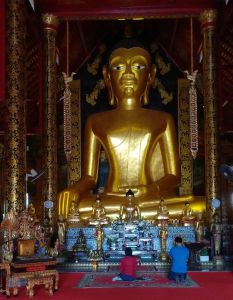
Pray Always

Prayer for me is not so much about petitioning some all-powerful being who is seemingly on a whim able to grant or refuse my wishes. For me it is more an affirmation of the reality of my already existent oneness with the entirety of the universe. It’s a way of seeking to actually realise that this oneness is my very Self.

Prayer is about being present, not wishing blindly that things be different than they are. In praying I seek to affirm that the ‘universe is unfolding as it should’, as it says in a famous poem I’ve always loved. (Actually if you don’t know about Desiderata [Things Desired] then please do check it out; you’ll love it).

I think that in this sense, prayer is in fact an act of mindfulness, or rather an act which will help develop a mindfulness practice. It is a way to practise being fully focused and present to whatever is going on, whatever circumstances we find ourselves in.
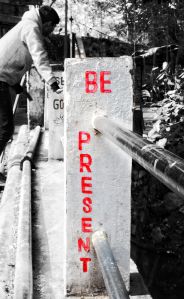
And if we’re able to be present – even on a temporary or momentary basis – then we will be more calm, more at peace, and more able to achieve some clarity in our lives and with whatever is the intention with our prayer.

I know it might sound like a clumsy attempt at a clever play on words, but we’ve described mindfulness as the practice of being fully present. But we can put it another way. We can define that state of being fully present as being in presence.  Like what we might say to a friend who is daydreaming while we are trying to talk to them. We might say something like ‘so and so, your presence would be appreciated’.

In presence of what? I would say everything. When we are absolutely in the present moment (again even momentarily), when we are able to realise our oneness with all things. Essentially the universe is there – or is it here? – with you in that present moment. It’s a moment when we may indeed feel we are in the presence of all that is.
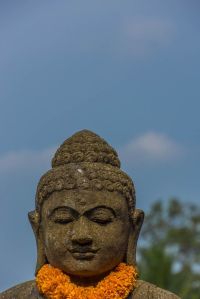
Some may call that presence God, or the Divine, or Universal Consciousness. Others may see it as being in the presence of their own true and authentic Self.

That leads quite nicely to the next aspect of prayer that I want us to look at. Praying to God. I’ve spent so long on mindfulness because I wanted to stress that I don’t think it’s necessary to have a personal name or form for God, or even a notion of an unmanifested, invisible ‘force’ called God, in order to pray.

On the other hand for me, and I know for a lot of people, there are names and forms of the universal consciousness that pervades and permeates the universe, that I personally resonate with and I can reach out to them whenever the feeling or inclination arises. It sounds a bit odd to say, but for me to think that all that is, is all that is, sort of sums it up.

And as a result of that, any prayer  I pray is addressed to my own Self which is simply part and parcel of all there is. In other words, it’s a personal choice for any one of us what form or name we choose to pray to. Or if we don’t pray to a name and form at all. All is one.

One thing I’ve mentioned I think a couple of times is the idea of making all our activities into a prayer, but other than the discussion on mindfulness and presence, I’ve not really addressed the how and why.

Why is pretty obvious. Because living and acting mindfully helps us in so many way such as being more peaceful, more relaxed, happier, and so on. The how, now I’m thinking about it is the purpose of this post. And it’s also true to say we’ve been talking about it since this series began.

That is to say, we flee from the aspects of our lives that don’t serve us and which can be changed. This might be a decision to spend 30 minutes every day sitting quietly and undisturbed. And as we’ve mentioned a few times already it could be going all out and moving to a desert cave somewhere.

In both those scenarios we give ourselves the opportunity to be silent and, hopefully also surrounded by silence. How to pray always? There’s an expression I love and try to live by: Follow your Dharma. Here Dharma means your own truth, being authentic to who you are, having the intention to do what’s right in all situations. And of course actually following through with that intention if at all possible. In this way you transform every action into prayer.

Living a life of prayer does seem on the face of it to not involve much use of spoken prayers, as in saying prayers with words. Well, I don’t intend to be humourous here, but a great deal of prayer does it fact involve talking to one’s Self. To the real self, that part of us that’s part of everything else. It can do us good to have these deep conversations.
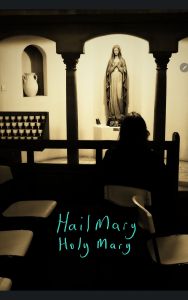
Then of course there are the many many prayers that already exist to serve people from so many traditions, cultures, to suit all kinds of purposes and intentions.

Many of us will be familiar with a number of prayers learnt when we were children. If you’re anything like me, they still pop up by themselves from time to time.

Actually as I deepen my prayer practice, I’m discovering that I’m remembering all sorts of prayers from many and varied sources. I think as I dig deeper, more and more are coming up to the surface.
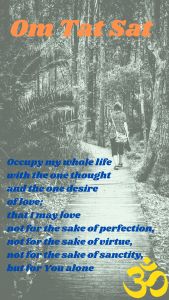
This prayer (by Thomas Merton I think) resonates deeply with me

If these ‘pre-prepared’ prayers say what you want to say and in a way that resonates with you, then you are free to choose those that feel right for you. I guess I mix and match the prayers I use; it’s always dependent on my feelings, thoughts, and intentions at the time.

Like  Arsenius, I try to be open and responsive to whatever the ‘answers’ are, even though my ego does sometimes when it doesn’t like the answer, try and control outcomes.

One point about such prayers: I find it tempting oftentimes to simply recite them at what I’ve heard described as lip level. By rote and without emotion, in other words. At those times I try to slow down or pause to reflect on what I’m doing and why to get back in touch with Self.
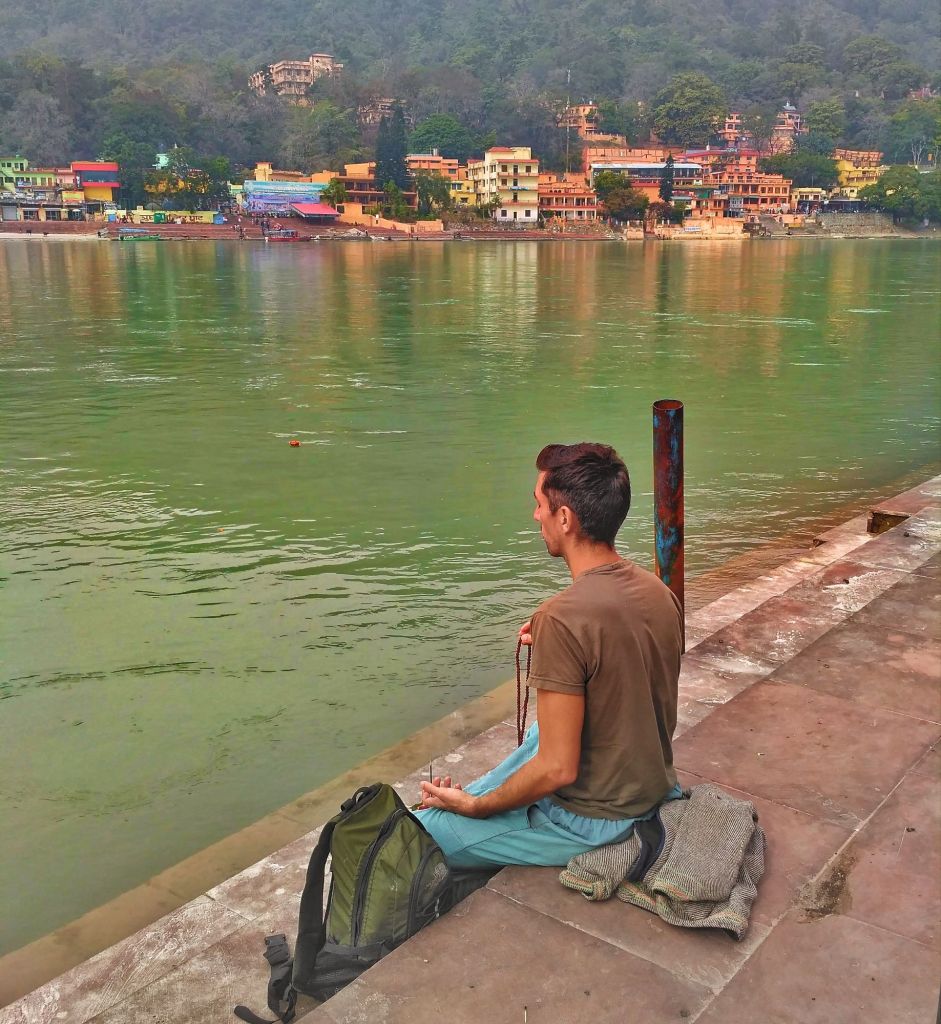
A major part of my prayer life is chanting mantra. I try to spend more time chanting as time passes. There are a number that I use depending on inclination and need.

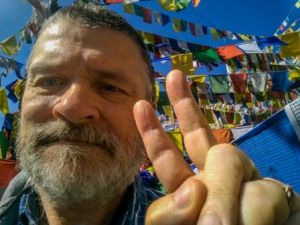
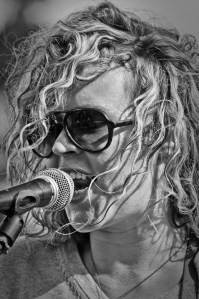
I chant anywhere and sometimes a mantra will start chanting itself, surprising me by its arrival

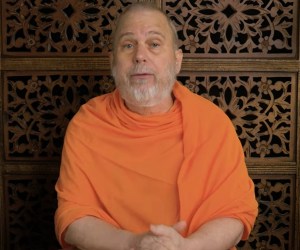
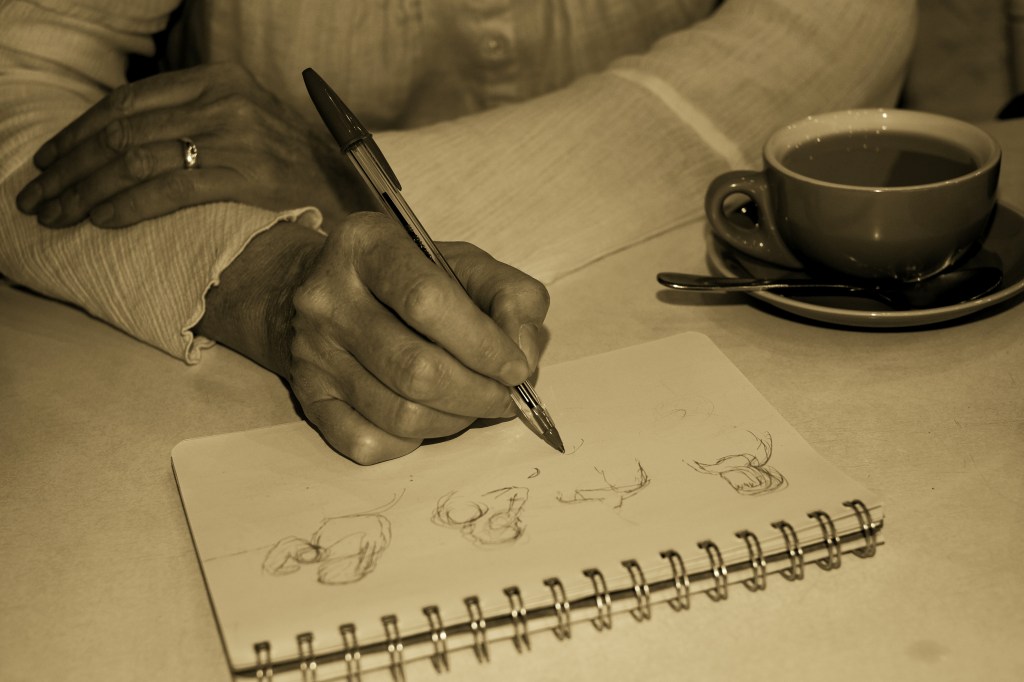
(This photo isn’t me by the way)

Now, probably one of the most important aspects of my own prayer life: I know I’ve mentioned my intentions in praying at all, but one aspect I haven’t mentioned is praying as devotion.
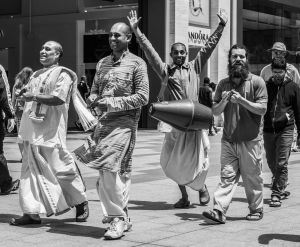
Devotion as in worship, praise, as in gratitude for the beauty in my life, as an expression of love. Knowing with the mind that all is one is fine, but these kinds of prayers help us to cement our awareness of that oneness of all living beings. As I said earlier, I, like you or anyone else, may use particular names and forms to represent this oneness, but, well, it’s all one, so we are non-different from all those names and forms.
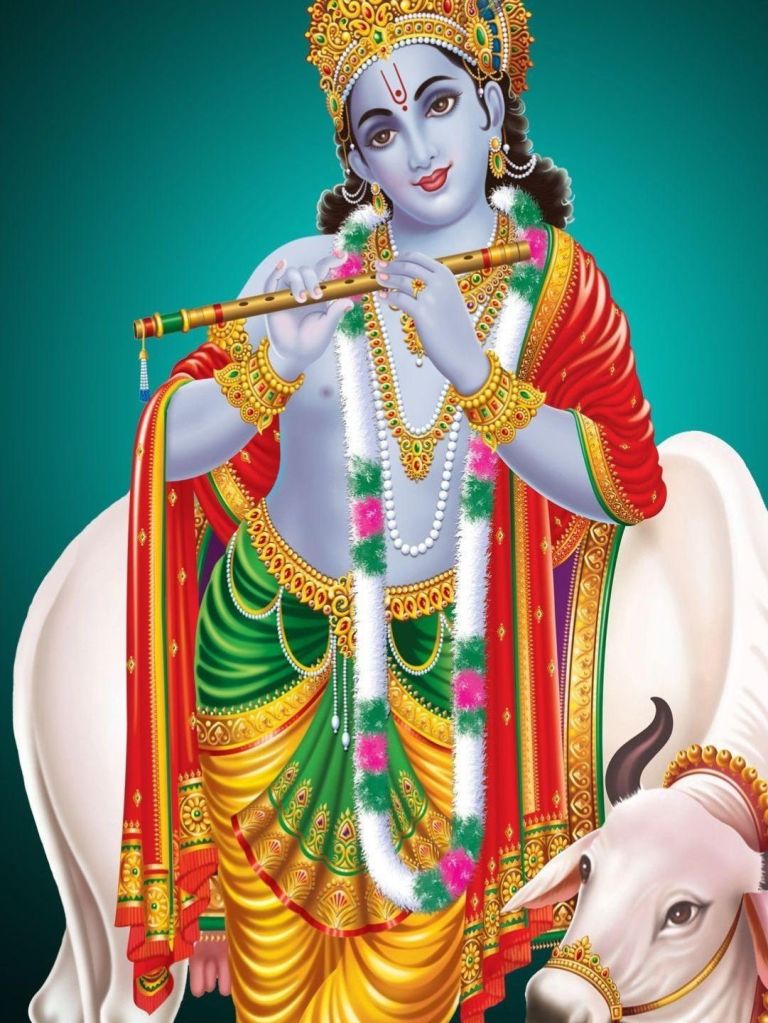
Lord Sri Krishna is among my favourite forms of Universal Consciousness  (also known as Brahman)

There are many representations of the Divine, but Krishna and this picture of Him are special to me.

Focusing your devotion on a particular form seems to help make it easier or more real. It’s tricky to pray to and with a thing that has no form and is invisible.

So, my friends I hope what I’ve said here is of some little interest to you and that you have found at least something you can use for your own life.

With peace, love, and with my prayers

Paul
Making Peace with Poetry and a Prayer

Namaste my friends

The poem I want to share with you today has, I think, been shared on this blog before. I haven’t checked because I didn’t want to be tempted to censor myself and not post it again if it has been posted.

The poem, titled simply Peace Prayer, has a repeating refrain in each verse:

Our Lady Queen of Peace Pray for us.

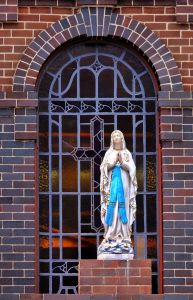
A couple of days ago I came across a church dedicated to this particular manifestation of the Divine Feminine. I know it doesn’t seem to be such a far-out coincidence, but up till then, I had never encountered a church with this name.


So, obviously, it reminded me of my poem, written a couple of years ago now. As well as the story that prompted its writing:

When I was 12 my father went to war. As a professional soldier, he went as a part of this country’s commitment to its American allies in its war against Vietnam.

Our family was, at least nominally, Christian at that time, and anyway, desperate times do indeed call for desperate measures.

Which means we, my mother, my sisters, and I, formed a tiny prayer circle every night for over a year to pray for my father and for peace.

These days I no longer label my beliefs, not if I can help it anyway. What I seek now is the Divine wherever it is to be found. Which is everywhere of course!

In any case, here is my poem. It’s always the right time to pray for peace, though we should always remember our prayers are really directed at ourselves. It’s up to us to answer the prayer as we are able and see fit.

Peace and love to you all.

Peace Prayer

The father, the husband, the man of the house
He’s away. At the war.
Our Lady Queen of Peace pray for us.

Away at the war, yes,
In a far off land. Not his own.
Our Lady Queen of Peace pray for us.

Away at the war. “Incountry”.
that’s what they call it.
Our Lady Queen of Peace pray for us.

At home the children, the wife and mother wait.
Wait and pray.
Our Lady Queen of Peace pray for us.

At home they wait yes.
Each night on their knees,
in a circle. Prayer circle.

Away at the war, he is fighting. For what?
At home, they are praying. For what?
Our Lady Queen of Peace pray for us.

My take on Dharma, Karma, & Living a Good Life Part 1

Most likely I’m not alone when I say that when first listening to new information, a lecture, teachings or anything else for that matter, I will often forget either part of what I’m trying to learn or even all of it. In fact, I’m sure there are more than a few scholarly research papers that will tell us all about this universal phenomena with all facts and figures along with all the whys and wherefores.

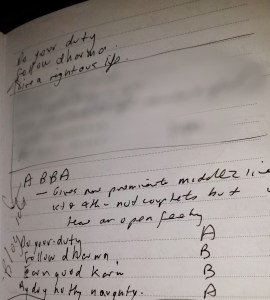
Anyway, I was listening to my teacher ( Swami Tadatmananda) recently. He summarized the teachings he was giving on that occasion in three succinct, pithy lines. Thinking back now, I have no memory of the teachings being presented, and all I have is a quick note jotted down of the teacher’s summary:

Do your duty
Follow Dharma
Live a righteous life.

Fast forward a couple of days and I was watching a video about 19th Century English poets. Once again I’m not able to tell you the names of all those poets or what the show was about (actually to be honest, I got bored and stopped watching half way).

And, again, all that remains is a scribbled note about the pioneering of a particular rhyming scheme by one of the featured poets.

That revolutionary rhyming scheme is ABBA (where the first line of a verse rhymes with the fourth, and the middle two rhyme with each other). It’s as well that I did jot down a note: I have never been able to take in, much less retain in memory, all the technical stuff to do with poetics. Never.

But for some reason this particular idea appealed to me. Maybe it’s to do with how I was once a big fan of the Swedish pop group Abba? (okay, maybe I still am)

As it happens, my note on this appears in my notebook just below the first one I mentioned above. So, as I thought about ABBA (the rhyming scheme, not the pop group), I saw that first note and started playing with it:

Do your duty
Follow Dharma
Earn good Karma
Do nothing naughty

Okay, I know, it’s not exactly great literature is it? Never mind; it’s only an experiment. But, having said that, I do quite like this little, what shall we call it? This little ditty. It seems to be a nice, even quirky, little rephrasing of my teacher’s own summary.

This is all very well and good you might think, but what does it all mean? Does it actually mean anything? Well, my short answer is yes: for me it does indeed definitely mean something.

Actually, it means a lot. But as this post seems to be dragging on a bit, perhaps we will have to continue in another post.

Meanwhile, be blessed

God is in the Ink

My eyes follow the line her pen inscribes
across the page, its whiteness coming alive.
In such moments, I know that it is true :
I know that God is truly in the ink.

Let the Music Play

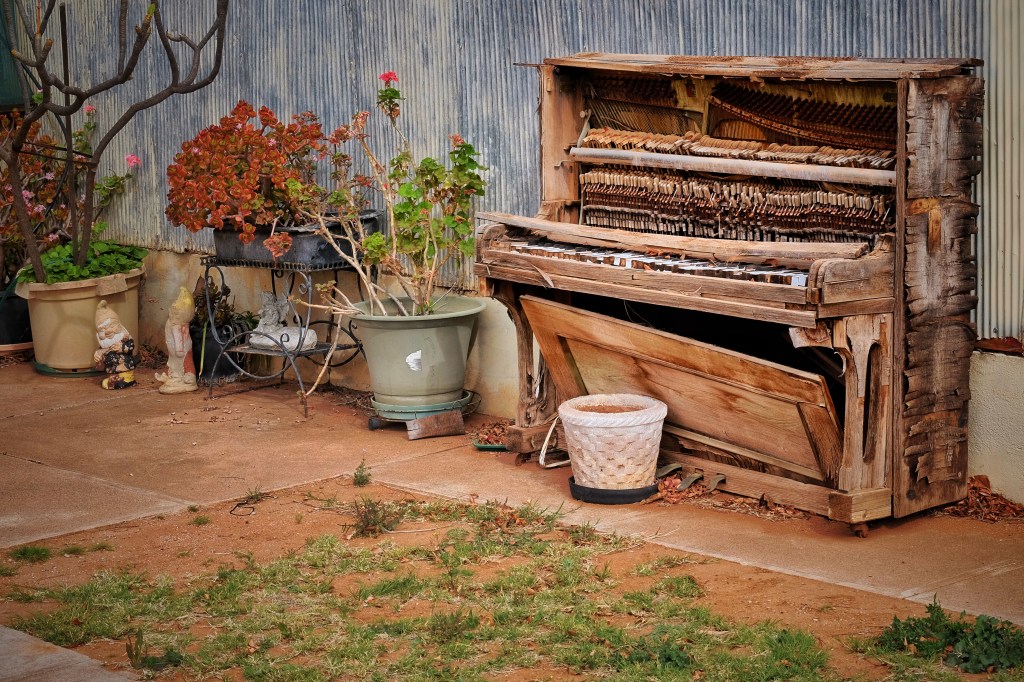
When thinking about a name for this photo I was really tempted to somehow reference the song American Pie by Don McLean. The phrase from the lyrics ‘the day the music died’, kept coming to mind – even as I made the photo of the scene.

By the way, ‘the day the music died’ refers to the plane crash in 1959 in which the up and coming Buddy Holly, and the more well known Ritchie Valens and The Big Bopper were killed.

And there was that brilliant MASH scene coming to mind. In the scene there is concert pianist who has lost the use of his right hand in battle. One of the doctors attempts to encourage him to not allow the music to die, to find other ways than actually playing piano to share the music.

Both connections seemed obvious: a very old dead piano decaying, returning to old forms of itself. But then it struck me: it was the instrument that had died and was changing forms. All material things change, die, becoming something else.

The music on the other hand, hasn’t died. It not only survived that plane crash and the transition of those three singers, it has thrived. Their music lives on. Music can’t die. Why?

Because music is life. Vibrations, harmony, and sound itself, are the foundations, the roots of ‘life the universe and everything’ (to borrow an old expression). As such, music is not a tangible, physical thing and it needs an instrument to make it manifest in the world; music merely passes through the instrument and emerges into being.

I liked that MASH episode. The doctor (stuffy Major Winchester) says to his patient, the wounded pianist, that as a skilled surgeon he has hands that ‘can make a scalpel sing’. But really, what he’s wanted all his life to is to experience music the way the pianist has.

He says he can play the notes, but he doesn’t have the gift that would allow the music (as in Chopin, Brahms and the rest) to flow through him. He tells his patient, who is depressed and unwilling or unable to consider that the music may not have died:

The gift does not live in your hands. The true gift is in your head, and in your heart, and in your soul.

Major Charles Winchester

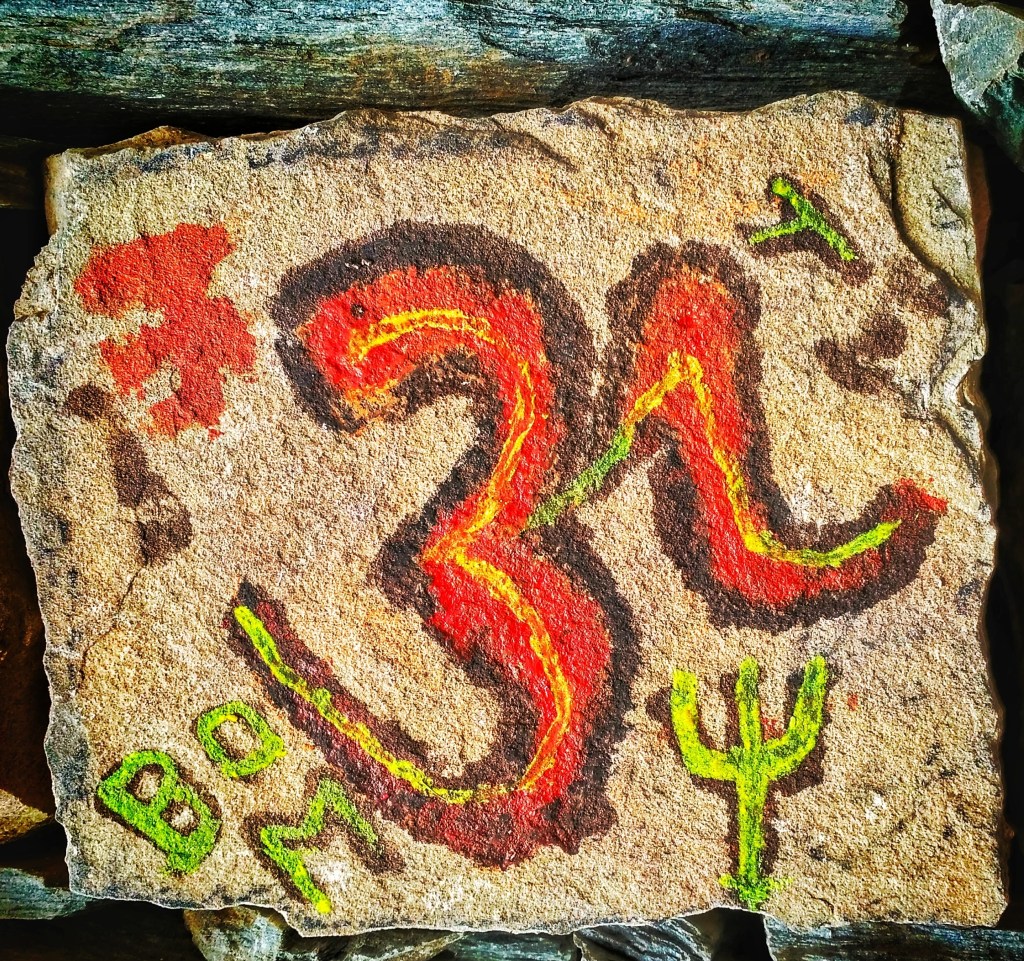
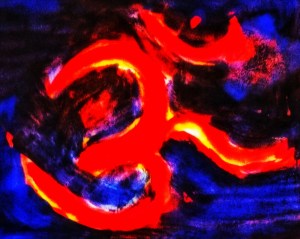
Hearing that line again reminded me of Om. There are a number of religious traditions that consider OM (sometimes spelt as AUM) to be the primordial sound, the very source of creation. The word itself, when written is considered sacred.

Then there is the verse from the Christian Bible that makes the exact same assertion:

In the beginning was the word and the word was with God and the word was God.

John 1:1-3

Well, music needs an instrument – whether in the form of a voice, body, mind, or in an object made of wood, strings, brass, or something else – in order to manifest into the material world and to be experienced by us.

Just think: the piano in my photo in the front garden of a house in a mining town has most likely allowed many generations to experience music. Accompanied them in celebrations and greivings; helped so many through good times and bad times; witnessed people laugh, cry, and even dance;

Of course, Major Winchester’s gifts as a surgeon are that he is a instrument for the vibration, the music of the universe, to make itself manifest in another way.

And what he is essentially saying to our wounded pianist is: ‘Look you can shut it off forever (his words) or you can continue making your gifts – your Self – available as an instrument that allows that music to come into the world for everyone to share’.

Well dear friends, I have pledged to carry on using my gifts and be available in just that way that allows the music to come through me in whatever form and shape it takes.

By gifts I mean those things that have been granted to every living being: the ability to create harmony; the ability to make and spread good vibrations; and the capacity to appreciate and celebrate beauty.

And when you think of it there is no way to put a limit on the number of ways that the music that is Life might be channelled through each and every one of us

A good place to pick up some good vibes, get into harmony with yourself and appreciate beauty all at the same time

In my own ways I try to make harmony in and around myself as much as I’m able. I am always attempting to cultivate behaviours and attitudes that help to create and spread good vibes. And I constantly seek to appreciate beauty, even when the world seems to be only ugliness.

Of course, as I say I am only the instrument. The music -the beauty, good vibes, and harmony – exist with or without me. But music in whatever shape and form it takes needs an instrument if it is to come into our material world and be there for all of us to share.

So, this is my prayer: that at least every once in a while, every now and then, I can actually be that instrument .

PS Just a little postscript. When passing that particular garden (the piano garden I call it now) I was drawn to this:

Eagle-eyed Garden Guardian

Just as I photographed this lovely creature, I heard my partner’s voice:

‘Did you see the piano?’

Now being in what you’ve heard me call the Zen Zone I was fully focused on and absorbed in, our winged friend. Coming back from wherever I’d been, I did in fact notice the piano.

You see, you just never never know where the music is going to come from. I might not have seen the piano with my own eagle eye but lucky for me music had a ready and willing instrument standing by to remind me of which way to look.